Ukjent sin avatar

The Role of Carbon Dioxide in Free Radical Reactions of the Organism

Nevner flere måter som CO2 virker som en antioksidant, i tillegg som en beskytter av andre antioksidanter. Dette er en teorietisk gjennomgang.

Klikk for å få tilgang til 51_335.pdf

Summary

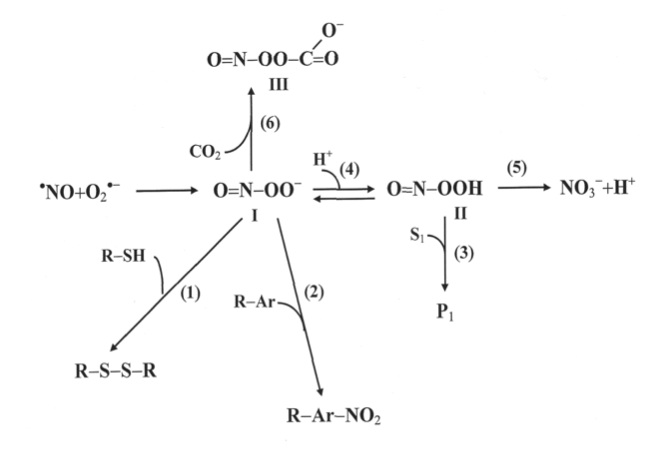
Carbon dioxide interacts both with reactive nitrogen species and reactive oxygen species. In the presence of superoxide, NO reacts to form peroxynitrite that reacts with CO2 to give nitrosoperoxycarbonate. This compound rearranges to nitrocarbonate which is prone to further reactions. In an aqueous environment, the most probable reaction is hydrolysis producing carbonate and nitrate. Thus the net effect of CO2 is scavenging of peroxynitrite and prevention of nitration and oxidative damage. However, in a nonpolar environment of membranes, nitrocarbonate undergoes other reactions leading to nitration of proteins and oxidative damage. When NO reacts with oxygen in the absence of superoxide, a nitrating species N2O3 is formed. CO2 interacts with N2O3 to produce a nitrosyl compound that, under physiological pH, is hydrolyzed to nitrous and carbonic acid. In this way, CO2 also prevents nitration reactions. CO2 protects superoxide dismutase against oxidative damage induced by hydrogen peroxide. However, in this reaction carbonate radicals are formed which can propagate the oxidative damage. It was found that hypercapnia in vivo protects against the damaging effects of ischemia or hypoxia. Several mechanisms have been suggested to explain the protective role of CO2 in vivo. The most significant appears to be stabilization of the iron-transferrin complex which prevents the involvement of iron ions in the initiation of free radical reactions.

CO2 er en antioksidant

Ukjent sin avatar

Slow Breathing Improves Arterial Baroreflex Sensitivity and Decreases Blood Pressure in Essential Hypertension

Nevner hvordan 6 pust i minuttet øker HRV og vagus nervens effekt på hjertet. Nevner også hvordan CO2 synker ved 15 pust i minuttet og holdes normalt ved 6 pust i minuttet. De med hjerteproblemer har mye større reaksjon på CO2 enn andre, og generelt lavere nivå.

http://hyper.ahajournals.org/content/46/4/714.full

Sympathetic hyperactivity and parasympathetic withdrawal may cause and sustain hypertension. This autonomic imbalance is in turn related to a reduced or reset arterial baroreflex sensitivity and chemoreflex-induced hyperventilation. Slow breathing at 6 breaths/min increases baroreflex sensitivity and reduces sympathetic activity and chemoreflex activation, suggesting a potentially beneficial effect in hypertension. We tested whether slow breathing was capable of modifying blood pressure in hypertensive and control subjects and improving baroreflex sensitivity. Continuous noninvasive blood pressure, RR interval, respiration, and end-tidal CO2 (CO2-et) were monitored in 20 subjects with essential hypertension (56.4±1.9 years) and in 26 controls (52.3±1.4 years) in sitting position during spontaneous breathing and controlled breathing at slower (6/min) and faster (15/min) breathing rate. Baroreflex sensitivity was measured by autoregressive spectral analysis and “alpha angle” method. Slow breathing decreased systolic and diastolic pressures in hypertensive subjects (from 149.7±3.7 to 141.1±4 mm Hg, P<0.05; and from 82.7±3 to 77.8±3.7 mm Hg, P<0.01, respectively). Controlled breathing (15/min) decreased systolic (to 142.8±3.9 mm Hg; P<0.05) but not diastolic blood pressure and decreased RR interval (P<0.05) without altering the baroreflex. Similar findings were seen in controls for RR interval. Slow breathing increased baroreflex sensitivity in hypertensives (from 5.8±0.7 to 10.3±2.0 ms/mm Hg; P<0.01) and controls (from 10.9±1.0 to 16.0±1.5 ms/mm Hg; P<0.001) without inducing hyperventilation. During spontaneous breathing, hypertensive subjects showed lower CO2 and faster breathing rate, suggesting hyperventilation and reduced baroreflex sensitivity (P<0.001 versus controls). Slow breathing reduces blood pressure and enhances baroreflex sensitivity in hypertensive patients. These effects appear potentially beneficial in the management of hypertension.

However, breathing at 6 breaths/min significantly increased the baroreflex sensitivity in hypertensive (from 5.8±0.7 to 10.3±2.0 ms/mm Hg; P<0.01) and control subjects (from 10.9±1.0 to 16.0±1.5 ms/mm Hg; P<0.001;Figure 2).

Hypertensive subjects showed a significantly higher resting respiratory rate (14.55±0.82 versus 11.76±1.00; P<0.05) and a significantly lower CO2-et values compared with control subjects (Figure 3). During controlled breathing at 6/min, there were no significant changes in CO2-et and in Vm. The lack of change in Vm, despite lower breathing rate, was attributable to a significant increase in Vt in hypertensives and controls. Controlled breathing at 15/min induced a marked decrease in CO2-et, particularly in hypertensive subjects, and a marked relative increase in Vm and Vt (Figure 3).

We found that paced breathing, and particularly slow breathing at 6 cycle/min, reduces blood pressure in hypertensive patients. The reduction in blood pressure during slow breathing is associated with an increase in the vagal arm of baroreflex sensitivity, indicating a change in autonomic balance, related to an absolute or relative reduction in sympathetic activity.

This demonstrated that slow breathing is indeed capable of inducing a modification in respiratory and cardiovascular control, and that appropriate training could induce a long-term effect. In subjects with chronic congestive heart failure, a condition known to induce sympathetic and chemoreflex activation, slow breathing induced a reduction in chemoreflexes and an increase in baroreflex.10,25 We have also shown that in these patients, 1-month training in slow breathing could induce prolonged benefits, even in terms of exercise capacity.25

Ukjent sin avatar

Slow Breathing Increases Arterial Baroreflex Sensitivity in Patients With Chronic Heart Failure

Nevner at 6 pust i minuttet gir beste respons på HRV og vagusnerven. I tillegg til å dempe blodtrykk markant. Studien ga disse resultatene med en bare 4 minutters pustesession.

http://circ.ahajournals.org/content/105/2/143.full

Background It is well established that a depressed baroreflex sensitivity may adversely influence the prognosis in patients with chronic heart failure (CHF) and in those with previous myocardial infarction.

Methods and Results We tested whether a slow breathing rate (6 breaths/min) could modify the baroreflex sensitivity in 81 patients with stable (2 weeks) CHF (age, 58±1 years; NYHA classes I [6 patients], II [33], III [27], and IV [15]) and in 21 controls. Slow breathing induced highly significant increases in baroreflex sensitivity, both in controls (from 9.4±0.7 to 13.8±1.0 ms/mm Hg, P<0.0025) and in CHF patients (from 5.0±0.3 to 6.1±0.5 ms/mm Hg, P<0.0025), which correlated with the value obtained during spontaneous breathing (r=+0.202, P=0.047). In addition, systolic and diastolic blood pressure decreased in CHF patients (systolic, from 117±3 to 110±4 mm Hg, P=0.009; diastolic, from 62±1 to 59±1 mm Hg, P=0.02).

Conclusions These data suggest that in patients with CHF, slow breathing, in addition to improving oxygen saturation and exercise tolerance as has been previously shown, may be beneficial by increasing baroreflex sensitivity.

Breathing at 6 breaths/min, compared with spontaneous breathing, slightly increased overall spontaneous fluctuations in RR interval, reduced fluctuations in blood pressure, and significantly increased the baroreflex sensitivity in both CHF patients (from 5.0±0.3 to 6.1±0.5 ms/mm Hg, P<0.0025) and controls (from 9.4±0.7 to 13.8±1.0 ms/mm Hg, P<0.0025) (Figure 1).

The slow breathing rate in the CHF group also produced an increase in mean RR interval of 20 ms and a decrease in both systolic and diastolic blood pressure (systolic, from 117±3 to 110±4 mm Hg, P=0.009; diastolic, from 62±1 to 59±1 mm Hg, P=0.02) (Figure 2).


Ukjent sin avatar

Transcutaneous vagus nerve stimulation reduces serum high mobility group box 1 levels and improves survival in murine sepsis.

Elektrisk stimuli av vagusnerven er en effektiv behandling ved blodforgiftning, i mus.

http://www.ncbi.nlm.nih.gov/pubmed/17901837

Abstract
OBJECTIVE:
Electrical vagus nerve stimulation inhibits proinflammatory cytokine production and prevents shock during lethal systemic inflammation through an alpha7 nicotinic acetylcholine receptor (alpha7nAChR)-dependent pathway to the spleen, termed the cholinergic anti-inflammatory pathway. Pharmacologic alpha7nAChR agonists inhibit production of the critical proinflammatory mediator high mobility group box 1 (HMGB1) and rescue mice from lethal polymicrobial sepsis. Here we developed a method of transcutaneous mechanical vagus nerve stimulation and then investigated whether this therapy can protect mice against sepsis lethality.
DESIGN:
Prospective, randomized study.
SETTING:
Institute-based research laboratory.
SUBJECTS:
Male BALB/c mice.
INTERVENTIONS:
Mice received lipopolysaccharide to induce lethal endotoxemia or underwent cecal ligation and puncture to induce polymicrobial sepsis. Mice were then randomized to receive electrical, transcutaneous, or sham vagus nerve stimulation and were followed for survival or euthanized at predetermined time points for cytokine analysis.
MEASUREMENTS AND MAIN RESULTS:
Transcutaneous vagus nerve stimulation dose-dependently reduced systemic tumor necrosis factor levels during lethal endotoxemia. Treatment with transcutaneous vagus nerve stimulation inhibited HMGB1 levels and improved survival in mice with polymicrobial sepsis, even when administered 24 hrs after the onset of disease.
CONCLUSIONS:
Transcutaneous vagus nerve stimulation is an efficacious treatment for mice with lethal endotoxemia or polymicrobial sepsis.

Ukjent sin avatar

The vagus nerve and the inflammatory reflex: wandering on a new treatment paradigm for systemic inflammation and sepsis.

Mer om vagusnerven og betennelsesdemping

http://www.ncbi.nlm.nih.gov/pubmed/22913335

Abstract
BACKGROUND:
The immune system protects the host against dangerous pathogens and toxins. The central nervous system is charged with monitoring and coordinating appropriate responses to internal and external stimuli. The inflammatory reflex sits at the crossroads of these crucial homeostatic systems. This review highlights how the vagus nerve-mediated inflammatory reflex facilitates rapid and specific exchange of information between the nervous and immune systems to prevent tissue injury and infection.
METHODS:
Review of the pertinent English-language literature. Nearly two decades of research has elucidated some of the essential anatomic, physiologic, and molecular connections of the inflammatory reflex. The original descriptions of how these key components contribute to afferent and efferent anti-inflammatory vagus nerve signaling are summarized.
RESULTS:
The central nervous system recognizes peripheral inflammation via afferent vagus nerve signaling. The brain can attenuate peripheral innate immune responses, including pro-inflammatory cytokine production, leukocyte recruitment, and nuclear factor kappa β activation via α7-nicotinic acetylcholine receptor subunit-dependent, T-lymphocyte-dependent, vagus nerve signaling to spleen. This efferent arm of the inflammatory reflex is referred to as the «cholinergic anti-inflammatory pathway.» Activation of this pathway via vagus nerve stimulation or pharmacologic α7 agonists prevents tissue injury in multiple models of systemic inflammation, shock, and sepsis.
CONCLUSIONS:
The vagus nerve-mediated inflammatory reflex is a powerful ally in the fight against lethal tissue damage after injury and infection. Further studies will help translate the beneficial effects of this pathway into clinical use for our surgical patients.

Ukjent sin avatar

Heart Rate Variability Biofeedback Increases Baroreflex Gain and Peak Expiratory Flow

Veldig spennende studie som nevner at HRV trening av pusten har langtids virkninger på hjerte/kar sykdommer og at det aktiverer nevroplastisitet, altså vari endring i nervesystemet. Bekrefter at pustefrekvensen på 6x /min (5 sek inn, 5 sek ut), gir en opptrening vagusnerven. Viser også at man får effekt uten biofeedback, men nervesystemet resonderer bedre med biofeedback.

http://www.ncbi.nlm.nih.gov/pubmed/14508023

http://www.psychosomaticmedicine.org/content/65/5/796.long

http://journals.lww.com/psychosomaticmedicine/Fulltext/2003/09000/Heart_Rate_Variability_Biofeedback_Increases.12.aspx

Abstract

OBJECTIVE: We evaluated heart rate variability biofeedback as a method for increasing vagal baroreflex gain and improving pulmonary function among 54 healthy adults.

METHODS: We compared 10 sessions of biofeedback training with an uninstructed control. Cognitive and physiological effects were measured in four of the sessions.

RESULTS: We found acute increases in low-frequency and total spectrum heart rate variability, and in vagal baroreflex gain, correlated with slow breathing during biofeedback periods. Increased baseline baroreflex gain also occurred across sessions in the biofeedback group, independent of respiratory changes, and peak expiratory flow increased in this group, independently of cardiovascular changes. Biofeedback was accompanied by fewer adverse relaxation side effects than the control condition.

CONCLUSIONS: Heart rate variability biofeedback had strong long-term influences on resting baroreflex gain and pulmonary function. It should be examined as a method for treating cardiovascular and pulmonary diseases. Also, this study demonstrates neuroplasticity of the baroreflex.

The resonant HRV frequency usually is ∼0.1 Hz (6 cycles/min). At this frequency, we previously found that HR and BP oscillate 180° out of phase (20), while HR and respiration oscillate in phase with each other (0° phase relationship, with inhalation coinciding with HR accelerations and exhalation with decelerations). Thus, when people breathe at their resonant frequency, respiratory effects on HRV stimulate baroreflex effects (ie, as the individual inhales, HR rises, BP falls, and the consequent baroreflex response produces a further increase in HR, with corresponding effects during exhalation). The consequent resonance effects produce very large increases in both HRV and baroreflex gain, which can be obtained only when subjects try to increase HRV at this particular frequency (20).

Biofeedback acutely increased both HRV and baroreflex gain, and chronically increased baroreflex gain and peak expiratory flow even among healthy individuals, in whom these measures ordinarily are thought to be stable. Other interventions known to increase baroreflex gain, including β-adrenergic blockade (30) and exercise training (31), also prevent sudden death in high-risk populations. Further research may show that HRV biofeedback training may have similar salutary effects, without the side effects that medication often causes.

The acute baroreflex effects are consistent with our hypothesis that stimulation of HRV at its resonant frequency by respiratory activity involves amplification of the vagal baroreflex response, and that this “exercises” the baroreflex.

However, the cumulative changes in baroreflex gain, both within and, more importantly, across sessions, were not simple effects of slow breathing. The effects of biofeedback on baroreflex gain, both within and between sessions, remained significant, after factoring out the effects of respiration rate. Thus, although breathing at participants’ resonant frequencies produced immediate baroreflex augmentation, over time (both within individual sessions and over weeks of practice) the baroreflex became intrinsically more responsive, an effect that no longer depended on breathing rate and volume. Thus, the intrinsic resting baroreflex increased.

Ukjent sin avatar

An Introduction to Reactive Oxygen Species – Measurement of ROS in Cells

Mye interessant om ROS (reactive oxygen species), som er skadevirkningene fra oksygenforbruk. Nevner ikke CO2 som antioksidant, men beskriver superoksid dismutase, glutathion og c-vitamin, m.m. Glutathion er viktigste intra-cellulære antioksidant.

http://www.biotek.com/resources/articles/reactive-oxygen-species.html

Reactive Oxygen Species (ROS) have long been known to be a component of the killing response of immune cells to microbial invasion. Recent evidence has shown that ROS play a key role as a messenger in normal cell signal transduction and cell cycling.

Reactive Oxygen Species (ROS) is a phrase used to describe a number of reactive molecules and free radicals derived from molecular oxygen. The production of oxygen based radicals is the bane to all aerobic species.

Detoxification of reactive oxygen species is paramount to the survival of all aerobic life forms. As such a number of defense mechanisms have evolved to meet this need and provide a balance between production and removal of ROS. An imbalance toward the pro-oxidative state is often referred to as “Oxidative stress”.

The effect of reactive oxygen species on cellular processes is a function of the strength and duration of exposure, as well as the context of the exposure. The typical cellular response to stress is to leave the cell cycle and enter into G0. With continued exposure and/or high levels of ROS, apoptosis mechanisms are triggered.

Reactive oxygen species have a role in a number of cellular processes. High levels of ROS, which can lead to cellular damage, oxidative stress and DNA damage, can elicit either cell survival or apoptosis mechanisms depending on severity and duration of exposure.

The interest in reactive oxygen species originally revolved around the pathology associated with the deleterious effects of aerobic respiration: the necessary evil caused by the leakage from the electron transport chain in mitochondria. In this context, research involved the role that these agents played in aging, chronic diseases and cancer.

A new frontier was born with the discovery that the “oxidative burst” by phagocytic cells was actually the result of the intentional production of reactive oxygen species. This was thought to be a very specific application where specific cells produced what can only be described as toxic agents in order to kill invading microorganisms. Further recent work has shown that ROS are produced in all cell types and serve as important cellular messengers for both intra- and inter-cellular communications. It is now apparent that a very complex intra-cellular regulatory system involving ROS exists within cells. Cells respond to ROS moieties in different ways depending on the intensity, duration and context of the signaling. In regards to intracellular signaling it appears that hydrogen peroxide (H2O2) is the most interesting candidate, while nitric oxide (•NO) is involved primarily with intercellular signaling.

Ukjent sin avatar

Understanding the rhythm of breathing: so near yet so far

Nevner mange interessante prinsipper om pusten og hvordan dens rytmiske egenskaper regulerer kroppsfunksjoner.

http://www.ncbi.nlm.nih.gov/pmc/articles/PMC3671763/

Abstract
Understanding the mechanisms leading from DNA to molecules to neurons to networks to behavior is a major goal for neuroscience, but largely out of reach for many fundamental and interesting behaviors. The neural control of breathing may be a rare exception, presenting a unique opportunity to understand how the nervous system functions normally, how it balances inherent robustness with a highly regulated lability, how it adapts to rapidly and slowly changing conditions, and how particular dysfunctions result in disease. Why can we assert this? First and foremost, the functions of breathing are clearly definable, starting with its regulatory job of maintaining blood (and brain) O2, CO2 and pH; failure is not an option. Breathing is also an essential component of many vocal and emotive behaviors including, e.g., crying, laughing, singing, and sniffing, and must be coordinated with such vital behaviors as suckling and swallowing, even at birth. Second, the regulated variables, O2, CO2 and pH (and temperature in non-primate mammals), are continuous and are readily and precisely quantifiable, as is ventilation itself along with the underlying rhythmic motor activity, i.e., respiratory muscle EMGs. Third, we breathe all the time, except for short breaks as during breath-holding (which can be especially long in diving or hibernating mammals) or sleep apnea. Mammals (including humans) breathe in all behavioral states, e.g., sleep-wake, rest, exercise, panic, or fear, during anesthesia and even following decerebration. Moreover, essential aspects of the neural mechanisms driving breathing, including rhythmicity, are present at levels of reduction down to a medullary slice. Fourth, the relevant circuits exhibit a remarkable combination of extraordinary reliability, starting ex utero with the first air breath – intermittent breathing movements actually start in utero during the third trimester – and continuing for as many as ~109 breaths, as well as considerable lability, responding rapidly (in less than one second) and with considerable precision, over an order of magnitude in metabolic demand for O2 (~0.25 to ~5 liters of O2/min). Breathing does indeed persist! Finally, breathing is genetically determined to work at birth, with a well-defined developmental program underlying a neuroanatomical organization with apparent segregation of function, i.e., rhythmogenesis is separate from motor pattern (burst shape and coordination) generation. Importantly, single human gene mutations can affect breathing, and several neurodegenerative disorders compromise breathing by direct effects on brainstem respiratory circuits (See below).


Ukjent sin avatar

Evidence for surgery in degenerative lumbar spine disorders

Nevner forskjellige kirurgiske inngrep og den svake effekten på korsryggsmerter.

Selbe Studien her: http://www.ncbi.nlm.nih.gov/pubmed/24315148

http://www.anatomy-physiotherapy.com/component/content/article/33-articles/systems/musculoskeletal/spine/lumbar/572-evidence-for-surgery-in-degenerative-lumbar-spine-disorders

Low Back Pain (LBP) has a high lifetime prevalence rate. This article reviews the available evidence on the effectiveness of surgical interventions for some conditions resulting in low back pain (LBP) or spine-related irradiating leg pain. The most important findings are presented below:

– The current evidence does not support surgery as effective treatment compared to high-intensity conservative interventions for the treatment of discogenic LBP without disc herniation or spinal stenosis.
– In patients with disc herniations surgery can lead to short-term benefits of leg pain, to a lesser extent for LBP. However, no difference between surgery and conservative treatment is present at the 1-year follow-up
– In spondylolisthesis (type II and III) surgery appears to lead to better clinical improvements compared to conservative treatment. Fusion appears to be superior to decompression techniques.
– In patients with degenerative spinal stenosis surgery resulting in better outcomes, both in leg pain and disability, compared to conservative interventions. However the evidence is not consistent and the quality of the studies was not all of high quality. > From: Jacobs et al., Beste Pract Res Clin Rheumatol 27 (2013) 673-84. All rights reserved to Elsevier Ltd.


Ukjent sin avatar

Evolution of Air Breathing: Oxygen Homeostasis and the Transitions from Water to Land and Sky

Omfattende studie som beskriver hvordan vi har tilpasset oss høyere nivåer av oksygen. Bekrefter alle innspill jeg har hatt om oksygen sin destruktive effekt og at beskyttelsen mot oksygenets skadevirkninger er viktigere enn å få mer oksygen inn i kroppen. Lunger, sirkulasjonssystem, hemoglobin, antioksidantsystem og det at mitokondriene er godt gjemt inni en annen celle som er godt beskyttet av en tett cellevegg er forsvars- og reguleringsmekanismer mot det livsfarlige men også livsnødvendige oksygenet.

Nevner at den opprinnelige atmosfæren bestod av veldig lite O2(1-2% eller 2,4 mmHg) og mer enn dobbelt så mye CO2. Dette er miljøet mitokondriene ble utviklet i for 2,7 billioner år siden, og som de fortsatt lever i inni cellene våre. Om oksygennivået økes tilmer enn dette blir mitokondriene dårligere og mister sin funksjon.

Nevner også at forsvarsmekanismene mot oksygen var tilstede helt fra starten. Og hemoglobin (blodcelle i dyr) og klorofyll (i planter) tilfredstiller alle de nødvendige beskyttende egenskapene vi trenger mot oksygen.

Nevner at CO2 var den første antioksidanten i evolusjonen.

Beskriver også det som skjer i mitokondria, at hypoxi (lavere O2 tilgjengelighet) gir mindre ROS og økt mitochondrial uncoupling (produksjon av varme istedet for ATP). Vi kan se dette som om mitokondriene går på tomgang med lavt turtall, mens ATP produksjon er høyt turtall og dermed også mer slitasje.

Nevner også evolusjonen av diafragma som den primære pustemuskelen.

http://www.ncbi.nlm.nih.gov/pmc/articles/PMC3926130/

Abstract
Life originated in anoxia, but many organisms came to depend upon oxygen for survival, independently evolving diverse respiratory systems for acquiring oxygen from the environment. Ambient oxygen tension (PO2) fluctuated through the ages in correlation with biodiversity and body size, enabling organisms to migrate from water to land and air and sometimes in the opposite direction. Habitat expansion compels the use of different gas exchangers, for example, skin, gills, tracheae, lungs, and their intermediate stages, that may coexist within the same species; coexistence may be temporally disjunct (e.g., larval gills vs. adult lungs) or simultaneous (e.g., skin, gills, and lungs in some salamanders). Disparate systems exhibit similar directions of adaptation: toward larger diffusion interfaces, thinner barriers, finer dynamic regulation, and reduced cost of breathing. Efficient respiratory gas exchange, coupled to downstream convective and diffusive resistances, comprise the “oxygen cascade”—step-down of PO2 that balances supply against toxicity. Here, we review the origin of oxygen homeostasis, a primal selection factor for all respiratory systems, which in turn function as gatekeepers of the cascade. Within an organism’s lifespan, the respiratory apparatus adapts in various ways to upregulate oxygen uptake in hypoxia and restrict uptake in hyperoxia. In an evolutionary context, certain species also become adapted to environmental conditions or habitual organismic demands. We, therefore, survey the comparative anatomy and physiology of respiratory systems from invertebrates to vertebrates, water to air breathers, and terrestrial to aerial inhabitants. Through the evolutionary directions and variety of gas exchangers, their shared features and individual compromises may be appreciated.

Introduction

Oxygen, a vital gas and a lethal toxin, represents a trade-off with which all organisms have had a conflicted relationship. While aerobic respiration is essential for efficient metabolic energy production, a prerequisite for complex organisms, cumulative cellular oxygen stress has also made senescence and death inevitable. Harnessing the energy from oxidative phosphorylation while minimizing cellular stress and damage is an eternal struggle transcending specific organ systems or species, a conflict that shaped an assortment of gas-exchange systems.

The respiratory organ is the “gatekeeper” that determines the amount of oxygen available for distribution. Gas exchangers arose as simple air-blood diffusion interfaces that in active animals progressively gained in complexity in coordination with the cardiovascular system, leading to serial “step-downs” of oxygen tension to maintain homeostasis between uptake distribution and cellular protection.

While a comprehensive treatment of the evolutionary physiology of respiration is beyond the scope of any one article, here we focuses on the first step of the oxygen cascade—convection and diffusion in the gas-exchange organ—to provide an overview of the diversity of nature’s “solutions” to the dilemma of acquiring enough but not too much oxygen from the environment.

Ubiquity of Reactive Oxygen Species

As reviewed by Lane (407) and Maina (466), the primary atmosphere contained mainly nitrogen, carbon dioxide, and water vapor. Much of these were swept away by meteorite bombardment and replaced with a secondary atmosphere (416-418, 579, 590) consisting of hydrogen sulfide, cyanide, carbon monoxide, carbon doxide, methane, and more water vapor from volcanic eruptions. Only trace oxygen (<0.01% present atmospheric level) existed (418), originated from inorganic (photolysis and peroxy hydrolysis) (622) and organic (photosynthesis) sources.

Oxidative respiration is the reverse process as O2 accepts four electrons successively to form water. Many of these steps are catalyzed by transitional metal ions (e.g., iron, copper, and magnesium). Therefore, aerobic respiration, oxygen toxicity and radiation poisoning represent equivalent forms of oxidative stress (407).

Origin of Oxygen Sensing and Antioxidation—Metalloproteins

If oxidative stress was present from the beginning, early anaerobic organisms must have possessed effective antioxidant defenses, including mechanism(s) for controlled O2 sensing, storage, transport, and release as well as pathways for neutralizing ROS. The general class of compounds that fulfill these requirements is the metalloproteins that transfer electrons via transitional metals (766, 767), for example, heme proteins and chlorophyll (Fig. 2).

Hydrogen may have been the first electron donor and CO2 the first electron acceptor for synthesizing ATP by chemiosmosis (408).

Because of a high redox potential of O2 as the terminal electron acceptor in electron transport, aerobic respiration is far more efficient in energy production (36 moles of ATP per mole of glucose) than anaerobic respiration (~5 moles). Aerobic multicellular organisms arose approximately 1 Ga and more complex organisms such as marine molluscs thrived approximately 550 to 500 million years ago (Ma). Exposed to a still low O2 tension in the deep sea, these organisms uniformly possessed metalloprotein respiratory pigments with a characteristically high O2 affinity for efficient O2 storage and slow O2 release thereby avoiding flooding the cell with excessive ROS (783). Contemporary myoglobin continues to perform this regulatory function in muscle.

It is well recognized that embryos and undifferentiated cells grow better in a hypoxia (129, 153). A low O2 tension (1%-5%) is an important component of the embryonic and mesenchymal stem cell “niche” that maintains stem cell properties, minimizes oxidative stress, prevents chromosomal abnormalities, improves clonal survival, and perpetuates the undifferentiated characteristics (457). In addition, hypoxia stimulates endothelial cell proliferation, migration, tubulogenesis, and stress resistance (752, 850) as well as preferential growth and vascularization of many malignant tumor cells; the latter observation constitutes the basis for the use of adjuvant hyperoxia to enhance tumor killing during irradiation and chemotherapy (277,738). Collectively, these responses to O2 tension suggest that the pulmonary gas-exchange organs adapted in a direction toward controlled restriction of cellular exposure to O2.

Origin of the Oxygen Cascade

The oxygen cascade (Fig. 6) describes serial step-downs of O2 tension from ambient air through successive resistances across the pulmonary, cardiac, macrovascular and microvascular systems into the cell and mitochondria. These resistances adapt in a coordinated fashion in response to changes in ambient O2 availability or utilization (333). Traditional paradigm holds that the primary selection pressure in the evolution of O2 transport systems is the efficiency of O2 delivery to meet cellular metabolic demands. If this is the sole function of the cascade, why are there so many resistances? Once we accept the anaerobic origin of eukaryotes and their persistent preference for hypoxia, an alternative paradigm becomes plausible, namely, the entire oxygen cascade could be viewed as an elaborate gate-keeping mechanism the major function of which is to balance cellular O2 delivery against oxidative damage.

Mitochondria consume the majority of cellular O2, directly control intracellular O2 tension, and generate most of the cellular ROS (136). Intracellular O2 tension in turn regulates mitochondrial oxidative phosphorylation, ROS production, cell signaling, and gene expression. Via O2-dependent oxidative phosphorylation the mitochondria act as cellular O2 sensors in the regulation of diverse responses from local blood flow to electric activity (830). Earlier studies reported that hypoxia increases mitochondrial ROS generation (126, 782, 823) via several mechanisms: (i) O2 limitation at the terminal complex IV (cytochrome c oxidase) in the mitochondrial electron transport chain causes electrons to back up the chain with increased electron leak to form superoxide (•O2−). (ii) Hypoxia induces conformational changes in complex III (ubiquinol cytochrome c oxidoreductase) to enhance superoxide formation (88, 287). (iii) Oxidized cytochrome c scavenges superoxide (722). Hypoxia-induced O2 limitation at complex IV leads to cytochrome c reduction, limiting its ability to scavenge superoxide and enhancing mitochondrial ROS leakage. However, recent studies of isolated mitochondria show that hypoxia actually reduces mitochondrial ROS generation and causes mitochondrial uncoupling, suggesting extramitochondrial sources of ROS generation in hypoxia (330). These conflicting reports remain to be resolved. Nonetheless, moderate hypoxia rapidly and reversibly downregulates mitochondrial enzyme transcripts, in parallel with reductions in mitochondrial respiratory activity and O2 consumption (631).

As paleo-atmospheric O2 concentration increased and multicellular aerobic organisms arose, the endosymbiotic mitochondria-host relationship faced the challenge of balancing conflicting needs of aerobic energy generation for the host cell and anaerobic protection for its internal power generator. The host cell must finely control a constant supply of O2 to the mitochondria for oxidative phosphorylation while simultaneously protecting mitochondria against oxidative damage by maintaining a near-anoxic level of local O2 concentration. This trade-off may have led to the evolution of ever more elaborate physicochemical barriers that created and maintained successive O2 partial pressure gradients, by convection and diffusion in the lung, chemical binding to hemoglobin, distribution and release via cardiovascular delivery, dissociation from hemoglobin, and diffusion into peripheral cells with or without myoglobin facilitated transport. As a result, the primordial anoxic conditions of the Earth necessary for survival and optimal function of this proteobacterial remnant are preserved inside the host cell. In working human leg muscle O2 tension at the sarcoplasmic and mitochondrial boundaries has been estimated at approximately 2.4 mmHg (0.32 kPa) (835) and muscle mitochondrial O2 concentration at half-maximal metabolic rate 0.02 to 0.2 mmHg (834), that is, in the range of the ancient atmospheric level approximately 2 Ga. Raising O2 tension above these levels impairs mitochondrial activity (672). In this context, protection of mitochondria from O2 exposure likely constitutes a major selection factor in the evolution of complex aerobic life while the various forms of systemic O2 delivery systems are necessary but secondary functions that sustain the “gate-keeping” barrier apparatus to maintain adequate partial pressure gradients along the O2 transport cascade and preserve the near-anoxic intracellular conditions for the mitochondria. In parallel with physical barriers, cells also developed various biochemical scavenging and antioxidant pathways to counteract the toxic effects of ROS as ambient oxygenation increased.

Defense against the Dark Arts of Oxidation

To summarize, the evolution of life on Earth has adapted to a wide range of ambient O2 levels from 0% to 35%. Periods of relative hyperoxia promote biodiversity and gigantism but incur excess oxidative stress and mandating the upregulation of antioxidant defenses. Periods of relative hypoxia promote coordinated conservation of resources and downregulation of metabolic capacities to improve energy efficiency and channel some savings into compensatory growth of gas-exchange organs. The trajectory of early evolution is at least partly coupled to O2 content of the atmosphere and the deep ocean, and there is a plausible explanation for the coupling, namely, defense against the dark arts of oxidation. Oxygen is capable of giving and taking life. The anaerobic proteobacteria escaped the fate of annihilation by taking refuge inside another cell and in a brilliant evolutionary move coopted its own oxygen-detoxifying machinery to provide essential sustenance for the host cell in return for nourishment and physical protection from oxidation. As the threat of oxidation increased with rising environmental O2 concentration, selection pressure escalated for ever more sophisticated defense mechanisms against oxidative injury and in direct conflict with simultaneously escalating selection pressures to harness the energetic advantage of oxidative phosphorylation.

Trading off the above opposing demands shaped all known respiratory organs, from simple O2 diffusion across cell membranes to facilitated transport via O2 binding proteins to gas-exchange systems of varying complexity (skin, gills, tracheae, book lung, alveolar lung, and avian lung) (Sections 2-5). Concurrently evolving with a convective transport system, these increasingly elaborate respiratory organs not only increase O2 uptake but also maintain air-to-mitochondria O2 tension gradients and intracellular O2 fluxes at a hospitable ancestral level. This epic struggle began at the dawn of life and persisted to the present on a universal scale. The evolutionary trajectory of air breathing has continued contemporary significance to the understanding of oxygen-dependent metabolic homeostasis, especially in relation to maturation, senescence, and aging-related organ degeneration and disease.