Ukjent sin avatar

The role of hyperventilation – hypocapnia in the pathomechanism of panic disorder

Her er en spennede studie som nevner at relasjonen mellom panikkanfall og hyperventillering kommer i utgangspunktet av metabolsk acidose, som er en kompensasjon for kronisk hyperventillering. Når CO2 synker øker nervesystemets sensitivitet til catacholaminer (stresshormoner som adrenalin og noradrenalin) og panikkanfallet kommer. I hyperkapnisk acidose (høy CO2) minker sensitiviteten til stresshormoner og kroppen beskyttes mot panikkanfall. Igjen en bekreftelse på at acidose fra CO2 er beskyttende, mens acidose fra andre ting er provoserende.

http://www.ncbi.nlm.nih.gov/pubmed/17713689

http://www.scielo.br/scielo.php?script=sci_arttext&pid=S1516-44462006005000048&lng=en&nrm=iso&tlng=en

OBJECTIVE: The authors present a profile of panic disorder based on and generalized from the effects of acute and chronic hyperventilation that are characteristic of the respiratory panic disorder subtype. The review presented attempts to integrate three premises: hyperventilation is a physiological response to hypercapnia; hyperventilation can induce panic attacks; chronic hyperventilation is a protective mechanism against panic attacks.
METHOD: A selective review of the literature was made using the Medline database. Reports of the interrelationships among panic disorder, hyperventilation, acidosis, and alkalosis, as well as catecholamine release and sensitivity, were selected. The findings were structured into an integrated model.
DISCUSSION: The panic attacks experienced by individuals with panic disorder develop on the basis of metabolic acidosis, which is a compensatory response to chronic hyperventilation. The attacks are triggered by a sudden increase in (pCO2) when the latent (metabolic) acidosis manifests as hypercapnic acidosis. The acidotic condition induces catecholamine release. Sympathicotonia cannot arise during the hypercapnic phase, since low pH decreases catecholamine sensitivity. Catecholamines can provoke panic when hyperventilation causes the hypercapnia to switch to hypocapnic alkalosis (overcompensation) and catecholamine sensitivity begins to increase.
CONCLUSION: Therapeutic approaches should address long-term regulation of the respiratory pattern and elimination of metabolic acidosis.

Chronic hyperventilation predisposes an individual to PD, since compensatory mechanisms (such as alterations in renal function and tissue buffer capacity) lead to chronic metabolic acidosis, which remains latent until it is activated by chronic hypocapnia.

Therefore, therapeutic approaches should address long-term regulation of respiratory patterns60 and elimination of metabolic acidosis.

Ukjent sin avatar

Tissue Oxygenation Response to Mild Hypercapnia during Cardiopulmonary Bypass with Constant Pump Output

Nevner at oksygenering av vev ikke er pga CO2 sin vasodilerende effekt, men fra økt pumping av blod og høyre-skift av oksygendissassosiasjonskurven. Denne studien ga ikke økt oksygenering av vev når hjertets pumpeevne ble holdt konstant. Den påpeker at blodtrykk og hjerterytme ikke ble endret ved hyperkapni, selv om hjertets pumpeevne øker.

http://www.ncbi.nlm.nih.gov/pmc/articles/PMC1464052/

It is well established that mild hypercapnia improves peripheral perfusion and increases tissue PO2. Our main question was whether peripheral vasodilation is a direct effect of the CO2 or a secondary result of increased cardiac output and related central autonomic homeostatic responses. We found that mild hypercapnia did not increase subcutaneous tissue oxygenation when systemic blood flow and mean arterial pressure remained constant during cardiopulmonary bypass. Increased tissue oxygenation during mild hypercapnia thus most likely results from a hyperdynamic circulatory response and shifting oxyhaemoglobin dissociation curve rather than direct peripheral vasodilation.

Hypercapnia increases both sympathetic and cardiac vagus nerve activity in anaesthetized dogs. Such co-activation of vagus and sympathetic systems, which can be initiated reflexively or by action on higher centres, has been shown to be of distinct physiological benefit in controlling reactions that relate cardiac function to body need. Since the sympathetic and parasympathetic systems are co-activated during systemic hypercapnia, blood pressure and heart rate response depends on the functional balance between these two systems. We were unable to evaluate heart rate during bypass, but have previously shown that both mean arterial blood pressure and heart rate remained essentially unchanged during hypercapnia even though cardiac output increases 25%.11

Thus, the vasodilator effect of CO2 is particularly marked in the cerebral circulation where a CO2 concentration of 7 to 10% nearly doubles cerebral blood flow (CBF) in humans,39 while mild hypercapnia (PaCO2 ~ 50 mmHg) impairs autoregulation of CBF and is associated with an overall increase in cerebral oxygenation.11, 40 A similar cerebrovascular response during cardiopulmonary bypass leads to an increase in CBF41 that is associated with a reduction in cerebral oxygen consumption.42 On the other hand, peripheral vasomotor tone during hypercapnia is essentially the result of a balance between the direct effects of CO2 and the level of sympathetic activity.38

The mechanism by which CO2 exerts its direct effects on the cerebral vasculature seems to involve nitric oxide (NO), ATP-sensitive potassium channels, and cyclooxygenase-dependent pathways. The CO2-NO axis is considered a cardinal pathway for CBF regulation in humans. Thus, although ATP-sensitive and Ca2+-activated potassium channels are also major systems that respond to hypercapnic acidosis, their response is incomplete in the absence of NO donors. In both animals43 and humans,44 hypercapnic vasodilatation is mediated by inhibition of nitric oxide synthase — the enzyme responsible for nitric oxide synthesis. It is probable that the vasodilation to hypercapnic acidosis is mediated either by increased synthesis of NO or increased sensitivity to NO.

However, 20 to 30 minutes is sufficient to obtain stable tissue oxygen values with tonometric systems that accommodate tissue oxygen probes.


Ukjent sin avatar

Breath-holding and its breakpoint

Alt om hva som gjør at vi ikke greier å holde pusten lenge.

http://ep.physoc.org/content/91/1/1.long

This article reviews the basic properties of breath-holding in humans and the possible causes of the breath at breakpoint. The simplest objective measure of breath-holding is its duration, but even this is highly variable. Breath-holding is a voluntary act, but normal subjects appear unable to breath-hold to unconsciousness. A powerful involuntary mechanism normally overrides voluntary breath-holding and causes the breath that defines the breakpoint. The occurrence of the breakpoint breath does not appear to be caused solely by a mechanism involving lung or chest shrinkage, partial pressures of blood gases or the carotid arterial chemoreceptors. This is despite the well-known properties of breath-hold duration being prolonged by large lung inflations, hyperoxia and hypocapnia and being shortened by the converse manoeuvres and by increased metabolic rate.

Breath-holding has, however, two much less well-known but important properties. First, the central respiratory rhythm appears to continue throughout breath-holding. Humans cannot therefore stop their central respiratory rhythm voluntarily. Instead, they merely suppress expression of their central respiratory rhythm and voluntarily ‘hold’ the chest at a chosen volume, possibly assisted by some tonic diaphragm activity. Second, breath-hold duration is prolonged by bilateral paralysis of the phrenic or vagus nerves. Possibly the contribution to the breakpoint from stimulation of diaphragm muscle chemoreceptors is greater than has previously been considered. At present there is no simple explanation for the breakpoint that encompasses all these properties.

At breakpoint from maximum inflation in air, the Pa/etO2 is typically 62 ± 4 mmHg and the PetCO2 is typically 54 ± 2 mmHg (n = 5; Lin et al. 1974), and the longer the breath-hold the more they change.

Nunn (1987) estimates that consciousness in normal adults is lost at PaO2 levels below ∼27 mmHg and PaCO2 levels between 90 and 120 mmHg.

This is because the rhythmic EMG and negative pressure waves occur simultaneously, because their frequency and amplitude are within the respiratory range and because they increase as CO2 levels rise towards the end of the breath-hold. This CO2 rise would stimulate the central respiratory rhythm.

Ukjent sin avatar

Rapid changes in histone deacetylases and inflammatory gene expression in expert meditators.

Om hvordan 1 hel dag med meditasjon endrer genene som styrer betennelser.

http://www.ncbi.nlm.nih.gov/pubmed/24485481/

Abstract

BACKGROUND:

A growing body of research shows that mindfulness meditation can alter neural, behavioral and biochemical processes. However, the mechanisms responsible for such clinically relevant effects remain elusive.

METHODS:

Here we explored the impact of a day of intensive practice of mindfulness meditation in experienced subjects (n=19) on the expression of circadian, chromatin modulatory and inflammatory genes in peripheral blood mononuclear cells (PBMC). In parallel, we analyzed a control group of subjects with no meditation experience who engaged in leisure activities in the same environment (n=21). PBMC from all participants were obtained before (t1) and after (t2) the intervention (t2-t1=8h) and gene expression was analyzed using custom pathway focused quantitative-real time PCR assays. Both groups were also presented with the Trier Social Stress Test (TSST).

RESULTS:

Core clock gene expression at baseline (t1) was similar between groups and their rhythmicity was not influenced in meditators by the intensive day of practice. Similarly, we found that all the epigenetic regulatory enzymes and inflammatory genes analyzed exhibited similar basal expression levels in the two groups. In contrast, after the brief intervention we detected reduced expression of histone deacetylase genes (HDAC 2, 3 and 9), alterations in global modification of histones (H4ac; H3K4me3) and decreased expression of pro-inflammatory genes (RIPK2 and COX2) in meditators compared with controls. We found that the expression of RIPK2 and HDAC2 genes was associated with a faster cortisol recovery to the TSST in both groups.

CONCLUSIONS:

The regulation of HDACs and inflammatory pathways may represent some of the mechanisms underlying the therapeutic potential of mindfulness-based interventions. Our findings set the foundation for future studies to further assess meditation strategies for the treatment of chronic inflammatory conditions.


Ukjent sin avatar

Cytokine Dysregulation, Inflammation and Well-Being

Om hvordan cytokiner kobler nervesystem og immunsystem med betennelser. Den forteller at betennelser er utgangspunktet for de fleste livsstilsykdommer og smertetilstander som følge av autoimmunesykdommer.

http://www.karger.com/Article/Abstract/87104

Cytokines mediate and control immune and inflammatory responses. Complex interactions exist between cytokines, inflammation and the adaptive responses in maintaining homeostasis, health, and well-being. Like the stress response, the inflammatory reaction is crucial for survival and is meant to be tailored to the stimulus and time. A full-fledged systemic inflammatory reaction results in stimulation of four major programs: the acute-phase reaction, the sickness syndrome, the pain program, and the stress response, mediated by the hypothalamic-pituitary-adrenal axis and the sympathetic nervous system. Common human diseases such as atopy/allergy, autoimmunity, chronic infections and sepsis are characterized by a dysregulation of the pro- versus anti-inflammatory and T helper (Th)1versus Th2 cytokine balance. Recent evidence also indicates the involvement of pro-inflammatory cytokines in the pathogenesis of atherosclerosis and major depression, and conditions such as visceral-type obesity, metabolic syndrome and sleep disturbances. During inflammation, the activation of the stress system, through induction of a Th2 shift, protects the organism from systemic ‘overshooting’ with Th1/pro-inflammatory cytokines. Under certain conditions, however, stress hormones may actually facilitate inflammation through induction of interleukin (IL)-1, IL-6, IL-8, IL-18, tumor necrosis factor-α and C-reactive protein production and through activation of the corticotropin-releasing hormone/substance P-histamine axis. Thus, a dysfunctional neuroendocrine-immune interface associated with abnormalities of the ‘systemic anti-inflammatory feedback’ and/or ‘hyperactivity’ of the local pro-inflammatory factors may play a role in the pathogenesis of atopic/allergic and autoimmune diseases, obesity, depression, and atherosclerosis. These abnormalities and the failure of the adaptive systems to resolve inflammation affect the well-being of the individual, including behavioral parameters, quality of life and sleep, as well as indices of metabolic and cardiovascular health. These hypotheses require further investigation, but the answers should provide critical insights into mechanisms underlying a variety of common human immune-related diseases.


Ukjent sin avatar

Free oxygen radicals in whole blood correlate strongly with high-sensitivity C-reactive protein.

Nevner at mengden ROS (Reactive Oxygen Species) i blod korresponderer direkte til CRP, en betenneslsesmarkør.

http://www.ncbi.nlm.nih.gov/pubmed/21291700

BACKGROUND:

Increased concentrations of reactive oxygen molecules are believed to be a driving force in inflammation. Although evident in tissue culture and animal models, it has been difficult to link reactive oxygen species (ROS) and inflammatory markers in humans. In patients recruited to represent a broad spectrum of risk factors, we investigated the relationship between the plasma concentration of oxygen radicals and high-sensitivity C-reactive protein (hs-CRP), utilizing a new chemistry with an easily oxidized chromophore.

METHODS:

ROS and hs-CRP were measured in blood from 59 fasting subjects selected to have variable risk predicted by classical risk factors. ROS were determined using the free oxygen radical monitor, which is an indirect colorimetric assay for the concentration of hydroperoxides in whole blood.

RESULTS:

Using log transformation, the correlation between ROS and hs-CRP was r = 0.505 (P < 0.0001). This relationship between ROS and hs-CRP was comparable (r = 0.527, P = 0.001) in the subgroup not currently on statin therapy (n = 39). ROS were not correlated with Framingham risk, r = -0.027 (P = 0.84).

CONCLUSION:

ROS directly measured in human blood correlates strongly with hs-CRP.

Ukjent sin avatar

You May Need a Nerve to Treat Pain: The Neurobiological Rationale for Vagal Nerve Activation in Pain Management.

Alt om hvordan vagus nerven demper smerte gjennom 5 mekanismer samtidig: dempe betennelser, dempe sympaticus aktivitet (fight-or-flight), redusere oksidativt stress, aktivere smertedempende områder i hjernen og utløse smertedempende opioider og cannabinoider i kroppen. Den bekrefter også at pusten stimulerer vagusnerven, spesielt når man puster med HRV-synkron pust slik vi gjør i Verkstedet Breathing System Autonom Pust.

http://www.ncbi.nlm.nih.gov/pubmed/24451632

Mer fra Studien her.

Abstract

Pain is a complex common health problem, with important implications for quality of life and with huge economic consequences. Pain can be elicited due to tissue damage, as well as other multiple factors such as inflammation and oxidative stress. Can there be one therapeutic pathway which may target multiple etiologic factors in pain? In the present article, we review evidence for the relationships between vagal nerve activity and pain, and between vagal nerve activity and five factors which are etiologic to or protective in pain. Specifically, vagal nerve activity inhibits inflammation, oxidative stress and sympathetic activity, activates brain regions that can oppose the brain «pain matrix», and finally it might influence the analgesic effects of opioids. Together, these can explain the anti-nociceptive effects of vagal nerve activation or of acetylcholine, the principal vagal nerve neurotransmitter. These findings form an evidence-based neurobiological rationale for testing and possibly implementing different vagal nerve activating treatments in pain conditions. Perspective: In this article, we show evidence for the relationships between vagal nerve activity and pain, and between vagal nerve activity and five factors which are etiologic to pain. Given the evidence and effects of the vagus nerve activation in pain, people involved in pain therapy may need to seriously consider activation of this nerve.


Ukjent sin avatar

Hypercapnia Improves Tissue Oxygenation

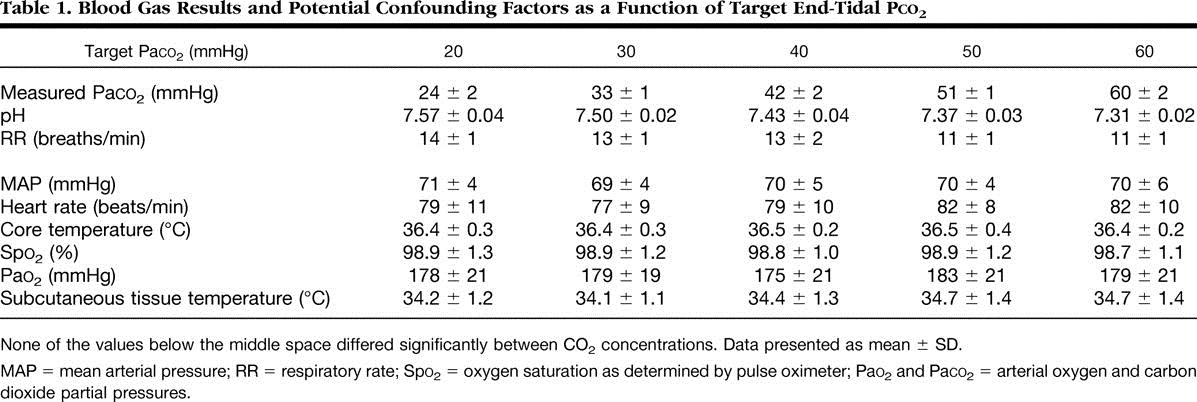
Denne viser hvordan økt CO2 øker oksygenering og blodsirkulasjon i huden og i vevet. Studien er gjort på individer i narkose og med assistert pust med konstant volum på 10ml/kg og pustefrekvens mellom 11 og 14.

http://journals.lww.com/anesthesiology/Fulltext/2002/10000/Hypercapnia_Improves_Tissue_Oxygenation.9.aspx

Background: Wound infections are common, serious, surgical complications. Oxidative killing by neutrophils is the primary defense against surgical pathogens and increasing intraoperative tissue oxygen tension markedly reduces the risk of such infections. Since hypercapnia improves cardiac output and peripheral tissue perfusion, we tested the hypothesis that peripheral tissue oxygenation increases as a function of arterial carbon dioxide tension (Paco2) in anesthetized humans.

Methods: General anesthesia was induced with propofol and maintained with sevoflurane in 30% oxygen in 10 healthy volunteers. Subcutaneous tissue oxygen tension (Psqo2) was recorded from a subcutaneous tonometer. An oximeter probe on the upper arm measured muscle oxygen saturation. Cardiac output was monitored noninvasively. Paco2 was adjusted to 20, 30, 40, 50, or 60 mmHg in random order with each concentration being maintained for 45 min.
Results: Increasing Paco2 linearly increased cardiac index and Psqo2: Psqo2 = 35.42 + 0.77 (Paco2), P < 0.001.
Conclusions: The observed difference in PsqO2 is clinically important because previous work suggests that comparable increases in tissue oxygenation reduced the risk of surgical infection from −8% to 2 to 3%. We conclude that mild intraoperative hypercapnia increased peripheral tissue oxygenation in healthy human subjects, which may improve resistance to surgical wound infections.
co2 og pustefrekvens
co2 og blodsirkulasjon og oksygenering
This hypercapnia-induced increase in cardiac output results in higher tissue oxygen pressure. In the current study Psqo2 went from 58 to 74 mmHg with only a 20-mmHg increase in Paco2. This increase in Psqo2 is likely to be clinically important because it is associated with a substantial reduction in the risk of surgical wound infection. 11 These results suggest that maintaining slight hypercapnia is likely to reduce the risk of surgical wound infection. Carbon dioxide management thus joins the growing list of anesthetic factors that do or are likely to influence the risk of wound infection.

Hypercapnia appears to provide other benefits as well. 35 For example, hypercapnia and hypercapnic acidosis decrease ischemia–reperfusion injury by inhibiting xanthine oxidase in an in vitro model of acute lung injury. 36 Hypercapnia similarly improves functional recovery and coronary blood flow during hypercapnic acidosis in an isolated blood-perfused heart model. 37 Furthermore, small tidal volume ventilation (associated with mild hypercapnia) and permissive hypercapnia have been shown to improve the outcome of patients with acute respiratory distress syndrome as a result of decreased mechanical stretch of the diseased pulmonary tissues. 38,39
Hypercapnia also increases cerebral blood flow and decreases cerebrovascular resistance through dilation of arterioles whereas hypocapnia does the opposite. 40,41 In a recent study, hyper- and hypocapnia were shown to influence brain oxygen tension in swine during hemorrhagic shock 42; hyperventilation and the resulting hypocapnia (15–20 mmHg) decreased cerebral oxygen pressure a further 56%. Hypercapnia has been utilized clinically to improve cerebral perfusion during carotid endarterectomy 43,44 and for emergency treatment of retinal artery occlusion. 45