Ukjent sin avatar

Physical examination tests of the shoulder: a systematic review with meta-analysis of individual tests.

Om at de tradisjonelle diagnosekriteriene som brukes i fysioterapi ikke holder mål i klinisk sammenheng.

http://www.ncbi.nlm.nih.gov/pubmed/17720798

Currently, almost without exception, there is a lack of clarity with regard to whether common OSTs used in clinical examination are useful in differentially diagnosing pathologies of the shoulder.

Ukjent sin avatar

Arthroscopic Partial Meniscectomy versus Sham Surgery for a Degenerative Meniscal Tear

Mer om at operasjoner ikke er bedre enn placebo ved mediskproblemer.

http://www.nejm.org/doi/full/10.1056/NEJMoa1305189

In this trial involving patients without knee osteoarthritis but with symptoms of a degenerative medial meniscus tear, the outcomes after arthroscopic partial meniscectomy were no better than those after a sham surgical procedure.

Ukjent sin avatar

Acute steroid responsive small-fiber sensory neuropathy: a new entity?

Nevner at betennelseshemmende midler kan hjelpe på tynnfibernevropati, kanskje spesielt post-operativ tynnfiber nevropati.

http://www.ncbi.nlm.nih.gov/pubmed/16519781

Small-fiber neuropathy is often idiopathic and commonly follows a chronic course. Treatment is often effective in treating the core symptom of pain, but it has no effect on the pathologic process. We describe four patients with acute small-fiber neuropathy who responded dramatically to steroid therapy. All patients had acute onset neuropathic pain, normal nerve conduction studies, and evidence of small-fiber dysfunction in quantitative sensory testing and skin biopsy. Symptoms were distal and symmetrical in three patients and generalized in one patient. In two cases, the neuropathy presented as an erythromelalgia-like syndrome. Marked clinical improvement occurred 1-2 weeks after oral prednisone therapy was initiated. Three patients remained symptom free, and one patient experienced recurrence of neuropathy after prednisone was tapered.

Ukjent sin avatar

Post-surgical inflammatory neuropathy

Nevner hvordan operasjoner kan gi betennelser i nervene og bidra til post-operative nevropatiske smerter. Dette er et underkjent tema, akkurat som all nevropati uten de vanlige nevrologiske funn er. Konkluderer med at immunoterapi er nyttig.

http://brain.oxfordjournals.org/content/early/2010/09/15/brain.awq252.full

Post-surgical neuropathies are usually attributed to mechanical factors, such as compression, stretch, contusion or transection. The role of inflammatory mechanisms in neuropathies occurring after surgeries is poorly appreciated and not well characterized, and may provide a rationale for immunotherapy. A total of 23 selected patients with post-surgical neuropathies received nerve biopsies, of which 21 demonstrated increased inflammation. Here we report the clinical features in these 21 cases of biopsy-confirmed and 12 cases of clinically suspected post-surgical inflammatory neuropathies, in whom no trauma to the nerves was documented. All neuropathies developed within 30 days of a surgical procedure. Of 33 patients, 20 were male and the median age was 65 years (range 24–83). Surgical procedures were orthopaedic (n = 14), abdominal/pelvic (n = 12), thoracic (n = 5) and dental (n = 2). Patients developed focal (n = 12), multifocal (n = 14) or diffuse (n = 7) neuropathies. Focal and multifocal neuropathies typically presented with acute pain and weakness, and focal neuropathies often mimicked mechanical aetiologies. Detailed analyses, including clinical characteristics, electrophysiology, imaging and peripheral nerve pathology, were performed. Electrophysiology showed axonal damage. Magnetic resonance imaging of roots, plexuses and peripheral nerves was performed in 22 patients, and all patients had abnormally increased T2nerve signal, with 20 exhibiting mild (n = 7), moderate (n = 12) or severe (n = 1) enlargement. A total of 21 patients had abnormal nerve biopsies that showed increased epineurial perivascular lymphocytic inflammation (nine small, five moderate and seven large), with 15 diagnostic or suggestive of microvasculitis. Evidence of ischaemic nerve injury was seen in 19 biopsies. Seventeen biopsies had increased axonal degeneration suggesting active neuropathy. Seventeen biopsied patients were treated with immunotherapy. In 13 cases with longitudinal follow-up (median 9 months, range 3–71 months), the median neuropathy impairment score improved from 30 to 24 at the time of last evaluation (P = 0.001). In conclusion: (i) not all post-surgical neuropathies are mechanical, and inflammatory mechanisms can be causative, presenting as pain and weakness in a focal, multifocal or diffuse pattern; (ii) these inflammatory neuropathies may be recognized by their spatio-temporal separation from the site and time of surgery and by the characteristic magnetic resonance imaging features; (iii) occasionally post-surgical inflammatory and mechanical neuropathies are difficult to distinguish and nerve biopsy may be required to demonstrate an inflammatory mechanism, which in our cohort often, but not exclusively, exhibited pathological features of microvasculitis and ischaemia; and (iv) recognizing the role of inflammation in these patients’ neuropathy led to rational immunotherapy, which may have resulted in the subsequent improvement of neurological symptoms and impairments.

Ukjent sin avatar

Effect sizes of non-surgical treatments of non-specific low-back pain

Nevner at akupunktur er den beste behandling mot uspesifikke ryggsmerter, bedre enn feks. kiropraktisk manipulering.

http://www.ncbi.nlm.nih.gov/pmc/articles/PMC2223333/

Numerous randomized trials have been published investigating the effectiveness of treatments for non-specific low-back pain (LBP) either by trials comparing interventions with a no-treatment group or comparing different interventions. In trials comparing two interventions, often no differences are found and it raises questions about the basic benefit of each treatment. To estimate the effect sizes of treatments for non-specific LBP compared to no-treatment comparison groups, we searched for randomized controlled trials from systematic reviews of treatment of non-specific LBP in the latest issue of the Cochrane Library, issue 2, 2005 and available databases until December 2005. Extracted data were effect sizes estimated as Standardized Mean Differences (SMD) and Relative Risk (RR) or data enabling calculation of effect sizes. For acute LBP, the effect size of non-steroidal anti-inflammatory drugs (NSAIDs) and manipulation were only modest (ES: 0.51 and 0.40, respectively) and there was no effect of exercise (ES: 0.07). For chronic LBP, acupuncture, behavioral therapy, exercise therapy, and NSAIDs had the largest effect sizes (SMD: 0.61, 0.57, and 0.52, and RR: 0.61, respectively), all with only a modest effect. Transcutaneous electric nerve stimulation and manipulation had small effect sizes (SMD: 0.22 and 0.35, respectively). As a conclusion, the effect of treatments for LBP is only small to moderate. Therefore, there is a dire need for developing more effective interventions.


Ukjent sin avatar

The Polyvagal Perspective

Denen Studien beskriver Stephen Porges sitt arbeid med å forstå Vagus nerven og hvordan den forholder seg til pusten og til psyken.

http://www.ncbi.nlm.nih.gov/pmc/articles/PMC1868418/

The Polyvagal Theory introduced a new perspective relating autonomic function to behavior that included an appreciation of autonomic nervous system as a “system,” the identification of neural circuits involved in the regulation of autonomic state, and an interpretation of autonomic reactivity as adaptive within the context of the phylogeny of the vertebrate autonomic nervous system. The paper has two objectives: First, to provide an explicit statement of the theory; and second, to introduce the features of a polyvagal perspective. The polyvagal perspective emphasizes how an understanding of neurophysiological mechanisms and phylogenetic shifts in neural regulation, leads to different questions, paradigms, explanations, and conclusions regarding autonomic function in biobehavioral processes than peripheral models. Foremost, the polyvagal perspective emphasizes the importance of phylogenetic changes in the neural structures regulating the autonomic nervous system and how these phylogenetic shifts provide insights into the adaptive function and the neural regulation of the two vagal systems

Ukjent sin avatar

The Anatomy of Dorsal Ramus Nerves and Its Implications in Lower Back Pain

Om hudnære nerver sin rolle i korsryggsmerter. Beskriver spesielt nervene ved L1-2 som går ned til huden i korsryggen og hoftene. Nevner flere interessante diagnosekriterier. Men som de legene og kirurgene forskerne er, har de kun nerveblokkade og kirurgi i som behandlingmuligheter, fullstendig ignorante til mulighetene i manuell behandling. Selv nerveblokkade har 85% av pasientene får mer enn 50% bedring i symptomene, ikke så annerledes enn hva vi forventer med manuell behandling og en intelligent tilnærming til nervesystemet.

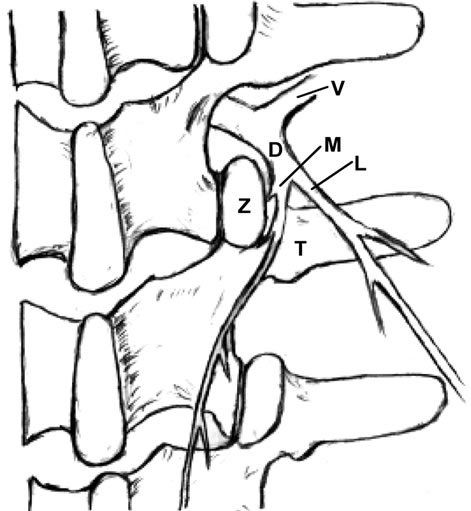
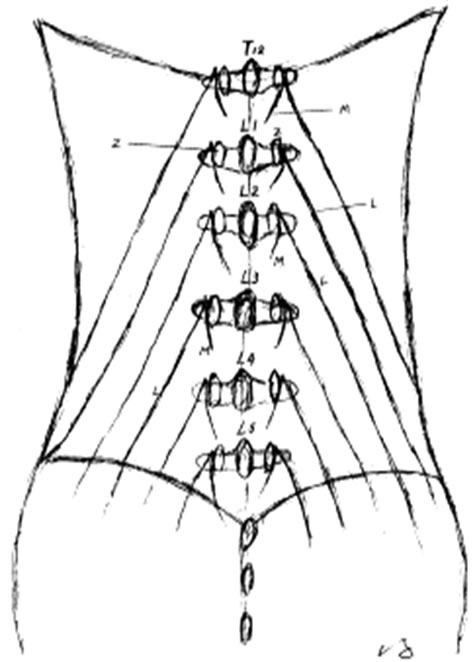
Each spinal dorsal ramus arises from the spinal nerve and then divides into a medial and lateral branch. The medial branch supplies the tissues from the midline to the zygapophysial joint line and innervates two to three adjacent zygapophysial joints and their related soft tissues. The lateral branch innervates the tissues lateral to the zygapophysial joint line.

Clinically, L1 and L2 are the most common sites of dorsal rami involvement.

The etiologies of low back pain are numerous. Anatomically, lumbar muscle strain [1,2], lumbar zygapophysial joint syndrome [3-11], instability of the lumbar spine [12], discogenic back pain [1,13], and sacroiliac joint syndrome [2] can cause low back pain. Mechanical pressure on the nerve roots, which may interfere with venous return of the nerve root [14], epidural fibrosis [15], perineural and intraneural fibrosis [16], are additional factors to consider. Additionally, some authors have suggested that the iliolumbar ligament inserting on the lumbar spine is a source of back pain [17].

Anatomically, Bogduk’s work exposed the medial branches of the lumbar spinal dorsal rami as a potential player in low back pain [23-25]. Sihvonen et al. blocked the medial dorsal ramus branch, which resulted in relief of muscle spasms and they suggested that this treatment would aid in improving lumbopelvic rhythm and reducing low back pain [26-29]. These studies supported spinal dorsal ramus as a potential pain generator.

http://file.scirp.org/Html/9-2400120/b3c5afd3-5aa8-4350-9ecc-22fe3e3cc027.jpg

http://file.scirp.org/Html/9-2400120/c6242d6a-bc68-420a-bd92-3c9e7fbafa2d.jpg

The distribution area of each dorsal ramus is characterized by an overlapping multiple segmental innervations, e.g., the L4 zygapophysial joint is innervated by the L3 and L4 medial branches. Therefore, if single dorsal ramus is irritated proximally, a patient could experience pain at the distal site of this nerve distribution (referred pain). This phenomenon mimics radicular pain, for example, a patient with L4-5 herniated disc experiences pain on his dorsal foot. Thus, a local anesthetic injected to the referred pain area will not relieve pain, because the pain is caused by irritation at the proximal dorsal ramus (see below) [36].

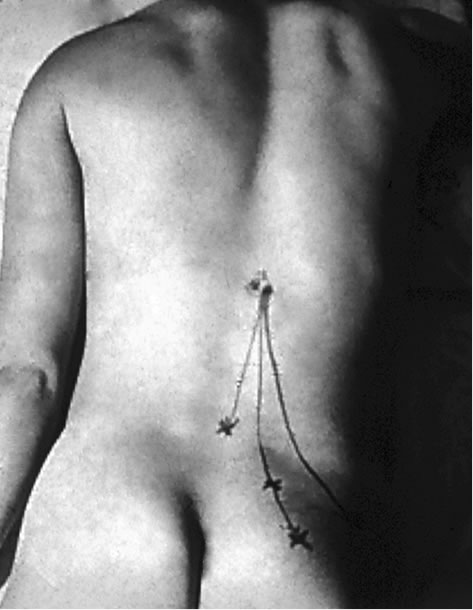
In patients with the spinal dorsal ramus mediated pain, their symptoms usually are on one side and are exacerbated by lumbar extension and/or rotation. This pain may radiate to the ipsilateral low back and buttock region (referred pain) [21,22] (Figure 2). Some patients may present paraspinal muscle spasm (Figure 3(a)). Hyperesthesia may present in the affected dermatome [10,21,22,31,35, 45,46].

http://file.scirp.org/Html/9-2400120/e412d7c3-e859-4500-b82d-396e71f6b638.jpg

The zygapophysial joint line demarcates the distribution of the medial and lateral branches. Pain at between the midline and the zygapophysial joint line or the paraspinal sacroiliac region is caused by on irritated medial branch. Pain lateral to the zygapophysial joint line with radiation to the lateral iliac crest is induced by the lateral branch involvement [19,22]. When the common dorsal ramus is involved, pain will be at the territories of both medial and lateral branches [36,38,47] (Figure 2).

There are some clinical findings in the patient with the spinal dorsal ramus mediated low back pain. The patient usually points to pain at the distal low back (referred pain) [19,22,47]. When the patient bends forward, there is usually a palpable step-off at the affected spinous processes and this is typically two to three segments above the referred pain [47]. There is a palpably widened space and deep tenderness between the spinous processes below the stepoff. With deep palpation of the junction of the same level lateral zygapophysial joint and proximal transverse process, the patient will experience pain and referred pain [19-22,36,47] (Figure 2). Additionally, patients may present an ipsilateral segmental muscle spasm, and a mild scoliosis at the affected vertebral level when the medial branch is involved (Figure 3(a)) [36,47]. If the lateral branch is involved, palpating the longissimus and the iliocostalis muscles can be painful [19-22,35,36,47]. Maigne’s examination techniques are to provoke pain by applying pressure to the lateral aspect of the spinous processes and rubbing the ipislateral facet at the thoracolumbar junction [19-22]. Other findings such as motor, sensory and straight leg raising tests are unremarkable. When the low back pain patient presents pain with radiation below the knee and positive nerve root signs such as loss of sensory or motor function or reflexes in the distribution of the ventral ramus, the ventral ramus involvement (lumbar radiculopathy) should be considered [1].

Any abnormality of the zygapophysial joint such as vertebral malrotation or muscle spasm as well as structural changes of the zygapophysial joint such as subluxation, degeneration, bony proliferation, capsular/ligamentous hypertrophy or fracture can irritate the common dorsal ramus and medial branch, and induce clinical symptoms [18,44,47,48]. Ossification of the mammilloaccessory ligament may cause an entrapment neuropathy and low back pain [18,24,33].

Chen and colleagues [51] dissected the spinal dorsal rami from T12 to the sacrum and conducted biomechanical studies. Their study demonstrated that the L2 dorsal rami bore the greatest stretching force and tensile stress when the specimens were flexed and rotated to the contralateral side.

Spinal dorsal ramus mediated back pain can occur at any level of the human spine [18,21,22,44,52,53]. For low back pain mediated by dorsal ramus, the primary pain is commonly at the thoracolumbar junction [19-22, 38,44]. Within the thoracic region, the coronal orientation of the zygapophysial joints grants spine free rotation. However, this rotation is limited by a rigid rib cage, except at the T10-12 levels because of floating ribs. The upper lumbar facets also have a relative coronal orientation. Therefore, spine rotation is relatively free at the thoracolumbar junction and the greatest shear force occurs at the more mobile upper lumbar segments. This normal spinal movement can cause zygapophysial joint separation or rotation. If these movements occur rapidly or overcome the body’s physiological limit, they can cause stretching tension and irritation to the dorsal ramus, resulting in low back pain [20,40,44,54]. Shao and his colleagues reported that seventy four percent (74%) of the 1263 patients with spinal dorsal ramus mediated low back pain had the pain originating from L1 and/or L2 dorsal ramus [36].

http://file.scirp.org/Html/9-2400120/3fe33e99-0bf8-4fbf-ac3c-867b9de28c6b.jpg

Additionally, Zhou has reported in his retrospective study, that in 41 patients with spinal dorsal ramus mediated lower back pain, after the selective spinal dorsal ramus injection, 84% of these patients received greater than 50% and more than two months of pain reduction [74]. These patients also reported improvement in their daily activities and decrease of their pain medications [74].

Normally, this type of pain originates at L1 or L2 dorsal rami, and the pathogeneses can be multiple factors which irritate the dorsal ramus. The back pain induced by dorsal ramus irritation can occur in the cervical [51] and thoracic spine [50] as well. Therefore, spinal dorsal ramus mediated back pain should be appropriately called “spinal dorsal ramus syndrome (SDRS)”.

The clinical presentations of dorsal ramus mediated back pain and zygapophysial syndrome can be overlapping. However, there are some distinctions. The thoracolumbar junction is the most common site of spinal dorsal ramus mediated back pain [21,22,36], while, zygapophysial joint syndrome commonly occurs at the lower lumbar zygapophysial joints such as L5-S1 and L4-5 [5,6,9,43,57, 58].

Ukjent sin avatar

VKM gjennomgang av D-vitamin

Vitenskapskomiteens gjennomgang av D-vitamin, basert på EFSAs vurdering fra 2012.

«In two studies in men, intakes between 234 and 275 μg/day were not associated with hypercalcaemia, and a no observed adverse effect level (NOAEL) at 250 μg/day was established.»

Basert på en sikkerhetsmargin på 2,5 for å ta hensyn til mellommenneskelige forskjeller, vurderer de Upper Limit til å være 1000 IU daglig.

Klikk for å få tilgang til 422f24e6e0.pdf