Ukjent sin avatar

Melatonin, mitochondria, and cellular bioenergetics.

Mye interessant om melatonin her. Bl.a. at det er neuroprotective og hjelper i forsvaret mot oksidativt stress.

http://www.ncbi.nlm.nih.gov/pubmed/11270481

Aerobic cells use oxygen for the production of 90-95% of the total amount of ATP that they use. This amounts to about 40 kg ATP/day in an adult human. The synthesis of ATP via the mitochondrial respiratory chain is the result of electron transport across the electron transport chain coupled to oxidative phosphorylation. Although ideally all the oxygen should be reduced to water by a four-electron reduction reaction driven by the cytochrome oxidase, under normal conditions a small percentage of oxygen may be reduced by one, two, or three electrons only, yielding superoxide anion, hydrogen peroxide, and the hydroxyl radical, respectively. The main radical produced by mitochondria is superoxide anion and the intramitochondrial antioxidant systems should scavenge this radical to avoid oxidative damage, which leads to impaired ATP production. During aging and some neurodegenerative diseases, oxidatively damaged mitochondria are unable to maintain the energy demands of the cell leading to an increased production of free radicals. Both processes, i.e., defective ATP production and increased oxygen radicals, may induce mitochondrial-dependent apoptotic cell death. Melatonin has been reported to exert neuroprotective effects in several experimental and clinical situations involving neurotoxicity and/or excitotoxicity. Additionally, in a series of pathologies in which high production of free radicals is the primary cause of the disease, melatonin is also protective. A common feature in these diseases is the existence of mitochondrial damage due to oxidative stress. The discoveries of new actions of melatonin in mitochondria support a novel mechanism, which explains some of the protective effects of the indoleamine on cell survival.

Ukjent sin avatar

EPOC konseptet i restitusjon

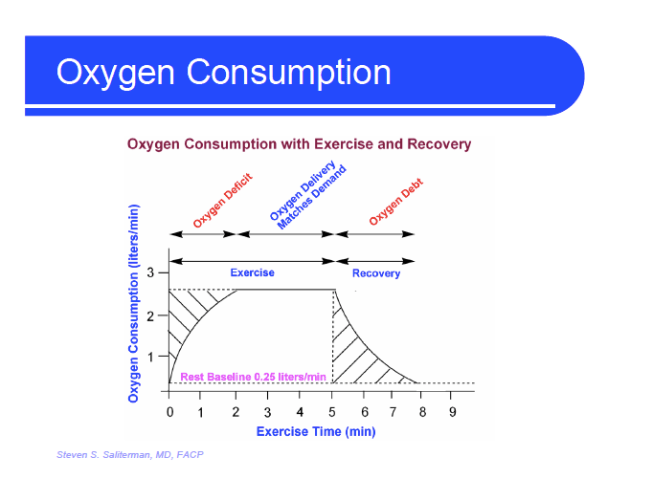
EPOC er Excess Post-exercise Oxygen Consuption, som innebærer at kroppen bruker mer oksygen etter trening for å fylle på lagrene den har tømt under treningsøkten.

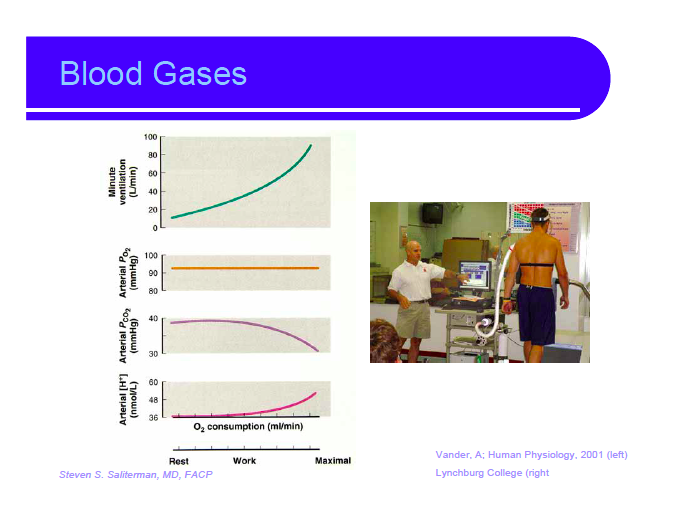
Dette er også en viktig årsak til at pusteteknikker etter treningsøkten har så gode resultater. Ikke minst fordi økt CO2 gjør at O2 lettere hopper av blodcellene og kan benyttes i cellene som trenger det.

EPOC er aktuelt om treningsintensiteten er over 70% VO2max og varer lenger enn 50 minutter, eller er superintens på over 105% VO2max i mer enn 6 minutter.

Wiki siden her: http://en.wikipedia.org/wiki/Excess_post-exercise_oxygen_consumption

In recovery, oxygen (EPOC) is used in the processes that restore the body to a resting state and adapt it to the exercise just performed. These include: hormone balancing, replenishment of fuel stores, cellular repair, innervation and anabolism. Post-exercise oxygen consumption replenishes the phosphagen system. New ATP is synthesized and some of this ATP donates phosphate groups to creatine until ATP and creatine levels are back to resting state levels again. Post-exercise oxygen is also used to oxidize lactic acid. Lactic acid is produced during exercise and then travels via the blood stream to the kidneys, cardiac muscle, and liver. An increased amount of oxygen is necessary to convert the lactic acid back to pyruvic acid at these locations. Another use of EPOC is to fuel the body’s increased metabolism from the increase in body temperature which occurs during exercise.[2]

En studie her: http://www.ncbi.nlm.nih.gov/pubmed/17101527

Recovery from a bout of exercise is associated with an elevation in metabolism referred to as the excess post-exercise oxygen consumption (EPOC).

Evidence has accumulated to suggest an exponential relationship between exercise intensity and the magnitude of the EPOC for specific exercise durations. Furthermore, work at exercise intensities >or=50-60% VO2max stimulate a linear increase in EPOC as exercise duration increases.

it is now apparent that a prolonged EPOC (3-24 h) may result from an appropriate exercise stimulus (submaximal: >or=50 min at >or=70% VO2max; supramaximal: >or=6 min at >or=105% VO2max).

However, even those studies incorporating exercise stimuli resulting in prolonged EPOC durations have identified that the EPOC comprises only 6-15% of the net total oxygen cost of the exercise.

Og en studie til her: http://www.ncbi.nlm.nih.gov/pmc/articles/PMC3527216/

Trained individuals have better thermoregulatory capacities than untrained individuals because physical training enhances the sweating mechanism at a given level of the central sweating drive [11]. Therefore, elevated body temperature in untrained individuals could last longer than in trained individuals [12]. Moreover, subjects with lower VO2max might produce more lactate than those with higher VO2max especially during strenuous exercise. An enhanced lactate metabolism requires oxygen consumption for recovery. Thus, fitness level may contribute to the magnitude of EPOC.

In conclusion, we revealed that cardiorespiratory fitness level correlates inversely with the magnitude of EPOC, especially when performing an aerobic-type interval exercise.

Ukjent sin avatar

CO2/H(+) sensing: peripheral and central chemoreception.

Omfattende gjennomgang av hvordan kroppen reagerer på CO2. Mange ting om CO2 er nevnt for aller første gang i denne studien fra 2003.

http://www.ncbi.nlm.nih.gov/pubmed/12818238

H(+) is maintained constant in the internal environment at a given body temperature independent of external environment according to Bernard’s principle of «milieu interieur». But CO2 relates to ventilation and H(+) to kidney. Hence, the title of the chapter. In order to do this, sensors for H(+) in the internal environment are needed. The sensor-receptor is CO2/H(+) sensing. The sensor-receptor is coupled to integrate and to maintain the body’s chemical environment at equilibrium. This chapter dwells on this theme of constancy of H(+) of the blood and of the other internal environments. [H(+)] is regulated jointly by respiratory and renal systems.

The respiratory response to [H(+)] originates from the activities of two groups of chemoreceptors in two separate body fluid compartments: (A) carotid and aortic bodies which sense arterial P(O2) and H(+); and (B) the medullary H(+) receptors on the ventrolateral medulla of the central nervous system (CNS). The arterial chemoreceptors function to maintain arterial P(O2) and H(+) constant, and medullary H(+) receptors to maintain H(+) of the brain fluid constant. Any acute change of H(+) in these compartments is taken care of almost instantly by pulmonary ventilation, and slowly by the kidney. This general theme is considered in Section 1.

The general principles involving cellular CO2 reactions mediated by carbonic anhydrase (CA), transport of CO2 and H(+) are described in Section 2. Since the rest of the chapter is dependent on these key mechanisms, they are given in detail, including the role of Jacobs-Stewart Cycle and its interaction with carbonic anhydrase. Also, this section deals briefly with the mechanisms of membrane depolarization of the chemoreceptor cells because this is one mechanism on which the responses depend. The metabolic impact of endogenous CO2 appears in the section with a historical twist, in the context of acclimatization to high altitude (Section 3). Because low P(O2) at high altitude stimulates the peripheral chemoreceptors (PC) increasing ventilation, the endogenous CO2 is blown off, making the internal milieu alkaline. With acclimatization however ventilation increases. This alkalinity is compensated in the course of time by the kidney and the acidity tends to be restored, but the acidification is not great enough to increase ventilation further. The question is what drives ventilation during acclimatization when the central pH is alkaline? The peripheral chemoreceptor came to the rescue. Its sensitivity to P(O2) is increased which continues to drive ventilation further during acclimatization at high altitude even when pH is alkaline. This link of CO2 through the O2 chemoreceptor is described in Section 4 which led to hypoxia-inducible factor (HIF-1). HIF-1 is stabilized during hypoxia, including the carotid body (CB) and brain cells, the seat of CO2 chemoreception. The cells are always hypoxic even at sea level. But how CO2 can affect the HIF-1 in the brain is considered in this section.

CO2 sensing in the central chemoreceptors (CC) is given in Section 5. CO(2)/H(+) is sensed by the various structures in the central nervous system but its respiratory and cardiovascular responses are restricted only to some areas. How the membranes are depolarized by CO2 or how it works through Na(+)/Ca(2+) exchange are discussed in this section. It is obvious, however, that CO2 is not maintained constant, decreasing with altitude as alveolar P(O2) decreases and ventilation increases. Rather, it is the [H(+)] that the organism strives to maintain at the expense of CO2. But then again, [H(+)] where? Perhaps it is in the intracellular environment.

Gap junctions in the carotid body and in the brain are ubiquitous. What functions they perform have been considered in Section 6. CO2 changes take place in lung alveoli where inspired air mixes with the CO2 from the returning venous blood. It is the interface between the inspired and expired air in the lungs where CO2 change is most dramatic. As a result, various investigators have looked for CO2 receptors in the lung, but none have been found in the mammals. Instead, CO2/H(+) receptors were found in birds and amphibians. However, they are inhibited by increasing CO2/H(+), instead of stimulated. But the afferent impulses transmitted to the brain produced stimulation in the efferents. This reversal of afferent-efferent inputs is a curious situation in nature, and this is considered in Section 7.

The NO and CO effects on CO2 sensing are interesting and have been briefly mentioned in Section 8.

A model for CO2/H(+) sensing by cells, neurons and bare nerve endings are also considered. These NO effects, models for CO2/H(+) and O2-sensitive cells in the CNS have been considered in the perspectives. Finally, in conclusion, the general theme of constancy of internal environment for CO2/H(+) is reiterated, and for that CO2/H(+) sensors-receptors systems are essential.

Since CO2/H(+) sensing as such has not been reviewed before, the recent findings in addition to defining basic CO2/H(+) reactions in the cells have been briefly summarized.

Ukjent sin avatar

The role of carbon dioxide (and intracellular pH) in the pathomechanism of several mental disorders. Are the diseases of civilization caused by learnt behaviour, not the stress itself?

Spennede studie som nevner mange viktige prinsipper rundt CO2 og hinter til at det er veldig mye vi har misforstått.

Beskriver spesielt godt hvordan lav CO2 (alkalose) gjør at cellemembraner blir mer permeabal (slipper ting lettere igjennom) for å balansere pH inne i cellen. Noe som fører til at også Ca2+ slippes inn i cellene og f.eks. muskelceller trekker seg mer sammen og nerveceller fyrer av lettere. Kroppen trenger mer oksygen og den setter igang en negativ spiral hvor økt pustefrekvens gir mindre CO2 som gir mer behov for oksygen og dermed en videreføing av økt pustefrekvens. Høy CO2 (acidose) gjør det motsatte, muskler slapper av, nervene roes ned og cellen beskyttes.

http://www.ncbi.nlm.nih.gov/pubmed/20128395
Hele studien: http://www.mppt.hu/images/magazin/pdf/xi-evfevfolyam-3-szam/a-szendioxid-es-az-intracellularis-ph.pdf

The role of carbon dioxide (CO2) is underestimated in the pathomechanism of neuropsychiatric disorders, though it is an important link between psyche and corpus.

The actual spiritual status also influences respiration (we start breathing rarely, frequently, irregularly, etc.) causing pH alteration in the organism;

on the other hand the actual cytosolic pH of neurons is one of the main modifiers of Ca2+-conductance, hence breathing directly, quickly, and effectively influences the second messenger system through Ca2+-currents. (Decreasing pCO2 turns pH into alkalic direction, augments psychic arousal, while increasing pCO2 turns pH acidic, diminishes arousal.)

One of the most important homeostatic function is to maintain or restore the permanence of H+-concentration, hence the alteration of CO2 level starts cascades of contraregulation. However it can be proved that there is no perfect compensation, therefore compensational mechanisms may generate psychosomatic disorders causing secondary alterations in the «milieu interieur».

Authors discuss the special physico-chemical features of CO2, the laws of interweaving alterations of pCO2 and catecholamine levels (their feedback mechanism), the role of acute and chronic hypocapnia in several hyperarousal disorders (delirium, panic disorder, hyperventilation syndrome, generalized anxiety disorder, bipolar disorder), the role of «locus minoris resistentiae» in the pathomechanism of psychosomatic disorders. It is supposed that the diseases of civilization are caused not by the stress itself but the lack of human instinctive reaction to it, and this would cause long-lasting CO2 alteration. Increased brain-pCO2, acidic cytosol pH and/or increased basal cytosolic Ca2+ level diminish inward Ca2+-current into cytosol, decrease arousal–they may cause dysthymia or depression. This state usually co-exists with ATP-deficiency and decreased cytosolic Mg2+ content. This energetical- and ion-constellation is also typical of ageing-associated and chronic organic disorders. It is the most important link between depression and organic disorders (e.g. coronary heart disease). The above-mentioned model is supported by the fact that H+ and/or Ca2+ metabolism is affected by several drugs (catecholemines, serotonin, lithium, triaecetyluridine, thyroxine) and sleep deprivation, they act for the logically right direction.

If we take our breath deeply or frequently our pulse speeds up proving that CO2 has left the pacemaker cells of heart, and the alkalic cytoplasm allowes Ca2+ to enter in the cytosol. If we keep on this kind of breathing for a long time, our pulse will slowly come back to the incipient frequency because the organism compensates the alteration of pH in the cytosol. The lack of H+ in cytosol increases conductance of Ca 2+ and some other ions (Harvey et al.), thus it increases contraction, metabolism and O2 requirement (Laffey et al.), and also increases excitability of neurons in the peripherium (Macefield et al.) and in the brain (Stenkamp et al.). All these events can be explained by the simple fact that lack of H+ (=alkalosis) increases transmembrane conductance of ions and (consequently) increases active ion-pumping mechanisms too (because the original ion-status has to be restored). By contrast, acidosis decreases the transmembrane Ca 2+-conductance (Tombaugh & Somjen), decreases excitability of neurons, and the decreased Ca 2+-conductance can dramatically affect neurotransmitter re- lease (Dodge et al..).

Then chronic hypocapnia or hypercapnia is followed by cascades which alter the whole ionmileu in the cells, they may alter even the neurotransmitter/endocrine sta- tus (Dodge et al.). Therefore, it is inappropriate to call that process a “compensational mechanism”, this name suggests that it is all right, while it is not! According to Claude Bernard alteration of milieu interieur can result in illness. It is very important that the new ion milieu is similarly stable as the original one and it does not allow the organism to restore the original status. Therefore we should name this happening a „complication” (in- stead of “compensation”).

Ukjent sin avatar

Fractional end-tidal CO2 as an index of the effects of stress on math performance and verbal memory of test-anxious adolescents.

Man tenker vanligvis, f.eks. under trening at høy CO2 fører til hyperventilering. Men vi vet også at hyperventilering fører til lav CO2, som vist i denne studien på ungdom med eksamensangst.

http://www.ncbi.nlm.nih.gov/pubmed/9792486

The research reported here was derived from the hypothesis that hyperventilation contributes to the decrement in performance observed in test-anxious students. From this point of view, students identified as test-anxious would be expected to hyperventilate to a greater extent than non-test-anxious students when confronted with the stress of testing. The experiment reported here tested this hypothesis by continuous capnographic monitoring of end-tidal CO2 and respiration frequency of 16 high- and 16 low-test-anxious boys and girls (ages 12-14 years) before and during tests of math and word-recall memory under conditions of high- and low-stress (i.e. ‘strong’ motivational instruction versus ‘weak’ motivational instructions). Consistent with predictions, high test-anxious students displayed lower levels of end-tidal CO2 (under the high-stress condition) and faster respiration frequencies than low test-anxious students. Both high- and low-test-anxious students scored higher on the math test under high-stress conditions, but differences between recall scores were not significant. Collateral data revealed a positive relationship between scores on the Nijmegen Hyperventilation Questionnaire and the Revised Suinn Test Anxiety Behavior Scale, and a negative relationship between the questionnaire scores (self reports of frequency of symptoms of hypocapnia) and drop in level of end-tidal CO2 during testing, i.e. high-test-anxiety group reported a greater frequency of symptoms of hyperventilation and a larger drop in level of end-tidal CO2 during testing than low-test-anxiety group.

Ukjent sin avatar

The effect of two manipulative therapy techniques and their outcome in patients with sacroiliac joint syndrome

Denne studien viser at manipulering av SI leddet i korsbeinet fungerer bedre om man også gjør manipulering av korsryggen. Dette prinsippet viser at uansett hva man behandler så er det bedre om man inkluderer flere deler av kroppen.

Vi må innse at menneskekroppen ikke er en mekanisme, men en organisme.

http://www.sciencedirect.com/science/article/pii/S136085921100026X

A single session of SIJ and lumbar manipulation was more effective for improving functional disability than SIJ manipulation alone in patients with SIJ syndrome. Spinal HVLA manipulation may be a beneficial addition to treatment for patients with SIJ syndrome.

Ukjent sin avatar

End-tidal CO2 as a predictor of survival in out-of-hospital cardiac arrest.

Nevner hvordan CO2 mengden i blod kan brukes til å vurdere ovelevelsesgraden av hjertestans.

Spontan blodsirkulasjon gjenopprettes når EtCO2 er på 27,6 mmHg.

http://www.ncbi.nlm.nih.gov/pubmed/22107764

The mean initial EtCO2 was 18.7 (95%CI = 18.2-19.3) for all patients. Return of spontaneous circulation was achieved in 695 patients (22.4%) for which the mean initial EtCO2 was 27.6 (95%CI = 26.3-29.0). For patients who failed to achieve ROSC, the mean EtCO2 was 16.0 (95%CI = 15.5-16.5).