Ukjent sin avatar

Pain

Svært viktig studie med alt om smerte, fra Melzaks Body-Self Neuromatrix. Smerteforståelsens historie, fantomsmerter, hypersensitivitet, nervedegenerasjon, betennelser, Gate Control og Neuromatrix teori, m.m. Her forklares hvordan kroppsopplevelsen skapes i hjernen, selv uten noen input fra kroppen. Nevner også at smerte kan sette seg som et minne; somatic memory. Og vier mye plass til hvordan stress og kortisol bidrar til kroniske smerter, muskelsvikt og nedsatt immunsystem.

http://onlinelibrary.wiley.com/doi/10.1002/wcs.1201/full

Smerte har en funksjon i menneskekroppen som har utviklet seg i evolusjonen for å holde oss i live. Det gjør at vi tilpasser vår aktivitet så kroppen kan fokusere på helbredelse.

Pain has many valuable functions. It often signals injury or disease, generates a wide range of adaptive behaviors, and promotes healing through rest.

Men de siste 100-årenes (og foreløpige) forståelse av selve årsaken til smerte, hvordan den oppstår og hvordan den forsvinner, er basert på et mekanisk kroppsbilde som ikke tar hensyn til den subjektive smerteopplevelse. Melsaks arbeid viser oss hvordan vi snur dette og får en bedre og mer korrekt forståelse av smertefunksjonen:

Pain is a personal, subjective experience influenced by cultural learning, the meaning of the situation, attention, and other psychological variables. Pain processes do not begin with the stimulation of receptors. Rather, injury or disease produces neural signals that enter an active nervous system that (in the adult organism) is the substrate of past experience, culture, and a host of other environmental and personal factors.

Pain is not simply the end product of a linear sensory transmission system; it is a dynamic process that involves continuous interactions among complex ascending and descending systems. The neuromatrix theory guides us away from the Cartesian concept of pain as a sensation produced by injury, inflammation, or other tissue pathology and toward the concept of pain as a multidimensional experience produced by multiple influences.

Smerte er en helbredelsesfunksjon. Den hjelper oss å unngå truende situasjoner og sørger for at vi gir kroppen mulighet til å helbrede seg. Det er en naturlig og intelligent biologisk funksjon som i milliarder av år igjennom evolusjonen har sørget for at vi overlever så lenge som mulig.

We all know that pain has many valuable functions. It often signals injury or disease and generates a wide range of behaviors to end it and to treat its causes. Chest pain, for example, may be a symptom of heart disease, and may compel us to seek a physician’s help. Memories of past pain and suffering also serve as signals for us to avoid potentially dangerous situations. Yet another beneficial effect of pain, notably after serious injury or disease, is to make us rest, thereby promoting the body’s healing processes. All of these actions induced by pain—to escape, avoid, or rest—have obvious value for survival.

Smerteproblematikk har eksplodert de siste 20-30 årene og korsryggsmerter har overtatt plassen fra sult som den viktigste årsaken til ubehag blandt verdens befolkning. Melzak foreslår at vi bør se på kronisk smerte som en sykdom i seg selv, ikke som et symptom. En sykdom som følge av at nervesystemets alarm-mekanismer har slått seg vrang.

The pain, not the physical impairment, prevents them from leading a normal life. Likewise, most backaches, headaches, muscle pains, nerve pains, pelvic pains, and facial pains serve no discernible purpose, are resistant to treatment, and are a catastrophe for the people who are afflicted.

Pain may be the warning signal that saves the lives of some people, but it destroys the lives of countless others. Chronic pains, clearly, are not a warning to prevent physical injury or disease. They are the disease—the result of neural mechanisms gone awry.1–3

A BRIEF HISTORY OF PAIN

I smerteforskning og forståelse har vi, siden Descartes tid på 1600-tallet, beveget oss fra utsiden av kroppen igjennom det vi trodde var smerte-nervetråder, inn til ryggmargens «Gate Control», og nå, med The Neuromatrix, kommet opp til selve hjernen hvor vår opplevde virkelighet faktisk skapes. Først nå de siste årene har vi begynt å inkludere hjernens forskjellige funksjoner og dens eget «bilde» og opplevelse av kroppen. Tidligere ville pasienter som ikke ble bedre av kirurgi eller behandling bare bli avfeid av legene og heller sent til psykolog, hvor de heller ikke fikk noe spesifikk hjelp for smertene. Først nå, endelig, kan behandling av kronisk smerte inkludere større deler av mennesket som stemmer bedre overens med realiteten i både den subjektive opplevelsen og den vitenskapelige forklaringsmodellen.

The theory of pain we inherited in the 20th century was proposed by Descartes three centuries earlier. The impact of Descartes’ specificity theory was enormous. It influenced experiments on the anatomy and physiology of pain up to the first half of the 20th century (reviewed in Ref 4). This body of research is marked by a search for specific pain fibers and pathways and a pain center in the brain. The result was a concept of pain as a specific, direct-line sensory projection system. This rigid anatomy of pain in the 1950s led to attempts to treat severe chronic pain by a variety of neurosurgical lesions. Descartes’ specificity theory, then, determined the ‘facts’ as they were known up to the middle of the 20th century, and even determined therapy.

Specificity theory proposed that injury activates specific pain receptors and fibers which, in turn, project pain impulses through a spinal pain pathway to a pain center in the brain. The psychological experience of pain, therefore, was virtually equated with peripheral injury. In the 1950s, there was no room for psychological contributions to pain, such as attention, past experience, anxiety, depression, and the meaning of the situation.

Patients who suffered back pain without presenting signs of organic disease were often labeled as psychologically disturbed and sent to psychiatrists. 

However, in none of these theories was there an explicit role for the brain other than as a passive receiver of messages. Nevertheless, the successive theoretical concepts moved the field in the right direction: into the spinal cord and away from the periphery as the exclusive answer to pain. At least the field of pain was making its way up toward the brain.

gatecontrolltheory

(D) Gate control theory. The large (L) and small (S) fibers project to the substantia gelatinosa (SG) and first central transmission (T) cells. The central control trigger is represented by a line running from the large fiber system to central control mechanisms, which in turn project back to the gate control system. The T cells project to the entry cells of the action system. +, excitation; −, inhibition.

THE GATE CONTROL THEORY OF PAIN

The Gate Control beskriver hvordan stimulering av store nervefibre, f.eks. å blåse på sår, stryke på huden, osv., (mekanoreseptorer i huden) kan overdøve smertesignalene som kommer fra små nervefibre (nociceptive C-fibre). Gate Control teorien var den første som viste hvordan sentralnervesystemet kunne nedregulere smerte ovenifra og ned. Som inkluderer hjernens respons på signalene fra kroppen.

The final model, depicted in Figure 1(d), is the first theory of pain to incorporate the central control processes of the brain.

The gate control theory of pain11 proposed that the transmission of nerve impulses from afferent fibers to spinal cord transmission (T) cells is modulated by a gating mechanism in the spinal dorsal horn. This gating mechanism is influenced by the relative amount of activity in large- and small-diameter fibers, so that large fibers tend to inhibit transmission (close the gate) while small-fibers tend to facilitate transmission (open the gate).

When the output of the spinal T cells exceeds a critical level, it activates the Action System—those neural areas that underlie the complex, sequential patterns of behavior and experience characteristic of pain.

Psychological factors, which were previously dismissed as ‘reactions to pain’, were now seen to be an integral part of pain processing and new avenues for pain control by psychological therapies were opened.

BEYOND THE GATE

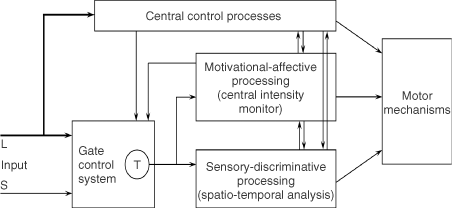
We believe the great challenge ahead of us is to understand brain function. Melzack and Casey13 made a start by proposing that specialized systems in the brain are involved in the sensory-discriminative, motivational-affective and cognitive-evaluative dimensions of subjective pain experience (Figure 2).
neuromatrixtheory

Figure 2. Conceptual model of the sensory, motivational, and central control determinants of pain. The output of the T (transmission) cells of the gate control system projects to the sensory-discriminative system and the motivational-affective system. The central control trigger is represented by a line running from the large fiber system to central control processes; these, in turn, project back to the gate control system, and to the sensory-discriminative and motivational-affective systems. All three systems interact with one another, and project to the motor system.

The newest version, the Short-Form McGill Pain Questionnaire-2,16 was designed to measure the qualities of both neuropathic and non-neuropathic pain in research and clinical settings.

In 1978, Melzack and Loeser17 described severe pains in the phantom body of paraplegic patients with verified total sections of the spinal cord, and proposed a central ‘pattern generating mechanism’ above the level of the section. This concept represented a revolutionary advance: it did not merely extend the gate; it said that pain could be generated by brain mechanisms in paraplegic patients in the absence of a spinal gate because the brain is completely disconnected from the cord. Psychophysical specificity, in such a concept, makes no sense; instead we must explore how patterns of nerve impulses generated in the brain can give rise to somesthetic experience.

Phantom Limbs and the Concept of a Neuromatrix

But there is a set of observations on pain in paraplegic patients that just does not fit the theory. This does not negate the gate theory, of course. Peripheral and spinal processes are obviously an important part of pain and we need to know more about the mechanisms of peripheral inflammation, spinal modulation, midbrain descending control, and so forth. But the data on painful phantoms below the level of total spinal cord section18,19 indicate that we need to go above the spinal cord and into the brain.

The cortex, Gybels and Tasker made amply clear, is not the pain center and neither is the thalamus.20 The areas of the brain involved in pain experience and behavior must include somatosensory projections as well as the limbic system.

First, because the phantom limb feels so real, it is reasonable to conclude that the body we normally feel is subserved by the same neural processes in the brain as the phantom; these brain processes are normally activated and modulated by inputs from the body but they can act in the absence of any inputs.

Second, all the qualities of experience we normally feel from the body, including pain, are also felt in the absence of inputs from the body; from this we may conclude that the origins of the patterns of experience lie in neural networks in the brain; stimuli may trigger the patterns but do not produce them.

Third, the body is perceived as a unity and is identified as the ‘self’, distinct from other people and the surrounding world. The experience of a unity of such diverse feelings, including the self as the point of orientation in the surrounding environment, is produced by central neural processes and cannot derive from the peripheral nervous system or spinal cord.

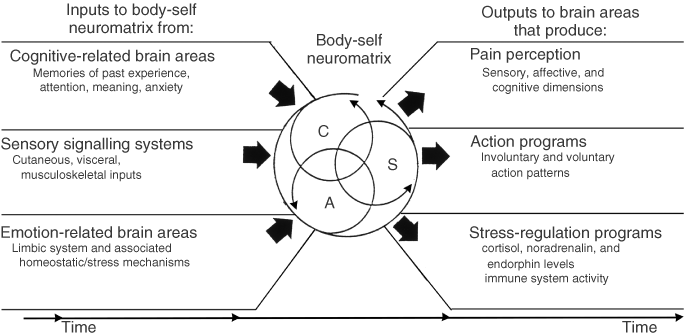
Fourth, the brain processes that underlie the body-self are ‘built-in’ by genetic specification, although this built-in substrate must, of course, be modified by experience, including social learning and cultural influences. These conclusions provide the basis of the conceptual model18,19,21 depicted in Figure 3.
bodyselfneuromatrix

Figure 3. Factors that contribute to the patterns of activity generated by the body-self neuromatrix, which is comprised of sensory, affective, and cognitive neuromodules. The output patterns from the neuromatrix produce the multiple dimensions of pain experience, as well as concurrent homeostatic and behavioral responses.

Outline of the Theory

The anatomical substrate of the body-self is a large, widespread network of neurons that consists of loops between the thalamus and cortex as well as between the cortex and limbic system.18,19,21 The entire network, whose spatial distribution and synaptic links are initially determined genetically and are later sculpted by sensory inputs, is a neuromatrix. The loops diverge to permit parallel processing in different components of the neuromatrix and converge repeatedly to permit interactions between the output products of processing. The repeated cyclical processing and synthesis of nerve impulses through the neuromatrix imparts a characteristic pattern: the neurosignature. The neurosignature of the neuromatrix is imparted on all nerve impulse patterns that flow through it; the neurosignature is produced by the patterns of synaptic connections in the entire neuromatrix.

The neurosignature, which is a continuous output from the body-self neuromatrix, is projected to areas in the brain—the sentient neural hub—in which the stream of nerve impulses (the neurosignature modulated by ongoing inputs) is converted into a continually changing stream of awareness. Furthermore, the neurosignature patterns may also activate a second neuromatrix to produce movement, the action-neuromatrix .

The Body-Self Neuromatrix

The neuromatrix (not the stimulus, peripheral nerves or ‘brain center’) is the origin of the neurosignature; the neurosignature originates and takes form in the neuromatrix. Though the neurosignature may be activated or modulated by input, the input is only a ‘trigger’ and does not produce the neurosignature itself. The neuromatrix ‘casts’ its distinctive signature on all inputs (nerve impulse patterns) which flow through it.

The neuromatrix, distributed throughout many areas of the brain, comprises a widespread network of neurons which generates patterns, processes information that flows through it, and ultimately produces the pattern that is felt as a whole body.

Conceptual Reasons for a Neuromatrix

It is difficult to comprehend how individual bits of information from skin, joints, or muscles can all come together to produce the experience of a coherent, articulated body. At any instant in time, millions of nerve impulses arrive at the brain from all the body’s sensory systems, including the proprioceptive and vestibular systems. How can all this be integrated in a constantly changing unity of experience? Where does it all come together?

The neuromatrix, then, is a template of the whole, which provides the characteristic neural pattern for the whole body (the body’s neurosignature) as well as subsets of signature patterns (from neuromodules) that relate to events at (or in) different parts of the body

Alle har sett filmen The Matrix, sant? Spesielt scenen med «the spoonboy» er magisk: «Do not try to bend the spoon. That is impossible. Instead… only try to realize the truth» Neo: «What truth?». Spoonboy: «There is no spoon». Neo: «There is no spoon?». Spoonboy: «Then you´ll see, that it is not the spoon that bends, it is only your self». Dette har en direkte relasjon til smerteopplevelsen. Melzack forklarer:

Pain is not injury; the quality of pain experiences must not be confused with the physical event of breaking skin or bone. Warmth and cold are not ‘out there’; temperature changes occur ‘out there’, but the qualities of experience must be generated by structures in the brain. There are no external equivalents to stinging, smarting, tickling, itch; the qualities are produced by built-in neuromodules whose neurosignatures innately produce the qualities.

We do not learn to feel qualities of experience: our brains are built to produce them.

When all sensory systems are intact, inputs modulate the continuous neuromatrix output to produce the wide variety of experiences we feel. We may feel position, warmth, and several kinds of pain and pressure all at once. It is a single unitary feeling just as an orchestra produces a single unitary sound at any moment even though the sound comprises violins, cellos, horns, and so forth.

The experience of the body-self involves multiple dimensions—sensory, affective, evaluative, postural and many others.

To use a musical analogy once again, it is like the strings, tympani, woodwinds and brasses of a symphony orchestra which each comprise a part of the whole; each makes its unique contribution yet is an integral part of a single symphony which varies continually from beginning to end.

Action Patterns: The Action-Neuromatrix

The output of the body neuromatrix is directed at two systems: (1) the neuromatrix that produces awareness of the output, and (2) a neuromatrix involved in overt action patterns. Just as there is a steady stream of awareness, there is also a steady output of behavior (including movements during sleep).

It is important to recognize that behavior occurs only after the input has been at least partially synthesized and recognized. For example, when we respond to the experience of pain or itch, it is evident that the experience has been synthesized by the body-self neuromatrix (or relevant neuromodules) sufficiently for the neuromatrix to have imparted the neurosignature patterns that underlie the quality of experience, affect and meaning. Most behavior occurs only after inputs have been analyzed and synthesized sufficiently to produce meaningful experience.

When we reach for an apple, the visual input has clearly been synthesized by a neuromatrix so that it has 3-dimensional shape, color and meaning as an edible, desirable object, all of which are produced by the brain and are not in the object ‘out there’. When we respond to pain (by withdrawal or even by telephoning for an ambulance), we respond to an experience that has sensory qualities, affect and meaning as a dangerous (or potentially dangerous) event to the body.

After inputs from the body undergo transformation in the body-neuromatrix, the appropriate action patterns are activated concurrently (or nearly so) with the neuromatrix for experience. Thus, in the action-neuromatrix, cyclical processing and synthesis produces activation of several possible patterns, and their successive elimination, until one particular pattern emerges as the most appropriate for the circumstances at the moment. In this way, input and output are synthesized simultaneously, in parallel, not in series. This permits a smooth, continuous stream of action patterns.

Another entrenched assumption is that perception of one’s body results from sensory inputs that leave a memory in the brain; the total of these signals becomes the body image. But the existence of phantoms in people born without a limb or who have lost a limb at an early age suggests that the neural networks for perceiving the body and its parts are built into the brain.18,19,27,28

Phantoms become comprehensible once we recognize that the brain generates the experience of the body. Sensory inputs merely modulate that experience; they do not directly cause it.

Pain and Neuroplasticity

Plasticity related to pain represents persistent functional changes, or ‘somatic memories,’29–31 produced in the nervous system by injuries or other pathological events.

Denervation Hypersensitivity and Neuronal Hyperactivity

Clinical neurosurgery studies reveal a similar relationship between denervation and CNS hyperactivity. Neurons in the somatosensory thalamus of patients with neuropathic pain display high spontaneous firing rates, abnormal bursting activity, and evoked responses to stimulation of body areas that normally do not activate these neurons.34,35

Furthermore, in patients with neuropathic pain, electrical stimulation of subthalamic, thalamic and capsular regions may evoke pain36 and in some instances even reproduce the patient’s pain.37–39

It is possible that receptive field expansions and spontaneous activity generated in the CNS following peripheral nerve injury are, in part, mediated by alterations in normal inhibitory processes in the dorsal horn. Within four days of a peripheral nerve section there is a reduction in the dorsal root potential, and therefore, in the presynaptic inhibition it represents.40 Nerve section also induces a reduction in the inhibitory effect of A-fiber stimulation on activity in dorsal horn neurons.41

The fact that amputees are more likely to develop phantom limb pain if there is pain in the limb prior to amputation30 raises the possibility that the development of longer term neuropathic pain also can be prevented by reducing the potential for central sensitization at the time of amputation.52,53

Pain and Psychopathology

Pain that is ‘nonanatomical’ in distribution, spread of pain to non-injured territory, pain that is said to be out of proportion to the degree of injury, and pain in the absence of injury have all, at one time or another, been used as evidence to support the idea that psychological disturbance underlies the pain. Yet each of these features of supposed psychopathology can now be explained by neurophysiological mechanisms that involve an interplay between peripheral and central neural activity.4,60

This raises the intriguing possibility that the intensity of pain at the site of an injury may be facilitated by contralateral neurite loss induced by the ipsilateral injury68—a situation that most clinicians would never have imagined possible.

Taken together, these novel mechanisms that explain some of the most puzzling pain symptoms must keep us mindful that emotional distress and psychological disturbance in our patients are not at the root of the pain. In fact, more often than not, prolonged pain is the cause of distress, anxiety, and depression.

Attributing pain to a psychological disturbance is damaging to the patient and provider alike; it poisons the patient-provider relationship by introducing an element of mutual distrust and implicit (and at times, explicit) blame. It is devastating to the patient who feels at fault, disbelieved and alone.

Pain and Stress

We are so accustomed to considering pain as a purely sensory phenomenon that we have ignored the obvious fact that injury does not merely produce pain; it also disrupts the brain’s homeostatic regulation systems, thereby producing ‘stress’ and initiating complex programs to reinstate homeostasis. By recognizing the role of the stress system in pain processes, we discover that the scope of the puzzle of pain is vastly expanded and new pieces of the puzzle provide valuable clues in our quest to understand chronic pain.69

However, it is important for the purpose of understanding pain to keep in mind that stress involves a biological system that is activated by physical injury, infection, or any threat to biological homeostasis, as well as by psychological threat and insult of the body-self.

When injury occurs, sensory information rapidly alerts the brain and begins the complex sequence of events to re-establish homeostasis. Cytokines are released within seconds after injury. These substances, such as gamma-interferon, interleukins 1 and 6, and tumor necrosis factor, enter the bloodstream within 1–4 min and travel to the brain. The cytokines, therefore, are able to activate fibers that send messages to the brain and, concurrently, to breach the blood–brain barrier at specific sites and have an immediate effect on hypothalamic cells. The cytokines together with evaluative information from the brain rapidly begin a sequence of activities aimed at the release and utilization of glucose for necessary actions, such as removal of debris, the repair of tissues, and (sometimes) fever to destroy bacteria and other foreign substances. Following severe injury, the noradrenergic system is activated: epinephrine is released into the blood stream and the powerful locus coeruleus/norepinephrine system in the brainstem projects information upward throughout the brain and downward through the descending efferent sympathetic nervous system. Thus, the whole sympathetic system is activated to produce readiness of the heart, blood vessels, and other viscera for complex programs to reinstate homeostasis.70,71

At the same time, the perception of injury activates the hypothalamic–pituitary–adrenal (HPA) system and the release of cortisol from the adrenal cortex, which inevitably plays a powerful role in determining chronic pain. Cortisol also acts on the immune system and the endogeneous opioid system. Although these opioids are released within minutes, their initial function may be simply to inhibit or modulate the release of cortisol. Experiments with animals suggest that their analgesic effects may not appear until as long as 30 min after injury.

Cortisol is an essential hormone for survival because it is responsible for producing and maintaining high levels of glucose for rapid response after injury or major threat. However, cortisol is potentially a highly destructive substance because, to ensure a high level of glucose, it breaks down the protein in muscle and inhibits the ongoing replacement of calcium in bone. Sustained cortisol release, therefore, can produce myopathy, weakness, fatigue, and decalcification of bone. It can also accelerate neural degeneration of the hippocampus during aging. Furthermore, it suppresses the immune system.

Estrogen increases the release of peripheral cytokines, such as gamma-interferon, which in turn produce increased cortisol. This may explain why more females than males suffer from most kinds of chronic pain as well as painful autoimmune diseases such as multiple sclerosis and lupus.72

Some forms of chronic pain may occur as a result of the cumulative destructive effect of cortisol on muscle, bone, and neural tissue. Furthermore, loss of fibers in the hippocampus due to aging reduces a natural brake on cortisol release which is normally exerted by the hippocampus. As a result, cortisol is released in larger amounts, producing a greater loss of hippocampal fibers and a cascading deleterious effect

The cortisol output by itself may not be sufficient to cause any of these problems, but rather provides the conditions so that other contributing factors may, all together, produce them. 

The fact that several autoimmune diseases are also classified as chronic pain syndromes—such as Crohn’s disease, multiple sclerosis, rheumatoid arthritis, scleroderma, and lupus—suggests that the study of these syndromes in relation to stress effects and chronic pain could be fruitful. Immune suppression, which involves prolonging the presence of dead tissue, invading bacteria, and viruses, could produce a greater output of cytokines, with a consequent increase in cortisol and its destructive effects.

In some instances, pain itself may serve as a traumatic stressor.

Phantom Limb Pain

The cramping pain, however, may be due to messages from the action-neuromodule to move muscles in order to produce movement. In the absence of the limbs, the messages to move the muscles become more frequent and ‘stronger’ in the attempt to move the limb. The end result of the output message may be felt as cramping muscle pain. Shooting pains may have a similar origin, in which action-neuromodules attempt to move the body and send out abnormal patterns that are felt as shooting pain. The origins of these pains, then, lie in the brain.

Low-Back Pain

Protruding discs, arthritis of vertebral joints, tumors, and fractures are known to cause low back pain. However, about 60–70% of patients who suffer severe low back pain show no evidence of disc disease, arthritis, or any other symptoms that can be considered the cause of the pain. Even when there are clear-cut physical and neurological signs of disc herniation (in which the disc pushes out of its space and presses against nerve roots), surgery produces complete relief of back pain and related sciatic pain in only about 60% of cases.

A high proportion of cases of chronic back pain may be due to more subtle causes. The perpetual stresses and strains on the vertebral column (at discs and adjacent structures called facet joints) produce an increase in small blood vessels and fibrous tissue in the area.78 As a result, there is a release of substances that are known to produce inflammation and pain into local tissues and the blood stream; this whole stress cascade may be triggered repeatedly. The effect of stress-produced substances—such as cortisol and norepinephrine—at sites of minor lesions and inflammation could, if it occurs often and is prolonged, activate a neuromatrix program that anticipates increasingly severe damage and attempts to counteract it.

Fibromyalgia

An understanding of fibromyalgia has eluded us because we have failed to recognize the role of stress mechanisms in addition to the obvious sensory manifestations which have dominated research and hypotheses about the nature of fibromyalgia. Melzack’s interpretation of the available evidence is that the body-self neuromatrix’s response to stressful events fails to turn off when the stressor diminishes, so that the neuromatrix maintains a continuous state of alertness to threat. It is possible that this readiness for action produces fatigue in muscles, comparable to the fatigue felt by paraplegics in their phantom legs when they spontaneously make cycling movements.24 It is also possible that the prolonged tension maintained in particular sets of muscles produces the characteristic pattern of tender spots.

The persistent low-level stress (i.e., the failure of the stress response to cease) would produce anomalous alpha waves during deep sleep, greater feelings of fatigue, higher generalized sensitivity to all sensory inputs, and a low-level, sustained output of the stress-regulation system, reflected in a depletion of circulating cortisol.

Ukjent sin avatar

Skin Matters: Identifying Pain Mechanisms and Predicting Treatment Outcomes

Mye om huden relatert til smerte og nevropati! Mest relatert til biopsi, men mye kan knyttes til behandling også. Spesielt ved hemming av TRPV1.

http://www.hindawi.com/journals/nri/2013/329364/

This data has led to new insights into the potential pain mechanisms for various pain conditions including neuropathic pain (from small fiber neuropathies) and Complex Regional Pain Syndrome. The somatosensory neurons that innervate our skin constantly update our brains on the objects and environmental factors that surround us. Cutaneous sensory neurons expressing nociceptive receptors such as transient receptor potential vanilloid 1 channels and voltage-gated sodium channels are critical for pain transmission. Epidermal cells (such as keratinocytes, Langerhans cells, and Merkel cells) express sensor proteins and neuropeptides; these regulate the neuroimmunocutaneous system and participate in nociception and neurogenic inflammation.

The skin has homeostatic and immunologic barrier functions, but acts as a complex sensory organ as well [1]. The somatosensory neurons that innervate our skin constantly update our brains on the objects and environmental factors that surround us [2]. The neuroimmunocutaneous system (NICS) is responsible for the cutaneous sensations of touch, pressure, temperature, and pain. This sensory transduction occurs via primary afferent nerves following reciprocated signals between neuronal and nonneuronal skin cells of the NICS [1]. New data concerning peripheral pain mechanisms from within the skin have led to new insight into the potential pain mechanisms for various pain conditions including neuropathic pain syndromes such as diabetic neuropathy and Complex Regional Pain Syndrome.

In pain and neurogenic inflammation, TRPV1 is coexpressed on TRPA1-expressing sensory nerves; both integrate a variety of noxious stimuli [4]. Complex signaling pathways between cells of the NICS, such as keratinocytes, TRPV1-expressing nociceptors, and macrophages, lead to the release of neural growth factor (NGF), prostaglandins, opioids, proinflammatory cytokines, and chemokines [1]. These lead to sensitisation of the peripheral nerves by upregulating ionic channels and by inducing further spinal cord cytokine release [8].

2. Small Fiber Neuropathy (SFN)
Neuropathic pain arises as a direct consequence of a lesion or disease of the somatosensory system; it affects about 7% of the general population [10, 11].

Small fiber neuropathy is a neuropathy of the small nonmyelinated fibers and myelinated A delta fibers. Neuropathic pain occurs from small fiber neuropathy; small fiber neuropathy is caused by a wide variety of acquired and genetic disorders [12], many of which are treatable [13].

Diabetes mellitus is the most frequent underlying cause of SFN [14]. Other causes include toxic (e.g., alcohol), metabolic, immune-mediated, infectious, and hereditary causes.

About 60% of patients describe the painful sensation as spontaneous (burning, sunburn-like, paroxysmal, pruritic, and deep), with worsening at rest or during the night [12]; the sensation can be associated with thermal evoked pain (cold or warm) with or without allodynia, a painful response to a normally innocuous stimulus, and hyperalgesia, an increased response to a painful stimulus [12]. In addition there are negative sensory symptoms (thermal and pinprick hypoesthesia) that reflect peripheral deafferentation [19]. Sensation of cold feet is reported, though warm to touch. Thermal hypoesthesia with or without pinprick hypoesthesia has been detected in 40% of patients [20]; hyperalgesia and aftersensation have been detected in 10–20% of patients [12, 20].

2.3. Complex Regional Pain Syndrome (CRPS)
CRPS is a syndrome characterized by a continuing (spontaneous and/or evoked) regional pain, that is, seemingly disproportionate in time or degree to the usual course of any known trauma or other lesion [23]. The pain is regional (not in a specific nerve territory or dermatome); it usually has a distal predominance of abnormal sensory, motor, sudomotor, vasomotor, and/or trophic findings. It has signs of central sensitisation such as allodynia and hyperalgesia. The syndrome shows variable progression over time [23].

Accumulating experimental and clinical evidence supports the hypothesis that Complex Regional Pain Syndrome type I (CRPS-I) might indeed be a small fiber neuropathy [25]. Most post-traumatic inflammatory changes observed in CRPS are mediated by two peptides, CGRP and substance P [26]. The activation of cutaneous nociceptors can induce retrograde depolarisation of small-diameter primary afferents, causing release of neuropeptides such as substance P and CGRP from sensory terminals in the skin.

A specific diagnostic test for small fiber neuropathy is a skin biopsy; this includes a count of the intraepidermal small nerve fibers (IENF) that cross the basal membrane. The loss of IENF can be reliably measured and is currently used to diagnose small fiber neuropathy (SFN) [17].


Skin biopsy is much less invasive and more practical than peripheral nerve biopsy. It is a safe and reliable tool for investigating nociceptive fibers in human epidermis and dermis [29]. It can be performed at any site of the body, with a disposable punch, using a sterile technique, and under local anesthesia (Figure 2) [29].

A recent study assessed the usefulness of skin biopsy in the assessment of 145 patients with suspected SFN [21]. In 59% of patients skin biopsy was abnormal in at least one site [21]. Patients with confirmed SFN were significantly more likely to have pain; they were more than twice as likely to respond to standard neuropathic pain medications [21]. A positive response to neuropathic pain medications was seen in 84% of patients with an abnormal skin biopsy compared to only 42% of those with a normal biopsy [21]. Skin biopsy has a relatively high yield in patients with sensory symptoms with no findings of mixed fiber neuropathy on clinical examination or on nerve conduction studies [21].

Along with neuronal and immunological systems, the skin plays a critical role in sensory transduction [1]. Further direct targeting of the skin with topical agents should be considered. The interaction of TRPV1 and TRPA1 channels in the skin in painful conditions needs further exploration. Second generation TRPV1 antagonists (without on-target side effects of hyperthermia and burn risk) are under development [6].

In Pain Medicine, the skin does indeed matter!

Ukjent sin avatar

Pathophysiology of Nerve Compression Syndromes: Response of Peripheral Nerves to Loading

Om nerve compression syndrome, som sannsynligvis er årsaken til de fleste plager folk kommer til behandling for. Nevner hvordan nervevev påvirkes i løpet av timer, dager og uker. Nevner de 3 gradene av kompresjon og hvilke symptomer de gir.

http://ergo.berkeley.edu/docs/1999rempeljbjs.pdf

Nerve compression syndromes involve peripheral- nerve dysfunction that is due to localized interference of microvascular function and structural changes in the nerve or adjacent tissues.

When tissues are subjected to load or pressure, they deform and pressure gradients are formed, redistribut- ing the compressed tissue toward areas of lower pres- sure. Nerve compression syndromes usually occur at sites where the nerve passes through a tight tunnel formed by stiff tissue boundaries. The resultant con- fined space limits movement of tissue and can lead to sustained tissue pressure gradients. Space-occupying structures or lesions (for example, lumbrical muscles, tu- mors, and cysts) can cause nerve compression injury, as can conditions associated with accumulation of fluid (for example, pregnancy, congestive heart failure, and muscle compartment syndromes) or accumulation of extracellular matrix (for example, acromegaly, myx- edema hypothyroidism, and mucopolysaccharidosis)76.

Although nerve injuries related to vibration occur near the region of exposure, the symptoms may be manifest at another site, where the nerve may be constricted.

Other conditions, such as diabetes mellitus, may increase the likelihood that a compressed nerve will undergo a pathological response. In addition, there may be an in- flammatory reaction that may impair the normal gliding of the nerve.

Lying next to the myelinated nerve fibers are many nonmyelinated fibers associated with one Schwann cell. Myelinated and nonmyelinated nerve fibers are organized in bundles, called fascicles, which are surrounded by a strong membrane called the peri- neurial membrane, consisting of laminae of flattened cells.

Between the nerve fibers and their basal mem- brane is an intrafascicular connective tissue known as the endoneurium. The quantity of the connective-tissue components may vary between nerves and also along the length of the same nerve. For example, nerves lo- cated superficially in the limb or parts of the nerve that cross a joint contain a greater quantity of connective tissue, possibly as a response to repeated loading76.

The propagation of impulses in the nerve fibers as well as the communication and nutritional transport sys- tem in the neuron (axonal transport) requires an ade- quate energy supply. Therefore, the peripheral nerve contains a well developed microvascular system with vascular plexuses in all of its layers of connective tis- sue36,38. The vessels approach the nerve trunk segmen- tally and have a coiled configuration so that the vascular supply is not impaired during normal gliding or excur- sion of the nerve trunk. When the vessels reach the nerve trunk, they divide into branches that run longi- tudinally in various layers of the epineurium and they also form numerous collateral connections to vessels in the perineurial sheath. When the vessels pass through the perineurium into the endoneurium, which contains primarily capillaries, they often go through the perineu- rium obliquely, thereby constituting a possible valve mechanism36,38.

The perineurial layer and the endoneurial vessels play an important role in protecting the nerve fibers in the fascicles. The endoneurial milieu is protected by a blood-nerve barrier, and the tissue pressure in the fascicle (endoneurial fluid pressure) is slightly positive50.

The median and ulnar nerves may glide 7.3 and 9.8 millimeters, respectively, during full flexion and extension of the elbow, and the extent of excursion of these nerves just proximal to the wrist is even more pronounced (14.5 and 13.8 millimeters, respectively)90. In relation to the flexor retinaculum, the median nerve can move a maximum of 9.6 millimeters during wrist flexion and somewhat less during wrist extension; it also moves during motion of the fingers48.

Acute Effects of Nerve Compression (Effects within Hours)
In animal experiments, low-magnitude extraneural compression was noted to decrease intraneural micro- vascular flow, impair axonal transport, and alter nerve structure and function. Extraneural pressures of 2.7 kilo- pascals (twenty millimeters of mercury), induced with use of miniature inflatable cuffs, reduced epineurial ve- nule blood flow68. At pressures of 10.7 kilopascals (eighty millimeters of mercury), all intraneural blood flow ceased. Similarly, pressures of 4.0 kilopascals (thirty mil- limeters of mercury) inhibited both fast and slow ante- grade as well as retrograde axonal transport8.

In subjects with different blood pres- sures, the critical extraneural pressure threshold above which nerve function was blocked was 4.0 kilopascals (thirty millimeters of mercury) less than the diastolic pressure. This finding, combined with the observation that carpal tunnel syndrome may manifest with the treat- ment of hypertension17, provides additional support for an ischemic mechanism of acute nerve dysfunction.

Short-Term Effects of Nerve Compression (Effects within Days)
Com- pression of 4.0 kilopascals led to an elevated endoneu- rial pressure, which persisted for twenty-four hours after release of the cuff. Furthermore, the endoneurial pres- sures at twenty-four hours after release of the cuff increased with increasing durations of compression. His- tological examination demonstrated endoneurial edema in the nerves that had been subjected to eight hours of compression but not in those subjected to shorter dura- tions. Eight hours of compression led to an increase of the endoneurial pressures to levels that can reduce in- traneural blood flow51.

The study demonstrated that, af- ter low elevations of extraneural pressure for only two hours, endoneurial fluid pressures increased rapidly and the increases persisted for at least an additional twentyfour hours40. These effects probably are due to the in- creased vascular permeability of the epineurial and en- doneurial vessels after compression. Other studies have demonstrated that ischemia alters the structure of the endothelial and basement membranes over a similar time-frame2.

Long-Term Effects of Nerve Compression (Effects within Weeks)
Edema was visible in the sub- perineurial space within four hours in all compression subgroups, and it persisted for the entire duration of the study. Inflammation and fibrin deposits occurred within hours after compression, followed by prolifera- tion of endoneurial fibroblasts and capillary endothe- lial cells. Vigorous proliferation of fibrous tissue was noted within days, and marked fibrosis and sheets of fibrous tissue were seen extending to adjacent structures at twenty-eight days. Endoneurial invasion of mast cells and macrophages was noted, especially at twenty-eight days. Axonal degeneration was noted in the nerves sub- jected to 10.7 kilopascals of compression and, to a lesser extent, in those subjected to 4.0 kilopascals of compres- sion. It rarely was seen in the nerves subjected to 1.3 kilopascals of compression. Axonal degeneration was associated with the degree of endoneurial edema. De- myelination and Schwann-cell necrosis at seven and ten days was followed by remyelination at fourteen and twenty-eight days. Demyelination was prominent in the nerves subjected to 4.0 kilopascals of compres- sion and, to a lesser extent, in those subjected to1.3 kilo- pascals of compression.

The tension of the ligatures or the inner diameter of the tube generally was selected so that blood flow was not visibly restricted. The re- sponse of nerves to compression in these studies was similar to that in the experiments involving compression with a cuff. For example, the application of loose liga- tures around the sciatic nerve led to perineurial edema with proliferation of endothelial cells and demyelina- tion within the first few days, to proliferation of fibro- blasts and macrophages as well as degeneration of distal nerve fibers and the beginning of nerve sprouts within one week, to invasion by fibrous tissue and remyelina- tion at two weeks, to regeneration of nerve fibers as well as thickening of the perineurium and the vessel walls at six weeks, and to remyelination of distal nerve segments at twelve weeks73.

Applica- tion of silicone tubes with a wide internal diameter can induce increased expression of interleukin-1 and trans- forming growth factor beta-1 in the nerve cell bodies in the dorsal root ganglia, but the relevance of this finding remains to be clarified92. The limitations of these models are that (1) the effects of the tissue inflammatory reac- tion to the device (foreign-body reaction) usually are not considered but do occur29 and (2) it is not possible to measure or control the applied extraneural pressure. However, these observational studies provide some in- sight into the biological response of the nerve to chronic low-grade compression.

In a few case reports on patients in whom a nerve segment was resected, the nerve at the site of the injury was compared with a nerve at a site proximal or distal to the injury47,55,82. In each instance, there was thickening of the walls of the microvessels in the endo- neurium and perineurium as well as epineurial and peri- neurial edema, thickening, and fibrosis at the site of the injury. Thinning of the myelin also was noted, along with evidence of degeneration and regeneration of fibers. The patients in these reports had advanced stages of compression syndrome. Earlier in the course of the dis- ease, a segment of the nerve usually is compressed with disturbance of the microcirculation, which is restored immediately after transection of the flexor retinaculum. There is usually both an immediate and a delayed return of nerve function, indicating the importance of ischemia in the early stages of compression syndrome43.

The tissues that lie next to a nerve, within a confined space (for example, synovial tissue within the carpal tunnel), are more easily obtained and can provide infor- mation on the response of these tissues to compres- sion18,20,32,53,61,69,70,91.
The im- portant findings were increased edema and vascular sclerosis (endothelial thickening) in samples from the patients, who were between the ages of nineteen and seventy-nine years. Inflammatory cell infiltrates (lym- phocytes and histiocytes) were observed in only 10 per- cent (seventeen) of the 177 samples. Surprisingly, the prevalence of fibrosis (3 percent [five of 177]) was much lower than the prevalences of 33 percent (fifteen of forty-five) to 100 percent (twenty-one of twenty-one) reported in the other studies.

The initial symptoms of compres- sion of the median nerve at the wrist (carpal tunnel syndrome) usually are intermittent paresthesia and def- icits of sensation that occur primarily at night (stage I). These symptoms probably are due to changes in the intraneural microcirculation that are associated with some edema, which disappears during the day.
Progres- sive compression leads to more severe and constant symptoms that do not disappear during the day (stage II); these include paresthesia and numbness, impaired dexterity, and, possibly, muscle weakness. During this stage, the microcirculation may be altered throughout the day by edema and there may be morphological changes such as segmental demyelination.
In the final stage (stage III), there are more pronounced morpho- logical changes accompanied by degeneration of the nerve fibers; these changes manifest as constant pain with atrophy of the median-nerve-innervated thenar muscles and permanent sensory dysfunction.

In a study of the ulnar nerve at the elbow, localized areas of strain (nerve-stretching) of greater than 10 percent were observed in some cadav- eric arms83. A strain of 6 to 8 percent can limit blood flow in a nerve or can alter nerve function5,37,59.

Overview
First, elevated extraneural pressures can, within min- utes or hours, inhibit intraneural microvascular blood flow, axonal transport, and nerve function and also can cause endoneurial edema with increased intrafascicular pressure and displacement of myelin, in a dose-response manner. Pressures of 2.7 kilopascals (twenty millimeters of mercury) can limit epineurial blood flow, pressures of 4.0 kilopascals (thirty millimeters of mercury) can limit axonal transport and can cause nerve dysfunction and endoneurial edema, and pressures of 6.7 kilopascals (fifty millimeters of mercury) can alter the structure of myelin sheaths.

Second, on the basis of several animal models, it is apparent that low-magnitude, short-duration extraneu- ral pressure (for example, 4.0 kilopascals [thirty millime-
ters of mercury] applied for two hours) can initiate a process of nerve injury and repair and can cause struc- tural tissue changes that persist for at least one month.

The cascade of the bio- logical response to compression includes endoneurial edema, demyelination, inflammation, distal axonal de- generation, fibrosis, growth of new axons, remyelination, and thickening of the perineurium and endothelium. The degree of axonal degeneration is associated with the amount of endoneurial edema.

Third, in healthy people, non-neutral positions of the fingers, wrist, and forearm and loading of the fingertips can elevate extraneural pressure in the carpal tunnel in a dose-response manner. For example, fingertip pinch forces of five, ten, and fifteen newtons can elevate pres- sures to 4.0, 5.6, and 6.6 kilopascals

Fourth, in a rat model, exposure of the hindlimb to vibration for four to five hours per day for five days can cause intraneural edema, structural changes in my- elinated and unmyelinated fibers in the sciatic nerve, and functional changes both in nerve fibers and in non- neuronal cells.

Fifth, exposure to vibrating hand tools at work can lead to permanent nerve injury with structural neuronal changes in finger nerves as well as in the nerve trunks just proximal to the wrist. The relationships between the duration of exposure, the magnitude of the vibration, and structural changes in the nerve are unknown.

Ukjent sin avatar

Processing of Vibrotactile Inputs From Hairy Skin by Neurons of the Dorsal Column Nuclei in the Cat

Nevner at det hårsekk-nerver som reagerer på lavfrekvent vibrasjon (<50 Hz) og at signalene blir sterkere med høyere intensitet. Spesielt ved lave frekvenser <20 Hz er grensen for aktivering av nerveendene lav, med sterkere aktivering ved høyere intensiteter. Lav frekvens, høy amplitude gir sterkest respons! Viser hvordan signalene går opp til hjernen.

http://m.jn.physiology.org/content/95/3/1451.full

Dynamically sensitive tactile neurons of the DCN the input of which came from hairy skin could be divided into two classes, one associated with hair follicle afferent (HFA) input, the other with Pacinian corpuscle (PC) input. The HFA-related class was most sensitive to low-frequency (<50 Hz) vibration and had a graded response output as a function of vibrotactile intensity changes.

In conclusion, the functional capacities of these two classes of cuneate neuron appear to account for behavioral vibrotactile frequency discriminative performance in hairy skin, in contrast to the limited capacities of vibrotactile-sensitive neurons within the spinocervical tract system.

However, tactile information derived from the hairy skin is well represented within the spinocervical pathwayBrown 1981; Brown and Franz 1969) and in the responses of neurons within its target structure, the lateral cervical nucleus (Craig and Tapper 1978; Downie et al. 1988), in addition to its substantial representation within the dorsal column-lemniscal pathway (Brown et al. 1974; Dykes et al. 1982; Golovchinsky 1980; Gordon and Jukes 1964; Perl et al. 1962).

Although tactile information from both the glabrous and hairy skin regions is conveyed over the dorsal column pathway to higher centers, there are known to be marked differences between these two skin regions in human vibrotactile detection thresholds with those on the hairy skin of the forearm being approximately an order of magnitude higher than those for the glabrous finger tips (Merzenich and Harrington 1969; Talbot et al. 1968).

At low vibrotactile frequencies (≤100 Hz), the input from hairy skin comes from afferents associated with hair follicles, the hair follicle afferent (HFA) fibers (Burgess et al. 1968; Merzenich and Harrington 1969), whereas that from glabrous skin arises from rapidly adapting intradermal receptors, known as Meissner corpuscles in primates (Brown and Iggo 1967; Talbot et al. 1968).

As neurons of this class had circumscribed RFs that remained stable on the skin surface, even when it was possible to displace the skin across the underlying tissues, and were most sensitive to vibration at low frequencies (usually <50 Hz), they appeared to derive their input selectively or predominantly from HFA fibers. The remaining dynamically sensitive neurons (15/36) could often be activated with manual tapping stimuli from widespread regions of the limb or even the experimental table, and in circumstances in which the skin could be displaced, it appeared that responsiveness was associated with subcutaneous sources.

The vibration-sensitive neurons with lowest vibrotactile thresholds at frequencies of ≤50 Hz appeared to be activated selectively by HFA inputs and displayed a graded responsiveness as a function of changes in vibration intensity. The impulse traces of Fig. 3 show the range of responsiveness for one HFA neuron and its gradation of output as a function of amplitude increases at vibration frequencies of 10–100 Hz. Responses occur sporadically on some cycles at low-amplitude, become more regular, and, at low vibration frequencies (≤20 Hz), give way to pairs or bursts of spikes on individual cycles at the higher amplitudes, such that the firing rates usually exceed the vibration frequency in this low range of stimulus frequencies.


Quantification of the response (in imp/s) as a function of the vibration amplitude permitted construction of stimulus-response relations (Fig. 4A) which, for a different, but representative neuron of this HFA-related type, show that thresholds are lowest (5–20 μm) in the frequency range 5–50 Hz

Furthermore, the graded relations apparent at 5–100 Hz in Fig. 4Afor this particular neuron, and, at 20 Hz, for seven different HFA-related neurons in Fig. 4B, ensure that, at these low frequencies, individual neurons of this class can contribute a sensitive signal of the changing intensity of vibrotactile perturbations in the hairy skin.


B: stimulus-response relations plotting, for another neuron, the mean response (imp/s) as a function of vibration amplitude at a range of frequencies.


A: values for 12 HFA neurons; B: 10 PC neurons; and C: for the mean ± SE threshold as a function of vibration frequency for the 2 classes.


Phaselocking of this neuron’s response was retained at frequencies ranging ≤75 Hz, but at higher frequencies, the failure rate increased on individual cycles, in particular, at vibration frequencies >30 Hz.


However, a switch-over occurs ∼50 Hz with values for HFA neurons falling below those for PC neurons at the higher frequencies.

The natural tactile stimuli most frequently encountered on the hairy skin of the arms and legs are likely to arise from objects brushing across the skin surface or its projecting hairs (e.g., see discussion in Gynther et al. 1995). These moving stimuli will set up various forms of complex vibrational disturbance in the skin that will generate spatiotemporal patterns of sensory inputs that we interpret as the nature and texture of the contacted object.

One dynamically sensitive class was most sensitive to vibration frequencies <50–80 Hz, had RFs within the hairy skin itself, and appeared to derive its peripheral input from the HFA class of afferent fibers.

The cuneate neurons driven selectively by the HFA class of peripheral afferents were most tightly phaselocked in response to vibratory disturbances in the hairy skin at frequencies ≤50 Hz. Furthermore, their impulse levels enabled them to respond at these frequencies in a cycle-by-cycle manner, thus replicating in their impulse pattern the periodicity inherent in the vibration stimulus.

The HFA-related class of cuneate neuron appeared to have a similar capacity for signaling vibrotactile frequency information to that of the RA class of neurons associated with low-frequency vibrotactile inputs from the glabrous skin (Connor et al. 1984; Douglas et al. 1978; Ferrington et al. 1987a, 1988) as percentage entrainment measures for responses to different vibration frequencies ≤50 Hz had average values in the range, 87–93%, for HFA neurons (Fig. 11) in comparison with values of ∼85–97% for RA neurons examined in an earlier study from our laboratory (Fig. 11B in Douglas et al. 1978).

The capacity to encode information about the frequency parameter of vibrotactile events in the impulse patterns of individual neurons appears to be well retained at the next level of the dorsal column-lemniscal pathway, in the ventralposterolateral (VPL) nucleus of the thalamus (Ghosh et al. 1992). From here, the information is conveyed over a parallel projection network to two principal cerebral cortical target regions, the primary and secondary somatosensory areas of the cortex (SI and SII, respectively) (Bennett et al. 1980; Ferrington and Rowe 1980b; Fisher et al. 1983; Mackie et al. 1996; Rowe et al. 1985; Turman et al. 1992, 1995; Zhang et al. 1996, 2001a,b).

This breakdown of a cycle-by-cycle impulse patterning at the cortical level for higher-frequency vibrotactile disturbances may mean (if impulse patterning is the crucial neural substrate for frequency recognition) that frequency coding in the range above ∼100 Hz may be dependent on a concatenation of thalamo-cortical events that include the presence of patterned activity at the thalamic level (Ghosh et al. 1992; Rowe 1990).

It is clear from both the earlier analyses of glabrous skin vibrotactile coding mechanisms in the DCN and from the present analysis for hairy skin that individual neurons in this tactile sensory pathway, relaying through the gracile and cuneate nuclei have a much greater capacity for signaling reliably the intensive and frequency parameters of vibrotactile stimuli than do their counterparts within the parallel spinocervical ascending system (Sahai et al. 2006).

Ukjent sin avatar

Functional MRI of working memory and selective attention in vibrotactile frequency discrimination

Viktig studie som nevner hvordan vibrasjoner på huden påvirker tilsvarende område i hjernen og hvilken relasjon dette har til hukommelse og kinestetisk oppmerksomhet. De kaller det vibrotactile memory. Denne bekrefter også at 25Hz aktiverer Meissner corpulses første og fremst. Nevner også at tidperspektivet i stimuleringen er viktig siden det aktiverer bilateralt insula (har med prosessering av følelser å gjøre). Den nevner også at hjernens «default network» dempes når vi blir oppmerksomme på vibrasjon, ganske likt det som skjer når vi mediterer.

http://www.biomedcentral.com/1471-2202/8/48

Focal lesions of the frontal, parietal and temporal lobe may interfere with tactile working memory and attention. To characterise the neural correlates of intact vibrotactile working memory and attention, functional MRI was conducted in 12 healthy young adults.

These results support the notion that working memory and attention are organised in partly overlapping neural circuits. In contrast to previous reports in the visual or auditory domain, this study emphasises the involvement of the anterior insula in vibrotactile working memory and selective attention.

Faced with a continuous stream of afferent data, somatosensory processing requires not only the analysis of the properties of tactile stimuli, but also the extraction and encoding of novel, relevant information [1]. The integration of tactile information retrieved from cutaneous afferents, traditionally attributed to the primary (SI) and secondary somatosensory cortices (SII), has been extensively studied [2]. In contrast, the neural basis of tactile working memory and tactile selective attention is less well known.

These higher-level cognitive processes are nevertheless crucial for managing many challenges of every-day life. Pulling out a key from a coat pocket in the dark requires, amongst others, exploratory finger movements, attention to tactile information derived from the exploring hand (and not, e.g., from the other hand holding a bag), storage of this information in working memory, and integration of the successively obtained tactile information. Studies on patients with focal lesions suggest that the prefrontal cortex [3,4], right parietal cortex[5] and thalamus [6] are involved in the inhibition of task-irrelevant tactile information. Lesions of the medial temporal lobe, in contrast, have been shown to impair tactile working memory in patients [7].


Brain activation associated with processing of the probe. The figure shows brain activation and deactivation associated with the processing of the probe (either 25 Hz or higher) across all conditions (clustered activation images with an overall corrected p < 0.05). Activated areas are colour-coded in yellow and red, deactivated areas are displayed in blue. Activation is seen in the left cerebellar hemisphere (1), the bilateral anterior insula (2, 3), the bilateral head of the caudate nucleus and the globus pallidus (4, 5), the bilateral thalamus (6, 7), the right inferior frontal cortex (8), the anterior cingulate cortex (9), the left (contralateral) sensorimotor cortex (10), the right posterior parietal cortex (11) and the supplementary motor area (12). Deactivation was found in the right parahippocampal gyrus (13), the bilateral medial frontal gyrus (14), the right cuneus (15), the bilateral posterior cingulate gyrus (16), the bilateral precuneus (16) and the left superior frontal gyrus (17). Brain images are shown in radiological convention (the right hemisphere is seen on the left side of the image).

The results of the present study demonstrate that vibrotactile frequency discrimination is associated with the activation of distributed neural networks, in particular the central somatosensory pathways, the motor system, and the polymodal frontal, parietal and insular cortices (Fig. 1).

The chosen vibrotactile stimuli with a frequency around 25 Hz activate primarily Meissner’s corpuscles, located in the dermal-epidermal junction of the superficial glabrous skin [10].

Based on these reports, it is hypothesised that the bilateral anterior insula is involved in the analysis of the temporal aspects of vibrotactile stimuli. In support of this hypothesis, passive vibrotactile stimulation without discrimination between stimuli of different frequency [1318,30] did not activate the anterior insula.

Compared with baseline, vibrotactile frequency discrimination was associated with deactivation in the frontal cortex (medial and superior frontal gyrus), the cuneus, the precuneus, the parahippocampal area and the posterior cingulate gyrus (Fig 3). These areas probably reflect a widespread neuronal network that is consistently activated during rest or during less demanding tasks, termed the default mode network [31].

The present study demonstrates that vibrotactile frequency discrimination is associated with the activation of distributed neural circuits including the somatomotor system, and polymodal frontal, parietal, and insular areas.

Ukjent sin avatar

Stimulus-dependent spatial patterns of response in SI cortex

Enda en viktig studie som viser hvordan vibrasjon-stimuli i huden påvirker tilsvarende område i hjernen. Går dypere inn i hva som spesifikt skjer i selve det aktiverte området. Legges til som ekstra referanse.

http://www.biomedcentral.com/1471-2202/6/47

Afferent projections from skin to primary somatosensory cortex (SI) are well known to form a fine map of the body surface in SI. In this map, a skin locus provides afferent input to an extensive cortical region in SI [1,2]. In particular, the direct connectivity between somatosensory thalamus and SI cortex is now recognized to be much more spatially distributed than previously believed (e.g., in primates the ventrobasal thalamic region which receives its input from a single digit projects to an extensive, 20 mm2 sector of SI cortex – [3,4]).

The intrinsic SI excitatory connections link not only neighboring but also widely separated regions of somatosensory cortex[5]. These connections ensure that many members of widely distributed neuronal populations interact extensively within milliseconds after the onset of stimulus-evoked thalamocortical drive. Thus it is not surprising to find that the processing of even a very local skin stimulus is associated with SI activation over several sq. millimeters of cortical area, as revealed, for example, with optical imaging techniques [610].

Together these considerations suggest that the spatial pattern of activity evoked in SI by even the smallest stimuli might be structurally more complex than a typically envisioned basic bell-shaped pattern. A closer inspection of such patterns might reveal certain spatial formations within them with significant functional implications.

Observations of the spatial patterns of SI cortical response within an activated region, such as those evoked by flutter stimulation of the skin, suggest that evoked cortical activity within such a territory is not evenly distributed. Furthermore, the cortical activity patterns change in a manner that appears to be dependent upon stimulus conditions. The observed spatiointensive fractionation on a sub-macrocolumnar scale of the SI response to skin stimulation might be the product of local competitive interactions within the stimulus-activated SI region, and as such can lead to new insights about the functional interactions that take place in the SI cortex.

Ukjent sin avatar

Amplitude-dependency of response of SI cortex to flutter stimulation

Nevner at amplitude (utslag) i percussoren er viktig for utslaget stimuleringen gir i hjernen. Denne tester veldig små amplituder (0,005-0,4mm), men sier at området som aktiveres i hjernen blir tydeligere jo større amplitude.

http://www.biomedcentral.com/1471-2202/6/43

Stimulation of a discrete skin site on the forelimb evoked a prominent increase in absorbance within the forelimb representational region in cytoarchitectonic areas 3b and 1 of the contralateral hemisphere. An increase in stimulus amplitude led to a proportional increase in the magnitude of the absorbance increase in this region of areas 3b and 1 while surrounding cortex underwent a decrease in absorbance.

Correlation maps revealed that as stimulus amplitude is increased, the spatial extent of the activated region in SI remains relatively constant, and the activity within this region increases progressively. Additionally, as stimulus amplitude is increased to suprathreshold levels, activity in the surround of the activated SI territory decreases, suggesting an increase in inhibition of neuronal activity within these regions.

Increasing the amplitude of a flutter stimulus leads to a proportional increase in absorbance within the forelimb representational region of SI. This most likely reflects an increase in the firing rate of neurons in this region of SI.

In general, results from these studies indicate that increases in stimulus intensity are accompanied by increases in the intensity of the evoked signal as well as increases in the activated volume of cortex. As a result these studies predicted that amplitude might be coded not only by the average firing rates of individual SI neurons, but also by the total aggregate of responding neurons.

The results suggest that increasing the amplitude of a skin flutter stimulus evokes a proportionally larger absorbance increase in SI that remains confined to the same SI territory. In addition, it was found that increasing the amplitude of flutter evokes a large decrease in absorbance in the territory that borders the activated region of SI. Neurons in the SI region that demonstrate decreased absorbance in response to flutter stimulation are proposed to undergo stimulus-evoked inhibition and to contribute importantly to the SI processing of high-amplitude skin flutter stimuli.


Areas of high absorbance are indicated by dark patches within each image; regions of high absorbance in each case correspond to the SI locus that represents the stimulated site on the skin.


Spatial histograms of activity at different amplitudes.


Absorbance time course and anatomical registration in SI.

As a result, the observed tendency for absorbance in the same localized region of area 3b to increase with increasing stimulus amplitude (Figures 3 &4) most likely is due to the amplitude-dependence of the average firing rate of neurons in the same region[17].

Regardless of stimulus amplitude, the activated cortical region appears circular in shape and occupies an area approximately 2 mm in diameter (figures 4 &6). Within the ROI average absorbance increases progressively with increasing stimulus duration.

Combined metabolic tracer and neurophysiological studies have shown that the initial response to a repetitive tactile stimulus occupies an extremely large cortical territory. As the repetitive mechanical stimulation is continued, however, the response is quickly sculpted by cortical inhibitory mechanisms, leading to an activity pattern that becomes confined to a relatively restricted region in SI [2527].

Ukjent sin avatar

Response of Anterior Parietal Cortex to Cutaneous Flutter Versus Vibration

om 25 Hz vibrasjon (flutter) på huden og reaksjonen i hjernen. 25 Hz øker absorbsjon av molekyler i hjernens tilsvarende område, mens 200 Hz demper absorbsjon. Konsekvensen av demping rel økning er jeg usikker på. Denne studien mener at varme øker absorbsjon og det gjør 25 Hz også. Mulig dette ikke relateres til percusoren siden den vibrerer på 8-15 Hz når vi jobber.

http://jn.physiology.org/content/82/1/16.long

Twenty-five-Hertz (“flutter”) stimulation of a discrete skin site on either the hindlimb or forelimb for 3–30 s evoked a prominent increase in absorbance within cytoarchitectonic areas 3b and 1 in the contralateral hemisphere. This response was confined to those area 3b/1 regions occupied by neurons with a receptive field (RF) that includes the stimulated skin site.

In contrast, same-site 200-Hz stimulation (“vibration”) for 3–30 s evoked a decrease in absorbance in a much larger territory (most frequently involving areas 3b, 1, and area 3a, but in some subjects area 2 as well) than the region that undergoes an increase in absorbance during 25-Hz flutter stimulation.

The increase in absorbance evoked by 25-Hz flutter developed quickly and remained relatively constant for as long as stimulation continued (stimulus duration never exceeded 30 s).

As has been pointed out by others, although the percept of flutter is referred with great accuracy to the actual locus of low-frequency skin stimulation, as frequency is increased (≥50 Hz) the evoked sensation (vibration) often is referred to tissues deep and remote from the actual site of skin contact (Bolanowski et al. 1988; LaMotte and Mountcastle 1975; Mountcastle 1984;Sherrick et al. 1990).

First, previous work showed that an increase in the time of exposure to a vibrotactile stimulus leads to an increase in the spatial contrast in the stimulus-evoked SI global activity pattern (Tommerdahl and Whitsel 1996). Second, a recent psychophysical study (Goble and Hollins 1994) showed that human vibrotactile frequency discriminative capacity improves substantially with prior exposure to stimuli similar in frequency to those to be discriminated. And third, a quantitative electroencephalographic (EEG) study of human subjects reported that the contralateral postcentral response to a spatially discrete cutaneous flutter stimulus becomes more spatially localized with increasing duration of stimulation (Kelly et al. 1997; E. F. Kelly and S. E. Folger, unpublished data).


A: images showing surface vascular pattern (top left), thresholded response to 25-Hz skin stimulation at 9.4 s (bottom left), and images of the response acquired at different times after stimulus onset. B: spike trains recordings (left); peristimulus time (PST) histograms (top right); and spatial histograms showing how mean absorbance varies with distance at 2 different times (2.2 and 7.0 s) after stimulus onset. C, top: spike trains obtained from an SI neuron studied duringpenetration 1 (left), from 2 SI neurons studied duringpenetration 1 (middle), and from 1 SI neuron studied in penetration 3.Horizontal line at top of each spike train raster indicates time of 25-Hz stimulation; for every neuron the skin site stimulated (contralateral radial interdigital pad) was the same site used to evoke the OIS activity pattern shown in A. Response to 1st stimulus shown at top of each raster; response to 15th stimulus shown at bottom. Graphs show the trial-by-trial difference between each neuron’s mean firing rate during vs. after each stimulus presentation (MFRstim − MFRbackground). Vibrotactile stimulus parameters: 25 Hz, 400 μm peak-to-peak, 7-s duration, 45-s interstimulus interval, stimulator probe contacted 2 mm skin site.


Inspection of Fig. 5 reveals that 25-Hz stimulation (left) evoked a localized increase in absorbance (indicated by dark region) primarily confined to area 3b (a small component of the response to 25-Hz stimulation also occupies a neighboring part of 3a insubject 2, and a neighboring part of area 1 in subject 4). Same-site 200-Hz stimulation, however, yielded quite a different result; in all nine subjects studied (the data for 4 subjects are shown in Fig. 5, middle; each image shows the response at 6 s after onset of stimulation), the region of area 3b that had been maximally activated by 25-Hz stimulation exhibits only near-background or slightly lower-than-background (decreased) absorbance values.


Specifically, although both 200 and 25 Hz evoked an absorbance decrease within region 2, the magnitude of the decrease was larger and more rapid at the higher stimulus frequency.


The observations illustrated in Fig. 9, therefore, appear fully consistent with our interpretation of the OIS imaging observations: although 25-Hz stimulation of a skin site elevates the spike discharge activity of neurons within a sector of area 3b throughout the entire period of skin stimulation, same-site 200-Hz stimulation evokes a much more transient elevation of the spike discharge activity of the same area 3b neurons.

Similarly, the evidence obtained in recent functional magnetic resonance imaging (fMRI) and positron emission tomography (PET) human brain imaging studies (Apkarian 1995a,b, 1996;Apkarian et al. 1994; Derbyshire et al. 1996; Coghill et al. 1994) and in optical imaging studies of the somatosensory cortex in anesthetized monkey subjects (Tommerdahl et al. 1996a, 1998) indicate that a noxious skin heating stimulus normally evokes activation of the topographically appropriate region in one cortical territory (area 3a, SII and/or anterior cingulate cortex) and simultaneously suppresses the activity in the corresponding region in other functionally related territories (areas 3b and 1).

Also relevant to the idea that stimulus-evoked mechanoreceptive afferent activity can evoke SI suppression/inhibition is an observation reported in a study of SI neurons in conscious behaving monkeys: Lebedev et al. (1994) found that the mean firing rate (MFR) of SI neurons stimulated on the contralateral palm of the hand at 127 Hz was significantly lower than the rates obtained at 27 and 57 Hz, leading those authors to conclude that the “decrease in MFR of neurons with cutaneous receptive fields (RFs) at 127 Hz may be due to inhibitory mechanisms dependent on stimulus frequency.”

lso, the fact that 2DG metabolic mapping experiments in both monkey and cat have demonstrated that a high-amplitude (0.5–1.0 mm peak-to-peak) 25-Hz sinusoidal skin stimulus evokes a prominent, columnar pattern of above-background 2DG uptake in the topographically appropriate sector of areas 3b and 1 even after preexposure to such stimulation for a prolonged period (for 15 min to >1 h) before administration of the 2DG tracer (Juliano and Whitsel 1981, 1983, 1989; Tommerdahl et al. 1996a),

These published findings lead us to propose that the discovery that 200-Hz stimulation, but not 25-Hz stimulation of the same skin site, suppresses area 3a (for example, see Fig. 6) and the finding that noxious skin heating selectively activates area 3a (Tommerdahl et al. 1996a, 1998) are both consistent with the proposal that it is area 3a, and not areas 3b and 1, which plays the leading role in the perception of noxious skin heating stimuli (Tommerdahl et al. 1996a, 1998).

Til slutt, forklaring om parietal lappen fra Wiki:
The parietal lobe integrates sensory information from different modalities, particularly determining spatial sense and navigation. For example, it comprises somatosensory cortex and the dorsal stream of the visual system. This enables regions of the parietal cortex to map objects perceived visually into body coordinate positions. Several portions of the parietal lobe are important in language processing. Just posterior to the central sulcus lies the postcentral gyrus. This area of the cortex is responsible for somatosensation.[1]Somatosensory cortex can be illustrated as a distorted figure — the homunculus (Latin: «little man»), in which the body parts are rendered according to how much of the somatosensory cortex is devoted to them.[2]

Ukjent sin avatar

Attenuation of Experimental Pain by Vibro-Tactile Stimulation in Patients with Chronic Local or Widespread Musculoskeletal Pain

Viktig studie som nevner smertedempende effekt av høyfrekvent vibrasjon på huden. Det er A-beta fiber (pacini) som blir stimulert, som er de tettes og tykkest myeliniserte og raske nervefibrene. «homotopic» betyr «på samme sted». Med vibrasjon på samme sted som smerten får man en 40% smerteredusering, sier studien. Nevner også at smertereduksjonen kommer av spinal inhibition (gate control).

http://www.ncbi.nlm.nih.gov/pmc/articles/PMC3136545/

Several lines of evidence implicate abnormalities of central pain processing as contributors for chronic pain, including dysfunctional descending pain inhibition. One form of endogenous pain inhibition, diffuse noxious inhibitory controls (DNIC), has been found to be abnormal in some chronic pain patients and evidence exists for deficient spatial summation of pain, specifically in FM. Similar findings have been reported in patients with localized musculoskeletal pain (LMP) disorders, like neck and back pain.

Whereas DNIC reduces pain through activation of nociceptive afferents, vibro-tactile pain inhibition involves innocuous A-beta fiber.

Homotopic vibro-tactile stimulation resulted in 40% heat pain reductions in all subject groups.

Although the pathogenesis of CWP is only incompletely understood (Vierck, Jr. 2006), increasing evidence points toward the important roles of abnormal peripheral (Staud et al., 2009Staud et al., 2010) and central pain mechanisms (Desmeules et al., 2003Staud 2009). Biochemical abnormalities in the cerebrospinal fluid (CSF) of some CWP patients, like FM include low levels of serotonin (5HT) and noradrenaline (NA) (Russell et al., 1992), high levels of substance P (Russell et al., 1994Vaeroy et al., 1988) and of nerve growth factors (Giovengo et al., 1999) providing indirect evidence for abnormal central pain modulation. Abnormal levels of CSF neurotransmitters may also account for some of the symptoms experienced by many CWP patients such as sleep disturbance, fatigue, cognitive abnormalities, and depression. Moreover, reductions of 5HT and NA in the CSF seem to suggest dysfunction of the descending inhibitory systems (Lautenbacher and Rollman 1997) which may, at least in part, be responsible for the widespread pain of these patients.

Inadequate pain inhibition has been detected in FM patients but not in healthy control subjects (NC) during noxious counter-stimulation experiments (Kosek and Hansson 1997Lautenbacher and Rollman 1997de Souza et al., 2009). Similar findings have been reported in patients with localized musculoskeletal pain (LMP) disorders like osteoarthritis (OA) (Arendt-Nielsen et al., 2010). Dysfunctional central pain inhibition also appears to be responsible for abnormal spatial summation (Julien et al., 2005) and reduced pain habituation in FM patients (Montoya et al., 2006Smith et al., 2008).

A mechanism yet to be tested is that of vibro-tactile analgesia which relies on high frequency stimulation of low threshold A-beta mechanoreceptors (e.g., Pacinian corpuscles), segmental dorsal horn mechanisms (Salter and Henry 1990aSalter and Henry 1990b), and possibly mechanisms within the somatosensory cortex (Peltz et al., 2011) (Tommerdahl et al., 1999aTommerdahl et al., 2005).

Vibro-tactile analgesia is mechanistically very different from various forms of counter-stimulation that rely on stimulation of high threshold primary afferent neurons (e.g., DNIC and high intensity- low frequency TENS). Vibro-tactile stimulation of A-beta primary afferents produces potent inhibition of dorsal horn nociceptive neurons (Salter and Henry 1990aSalter and Henry 1990b) and somatosensory cortical neurons in area 3B (Tommerdahl et al., 1999a).

verage (SD) vibration intensity at detection threshold was .012 (.006) m/s2 for NC, .013 (.004) m/s2 for FM, and .013 (.004) m/s2 for LMP participants.

The results of our study demonstrate robust attenuation of experimental pain by either homotopic or heterotopic vibro-tactile stimulation in NC, FM, and LMP patients. The magnitude of endogenous analgesic effects was large (ca. 40% pain reductions) and not statistically different across all three subject groups.

The analgesic effect of vibro-tactile stimuli was greater during homotopic compared to heterotopic conditioning stimulation (40% vs. 32%) in all groups studied. Considerable neurophysiological evidence supports spinal segmental inhibition as an explanation for this effect (Salter and Henry 1990aSalter and Henry 1990b). Such an analgesic mechanism had originally been envisioned by Melzack & Wall in 1965 (Melzack and Wall 1965).

Overall, vibro-tactile stimulation appears to reliably activate analgesic mechanisms in chronic musculoskeletal pain patients which can powerfully inhibit experimental pain.

A major component of vibro-tactile analgesia is likely related to A-beta mediated afferent inhibition of dorsal horn nociceptive neurons (Salter and Henry 1990aSalter and Henry 1990b).

Using optical intrinsic signal imaging, Tommerdahl and Whitsel have shown that cutaneous vibro-tactile stimuli result in frequency-dependent reduction in cortical responsiveness to heat nociceptive input. (Whitsel et al., 1999Tommerdahl et al., 1999b). In contrast to 25 Hz skin stimulation which does not seem to change S1 activation, vibro-tactile stimulation frequencies, similar to those used in the present study (100 Hz), resulted in potent suppression/inhibition of heat nociceptive responses within S1 (Tommerdahl et al., 1999aWhitsel et al., 2000).

Recent evidence indicates that patients with idiopathic pain disorders, such as temporo-mandibular disorders, FM, tension headache, migraine and irritable bowel syndrome, demonstrate lower DNIC efficiency compared to NC (Julien et al., 2005Maixner et al., 1995Pielsticker et al., 2005). Similarly, less efficient DNIC has been associated with an extended history of pain among healthy subjects (Edwards et al., 2003).

Overall, vibro-tactile stimulation tests appear to be well tolerated by study participants and well suited for characterizing not only pain modulatory capacities of NC but also of individuals with chronic pain.

Given the potent effects observed in the present study, clinical investigations of analgesia using vibro-tactile stimulation in various musculoskeletal pain disorders, including FM and LMP, seem warranted.