Ukjent sin avatar

Autonomic system modification in zen practitioners

Nevner mye om hvordan pustefrekvens påvirker HRV og  andre faktorer. Og spesielt hvordan dette endrer den normale pusten på lang sikt.

http://www.ncbi.nlm.nih.gov/pubmed/24469560

http://www.indianjmedsci.org/article.asp?issn=0019-5359;year=2013;volume=67;issue=7;spage=161;epage=167;aulast=Fiorentini

Background: Meditation in its various forms is a traditional exercise with a potential benefit on well-being and health. On a psychosomatic level these exercises seem to improve the salutogenetic potential in man.Especially the cardiorespiratory interaction seems to play an important role since most meditation techniques make use of special low frequency breathing patterns regardless of whether they result from a deliberate guidance of breathing or other mechanisms, for example, the recitation of specific verse. During the different exercises of Zen meditation the depth and the duration of each respiratory cycle is determined only by the process of breathing. Respiratory manoeuvres during Zazen meditation may produce HR variability changes similar to those produces during biofeedback.Recognition that the respiratory sinus arrhythmia (RSA) was mediated by efferent vagal activity acting on the sinus node led investigators to attempt to quantify the fluctuations in R-R intervals that were related to breathing. Materials and Methods: Nine Zen practitioners with five years of experience took part in the study. Autonomic nervous system function was evaluated by heart rate variability (HRV) analysis during 24-hours ECG recording during zen meditation and at rest. Results: The data of this small observational study confirm that ZaZen breathing falls within the range of low frequency HR spectral bands. Our data suggest that the modification of HR spectral power remained also in normal day when the subject have a normal breathing. Conclusion: We suggest that the changes in the breathing rate might modify the chemoreflex and the continuous practice in slow breathing can reduce chemoreflex. This change in the automonic control of respiration can be permanent with a resetting of endogenous circulatory rhythms.

Figure 1: Power spectrum analysis of heart rate variability during zen meditation

Figure 2: Power spectrum analysis of heart rate variability to rest

In conclusion, repeated training to slow down breathing reduces the spontaneous breathing rate with long term effects on the cardiovascular control mechanisms. Indeed, when respiration slows to about 6 cycles/min, as in Zen practitioners and in the frequency range of the spontaneous LF oscillation, the cardiovascular fluctuations become maximal. The changes in the breathing rate might modify the chemoreflex and the continuous practice in slow breathing can reduce chemoreflex. This change in the autonomic control of respiration can be permanent with a resetting of endogenous circulatory rhythms.
Ukjent sin avatar

Relationship between dysfunctional breathing patterns and ability to achieve target heart rate variability with features of «coherence» during biofeedback.

Nevner hvordan en topp-pust relateres til lav HRV og problemer i hjerte/kar systemet.

http://www.ncbi.nlm.nih.gov/pubmed/22164811

Abstract

BACKGROUND:

Heart rate variability (HRV) biofeedback is a self-regulation strategy used to improve conditions including asthma, stress, hypertension, and chronic obstructive pulmonary disease. Respiratory muscle function affects hemodynamic influences on respiratory sinus arrhythmia (RSA), and HRV and HRV-biofeedback protocols often include slow abdominal breathing to achieve physiologically optimal patterns of HRV with power spectral distribution concentrated around the 0.1-Hz frequency and large amplitude. It is likely that optimal balanced breathing patterns and ability to entrain heart rhythms to breathing reflect physiological efficiency and resilience and that individuals with dysfunctional breathing patterns may have difficulty voluntarily modulating HRV and RSA. The relationship between breathing movement patterns and HRV, however, has not been investigated. This study examines how individuals’ habitual breathing patterns correspond with their ability to optimize HRV and RSA.

METHOD:

Breathing pattern was assessed using the Manual Assessment of Respiratory Motion (MARM) and the Hi Lo manual palpation techniques in 83 people with possible dysfunctional breathing before they attempted HRV biofeedback. Mean respiratory rate was also assessed. Subsequently, participants applied a brief 5-minute biofeedback protocol, involving breathing and positive emotional focus, to achieve HRV patterns proposed to reflect physiological «coherence» and entrainment of heart rhythm oscillations to other oscillating body systems.

RESULTS:

Thoracic-dominant breathing was associated with decreased coherence of HRV (r = -.463, P = .0001). Individuals with paradoxical breathing had the lowest HRV coherence (t(8) = 10.7, P = .001), and the negative relationship between coherence of HRV and extent of thoracic breathing was strongest in this group (r = -.768, P = .03).

CONCLUSION:

Dysfunctional breathing patterns are associated with decreased ability to achieve HRV patterns that reflect cardiorespiratory efficiency and autonomic nervous system balance. This suggests that dysfunctional breathing patterns are not only biomechanically inefficient but also reflect decreased physiological resilience. Breathing assessment using simple manual techniques such as the MARM and Hi Lo may be useful in HRV biofeedback to identify if poor responders require more emphasis on correction of dysfunctional breathing.

Ukjent sin avatar

Trigger point dry needling as an adjunct treatment for a patient with adhesive capsulitis of the shoulder.

Nevner gode resultater på forzen shoulder med nålebehandlng av skuldermuskulatur. Men det er bare beskrivelse av en enkelt case, med 13 behandlinger på 6 uker.

http://www.ncbi.nlm.nih.gov/pubmed/24261931

Abstract

STUDY DESIGN:

Case report.

BACKGROUND:

Prognosis for adhesive capsulitis has been described as self-limiting and can persist for 1 to 3 years. Conservative treatment that includes physical therapy is commonly advised.

CASE DESCRIPTION:

The patient was a 54-year-old woman with primary symptoms of shoulder pain and loss of motion consistent with adhesive capsulitis. Manual physical therapy intervention initially consisted of joint mobilizations of the shoulder region and thrust manipulation of the cervicothoracic region. Although manual techniques seemed to result in some early functional improvement, continued progression was limited by pain. Subsequent examination identified trigger points in the upper trapezius, levator scapula, deltoid, and infraspinatus muscles, which were treated with dry needling to decrease pain and allow for higher grades of manual intervention.

OUTCOMES:

The patient was treated for a total of 13 visits over a 6-week period. After trigger point dry needling was introduced on the third visit, improvements in pain-free shoulder range of motion and functional outcome measures, assessed with the Shoulder Pain and Disability Index and the shortened form of the Disabilities of the Arm, Shoulder and Hand questionnaire, exceeded the minimal clinically important difference after 2 treatment sessions. At discharge, the patient had achieved significant improvements in shoulder range of motion in all planes, and outcome measures were significantly improved.

DISCUSSION:

This case report describes the clinical reasoning behind the use of trigger point dry needling in the treatment of a patient with adhesive capsulitis. The rapid improvement seen in this patient following the initiation of dry needling to the upper trapezius, levator scapula, deltoid, and infraspinatus muscles suggests that surrounding muscles may be a significant source of pain in this condition.

Ukjent sin avatar

The Role of Carbon Dioxide in Free Radical Reactions of the Organism

Nevner flere måter som CO2 virker som en antioksidant, i tillegg som en beskytter av andre antioksidanter. Dette er en teorietisk gjennomgang.

Klikk for å få tilgang til 51_335.pdf

Summary

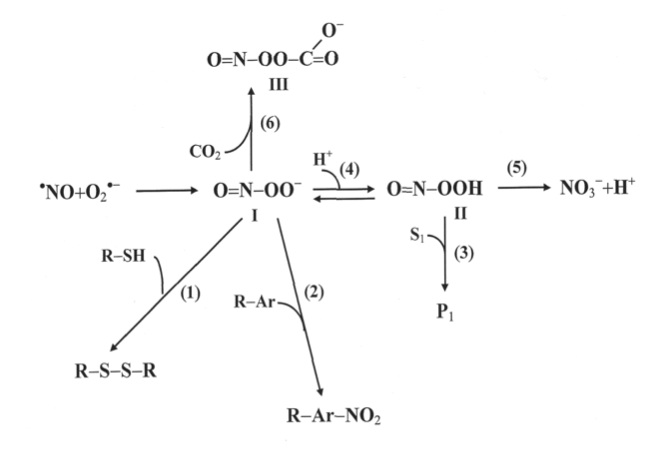
Carbon dioxide interacts both with reactive nitrogen species and reactive oxygen species. In the presence of superoxide, NO reacts to form peroxynitrite that reacts with CO2 to give nitrosoperoxycarbonate. This compound rearranges to nitrocarbonate which is prone to further reactions. In an aqueous environment, the most probable reaction is hydrolysis producing carbonate and nitrate. Thus the net effect of CO2 is scavenging of peroxynitrite and prevention of nitration and oxidative damage. However, in a nonpolar environment of membranes, nitrocarbonate undergoes other reactions leading to nitration of proteins and oxidative damage. When NO reacts with oxygen in the absence of superoxide, a nitrating species N2O3 is formed. CO2 interacts with N2O3 to produce a nitrosyl compound that, under physiological pH, is hydrolyzed to nitrous and carbonic acid. In this way, CO2 also prevents nitration reactions. CO2 protects superoxide dismutase against oxidative damage induced by hydrogen peroxide. However, in this reaction carbonate radicals are formed which can propagate the oxidative damage. It was found that hypercapnia in vivo protects against the damaging effects of ischemia or hypoxia. Several mechanisms have been suggested to explain the protective role of CO2 in vivo. The most significant appears to be stabilization of the iron-transferrin complex which prevents the involvement of iron ions in the initiation of free radical reactions.

CO2 er en antioksidant

Ukjent sin avatar

Slow Breathing Improves Arterial Baroreflex Sensitivity and Decreases Blood Pressure in Essential Hypertension

Nevner hvordan 6 pust i minuttet øker HRV og vagus nervens effekt på hjertet. Nevner også hvordan CO2 synker ved 15 pust i minuttet og holdes normalt ved 6 pust i minuttet. De med hjerteproblemer har mye større reaksjon på CO2 enn andre, og generelt lavere nivå.

http://hyper.ahajournals.org/content/46/4/714.full

Sympathetic hyperactivity and parasympathetic withdrawal may cause and sustain hypertension. This autonomic imbalance is in turn related to a reduced or reset arterial baroreflex sensitivity and chemoreflex-induced hyperventilation. Slow breathing at 6 breaths/min increases baroreflex sensitivity and reduces sympathetic activity and chemoreflex activation, suggesting a potentially beneficial effect in hypertension. We tested whether slow breathing was capable of modifying blood pressure in hypertensive and control subjects and improving baroreflex sensitivity. Continuous noninvasive blood pressure, RR interval, respiration, and end-tidal CO2 (CO2-et) were monitored in 20 subjects with essential hypertension (56.4±1.9 years) and in 26 controls (52.3±1.4 years) in sitting position during spontaneous breathing and controlled breathing at slower (6/min) and faster (15/min) breathing rate. Baroreflex sensitivity was measured by autoregressive spectral analysis and “alpha angle” method. Slow breathing decreased systolic and diastolic pressures in hypertensive subjects (from 149.7±3.7 to 141.1±4 mm Hg, P<0.05; and from 82.7±3 to 77.8±3.7 mm Hg, P<0.01, respectively). Controlled breathing (15/min) decreased systolic (to 142.8±3.9 mm Hg; P<0.05) but not diastolic blood pressure and decreased RR interval (P<0.05) without altering the baroreflex. Similar findings were seen in controls for RR interval. Slow breathing increased baroreflex sensitivity in hypertensives (from 5.8±0.7 to 10.3±2.0 ms/mm Hg; P<0.01) and controls (from 10.9±1.0 to 16.0±1.5 ms/mm Hg; P<0.001) without inducing hyperventilation. During spontaneous breathing, hypertensive subjects showed lower CO2 and faster breathing rate, suggesting hyperventilation and reduced baroreflex sensitivity (P<0.001 versus controls). Slow breathing reduces blood pressure and enhances baroreflex sensitivity in hypertensive patients. These effects appear potentially beneficial in the management of hypertension.

However, breathing at 6 breaths/min significantly increased the baroreflex sensitivity in hypertensive (from 5.8±0.7 to 10.3±2.0 ms/mm Hg; P<0.01) and control subjects (from 10.9±1.0 to 16.0±1.5 ms/mm Hg; P<0.001;Figure 2).

Hypertensive subjects showed a significantly higher resting respiratory rate (14.55±0.82 versus 11.76±1.00; P<0.05) and a significantly lower CO2-et values compared with control subjects (Figure 3). During controlled breathing at 6/min, there were no significant changes in CO2-et and in Vm. The lack of change in Vm, despite lower breathing rate, was attributable to a significant increase in Vt in hypertensives and controls. Controlled breathing at 15/min induced a marked decrease in CO2-et, particularly in hypertensive subjects, and a marked relative increase in Vm and Vt (Figure 3).

We found that paced breathing, and particularly slow breathing at 6 cycle/min, reduces blood pressure in hypertensive patients. The reduction in blood pressure during slow breathing is associated with an increase in the vagal arm of baroreflex sensitivity, indicating a change in autonomic balance, related to an absolute or relative reduction in sympathetic activity.

This demonstrated that slow breathing is indeed capable of inducing a modification in respiratory and cardiovascular control, and that appropriate training could induce a long-term effect. In subjects with chronic congestive heart failure, a condition known to induce sympathetic and chemoreflex activation, slow breathing induced a reduction in chemoreflexes and an increase in baroreflex.10,25 We have also shown that in these patients, 1-month training in slow breathing could induce prolonged benefits, even in terms of exercise capacity.25

Ukjent sin avatar

Slow Breathing Increases Arterial Baroreflex Sensitivity in Patients With Chronic Heart Failure

Nevner at 6 pust i minuttet gir beste respons på HRV og vagusnerven. I tillegg til å dempe blodtrykk markant. Studien ga disse resultatene med en bare 4 minutters pustesession.

http://circ.ahajournals.org/content/105/2/143.full

Background It is well established that a depressed baroreflex sensitivity may adversely influence the prognosis in patients with chronic heart failure (CHF) and in those with previous myocardial infarction.

Methods and Results We tested whether a slow breathing rate (6 breaths/min) could modify the baroreflex sensitivity in 81 patients with stable (2 weeks) CHF (age, 58±1 years; NYHA classes I [6 patients], II [33], III [27], and IV [15]) and in 21 controls. Slow breathing induced highly significant increases in baroreflex sensitivity, both in controls (from 9.4±0.7 to 13.8±1.0 ms/mm Hg, P<0.0025) and in CHF patients (from 5.0±0.3 to 6.1±0.5 ms/mm Hg, P<0.0025), which correlated with the value obtained during spontaneous breathing (r=+0.202, P=0.047). In addition, systolic and diastolic blood pressure decreased in CHF patients (systolic, from 117±3 to 110±4 mm Hg, P=0.009; diastolic, from 62±1 to 59±1 mm Hg, P=0.02).

Conclusions These data suggest that in patients with CHF, slow breathing, in addition to improving oxygen saturation and exercise tolerance as has been previously shown, may be beneficial by increasing baroreflex sensitivity.

Breathing at 6 breaths/min, compared with spontaneous breathing, slightly increased overall spontaneous fluctuations in RR interval, reduced fluctuations in blood pressure, and significantly increased the baroreflex sensitivity in both CHF patients (from 5.0±0.3 to 6.1±0.5 ms/mm Hg, P<0.0025) and controls (from 9.4±0.7 to 13.8±1.0 ms/mm Hg, P<0.0025) (Figure 1).

The slow breathing rate in the CHF group also produced an increase in mean RR interval of 20 ms and a decrease in both systolic and diastolic blood pressure (systolic, from 117±3 to 110±4 mm Hg, P=0.009; diastolic, from 62±1 to 59±1 mm Hg, P=0.02) (Figure 2).


Ukjent sin avatar

Transcutaneous vagus nerve stimulation reduces serum high mobility group box 1 levels and improves survival in murine sepsis.

Elektrisk stimuli av vagusnerven er en effektiv behandling ved blodforgiftning, i mus.

http://www.ncbi.nlm.nih.gov/pubmed/17901837

Abstract
OBJECTIVE:
Electrical vagus nerve stimulation inhibits proinflammatory cytokine production and prevents shock during lethal systemic inflammation through an alpha7 nicotinic acetylcholine receptor (alpha7nAChR)-dependent pathway to the spleen, termed the cholinergic anti-inflammatory pathway. Pharmacologic alpha7nAChR agonists inhibit production of the critical proinflammatory mediator high mobility group box 1 (HMGB1) and rescue mice from lethal polymicrobial sepsis. Here we developed a method of transcutaneous mechanical vagus nerve stimulation and then investigated whether this therapy can protect mice against sepsis lethality.
DESIGN:
Prospective, randomized study.
SETTING:
Institute-based research laboratory.
SUBJECTS:
Male BALB/c mice.
INTERVENTIONS:
Mice received lipopolysaccharide to induce lethal endotoxemia or underwent cecal ligation and puncture to induce polymicrobial sepsis. Mice were then randomized to receive electrical, transcutaneous, or sham vagus nerve stimulation and were followed for survival or euthanized at predetermined time points for cytokine analysis.
MEASUREMENTS AND MAIN RESULTS:
Transcutaneous vagus nerve stimulation dose-dependently reduced systemic tumor necrosis factor levels during lethal endotoxemia. Treatment with transcutaneous vagus nerve stimulation inhibited HMGB1 levels and improved survival in mice with polymicrobial sepsis, even when administered 24 hrs after the onset of disease.
CONCLUSIONS:
Transcutaneous vagus nerve stimulation is an efficacious treatment for mice with lethal endotoxemia or polymicrobial sepsis.

Ukjent sin avatar

The vagus nerve and the inflammatory reflex: wandering on a new treatment paradigm for systemic inflammation and sepsis.

Mer om vagusnerven og betennelsesdemping

http://www.ncbi.nlm.nih.gov/pubmed/22913335

Abstract
BACKGROUND:
The immune system protects the host against dangerous pathogens and toxins. The central nervous system is charged with monitoring and coordinating appropriate responses to internal and external stimuli. The inflammatory reflex sits at the crossroads of these crucial homeostatic systems. This review highlights how the vagus nerve-mediated inflammatory reflex facilitates rapid and specific exchange of information between the nervous and immune systems to prevent tissue injury and infection.
METHODS:
Review of the pertinent English-language literature. Nearly two decades of research has elucidated some of the essential anatomic, physiologic, and molecular connections of the inflammatory reflex. The original descriptions of how these key components contribute to afferent and efferent anti-inflammatory vagus nerve signaling are summarized.
RESULTS:
The central nervous system recognizes peripheral inflammation via afferent vagus nerve signaling. The brain can attenuate peripheral innate immune responses, including pro-inflammatory cytokine production, leukocyte recruitment, and nuclear factor kappa β activation via α7-nicotinic acetylcholine receptor subunit-dependent, T-lymphocyte-dependent, vagus nerve signaling to spleen. This efferent arm of the inflammatory reflex is referred to as the «cholinergic anti-inflammatory pathway.» Activation of this pathway via vagus nerve stimulation or pharmacologic α7 agonists prevents tissue injury in multiple models of systemic inflammation, shock, and sepsis.
CONCLUSIONS:
The vagus nerve-mediated inflammatory reflex is a powerful ally in the fight against lethal tissue damage after injury and infection. Further studies will help translate the beneficial effects of this pathway into clinical use for our surgical patients.

Ukjent sin avatar

Heart Rate Variability Biofeedback Increases Baroreflex Gain and Peak Expiratory Flow

Veldig spennende studie som nevner at HRV trening av pusten har langtids virkninger på hjerte/kar sykdommer og at det aktiverer nevroplastisitet, altså vari endring i nervesystemet. Bekrefter at pustefrekvensen på 6x /min (5 sek inn, 5 sek ut), gir en opptrening vagusnerven. Viser også at man får effekt uten biofeedback, men nervesystemet resonderer bedre med biofeedback.

http://www.ncbi.nlm.nih.gov/pubmed/14508023

http://www.psychosomaticmedicine.org/content/65/5/796.long

http://journals.lww.com/psychosomaticmedicine/Fulltext/2003/09000/Heart_Rate_Variability_Biofeedback_Increases.12.aspx

Abstract

OBJECTIVE: We evaluated heart rate variability biofeedback as a method for increasing vagal baroreflex gain and improving pulmonary function among 54 healthy adults.

METHODS: We compared 10 sessions of biofeedback training with an uninstructed control. Cognitive and physiological effects were measured in four of the sessions.

RESULTS: We found acute increases in low-frequency and total spectrum heart rate variability, and in vagal baroreflex gain, correlated with slow breathing during biofeedback periods. Increased baseline baroreflex gain also occurred across sessions in the biofeedback group, independent of respiratory changes, and peak expiratory flow increased in this group, independently of cardiovascular changes. Biofeedback was accompanied by fewer adverse relaxation side effects than the control condition.

CONCLUSIONS: Heart rate variability biofeedback had strong long-term influences on resting baroreflex gain and pulmonary function. It should be examined as a method for treating cardiovascular and pulmonary diseases. Also, this study demonstrates neuroplasticity of the baroreflex.

The resonant HRV frequency usually is ∼0.1 Hz (6 cycles/min). At this frequency, we previously found that HR and BP oscillate 180° out of phase (20), while HR and respiration oscillate in phase with each other (0° phase relationship, with inhalation coinciding with HR accelerations and exhalation with decelerations). Thus, when people breathe at their resonant frequency, respiratory effects on HRV stimulate baroreflex effects (ie, as the individual inhales, HR rises, BP falls, and the consequent baroreflex response produces a further increase in HR, with corresponding effects during exhalation). The consequent resonance effects produce very large increases in both HRV and baroreflex gain, which can be obtained only when subjects try to increase HRV at this particular frequency (20).

Biofeedback acutely increased both HRV and baroreflex gain, and chronically increased baroreflex gain and peak expiratory flow even among healthy individuals, in whom these measures ordinarily are thought to be stable. Other interventions known to increase baroreflex gain, including β-adrenergic blockade (30) and exercise training (31), also prevent sudden death in high-risk populations. Further research may show that HRV biofeedback training may have similar salutary effects, without the side effects that medication often causes.

The acute baroreflex effects are consistent with our hypothesis that stimulation of HRV at its resonant frequency by respiratory activity involves amplification of the vagal baroreflex response, and that this “exercises” the baroreflex.

However, the cumulative changes in baroreflex gain, both within and, more importantly, across sessions, were not simple effects of slow breathing. The effects of biofeedback on baroreflex gain, both within and between sessions, remained significant, after factoring out the effects of respiration rate. Thus, although breathing at participants’ resonant frequencies produced immediate baroreflex augmentation, over time (both within individual sessions and over weeks of practice) the baroreflex became intrinsically more responsive, an effect that no longer depended on breathing rate and volume. Thus, the intrinsic resting baroreflex increased.

Ukjent sin avatar

An Introduction to Reactive Oxygen Species – Measurement of ROS in Cells

Mye interessant om ROS (reactive oxygen species), som er skadevirkningene fra oksygenforbruk. Nevner ikke CO2 som antioksidant, men beskriver superoksid dismutase, glutathion og c-vitamin, m.m. Glutathion er viktigste intra-cellulære antioksidant.

http://www.biotek.com/resources/articles/reactive-oxygen-species.html

Reactive Oxygen Species (ROS) have long been known to be a component of the killing response of immune cells to microbial invasion. Recent evidence has shown that ROS play a key role as a messenger in normal cell signal transduction and cell cycling.

Reactive Oxygen Species (ROS) is a phrase used to describe a number of reactive molecules and free radicals derived from molecular oxygen. The production of oxygen based radicals is the bane to all aerobic species.

Detoxification of reactive oxygen species is paramount to the survival of all aerobic life forms. As such a number of defense mechanisms have evolved to meet this need and provide a balance between production and removal of ROS. An imbalance toward the pro-oxidative state is often referred to as “Oxidative stress”.

The effect of reactive oxygen species on cellular processes is a function of the strength and duration of exposure, as well as the context of the exposure. The typical cellular response to stress is to leave the cell cycle and enter into G0. With continued exposure and/or high levels of ROS, apoptosis mechanisms are triggered.

Reactive oxygen species have a role in a number of cellular processes. High levels of ROS, which can lead to cellular damage, oxidative stress and DNA damage, can elicit either cell survival or apoptosis mechanisms depending on severity and duration of exposure.

The interest in reactive oxygen species originally revolved around the pathology associated with the deleterious effects of aerobic respiration: the necessary evil caused by the leakage from the electron transport chain in mitochondria. In this context, research involved the role that these agents played in aging, chronic diseases and cancer.

A new frontier was born with the discovery that the “oxidative burst” by phagocytic cells was actually the result of the intentional production of reactive oxygen species. This was thought to be a very specific application where specific cells produced what can only be described as toxic agents in order to kill invading microorganisms. Further recent work has shown that ROS are produced in all cell types and serve as important cellular messengers for both intra- and inter-cellular communications. It is now apparent that a very complex intra-cellular regulatory system involving ROS exists within cells. Cells respond to ROS moieties in different ways depending on the intensity, duration and context of the signaling. In regards to intracellular signaling it appears that hydrogen peroxide (H2O2) is the most interesting candidate, while nitric oxide (•NO) is involved primarily with intercellular signaling.