Ukjent sin avatar

Morning attenuation in cerebrovascular CO2 reactivity in healthy humans is associated with a lowered cerebral oxygenation and an augmented ventilatory response to CO2

Denne beskriver hvordan blodkarenes respons på CO2 er dårligere om morgenen, og det er derfor det skjer flere slag og slikt om morgenen. Den nevner mange interessante prinsipper. Bl.a. at lavere vasomotor respons (på CO2) gir mindre oksygen til hjernen. Og at i opptil 20 sekunder etter en 20 sekunder holdning av pust (etter utpust) øker fortsatt oksygenmengden og blodgjennomstrømningen i hjernen. Nevner også at siden blodkarene i hjernen reagerer dårligere på CO2 om morgenen blir det lett at pusten over- eller underkompenserer, så pustemønsteret blir uregelmessig om morgenen. Spesielt om man har underliggende faremomenter som hjerte/karsykdommer.

http://jap.physiology.org/content/102/5/1891


Furthermore, our results suggest that morning cerebral tissue oxygenation might be reduced as a result of a decreased cerebrovascular responsiveness to CO2 or other factors, leading to a higher level of desaturation.

Our data indicate that the cerebrovascular reactivity to CO2 in healthy subjects is significantly reduced in the morning and is strongly associated with an augmented ventilatory response to CO2. It is likely that this reduction in MCAV CO2 reactivity, by reducing blood flow through medullary respiratory control centers, increases both the arterial-brain tissue PCO2 difference and the H+ concentration presented to the central chemoreceptor(s) (1144). In effect, it appears the brain tissue is more susceptible in the morning to changes in arterial PCO2, which could increase the likelihood of ventilatory overshoots and undershoots.

However, as was the case with the hypercapnic challenge, subjects holding their breath in the morning experienced a significantly blunted increase in MCAV compared with evening, likely a result of a reduced cerebrovascular responsiveness to CO2.

In conclusion, our results suggest that early morning reductions in cerebrovascular CO2 reactivity strongly influence the magnitude of the ventilatory response to CO2. This may have significant implications for breathing stability, increasing the chances of periodic breathing in the morning in patients with additional risk factors. The early morning reduction in cerebral oxygenation with hypercapnic challenge, mild hypoxemia, or during apnea may be a contributing factor in the high prevalence of early morning stroke. Whether differences in the responses of CBF, oxygenation, or V̇E to CO2challenge are associated with other risk factors for stroke, such as gender or age, remains to be elucidated.

Ukjent sin avatar

CO2-beriket vann til fotbad

Å bade i CO2 beriket vann har vært brukt som medisin i alle år. Hellige og mirkauløse kilder har ofter vært vann med et høyt innhold av karbondioksid. Og det har blitt brukt i spa behandling i århundrer, spesielt i Bulgaria. Man finner Co2-rikt vann spesielt ved sovende og inaktive vulkaner.

CO2 er et veldig lite molekyl som diffunderer lett igjennom huden. I CO2-beriket vann kommer derfor CO2 inn i huden og inn til blodkarene i underhuden, hvor alle sansenerver ligger. Den økte CO2 en gjør at blodkarene rundt nervetrådene og i muskelvevet utvides (vasodilasjon) og at oksygene letter hopper av blodcellene slik at det kan bli brukt til energi i celler som vanligvis har lite tilgang på oksygen.

CO2 beriket vann kan vi lage selv på en svært enkel måte: blande Natron, Sitronsyre og vann. Begge disse stoffene fåes kjøpt på vanlig daglivarebutikk. Vannet begynner å bruse, og dette er CO2.

Studier nevner at man bør ha 900-1200 mg CO2 pr liter vann. Ved å måle pH kan vi regne med at vi har det når pH er nede på 5.

Vi kan se CO2 effekten på huden ved at det kommer tett-i-tett med ørsmå bobler. I f.eks. fotbad vil vi se at når vi tar foten opp fra vannet så er den rød, noe som er et tegn på økt blodsirkulasjon i huden.

For alle med nevropatier, diabetes, sår, nevromer, leggspenninger, restless leg syndrom, som lett blir sliten i bena av å gå, så vil dette være verdt et forsøk.

2-3 ganger i uka pleier å være den vanlige oppskriften. Noen studier har brukt det hver dag i mange uker. Spesielt når det gjelder diabetes sår.

Oppskrift: Bland 1 poseNatron med 2 poser Sitronsyre (blandingsforhold ca. 1:1) og hell innholdet i 5L vann. Det bruser veldig pga reaksjonen som lager CO2. Når du setter føttene nedi skal det komme mange små bobler som dekker huden. Etter 5-10 minutter vil huden som er under vann bli rød. Dette er et tegn på økt blodsirkulasjon.

5-15 minutter etter du er ferdig med fotbadet vil du sannsynligvis kjenne det prikker og strømmer ellers i kroppen også. Vanligvis kjennes det først og fremst i armer og bein, som er de stedene vi lettest kjenner økt blodsirkulasjon.

Her er noen studier som bekrefter effektene av CO2 beriket vann.

Beskriver det meste om balneotherapy, som det også heter. Inkludert kontraindikasjoner(hjerteproblemer og hypercapni som følge av lungeskade): http://www.centro-lavalle.com/edu/wp-content/uploads/2010/05/Carbon_Dioxide_Bath.pdf

Table 4. Major Indicators for CO2 Balneotherapy

1. Hypertension, especially borderline hypertension

2. Arteriolar occlusion, Stages I and II

3. Functional arteriolar blood flow disorders

4. Microcirculatory disorders

5. Functional disorders of the heart

Beskriver alt om hvordan det øker blodsirkulasjon og oksygenmetning: http://www.ncbi.nlm.nih.gov/pmc/articles/PMC3169585/?report=classic

Viser at det øker blodsirkulasjonen i huden og oksygenmetningen i muskelvev hos de som lett blir trøtte i beina: http://www.ncbi.nlm.nih.gov/pubmed/9112881/

Viser at det øker blodsirkulasjon og produksjonen av blodkar (angiogenese): http://circ.ahajournals.org/content/111/12/1523.long

Viser at det reparerer sår som ikke vil gro: http://iv.iiarjournals.org/content/24/2/223.long

Viser at det reparerer muskelskade: http://www.ncbi.nlm.nih.gov/pmc/articles/PMC3805014/

Viser at det reparerer muskelskade og atrofi (muskelsvikt) etter langtids post-operative sengeliggende: http://www.ncbi.nlm.nih.gov/pubmed/21371433

Viser at det reduserer hjertefrekvens gjennom å dempe sympaticus aktivering (ikke ved å øke parasymptaticus aktivering): http://jap.physiology.org/content/96/1/226

Viser at det øker mitokondrier og fjerner syster: http://www.ncbi.nlm.nih.gov/pmc/articles/PMC3499556/

Viser at det øker antioksidant status, reduserer frie radikaler og øker blodsirkulasjon i kapuillærene (mikrosirkulasjon): http://www.ncbi.nlm.nih.gov/pubmed/21248668

Viser at det hjelper til å reparere sår etter operasjon: http://www.ncbi.nlm.nih.gov/pmc/articles/PMC3595724/

Dr. Sircus sin forklaring av CO2 medisin som nevner mange måter å gjøre det på: 

CO2 Medicine & Bath Bombing Your Way to Health

Denne artikkelen beskriver mye om historien til CO2-bad. http://ndnr.com/dermatology/cellulite-and-carbon-dioxide-bath/

Mange bilder av diabetes sår (OBS: ikke for sarte sjeler) som blir regenerert i løpet av få uker med 20-30 min fotbad. Disse bruker 900-1000ppm CO2 konsentrasjon. Jeg er usikker på om det er mulig med å blande Sitronsyre og Natron: http://www.iasj.net/iasj?func=fulltext&aId=48581

Denne artikkelen beskriver de fleste sider ved forskjellig bruk av CO2 behandling. God gjennomgang av hvordan blodsirkluasjonen påvirkes. http://www.scuolaeuropeamedicinaestetica.it/public/CARBOXYTHERAPY.pdf

Ukjent sin avatar

Bench-to-bedside review: Permissive hypercapnia

Nevner veldig mye rundt hva hyperkapni kan brukes til i klinisk sammenheng, men spesielt interessant er kapittelet om hvordan det reduserer oksidativt stress, som forklarer godt og omfattende dette prinsippet.

http://www.ncbi.nlm.nih.gov/pmc/articles/PMC1065087/

Effects on free radical generation and activity

Hypercapnic acidosis appears to attenuate free radical production and modulate free radical induced tissue damage. In common with most biological enzymes, the enzymes that produce these oxidizing agents function optimally at neutral physiological pH levels. Oxidant generation by both basal and stimulated neutrophils appears to be regulated by ambient carbon dioxide levels, with oxidant generation reduced by hypercapnia and increased by hypocapnia [54]. The production of superoxide by stimulated neutrophils in vitro is decreased at acidic pH [6567]. In the brain, hypercapnic acidosis attenuates glutathione depletion and lipid peroxidation, which are indices of oxidant stress [39]. In the lung, hypercapnic acidosis has been demonstrated to reduce free radical tissue injury following pulmonary ischaemia/ reperfusion [27]. Hypercapnic acidosis appears to attenuate the production of higher oxides of nitric oxide, such as nitrite and nitrate, following both ventilator-induced [26] and endotoxin-induced [29] ALI. Hypercapnic acidosis inhibits ALI mediated by xanthine oxidase, a complex enzyme system produced in increased amounts during periods of tissue injury, which is a potent source of free radicals [68] in the isolated lung [24]. In in vitro studies the enzymatic activity of xanthine oxidase was potently decreased by acidosis, particularly hypercapnic acidosis [24,25].

Concerns exist regarding the potential for hypercapnia to potentiate tissue nitration by peroxynitrite, a potent free radical. Peroxynitrite is produced in vivo largely by the reaction of nitric oxide with superoxide radical, and causes tissue damage by oxidizing a variety of biomolecules and by nitrating phenolic amino acid residues in proteins [6973]. The potential for hypercapnia to promote the formation of nitration products from peroxynitrite has been clearly demonstrated in recent in vitroexperiments [45,51]. However, the potential for hypercapnia to promote nitration of lung tissue in vivoappears to depend on the injury process. Hypercapnic acidosis decreased tissue nitration following pulmonary ischaemia/reperfusion-induced ALI [27], but it increased nitration following endotoxin-induced lung injury [29].


Ukjent sin avatar

Intraoperative End-Tidal Carbon Dioxide Concentrations: What Is the Target?

Nevner at å øke CO2 under operasjoner gir bedre resultater, og oppklarer mange misforståelser om CO2 i klinisk sammenheng.

http://www.ncbi.nlm.nih.gov/pmc/articles/PMC3202118/

In conclusion, the dogma of maintaining ETCO2 values between 30 and 35 mmHg is without scientific merit and needs to be revisited. In fact, hypocapnia, and the hyperventilation required to achieve it, is clearly not benign. On the other hand, mild hypercapnia (ETCO2 values around 40 mmHg or higher, but with the caveats as previously described) is beneficial and should come to be accepted as the standard of care.

Ukjent sin avatar

Regulation of gene expression by carbon dioxide

Nevner det meste om hvordan organismen er tilpasset CO2 fra evolusjonen, og hvordan CO2 kan virke sykdomsbegrensende. Med spesielt fokus på hvordan det regulerer gen-uttrykk.

http://www.ncbi.nlm.nih.gov/pmc/articles/PMC3060358/

Abstract

Carbon dioxide (CO2) is a physiological gas found at low levels in the atmosphere and produced in cells during the process of aerobic respiration. Consequently, the levels of CO2 within tissues are usually significantly higher than those found externally. Shifts in tissue levels of CO2 (leading to either hypercapnia or hypocapnia) are associated with a number of pathophysiological conditions in humans and can occur naturally in niche habitats such as those of burrowing animals. Clinical studies have indicated that such altered CO2 levels can impact upon disease progression. Recent advances in our understanding of the biology of CO2 has shown that like other physiological gases such as molecular oxygen (O2) and nitric oxide (NO), CO2 levels can be sensed by cells resulting in the initiation of physiological and pathophysiological responses. Acute CO2 sensing in neurons and peripheral and central chemoreceptors is important in rapidly activated responses including olfactory signalling, taste sensation and cardiorespiratory control. Furthermore, a role for CO2 in the regulation of gene transcription has recently been identified with exposure of cells and model organisms to high CO2 leading to suppression of genes involved in the regulation of innate immunity and inflammation. This latter, transcriptional regulatory role for CO2, has been largely attributed to altered activity of the NF-κB family of transcription factors. Here, we review our evolving understanding of how CO2 impacts upon gene transcription.

The natural history of CO2

During the history of metazoan evolution in the Phanerozoic aeon, atmospheric levels of CO2 in dry air ranged from over 6000 ppmv (0.6%) around 600–400 million years ago to 284 ppmv (0.0284%) in the mid 1800s (Berner & Kothavala, 2001Berner, 2003Beerling & Berner, 2005;Royer et al. 2007Vandenbroucke et al. 2010). Current atmospheric An external file that holds a picture, illustration, etc.
Object name is tjp0589-0797-mu1.jpg levels are approximately 387 ppmv (0.0387%), representing an increase of approximately 36% since the advent of human industrial activity. While relatively low, this level of CO2 is key in regulation of the Earth’s temperature and climate (Lacis et al. 2010).

In respiring metazoans, the main source of CO2 is the electron transport chain of mitochondria where the chemical reduction of molecular oxygen is responsible for the generation of CO2 as a by-product. Thus, in contrast to molecular oxygen, the levels of CO2 found in tissues of the body are significantly higher than those found in the external atmosphere. A number of enzymes utilise CO2during their activity including carbonic anhydrases, a family of ubiquitously expresses metallo-enzymes which are responsible for catalysing the reversible hydration of CO2 and H2O to HCO3−and H+ (De Simone & Supuran, 2010). Remaining CO2 is primarily removed by the blood and is exhaled or diffuses through the skin. Recent advances have demonstrated that organisms contain distinct mechanisms capable of sensing changes in CO2 and eliciting distinct acute responses or changes in gene expression through transcriptional regulation.

The ability of metazoan cells to sense CO2 acutely and initiate rapid neuronal responses is analogous in nature to the acute oxygen-sensing pathways which exist in specialized tissues such as the carotid body (Weir et al. 2005Lopez-Barneo et al. 2009) leading to neuronal signalling to control rate and depth of breathing. It is likely that in vivo such changes in neuronal activity will lead indirectly to CO2-induced changes in gene transcription as a consequence of altered neuronal activity.

CO2 and gene expression

In studies investigating the mechanisms underpinning the protective effects of ‘permissive hypercapnia’ in pulmonary disease, gene array analysis experiments were carried out on neonatal mice exposed to atmospheric hypercapnia (Li et al. 2006). This study identified altered levels of pulmonary genes related to cell adhesion, growth, signal transduction and innate immunity (Li et al. 2006).

NF-κB is a master regulator of the genes involved in innate immunity and inflammation. The NF-κB pathway is complex and has been expertly reviewed recently (Gilmore 2006).

While the effects of in vivo hypercapnia on gene expression are likely to occur in part through indirect mechanisms such as altered neuronal activity or the release of stress hormones, recent evidence suggests that CO2 may also directly regulate gene expression through the NF-κB pathway (Cummins et al. 2010). Some insight into a possible mechanism underpinning the suppression of NF-κB activity by hypercapnia was recently provided by the demonstration of CO2-induced nuclear localization of the IKKα subunit (Cummins et al. 2010).

In summary, the studies outlined above provide evidence that metazoan cells possess the capability to sense changes in microenvironmental CO2 levels and activate a transcriptional response which results in the suppression of innate immunity and inflammatory signalling.

Additionally, altered CO2 levels are likely to impact upon metabolic processes such as glycolysis.

Table 1

Summary table of the evidence for NF-κB involvement in response to CO2

Experimental model Cellular Effect Evidence of NF-κB involvement Reference
Rat hepatic IRI ↓ TNFα ↓ NF-κB staining by IHC Li et al.
↑ IL-10
↓ Apoptosis
↓ Liver injury
In vitro buffered hypercapnia (MEF, A549 lung epithelial cells and others) ↓ TNFα, ICAM-1 and CCL2 ↓ NF-κB luciferase promoter reporter Cummins et al.
↑ IL-10 ↓ Nuclear p65 accumulation
↓ IκBα degradation
↑ Nuclear lKKα
In vitro hypercapnic acidosis (pulmonary endothelial cells) ↓ ICAM-1, IL-8 ↓ Nuclear p65 binding (EMSA) Takeshita et al.
↓ Neutrophil adherence ↓ IκBα degradation
In vitro hypercapnia (macrophages) ↓ IL-6, TNFα No change in p65 or IκBα Wang et al.
IL-10 unaffected ↓ IL-6 promoter activity
↓ Phagocytosis
In vitro hypercapnia acidosis (wound healing model in A549 lung epithelial cells) ↓ Wound healing ↓ IκBα degradation O’Toole et al.
↓ Cell migration ↓ NF-κB luciferase promoter reporter
Effect of HCA lost when NF-κB inhibited
Drosophila (flies +/− pathogen at a range of CO2 concentrations) ↑ Mortality Proteolytic cleavage of Relish unchanged Helenius et al.
↓ Antimicrobial peptide genes Hypercapnia inhibits Rel targets in parallel or downstream of proteolytic activation of Rel

In normal conditions, An external file that holds a picture, illustration, etc.
Object name is tjp0589-0797-mu2.jpg levels in the body are likely to vary between tissues and individual cells. Typical arterial blood An external file that holds a picture, illustration, etc.
Object name is tjp0589-0797-mu3.jpg values are in the range of 35–45 mmHg. A thorough review of the contribution of CO2 to physiological and pathophysiological processes has recently been published elsewhere (Curley et al. 2010).

Hypercapnia arises when the mean arterial An external file that holds a picture, illustration, etc.
Object name is tjp0589-0797-mu5.jpg is elevated above normal levels and can occur as a consequence of respiratory failure (e.g. in chronic obstructive pulmonary disease), but clinically it is commonly seen as a consequence of a low tidal volume ventilation strategy for acute respiratory distress syndrome (ARDS). Environmental hypercapnia may also occur in the natural habitats of burrowing animals (Lechner, 1976).

Hypercapnic acidosis (HCA), which can be a consequence of patient hypoventilation, was also identified as being associated with decreased mortality in a subset of the ARDSnet patient cohort (patients receiving 12 ml kg−1 tidal volumes who were defined as having hypercapnic acidosis on day 1 of the study) independent of changes in mechanical ventilation (Kregenow et al. 2006). Taken together these data are suggestive of elevated CO2 levels being protective in the critically ill patient.

Therapeutic hypercapnia has been reported to be of benefit in ischaemia–reperfusion injury in the mesentery (Laffey et al. 2003) and recently in the liver (Li et al. 2010). The mechanisms for this protection are not yet fully elucidated in vivo, but the latter study reports attenuated IRI-mediated pro-inflammatory gene expression (TNFα), enhanced anti-inflammatory cytokine production (IL-10), decreased apoptosis and decreased immunohistochemical staining for NF-κB in the hypercapnia treated groups. These studies are consistent with the observations described above for CO2 (independent of extracellular pH) having a suppressive effect on NF-κB signalling (Cumminset al. 2010Wang et al. 2010) and of hypercapnic acidosis blunting endotoxin-stimulated NF-κB signalling, resulting in decreased ICAM-1 and IL-8 expression in pulmonary endothelial cells (Takeshita et al. 2003).

CO2 through its modulation of NF-κB signalling has the ability to both suppress inflammatory signalling and diminish innate immune responses. Depending on the nature of the challenge, CO2 and/or HCA can both blunt inflammation driven tissue damage as in the case of LPS-induced lung injury and exacerbate lung damage in response to pathogen infection. This has clear implications for the potential therapeutic applications of CO2 in the clinic where CO2 suppresses inflammation but also the ability to fight infection.

Ukjent sin avatar

The Role of Carbon Dioxide in Free Radical Reactions of the Organism

Nevner flere måter som CO2 virker som en antioksidant, i tillegg som en beskytter av andre antioksidanter. Dette er en teorietisk gjennomgang.

Klikk for å få tilgang til 51_335.pdf

Summary

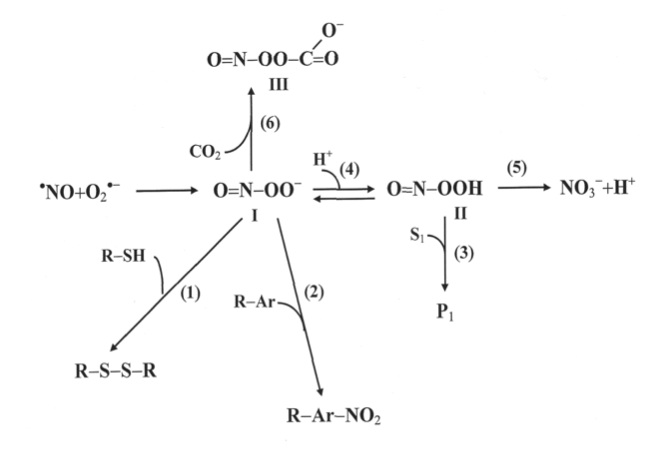
Carbon dioxide interacts both with reactive nitrogen species and reactive oxygen species. In the presence of superoxide, NO reacts to form peroxynitrite that reacts with CO2 to give nitrosoperoxycarbonate. This compound rearranges to nitrocarbonate which is prone to further reactions. In an aqueous environment, the most probable reaction is hydrolysis producing carbonate and nitrate. Thus the net effect of CO2 is scavenging of peroxynitrite and prevention of nitration and oxidative damage. However, in a nonpolar environment of membranes, nitrocarbonate undergoes other reactions leading to nitration of proteins and oxidative damage. When NO reacts with oxygen in the absence of superoxide, a nitrating species N2O3 is formed. CO2 interacts with N2O3 to produce a nitrosyl compound that, under physiological pH, is hydrolyzed to nitrous and carbonic acid. In this way, CO2 also prevents nitration reactions. CO2 protects superoxide dismutase against oxidative damage induced by hydrogen peroxide. However, in this reaction carbonate radicals are formed which can propagate the oxidative damage. It was found that hypercapnia in vivo protects against the damaging effects of ischemia or hypoxia. Several mechanisms have been suggested to explain the protective role of CO2 in vivo. The most significant appears to be stabilization of the iron-transferrin complex which prevents the involvement of iron ions in the initiation of free radical reactions.

CO2 er en antioksidant

Ukjent sin avatar

Evolution of Air Breathing: Oxygen Homeostasis and the Transitions from Water to Land and Sky

Omfattende studie som beskriver hvordan vi har tilpasset oss høyere nivåer av oksygen. Bekrefter alle innspill jeg har hatt om oksygen sin destruktive effekt og at beskyttelsen mot oksygenets skadevirkninger er viktigere enn å få mer oksygen inn i kroppen. Lunger, sirkulasjonssystem, hemoglobin, antioksidantsystem og det at mitokondriene er godt gjemt inni en annen celle som er godt beskyttet av en tett cellevegg er forsvars- og reguleringsmekanismer mot det livsfarlige men også livsnødvendige oksygenet.

Nevner at den opprinnelige atmosfæren bestod av veldig lite O2(1-2% eller 2,4 mmHg) og mer enn dobbelt så mye CO2. Dette er miljøet mitokondriene ble utviklet i for 2,7 billioner år siden, og som de fortsatt lever i inni cellene våre. Om oksygennivået økes tilmer enn dette blir mitokondriene dårligere og mister sin funksjon.

Nevner også at forsvarsmekanismene mot oksygen var tilstede helt fra starten. Og hemoglobin (blodcelle i dyr) og klorofyll (i planter) tilfredstiller alle de nødvendige beskyttende egenskapene vi trenger mot oksygen.

Nevner at CO2 var den første antioksidanten i evolusjonen.

Beskriver også det som skjer i mitokondria, at hypoxi (lavere O2 tilgjengelighet) gir mindre ROS og økt mitochondrial uncoupling (produksjon av varme istedet for ATP). Vi kan se dette som om mitokondriene går på tomgang med lavt turtall, mens ATP produksjon er høyt turtall og dermed også mer slitasje.

Nevner også evolusjonen av diafragma som den primære pustemuskelen.

http://www.ncbi.nlm.nih.gov/pmc/articles/PMC3926130/

Abstract
Life originated in anoxia, but many organisms came to depend upon oxygen for survival, independently evolving diverse respiratory systems for acquiring oxygen from the environment. Ambient oxygen tension (PO2) fluctuated through the ages in correlation with biodiversity and body size, enabling organisms to migrate from water to land and air and sometimes in the opposite direction. Habitat expansion compels the use of different gas exchangers, for example, skin, gills, tracheae, lungs, and their intermediate stages, that may coexist within the same species; coexistence may be temporally disjunct (e.g., larval gills vs. adult lungs) or simultaneous (e.g., skin, gills, and lungs in some salamanders). Disparate systems exhibit similar directions of adaptation: toward larger diffusion interfaces, thinner barriers, finer dynamic regulation, and reduced cost of breathing. Efficient respiratory gas exchange, coupled to downstream convective and diffusive resistances, comprise the “oxygen cascade”—step-down of PO2 that balances supply against toxicity. Here, we review the origin of oxygen homeostasis, a primal selection factor for all respiratory systems, which in turn function as gatekeepers of the cascade. Within an organism’s lifespan, the respiratory apparatus adapts in various ways to upregulate oxygen uptake in hypoxia and restrict uptake in hyperoxia. In an evolutionary context, certain species also become adapted to environmental conditions or habitual organismic demands. We, therefore, survey the comparative anatomy and physiology of respiratory systems from invertebrates to vertebrates, water to air breathers, and terrestrial to aerial inhabitants. Through the evolutionary directions and variety of gas exchangers, their shared features and individual compromises may be appreciated.

Introduction

Oxygen, a vital gas and a lethal toxin, represents a trade-off with which all organisms have had a conflicted relationship. While aerobic respiration is essential for efficient metabolic energy production, a prerequisite for complex organisms, cumulative cellular oxygen stress has also made senescence and death inevitable. Harnessing the energy from oxidative phosphorylation while minimizing cellular stress and damage is an eternal struggle transcending specific organ systems or species, a conflict that shaped an assortment of gas-exchange systems.

The respiratory organ is the “gatekeeper” that determines the amount of oxygen available for distribution. Gas exchangers arose as simple air-blood diffusion interfaces that in active animals progressively gained in complexity in coordination with the cardiovascular system, leading to serial “step-downs” of oxygen tension to maintain homeostasis between uptake distribution and cellular protection.

While a comprehensive treatment of the evolutionary physiology of respiration is beyond the scope of any one article, here we focuses on the first step of the oxygen cascade—convection and diffusion in the gas-exchange organ—to provide an overview of the diversity of nature’s “solutions” to the dilemma of acquiring enough but not too much oxygen from the environment.

Ubiquity of Reactive Oxygen Species

As reviewed by Lane (407) and Maina (466), the primary atmosphere contained mainly nitrogen, carbon dioxide, and water vapor. Much of these were swept away by meteorite bombardment and replaced with a secondary atmosphere (416-418, 579, 590) consisting of hydrogen sulfide, cyanide, carbon monoxide, carbon doxide, methane, and more water vapor from volcanic eruptions. Only trace oxygen (<0.01% present atmospheric level) existed (418), originated from inorganic (photolysis and peroxy hydrolysis) (622) and organic (photosynthesis) sources.

Oxidative respiration is the reverse process as O2 accepts four electrons successively to form water. Many of these steps are catalyzed by transitional metal ions (e.g., iron, copper, and magnesium). Therefore, aerobic respiration, oxygen toxicity and radiation poisoning represent equivalent forms of oxidative stress (407).

Origin of Oxygen Sensing and Antioxidation—Metalloproteins

If oxidative stress was present from the beginning, early anaerobic organisms must have possessed effective antioxidant defenses, including mechanism(s) for controlled O2 sensing, storage, transport, and release as well as pathways for neutralizing ROS. The general class of compounds that fulfill these requirements is the metalloproteins that transfer electrons via transitional metals (766, 767), for example, heme proteins and chlorophyll (Fig. 2).

Hydrogen may have been the first electron donor and CO2 the first electron acceptor for synthesizing ATP by chemiosmosis (408).

Because of a high redox potential of O2 as the terminal electron acceptor in electron transport, aerobic respiration is far more efficient in energy production (36 moles of ATP per mole of glucose) than anaerobic respiration (~5 moles). Aerobic multicellular organisms arose approximately 1 Ga and more complex organisms such as marine molluscs thrived approximately 550 to 500 million years ago (Ma). Exposed to a still low O2 tension in the deep sea, these organisms uniformly possessed metalloprotein respiratory pigments with a characteristically high O2 affinity for efficient O2 storage and slow O2 release thereby avoiding flooding the cell with excessive ROS (783). Contemporary myoglobin continues to perform this regulatory function in muscle.

It is well recognized that embryos and undifferentiated cells grow better in a hypoxia (129, 153). A low O2 tension (1%-5%) is an important component of the embryonic and mesenchymal stem cell “niche” that maintains stem cell properties, minimizes oxidative stress, prevents chromosomal abnormalities, improves clonal survival, and perpetuates the undifferentiated characteristics (457). In addition, hypoxia stimulates endothelial cell proliferation, migration, tubulogenesis, and stress resistance (752, 850) as well as preferential growth and vascularization of many malignant tumor cells; the latter observation constitutes the basis for the use of adjuvant hyperoxia to enhance tumor killing during irradiation and chemotherapy (277,738). Collectively, these responses to O2 tension suggest that the pulmonary gas-exchange organs adapted in a direction toward controlled restriction of cellular exposure to O2.

Origin of the Oxygen Cascade

The oxygen cascade (Fig. 6) describes serial step-downs of O2 tension from ambient air through successive resistances across the pulmonary, cardiac, macrovascular and microvascular systems into the cell and mitochondria. These resistances adapt in a coordinated fashion in response to changes in ambient O2 availability or utilization (333). Traditional paradigm holds that the primary selection pressure in the evolution of O2 transport systems is the efficiency of O2 delivery to meet cellular metabolic demands. If this is the sole function of the cascade, why are there so many resistances? Once we accept the anaerobic origin of eukaryotes and their persistent preference for hypoxia, an alternative paradigm becomes plausible, namely, the entire oxygen cascade could be viewed as an elaborate gate-keeping mechanism the major function of which is to balance cellular O2 delivery against oxidative damage.

Mitochondria consume the majority of cellular O2, directly control intracellular O2 tension, and generate most of the cellular ROS (136). Intracellular O2 tension in turn regulates mitochondrial oxidative phosphorylation, ROS production, cell signaling, and gene expression. Via O2-dependent oxidative phosphorylation the mitochondria act as cellular O2 sensors in the regulation of diverse responses from local blood flow to electric activity (830). Earlier studies reported that hypoxia increases mitochondrial ROS generation (126, 782, 823) via several mechanisms: (i) O2 limitation at the terminal complex IV (cytochrome c oxidase) in the mitochondrial electron transport chain causes electrons to back up the chain with increased electron leak to form superoxide (•O2−). (ii) Hypoxia induces conformational changes in complex III (ubiquinol cytochrome c oxidoreductase) to enhance superoxide formation (88, 287). (iii) Oxidized cytochrome c scavenges superoxide (722). Hypoxia-induced O2 limitation at complex IV leads to cytochrome c reduction, limiting its ability to scavenge superoxide and enhancing mitochondrial ROS leakage. However, recent studies of isolated mitochondria show that hypoxia actually reduces mitochondrial ROS generation and causes mitochondrial uncoupling, suggesting extramitochondrial sources of ROS generation in hypoxia (330). These conflicting reports remain to be resolved. Nonetheless, moderate hypoxia rapidly and reversibly downregulates mitochondrial enzyme transcripts, in parallel with reductions in mitochondrial respiratory activity and O2 consumption (631).

As paleo-atmospheric O2 concentration increased and multicellular aerobic organisms arose, the endosymbiotic mitochondria-host relationship faced the challenge of balancing conflicting needs of aerobic energy generation for the host cell and anaerobic protection for its internal power generator. The host cell must finely control a constant supply of O2 to the mitochondria for oxidative phosphorylation while simultaneously protecting mitochondria against oxidative damage by maintaining a near-anoxic level of local O2 concentration. This trade-off may have led to the evolution of ever more elaborate physicochemical barriers that created and maintained successive O2 partial pressure gradients, by convection and diffusion in the lung, chemical binding to hemoglobin, distribution and release via cardiovascular delivery, dissociation from hemoglobin, and diffusion into peripheral cells with or without myoglobin facilitated transport. As a result, the primordial anoxic conditions of the Earth necessary for survival and optimal function of this proteobacterial remnant are preserved inside the host cell. In working human leg muscle O2 tension at the sarcoplasmic and mitochondrial boundaries has been estimated at approximately 2.4 mmHg (0.32 kPa) (835) and muscle mitochondrial O2 concentration at half-maximal metabolic rate 0.02 to 0.2 mmHg (834), that is, in the range of the ancient atmospheric level approximately 2 Ga. Raising O2 tension above these levels impairs mitochondrial activity (672). In this context, protection of mitochondria from O2 exposure likely constitutes a major selection factor in the evolution of complex aerobic life while the various forms of systemic O2 delivery systems are necessary but secondary functions that sustain the “gate-keeping” barrier apparatus to maintain adequate partial pressure gradients along the O2 transport cascade and preserve the near-anoxic intracellular conditions for the mitochondria. In parallel with physical barriers, cells also developed various biochemical scavenging and antioxidant pathways to counteract the toxic effects of ROS as ambient oxygenation increased.

Defense against the Dark Arts of Oxidation

To summarize, the evolution of life on Earth has adapted to a wide range of ambient O2 levels from 0% to 35%. Periods of relative hyperoxia promote biodiversity and gigantism but incur excess oxidative stress and mandating the upregulation of antioxidant defenses. Periods of relative hypoxia promote coordinated conservation of resources and downregulation of metabolic capacities to improve energy efficiency and channel some savings into compensatory growth of gas-exchange organs. The trajectory of early evolution is at least partly coupled to O2 content of the atmosphere and the deep ocean, and there is a plausible explanation for the coupling, namely, defense against the dark arts of oxidation. Oxygen is capable of giving and taking life. The anaerobic proteobacteria escaped the fate of annihilation by taking refuge inside another cell and in a brilliant evolutionary move coopted its own oxygen-detoxifying machinery to provide essential sustenance for the host cell in return for nourishment and physical protection from oxidation. As the threat of oxidation increased with rising environmental O2 concentration, selection pressure escalated for ever more sophisticated defense mechanisms against oxidative injury and in direct conflict with simultaneously escalating selection pressures to harness the energetic advantage of oxidative phosphorylation.

Trading off the above opposing demands shaped all known respiratory organs, from simple O2 diffusion across cell membranes to facilitated transport via O2 binding proteins to gas-exchange systems of varying complexity (skin, gills, tracheae, book lung, alveolar lung, and avian lung) (Sections 2-5). Concurrently evolving with a convective transport system, these increasingly elaborate respiratory organs not only increase O2 uptake but also maintain air-to-mitochondria O2 tension gradients and intracellular O2 fluxes at a hospitable ancestral level. This epic struggle began at the dawn of life and persisted to the present on a universal scale. The evolutionary trajectory of air breathing has continued contemporary significance to the understanding of oxygen-dependent metabolic homeostasis, especially in relation to maturation, senescence, and aging-related organ degeneration and disease.

Ukjent sin avatar

The role of hyperventilation – hypocapnia in the pathomechanism of panic disorder

Her er en spennede studie som nevner at relasjonen mellom panikkanfall og hyperventillering kommer i utgangspunktet av metabolsk acidose, som er en kompensasjon for kronisk hyperventillering. Når CO2 synker øker nervesystemets sensitivitet til catacholaminer (stresshormoner som adrenalin og noradrenalin) og panikkanfallet kommer. I hyperkapnisk acidose (høy CO2) minker sensitiviteten til stresshormoner og kroppen beskyttes mot panikkanfall. Igjen en bekreftelse på at acidose fra CO2 er beskyttende, mens acidose fra andre ting er provoserende.

http://www.ncbi.nlm.nih.gov/pubmed/17713689

http://www.scielo.br/scielo.php?script=sci_arttext&pid=S1516-44462006005000048&lng=en&nrm=iso&tlng=en

OBJECTIVE: The authors present a profile of panic disorder based on and generalized from the effects of acute and chronic hyperventilation that are characteristic of the respiratory panic disorder subtype. The review presented attempts to integrate three premises: hyperventilation is a physiological response to hypercapnia; hyperventilation can induce panic attacks; chronic hyperventilation is a protective mechanism against panic attacks.
METHOD: A selective review of the literature was made using the Medline database. Reports of the interrelationships among panic disorder, hyperventilation, acidosis, and alkalosis, as well as catecholamine release and sensitivity, were selected. The findings were structured into an integrated model.
DISCUSSION: The panic attacks experienced by individuals with panic disorder develop on the basis of metabolic acidosis, which is a compensatory response to chronic hyperventilation. The attacks are triggered by a sudden increase in (pCO2) when the latent (metabolic) acidosis manifests as hypercapnic acidosis. The acidotic condition induces catecholamine release. Sympathicotonia cannot arise during the hypercapnic phase, since low pH decreases catecholamine sensitivity. Catecholamines can provoke panic when hyperventilation causes the hypercapnia to switch to hypocapnic alkalosis (overcompensation) and catecholamine sensitivity begins to increase.
CONCLUSION: Therapeutic approaches should address long-term regulation of the respiratory pattern and elimination of metabolic acidosis.

Chronic hyperventilation predisposes an individual to PD, since compensatory mechanisms (such as alterations in renal function and tissue buffer capacity) lead to chronic metabolic acidosis, which remains latent until it is activated by chronic hypocapnia.

Therefore, therapeutic approaches should address long-term regulation of respiratory patterns60 and elimination of metabolic acidosis.

Ukjent sin avatar

Tissue Oxygenation Response to Mild Hypercapnia during Cardiopulmonary Bypass with Constant Pump Output

Nevner at oksygenering av vev ikke er pga CO2 sin vasodilerende effekt, men fra økt pumping av blod og høyre-skift av oksygendissassosiasjonskurven. Denne studien ga ikke økt oksygenering av vev når hjertets pumpeevne ble holdt konstant. Den påpeker at blodtrykk og hjerterytme ikke ble endret ved hyperkapni, selv om hjertets pumpeevne øker.

http://www.ncbi.nlm.nih.gov/pmc/articles/PMC1464052/

It is well established that mild hypercapnia improves peripheral perfusion and increases tissue PO2. Our main question was whether peripheral vasodilation is a direct effect of the CO2 or a secondary result of increased cardiac output and related central autonomic homeostatic responses. We found that mild hypercapnia did not increase subcutaneous tissue oxygenation when systemic blood flow and mean arterial pressure remained constant during cardiopulmonary bypass. Increased tissue oxygenation during mild hypercapnia thus most likely results from a hyperdynamic circulatory response and shifting oxyhaemoglobin dissociation curve rather than direct peripheral vasodilation.

Hypercapnia increases both sympathetic and cardiac vagus nerve activity in anaesthetized dogs. Such co-activation of vagus and sympathetic systems, which can be initiated reflexively or by action on higher centres, has been shown to be of distinct physiological benefit in controlling reactions that relate cardiac function to body need. Since the sympathetic and parasympathetic systems are co-activated during systemic hypercapnia, blood pressure and heart rate response depends on the functional balance between these two systems. We were unable to evaluate heart rate during bypass, but have previously shown that both mean arterial blood pressure and heart rate remained essentially unchanged during hypercapnia even though cardiac output increases 25%.11

Thus, the vasodilator effect of CO2 is particularly marked in the cerebral circulation where a CO2 concentration of 7 to 10% nearly doubles cerebral blood flow (CBF) in humans,39 while mild hypercapnia (PaCO2 ~ 50 mmHg) impairs autoregulation of CBF and is associated with an overall increase in cerebral oxygenation.11, 40 A similar cerebrovascular response during cardiopulmonary bypass leads to an increase in CBF41 that is associated with a reduction in cerebral oxygen consumption.42 On the other hand, peripheral vasomotor tone during hypercapnia is essentially the result of a balance between the direct effects of CO2 and the level of sympathetic activity.38

The mechanism by which CO2 exerts its direct effects on the cerebral vasculature seems to involve nitric oxide (NO), ATP-sensitive potassium channels, and cyclooxygenase-dependent pathways. The CO2-NO axis is considered a cardinal pathway for CBF regulation in humans. Thus, although ATP-sensitive and Ca2+-activated potassium channels are also major systems that respond to hypercapnic acidosis, their response is incomplete in the absence of NO donors. In both animals43 and humans,44 hypercapnic vasodilatation is mediated by inhibition of nitric oxide synthase — the enzyme responsible for nitric oxide synthesis. It is probable that the vasodilation to hypercapnic acidosis is mediated either by increased synthesis of NO or increased sensitivity to NO.

However, 20 to 30 minutes is sufficient to obtain stable tissue oxygen values with tonometric systems that accommodate tissue oxygen probes.