Veldig omfattende litteratur studie av hvordan vagus påvirker betennelser.
https://www.duo.uio.no/bitstream/handle/10852/29480/ProsjektVogt.pdf?sequence=3

Veldig omfattende litteratur studie av hvordan vagus påvirker betennelser.
https://www.duo.uio.no/bitstream/handle/10852/29480/ProsjektVogt.pdf?sequence=3
Nevner mye om hvordan pustefrekvens påvirker HRV og andre faktorer. Og spesielt hvordan dette endrer den normale pusten på lang sikt.
http://www.ncbi.nlm.nih.gov/pubmed/24469560
Background: Meditation in its various forms is a traditional exercise with a potential benefit on well-being and health. On a psychosomatic level these exercises seem to improve the salutogenetic potential in man.Especially the cardiorespiratory interaction seems to play an important role since most meditation techniques make use of special low frequency breathing patterns regardless of whether they result from a deliberate guidance of breathing or other mechanisms, for example, the recitation of specific verse. During the different exercises of Zen meditation the depth and the duration of each respiratory cycle is determined only by the process of breathing. Respiratory manoeuvres during Zazen meditation may produce HR variability changes similar to those produces during biofeedback.Recognition that the respiratory sinus arrhythmia (RSA) was mediated by efferent vagal activity acting on the sinus node led investigators to attempt to quantify the fluctuations in R-R intervals that were related to breathing. Materials and Methods: Nine Zen practitioners with five years of experience took part in the study. Autonomic nervous system function was evaluated by heart rate variability (HRV) analysis during 24-hours ECG recording during zen meditation and at rest. Results: The data of this small observational study confirm that ZaZen breathing falls within the range of low frequency HR spectral bands. Our data suggest that the modification of HR spectral power remained also in normal day when the subject have a normal breathing. Conclusion: We suggest that the changes in the breathing rate might modify the chemoreflex and the continuous practice in slow breathing can reduce chemoreflex. This change in the automonic control of respiration can be permanent with a resetting of endogenous circulatory rhythms.

Figure 1: Power spectrum analysis of heart rate variability during zen meditation

Figure 2: Power spectrum analysis of heart rate variability to rest
In conclusion, repeated training to slow down breathing reduces the spontaneous breathing rate with long term effects on the cardiovascular control mechanisms. Indeed, when respiration slows to about 6 cycles/min, as in Zen practitioners and in the frequency range of the spontaneous LF oscillation, the cardiovascular fluctuations become maximal. The changes in the breathing rate might modify the chemoreflex and the continuous practice in slow breathing can reduce chemoreflex. This change in the autonomic control of respiration can be permanent with a resetting of endogenous circulatory rhythms.
Nevner hvordan en topp-pust relateres til lav HRV og problemer i hjerte/kar systemet.
http://www.ncbi.nlm.nih.gov/pubmed/22164811
Heart rate variability (HRV) biofeedback is a self-regulation strategy used to improve conditions including asthma, stress, hypertension, and chronic obstructive pulmonary disease. Respiratory muscle function affects hemodynamic influences on respiratory sinus arrhythmia (RSA), and HRV and HRV-biofeedback protocols often include slow abdominal breathing to achieve physiologically optimal patterns of HRV with power spectral distribution concentrated around the 0.1-Hz frequency and large amplitude. It is likely that optimal balanced breathing patterns and ability to entrain heart rhythms to breathing reflect physiological efficiency and resilience and that individuals with dysfunctional breathing patterns may have difficulty voluntarily modulating HRV and RSA. The relationship between breathing movement patterns and HRV, however, has not been investigated. This study examines how individuals’ habitual breathing patterns correspond with their ability to optimize HRV and RSA.
Breathing pattern was assessed using the Manual Assessment of Respiratory Motion (MARM) and the Hi Lo manual palpation techniques in 83 people with possible dysfunctional breathing before they attempted HRV biofeedback. Mean respiratory rate was also assessed. Subsequently, participants applied a brief 5-minute biofeedback protocol, involving breathing and positive emotional focus, to achieve HRV patterns proposed to reflect physiological «coherence» and entrainment of heart rhythm oscillations to other oscillating body systems.
Thoracic-dominant breathing was associated with decreased coherence of HRV (r = -.463, P = .0001). Individuals with paradoxical breathing had the lowest HRV coherence (t(8) = 10.7, P = .001), and the negative relationship between coherence of HRV and extent of thoracic breathing was strongest in this group (r = -.768, P = .03).
Dysfunctional breathing patterns are associated with decreased ability to achieve HRV patterns that reflect cardiorespiratory efficiency and autonomic nervous system balance. This suggests that dysfunctional breathing patterns are not only biomechanically inefficient but also reflect decreased physiological resilience. Breathing assessment using simple manual techniques such as the MARM and Hi Lo may be useful in HRV biofeedback to identify if poor responders require more emphasis on correction of dysfunctional breathing.
Nevner hvordan 6 pust i minuttet øker HRV og vagus nervens effekt på hjertet. Nevner også hvordan CO2 synker ved 15 pust i minuttet og holdes normalt ved 6 pust i minuttet. De med hjerteproblemer har mye større reaksjon på CO2 enn andre, og generelt lavere nivå.
http://hyper.ahajournals.org/content/46/4/714.full
Sympathetic hyperactivity and parasympathetic withdrawal may cause and sustain hypertension. This autonomic imbalance is in turn related to a reduced or reset arterial baroreflex sensitivity and chemoreflex-induced hyperventilation. Slow breathing at 6 breaths/min increases baroreflex sensitivity and reduces sympathetic activity and chemoreflex activation, suggesting a potentially beneficial effect in hypertension. We tested whether slow breathing was capable of modifying blood pressure in hypertensive and control subjects and improving baroreflex sensitivity. Continuous noninvasive blood pressure, RR interval, respiration, and end-tidal CO2 (CO2-et) were monitored in 20 subjects with essential hypertension (56.4±1.9 years) and in 26 controls (52.3±1.4 years) in sitting position during spontaneous breathing and controlled breathing at slower (6/min) and faster (15/min) breathing rate. Baroreflex sensitivity was measured by autoregressive spectral analysis and “alpha angle” method. Slow breathing decreased systolic and diastolic pressures in hypertensive subjects (from 149.7±3.7 to 141.1±4 mm Hg, P<0.05; and from 82.7±3 to 77.8±3.7 mm Hg, P<0.01, respectively). Controlled breathing (15/min) decreased systolic (to 142.8±3.9 mm Hg; P<0.05) but not diastolic blood pressure and decreased RR interval (P<0.05) without altering the baroreflex. Similar findings were seen in controls for RR interval. Slow breathing increased baroreflex sensitivity in hypertensives (from 5.8±0.7 to 10.3±2.0 ms/mm Hg; P<0.01) and controls (from 10.9±1.0 to 16.0±1.5 ms/mm Hg; P<0.001) without inducing hyperventilation. During spontaneous breathing, hypertensive subjects showed lower CO2 and faster breathing rate, suggesting hyperventilation and reduced baroreflex sensitivity (P<0.001 versus controls). Slow breathing reduces blood pressure and enhances baroreflex sensitivity in hypertensive patients. These effects appear potentially beneficial in the management of hypertension.
However, breathing at 6 breaths/min significantly increased the baroreflex sensitivity in hypertensive (from 5.8±0.7 to 10.3±2.0 ms/mm Hg; P<0.01) and control subjects (from 10.9±1.0 to 16.0±1.5 ms/mm Hg; P<0.001;Figure 2).

Hypertensive subjects showed a significantly higher resting respiratory rate (14.55±0.82 versus 11.76±1.00; P<0.05) and a significantly lower CO2-et values compared with control subjects (Figure 3). During controlled breathing at 6/min, there were no significant changes in CO2-et and in Vm. The lack of change in Vm, despite lower breathing rate, was attributable to a significant increase in Vt in hypertensives and controls. Controlled breathing at 15/min induced a marked decrease in CO2-et, particularly in hypertensive subjects, and a marked relative increase in Vm and Vt (Figure 3).

We found that paced breathing, and particularly slow breathing at 6 cycle/min, reduces blood pressure in hypertensive patients. The reduction in blood pressure during slow breathing is associated with an increase in the vagal arm of baroreflex sensitivity, indicating a change in autonomic balance, related to an absolute or relative reduction in sympathetic activity.
This demonstrated that slow breathing is indeed capable of inducing a modification in respiratory and cardiovascular control, and that appropriate training could induce a long-term effect. In subjects with chronic congestive heart failure, a condition known to induce sympathetic and chemoreflex activation, slow breathing induced a reduction in chemoreflexes and an increase in baroreflex.10,25 We have also shown that in these patients, 1-month training in slow breathing could induce prolonged benefits, even in terms of exercise capacity.25
Denne viser hvordan økt CO2 øker oksygenering og blodsirkulasjon i huden og i vevet. Studien er gjort på individer i narkose og med assistert pust med konstant volum på 10ml/kg og pustefrekvens mellom 11 og 14.
Background: Wound infections are common, serious, surgical complications. Oxidative killing by neutrophils is the primary defense against surgical pathogens and increasing intraoperative tissue oxygen tension markedly reduces the risk of such infections. Since hypercapnia improves cardiac output and peripheral tissue perfusion, we tested the hypothesis that peripheral tissue oxygenation increases as a function of arterial carbon dioxide tension (Paco2) in anesthetized humans.
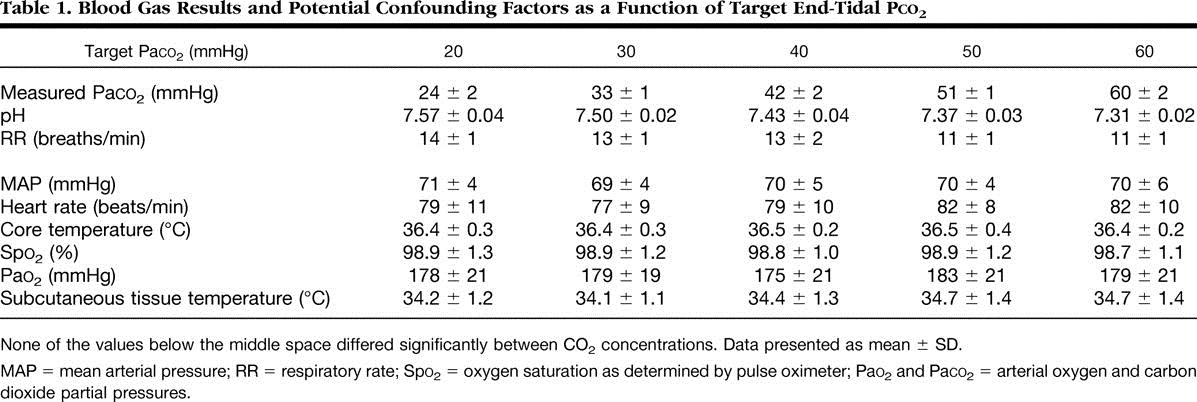

Nevner hvordan lav HRV gir økt betennelsesnivå ved høyer alder.
http://www.ncbi.nlm.nih.gov/pubmed/21323913
Increased levels of C-reactive protein (CRP) and serum amyloid A (SAA) are associated with an increased risk of cardiovascular disease. It is hypothesized that dysregulation of the autonomic nervous system (ANS) leads to increased inflammation via the cholinergic anti-inflammatory pathway. Heart rate variability (HRV) is a marker of ANS function. HRV has been shown to be associated with CRP levels. Currently, there are no studies addressing the relationship between HRV and SAA.
The purpose of this study was to compare the associations between HRV, CRP and SAA in healthy young adults. CRP and SAA concentrations and short-term HRV indices [high frequency (HF), low frequency (LF), total spectral component of HRV, root mean square differences of successive R-R intervals, the standard deviation of all R-R intervals and ratio between LF and HF) were measured in 1601 men and women aged 24-39 taking part in the Cardiovascular Risk in Young Finns study.
A significant inverse correlation (P < 0·05) between HRV indices and inflammatory markers was observed. However, in linear regression analyses, only inverse association between HRV indices and CRP levels remained significant (P < 0·05), while association between HRV indices and SAA levels was attenuated to the null (P > 0·05) after adjusting for age, sex, body mass index, cholesterol levels, leptin and other common traditional cardiovascular risk factors.
Reduced HRV indices are independently associated with increased CRP levels, but not with SAA levels. This association supports the hypothesis that dysregulation of the ANS may lead to increased inflammation early in adulthood.
En studie som beskriver mekanismene bak hvordan vagus nerven henger sammen med immunsystemet. Med en sterk vagusnerve (høy HRV) kan betennelser dempes.
http://www.ccjm.org/content/76/Suppl_2/S23.long
Inhibition of sympathoexcitatory circuits is influenced by cerebral structures and mediated via vagal mechanisms. Studies of pharmacologic blockade of the prefrontal cortex together with neuroimaging studies support the role of the right hemisphere in parasympathetic control of the heart via its connection with the right vagus nerve. Neural mechanisms also regulate inflammation; vagus nerve activity inhibits macrophage activation and the synthesis of tumor necrosis factor in the reticuloendothelial system through the release of acetylcholine. Data suggest an association between heart rate variability and inflammation that may support the concept of a cholinergic anti-inflammatory pathway.
The neurovisceral integration model of cardiac vagal tone integrates autonomic, attentional, and affective systems into a functional and structural network. This neural network can be indexed by heart rate variability (HRV). High HRV is associated with greater prefrontal inhibitory tone. A lack of inhibition leads to undifferentiated threat responses to environmental challenges.

Acetylcholine and parasympathetic tone inhibit proinflammatory cytokines such as interleukin (IL)-6. These proinflammatory cytokines are under tonic inhibitory control via the vagus nerve, and this function may have important implications for health and disease.5
The cholinergic anti-inflammatory pathway is associated with efferent activity in the vagus nerve, leading to acetylcholine release in the reticuloendothelial system that includes the liver, heart, spleen, and gastrointestinal tract. Acetylcholine interacts with the alpha-7 nicotinic receptor on tissue macrophages to inhibit the release of proinflammatory cytokines, but not anti-inflammatory cytokines such as IL-10.
Approximately 80% of the fibers of the vagus nerve are sensory; ie, they sense the presence of proinflammatory cytokines and convey the signal to the brain. Efferent vagus nerve activity leads to the release of acetylcholine, which inhibits tumor necrosis factor (TNF)-alpha on the macrophages. Cytokine regulation also involves the sympathetic nervous system and the endocrine system (the hypothalamic-pituitary axis).
In a study of 613 airplane factory workers in southern Germany, vagally mediated HRV was inversely related to high-sensitivity CRP in men and premenopausal women, even after controlling for urinary norepinephrine as an index of sympathetic activity.6
In a related report from the same study, vagal modulation of fibrinogen was investigated.7 Fibrinogen is a large glycoprotein that is synthesized by the liver. Plasma fibrinogen is a measure of systemic inflammation crucially involved in atherosclerosis.
The brain and the heart are intimately connected. Both epidemiologic and experimental data suggest an association between HRV and inflammation, including similar neural mechanisms. Evidence of an association between HRV and inflammation supports the concept of a cholinergic anti-inflammatory pathway.
Nevner hvordan sakte pust bedrer tilstanden i det autonome nervesystem. De bruker 6 sek inn og 6 sek ut i denne studien, som stimulerer vagusnerven best.
Klikk for å få tilgang til 0807.pdf
Background & objectives: Practice of breathing exercises like pranayama is known to improve autonomic function by changing sympathetic or parasympathetic activity. Therefore, in the present study the effect of breathing exercises on autonomic functions was performed in young volunteers in the age group of 17-19 yr.
Methods: A total of 60 male undergraduate medical students were randomly divided into two groups: slow breathing group (that practiced slow breathing exercise) and the fast breathing group (that practiced fast breathing exercise). The breathing exercises were practiced for a period of three months. Autonomic function tests were performed before and after the practice of breathing exercises.
Results: The increased parasympathetic activity and decreased sympathetic activity were observed in slow breathing group, whereas no significant change in autonomic functions was observed in the fast breathing group.
Interpretation & conclusion: The findings of the present study show that regular practice of slow breathing exercise for three months improves autonomic functions, while practice of fast breathing exercise for the same duration does not affect the autonomic functions.
En review studie fra 2012 som inneholder det meste om Magnesium, spesielt rettet mot betennelser i hjerte/kar og nervesystemet.
http://www.karger.com/Article/FullText/339380
Magnesium L-lactate and L-aspartate are the oral magnesium compounds that have the greatest bioavailability, are the most water-soluble and have the greatest serum and plasma concentrations [8].
After a mean follow-up of 9.8 years and adjusting for confounders, the authors concluded that women in the highest quintile (an intake of 400 mg/day of magnesium) had a decreased HTN (hypertension) risk (p < 0.0001) versus those in the lowest quintile (approx. 200 mg/day of magnesium) [20].
Because of magnesium’s anti-inflammatory, statin-like and anti-mineralizing effects, a role for it is emerging in cardiovascular and neurological medicine.
The potential impact of magnesium in cardiovascular and neurological health, the abundance and low cost of the supplement, the relatively low side effect profile and the paucity of information in the literature about this common mineral suggest that more studies should be conducted to determine its safety and efficacy. The majority of human trials with magnesium thus far have not been interventional, but based on food questionnaires which may not be accurate and are subject to a recall bias. Further work is also needed to determine the mechanism of action by which magnesium modulates the mineralization and inflammation of the cardiovascular and nervous systems.
Viser at HRV er størst ved 5-6 pust i minuttet.
http://www.sciencedirect.com/science/article/pii/S1566070201002673
Respiration is a powerful modulator of heart rate variability, and of baro- and chemoreflex sensitivity. Abnormal respiratory modulation of heart rate is often an early sign of autonomic dysfunction in a number of diseases.
This review examines the possibility that manipulation of breathing pattern may provide beneficial effects in terms not only of ventilatory efficiency, but also of cardiovascular and respiratory control in physiologic and pathologic conditions, such as chronic heart failure.

Fig. 2. Heart rate variability is maximal when respiration slows down in the low-frequency range, and particularly at 0.1 Hz (equivalent to 6 breaths/min).
 Verkstedet Bodywork & Breathing System