Ukjent sin avatar

The Polyvagal Perspective

Denen Studien beskriver Stephen Porges sitt arbeid med å forstå Vagus nerven og hvordan den forholder seg til pusten og til psyken.

http://www.ncbi.nlm.nih.gov/pmc/articles/PMC1868418/

The Polyvagal Theory introduced a new perspective relating autonomic function to behavior that included an appreciation of autonomic nervous system as a “system,” the identification of neural circuits involved in the regulation of autonomic state, and an interpretation of autonomic reactivity as adaptive within the context of the phylogeny of the vertebrate autonomic nervous system. The paper has two objectives: First, to provide an explicit statement of the theory; and second, to introduce the features of a polyvagal perspective. The polyvagal perspective emphasizes how an understanding of neurophysiological mechanisms and phylogenetic shifts in neural regulation, leads to different questions, paradigms, explanations, and conclusions regarding autonomic function in biobehavioral processes than peripheral models. Foremost, the polyvagal perspective emphasizes the importance of phylogenetic changes in the neural structures regulating the autonomic nervous system and how these phylogenetic shifts provide insights into the adaptive function and the neural regulation of the two vagal systems

Ukjent sin avatar

The Anatomy of Dorsal Ramus Nerves and Its Implications in Lower Back Pain

Om hudnære nerver sin rolle i korsryggsmerter. Beskriver spesielt nervene ved L1-2 som går ned til huden i korsryggen og hoftene. Nevner flere interessante diagnosekriterier. Men som de legene og kirurgene forskerne er, har de kun nerveblokkade og kirurgi i som behandlingmuligheter, fullstendig ignorante til mulighetene i manuell behandling. Selv nerveblokkade har 85% av pasientene får mer enn 50% bedring i symptomene, ikke så annerledes enn hva vi forventer med manuell behandling og en intelligent tilnærming til nervesystemet.

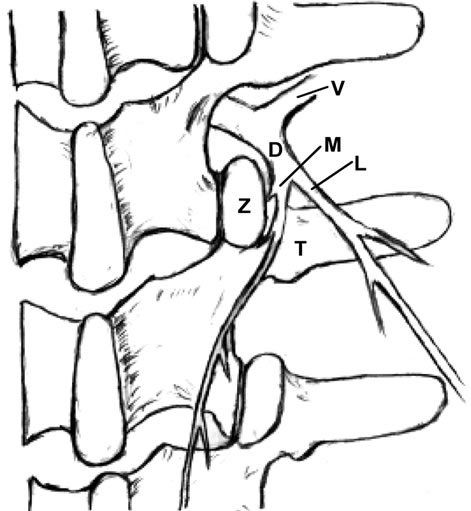
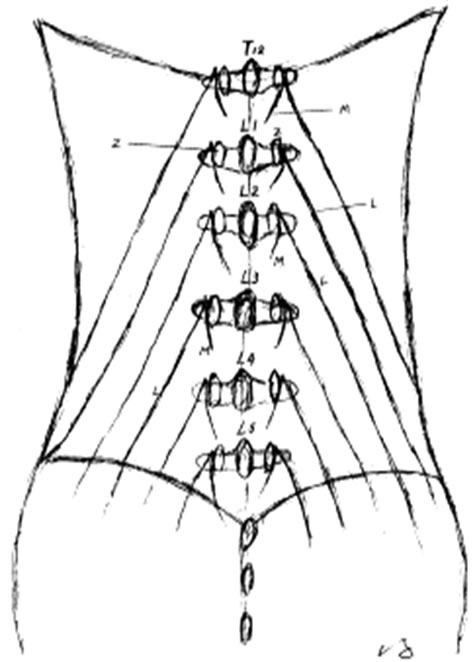
Each spinal dorsal ramus arises from the spinal nerve and then divides into a medial and lateral branch. The medial branch supplies the tissues from the midline to the zygapophysial joint line and innervates two to three adjacent zygapophysial joints and their related soft tissues. The lateral branch innervates the tissues lateral to the zygapophysial joint line.

Clinically, L1 and L2 are the most common sites of dorsal rami involvement.

The etiologies of low back pain are numerous. Anatomically, lumbar muscle strain [1,2], lumbar zygapophysial joint syndrome [3-11], instability of the lumbar spine [12], discogenic back pain [1,13], and sacroiliac joint syndrome [2] can cause low back pain. Mechanical pressure on the nerve roots, which may interfere with venous return of the nerve root [14], epidural fibrosis [15], perineural and intraneural fibrosis [16], are additional factors to consider. Additionally, some authors have suggested that the iliolumbar ligament inserting on the lumbar spine is a source of back pain [17].

Anatomically, Bogduk’s work exposed the medial branches of the lumbar spinal dorsal rami as a potential player in low back pain [23-25]. Sihvonen et al. blocked the medial dorsal ramus branch, which resulted in relief of muscle spasms and they suggested that this treatment would aid in improving lumbopelvic rhythm and reducing low back pain [26-29]. These studies supported spinal dorsal ramus as a potential pain generator.

http://file.scirp.org/Html/9-2400120/b3c5afd3-5aa8-4350-9ecc-22fe3e3cc027.jpg

http://file.scirp.org/Html/9-2400120/c6242d6a-bc68-420a-bd92-3c9e7fbafa2d.jpg

The distribution area of each dorsal ramus is characterized by an overlapping multiple segmental innervations, e.g., the L4 zygapophysial joint is innervated by the L3 and L4 medial branches. Therefore, if single dorsal ramus is irritated proximally, a patient could experience pain at the distal site of this nerve distribution (referred pain). This phenomenon mimics radicular pain, for example, a patient with L4-5 herniated disc experiences pain on his dorsal foot. Thus, a local anesthetic injected to the referred pain area will not relieve pain, because the pain is caused by irritation at the proximal dorsal ramus (see below) [36].

In patients with the spinal dorsal ramus mediated pain, their symptoms usually are on one side and are exacerbated by lumbar extension and/or rotation. This pain may radiate to the ipsilateral low back and buttock region (referred pain) [21,22] (Figure 2). Some patients may present paraspinal muscle spasm (Figure 3(a)). Hyperesthesia may present in the affected dermatome [10,21,22,31,35, 45,46].

http://file.scirp.org/Html/9-2400120/e412d7c3-e859-4500-b82d-396e71f6b638.jpg

The zygapophysial joint line demarcates the distribution of the medial and lateral branches. Pain at between the midline and the zygapophysial joint line or the paraspinal sacroiliac region is caused by on irritated medial branch. Pain lateral to the zygapophysial joint line with radiation to the lateral iliac crest is induced by the lateral branch involvement [19,22]. When the common dorsal ramus is involved, pain will be at the territories of both medial and lateral branches [36,38,47] (Figure 2).

There are some clinical findings in the patient with the spinal dorsal ramus mediated low back pain. The patient usually points to pain at the distal low back (referred pain) [19,22,47]. When the patient bends forward, there is usually a palpable step-off at the affected spinous processes and this is typically two to three segments above the referred pain [47]. There is a palpably widened space and deep tenderness between the spinous processes below the stepoff. With deep palpation of the junction of the same level lateral zygapophysial joint and proximal transverse process, the patient will experience pain and referred pain [19-22,36,47] (Figure 2). Additionally, patients may present an ipsilateral segmental muscle spasm, and a mild scoliosis at the affected vertebral level when the medial branch is involved (Figure 3(a)) [36,47]. If the lateral branch is involved, palpating the longissimus and the iliocostalis muscles can be painful [19-22,35,36,47]. Maigne’s examination techniques are to provoke pain by applying pressure to the lateral aspect of the spinous processes and rubbing the ipislateral facet at the thoracolumbar junction [19-22]. Other findings such as motor, sensory and straight leg raising tests are unremarkable. When the low back pain patient presents pain with radiation below the knee and positive nerve root signs such as loss of sensory or motor function or reflexes in the distribution of the ventral ramus, the ventral ramus involvement (lumbar radiculopathy) should be considered [1].

Any abnormality of the zygapophysial joint such as vertebral malrotation or muscle spasm as well as structural changes of the zygapophysial joint such as subluxation, degeneration, bony proliferation, capsular/ligamentous hypertrophy or fracture can irritate the common dorsal ramus and medial branch, and induce clinical symptoms [18,44,47,48]. Ossification of the mammilloaccessory ligament may cause an entrapment neuropathy and low back pain [18,24,33].

Chen and colleagues [51] dissected the spinal dorsal rami from T12 to the sacrum and conducted biomechanical studies. Their study demonstrated that the L2 dorsal rami bore the greatest stretching force and tensile stress when the specimens were flexed and rotated to the contralateral side.

Spinal dorsal ramus mediated back pain can occur at any level of the human spine [18,21,22,44,52,53]. For low back pain mediated by dorsal ramus, the primary pain is commonly at the thoracolumbar junction [19-22, 38,44]. Within the thoracic region, the coronal orientation of the zygapophysial joints grants spine free rotation. However, this rotation is limited by a rigid rib cage, except at the T10-12 levels because of floating ribs. The upper lumbar facets also have a relative coronal orientation. Therefore, spine rotation is relatively free at the thoracolumbar junction and the greatest shear force occurs at the more mobile upper lumbar segments. This normal spinal movement can cause zygapophysial joint separation or rotation. If these movements occur rapidly or overcome the body’s physiological limit, they can cause stretching tension and irritation to the dorsal ramus, resulting in low back pain [20,40,44,54]. Shao and his colleagues reported that seventy four percent (74%) of the 1263 patients with spinal dorsal ramus mediated low back pain had the pain originating from L1 and/or L2 dorsal ramus [36].

http://file.scirp.org/Html/9-2400120/3fe33e99-0bf8-4fbf-ac3c-867b9de28c6b.jpg

Additionally, Zhou has reported in his retrospective study, that in 41 patients with spinal dorsal ramus mediated lower back pain, after the selective spinal dorsal ramus injection, 84% of these patients received greater than 50% and more than two months of pain reduction [74]. These patients also reported improvement in their daily activities and decrease of their pain medications [74].

Normally, this type of pain originates at L1 or L2 dorsal rami, and the pathogeneses can be multiple factors which irritate the dorsal ramus. The back pain induced by dorsal ramus irritation can occur in the cervical [51] and thoracic spine [50] as well. Therefore, spinal dorsal ramus mediated back pain should be appropriately called “spinal dorsal ramus syndrome (SDRS)”.

The clinical presentations of dorsal ramus mediated back pain and zygapophysial syndrome can be overlapping. However, there are some distinctions. The thoracolumbar junction is the most common site of spinal dorsal ramus mediated back pain [21,22,36], while, zygapophysial joint syndrome commonly occurs at the lower lumbar zygapophysial joints such as L5-S1 and L4-5 [5,6,9,43,57, 58].

Ukjent sin avatar

VKM gjennomgang av D-vitamin

Vitenskapskomiteens gjennomgang av D-vitamin, basert på EFSAs vurdering fra 2012.

«In two studies in men, intakes between 234 and 275 μg/day were not associated with hypercalcaemia, and a no observed adverse effect level (NOAEL) at 250 μg/day was established.»

Basert på en sikkerhetsmargin på 2,5 for å ta hensyn til mellommenneskelige forskjeller, vurderer de Upper Limit til å være 1000 IU daglig.

Klikk for å få tilgang til 422f24e6e0.pdf

Ukjent sin avatar

Massasjeterapi definisjon

God definisjon på massasjeterapi:

«Massage therapy or therapeutic massage is the intelligent, compassionate and respectful process of using massage to support another along the continuum of health and wellness . Therefore massage therapy is a multidimensional therapeutic relationship consisting of observable and measurable mechanical aspects and an interpersonal more subjective experience both of which have therapeutic value for the client through multiple interacting specific and nonspecific pathways/»

http://sandycfritz.blogspot.no/2013/11/figuring-it-out-part-2.html

Ukjent sin avatar

Can ‘permissive’ hypercapnia modulate the severity of sepsis-induced ALI/ARDS?

En viktig studie som nevner alt om hvordan CO2 påvirker immunsystemet i positiv retning. Nevner de to grenene av immunsystemet – den iboende og den tilpasningsdyktige. Den tilpasningsdyktige delen lærer av sine tidligere reaksjoner.

Nevner at hyperkapni reduserer utskillelse av cytokiner (betennelsesfaktorer) fra nøytrofiler og makrofager (immunceller). I tillegg reduseres produksjonen av frie radikaler, noe som normalt sett er bra, men når det gjelder bakterier benyttes de frie radikalene til å drepe slike inntrengere.

Nevner også at acidose øker muligheten for kreftspredning, så dette er ikke anbefalt i kreft-tilfeller.

I tilfeller med bakterielle infeksjoner kan det virke som at hyperkapni ikke er å anbefale når det gjelder lungeinfeksjoner, mens mot infeksjoner ellers i kroppen er hyperkapni svært nyttig.

http://ccforum.com/content/15/2/212

Of particular importance, a secondary analysis of data from the ARDSnet tidal volume study [1] demonstrated that the presence of hypercapnic acidosis at the time of randomization was associated with improved patient survival in patients who received high tidal volume ventilation [3]. These findings have resulted in a shift in paradigms regarding hypercapnia – from avoidance to tolerance – with hypercapnia increasingly permitted in order to realize the benefits of low lung stretch.

The ideal inflammatory process is rapid, causes focused destruction of pathogens, yet is specific and ultimately self-limiting [5]. In contrast, when the inflammatory response is dysregulated or persistent, this can lead to excessive host damage, and contribute to the pathogenesis of lung and systemic organ injury, leading to multiple organ failure and death. The potential for hypercapnia and/or its associated acidosis to potently inhibit the immune response is increasingly recognized[6,7].

The protective effects of hypercapnic acidosis in these models appear due, at least in part, to its anti-inflammatory effects.

The immune system can be viewed as having two inter-connected branches, namely the innate and adaptive immune responses [5].

The innate immune system is an ancient, highly conserved response, being present in some form in all metazoan organisms. This response is activated by components of the wall of invading micro-organisms, such as lipopolysaccharide (LPS) or peptidoglycan, following the binding of these pathogen-associated molecular patterns to pattern recognition receptors, such as the Toll-like receptors (TLRs) on tissue macrophages. The innate immune response is also activated by endogenous ‘danger’ signals, such as mitochondrial components [15], providing an elegant explanation for why non-septic insults can also lead to organ injury and dysfunction. An inflammatory cascade is then initiated, involving cytokine signaling activation of phagocytes that kill bacteria, as is activation of the (later) adaptive immune response.

Increasing evidence suggests that hypercapnic acidosis directly inhibits the activation of NF-κB [16]. Intriguingly, this effect of hypercapnic acidosis may be a property of the CO2 rather than its associated acidosis [1719].

Hypercapnic acidosis reduces neutrophil [20] and macrophage [21] production of pro-inflammatory cytokines such as tumor necrosis factor (TNF)-α, interleukin (IL)-1β, IL-8 and IL-6. Hypercapnic acidosis reduced endotoxin stimulated macro-phage release of TNFα and IL-1β in vitro [21].

Hypercapnic acidosis inhibits the generation of oxidants such as superoxide by unstimulated neutrophils and by neutrophils stimulated with opsonized Escherichia coli or with phorbol esters [20].

The potential for hypercapnic acidosis to reduce free radical formation, while beneficial where host oxidative injury is a major component of the injury process, may be disadvantageous in sepsis, where free radicals are necessary to cause bacterial injury and death.

The adaptive immune system is activated by the innate response following activation of pattern recognition receptors that detect molecular signatures from microbial pathogens. Specific major histocompatibility complex molecules on T and B lymphocytes also bind microbial components. These activation events lead to the generation of T and B lymphocyte-mediated immune responses over a period of several days.

However, the demonstration that hypercapnic acidosis enhanced systemic tumor spread in a murine model [31] raises clear concerns regarding the potential for hypercapnic acidosis to suppress cell-mediated immunity.

In an animal model of prolonged untreated pneumonia, sustained hypercapnic acidosis worsenedhistological and physiological indices of lung injury, including compliance, arterial oxygenation, alveolar wall swelling and neutrophil infiltration [23]. Of particular concern to the clinical setting, hypercapnic acidosis was associated with a higher lung bacterial count.

Compared with normocapnia, both hypercapnic acidosis and dobutamine raised cardiac index and systemic oxygen delivery and reduced lactate levels. In addition, hypercapnic acidosis attenuated indices of lung injury, including lung edema, alveolar-arterial oxygen partial pressure difference and shunt fraction. Hypercapnic acidosis did not decrease survival time compared to normocapnia in this setting [43]. In a more prolonged systemic sepsis model, Costello et al. demonstrated that sustained hypercapnic acidosis reduced histological indices of lung injury compared with normocapnia in rodents following cecal ligation and puncture [42]. Reassuringly there was no evidence of an increased bacterial load in the lung, blood, or peritoneum of animals exposed to hypercapnia.

Most recently, CO2 pneumoperitoneum has been demonstrated to increase survival in mice with polymicrobial peritonitis induced by cecal ligation and puncture (Figure 3) [31]. These protective effects of intraperitoneal carbon dioxide insufflation appear be due to the immunomodulatory effects of hypercapnic acidosis, which include an IL-10 mediated downregulation of TNF-α [44].

The potential for hypercapnia to modulate the immune response, and the mechanisms underlying these effects are increasingly well understood. The findings that hypercapnic acidosis is protective in systemic sepsis, and in the earlier phases of pneumonia-induced sepsis, provide reassurance regarding the safety of hypercapnia in the clinical setting. However, the potential for hypercapnic acidosis to worsen injury in the setting of pro-longed lung sepsis must be recognized.

Ukjent sin avatar

Carbon dioxide and the critically ill—too little of a good thing?

Omfattende studie av alle de gode egenskapene ved hyperkapni – høyt CO2 nivå. Nevner mange interessante ting, bl.a. at CO2 indusert acidose gir mye mindre fire radikaler enn om pH senkes av andre faktorer. Bekrefter også at oksygen blir sittende fast på blodcellene ved hypokapni, og at melkesyreproduksjonen begrensens når acidosen er pga CO2 men ikke når den er av andre faktorer.

Spesielt med denne artikkelen er at den beskriver forskjellene på en hyperkapni acidose og acidose av andre faktorer. Hyperkapnisk acidose har beskyttende egenskaper.
http://www.thelancet.com/journals/lancet/article/PIIS0140-6736(99)02388-0/fulltext

Permissive hypercapnia (acceptance of raised concentrations of carbon dioxide in mechanically ventilated patients) may be associated with increased survival as a result of less ventilator-associated lung injury.
Accumulating clinical and basic scientific evidence points to an active role for carbon dioxide in organ injury, in which raised concentrations of carbon dioxide are protective, and low concentrations are injurious.
Although hypercapnic acidosis may indicate tissue dysoxia and predict adverse outcome, it is not necessarily harmful per se. In fact, it may be beneficial. There is increasing evidence that respiratory (and metabolic) acidosis can exert protective effects on tissue injury, and furthermore, that hypocapnia may be deleterious.
If hypoventilation is allowed in an effort to limit lung stretch, carbon dioxide tension increases. Such “permissive hypercapnia” may be associated with increased survival in acute respiratory distress syndrome (ARDS);2 this association is supported by outcome data from a 10-year study.3
Furthermore, hypocapnia shifts the oxyhaemoglobin dissociation curve leftwards, restricting oxygen off-loading at the tissue level; local oxygen delivery may be further impaired by hypocapnia-induced vasoconstriction.
Brain homogenates develop far fewer free radicals and less lipid peroxidation when pH is lowered by carbon dioxide than when it is lowered by hydrochloric acid.19
Finally, greater inhibition of tissue lactate production occurs when lowered pH is due to carbon dioxide than when it is due to hydrochloric acid.20
An association between hypoventilation, hypercapnia, and improved outcome has been established in human beings.2521 In lambs, ischaemic myocardium recovers better in the presence of hypercapnic acidosis than metabolic acidosis.22 Hypercapnic acidosis has also been shown to protect ferret hearts against ischaemia,23 rat brain against ischaemic stroke,16 and rabbit lung against ischaemia-reperfusion injury.24 Hypercapnia attenuates oxygen-induced retinal vascularisation,25 and improves retinal cellular oxygenation in rats.26 “pH-stat” management of blood gases during cardiopulmonary bypass, involving administration of large amounts of additional carbon dioxide for maintenance of temperature-corrected PaCO2, results in better neurological and cardiac outcome.27
Hypercapnia results in a complex interaction between altered cardiac output, hypoxic pulmonary vasoconstriction, and intrapulmonary shunt, with a net increase in PaO2 (figure).28 Because hypercapnia increases cardiac output, oxygen delivery is increased throughout the body.28 Regional, including mesenteric, blood flow is also increased,29 thereby increasing oxygen delivery to organs. Because hypercapnia (and acidosis) shifts the haemoglobin-oxygen dissociation curve rightwards, and may increase packed-cell volume,30 oxygen delivery to tissues is further increased. Acidosis may reduce cellular respiration and oxygen consumption,31 which may further benefit an imbalance between supply and demand, in addition to greater oxygen delivery. One hypothesis32 is that acidosis protects against continued production of further organic acids (by a negative feedback loop) in tissues, providing a mechanism of cellular metabolic shutdown at times of nutrient shortage—eg, ischaemia.
Acidosis attenuates the following inflammatory processes (figure): leucocyte superoxide formation,33 neuronal apoptosis,34phospholipase A2 activity,35 expression of cell adhesion molecules,36 and neutrophil Na+/H+ exchange.37 In addition, xanthine oxidase (which has a key role in reperfusion injury) is inhibited by hypercapnic acidosis.24 Furthermore, hypercapnia upregulates pulmonary nitric oxide38 and neuronal cyclic nucleotide production,39 both of which are protective in organ injury. Oxygen-derived free radicals are central to the pathogenesis of many types of acute lung injury, and in tissue homogenates, hypercapnia attenuates production of free radicals and decreases lipid peroxidation.19 Thus, during inflammatory responses, hypercapnia or acidosis may tilt the balance towards cell salvage at the tissue level.
However, we know from several case series that human beings, and animals, can tolerate exceptionally high concentrations of carbon dioxide, and when adequately ventilated, can recover rapidly and completely. Therefore, high concentrations (if tolerated) may not necessarily cause harm.
From the published studies reviewed, and from the pathological mechanisms assessed, we postulate that changes in carbon dioxide concentration might affect acute inflammation,33—36 tissue ischaemia,16 ischaemia-reperfusion,2024 and other metabolic,1221,32 or developmental14 processes.
We argue that the recent shift in thinking about hypercapnia must now be extended to therapeutic use of carbon dioxide. Our understanding of the biology of disorders in which hypocapnia is a cardinal element would require fundamental reappraisal if hypocapnia is shown to be independently harmful.
In summary, in critically ill patients, future therapeutic goals involving PaCO2 might be expressed as:“keep the PaCO2 high; if necessary, make it high; and above all, prevent it from being low”.
Ukjent sin avatar

Stress and the inflammatory response: a review of neurogenic inflammation.

Betennelser kan både skapes og opprettholdes av nervesystemet.

Det er velkjent av betennelser økes av stresshormonet kortisol når vi stresser fordi kortisol senker immunfunksjon og dermed øker betennelsestilstander.

Men denne studien beskriver hvordan stress øker nevrogen betennelse (betennelse i nervesystemet), som kan forklare årsaken til at alt som vanligvis bare er litt ukomfortabelt blåses opp og blir vondere når vi er i langvarig stress.

Man tenker vanligvis på sansenerver som noe som sender signaler fra kroppen, gjennom ryggraden og opp til hjernen. Men molekyler kan faktisk gå andre veien i nervetrådene også. Fra ryggraden og UT i kroppen. Når vi stresser sender nervecellene ut et stoff som kalles Substans P, sammen med andre betennelsesøkende stoffer. Der hvor nervetrådene ender (i ledd, i huden eller i organer) blir det en lokal betennelsesreaksjon som bidrar til smerte. Substans P er spesielt assosisert med smertetilstander.

Forskeren konkluderer også med at dette er en viktig årsak til hvordan kronisk stress kan bidra til kroniske betennelsessykdommer som arterosklreose i blodårene eller betennelser i organene.

Beste måten å roe ned et stresset nervesystem er meditasjon med Autonom pust (5-6 pust i minuttet).

http://www.ncbi.nlm.nih.gov/pubmed/12480495

The subject of neuroinflammation is reviewed. In response to psychological stress or certain physical stressors, an inflammatory process may occur by release of neuropeptides, especially Substance P (SP), or other inflammatory mediators, from sensory nerves and the activation of mast cells or other inflammatory cells.

Central neuropeptides, particularly corticosteroid releasing factor (CRF), and perhaps SP as well, initiate a systemic stress response by activation of neuroendocrinological pathways such as the sympathetic nervous system, hypothalamic pituitary axis, and the renin angiotensin system, with the release of the stress hormones (i.e., catecholamines, corticosteroids, growth hormone, glucagons, and renin). These, together with cytokines induced by stress, initiate the acute phase response (APR) and the induction of acute phase proteins, essential mediators of inflammation. Central nervous system norepinephrine may also induce the APR perhaps by macrophage activation and cytokine release. The increase in lipids with stress may also be a factor in macrophage activation, as may lipopolysaccharide which, I postulate, induces cytokines from hepatic Kupffer cells, subsequent to an enhanced absorption from the gastrointestinal tract during psychologic stress.

The brain may initiate or inhibit the inflammatory process.

The inflammatory response is contained within the psychological stress response which evolved later. Moreover, the same neuropeptides (i.e., CRF and possibly SP as well) mediate both stress and inflammation.

Cytokines evoked by either a stress or inflammatory response may utilize similar somatosensory pathways to signal the brain. Other instances whereby stress may induce inflammatory changes are reviewed.

I postulate that repeated episodes of acute or chronic psychogenic stress may produce chronic inflammatory changes which may result in atherosclerosis in the arteries or chronic inflammatory changes in other organs as well.