Ukjent sin avatar

Heart rate variability and experimentally induced pain in healthy adults: A systematic review

Svært interessant studie som gjennomgår hele 20 studier som viser hvordan HRV forholder seg til smerte, lav HRV = høy smerte og motsatt. Den nevner blandt annet at SNS reagerer i løpet av sekunder, mens PNS reagerer i løpet av millisekunder. Så når vi ser på variasjoner i hjerterytme (HRV), eller kurven på StressEraser eller StressDoctor App, er det PNS sin funksjon vi ser.

http://robjellis.net/papers/Koenig_et_al_2013_EJP.pdf

Non-pathologic acute pain is a complex sensory and emotional experience (Fernandez and Turk, 1992) that signals the organism to somatic damage, leading to an appropriate motor response of protection (Loeser and Melzack, 1999). Because pain is a stressor and environmental challenge (which in turn requires that organism to respond), it has been dis- cussed as a specific emotion that reflects homeostatic behavioural drive, similar to temperature, itch, hunger and thirst (Craig, 2003).

A comprehensive framework to investigate the way in which organisms function and adapt to diverse types of stressor such as pain is the model of neurovis- ceral integration (Thayer and Lane, 2000, 2007), which posits flexibility in the face of changing physiological and environmental demands as a hallmark of success- ful adaptation. The authors proposed that a core set of neural structures provides an organism with the ability to continuously assess the environment for signs of threat and safety and to prepare the organism for appropriate action. Heart rate variability (HRV) has been proposed to serve as index of the degree to which this system provides flexible, adaptive regulation (Thayer et al., 2012).

Like many organs in the body, the heart is dually innervated. Although a wide range of physiologic factors determine cardiac functions such as HR, the ANS is the most prominent (Thayer et al., 2012). Chronotropic (i.e., the timing of heartbeats) control of the heart is achieved via the complex interplay of the sympathetic nervous system (SNS) and parasympa- thetic nervous system (PNS) branches of the ANS. More importantly, the HR is under tonic inhibitory control by the PNS influences (Jose and Collison, 1970).

Relative increases in SNS activity are associated with HR increases and relative increases in PNS activity are associated with HR decreases. While SNS effects are slow on the timescale of seconds, PNS effects are faster on the timescale of milliseconds (Levy, 1997). There- fore, the PNS influences are the only ones capable of producing rapid changes in the beat-to-beat timing of the heart (Uijtdehaage and Thayer, 2000).

Findings from these studies may have important clinical implications as a large variety of health condi- tions are associated with changes in ANS function that can be indexed by HRV (Rajendra Acharya et al., 2006).

Addressing the field of pain, reduced HRV is reported in patients with complex regional pain syn- drome (Terkelsen et al., 2012), fibromyalgia patients (Mork et al., 2013), patients with chronic neck pain (Kang et al., 2012), irritable bowel syndrome (Mazurak et al., 2012) or headache (Micieli et al., 1993; Tubani et al., 2003). Furthermore, lower HRV is associated with extended pain-related sick leave in employees (Kristiansen et al., 2011).

Thus, HRV is of interest as a potential biomarker for specific pain- related diseases (Lerma et al., 2011) and a potential outcome measure for the relief of pain due to thera- peutic interventions (Storella et al., 1999; Zhang et al., 2006; Toro-Velasco et al., 2009). Evidence on the rela- tion of HRV and experimentally induced pain in healthy subjects may help gain further insights on changes in autonomic function in patients with pathological pain states.

Ukjent sin avatar

NF-κB Links CO2 Sens ing to Innate Immuni ty and Inflammation in Mammalian Cells

Viktig studie som nevner at økt CO2 kan dempe betennelser.

http://www.jimmunol.org/content/185/7/4439.long

In this study, we demonstrate that mammalian cells (mouse embryonic fibroblasts and others) also sense changes in local CO2 levels, leading to altered gene expression via the NF-κB pathway. IKKα, a central regulatory component of NF-κB, rapidly and reversibly translocates to the nucleus in response to elevated CO2. This response is independent of hypoxia-inducible factor hydroxylases, extracellular and intracellular pH, and pathways that mediate acute CO2-sensing in nematodes and flies and leads to attenuation of bacterial LPS-induced gene expression. These results suggest the existence of a molecular CO2 sensor in mammalian cells that is linked to the regulation of genes involved in innate immunity and inflammation.

FIGURE 7.Hypercapnia promotes an anti-inflammatory profile of gene expression. A PCR array of genes known to be involved in the NF-κB signaling cascade was performed on A549 cells exposed to ambient or 10% CO2 ± LT (100 ng/ml) for 4 h. A selection of differentially expressed genes from the array were chosen for validation. CCL2 (A), ICAM1 (B), TNF-α (C), and IL-10 (D) message levels were determined by quantitative real-time PCR and expressed as a percentage of LT-induced gene expression at 0.03% CO2 (n = 3 ± SEM, one-way ANOVA, Tukey post-test).

Traditionally, CO2 has been considered a waste product of respiration, and its biologic activity is poorly understood in terms of gene expression. However, a recent study reported differential gene expression in elevated CO2 (9).

This study suggests the existence of an intracellular CO2 sensor that is associated with anti-inflammatory and immunosuppressive signaling, is independent of intracellular and extracellular pH, and could account for the above clinical observations. CO2 can profoundly influence the transcriptional activation of the NF-κB pathway but its transcriptional effects may extend to other as yet uncharacterized pathways. Understanding the molecular mechanisms of CO2-dependent intracellular signaling could lead to new therapies in which the suppression of immunity or inflammation is clinically desirable.

Ukjent sin avatar

Biochemicals Associated With Pain and Inflammation are Elevated in Sites Near to and Remote From Active Myofascial Trigger Points

Spennende studie som viser biokjemiske endringer i triggerpunkter i trapezius. Nevner at bl.a. pH var lavere i ømme områder.  Noe som kanskje er et problem med denne studien er at nålen ble stående i 1 minutt før de tok sine prøver. Kanskje vil nålen i seg selv også øke betennelsesfaktorer lokalt i løpet av den tiden. Men uansett tok de sine prøver der det var en twitchrespons, og de fikk statistiske forskjeller i normal muskel vs triggerpunktdelen av muskelen.

http://www.sciencedirect.com/science/article/pii/S0003999307017522

Hele studien: http://www.archives-pmr.org/article/S0003-9993(07)01752-2/fulltext

We followed a predetermined sampling schedule; first in the trapezius muscle and then in normal gastrocnemius muscle, to measure pH, bradykinin, substance P, calcitonin gene-related peptide, tumor necrosis factor alpha, interleukin 1β (IL-1β), IL-6, IL-8, serotonin, and norepinephrine, using immunocapillary electrophoresis and capillary electrochromatography.

Within the trapezius muscle, concentrations for all analytes were higher in active subjects than in latent or normal subjects (P<.002); pH was lower (P<.03).

At all times within the gastrocnemius, the active group had higher concentrations of all analytes than did subjects in the latent and normal groups (P<.05); pH was lower (P<.01).

Subjects with active MTPs in the trapezius muscle have a biochemical milieu of selected inflammatory mediators, neuropeptides, cytokines, and catecholamines different from subjects with latent or absent MTPs in their trapezius.

The needle was kept stationary in situ for 1 minute, after which collection of the sample commenced. Five minutes after insertion, the needle was advanced into the muscle until an LTR was obtained in the active and latent subjects. Again, this was confirmed by surface electromyography. Depth of penetration was estimated to be between 0.5 and 1.0cm.

Analyte concentrations in the trapezius combining previous and current data. Collection for (A) pH and (B) SP.


Analyte concentrations in the trapezius for (A) CGRP and (B) bradykinin.

Analyte concentrations in the trapezius for (A) TNF-α and (B) IL-1β.

Analyte concentrations in the trapezius for (A) IL-6 and (B) IL-8.

Analyte concentrations in the trapezius for (A) 5-HT and (B) norepinephrine.


There is a unique biochemical milieu of substances associated with pain and inflammation in the vicinity of an active MTP in the upper trapezius that includes elevated concentrations of protons, SP, CGRP, bradykinin, TNF-α, IL-1β, IL-6, IL-8, 5-HT, and norepinephrine. Concentrations of analytes from the milieu of the upper trapezius differ quantitatively from a remote uninvolved site in the medial gastrocnemius muscle. Furthermore, compared with the other groups, subjects with active MTPs in the trapezius had elevated levels of inflammatory mediators, neuropeptides, catecholamines, and cytokines in the gastrocnemius muscle. This suggests that elevations of biochemicals associated with pain and inflammation may not be limited to localized areas of active MTPs.

Ukjent sin avatar

Three-Dimensional Mathematical Model for Deformation of Human Fasciae in Manual Therapy

Spennende studie som viser at tykkere bindevevsområder som fascia latae og plantar fascia ikke kan deformeres i strukturell integrering, men mykere bindevev som f.eks. rundt nesen kan det. Den forteller at det kreves enormt med strykk og strekk for å skape endringer i bindevev, så den releasen for opplever i strukturell integrering er sannsynligvis heller endringer i «twisting or extension forces» i vevet. Bindevevet blir ikke lengre eller deformert på noen som helst måte, det blir mer fleksibelt.
http://www.jaoa.org/content/108/8/379.long

The palpable sensations of tissue release that are often reported by osteopathic physicians and other manual therapists cannot be due to deformations produced in the firm tissues of plantar fascia and fascia lata. However, palpable tissue release could result from deformation in softer tissues, such as superficial nasal fascia.

Previous SectionNext Section


Rolfing, which is also referred to as structural integration in osteopathic medicine, is a manual technique in which the practitioner is trained to observe both obvious movement of the skeleton and more subtle motion evidenced by slight muscle contraction visible through the overlying skin.1,22 Rolfers are not trained in diagnosis and treatment of specific conditions—as are osteopathic physicians—but rather in therapies to improve posture and general ease of function.1,22

The therapist manipulated the nasal fascia of the subject with two fingers oriented caudally at a 30-degree angle to the surface of the skin just superior to the cartilaginous structure of the nose. Both normal and tangential pressure were applied with the rolfing technique (ie, structural integration).1

We used available in vitro data for dense fasciae7,11 to evaluate the magnitude of forces required to produce specific deformations in these fasciae. We concluded that the magnitude of these evaluated forces is outside the physiologic range of manual therapy. This conclusion is supported by the findings of Sucher et al6 that in vitro manipulation of the carpal tunnel area on human cadavers leads to plastic deformation only if the manipulation is extremely forceful or lasts for several hours.

Ward25 describes manual techniques central to osteopathic medicine (integrated neuromusculoskeletal release, myofascial release) that are designed to stretch and reflexively release restrictions in soft tissue. These techniques incorporate fascial compression, shear, traction, and twist. Our results indicate that compression and shear alone, within the normal physiologic range, cannot directly deform the dense tissue of fascia lata and plantar fascia, but these forces can impact softer tissue, such as superficial nasal fascia.

Our calculations reveal that the dense tissues of plantar fascia and fascia lata require very large forces—far outside the human physiologic range—to produce even 1% compression and 1% shear. However, softer tissues, such as superficial nasal fascia, deform under strong forces that may be at the upper bounds of physiologic limits. Although some manual therapists3,4 anecdotally report palpable tissue release in dense fasciae, such observations are probably not caused by deformations produced by compression or shear. Rather, these palpable effects are more likely the result of reflexive changes in the tissue—or changes in twisting or extension forces in the tissue.25

Ukjent sin avatar

Tissue Stretch Decreases Soluble TGF-β1 and Type-1 Procollagen in Mouse Subcutaneous Connective Tissue: Evidence From Ex Vivo and In Vivo Models

Svært interessant studie som viser at å strekke bindevev jevnlig, f.eks. slik vi gjør under behandling eller i yoga, gjør at vi får mindre arrvev. Det produseres mindre TGF-B1, et molekyl som stimulerer arrvevproduksjon. Spesielt for indre organer er dette hjelpsomt, som lunger og tarmer, f.eks. etter operasjoner eller ved betennelsesykdommer. Forskerene viser at det holder å strekke overkroppen så det blir 20-30% lengre avstand mellom hofte og skulder. Dette får vi til med noe så enkelt som å  svaie ryggen og strekke armene opp. F.eks.  ved å ligge på ryggen over en ball eller gjøre The Founder.

http://www.ncbi.nlm.nih.gov/pmc/articles/PMC3065715/

We tested the hypothesis that brief (10 min) static tissue stretch attenuates TGF-β1-mediated new collagen deposition in response to injury.

In the in vivo model, microinjury resulted in a significant increase in Type-1 procollagen in the absence of stretch (P < 0.001), but not in the presence of stretch (P = 0.21). Thus, brief tissue stretch attenuated the increase in both soluble TGF-β1 (ex vivo) and Type-1 procollagen (in vivo) following tissue injury. These results have potential relevance to the mechanisms of treatments applying brief mechanical stretch to tissues (e.g., physical therapy, respiratory therapy, mechanical ventilation, massage, yoga, acupuncture).

Transforming growth factor β1 (TGF-β1) is well-established as one of the key cytokines regulating the response of fibroblasts to injury, as well as the pathological production of fibrosis (Barnard et al., 1990;Sporn and Roberts, 1990; Leask and Abraham, 2004). Tissue injury is known to cause auto-induction of TGF-β1 protein production and secretion (Van Obberghen-Schilling et al., 1988; Morgan et al., 2000). Elevated extracellular levels of TGF-β1 have a major impact on extracellular matrix composition by causing autocrine and paracrine activation of fibroblast cell surface receptors, leading to increased synthesis of collagens, elastin, proteoglycans, fibronectin, and tenascin (Balza et al., 1988; Bassols and Massague, 1988; Kahari et al., 1992; Cutroneo, 2003).

In vivo, connective tissue remodeling is not limited to tissue injury, but also occurs in response to changing levels of tissue mechanical forces (e.g., immobilization, beginning a new exercise or occupation). Long-standing physical therapy practices also suggest that externally applied mechanical forces can be used to reduce collagen deposition during tissue repair and scar formation (Cummings and Tillman, 1992).

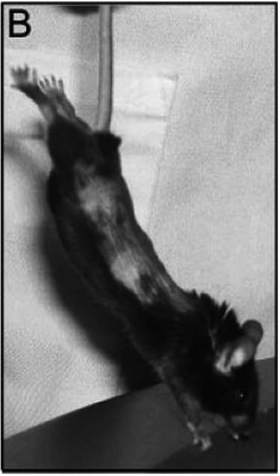
In the stretch group, the mice underwent stretching of the trunk for 10 min twice a day for 7 days in the following manner: each mouse was suspended by the tail such that its paws barely touched a surface slightly inclined relative to the vertical. In response to this maneuver, the mouse spontaneously extended its front and hind limbs (Fig. 1B) with the distance between ipsilateral hip and shoulder joints becoming 20–30% greater than the resting distance.

NIHMS173978.html

B: Method used to induce tissue stretch in vivo. Mice are suspended by the tail such that their paws barely touch a surface slightly inclined relative to the vertical. The mice spontaneously extend their front and hind limbs, the distance between ipsilateral hip and shoulder joints becoming 20–30% greater than the resting distance.

Effect of tissue stretch on TGF-β1 protein ex vivo. A: Time course of TGF-β1 protein levels in the culture media for non-stretched (closed circle, N = 4) and stretched (open circle, N = 4) mouse subcutaneous tissue explants on days 0, 1, and 3 post-stretch (or no stretch). All tissue samples were excised and incubated for 24h prior to day 0.B:Levels of TGF-β1 protein in the culture media at day 3 for non-stretched and stretched sbcutaneous tissue samples (N = 36). Asterisk (*) indicates significant difference from stretched (P = 0.002). Error bars represent standard errors.


Ex vivo tissue injury and cell viability assessment. A: Time course of LDH concentration in the culture media (marker of cell death) for non-stretched (closed circle, n = 4) and stretched (open circle, n = 4) mouse subcutaneous tissue explants on days 0, 1, and 3 post-stretch (or no stretch). B,C: Confocal microscopy imaging of mouse subcutaneous tissue explants showing similar proportions of live (green) and dead (red) cells in non-stretched (A) versus stretched (B) tissue after 3 day incubation post-stretch (or no stretch). Images are projections of three-dimensional image stacks. Scale bars: 40 μm.


Effect of tissue stretch in vivo on subcutaneous tissue Type-1 procollagen in mouse microinjury model. A: Mean ± SE procollagen percent staining area in non-injured versus injured sides, without stretch (N = 11) and with stretch (N = 10); B,C: Type-1 procollagen in non-stretched and stretched tissue (both injured). Scale bars, 40 μm.

First, stretching mouse subcutaneous tissue explants by 20% for 10 min decreases soluble TGF-β1 levels measured 3 days after stretch. During the 4-day incubation, TGF-β1 levels in the culture media increase in both stretched and non-stretched samples; because some tissue trauma occurs at the time of excision, this progressive rise in TGF-β1 is consistent with an injury response. However, the increase in the level of TGF-β1 is slower in the samples that are briefly stretched for 10 min, compared with samples that are not stretched. Since TGF-β1 auto-induction is an important mechanism driving the increase in collagen synthesis following tissue injury (Cutroneo, 2003), we hypothesized that brief stretching of tissue following injury in vivo would decrease soluble TGF-β1 levels, attenuate TGF-β1 auto-induction and decrease new collagen deposition.

Testing this hypothesis in a mouse subcutaneous tissue injury model showed that elongating the tissues of the trunk by 20–30% for 10 min twice a day significantly reduces the amount of subcutaneous new collagen 7 days following subcutaneous tissue injury.

Reducing scar and adhesion formation using stretch and mobilization is especially important for internal tissue injuries and inflammation involving fascia and organs, as opposed to open wounds. For open wounds (including surgical incisions) and severe internal tears (such as a ruptured ligament or tendon), wound closure and strength are critical and thus a certain amount of scarring is necessary and inevitable. In the case of minor sprains and repetitive motion injuries, however, scarring is mostly detrimental since it can contribute to maintaining the chronicity of tissue stiffness, abnormal movement patterns, and pain (Langevin and Sherman, 2007).

We have proposed that therapies that briefly stretch tissues beyond the habitual range of motion (physical therapy, massage, yoga, acupuncture) locally inhibit new collagen formation for several days after stretch and thus prevent and/or ameliorate soft tissue adhesions (Langevin et al., 2001, 2002, 2005, 2006a, 2007).


Proposed model for healing of connective tissue injury in the absence (A,C,E) and presence (B,D,F) of tissue stretch. In this model, brief stretching of tissue beyond the habitual range of motion reduces soluble TGF-β1 levels (D) causing a decrease in the fibrotic response, less collagen deposition, and reduced tissue adhesion (F) compared with no stretch (E). Black lines represent newly formed collagen.

Ukjent sin avatar

Structure of the rat subcutaneous connective tissue in relation to its sliding mechanism.

Om hvordan bindevevet i huden beveger seg når man strekker huden. Nevner at nerver og blodårer har veldig svingete baner i huden, og at dette gjør at vi tåler mye strekk og bevegelse uten at disse strekkes eller ødelegges.

http://www.ncbi.nlm.nih.gov/pubmed/14527168/

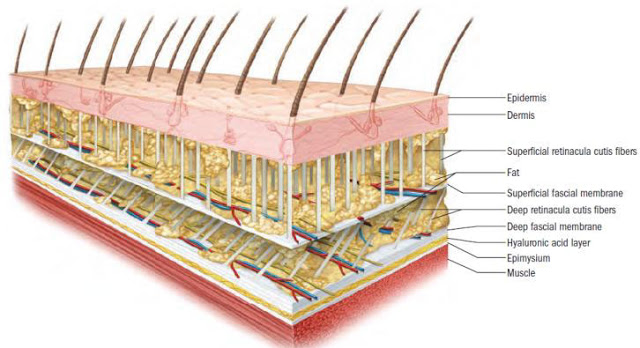
The subcutaneous connective tissue was observed to be composed of multiple layers of thin collagen sheets containing elastic fibers. These piled-up collagen sheets were loosely interconnected with each other, while the outer and inner sheets were respectively anchored to the dermis and epimysium by elastic fibers. Collagen fibers in each sheet were variable in diameter and oriented in different directions to form a thin, loose meshwork under conditions without mechanical stretching.

When a weak shear force was loaded between the skin and the underlying abdominal muscles, each collagen sheet slid considerably, resulting in a stretching of the elastic fibers which anchor these sheets. When a further shear force was loaded, collagen fibers in each sheet seemed to align in a more parallel manner to the direction of the tension. With the reduction or removal of the force, the arrangement of collagen fibers in each sheet was reversed and the collagen sheets returned to their original shapes and positions, probably with the stabilizing effect of elastic fibers.

Blood vessels and nerves in the subcutaneous connective tissue ran in tortuous routes in planes parallel to the unloaded skin, which seemed very adaptable for the movement of collagen sheets. These findings indicate that the subcutaneous connective tissue is extensively mobile due to the presence of multilayered collagen sheets which are maintained by elastic fibers.

Ukjent sin avatar

Immunohistochemical analysis of wrist ligament innervation in relation to their structural composition.

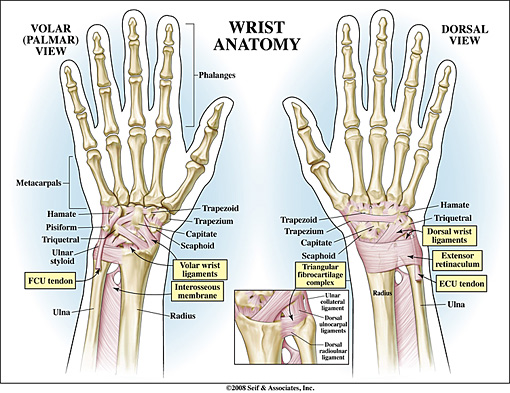
Nevner at noen ligamenter i håndleddethar mye innervasjon og er viktige for propriosepsjon, mens andre har ikke det. Sier at innervasjonen sitter helt ytterst i ligamentene. Nevner at det meste av innerverte ligamenter er på oversiden.

http://www.ncbi.nlm.nih.gov/pubmed/17218173/

The innervation pattern in the ligaments was found to vary distinctly, with a pronounced innervation in the dorsal wrist ligaments (dorsal radiocarpal, dorsal intercarpal, scaphotriquetral, dorsal scapholunate interosseous), an intermediate innervation in the volar triquetral ligaments (palmar lunotriquetral interosseous, triquetrocapitate, triquetrohamate), and only limited/occasional innervation in the remaining volar wrist ligaments. The innervation pattern also was reflected in the structural differences between the ligaments.

When present, mechanoreceptors and nerve fibers were consistently found in the loose connective tissue in the outer region (epifascicular region) of the ligament. Hence, ligaments with abundant innervation had a large epifascicular region, as compared with the ligaments with limited innervation, which consisted mostly of densely packed collagen fibers.

The results of our study suggest that wrist ligaments vary with regard to sensory and biomechanical functions. Rather, based on the differences found in structural composition and innervation, wrist ligaments are regarded as either mechanically important ligaments or sensory important ligaments. The mechanically important ligaments are ligaments with densely packed collagen bundles and limited innervation. They are located primarily in the radial, force-bearing column of the wrist. The sensory important ligaments, by contrast, are richly innervated although less dense in connective tissue composition and are related to the triquetrum. The triquetrum and its ligamentous attachments are regarded as key elements in the generation of the proprioceptive information necessary for adequate neuromuscular wrist stabilization.

Ukjent sin avatar

The fascia of the limbs and back – a review

Never det meste rundt bindevev: tensegritet, subcutan hud, skinligaments, stretching, ligamenter, nerver, m.m.

http://www.ncbi.nlm.nih.gov/pmc/articles/PMC2667913/

Fasciae probably hold many of the keys for understanding muscle action and musculoskeletal pain, and maybe of pivotal importance in understanding the basis of acupuncture and a wide range of alternative therapies (Langevin et al. 2001, 2002, 2006a; Langevin & Yandow, 2002; Iatridis et al. 2003). Intriguingly, Langevin et al. (2007) have shown that subtle differences in the way that acupuncture needles are manipulated can change how the cells in fascia respond. The continuum of connective tissue throughout the body, the mechanical role of fascia and the ability of fibroblasts to communicate with each other via gap junctions, mean that fascia is likely to serve as a body-wide mechanosensitive signaling system with an integrating function analogous to that of the nervous system (Langevin et al. 2004; Langevin, 2006). It is indeed a key component of a tensegrity system that operates at various levels throughout the body and which has been considered in detail by Lindsay (2008) in the context of fascia.

Anatomists have long distinguished between superficial and deep fascia (Fig. 1), although to many surgeons, ‘fascia’ is simply ‘deep fascia’. The superficial fascia is traditionally regarded as a layer of areolar connective or adipose tissue immediately beneath the skin, whereas deep fascia is a tougher, dense connective tissue continuous with it.


A diagrammatic representation of a transverse section through the upper part of the leg showing the relative positions of the superficial (SF) and deep fascia (DF) in relation to the skin (S) and muscles. Note how the deep fascia, in association with the bones [tibia (T) and fibula (F)] and intermuscular septa (IS) forms a series of osteofascial compartments housing the extensor, peroneal (PER) and flexor muscles. If pressure builds up within a compartment because of an acute or overuse injury, then the vascular supply to the muscles within it can be compromised and ischaemia results. ANT, anterior compartment; IM, interosseous membrane.

The presence of a significant layer of fat in the superficial fascia is a distinctive human trait (thepanniculus adiposus), compensating for the paucity of body hair. It thus plays an important role in heat insulation. In hairy mammals, the same fascia is typically an areolar tissue that allows the skin to be readily stripped from the underlying tissues (Le Gros Clark, 1945). Where fat is prominent in the superficial fascia (as in man), it may be organized into distinctive layers, or laminae (Johnston & Whillis, 1950), although Gardner et al. (1960) caution that these may sometimes be a characteristic of embalmed cadavers and not evident in the living person. Furthermore, Le Gros Clark (1945) also argues that fascial planes can be artefactually created by dissection. Conversely, however, some layers of deep fascia are more easily defined in fresh than in fixed cadavers (Lytle, 1979).

The superficial fascia conveys blood vessels and nerves to and from the skin and often promotes movement between the integument and underlying structures.

Skin mobility protects both the integument and the structures deep to it from physical damage. Mobility is promoted by multiple sheets of collagen fibres coupled with the presence of elastin (Kawamata et al. 2003). The relative independence of the collagen sheets from each other promotes skin sliding and further stretching is afforded by a re-alignment of collagen fibres within the lamellae. The skin is brought back to its original shape and position by elastic recoil when the deforming forces are removed. As Kawamata et al. (2003)point out, one of the consequences of the movement-promoting characteristics of the superficial fascia is that the blood vessels and nerves within it must run a tortuous route so that they can adapt to an altered position of the skin, relative to the deeper structures.

Although deep fascia elsewhere in the limbs is often not so tightly bound to the skin, nevertheless cutaneous ligaments extending from deep fascia to anchor the integument are much more widespread than generally recognized and serve to resist a wide variety of forces, including gravitational influences (Nash et al. 2004).

According to Bouffard et al. (2008), brief stretching decreases TGF-β1-mediated fibrillogenesis, which may be pertinent to the deployment of manual therapy techniques for reducing the risk of scarring/fibrosis after an injury. As Langevin et al. (2005) point out, such striking cell responses to mechanical load suggest changes in cell signaling, gene expression and cell-matrix adhesion.

In contrast, Schleip et al. (2007) have reported myofibroblasts in the rat lumbar fascia (a dense connective tissue). The cells can contract in vitro andSchleip et al. (2007) speculate that similar contractions in vivo may be strong enough to influence lower back mechanics. Although this is an intriguing suggestion that is worthy of further exploration, it should be noted that tendon cells immunolabel just as strongly for actin stress fibres as do fascial cells and this may be associated with tendon recovery from passive stretch (Ralphs et al. 2002). Finally, the reader should also note that true muscle fibres (both smooth and skeletal) can sometimes be found in fascia. Smooth muscle fibres form the dartos muscle in the superficial fascia of the scrotum and skeletal muscle fibres form the muscles of fascial expression in the superficial fascia of the head and neck.

Consequently, entheses are designed to reduce this stress concentration, and the anatomical adaptations for so doing are evident at the gross, histological and molecular levels. Thus many tendons and ligaments flare out at their attachment site to gain a wide grip on the bone and commonly have fascial expansions linking them with neighbouring structures. Perhaps the best known of these is the bicipital aponeurosis that extends from the tendon of the short head of biceps brachii to encircle the forearm flexor muscles and blend with the antebrachial deep fascia (Fig. 6). Eames et al. (2007) have suggested that this aponeurosis may stabilize the tendon of biceps brachii distally. In doing so, it reduces movement near the enthesis and thus stress concentration at that site.


The bicipital aponeurosis (BA) is a classic example of a fascial expansion which arises from a tendon (T) and dissipates some of the load away from its enthesis (E). It originates from that part of the tendon associated with the short head of biceps brachii (SHB) and blends with the deep fascia (DF) covering the muscles of the forearm. The presence of such an expansion at one end of the muscle only, means that the force transmitted through the proximal and distal tendons cannot be equal. LHB, long head of biceps brachii. Photograph courtesy of S. Milz and E. Kaiser.

Several reports suggest that fascia is richly innervated, and abundant free and encapsulated nerve endings (including Ruffini and Pacinian corpuscles) have been described at a number of sites, including the thoracolumbar fascia, the bicipital aponeurosis and various retinacula (Stilwell, 1957; Tanaka & Ito, 1977; Palmieri et al. 1986; Yahia et al. 1992; Sanchis-Alfonso & Rosello-Sastre, 2000; Stecco et al. 2007a).

Changes in innervation can occur pathologically in fascia, and Sanchis-Alfonso & Rosello-Sastre (2000) report the ingrowth of nociceptive fibres, immunoreactive to substance P, into the lateral knee retinaculum of patients with patello-femoral malignment problems.

Stecco et al. (2008) argue that the innervation of deep fascia should be considered in relation to its association with muscle. They point out, as others have as well (see below in ‘Functions of fascia’) that many muscles transfer their pull to fascial expansions as well as to tendons. By such means, parts of a particular fascia may be tensioned selectively so that a specific pattern of proprioceptors is activated.

It is worth noting therefore that Hagert et al. (2007) distinguish between ligaments at the wrist that are mechanically important yet poorly innervated, and ligaments with a key role in sensory perception that are richly innervated. There is a corresponding histological difference, with the sensory ligaments having more conspicuous loose connective tissue in their outer regions (in which the nerves are located). Comparable studies are not available for deep fascia, although Stecco et al. (2007a) report that the bicipital aponeurosis and the tendinous expansion of pectoralis major are both less heavily innervated than the fascia with which they fuse. Where nerves are abundant in ligaments, blood vessels are also prominent (Hagert et al. 2005). One would anticipate similar findings in deep fascia.

Some of the nerve fibres associated with fascia are adrenergic and likely to be involved in controlling local blood flow, but others may have a proprioceptive role. Curiously, however, Bednar et al. (1995)failed to find any nerve fibres in thoracolumbar fascia taken at surgery from patients with low back pain.

The unyielding character of the deep fascia enables it to serve as a means of containing and separating groups of muscles into relatively well-defined spaces called ‘compartments’.

One of the most influential anatomists of the 20th century, Professor Frederic Wood Jones, coined the term ‘ectoskeleton’ to capture the idea that fascia could serve as a significant site of muscle attachment – a ‘soft tissue skeleton’ complementing that created by the bones themselves (Wood Jones, 1944). It is clearly related to the modern-day concept of ‘myofascia’ that is popular with manual therapists and to the idea of myofascial force transmission within skeletal muscle, i.e. the view that force generated by skeletal muscle fibres is transmitted not only directly to the tendon, but also to connective tissue elements inside and outside the skeletal muscle itself (Huijing et al. 1998; Huijing, 1999).

One can even extend this idea to embrace the concept that agonists and antagonists are mechanically coupled via fascia (Huijing, 2007). Thus Huijing (2007) argues that forces generated within a prime mover may be exerted at the tendon of an antagonistic muscle and indeed that myofascial force transmission can occur between all muscles of a particular limb segment.

Wood Jones (1944) was particularly intrigued by the ectoskeletal function of fascia in the lower limb. He related this to man’s upright stance and thus to the importance of certain muscles gaining a generalized attachment to the lower limb when it is viewed as a whole weight-supporting column, rather than a series of levers promoting movement. He singled out gluteus maximus and tensor fascia latae as examples of muscles that attach predominantly to deep fascia rather than bone (Wood Jones, 1944).

They have argued that a common attachment to the thoracolumbar fascia means that the latter has an important role in integrating load transfer between different regions. In particular, Vleeming et al. (1995) have proposed that gluteus maximus and latissimus dorsi (two of the largest muscles of the body) contribute to co-ordinating the contralateral pendulum like motions of the upper and lower limbs that characterize running or swimming. They suggest that the muscles do so because of a shared attachment to the posterior layer of the thoracolumbar fascia. Others, too, have been attracted by the concept of muscle-integrating properties of fascia. Thus Barker et al. (2007) have argued for a mechanical link between transversus abdominis and movement in the segmental neutral zone of the back, via the thoracolumbar fascia. They feel that the existence of such fascial links gives an anatomical/biomechanical foundation to the practice in manual therapy of recommending exercises that provoke a submaximal contraction of transversus abdominis in the treatment of certain forms of low back pain.

An important function of deep fascia in the limbs is to act as a restraining envelope for muscles lying deep to them. When these muscles contract against a tough, thick and resistant fascia, the thin-walled veins and lymphatics within the muscles are squeezed and their unidirectional valves ensure that blood and lymph are directed towards the heart. Wood Jones (1944) contests that the importance of muscle pumping for venous and lymphatic return is one of the reasons why the deep fascia in the lower limb is generally more prominent than in the upper – because of the distance of the leg and foot below the heart.

In certain regions of the body, fascia has a protective function. Thus, the bicipital aponeurosis (lacertus fibrosus), a fascial expansion arising from the tendon of the short head of biceps brachii (Athwal et al. 2007), protects the underlying vessels. It also has mechanical influences on force transmission and stabilizes the tendon itself distally (Eames et al. 2007).

Ukjent sin avatar

Immunohistochemical demonstration of nerve endings in iliolumbar ligament.

Ett par studier som bekrefter at IL ligamentet er fullt av nervetråder. Viktig å vite for ligamentbehandlingen vi gjør på Verkstedet.

http://www.ncbi.nlm.nih.gov/pubmed/20081564

The function of iliolumbar ligament and its role in low back pain has not been yet fully clarified. Understanding the innervation of this ligament should provide a ground which enables formation of stronger hypotheses.

Iliac wing insertion was found to be the richest region of the ligament in terms of mechanoreceptors and nociceptors. Pacinian (type II) mechanoreceptor was determined to be the most common (66.67%) receptor followed by Ruffini (type I) (19.67%) mechanoreceptor, whereas free nerve endings (type IV) and Golgi tendon organs (type III) were found to be less common, 10.83% and 2.83%, respectively.

Those results indicate that ILL plays an important role in proprioceptive coordination of lumbosacral region alongside its known biomechanic support function. Moreover, the presence of type IV nerve endings suggest that the injury of this ligament might contribute to the low back pain.

Mer om IL ligamentet i denne studien:

http://repub.eur.nl/res/pub/9784/11693306.pdf

Ukjent sin avatar

Sensory innervation of the thoracolumbar fascia in rats and humans.

Studie som viser innervasjon av korsryggbindevev og påpeker at det er kun det ytre laget av bindevevet, det som er helt inn mot huden, som er tettpakket med sensoriske nerver og nociceptive fibre (som utskiller substans P og CGRP, og gir betennelser). De dypere lagene i midten av bindevevet eller ned mot musklene har nesten ingen nerveender eller sansesmuligheter.

http://www.ncbi.nlm.nih.gov/pubmed/21839150

Hele studien i min dropbox.

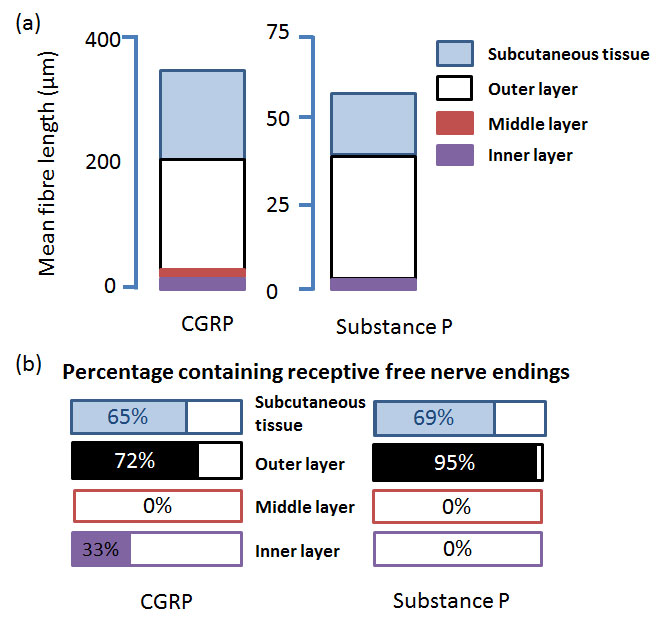
The subcutaneous tissue and the outer layer showed a particularly dense innervation with sensory fibers. SP-positive free nerve endings-which are assumed to be nociceptive-were exclusively found in these layers. Because of its dense sensory innervation, including presumably nociceptive fibers, the TLF may play an important role in low back pain.


Fig. 1. Structure of the rat thoracolumbar fascia (TLF) close to the spinous processes L4/L5. (a) Transversal section showing the three layers of the TLF (hematoxylin and eosin staining): OL, outer layer with transversely oriented collagen fibers; ML, middle layer composed of collagen fiber bundles oriented diagonally to the long axis of the body; IL, inner layer of loose connective tissue covering the multifidus muscle (muscle). SCT, subcutaneous tissue. (b) PGP 9.5-ir nerve fibers in the layers of the TLF. Black arrows, fibers on passage; open arrows, nerve endings. (c) Mean fiber length of PGP 9.5-ir fibers in the TLF. The great majority of all fibers were located in the outer layer (OL) of the fascia and in the subcutaneous tissue (SCT). White part of the bar: subcutaneous tissue plus outer layer of the TLF; black: middle layer; hatched: inner layer. n, number of sections evaluated.


Fig. 4. Distribution of CGRP and Substance P (SP)-immunoreactive nerve fibers in the TLF. (a) Mean fiber length of CGRP-ir nerve fibers. (b) Mean fiber length of SP-ir nerve fibers. Almost all fibers were found in the outer layer of the fascia and the subcutaneous tissue. The middle layer was free of SP-positive fibers. Gray part of the bars: subcutaneous tissue; white: outer layer of the TLF; black: middle layer; hatched: inner layer. n=number of sections evaluated. (c, d) Distribution of CGRP- (c) and SP-containing receptive free nerve endings (d) expressed as percent of the total number of CGRP- or SP-containing fibers in each layer. For classification as receptive endings, the structures had to exhibit at least three varicosities. SP-containing free nerve endings were restricted to the outer layer of the thoracolumbar fascia and the subcutaneous connective tissue while CGRP-containing free nerve endings were also found in the inner layer of the thoracolumbar fascia.

Og et bilde av de forskjellige bindevevslagene som er nevnt i denne studien.

Our study demonstrates that the rat TLF and the SCT overlying the fascia are densely innervated tissues, and therefore both the TLF and SCT, may play a role in low back pain. Most nerve fibers are located in the OL of the TLF and in the SCT, whereas in the ML nerve fibers are rare. Actually, no SP-ir fibers were found in this layer. Teleologically, the lack of fibers in the ML, particularly those containing SP, makes sense because each move- ment of the body causes shearing forces between the collagen fiber bundles, which might excite nociceptors.