Ukjent sin avatar

Evolution of Air Breathing: Oxygen Homeostasis and the Transitions from Water to Land and Sky

Omfattende studie som beskriver hvordan vi har tilpasset oss høyere nivåer av oksygen. Bekrefter alle innspill jeg har hatt om oksygen sin destruktive effekt og at beskyttelsen mot oksygenets skadevirkninger er viktigere enn å få mer oksygen inn i kroppen. Lunger, sirkulasjonssystem, hemoglobin, antioksidantsystem og det at mitokondriene er godt gjemt inni en annen celle som er godt beskyttet av en tett cellevegg er forsvars- og reguleringsmekanismer mot det livsfarlige men også livsnødvendige oksygenet.

Nevner at den opprinnelige atmosfæren bestod av veldig lite O2(1-2% eller 2,4 mmHg) og mer enn dobbelt så mye CO2. Dette er miljøet mitokondriene ble utviklet i for 2,7 billioner år siden, og som de fortsatt lever i inni cellene våre. Om oksygennivået økes tilmer enn dette blir mitokondriene dårligere og mister sin funksjon.

Nevner også at forsvarsmekanismene mot oksygen var tilstede helt fra starten. Og hemoglobin (blodcelle i dyr) og klorofyll (i planter) tilfredstiller alle de nødvendige beskyttende egenskapene vi trenger mot oksygen.

Nevner at CO2 var den første antioksidanten i evolusjonen.

Beskriver også det som skjer i mitokondria, at hypoxi (lavere O2 tilgjengelighet) gir mindre ROS og økt mitochondrial uncoupling (produksjon av varme istedet for ATP). Vi kan se dette som om mitokondriene går på tomgang med lavt turtall, mens ATP produksjon er høyt turtall og dermed også mer slitasje.

Nevner også evolusjonen av diafragma som den primære pustemuskelen.

http://www.ncbi.nlm.nih.gov/pmc/articles/PMC3926130/

Abstract
Life originated in anoxia, but many organisms came to depend upon oxygen for survival, independently evolving diverse respiratory systems for acquiring oxygen from the environment. Ambient oxygen tension (PO2) fluctuated through the ages in correlation with biodiversity and body size, enabling organisms to migrate from water to land and air and sometimes in the opposite direction. Habitat expansion compels the use of different gas exchangers, for example, skin, gills, tracheae, lungs, and their intermediate stages, that may coexist within the same species; coexistence may be temporally disjunct (e.g., larval gills vs. adult lungs) or simultaneous (e.g., skin, gills, and lungs in some salamanders). Disparate systems exhibit similar directions of adaptation: toward larger diffusion interfaces, thinner barriers, finer dynamic regulation, and reduced cost of breathing. Efficient respiratory gas exchange, coupled to downstream convective and diffusive resistances, comprise the “oxygen cascade”—step-down of PO2 that balances supply against toxicity. Here, we review the origin of oxygen homeostasis, a primal selection factor for all respiratory systems, which in turn function as gatekeepers of the cascade. Within an organism’s lifespan, the respiratory apparatus adapts in various ways to upregulate oxygen uptake in hypoxia and restrict uptake in hyperoxia. In an evolutionary context, certain species also become adapted to environmental conditions or habitual organismic demands. We, therefore, survey the comparative anatomy and physiology of respiratory systems from invertebrates to vertebrates, water to air breathers, and terrestrial to aerial inhabitants. Through the evolutionary directions and variety of gas exchangers, their shared features and individual compromises may be appreciated.

Introduction

Oxygen, a vital gas and a lethal toxin, represents a trade-off with which all organisms have had a conflicted relationship. While aerobic respiration is essential for efficient metabolic energy production, a prerequisite for complex organisms, cumulative cellular oxygen stress has also made senescence and death inevitable. Harnessing the energy from oxidative phosphorylation while minimizing cellular stress and damage is an eternal struggle transcending specific organ systems or species, a conflict that shaped an assortment of gas-exchange systems.

The respiratory organ is the “gatekeeper” that determines the amount of oxygen available for distribution. Gas exchangers arose as simple air-blood diffusion interfaces that in active animals progressively gained in complexity in coordination with the cardiovascular system, leading to serial “step-downs” of oxygen tension to maintain homeostasis between uptake distribution and cellular protection.

While a comprehensive treatment of the evolutionary physiology of respiration is beyond the scope of any one article, here we focuses on the first step of the oxygen cascade—convection and diffusion in the gas-exchange organ—to provide an overview of the diversity of nature’s “solutions” to the dilemma of acquiring enough but not too much oxygen from the environment.

Ubiquity of Reactive Oxygen Species

As reviewed by Lane (407) and Maina (466), the primary atmosphere contained mainly nitrogen, carbon dioxide, and water vapor. Much of these were swept away by meteorite bombardment and replaced with a secondary atmosphere (416-418, 579, 590) consisting of hydrogen sulfide, cyanide, carbon monoxide, carbon doxide, methane, and more water vapor from volcanic eruptions. Only trace oxygen (<0.01% present atmospheric level) existed (418), originated from inorganic (photolysis and peroxy hydrolysis) (622) and organic (photosynthesis) sources.

Oxidative respiration is the reverse process as O2 accepts four electrons successively to form water. Many of these steps are catalyzed by transitional metal ions (e.g., iron, copper, and magnesium). Therefore, aerobic respiration, oxygen toxicity and radiation poisoning represent equivalent forms of oxidative stress (407).

Origin of Oxygen Sensing and Antioxidation—Metalloproteins

If oxidative stress was present from the beginning, early anaerobic organisms must have possessed effective antioxidant defenses, including mechanism(s) for controlled O2 sensing, storage, transport, and release as well as pathways for neutralizing ROS. The general class of compounds that fulfill these requirements is the metalloproteins that transfer electrons via transitional metals (766, 767), for example, heme proteins and chlorophyll (Fig. 2).

Hydrogen may have been the first electron donor and CO2 the first electron acceptor for synthesizing ATP by chemiosmosis (408).

Because of a high redox potential of O2 as the terminal electron acceptor in electron transport, aerobic respiration is far more efficient in energy production (36 moles of ATP per mole of glucose) than anaerobic respiration (~5 moles). Aerobic multicellular organisms arose approximately 1 Ga and more complex organisms such as marine molluscs thrived approximately 550 to 500 million years ago (Ma). Exposed to a still low O2 tension in the deep sea, these organisms uniformly possessed metalloprotein respiratory pigments with a characteristically high O2 affinity for efficient O2 storage and slow O2 release thereby avoiding flooding the cell with excessive ROS (783). Contemporary myoglobin continues to perform this regulatory function in muscle.

It is well recognized that embryos and undifferentiated cells grow better in a hypoxia (129, 153). A low O2 tension (1%-5%) is an important component of the embryonic and mesenchymal stem cell “niche” that maintains stem cell properties, minimizes oxidative stress, prevents chromosomal abnormalities, improves clonal survival, and perpetuates the undifferentiated characteristics (457). In addition, hypoxia stimulates endothelial cell proliferation, migration, tubulogenesis, and stress resistance (752, 850) as well as preferential growth and vascularization of many malignant tumor cells; the latter observation constitutes the basis for the use of adjuvant hyperoxia to enhance tumor killing during irradiation and chemotherapy (277,738). Collectively, these responses to O2 tension suggest that the pulmonary gas-exchange organs adapted in a direction toward controlled restriction of cellular exposure to O2.

Origin of the Oxygen Cascade

The oxygen cascade (Fig. 6) describes serial step-downs of O2 tension from ambient air through successive resistances across the pulmonary, cardiac, macrovascular and microvascular systems into the cell and mitochondria. These resistances adapt in a coordinated fashion in response to changes in ambient O2 availability or utilization (333). Traditional paradigm holds that the primary selection pressure in the evolution of O2 transport systems is the efficiency of O2 delivery to meet cellular metabolic demands. If this is the sole function of the cascade, why are there so many resistances? Once we accept the anaerobic origin of eukaryotes and their persistent preference for hypoxia, an alternative paradigm becomes plausible, namely, the entire oxygen cascade could be viewed as an elaborate gate-keeping mechanism the major function of which is to balance cellular O2 delivery against oxidative damage.

Mitochondria consume the majority of cellular O2, directly control intracellular O2 tension, and generate most of the cellular ROS (136). Intracellular O2 tension in turn regulates mitochondrial oxidative phosphorylation, ROS production, cell signaling, and gene expression. Via O2-dependent oxidative phosphorylation the mitochondria act as cellular O2 sensors in the regulation of diverse responses from local blood flow to electric activity (830). Earlier studies reported that hypoxia increases mitochondrial ROS generation (126, 782, 823) via several mechanisms: (i) O2 limitation at the terminal complex IV (cytochrome c oxidase) in the mitochondrial electron transport chain causes electrons to back up the chain with increased electron leak to form superoxide (•O2−). (ii) Hypoxia induces conformational changes in complex III (ubiquinol cytochrome c oxidoreductase) to enhance superoxide formation (88, 287). (iii) Oxidized cytochrome c scavenges superoxide (722). Hypoxia-induced O2 limitation at complex IV leads to cytochrome c reduction, limiting its ability to scavenge superoxide and enhancing mitochondrial ROS leakage. However, recent studies of isolated mitochondria show that hypoxia actually reduces mitochondrial ROS generation and causes mitochondrial uncoupling, suggesting extramitochondrial sources of ROS generation in hypoxia (330). These conflicting reports remain to be resolved. Nonetheless, moderate hypoxia rapidly and reversibly downregulates mitochondrial enzyme transcripts, in parallel with reductions in mitochondrial respiratory activity and O2 consumption (631).

As paleo-atmospheric O2 concentration increased and multicellular aerobic organisms arose, the endosymbiotic mitochondria-host relationship faced the challenge of balancing conflicting needs of aerobic energy generation for the host cell and anaerobic protection for its internal power generator. The host cell must finely control a constant supply of O2 to the mitochondria for oxidative phosphorylation while simultaneously protecting mitochondria against oxidative damage by maintaining a near-anoxic level of local O2 concentration. This trade-off may have led to the evolution of ever more elaborate physicochemical barriers that created and maintained successive O2 partial pressure gradients, by convection and diffusion in the lung, chemical binding to hemoglobin, distribution and release via cardiovascular delivery, dissociation from hemoglobin, and diffusion into peripheral cells with or without myoglobin facilitated transport. As a result, the primordial anoxic conditions of the Earth necessary for survival and optimal function of this proteobacterial remnant are preserved inside the host cell. In working human leg muscle O2 tension at the sarcoplasmic and mitochondrial boundaries has been estimated at approximately 2.4 mmHg (0.32 kPa) (835) and muscle mitochondrial O2 concentration at half-maximal metabolic rate 0.02 to 0.2 mmHg (834), that is, in the range of the ancient atmospheric level approximately 2 Ga. Raising O2 tension above these levels impairs mitochondrial activity (672). In this context, protection of mitochondria from O2 exposure likely constitutes a major selection factor in the evolution of complex aerobic life while the various forms of systemic O2 delivery systems are necessary but secondary functions that sustain the “gate-keeping” barrier apparatus to maintain adequate partial pressure gradients along the O2 transport cascade and preserve the near-anoxic intracellular conditions for the mitochondria. In parallel with physical barriers, cells also developed various biochemical scavenging and antioxidant pathways to counteract the toxic effects of ROS as ambient oxygenation increased.

Defense against the Dark Arts of Oxidation

To summarize, the evolution of life on Earth has adapted to a wide range of ambient O2 levels from 0% to 35%. Periods of relative hyperoxia promote biodiversity and gigantism but incur excess oxidative stress and mandating the upregulation of antioxidant defenses. Periods of relative hypoxia promote coordinated conservation of resources and downregulation of metabolic capacities to improve energy efficiency and channel some savings into compensatory growth of gas-exchange organs. The trajectory of early evolution is at least partly coupled to O2 content of the atmosphere and the deep ocean, and there is a plausible explanation for the coupling, namely, defense against the dark arts of oxidation. Oxygen is capable of giving and taking life. The anaerobic proteobacteria escaped the fate of annihilation by taking refuge inside another cell and in a brilliant evolutionary move coopted its own oxygen-detoxifying machinery to provide essential sustenance for the host cell in return for nourishment and physical protection from oxidation. As the threat of oxidation increased with rising environmental O2 concentration, selection pressure escalated for ever more sophisticated defense mechanisms against oxidative injury and in direct conflict with simultaneously escalating selection pressures to harness the energetic advantage of oxidative phosphorylation.

Trading off the above opposing demands shaped all known respiratory organs, from simple O2 diffusion across cell membranes to facilitated transport via O2 binding proteins to gas-exchange systems of varying complexity (skin, gills, tracheae, book lung, alveolar lung, and avian lung) (Sections 2-5). Concurrently evolving with a convective transport system, these increasingly elaborate respiratory organs not only increase O2 uptake but also maintain air-to-mitochondria O2 tension gradients and intracellular O2 fluxes at a hospitable ancestral level. This epic struggle began at the dawn of life and persisted to the present on a universal scale. The evolutionary trajectory of air breathing has continued contemporary significance to the understanding of oxygen-dependent metabolic homeostasis, especially in relation to maturation, senescence, and aging-related organ degeneration and disease.
Ukjent sin avatar

You May Need a Nerve to Treat Pain: The Neurobiological Rationale for Vagal Nerve Activation in Pain Management.

Alt om hvordan vagus nerven demper smerte gjennom 5 mekanismer samtidig: dempe betennelser, dempe sympaticus aktivitet (fight-or-flight), redusere oksidativt stress, aktivere smertedempende områder i hjernen og utløse smertedempende opioider og cannabinoider i kroppen. Den bekrefter også at pusten stimulerer vagusnerven, spesielt når man puster med HRV-synkron pust slik vi gjør i Verkstedet Breathing System Autonom Pust.

http://www.ncbi.nlm.nih.gov/pubmed/24451632

Mer fra Studien her.

Abstract

Pain is a complex common health problem, with important implications for quality of life and with huge economic consequences. Pain can be elicited due to tissue damage, as well as other multiple factors such as inflammation and oxidative stress. Can there be one therapeutic pathway which may target multiple etiologic factors in pain? In the present article, we review evidence for the relationships between vagal nerve activity and pain, and between vagal nerve activity and five factors which are etiologic to or protective in pain. Specifically, vagal nerve activity inhibits inflammation, oxidative stress and sympathetic activity, activates brain regions that can oppose the brain «pain matrix», and finally it might influence the analgesic effects of opioids. Together, these can explain the anti-nociceptive effects of vagal nerve activation or of acetylcholine, the principal vagal nerve neurotransmitter. These findings form an evidence-based neurobiological rationale for testing and possibly implementing different vagal nerve activating treatments in pain conditions. Perspective: In this article, we show evidence for the relationships between vagal nerve activity and pain, and between vagal nerve activity and five factors which are etiologic to pain. Given the evidence and effects of the vagus nerve activation in pain, people involved in pain therapy may need to seriously consider activation of this nerve.


Ukjent sin avatar

Hypercapnia Improves Tissue Oxygenation

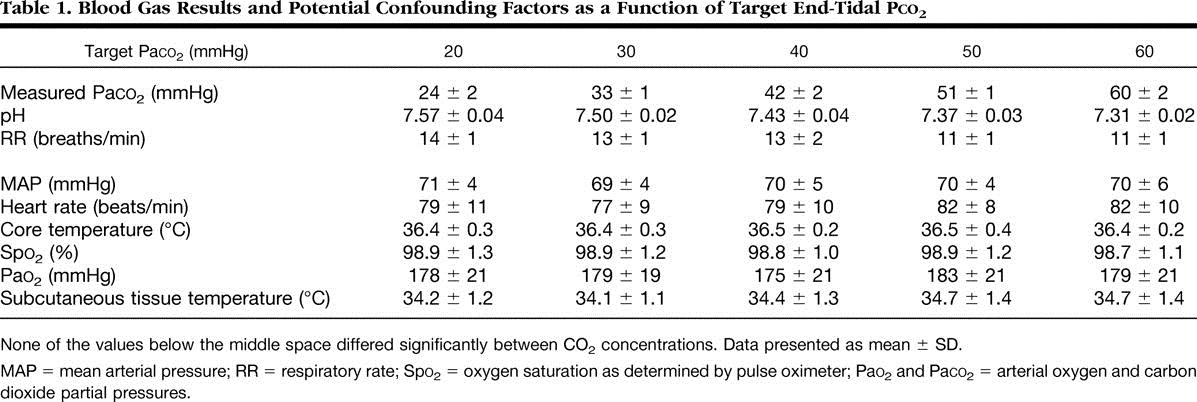
Denne viser hvordan økt CO2 øker oksygenering og blodsirkulasjon i huden og i vevet. Studien er gjort på individer i narkose og med assistert pust med konstant volum på 10ml/kg og pustefrekvens mellom 11 og 14.

http://journals.lww.com/anesthesiology/Fulltext/2002/10000/Hypercapnia_Improves_Tissue_Oxygenation.9.aspx

Background: Wound infections are common, serious, surgical complications. Oxidative killing by neutrophils is the primary defense against surgical pathogens and increasing intraoperative tissue oxygen tension markedly reduces the risk of such infections. Since hypercapnia improves cardiac output and peripheral tissue perfusion, we tested the hypothesis that peripheral tissue oxygenation increases as a function of arterial carbon dioxide tension (Paco2) in anesthetized humans.

Methods: General anesthesia was induced with propofol and maintained with sevoflurane in 30% oxygen in 10 healthy volunteers. Subcutaneous tissue oxygen tension (Psqo2) was recorded from a subcutaneous tonometer. An oximeter probe on the upper arm measured muscle oxygen saturation. Cardiac output was monitored noninvasively. Paco2 was adjusted to 20, 30, 40, 50, or 60 mmHg in random order with each concentration being maintained for 45 min.
Results: Increasing Paco2 linearly increased cardiac index and Psqo2: Psqo2 = 35.42 + 0.77 (Paco2), P < 0.001.
Conclusions: The observed difference in PsqO2 is clinically important because previous work suggests that comparable increases in tissue oxygenation reduced the risk of surgical infection from −8% to 2 to 3%. We conclude that mild intraoperative hypercapnia increased peripheral tissue oxygenation in healthy human subjects, which may improve resistance to surgical wound infections.
co2 og pustefrekvens
co2 og blodsirkulasjon og oksygenering
This hypercapnia-induced increase in cardiac output results in higher tissue oxygen pressure. In the current study Psqo2 went from 58 to 74 mmHg with only a 20-mmHg increase in Paco2. This increase in Psqo2 is likely to be clinically important because it is associated with a substantial reduction in the risk of surgical wound infection. 11 These results suggest that maintaining slight hypercapnia is likely to reduce the risk of surgical wound infection. Carbon dioxide management thus joins the growing list of anesthetic factors that do or are likely to influence the risk of wound infection.

Hypercapnia appears to provide other benefits as well. 35 For example, hypercapnia and hypercapnic acidosis decrease ischemia–reperfusion injury by inhibiting xanthine oxidase in an in vitro model of acute lung injury. 36 Hypercapnia similarly improves functional recovery and coronary blood flow during hypercapnic acidosis in an isolated blood-perfused heart model. 37 Furthermore, small tidal volume ventilation (associated with mild hypercapnia) and permissive hypercapnia have been shown to improve the outcome of patients with acute respiratory distress syndrome as a result of decreased mechanical stretch of the diseased pulmonary tissues. 38,39
Hypercapnia also increases cerebral blood flow and decreases cerebrovascular resistance through dilation of arterioles whereas hypocapnia does the opposite. 40,41 In a recent study, hyper- and hypocapnia were shown to influence brain oxygen tension in swine during hemorrhagic shock 42; hyperventilation and the resulting hypocapnia (15–20 mmHg) decreased cerebral oxygen pressure a further 56%. Hypercapnia has been utilized clinically to improve cerebral perfusion during carotid endarterectomy 43,44 and for emergency treatment of retinal artery occlusion. 45
Ukjent sin avatar

Arterial Blood Gas Changes During Breath-holding From Functional Residual Capacity

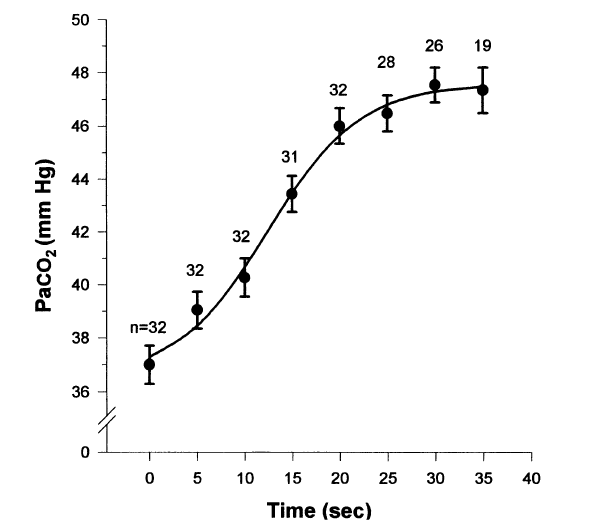
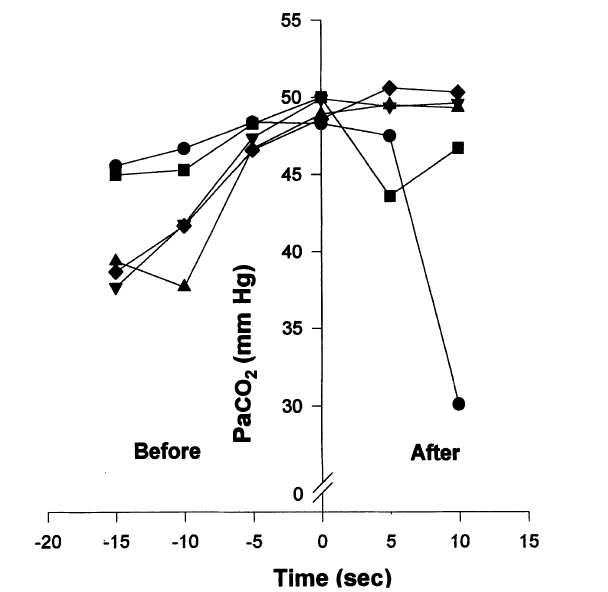
Endelig en studie som viser direkte hva som skjer med CO2 når vi holder pusten etter utpust. Her kaller de det etter «functional residual capacity» (wikipedia), altså etter en normal og passiv utpust. Denne studien viser først og fremst hva som skjer i løpet av én enkelt pustehold. De nevner også at det tar 5-10 sekunder etter innpust igjen før CO2 nivet begynner å synke. Så i metablsk pust (RecoveryBreathing) hvor vi puster 10sek inn/ut og har 10 sek pause bør CO2 lett kunne stabiliseres på et høyere nivå enn normalt.

http://www.ncbi.nlm.nih.gov/pubmed/8874252

Hele Studien: http://journal.publications.chestnet.org/data/Journals/CHEST/21737/958.pdf

Breath-holding serves as a model for studying gas exchange during clinical situations in which cessation of ventilation occurs. We chose to examine the arterial blood gas changes that occurred during breath-holding, when breath-holding was initiated from functional residual capacity (FRC) while breathing room air. Eight normal subjects who had a radial artery catheter placed for another study were taught to breath-hold on command from FRC. FRC was determined using respiratory inductance plethysmography. Arterial blood gas specimens were obtained at 5-s intervals until the termination of breath-holding. The average breath-holding time (+/-SD) was 35 (+/-10 s). The PaO2, PaCO2, and pH values were plotted against time and individually fit to logistic equations for each subject. The arterial PaO2 fell by a mean of 50 mm Hg during the first 35 s of breath-holding under these conditions, while the arterial PCO2 rose by a mean of 10.2 mm Hg during the first 35 s and the pH fell by a mean of 0.07 in the first 35 s. The rapid decline in PaO2 is greater than that previously reported using different methods and should be considered in clinical situations in which there is an interruption of oxygenation and ventilation at FRC while breathing room air. The changes in PaCO2 and pH are similar to those previously reported in paralyzed apneic patients.

CO2 etter utpust

We demonstrated during 5 breath-holding runs in which additional arterial specimens were obtained at 5 and 10 s after breath-hold (Fig 6) that the elevated arterial PCO2 did not begin to fall until at least 5 s after breaking from the breath-hold in 1 run and greater than 10 s in 3 other runs. This implies that the removal of the remaining arterial PCO2 by the lungs took longer than 5 s before recirculation from pulmonary capillary blood could lower the arterial PCO2 in the radial artery. The second less significant factor that explains the persistent elevation of arterial PCO2 is the concentrating effect caused by the decreasing LV. The concentrating effect occurs with breath-holding, as more oxygen is removed from the lungs than carbon dioxide is added. As carbon dioxide production continues to occur, the capillary

CO2 fall etter innpust

Ukjent sin avatar

Vagal tone and the inflammatory reflex

En studie som beskriver mekanismene bak hvordan vagus nerven henger sammen med immunsystemet. Med en sterk vagusnerve (høy HRV) kan betennelser dempes.

http://www.ccjm.org/content/76/Suppl_2/S23.long

Inhibition of sympathoexcitatory circuits is influenced by cerebral structures and mediated via vagal mechanisms. Studies of pharmacologic blockade of the prefrontal cortex together with neuroimaging studies support the role of the right hemisphere in parasympathetic control of the heart via its connection with the right vagus nerve. Neural mechanisms also regulate inflammation; vagus nerve activity inhibits macrophage activation and the synthesis of tumor necrosis factor in the reticuloendothelial system through the release of acetylcholine. Data suggest an association between heart rate variability and inflammation that may support the concept of a cholinergic anti-inflammatory pathway.

The neurovisceral integration model of cardiac vagal tone integrates autonomic, attentional, and affective systems into a functional and structural network. This neural network can be indexed by heart rate variability (HRV). High HRV is associated with greater prefrontal inhibitory tone. A lack of inhibition leads to undifferentiated threat responses to environmental challenges.

The cholinergic anti-inflammatory pathway

Acetylcholine and parasympathetic tone inhibit proinflammatory cytokines such as interleukin (IL)-6. These proinflammatory cytokines are under tonic inhibitory control via the vagus nerve, and this function may have important implications for health and disease.5

The cholinergic anti-inflammatory pathway is associated with efferent activity in the vagus nerve, leading to acetylcholine release in the reticuloendothelial system that includes the liver, heart, spleen, and gastrointestinal tract. Acetylcholine interacts with the alpha-7 nicotinic receptor on tissue macrophages to inhibit the release of proinflammatory cytokines, but not anti-inflammatory cytokines such as IL-10.

Approximately 80% of the fibers of the vagus nerve are sensory; ie, they sense the presence of proinflammatory cytokines and convey the signal to the brain. Efferent vagus nerve activity leads to the release of acetylcholine, which inhibits tumor necrosis factor (TNF)-alpha on the macrophages. Cytokine regulation also involves the sympathetic nervous system and the endocrine system (the hypothalamic-pituitary axis).

Inverse relationship between HRV and CRP

In a study of 613 airplane factory workers in southern Germany, vagally mediated HRV was inversely related to high-sensitivity CRP in men and premenopausal women, even after controlling for urinary norepinephrine as an index of sympathetic activity.6

Inverse relationship between HRV and fibrinogen

In a related report from the same study, vagal modulation of fibrinogen was investigated.7 Fibrinogen is a large glycoprotein that is synthesized by the liver. Plasma fibrinogen is a measure of systemic inflammation crucially involved in atherosclerosis.

CONCLUSION

The brain and the heart are intimately connected. Both epidemiologic and experimental data suggest an association between HRV and inflammation, including similar neural mechanisms. Evidence of an association between HRV and inflammation supports the concept of a cholinergic anti-inflammatory pathway.

Ukjent sin avatar

The inflammatory reflex: the role of the vagus nerve in regulation of immune functions

Nevner mekanismene bak hvordan vagus nerven demper betennelsesreaksjoner og kan bidra i autoimmune sykdommer.

http://www.ncbi.nlm.nih.gov/pubmed/22263327

Abstract

Experimental studies published in past years have shown an important role of the vagus nerve in regulating immune functions. Afferent pathways of this cranial nerve transmit signals related to tissue damage and immune reactions to the brain stem. After central processing of these signals, activated efferent vagal pathways modulate inflammatory reactions through inhibiting the synthesis and secretion of pro-inflammatory cytokines by immune cells. Therefore, pathways localized in the vagus nerve constitute the afferent and efferent arms of the so-called «inflammatory reflex» that participates in negative feedback regulation of inflammation in peripheral tissues. Activation of efferent pathways of the vagus nerve significantly reduces tissue damage in several models of diseases in experimental animals. Clinical studies also indicate the importance of the vagus nerve in regulating inflammatory reactions in humans. It is suggested that alteration of the inflammatory reflex underlies the etiopathogenesis of diseases characterized by exaggerated production of pro-inflammatory mediators. Therefore, research into the inflammatory reflex may create the basis for developing new approaches in the treatment of diseases with inflammatory components.

Ukjent sin avatar

Supplementary oxygen for nonhypoxemic patients: O2 much of a good thing?

Nevner alt om hvordan oksygen er skadelig i høye mengder, både i klinisk sammenheng og eller. Bl.a. fordi med høy O2 går CO2 ned og da trekker blodårene seg sammen.

http://www.ncbi.nlm.nih.gov/pmc/articles/PMC3218982/

Abstract

Supplementary oxygen is routinely administered to patients, even those with adequate oxygen saturations, in the belief that it increases oxygen delivery. But oxygen delivery depends not just on arterial oxygen content but also on perfusion. It is not widely recognized that hyperoxia causes vasoconstriction, either directly or through hyperoxia-induced hypocapnia. If perfusion decreases more than arterial oxygen content increases during hyperoxia, then regional oxygen delivery decreases. This mechanism, and not (just) that attributed to reactive oxygen species, is likely to contribute to the worse outcomes in patients given high-concentration oxygen in the treatment of myocardial infarction, in postcardiac arrest, in stroke, in neonatal resuscitation and in the critically ill. The mechanism may also contribute to the increased risk of mortality in acute exacerbations of chronic obstructive pulmonary disease, in which worsening respiratory failure plays a predominant role. To avoid these effects, hyperoxia and hypocapnia should be avoided, with oxygen administered only to patients with evidence of hypoxemia and at a dose that relieves hypoxemia without causing hyperoxia.

… the aim of oxygen therapy should be to increase the delivery of oxygen rather than to reach any arbitrary concentration in the arterial blood.

Hyperoxia marginally increases the arterial blood oxygen content (CaO2), theoretically increasing tissue oxygen delivery (DO2) assuming no reduction in tissue blood flow. However, oxygen causes constriction of the coronary, cerebral, renal and other key vasculatures – and if regional perfusion decreases concomitantly with blood hyperoxygenation, one would have a seemingly paradoxical situation in which the administration of oxygen may place tissues at increased risk of hypoxic stress. Any tissue damage in the course of oxygen administration would plausibly be attributed to the underlying disease process.

Ukjent sin avatar

Zazen and Cardiac Variability

Endelig en studie som nevner noen effekter av Zen meditasjon hvor fokus er på å puste veldig sakte, helt ned til 1 pust/min, bl.a. varme. Viser hvordan HRV påvirkes forskjellig, hvor hos noen økes hjerterytmen betraktelig i små perioder, noe som kan være en effekt av ting som skjer under meditasjonen. Desverre innser de at de burde ha målt kroppstemperatur, CO2, blodsirkulasjon og flere parametere for å se tydeligere hva som skjer i kroppen under så sakte pust.

http://www.psychosomaticmedicine.org/content/61/6/812.long

Figure 3 shows pre-Zazen rest period data from a Zen master (KS). This individual breathed close to 6 breaths/min throughout the rest period. Note the comparative absence of high-frequency cardiac variability and the major low-frequency peak at 0.1 Hz. A very-low-frequency peak also is notable. Note the periodic occurrence of irregularities in cardiac rhythm, superimposed on the sinus rhythm, each with a short R-R interval followed by a long one.

Figure 4 shows the last 5-minute period of Zazen from KS. During this period, respiration rate was slowed to less than 1 breath/min. Cardiac variability at this time occurred almost exclusively within the very-low-frequency range (Figure 4), with a power of more than 13 times greater than at rest.

Feelings of Warmth

The participants’ experiences of warmth during Zazen suggest that the body’s thermoregulatory system may have been affected by practice of this discipline. Subject KS, whose very-low-frequency wave amplitudes particularly increased, specifically remarked on his feelings of increased warmth during Zazen. Perhaps breathing at this very slow rate stimulated sympathetic reflexes that affect oscillations in HR within this very-low-frequency range. The meaning of these observations remains ambiguous, however, because we did not specifically examine thermoregulation, vascular tone, blood pressure, or any index of sympathetic activity. Although increases in HR occurred among some Rinzai subjects, these changes were small and not significant. Additional data are required on vascular and body temperature changes during Zazen and their possible relationship with increased sympathetic arousal and HR very-low-frequency wave activity. Previous observations of experienced Indian Yogis have similarly shown significant increases in body temperature during practice of yoga (58).

Ukjent sin avatar

Influence of breathing frequency on the pattern of respiratory sinus arrhythmia and blood pressure: old questions revisited

Mer om hvordan pustefrekvens styrer HRV, eller RSA (Respiratory Sinusoid Arrythmia) som de kaller det i denne studien. Nevner at 0,1 Hz (6 pust i minuttet) gir bedre HRV enn 0,2 Hz (12 pust i minuttet). Den viser også at 0,1 Hz gir høyest CO2 i utpusten. Og den bekrefter at det er vagus som styrer HRV siden blokkade av et hormon ikke påvirket HRV.

http://ajpheart.physiology.org/content/298/5/H1588

Respiratory sinus arrhythmia (RSA) is classically described as a vagally mediated increase and decrease in heart rate concurrent with inspiration and expiration, respectively. However, although breathing frequency is known to alter this temporal relationship, the precise nature of this phase dependency and its relationship to blood pressure remains unclear. In 16 subjects we systematically examined the temporal relationships between respiration, RSA, and blood pressure by graphically portraying cardiac interval (R-R) and systolic blood pressure (SBP) variations as a function of the respiratory cycle (pattern analysis), during incremental stepwise paced breathing. The principal findings were 1) the time interval between R-R maximum and expiration onset remained the same (∼2.5–3.0 s) irrespective of breathing frequency (P = 0.10), whereas R-R minimum progressively shifted from expiratory onset into midinspiration with slower breathing (P < 0.0001); 2) there is a clear qualitative distinction between pre- versus postinspiratory cardiac acceleration during slow (0.10 Hz) but not fast (0.20 Hz) breathing; 3) the time interval from inspiration onset to SBP minimum (P = 0.16) and from expiration onset to SBP maximum (P = 0.26) remained unchanged across breathing frequencies; 4) SBP maximum and R-R maximum maintained an unchanged temporal alignment of ∼1.1 s irrespective of breathing frequency (P = 0.84), whereas the alignment between SBP minimum and R-R minimum was inconstant (P > 0.0001); and 5) β1-adrenergic blockade did not influence the respiration-RSA relationships or distinct RSA patterns observed during slow breathing, suggesting that temporal dependencies associated with alterations in breathing frequency are unrelated to cardiac sympathetic modulation. Collectively, these results illustrate nonlinear respiration-RSA-blood pressure relationships that may yield new insights to the fundamental mechanism of RSA in humans.

Moreover, despite extensive research, it remains unclear as to whether RSA is driven by respiratory synchronous oscillations in blood pressure via the arterial baroreflex or whether RSA and blood pressure are independently related to respiration via nonbaroreflex mechanisms (41417284146). Clarification of these fundamental relationships is important for our understanding of how autonomic neural outflow is coupled with respiratory activity, especially given that RSA is considered a surrogate of cardiac parasympathetic modulation and is widely applied in the calculation of spontaneous baroreflex sensitivity (72434363739).

Following an initial 5-min stabilization period, paced breathing was commenced at 0.20, 0.15, and 0.10 Hz in randomized order for 5 min each, with 2-min rests between trials.

Table 1.

Effect of breathing frequency on baseline variables

Breathing Frequency, Hz
0.20 0.15 0.10 P
Respiratory sinus arrhythmia amplitude, ms 123 ± 44 167 ± 69 227 ± 92 <0.0001
R-R interval, ms 954 ± 83 958 ± 85 976 ± 82 0.17
Systolic blood pressure amplitude, mmHg 6.6 ± 1.8 8.8 ± 3.4 10 ± 3.1 <0.0001
Systolic blood pressure, mmHg 120 ± 14 119 ± 13 117 ± 14 0.40
Mean arterial blood pressure, mmHg 79 ± 8.2 78 ± 8.0 79 ± 9.6 0.81
Diastolic blood pressure, mmHg 62 ± 7.1 62 ± 7.2 61 ± 8.5 0.88
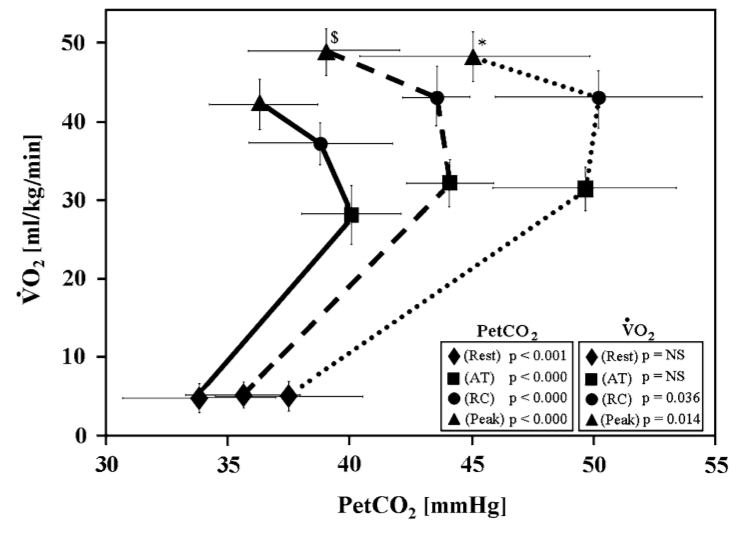
End-tidal CO2, % 5.04 ± 0.90 5.11 ± 0.93 5.20 ± 0.94 0.41
  • Values are means ± SD. No differences in R-R interval, systolic blood pressure, mean arterial blood pressure, diastolic blood pressure, or end-tidal CO2 were found across the breathing frequencies.

  • * Statistically significant compared with 0.20 Hz;

  • † statistically significant compared with 0.15 Hz.

The present investigation is the first to apply a pattern analysis approach to characterize nonlinearities in the temporal relationships between respiration, RSA, and blood pressure within the boundaries of the respiratory cycle. Under the conditions of this study the five major findings are: 1) the time interval between R-R maximum and expiration onset remained the same irrespective of breathing frequency, whereas R-R minimum progressively shifted from expiratory onset into midinspiration with slower breathing; 2) two qualitatively distinct stages of cardiac acceleration during slow 0.10-Hz breathing were observed in most subjects; 3) both the time intervals between inspiration onset and SBP minimum and between expiration onset and SBP maximum were unchanged by breathing frequency; 4) SBP maximum and R-R maximum maintained a fixed temporal alignment irrespective of breathing frequency, whereas, in contrast, the alignment between SBP minimum and R-R minimum varied according to breathing frequency; and 5) β1-adrenergic blockade did not influence the respiration-RSA relationships or distinct RSA patterns observed during slow breathing.

Finally, consistent with the established literature, we observed a clear relationship between breathing frequency and RSA amplitude (11234549). In this study 0.10-Hz breathing was associated with a ∼1.8-fold higher RSA amplitude compared with 0.20-Hz breathing. This is most likely due to breathing frequency coinciding with, and thus significantly augmenting, low frequency R-R interval fluctuations. The mechanism(s) behind this resonance phenomenon is unclear, but one proposal is that the augmentation of cardiovascular oscillations associated with slow breathing is due to global enhancement of arterial baroreflex sensitivity (7).

Conclusion

In summary, this study revealed several previously undescribed nonlinearities in respiration-RSA-blood pressure relationships in conscious humans. In contrast to prior studies, we found R-R minimum was not temporally aligned to expiration, beginning in late inspiration with slower breathing. Similarly, the onset of R-R maximum was not fixed to inspiratory onset but occurred in late expiration at slower breathing frequiencies. We also found that R-R maximum consistently occured ∼2.5–3.0 s following expiratory onset irrespective of breathing frequency. We observed two qualitatively distinct stages of cardiac acceleration during slow 0.10-Hz breathing, whereby the rate of cardiac acceleration occurring before inspiration was consistently less than the rate of cardiac acceleration following inspiratory onset, which to the best of our knowledge has not previously been described. Since these temporal dependencies were unaltered by selective β1-adrenergic blockade, they are most likely due to vagally mediated mechanisms. Furthermore, SBP maximum and R-R maximum maintained a temporal alignment of ∼1.1 s irrespective of breathing frequency whereas the delay between SBP minimum and R-R minimum became longer with slower breathing. These results demonstrate that the application of pattern analysis to the study of heart rate and blood pressure variability has potential to yield new insights into fundamental relationships between breathing and autonomic regulation of cardiovascular function.