Ukjent sin avatar

Effects of a 4-week training with voluntary hypoventilation carried out at low pulmonary volumes

Spennende studie som viser hvordan lav pustefrekvens i selve trening påvirker restitusjonen etterpå. F.eks. hvordan bikarbonat/natron (HCO3-) påvirker melkesyreterskel. Teknikken bestod i å holde pusten 4 sekunder etter utpust, i bolker a 5minutter i løpet av treningsperioden. Det gir spesielt lite oksygen i blodet, som gir mange positive resultater.

http://www.sciencedirect.com/science/article/pii/S1569904807002327

Helle studien her:  http://www.google.com/url?sa=t&rct=j&q=&esrc=s&source=web&cd=1&ved=0CCsQFjAA&url=http%3A%2F%2Fwww.researchgate.net%2Fpublication%2F5689789_Effects_of_a_4-week_training_with_voluntary_hypoventilation_carried_out_at_low_pulmonary_volumes%2Ffile%2F79e41509ccd387b0f9.pdf&ei=pM58UpS3IIKF4ATU24D4CA&usg=AFQjCNFVh6Yl8e_ScphKf6HTFiLp1CWKsw&sig2=B9Zq9u_LuDDzGru14OKsLQ&bvm=bv.56146854,d.bGE

This study investigated the effects of training with voluntary hypoventilation (VH) at low pulmonary volumes. Two groups of moderately trained runners, one using hypoventilation (HYPO, n = 7) and one control group (CONT, n = 8), were constituted. The training consisted in performing 12 sessions of 55 min within 4 weeks. In each session, HYPO ran 24 min at 70% of maximal O2 consumption (View the MathML source) with a breath holding at functional residual capacity whereas CONT breathed normally. A View the MathML source and a time to exhaustion test (TE) were performed before (PRE) and after (POST) the training period. There was no change in View the MathML source, lactate threshold or TE in both groups at POST vs. PRE. At maximal exercise, blood lactate concentration was lower in CONT after the training period and remained unchanged in HYPO. At 90% of maximal heart rate, in HYPO only, both pH (7.36 ± 0.04 vs. 7.33 ± 0.06; p < 0.05) and bicarbonate concentration (20.4 ± 2.9 mmol L−1 vs. 19.4 ± 3.5; p < 0.05) were higher at POST vs. PRE. The results of this study demonstrate that VH training did not improve endurance performance but could modify the glycolytic metabolism. The reduced exercise-induced blood acidosis in HYPO could be due to an improvement in muscle buffer capacity. This phenomenon may have a significant positive impact on anaerobic performance.

Ukjent sin avatar

Respiratory Dysregulation in Anxiety, Functional Cardiac, and Pain Disorders

Svært mye interessant i denne studien om pusten og CO2. Spesielt avsnittene om at kronisk smerte endrer pustemønsteret og senker CO2 nivået i kroppen.

http://www.ncbi.nlm.nih.gov/pubmed/11530714

http://www.mental-mechanics.org/pdf/Anxiety/FH%20Wilhelm%20et%20al%20-%20Respiratory%20dysregulation%20review.pdf

CHRONIC PAIN
Acute pain results in shortness of breath and an increase in ventila- tion (Nishino, Shimoyama, Ide, & Isono, 1999). A commonly used pain provocation in the laboratory is immersion of a limb into almost freezing water (cold pressor test), which is reliably followed by reduc- tions of PetCO2 among healthy people. (On the other hand, partial or full immersion of the face in cold water causes a modest reduction in ventilation, a component of the diving response). Patients who experi- ence intense chronic pain show these respiratory-related changes over extended periods. For example, migraine headache patients were found to have significantly lowered PetCO2 levels during an attack compared to controls and to migraine-free periods (Hannerz & Jogestrand, 1995), and there were even respiratory abnormalities immediately before an attack (Zhao, Sand, & Sjaastad, 1992). Glynn, Lloyd, & Folkhard (1981) examined arterial pH and PCO2 in 52 chronic pain patients (e.g., back pain, cancer-related pain). PCO2 was mark- edly lowered in these patients, and nerve blockade of pain resulted in a significant rise in PCO2.

Interestingly, blood pH was normal, indicat- ing a long-term blood chemistry compensation for chronic hyperven- tilation. In a sleep study of fibromyalgia patients, a high incidence of respiratory abnormalities such as periodic breathing were found, and arterial PCO2 was lowered in a subgroup of patients (Sergi et al., 1999). Many clinicians, including one of the present authors (Gevirtz), have had the opportunity to measure PetCO2 levels in hun- dreds of chronic muscle pain patients, and the clinical impression is that these levels are almost universally low (c.f., Timmons & Ley, 1994). Of course, pain may also play a role in the increased ventilation found in the FCD patients discussed above, especially during acute episodes of chest pain.

The increased ventilation during acute pain is likely a component of the fight-flight response, preparing the individual for immediate action and sometimes for being attacked or maybe injured. Interest- ingly, recent evidence from animal studies indicates that acute hyperventilation has anesthetic effects via the adrenergic and endogenous opiate system (Ide et al., 1994a, 1994b). Thus, the increased ventila- tion that first served to activate an individual for a fight may have the beneficial side effect of relieving pain if the fight is lost.

So far, no study we know of has examined if the chronic hyperventi- lation exhibited by pain patients is of any benefit to their pain experi- ence (and thus a coping strategy), is only a side effect of the intense pain, or makes their pain worse. One would expect that chronic hyper- ventilation is not healthy in these patients, as it is in other clinical groups, because it interferes with blood homeostatic mechanisms and can lead to a variety of physical symptoms. It has been suggested that by numbing pain, hyperventilation may become a short-term adaptive process with long-term negative consequences (Conway, 1994). Inter- esting in this context is that opioids are frequently prescribed to chronic pain patients to suppress their pain, and they typically also suppress ventilation via central nervous pathways, sometimes to a lethal extent. In summary, there is some initial evidence that hyper- ventilation plays a role in chronic pain, and some mediating mecha- nisms have been identified. However, most of the pain-hypocapnia relationship in chronic pain syndromes is not well understood.

Chronic Pain
Slow abdominal breathing is often taught as a relaxation technique in preparation for acute pain, such as surgery or childbirth, and it also helps patients counteract their tendency to hyperventilate during such events. As described above, the chronic hyperventilation that can accompany long-lasting pain may be especially problematic because it may have long-term negative organismic effects. It is therefore logi- cal that breathing training could be a valuable asset in the overall treat- ment of chronic pain disorders. However, no data are currently avail- able on the role of breathing training as a systematic intervention in these disorders. It is one author’s (Gevirtz) clinical experience that breathing training is in fact a powerful tool in a comprehensive pain management protocol. This is also a common assumption of most bodywork therapies of pain (c.f., Clifton-Smith, 1998). Here again, the capnometry readings are used to illustrate the physiological basis of the symptomatology.

Muscular pain can result from chronically tense muscles. Hubbard, Gevirtz, and their colleagues recently showed that a sympathetically mediated pathway to muscle spindles (trigger points), rather than pathways to muscle fibers, plays an important role in the maintenance of chronic muscular pain (Gerwin, Shannon, Hong, Hubbard, & Gevirtz, 1997; Hubbard & Berkoff, 1993; McNulty, Gevirtz, Hub- bard, & Berkoff, 1994). Psychological stress increased the activity of these spindles, which suggests that stress reduction could alleviate chronic muscle pain. Thus, relaxation induced by slow diaphragmatic breathing may have a beneficial effect on the activation of these spin- dles and reduce general muscle tension.

Ukjent sin avatar

CO2/H(+) sensing: peripheral and central chemoreception.

Omfattende gjennomgang av hvordan kroppen reagerer på CO2. Mange ting om CO2 er nevnt for aller første gang i denne studien fra 2003.

http://www.ncbi.nlm.nih.gov/pubmed/12818238

H(+) is maintained constant in the internal environment at a given body temperature independent of external environment according to Bernard’s principle of «milieu interieur». But CO2 relates to ventilation and H(+) to kidney. Hence, the title of the chapter. In order to do this, sensors for H(+) in the internal environment are needed. The sensor-receptor is CO2/H(+) sensing. The sensor-receptor is coupled to integrate and to maintain the body’s chemical environment at equilibrium. This chapter dwells on this theme of constancy of H(+) of the blood and of the other internal environments. [H(+)] is regulated jointly by respiratory and renal systems.

The respiratory response to [H(+)] originates from the activities of two groups of chemoreceptors in two separate body fluid compartments: (A) carotid and aortic bodies which sense arterial P(O2) and H(+); and (B) the medullary H(+) receptors on the ventrolateral medulla of the central nervous system (CNS). The arterial chemoreceptors function to maintain arterial P(O2) and H(+) constant, and medullary H(+) receptors to maintain H(+) of the brain fluid constant. Any acute change of H(+) in these compartments is taken care of almost instantly by pulmonary ventilation, and slowly by the kidney. This general theme is considered in Section 1.

The general principles involving cellular CO2 reactions mediated by carbonic anhydrase (CA), transport of CO2 and H(+) are described in Section 2. Since the rest of the chapter is dependent on these key mechanisms, they are given in detail, including the role of Jacobs-Stewart Cycle and its interaction with carbonic anhydrase. Also, this section deals briefly with the mechanisms of membrane depolarization of the chemoreceptor cells because this is one mechanism on which the responses depend. The metabolic impact of endogenous CO2 appears in the section with a historical twist, in the context of acclimatization to high altitude (Section 3). Because low P(O2) at high altitude stimulates the peripheral chemoreceptors (PC) increasing ventilation, the endogenous CO2 is blown off, making the internal milieu alkaline. With acclimatization however ventilation increases. This alkalinity is compensated in the course of time by the kidney and the acidity tends to be restored, but the acidification is not great enough to increase ventilation further. The question is what drives ventilation during acclimatization when the central pH is alkaline? The peripheral chemoreceptor came to the rescue. Its sensitivity to P(O2) is increased which continues to drive ventilation further during acclimatization at high altitude even when pH is alkaline. This link of CO2 through the O2 chemoreceptor is described in Section 4 which led to hypoxia-inducible factor (HIF-1). HIF-1 is stabilized during hypoxia, including the carotid body (CB) and brain cells, the seat of CO2 chemoreception. The cells are always hypoxic even at sea level. But how CO2 can affect the HIF-1 in the brain is considered in this section.

CO2 sensing in the central chemoreceptors (CC) is given in Section 5. CO(2)/H(+) is sensed by the various structures in the central nervous system but its respiratory and cardiovascular responses are restricted only to some areas. How the membranes are depolarized by CO2 or how it works through Na(+)/Ca(2+) exchange are discussed in this section. It is obvious, however, that CO2 is not maintained constant, decreasing with altitude as alveolar P(O2) decreases and ventilation increases. Rather, it is the [H(+)] that the organism strives to maintain at the expense of CO2. But then again, [H(+)] where? Perhaps it is in the intracellular environment.

Gap junctions in the carotid body and in the brain are ubiquitous. What functions they perform have been considered in Section 6. CO2 changes take place in lung alveoli where inspired air mixes with the CO2 from the returning venous blood. It is the interface between the inspired and expired air in the lungs where CO2 change is most dramatic. As a result, various investigators have looked for CO2 receptors in the lung, but none have been found in the mammals. Instead, CO2/H(+) receptors were found in birds and amphibians. However, they are inhibited by increasing CO2/H(+), instead of stimulated. But the afferent impulses transmitted to the brain produced stimulation in the efferents. This reversal of afferent-efferent inputs is a curious situation in nature, and this is considered in Section 7.

The NO and CO effects on CO2 sensing are interesting and have been briefly mentioned in Section 8.

A model for CO2/H(+) sensing by cells, neurons and bare nerve endings are also considered. These NO effects, models for CO2/H(+) and O2-sensitive cells in the CNS have been considered in the perspectives. Finally, in conclusion, the general theme of constancy of internal environment for CO2/H(+) is reiterated, and for that CO2/H(+) sensors-receptors systems are essential.

Since CO2/H(+) sensing as such has not been reviewed before, the recent findings in addition to defining basic CO2/H(+) reactions in the cells have been briefly summarized.

Ukjent sin avatar

The role of carbon dioxide (and intracellular pH) in the pathomechanism of several mental disorders. Are the diseases of civilization caused by learnt behaviour, not the stress itself?

Spennede studie som nevner mange viktige prinsipper rundt CO2 og hinter til at det er veldig mye vi har misforstått.

Beskriver spesielt godt hvordan lav CO2 (alkalose) gjør at cellemembraner blir mer permeabal (slipper ting lettere igjennom) for å balansere pH inne i cellen. Noe som fører til at også Ca2+ slippes inn i cellene og f.eks. muskelceller trekker seg mer sammen og nerveceller fyrer av lettere. Kroppen trenger mer oksygen og den setter igang en negativ spiral hvor økt pustefrekvens gir mindre CO2 som gir mer behov for oksygen og dermed en videreføing av økt pustefrekvens. Høy CO2 (acidose) gjør det motsatte, muskler slapper av, nervene roes ned og cellen beskyttes.

http://www.ncbi.nlm.nih.gov/pubmed/20128395
Hele studien: http://www.mppt.hu/images/magazin/pdf/xi-evfevfolyam-3-szam/a-szendioxid-es-az-intracellularis-ph.pdf

The role of carbon dioxide (CO2) is underestimated in the pathomechanism of neuropsychiatric disorders, though it is an important link between psyche and corpus.

The actual spiritual status also influences respiration (we start breathing rarely, frequently, irregularly, etc.) causing pH alteration in the organism;

on the other hand the actual cytosolic pH of neurons is one of the main modifiers of Ca2+-conductance, hence breathing directly, quickly, and effectively influences the second messenger system through Ca2+-currents. (Decreasing pCO2 turns pH into alkalic direction, augments psychic arousal, while increasing pCO2 turns pH acidic, diminishes arousal.)

One of the most important homeostatic function is to maintain or restore the permanence of H+-concentration, hence the alteration of CO2 level starts cascades of contraregulation. However it can be proved that there is no perfect compensation, therefore compensational mechanisms may generate psychosomatic disorders causing secondary alterations in the «milieu interieur».

Authors discuss the special physico-chemical features of CO2, the laws of interweaving alterations of pCO2 and catecholamine levels (their feedback mechanism), the role of acute and chronic hypocapnia in several hyperarousal disorders (delirium, panic disorder, hyperventilation syndrome, generalized anxiety disorder, bipolar disorder), the role of «locus minoris resistentiae» in the pathomechanism of psychosomatic disorders. It is supposed that the diseases of civilization are caused not by the stress itself but the lack of human instinctive reaction to it, and this would cause long-lasting CO2 alteration. Increased brain-pCO2, acidic cytosol pH and/or increased basal cytosolic Ca2+ level diminish inward Ca2+-current into cytosol, decrease arousal–they may cause dysthymia or depression. This state usually co-exists with ATP-deficiency and decreased cytosolic Mg2+ content. This energetical- and ion-constellation is also typical of ageing-associated and chronic organic disorders. It is the most important link between depression and organic disorders (e.g. coronary heart disease). The above-mentioned model is supported by the fact that H+ and/or Ca2+ metabolism is affected by several drugs (catecholemines, serotonin, lithium, triaecetyluridine, thyroxine) and sleep deprivation, they act for the logically right direction.

If we take our breath deeply or frequently our pulse speeds up proving that CO2 has left the pacemaker cells of heart, and the alkalic cytoplasm allowes Ca2+ to enter in the cytosol. If we keep on this kind of breathing for a long time, our pulse will slowly come back to the incipient frequency because the organism compensates the alteration of pH in the cytosol. The lack of H+ in cytosol increases conductance of Ca 2+ and some other ions (Harvey et al.), thus it increases contraction, metabolism and O2 requirement (Laffey et al.), and also increases excitability of neurons in the peripherium (Macefield et al.) and in the brain (Stenkamp et al.). All these events can be explained by the simple fact that lack of H+ (=alkalosis) increases transmembrane conductance of ions and (consequently) increases active ion-pumping mechanisms too (because the original ion-status has to be restored). By contrast, acidosis decreases the transmembrane Ca 2+-conductance (Tombaugh & Somjen), decreases excitability of neurons, and the decreased Ca 2+-conductance can dramatically affect neurotransmitter re- lease (Dodge et al..).

Then chronic hypocapnia or hypercapnia is followed by cascades which alter the whole ionmileu in the cells, they may alter even the neurotransmitter/endocrine sta- tus (Dodge et al.). Therefore, it is inappropriate to call that process a “compensational mechanism”, this name suggests that it is all right, while it is not! According to Claude Bernard alteration of milieu interieur can result in illness. It is very important that the new ion milieu is similarly stable as the original one and it does not allow the organism to restore the original status. Therefore we should name this happening a „complication” (in- stead of “compensation”).

Ukjent sin avatar

Fractional end-tidal CO2 as an index of the effects of stress on math performance and verbal memory of test-anxious adolescents.

Man tenker vanligvis, f.eks. under trening at høy CO2 fører til hyperventilering. Men vi vet også at hyperventilering fører til lav CO2, som vist i denne studien på ungdom med eksamensangst.

http://www.ncbi.nlm.nih.gov/pubmed/9792486

The research reported here was derived from the hypothesis that hyperventilation contributes to the decrement in performance observed in test-anxious students. From this point of view, students identified as test-anxious would be expected to hyperventilate to a greater extent than non-test-anxious students when confronted with the stress of testing. The experiment reported here tested this hypothesis by continuous capnographic monitoring of end-tidal CO2 and respiration frequency of 16 high- and 16 low-test-anxious boys and girls (ages 12-14 years) before and during tests of math and word-recall memory under conditions of high- and low-stress (i.e. ‘strong’ motivational instruction versus ‘weak’ motivational instructions). Consistent with predictions, high test-anxious students displayed lower levels of end-tidal CO2 (under the high-stress condition) and faster respiration frequencies than low test-anxious students. Both high- and low-test-anxious students scored higher on the math test under high-stress conditions, but differences between recall scores were not significant. Collateral data revealed a positive relationship between scores on the Nijmegen Hyperventilation Questionnaire and the Revised Suinn Test Anxiety Behavior Scale, and a negative relationship between the questionnaire scores (self reports of frequency of symptoms of hypocapnia) and drop in level of end-tidal CO2 during testing, i.e. high-test-anxiety group reported a greater frequency of symptoms of hyperventilation and a larger drop in level of end-tidal CO2 during testing than low-test-anxiety group.

Ukjent sin avatar

End-tidal CO2 as a predictor of survival in out-of-hospital cardiac arrest.

Nevner hvordan CO2 mengden i blod kan brukes til å vurdere ovelevelsesgraden av hjertestans.

Spontan blodsirkulasjon gjenopprettes når EtCO2 er på 27,6 mmHg.

http://www.ncbi.nlm.nih.gov/pubmed/22107764

The mean initial EtCO2 was 18.7 (95%CI = 18.2-19.3) for all patients. Return of spontaneous circulation was achieved in 695 patients (22.4%) for which the mean initial EtCO2 was 27.6 (95%CI = 26.3-29.0). For patients who failed to achieve ROSC, the mean EtCO2 was 16.0 (95%CI = 15.5-16.5).

Ukjent sin avatar

Cardiovascular and Respiratory Effect of Yogic Slow Breathing in the Yoga Beginner: What Is the Best Approach?

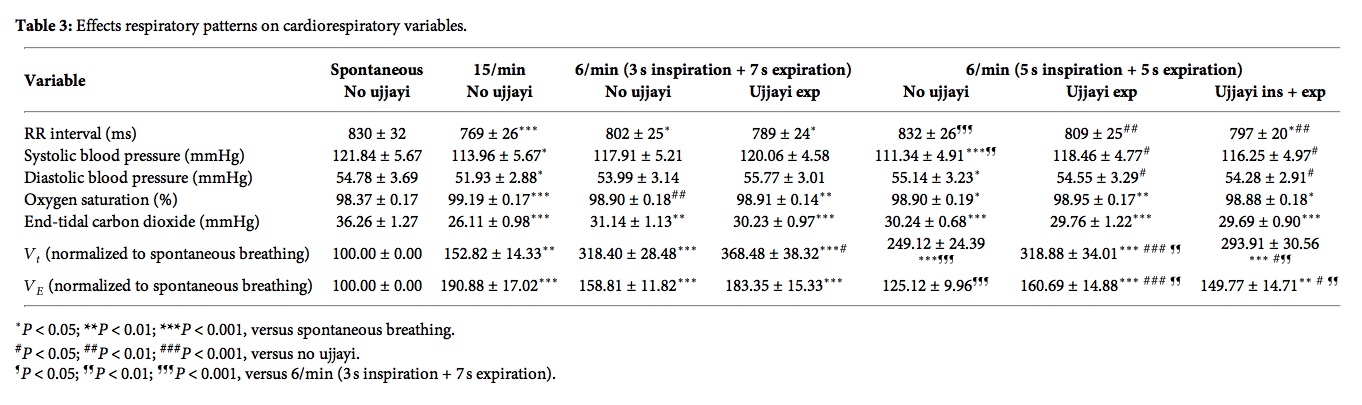
Svært spennende studie ang pustens påvirkning på vagusnerven, som bekrefter Breathing System sin Autonome pust, 5 sek inn og 5 sek ut, altså 6 pust i minuttet.

Nevner hvordan en usymmetrisk pust, f.eks. 3 inn og 7 ut, ikke påvirker vagusnerven i særlig stor grad. Og at ujjayi påvirker vagusnerven dårligere enn uanstrengt sakte pust. Ujjiayi pust har andre positivie effekter.

Nevner også at CO2 synker fra 36 til 30 mmHg når man puster 5/5 i forhold til når man ikke gjør pusteteknikk (spontan pust), men synker til 26 mmHg når man puster 15 pust i minuttet. Selv med 7s utpust synker CO2 ned til 31 mmHg. Dette er motsatt av hva studien på CO2 hos angstpasienter viser, hvor CO2 øker selv når pustefrekvensen senkes fra 15 til 12, og øker mer jo saktere pustefrekvensen er.

Nevner også noe svært interessant om at små endinger i oksygenmetning kan gi store endringer oksygentrykket pga bohr-effekt kurven som flater veldig ut ved 98% slik at en 0.5% økning i oksygenmetning kan likevel gir 30% økning i oksygentrykket.

http://www.hindawi.com/journals/ecam/2013/743504/

The slow breathing with equal inspiration and expiration seems the best technique for improving baroreflex sensitivity in yoga-naive subjects. The effects of ujjayi seems dependent on increased intrathoracic pressure that requires greater effort than normal slow breathing.

Respiratory research documents that reduced breathing rate, hovering around 5-6 breaths per minute in the average adult, can increase vagal activation leading to reduction in sympathetic activation, increased cardiac-vagal baroreflex sensitivity (BRS), and increased parasympathetic activation all of which correlated with mental and physical health [14]. BRS is a measure of the heart’s capacity to efficiently alter and regulate blood pressure in accordance with the requirements of a given situation. A high degree of BRS is thus a good marker of cardiac health [5].

The slow breathing-induced increase in BRS could be due to the increased tidal volume that stimulates the Hering-Breuer reflex, an inhibitory reflex triggered by stretch receptors in the lungs that feed to the vagus [6]. In addition, the slow breathing increases the oxygen absorption that follows greater tidal volume , as a result of reduction in the effects of anatomical and physiological dead space [78]. This might in turn produce another positive effect, that is, a reduction in the need of breathing. Indeed, a reduction in chemoreflex sensitivity and, via their reciprocal relationships, an increase in BRS, have been documented with slow breathing [913].

 pustmønster CO2
In comparison to spontaneous breathing, fast breathing led to a reduction in BRS, whilst all slow breathing (with or without ujjayi breathing) increased BRS. This increase was seen in both the symmetrical (5 second inspiration and expiration) and asymmetrical (3 second inspiration and 7 second expiration) slow breathing conditions. Engaging ujjayi breathing on the exhalation had the effect of reducing the increase in BRS of slow breathing alone, and this was further reduced with ujjayi on the inspiration and expiration (which was not significantly higher than baseline). These differences were even more pronounced with respect to controlled breathing at 15 breath/minute, which also showed highly significant differences with respect to spontaneous breathing, but in the opposite direction.
When slow breathing was done in conjunction with ujjayi breathing, oxygen saturation further increased, though only slightly. Overall, however, this was a highly significant change given that baseline oxygen saturation was already high approximately 98.3% (Table 3).
However, with 15 breath/minute controlled breathing the increase in oxygen saturation occurred with a large relative increase in Ve and a marked drop in end-tidal carbon dioxide. Conversely, with slow breathing, the increase in oxygen saturation occurred with only a moderate increase in Ve and drop in carbon dioxide.
The greatest improvement was found in slow breathing without ujjayi, while breathing controlled at a rate of 15/min caused a drop in BRS. In all forms of slow breathing there was a statistically significant increase in oxygen saturation from the mean baseline of 98.3%, confirming the relationship between high levels of oxygen absorption and BRS.
In this study, we show that slow breathing and increased oxygen absorption lead to enhanced BRS. This might result from several possible factors, all interrelated. In theory, the increase in arterial oxygen partial pressure increases blood pressure, which in turn could stimulate the baroreceptors and improve the BRS gain. This was recently observed in healthy [28] and diabetic subjects [25]. The seemingly small extent of the increase in oxygen saturation should not be overlooked. In fact, the haemoglobin dissociation curves states that at higher saturation values small changes reflex large changes in the partial pressure of oxygen.
Because the oxygen tension (and not oxygen saturation) is the chemoreflex input signal, this explains why in a previous study the administration of oxygen in normoxia induced a significant increase in BRS and parasympathetic activity despite a small increase in oxygen saturation [25].
We did not find any significant difference between asymmetrical and symmetrical breathing during slow breathing. We suggest that most of these results could be due to the prolonged expiratory time (in fact the 3-second inspiratory time of the asymmetrical breathing was very close to the spontaneous breathing). In the yoga tradition several degrees of asymmetries were adopted. While some of these could have specific effects (and could be matter for further investigations), our results suggest that an expiratory time of at least 5 seconds was sufficient to elicit most of the results observed.
Based on our findings, slow breathing with similar inspiration and expiration times appears the most effective and simple way to heighten the BRS and improve oxygenation in normoxia. Ujjayi breath demonstrates limited added benefit over slow breathing done at 6/min in normoxia; however, the effects could be more pronounced in hypoxia, and this could be matter for future investigations.


Ukjent sin avatar

NF-κB Links CO2 Sens ing to Innate Immuni ty and Inflammation in Mammalian Cells

Viktig studie som nevner at økt CO2 kan dempe betennelser.

http://www.jimmunol.org/content/185/7/4439.long

In this study, we demonstrate that mammalian cells (mouse embryonic fibroblasts and others) also sense changes in local CO2 levels, leading to altered gene expression via the NF-κB pathway. IKKα, a central regulatory component of NF-κB, rapidly and reversibly translocates to the nucleus in response to elevated CO2. This response is independent of hypoxia-inducible factor hydroxylases, extracellular and intracellular pH, and pathways that mediate acute CO2-sensing in nematodes and flies and leads to attenuation of bacterial LPS-induced gene expression. These results suggest the existence of a molecular CO2 sensor in mammalian cells that is linked to the regulation of genes involved in innate immunity and inflammation.

FIGURE 7.Hypercapnia promotes an anti-inflammatory profile of gene expression. A PCR array of genes known to be involved in the NF-κB signaling cascade was performed on A549 cells exposed to ambient or 10% CO2 ± LT (100 ng/ml) for 4 h. A selection of differentially expressed genes from the array were chosen for validation. CCL2 (A), ICAM1 (B), TNF-α (C), and IL-10 (D) message levels were determined by quantitative real-time PCR and expressed as a percentage of LT-induced gene expression at 0.03% CO2 (n = 3 ± SEM, one-way ANOVA, Tukey post-test).

Traditionally, CO2 has been considered a waste product of respiration, and its biologic activity is poorly understood in terms of gene expression. However, a recent study reported differential gene expression in elevated CO2 (9).

This study suggests the existence of an intracellular CO2 sensor that is associated with anti-inflammatory and immunosuppressive signaling, is independent of intracellular and extracellular pH, and could account for the above clinical observations. CO2 can profoundly influence the transcriptional activation of the NF-κB pathway but its transcriptional effects may extend to other as yet uncharacterized pathways. Understanding the molecular mechanisms of CO2-dependent intracellular signaling could lead to new therapies in which the suppression of immunity or inflammation is clinically desirable.

Ukjent sin avatar

Carbon Dioxide Transport and Carbonic Anhydrase in Blood and Muscle

Viktig studie med alt om hvordan CO2 går fra celle til vev til blod og forholdet mellom bikarbonat og melkesyre.

http://m.physrev.physiology.org/content/80/2/681.full

One of the major requirements of the body is to eliminate CO2. The large, but highly variable, amount of CO2 that is produced within muscle cells has to leave the body finally via ventilation of the alveolar space. To get there, diffusion of CO2 has to occur from the intracellular space of muscles into the convective transport medium blood, and diffusion out of the blood has to take place into the lung gas space across the alveolocapillary barrier.

HCO3 −, and H+, are required for a great variety of other cellular functions such as secretion of acid or base and some reactions of intermediary metabolism. In exercising skeletal muscle, the other “end product” of metabolism, lactic acid, contributes huge amounts of H+and by these affects the predominance of the three forms of CO2, because HCO3 − as well as carbamate are critically dependent on the concentration of H+.

Discussion of the overall transport of CO2in skeletal muscle has to take into account this contribution of lactic acid and its involvement in kinetics and equilibria of CO2reactions.

Table 1.

CO2 transport in blood at rest and exercise

Arterial Rest Exercise
Venous v-a diff, mmol/l blood Venous v-a diff, mmol/l blood
mM mmol/l blood mM mmol/l blood mM mmol/l blood
Plasma
pH† 7.40 7.37 7.145*
PCO 2 40 46 78*
Dissolved 1.23 0.68 1.42 0.78 0.10 2.40 1.32 0.64
Bicarbonate 24.58 13.52 26.38 14.51 0.99 26.65* 14.66 1.14
Carbamate 0.54 0.30 0.55 0.30 0.01 0.44 0.24 −0.06
Sum plasma 26.35 14.49 28.35 15.59 1.10 29.49 16.22 1.72
Red blood cell
pH† 7.20 7.175 6.996
Hb, g/l 333
Hct† 0.45
HbO2, fract† 0.97 0.75 0.25
Dissolved 1.23 0.4 1.42 0.46 0.06 2.40 0.78 0.38
Bicarbonate 15.47 5.01 16.84 5.46 0.44 18.91 6.13 1.11
Carbamate 1.66 0.75 1.86 0.84 0.09 2.12 0.95 0.21
Sum RBC 18.37 6.16 20.12 6.75 0.59 23.43 7.86 1.70
Total CO2 20.65 22.34 1.69 24.08 3.42

1.  Dissolved CO2

Only a small portion, ∼5% of total arterial content, is present in the form of dissolved CO2.

At rest, the contribution of dissolved CO2 to the total arteriovenous CO2 concentration difference is only ∼10%. However, during heavy exercise, the contribution of dissolved CO2 can increase sevenfold and then makes up almost one-third of the total CO2 exchange.

2.  CO2 bound as HCO3−

The majority of CO2 in all compartments is bound as HCO3−.

During a heavy work load of the muscle, high levels of lactic acid are present in addition to CO2, aggravating the decrease in pH. With this low pH, the fraction of HCO3− in total CO2 is diminished. Although at pH 7.4 HCO3− is 20-fold compared with dissolved CO2, it is only 13-fold at the normal intraerythrocytic pH of 7.2, and the ratio may fall to much lower values at plasma pH values of considerably below 7 during maximal exercise.

For the example of heavy exercise given in Table 1, HCO3 −contributes only two-thirds of total CO2 exchange, whereas at rest this figure is ∼85%.

3.  CO2 bound as carbamate

The amount of CO2 bound as carbamate to hemoglobin in erythrocytes or to plasma proteins depends on O2 saturation of hemoglobin and 2,3-diphosphoglycerate (2,3-DPG) concentration in the case of erythrocytes, and on H+concentration in the case of both red blood cells and plasma (61, 68, 134, 135). During passage of blood through muscle, O2 saturation and H+ concentration change considerably, in particular during exercise. However, the increase in hemoglobin desaturation and the increase in H+ concentration experienced by red blood cells in the capillary during exercise affect the amount of CO2bound to hemoglobin in opposite directions. Whereas deoxygenation of hemoglobin increases the amount of CO2 bound to hemoglobin, acidification decreases the amount of carbamate formed by hemoglobin.

Carbamate concentration in plasma does not contribute to overall CO2 exchange according to Table 1, which is in agreement with Klocke’s conclusion (105). During heavy exercise, arterial plasma contains an even higher concentration of carbamate than venous plasma. The physicochemical reason for this is that, in the absence of an oxylabile carbamate fraction as exhibited by hemoglobin, the increase in carbamate by the elevated PCO 2in venous plasma is counteracted or overruled by a decrease in carbamate caused by the fall in pH.


Fig. 2.

Diffusion constants of CO2 (in cm2·min−1·atm−1) at 22°C in different tissues as a function of the protein concentration (points) and in hemoglobin solutions of different hemoglobin concentrations (solid line). [Redrawn from Gros and Moll (64).]

2.  Diffusion of HCO3−

The diffusion coefficients for HCO3− are about one-half as great as those for CO2, and in the presence of proteins, its diffusion can be expected to be hindered to an extent comparable to that observed for CO2 diffusion.

Therefore, the HCO3− concentration gradient per CO2concentration gradient is higher at low PCO 2, and vice versa. This implies that the relative contribution of facilitated diffusion is highest at lowest PCO 2values and decreases consistently with increasing PCO 2 (66, 67).

3.  Diffusion of H+

The diffusion coefficient of free H+ in aqueous solutions at 25°C is 9.3 × 10⁻⁵ cm2/s (123), i.e., H+ possess a more than five times greater diffusivity in water than CO2. Nevertheless, free diffusion of H+ is a rather ineffective mechanism of H+ transport, because at physiological values of pH, the H+ concentration gradients within cells cannot exceed the order of 10−7 to 10−8 M.

This very much higher concentration difference of the bound H+ compensates for the lower diffusion coefficients of mobile buffers.

In the case of very large protein molecules, it has even been shown that facilitated H+ transport occurs very efficiently not only by translational but in addition by rotational protein diffusion (62, 63). Thus facilitated CO2 diffusion essentially occurs by diffusion of HCO3− and simultaneous buffer-facilitated H+ diffusion.

Fig. 3.

Calculated CO2 fluxes across a layer of buffer solution as a function of the average pH value in this layer. The boundary CO2partial pressures are constant with 6.65 and 5.32 kPa (50 and 40 mmHg), respectively. The solution is 66 mM phosphate with varying contents of base. Thickness of the layer is 180 μm. Carbonic anhydrase is assumed to be present in excess. Solid curve represents the total flux of CO2, and dashed curve represents the flux by free diffusion only. [Redrawn from Gros et al. (67).]

1.  Dissolved CO2

Erythrocyte membranes, though, are highly permeable to CO2, the absolute permeability values cited being in the range of 0.35–3 cm/s (Table 3), as has been thoroughly discussed by Klocke (105).

2.  HCO3−

Permeability for HCO3− of artificial phospholipid vesicles, which are devoid of any anion exchanger, is six orders of magnitude lower (Table 3; Ref. 127) than it is for dissolved CO2. However, erythrocyte membranes of all vertebrates with the exception of agnathans (hagfishes and lampreys; see reviews, Refs. 80, 126, 136) do have a rapid anion (HCO3−/Cl−) exchange protein, capnophorin or band 3 (see review by Jennings, Ref. 90), which exchanges HCO3− for Cl− at a ratio of 1:1.

Thus the permeability of the erythrocyte membrane to HCO3− is considerably increased over that of lipid bilayers but still about three to four orders of magnitude lower than the permeability for dissolved CO2 (Table 3).

3.  H+

Proton permeability of phospholipid vesicles is five times higher than HCO3− permeability, 1.8 × 10⁻⁵cm/s (127). However, because the H+concentration gradient across the cell membrane is very small (intracellular pH 7.2, extracellular pH 7.4, ΔpH 0.2), the product permeability × concentration gradient, is also very small:P H+ × cH+ = 1.8 × 10⁻⁵ cm/s × 2.3 × 10⁻⁸ M = 4 × 10⁻¹³ mmol H+·cm−2·s−1. Thus diffusion of free H+ across the membrane is so small that it cannot support any facilitated CO2 diffusion.

A third mechanism of H+ transport across the red cell membrane is by the H+/lactate carrier and by nonionic diffusion of lactic acid, both of which require the presence of lactate (27, 138).

Thus, in the presence of lactate, the above H+ flux estimate would have to be raised to ∼4 × 10⁻⁹mmol·cm−2· s−1, which is much lower than the flux estimate for HCO3−. The fluxes of both ions, however, are more than two orders of magnitude smaller than a physiological CO2 flux.

In conclusion, the permeability of dissolved CO2 is much greater than the effective permeability of HCO3− and H+. At the same time, more than two-thirds of the CO2 transported in either red blood cells or plasma is transported in the form of HCO3−. This makes it appear essential that CO2 and HCO3− can be converted into each other quite rapidly at the boundary between the two compartments: intraerythrocytic space and plasma. A high velocity of this interconversion is achieved by the enzyme CA.

Although HCO3− and H+ are produced in equal amounts by the hydration of CO2, the distribution of the two products among the two compartments, intraerythrocytic space and plasma, is quite different at electrochemical equilibrium. Bicarbonate is transported to a larger fraction within plasma than within erythrocytes because the equilibrium pH of the plasma is more alkaline than the intraerythrocytic pH (Table 1). In contrast, H+ are transported to a larger fraction within erythrocytes than in plasma because the nonbicarbonate buffer capacity of erythrocytes exceeds that of plasma by a factor of ∼10.

A) RAPID CATALYSIS OCCURS ONLY WITHIN ERYTHROCYTES. Carbon dioxide enters the red blood cells, and there is rapidly converted to HCO3− and H+. When the red blood cell has reached the end of the capillary, electrochemical equilibrium across erythrocyte membrane is not yet established, because H+concentration and even more so HCO3− concentration are too high within red blood cells compared with plasma concentrations. A significant fraction of the intraerythrocytic HCO3−has left the cell via HCO3−/Cl− exchange already during capillary transit. After blood has left the capillary, part of HCO3− and H+ that has been produced within the red blood cell is dehydrated back to give CO2; CO2 then leaves the cell and enters the plasma, where the slow uncatalyzed reaction hydrates CO2 to establish final equilibrium. During this postcapillary process, the plasma pH shifts slowly in the acidic direction.

1.  Catalysis by CA in blood

Carbonic anhydrase is found in the blood of all vertebrates.

The acceleration of the hydration-dehydration velocity by CA within erythrocytes is considerable. An activity (factor by which the rate of CO2 hydration is accelerated) of 13–14,000 was reported by Forster and Itada (46), and figures of 23,000 and 25,000 have been obtained by Wistrand (184) and by Forster et al. (47).

membrane-bound CA IV was found to be associated with capillary endothelium, sarcolemma, and sarcoplasmic reticulum (SR) (24).

The effect of presence of CA in the plasma has been studied by Wood and Munger (186) for the rainbow trout. They found that CA attenuated postexercise increases in PCO 2 and decreases in arterial pH by producing an increase in CO2excretion during exercise. However, the normal postexercise hyperventilation was also greatly attenuated when CA was present in the plasma, as was the normal increase in the plasma levels of epinephrine and norepinephrine. They concluded that CO2 is an important secondary drive to ventilation in fish, and by increasing CO2 excretion by the presence of CA in the plasma this drive is diminished. The plasma CA inhibitor will ensure that no CA activity of hemolysed erythrocytes is present and thus will contribute to maintain a high level of ventilation in certain situations, which will be favorable for O2 supply.

A.  CO2 Production in Muscle

Unlike most other tissues, muscle exhibits a vast range of aerobic (and anaerobic) metabolic rates. In humans, O2 consumption of muscle tissue can rise 15- to 20-fold from resting values of ∼10 μmol·min−1·100 g−1, and even higher increases have been reported from 6.3 mmol·min−1·100 g−1 at rest to 200 μmol·min−1·100 g−1 at maximal exercise of a small muscle group (forearm; Ref. 73). Carbon dioxide production rates can be calculated from these O2 consumption rates using a RQ of ∼0.85. The PCO 2 values in the venous blood leaving the skeletal muscle have also been measured and are ∼5.32–5.99 kPa (40–45 mmHg) at rest and can rise to as much as ∼13.3 kPa (100 mmHg) during exercise (for example, Ref. 95).

Although different muscle types and different mammalian species have vastly different maximal specific O2 consumption rates, maximal specific mitochondrial O2 consumption differs considerably less. At maximum O2 consumption (VO 2max), mitochondria of different species consumed 4.56 ± 0.61 ml O2·min−1·ml−1(87). This indicates that it is essentially mitochondrial density in muscle fibers that determines maximal specific O2 consumption of these fibers.

In heavily exercising muscle, in addition to CO2, lactic acid is produced and the additional H+ shift the equilibrium of the hydration/dehydration reaction toward CO2 and have to be buffered and eliminated from the cell. Intracellular pH of skeletal muscle can become very low and can decrease from ∼7.2 at rest to a value as low as 6.6–6.7 (6, 110) or to even lower values of 6.2–6.4 (119,152, 183) during maximal exercise. Accordingly, during maximal work, HCO3 −concentration is only two times that of dissolved CO2, whereas during rest, the ratio of HCO3 −/CO2 is ∼13. As a result, less facilitation of CO2 diffusion can be expected to take place during heavy exercise. At the same time, the “CO2store” in the muscle, HCO3 −, will be mobilized by the intracellular metabolic acidosis producing high PCO 2 values in muscle tissue and in the venous blood leaving the exercising muscle.

The intracellular H+ transport capacity, which suffices to transport H+ at a rate equal to the rate of HCO3− transport as it results from a HCO3 − concentration difference in the millimolar range (facilitated CO2 diffusion), will also suffice to transport H+ at a rate equaling the lactate flux that results from a lactate concentration difference in the millimolar range (lactic acid transport). Thus lactic acid, which is almost completely dissociated at physiological pH values, can be efficiently transported through the cell interior utilizing this facilitated H+ transport system. It may be noted that this H+ transport system under conditions of exclusively aerobic metabolism is used by the cell to maintain a facilitation of CO2 diffusion, whereas under conditions of dominating anaerobic glycolysis and low intracellular pH, it is mainly used to transport H+ along with the lactate anion through the intracellular space, a prerequisite for the elimination of lactic acid from the cell.


Fig. 4.

Schematic representation of proposed role of sarcoplasmic reticulum (SR) carbonic anhydrase (CA) in Ca2+ transport across the SR membrane. Catalyzed CO2 hydration within the SR provides protons that are exchanged for Ca2+ across SR membrane. Ca2+ uptake requires rapid H+ production within SR, as shown; Ca2+ release requires rapid H+buffering. Other counterions of Ca2+ appear to be Mg2+ and K+. As indicated at right, scheme on left is projected into a cross section through SR or L system. [From Geers et al. (55).]

During the capillary transit, the blood takes up CO2, H+, and lactate from the muscle cell via the interstitial space. Chemical and transport events that occur during gas and lactic acid exchange, which we have included in our calculations, are with few exceptions shown in Figure 6. With steady-state conditions, it is assumed that within each part of the interstitial space along the capillary wall concentrations are constant. Thus the sum of influx and efflux into this compartment and the rate of change of chemical rection has to be zero for CO2, HCO3 −, H+, and lactate.

The reactions and transport events included in the analysis are described as follows.

For CO2,

1) hydration/dehydration reaction catalyzed by CA or uncatalyzed;

2) diffusion between skeletal muscle cell, interstitial space, and erythrocytes; and

3) binding of CO2 to hemoglobin within erythrocytes (not shown in Fig. 6).

For HCO3 −, hydration/dehydration reaction catalyzed by CA or not (see point 1);

4) diffusion from interstitial space into plasma, and vice versa; and

5) movement between plasma and erythrocytes via anion exchanger.

For H+, hydration/dehydration reaction catalyzed by CA or not (see point 1);

6) buffered by proteins inside erythrocytes and plasma (not shown in Fig. 6);

7) cotransport of H+ and lactate ions across the sarcolemmal and red cell membrane;

8) release of H+by carbamate reaction (not shown in Fig. 6);

9) uptake of H+due to deoxygenation of hemoglobin (not shown in Fig. 6); and

10) diffusion across the capillary wall.

For lactate, cotransport of H+ and lactate ions across the sarcolemma and erythrocytes (see point 7);

11) movement of lactate ions via anion exchanger between plasma and erythrocytes.

An increase of the intramuscular partial pressure of CO2 to values as high as 13.3 kPa (100 mmHg) does not require any higher CA activity inside erythrocytes.

The same holds for a higher HCO3 − permeability of the erythrocyte membrane: when the HCO3 − permeability is assumed to be three times higher than the standard value used, the arteriovenous differences are unaltered compared with those seen in Figure 8. This implies that no additional CA would be necessary if the permeability of the erythrocyte membrane for HCO3 − were higher. (It may be noted that massive reduction of HCO3 −permeability per se decreases CO2 excretion in the lung, Ref. 23).

In other words, neither does the HCO3 −permeability of the red cell membrane set a limit to CO2uptake, nor does red cell CA activity ever become limiting at increased levels of CO2production. A possible situation where intraerythrocytic CA may become more critical, which has to our knowledge never been investigated, is a severe lactic acidosis with low intraerythrocytic pH values. At a pH of 6.4, the activity of CA II decreases to ∼30% of its value at pH 7.2 (99), and in this situation, more enzyme will be necessary to maintain the required activity.

More H+ arrive in the blood, and pH in plasma and in red blood cells decreases. This implies that, at a given PCO 2(here 55 mmHg), the total CO2 bound in the blood is reduced, because both HCO3 − and carbamate decrease with decreasing pH. Thus lactic acidosis decreases the total CO2release from muscle into blood at a given PCO 2. Because CO2 production continues, the consequence is a rise in tissue and venous blood PCO 2 values. For the whole body, heavy exercise therefore is associated with rather high muscle venous PCO 2 values and, as is well known, part of this CO2 is mobilized by lactic acid from the CO2 stores in muscle and blood.

Ukjent sin avatar

Bench-to-bedside review: Carbon dioxide

Om CO2 i helbredelse av vev. Viktig oversikt som nevner CO2 sin bane og effekt gjennom hele organismen – fra DNA til celle til vev til blod. Bekrefter ALT jeg har funnet om CO2 og pusteknikkene. Nevner også potensiell farer, som kun skjer ved akutt hypercapnia. Nevner også en meget spennende konsept om å buffre CO2 acidose med bikarbonat (Natron). I kliniske tilfeller på sykehus kan det ha negative effekter, men hos normale mennesker vil det virke som en effektiv buffer.

http://www.ncbi.nlm.nih.gov/pmc/articles/PMC2887152/

Hypercapnia may play a beneficial role in the pathogenesis of inflammation and tissue injury, but may hinder the host response to sepsis and reduce repair. In contrast, hypocapnia may be a pathogenic entity in the setting of critical illness.

For practical purposes, PaCO2 reflects the rate of CO2 elimination.

The commonest reason for hypercapnia in ventilated patients is a reduced tidal volume (VT); this situation is termed permissive hypercapnia.

http://www.ncbi.nlm.nih.gov/pmc/articles/PMC2887152/table/T1/?report=previmg

High VT causes, or potentiates, lung injury [4]. Smaller VT often leads to elevated PaCO2, termed permissive hypercapnia, and is associated with better survival [5,6]. These low-VT strategies are not confined to patients with acute lung injury (ALI)/acute respiratory distress syndrome (ARDS); they were first reported successful in severe asthma [7], and attest to the overall safety of hypercapnia. Indeed, hypercapnia in the presence of higher VT may independently improve survival [8].

Hypocapnia is common in several diseases (Table ​(Table1;1; for example, early asthma, high-altitude pulmonary edema, lung injury), is a common acid-base disturbance and a criterion for systemic inflammatory response syndrome [9], and is a prognostic marker of adverse outcome in diabetic ketoacidosis [10]. Hypocapnia – often prolonged – remains common in the management of adult [11] and pediatric [12] acute brain injury.

Table 1

Causes of hypocapnia

Hypoxemia Altitude, pulmonary disease
Pulmonary disorders Pneumonia, interstitial pneumonitis, fibrosis, edema, pulmonary emboli, vascular disease, bronchial asthma, pneumothorax
Cardiovascular system disorders Congestive heart failure, hypotension
Metabolic disorders Acidosis (diabetic, renal, lactic), hepatic failure
Central nervous system disorders Psychogenic/anxiety hyperventilation, central nervous system infection, central nervous system tumors
Drug induced Salicylates, methylxanthines, β-adrenergic agonists, progesterone
Miscellaneous Fever, sepsis, pain, pregnancy

CO2 is carried in the blood as HCO3-, in combination with hemoglobin and plasma proteins, and in solution. Inside the cell, CO2 interacts with H2O to produce carbonic acid (H2CO3), which is in equilibrium with H+ and HCO3-, a reaction catalyzed by carbonic anhydrase. CO2 transport into cells is complex, and passive diffusion, specific transporters and rhesus proteins may all be involved.

CO2 is sensed in central and peripheral neurons. Changes in CO2 and H+ are sensed in chemosensitive neurons in the carotid body and in the hindbrain [13,14]. Whether CO2 or the pH are preferentially sensed is unclear, but the ventilatory response to hypercapnic acidosis (HCA) exceeds that of an equivalent degree of metabolic acidosis [15], suggesting specific CO2 sensing.

An in vitro study has demonstrated that elevated CO2 levels suppress expression of TNF and other cytokines by pulmonary artery endothelial cells via suppression of NF-κB activation [18].

Furthermore, hypercapnia inhibits pulmonary epithelial wound repair also via an NF-κB mechanism [19].

The physiologic effects of CO2 are diverse and incompletely understood, with direct effects often counterbalanced by indirect effects.

Hypocapnia can worsen ventilation-perfusion matching and gas exchange in the lung via a number of mechanisms, including bronchoconstriction [21], reduction in collateral ventilation [22], reduction in parenchymal compliance [23], and attenuation of hypoxic pulmonary vasoconstriction and increased intrapulmonary shunting [24].

CO2 stimulates ventilation (see above). Peripheral chemoreceptors respond more rapidly than the central neurons, but central chemosensors make a larger contribution to stimulating ventilation. CO2increases cerebral blood flow (CBF) by 1 to 2 ml/100 g/minute per 1 mmHg in PaCO2[25], an effect mediated by pH rather than by the partial pressure of CO2.

Hypercapnia elevates both the partial pressure of O2 in the blood and CBF, and reducing PaCO2 to 20 to 25 mmHg decreases CBF by 40 to 50% [26]. The effect of CO2 on CBF is far larger than its effect on the cerebral blood volume. During sustained hypocapnia, CBF recovers to within 10% baseline by 4 hours; and because lowered HCO3-returns the pH towards normal, abrupt normalization of CO2 results in (net) alkalemia and risks rebound hyperemia.

Hypocapnia increases both neuronal excitability and excitatory (glutamatergic) synaptic transmission, and suppresses GABA-A-mediated inhibition, resulting in increased O2 consumption and uncoupling of metabolism to CBF [27].

Hypercapnia directly inhibits cardiac and vascular muscle contractility, effects that are counterbalanced by sympathoadrenal increases in heart rate and contractility, increasing the cardiac output overall [28].

Indeed, a large body of evidence now attests to the ability of hypercapnia to increase peripheral tissue oxygenation, independently of its effects on cardiac output [30,31].

The beneficial effects of HCA in such models are increasingly well understood, and include attenuation of lung neutrophil recruitment, pulmonary and systemic cytokine concentrations, cell apoptosis, and O2-derived and nitrogen-derived free radical injury.

Concern has been raised regarding the potential for the anti-inflammatory effects of HCA to impair the host response to infection. In early pulmonary infection, this potential impairment does not appear to occur, with HCA reducing the severity of acute-severe Escherichia coli pneumonia-induced ALI [41]. In the setting of more established E. coli pneumonia, HCA is also protective [42].

Hypocapnia increases microvascular permeability and impairs alveolar fluid reabsorption in the isolated rat lung, due to an associated decrease in Na/K-ATPase activity [47].

HCA protects the heart following ischemia-reperfusion injury.

Hypercapnia attenuates hypoxic-ischemic brain injury in the immature rat [52] and protects the porcine brain from reoxygenation injury by attenuation of free radical action. Hypercapnia increases the size of the region at risk of infarction in experimental acute focal ischemia; in hypoxic-ischemic injury in the immature rat brain, hypocapnia worsens the histologic magnitude of stroke [52] and is associated with a decrease in CBF to the hypoxia-injured brain as well as disturbance of glucose utilization and phosphate reserves.

Indeed, hypocapnia may be directly neurotoxic, through increased incorporation of choline into membrane phospholipids [56].

Rapid induction of hypercapnia in the critically ill patient may have adverse effects. Acute hypercapnia impairs myocardial function.

In patients managed with protective ventilation strategies, buffering of the acidosis induced by hypercapnia remains a common – albeit controversial – clinical practice.
While bicarbonate may correct the arterial pH, it may worsen an intracellular acidosis because the CO2 produced when bicarbonate reacts with metabolic acids diffuses readily across cell membranes, whereas bicarbonate cannot.

Hypocapnia is an underappreciated phenomenon in the critically ill patient, and is potentially deleterious, particularly when severe or prolonged. Hypocapnia should be avoided except in specific clinical situations; when induced, hypercapnic acidosis should be for specific indications while definitive measures are undertaken.