Ukjent sin avatar

Hypercapnia Induces Cleavage and Nuclear Localization of RelB Protein, Giving Insight into CO2 Sensing and Signaling

Viktig studie om CO2 som betennelsesdempende, og den fremtredende rolle i moderne forskning, og hvordan kroppen og cellene bruker det som signalstoff. Nevner at det demper betennelse ved å dempe pro-inflammatoriske genuttrykk.

http://www.ncbi.nlm.nih.gov/pmc/articles/PMC3340129/

Carbon dioxide (CO2) is increasingly being appreciated as an intracellular signaling molecule that affects inflammatory and immune responses.

In patients suffering from this syndrome (COPD), therapeutic hypoventilation strategy designed to reduce mechanical damage to the lungs is accompanied by systemic hypercapnia and associated acidosis, which are associated with improved patient outcome.

Recently, a role for the non-canonical NF-κB pathway has been postulated to be important in signaling the cellular transcriptional response to CO2. (Om NF-kB her: http://en.wikipedia.org/wiki/NF-κB)

Taken together, these data demonstrate that RelB is a CO2-sensitive NF-κB family member that may contribute to the beneficial effects of hypercapnia in inflammatory diseases of the lung.

The physiologic gas nitric oxide (NO) is sensed by cells and profoundly impacts upon intracellular signaling pathways through altering the activity of enzymes, including guanylate cyclase and cytochrome c oxidase (1,2). Furthermore molecular oxygen, another physiologic gas, is also sensed by cells and elicits signaling responses through altering hydroxylase activity, leading to activation of the hypoxia-inducible factor (HIF) (3). Carbon dioxide (CO2), a product of oxidative metabolism, is another physiologic gas with a recently appreciated role in the suppression of proinflammatory transcriptional pathways (4).

Patients in respiratory distress who are placed on ventilators have intentionally lowered tidal and minute volumes to protect the lungs against mechanical damage (810). This leads to an increase in paCO2. This protective ventilation strategy is termed “permissive hypercapnia.” In addition to reducing ventilator-associated lung injury, permissive hypercapnia has been demonstrated to decrease mortality in acute respiratory distress syndrome patients (11,12).

The NF-κB family of transcription factors is responsible for the regulation of innate immune, inflammatory, and anti-apoptotic gene expression. We have previously demonstrated a link between hypercapnia and NF-κB signaling (15). Elevated CO2 leads to a less inflammatory phenotype via the suppression of NF-κB-dependent proinflammatory gene expression (10).

In this study, we demonstrate that under conditions of elevated CO2, RelB is cleaved to a low molecular weight form that translocates to the nucleus, where it impacts upon the expression of proinflammatory genes. We dissected the relative contribution of CO2 and pH to RelB processing and inflammatory gene expression. Furthermore, we investigated the requirement of RelB for the suppression of specific inflammatory gene expression under conditions of elevated CO2. Finally, we provide mechanistic insight into RelB processing in response to CO2.

Taken together, these studies indicate that CO2 is a physiologic regulator of inflammatory gene expression and that non-canonical NF-κB family members are key to mediating the anti-inflammatory effects of CO2.

Arterial levels of CO2 can range from ~25 mm Hg (~3.6%) to >100 mm Hg (~13%) in pathophysiologic states. To determine the range of sensitivity of RelB to CO2, we exposed MEFs to 2% or 10% CO2 for 1 h before re-equilibration to 0.03% CO2 conditions for 5 min in each case. We observed a dose-dependent nuclear accumulation of RelB at 2% CO2, which was significantly more pronounced at 10% CO2 (Fig. 2A). Furthermore, return to ambient CO2 levels resulted in a rapid reversal of nuclear RelB localization (Fig. 2A), confirming that the impact of elevated CO2 on RelB is both rapid and reversible.

Hypercapnia is usually accompanied by acidosis in vivo. This is because CO2 forms carbonic acid in solution, leading to a cellular microenvironment that is both hypercapnic and acidic.

Leukocyte nuclear RelB staining in lungs from LPS-treated rats was significantly increased in the 5% CO2 group compared with the 0% CO2 group (Fig. 3, B and C). This enhanced nuclear RelB staining in the therapeutic hypercapnic acidosis group is associated with better survival, improved lung function, and a significant degree of lung protection as a consequence of reduced inflammatory damage (28). These data provide further supportive evidence for RelB nuclear localization under conditions of hypercapnia both in vivo and in vitro and demonstrate a correlation between nuclear RelB expression and improved disease outcome.

Under both neutral and acidic conditions, elevated CO2 suppressed TNFα to the same degree (Fig. 4A), indicating that the effects of elevated CO2 on inflammatory gene expression are independent of alterations in pHe. Thus, exposure to hypercapnia suppresses TNFα-stimulated inflammatory gene expression. Consistent with our previous studies (15), buffering pHe to a neutral value did not affect the suppressive effects of elevated CO2.

In summary, elevated CO2 suppresses cytokine-stimulated inflammatory gene expression, and this suppression is modestly enhanced in cells in which RelB expression is suppressed. Although the specific mechanism remains to be determined, these data support a role for RelB in the regulation of inflammatory gene expression under conditions of hypercapnia.

Hypercapnia is defined as the situation that arises when blood pCO2 is higher than normal. It is associated with a range of diseases, including chronic obstructive pulmonary disease, and is a clinically tolerated consequence of a low tidal volume ventilation strategy for acute respiratory distress syndrome (6). Low tidal volume ventilation strategies have come to prominence given the significant decrease in patient mortality seen with this approach compared with the traditional ventilation strategy in a large multicenter trial (12).

RelB is an NF-κB family member that, along with p52, forms the characteristic dimer of the non-canonical pathway. Knockdown of RelB has previously been demonstrated to impair cellular immunity and to lead to multi-organ inflammation (20), suggesting an anti-inflammatory role for RelB. In addition, RelB acts downstream of signaling molecules previously shown to be involved in CO2signaling.

In summary, we have identified a novel signaling event in which RelB becomes cleaved and localizes to the nucleus under conditions of hypercapnia and hypercapnic acidosis in vitro and is associated with improved outcome in an in vivo model of LPS-induced lung injury. Hypercapnia can influence ligand-induced NF-κB target gene expression independently of pHe. Hypercapnia-dependent RelB processing and localization are sensitive to MG-132 but do not involve GSK3β or MALT-1, as has been described in other models (23). Taken together, they provide new mechanistic insight into the molecular mechanisms underpinning CO2 signaling, with significant implications for clinical medicine.

Ukjent sin avatar

CO2 Reduction to Formate by NADH Catalysed by Formate Dehydrogenase from Pseudomonas oxalaticus

Nevner hvordan CO2 inngår direkte i Krebs syklus og NADH. Hele studien finnes som pdf i denne linken.

http://onlinelibrary.wiley.com/doi/10.1111/j.1432-1033.1976.tb11021.x/full

Proof for this reaction is supplied by the detection of a CO2-dependent NADH oxidation, and by the identification of [14C]carbonate.

That CO2 and not HCO3 is the active species in the reduction was shown by comparing the pH dependency of the velocities of the forward and back reactions and by observing the kinetics of CO2 reduction during the simultaneous attainment of the CO2-HCO−3 equilibrium.

Ukjent sin avatar

Intermittent Hypoxia Research in the Former Soviet Union and the Commonwealth of Independent States: History and Review of the Concept and Selected Applications

Svært viktig review om IHT – intermittend hypoxia training – som det har blitt gjort mye forskning på i russland, men først nå begynt å bli interessant i vesten. Nevner hvordan co2 reageer på hypoxi, og nervesystemet og vevet og i mitchondria, inklidert at SOD øker med 70% og at IHT normaliserer NO som lagres i blodkarene. Om at IHT kan brukes i behandling av sykdommer, inkludert strålingskader fra Chernobyl. Metoden er en «rebreathing» frem til O2% er nede på 7% – ca. 5 minutter daglig i 3 dager.

http://altitudenow.com/images/Hypoxia_in_USSR.pdf

To the present day, intermittent hypoxic training (IHT) has been used extensively for altitude preacclimatization; for the treatment of a variety of clinical disorders, including chronic lung diseases, bronchial asthma, hypertension, diabetes mellitus, Parkinson’s disease, emotional disorders, and radiation toxicity, in prophylaxis of certain occupational diseases; and in sports.

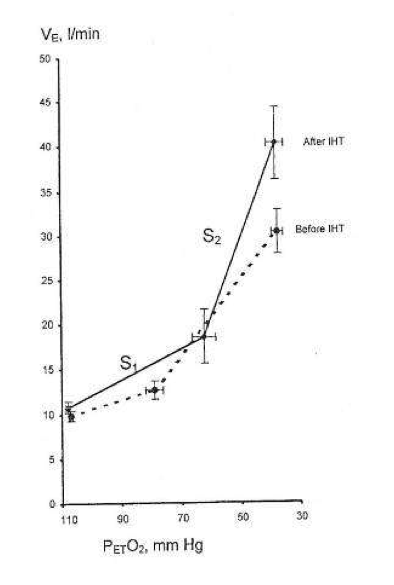
The basic mechanisms underlying the beneficial effects of IHT are mainly in three areas: regulation of respiration, free-radical production, and mitochondrial respiration. It was found that IHT induces increased ventilatory sensitivity to hypoxia, as well as other hypoxia-related physiological changes, such as increased hematopoiesis, alveolar ventilation and lung diffusion capacity, and alterations in the autonomic nervous system.
Skjermbilde 2013-06-23 kl. 11.20.57

Due to IHT, antioxidant defense mechanisms are stimulated, cellular membranes become more stable, Ca2+ elimination from the cytoplasm is increased, and 02 transport in tissues is improved. IHT induces changes within mitochondria, involving NAD-dependent metabolism, that increase the efficiency of oxygen utilization in ATP production. These effects are mediated partly by NO-dependent reactions.

Particularly at issue are the effects in humans of such transient bouts of hypoxia when repeated many times, a practice designated as intermittent hypoxia. Furthermore, when intermittent hypoxia as a specific protocol is employed to accomplish a particular aim, for example, acclimatization to high altitude, we use the term intermittent hypoxic training or IHT.

The interested reader is referred to more extensive recent scientific and historical reviews and investigative reports in Russian and Ukrainian, particularly as related to the potential thera- peutic effects of intermittent hypoxia (Berezovsky et al., 1985; Karash et al., 1988; Meerson et al., 1989; Anokhin et al., 1992; Berezovskii and Levashov, 1992; Donenko, 1992; Ehrenburg, 1992; Fesenko and Lisyana, 1992; Vinnitskaya et al., 1992; Serebrovskaya et al., 1998a,b; Volobuev, 1998; Chizhov and Bludov, 2000; Ragozin et al., 2000). Noted also is the use of IHT in the prophylaxis of professional occupational diseases (Berezovsky et al., 1985; Karash et al., 1988; Serebrovskaia et al., 1996) and in sports (Volkov et al., 1992; Radzievskii, 1997; Kolchinskaya et al., 1998, 1999). Recent reviews from Western Europe and North America are also given (Bavis et al., 2001; Clanton and Klawitter, 2001; Fletcher, 2001; Cozal and Cozal, 2001; Mitchell et al., 2001; Neubauer, 2001; Prabhakar, 2001; Prabhakar et al., 2001; Wilber, 2001).

During successive altitude exposures, compared with the initial exposure, the higher ventilation and blood arterial oxygen saturation, together with the lower blood Pco2, implied that ventilatory sensitivity to hypoxia had been increased.

In the intervening years to the present, intermittent hypoxia has been used extensively in the Soviet Union and the CIS not only for altitude pre acclimatization (Gorbachenkov et al., 1994), but also it has been proposed for treatment of a variety of clinical disorders, including chronic lung diseases and bronchial asthma in children and adults (Meerson et al., 1989; Anokhin et al., 1992; Berezovskii and Levashov, 1992; Donenko, 1992; Ehrenburg and Kordykinskaya, 1992; Fesenko and Lisyana, 1992; Redzhebova and Chizhov, 1992; Vinnitskaya et al., 1992; Lysenko et al., 1998; Serebrovskaya et al., 1998b; Chizhov and Bludov,2000; Ragozin et al.,2000, 2001), hypertension (Meerson et al., 1989; Potievskaya and Chizhov, 1992; Rezapov, 1992), emotional disorders (Gurevich et al., 1941), diabetes mellitus (Kolesnyk et al., 1999; Zakusilo et al., 2001), Parkinson’s disease (Kolesnikova and Serebrovskaya, 1998; Serebrovskaya et al., 1998a), inflammatory processes (Tkatchouk, 1994; Tsvetkova and Tkatchouk, 1999), radiation toxicity (Karash et al., 1988; Sutkovyi et al., 1995; Serebrovskaia et al., 1996; Strelkov, 1997; Strelkov and Chizhov, 1998), and certain occupational diseases (Berezovsky et al., 1985; Karash et al., 1988; Rushkevich and Lepko, 2001).

If so, then in normal humans only a few minutes of daily hypoxic exposure rapidly induces detectable increments in hypoxic ventilatory response, a hallmark of altitude acclimatization.

Hypocapnia occurs with altitude acclimatization and ventilation remains increased for days after the subjects return to sea level. By contrast, in the two above studies, eucapnia was maintained during the hypoxic exposures and neither normoxic venilation nor normoxic PC02 was altered by IHT, suggesting that only the hypoxemia and not changes in PC02 (or pH) were involved.

Changing CO2, either for the carotid body or the brain, did not induce ventilatory acclimatization to hypoxia. The work from Bisgard’s laboratory suggested that ventilatory acclimatization to hypoxia in the goat depends almost exclusively on the carotid body’s response to low oxygen. If similar mechanisms operate in humans, then ventilatory acclimatization to hypoxia, operating via the carotid body and independent of changes in pH or PCO2, can be induced by IHT. What is remarkable is that such brief periods of hypoxia can have such clearly measurable increases in the ventilatory response to hypoxia.

In addition to increasing hypoxic ventilatory sensitivity, CIS investigators have reported that IHT increases tidal volume and alveolar blood flow during exercise, improves matching of ventilation to perfusion, increases lung diffusion capacity, redistributes peripheral blood flow during exercise, decreases heart rate, increases stroke volume, and increases blood erythrocyte counts (Volkov et al., 1992; Kolchinskaya, 1993; Radzievskii 1997; Kolchinskaya et al., 1999; Maluta and Levashov, 2001). These effects have been considered to be beneficial in training athletes (Volkov et al., 1992; Radzievskii, 1997). Such findings await independent confirmation from others.

The spectral analysis suggested that after IHT there was greater parasympathetic preponderance during the hypoxic challenge than in the control group. These novel studies conducted in Ukraine suggested that IHT mimicked the usual acclimatization to high altitude, with its primarily greater parasympathetic activity (Reeves, 1993; Hughson et al., 1994). Such activation of the parasympathetic system by IHT was supported by experiments in rats (Doliba et al., 1993; Kurhalyuk et al., 2001a, b, see below).

Among these effects are that brief hypoxic stimuli of only several minutes per day for only a few days give responses that last many days, even weeks, and also that IHT apparently affects a multitude of normal functions and disease states.

This work, as well as more recent studies (Lukyanova, 1997; Sazontova et al., 1997; Kondrashova et al., 1997; Temnov et al., 1997; Lebkova et al., 1999), indicated that the basic molecular response to any type of hypoxic challenge involves the mitochondrial enzyme complexes (MchEC). There is evidence that energy metabolism under acute hypoxia is affected even before a significant decrease in oxygen consumption becomes measurable and before cytochrome c oxidase (CO) activity is significantly reduced.

In the cascade of hypoxia-induced metabolic alterations, MchEC I is most sensitive to intracellular oxygen shortage. The reversible inhibition of MchEC I leads to both the suppression of reduced equivalent flux through the NAD-dependent site of the respiratory chain and the emergency activation of compensatory metabolic pathways, primarily the succinate oxidase pathway. The switch of energy metabolism to this pathway is the most efficient energy-producing pathway available in response to a lack of O2 (Lukyanova et al., 1982).

Skulachev (1996) proposed a two-stage mechanism that allows mitochondria to regulate O2 concentrations and to protect against oxidative stress: (1) «soft» decoupling of oxidative phosphorylation for «fine-tuning» and (2) decrease of the reduction level of respiratory chain components by opening nonspecific mitochondrial inner membrane pores as a mechanism to cope with massive O2 excess.

However, parallel nonenzymatic processes result in O2 formation. This is especially the case when 02 concentrations reach the capacity of the respiratory chain enzymes. Reduction in O2 concentrations leads to an exponential decrease in radical formation. Skulachev (1995) hypothesizes that mitochondria have a mechanism for «soft» decoupling in stage 4 of the respiratory chain. This mechanism prevents the complete inhibition of respiration, the complete reduction of respiratory carriers, and the accumulation of reactive compounds such as ubisemiquinone (CoQ·-). Such a mechanism will be activated, for example, if the capacity of the respiratory chain is decreased due to a reduced availability of ADP.

In contrast to the constriction of capillaries, which prevents undesirably high O2 concentrations in tissue, «soft» decoupling allows fine-regulation on an intracellular level.

Adaptation to hypoxia by an intermittent hypoxic challenge is associated with the expression of, and a shift toward, enzyme isoforms that can efficiently function in a mitochondrial environment with high concentrations of reduced equivalents as generated during hypoxia. This prevents inactivation of the MchEC and may constitute one of the adaptation mechanisms triggered by intermittent hypoxia.

One of the most significant peculiarities of adaptation to intermittent hypoxia is free-radical processes.

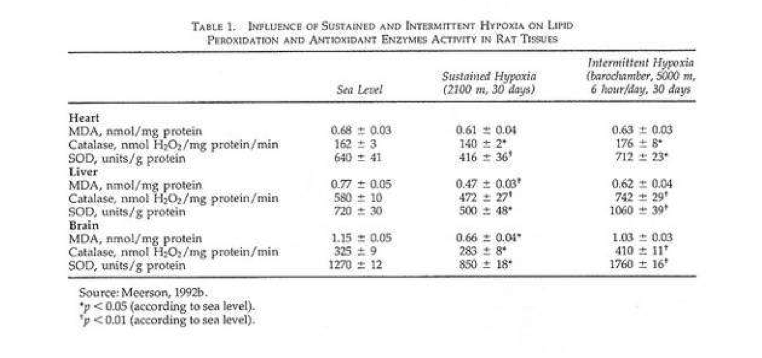
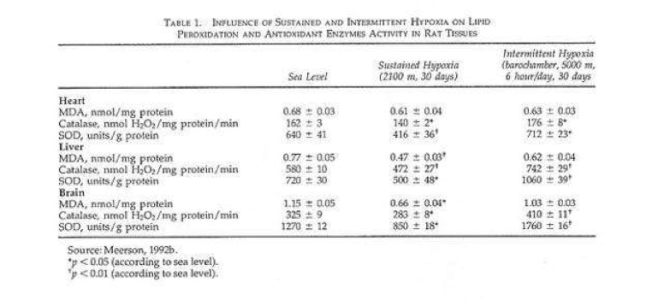
The periods of reoxygenation could lead to oxygen radical formation, which might be analogous to that occurring with normoxic reperfusion of transiently hypoxic or ischemic tissues (Belykh et al., 1992; Meerson et al., 1992a). If periods of hypoxia followed by normoxia led to formation of oxygen radicals, but if the hypoxia were much briefer than the periods of normoxia, and if the exposure sequence were repeated over days, then one might expect that antioxidant defenses could be enhanced much more effectively than in sustained hypoxia.

In a recent study rats were given shorter hypoxic exposures: 15 min five times daily for 14 d (Kurhalyuk and Serebrovskaya, 2001). When they were subsequently challenged by exposure to 7% oxygen, blood catalase and glutathione reductase activity were increased and malon dialdehyde concentration was half that of non-IHT controls. The findings were consistent with the concept that intermittent hypoxia stimulates increased antioxidant defenses.

While there was considerable individual variability in the findings (Table 2), our indexes of oxidant stress before IHT were higher in the Chernobyl workers. We used a program of IHT: isocapnic, progressive, hypoxic rebreathing lasting for 5 to 6 min until inspired air O2 reached 8% to 7%, with three sessions, separated by 5 min, of normoxia, per day for 14 consecutive days. The use of IHT was accompanied by a decrease of spontaneous and hydrogen peroxide-initiated blood chemiluminescene, as well as considerable reduction of MDA content (Table 2). Of interest, more recent study on patients with bronchial asthma, who also were characterized by indexes suggestive of oxidative stress, have shown that similar IHT produced the increase of superoxide dismutase (SOD) activity by nearly 70%. This increase correlated with a decrease in MDA content (r = -0.61, P< 0.05) (Safronova et al., 1999; Serebrovskaya et al., 1999c).
Skjermbilde 2013-06-23 kl. 11.39.58

Thus studies in humans and in tissues have shown that adaptation to intermittent hypoxia induces increased antioxidant defenses, acceleration of electron transport in the respiratory chain, stabilization of cellular membranes, and Ca2+ elimination from the cytoplasm. These data served as the basis for IHT in the treatment of various diseases in which free-radical production might be anticipated, for example, bronchial asthma and post-Chernobyl syndromes.

Recent studies have shown the following principal results: (1) adaptation to intermittent hypobaric hypoxia stimulates NO production in the organism; (2) excessive NO synthesized in the course of adaptation is stored in the vascular wall; (3) adaptation to hypoxia prevents both NO over-production and NO deficiency, resulting in an improvement in blood pressure; and (4) effects of intermittent hypoxia on mitochondrial respiration are mediated mainly by NO-dependent reactions (Manukhina et al., 1999, 2000a,b; Malyshev et al., 2000; Ikkert et al., 2000; Smirin et al., 2000; Kurhalyuk and Serebrovskaya, 2001; Kurhalyuk et al., 2001b; Serebrovskaya et al., 2001).

A somewhat different hypothesis has also been suggested, that the electron transport function of the myocardial respiratory chain in the NAD-cytochrome-b area is limited to a greater extent in animals poorly tolerant to hypoxia than in those that are not. In intolerant animals, even mild hypoxia leads to diminution of the oxidative capacity of the respiratory chain and of ATP production and, as a consequence, to a suppression of the energy-dependent contractile function of the myocardium. In animals more tolerant of hypoxia, this process is less manifest and develops very slowly, which confirms the lesser role of NAD-dependent oxidation of substrates in the metabolism of the myocardium of these animals (Korneev et al., 1990).

Taken together these studies suggest that IHT induces increased ventilatory sensitivity to hypoxia in the absence of Pco2 or pH changes; that it induces other hypoxia-related physiological changes such as increased hematopoiesis and decreased plasma volume and increase in alveolar ventilation and lung diffusion capacity; and that it may be useful in the management of certain disease states. The effects appear to be mediated, at least in part, through release of reactive oxygen species, which then induce an increase of antioxidant defenses. In addition, IHT appears to induce changes within mitochondria, possibly involving NAD-dependent metabolism, that increase the efficiency of oxygen utilization in ATP production.

Ukjent sin avatar

Differences in the control of breathing between Himalayan and sea-level residents

Om hvordan langvarig høydeopphold utvisker sensitiviteten til CO2.

http://jp.physoc.org/content/588/9/1591.full

Highlanders had lower mean ± S.E.M.ventilatory sensitivities to CO2 than lowlanders at both isoxic tensions (hyperoxic: 2.3 ± 0.3 vs. 4.2 ± 0.3 l min−1 mmHg−1, P = 0.021; hypoxic: 2.8 ± 0.3 vs. 7.1 ± 0.6 l min−1mmHg−1, P < 0.001), and the usual increase in ventilatory sensitivity to CO2 induced by hypoxia in lowlanders was absent in highlanders (P = 0.361).

Furthermore, the ventilatory recruitment threshold (VRT) CO2 tensions in highlanders were lower than in lowlanders (hyperoxic: 33.8 ± 0.9 vs. 48.9 ± 0.7 mmHg, P < 0.001; hypoxic: 31.2 ± 1.1 vs. 44.7 ± 0.7 mmHg, P < 0.001).

We conclude that control of breathing in Himalayan highlanders is distinctly different from that of sea-level lowlanders. Specifically, Himalayan highlanders have decreased central and absent peripheral sensitivities to CO2. Their response to hypoxia was heterogeneous, with the majority decreasing their VRT indicating either a CO2-independent increase in activity of peripheral chemoreceptor or hypoxia-induced increase in [H+] at the central chemoreceptor.

Control of breathing in humans can be broadly divided into chemoreflex and non-chemoreflex drives to breathe (Fig. 1) (Lloyd & Cunningham, 1963). Non-chemoreflex breathing stimuli include a wakefulness drive (Longobardo et al. 2002), voluntary (cortical) drive (Shea, 1996) and hormonal factors (Jensen et al. 2008), as well as neural and humoral mediating factors that are especially important in the control of breathing during exercise (Bell, 2006; Dempsey, 2006; Haouzi, 2006). The chemoreflex drive to breathe can be further divided into central and peripheral chemoreceptor drives. Both central and peripheral chemoreceptors respond to changes in the hydrogen ion concentration ([H+]) in their immediate environments (Torrance, 1996; Nattie & Li, 2009).

In contrast to the central chemoreceptors, peripheral chemoreceptors are also sensitive to changes in arterial Graphic (Graphic) via a hypoxia-mediated increase in their sensitivity to [H+] (Cunningham, 1987; Torrance, 1996; Kumar & Bin-Jaliah, 2007), and hyperoxia (Graphic ≥ 150 mmHg) effectively silences this response (Lloyd & Cunningham, 1963; Mohan & Duffin, 1997).

Central and peripheral chemoreceptor neural drives are integrated in the medulla to provide the total chemoreflex neural drive (Fink, 1961; Shea, 1996; Mohan & Duffin, 1997; Orem et al. 2002) that, in combination with non-chemoreflex drives, provides ventilatory drive to respiratory muscles.


Figure 3. Hypercapnic ventilatory response The graph displays two isoxic responses: hyperoxic (Graphic = 150 mmHg) representing central chemoreflex response, and hypoxic (Graphic = 50 mmHg) representing the addition of central and peripheral chemoreflexes responses. The slope of each isoxic response represents sensitivity of the chemoreflex to CO2. The inflection point at which ventilation starts to increase in response to increasing Graphic is the ventilatory recruitment threshold (VRT), where the chemoreflex neural drive to breathe exceeds a drive threshold and starts to produce an increase in pulmonary ventilation. Ventilation below VRT represents non-chemoreflex drives to breathe and is known as the basal ventilation. The differences in ventilation between isoxic rebreathing lines at any given isocapnic Graphic can be used to calculate the hypoxic ventilatory response (indicated by vertical arrows). Note that the choice of isocapnic Graphic affects the magnitude of the measured HVR even within the same subject (Duffin, 2007), with higher HVRs measured at higher isocapnic Graphicvalues in the illustrated example. Note also that the magnitude of HVR provides little information about the characteristics of the control of breathing model, as HVR magnitude is dependent on the combination of central and peripheral chemoreflex responses.

There was no difference in the non-chemoreflex drives to breathe between highlanders and lowlanders, as indicated by similar basal (below VRT) ventilations in the two populations (Table 2).

The highlanders had decreased VRTs compared to lowlanders during both hypoxic and hyperoxic rebreathing tests. The leftward shift of the VRTs in highlanders suggests that a lower Graphic was required to exceed the VRT in highlanders compared to lowlanders. Since both central and peripheral chemoreceptors are actually [H+] sensors, interpretation of this result should consider the acid–base status in both populations. According to the Henderson–Hasselbach equation (Nunn, 1993), the relationship between [H+] and Graphiccan be described as follows:Formulawhere [HCO3] is the bicarbonate ion concentration. In a hypothetical sea-level resident at sea-level, [H+] is approximately 40 nM l−1, Graphic is 40 mmHg and [HCO3] is 24 mM l−1. At altitude, hypoxia-induced hyperventilation results in a reduction of Graphic that leads to a reduction in [H+] and respiratory alkalosis according to the above equation. Highlanders compensate for respiratory alkalosis by presumably reducing their [HCO3] through increased renal excretion, thereby restoring the Graphic/[HCO3] ratio to sea-level values and normalizing [H+].

For example, if hypoxia-induced hyperventilation reduced CO2 from 40 to 30 mmHg, and HCO3− fell from 24 to 18 mM l−1, then the overall ratio of CO2/HCO3− would be maintained at 5/3 as in sea-level lowlanders, but normal [H+] of 40 nM l−1 would be achieved at a lower Graphic of 30 mmHg rather than 40 mmHg, as at sea-level. Considering that the highlanders in our study have an adapted acid–base status (Santolaya 1989), the observed difference in VRTs can be explained by the altered [H+]–Graphic relationship in highlanders compared to lowlanders, with the assumption that the chemoreceptor thresholds [H+] are similar (Duffin, 2005).

The sensitivity of the central chemoreceptor to CO2, as indicated by the ventilatory sensitivity during hyperoxic rebreathing, was lower in highlanders compared to lowlanders (2.5 ± 0.4 vs. 4.2 ± 0.3 l min−1 mmHg−1, P = 0.011). Hyperoxia effectively silences the peripheral chemoreceptor (Lloyd & Cunningham, 1963; Mohan & Duffin, 1997), and therefore the ventilatory sensitivity measured during hyperoxic rebreathing can be taken as a measure of central chemoreceptor sensitivity (Duffin, 2007).

Since the ventilatory response to hypercapnia decreases with age (Nishimura et al. 1991; Jones et al. 1993; Poulin et al.1993; McGurk et al. 1995) and increases with weight (Marcus et al. 1994), the observed lower central CO2 chemosensivity in our highlander subjects may be the result of their older age and smaller body size.

Ventilatory response to hypoxia in highlanders was markedly different from that in lowlanders. Unlike lowlanders, who responded to hypoxia by increasing the sensitivity of their ventilatory response to CO2 (Mohan & Duffin, 1997), the highlanders seemed to decrease their VRT in response to hypoxia with no change in the sensitivity to CO2.

The ventilatory response to hypoxia in sea-level residents is mediated by peripheral chemoreceptors via an increase in the peripheral chemoreceptor sensitivity to [H+] (Cunningham, 1987; Torrance, 1996; Kumar & Bin-Jaliah, 2007). A lack of increase in ventilatory sensitivity to CO2 with induction of hypoxia in highlanders suggests that their peripheral chemoreceptors are relatively insensitive to CO2.

Other possible mechanisms of CO2-independent peripheral responses to hypoxia may include a hypoxia-induced increase in the carotid body tonic drive to breathe, changes in systemic hormonal mediators, an altered cerebral spinal fluid-buffering capacity at the central chemoreceptor or an alteration in cerebral vascular reactivity leading to a higher [H+] at central chemoreceptor.

Specifically, we showed that Himalayan highlanders have decreased central and absent peripheral chemoreceptor sensitivity to CO2, and that they are sensitive to hypoxia, albeit via a different mechanism than that observed in lowlanders at sea-level. A blunted central and an absent peripheral ventilatory sensitivity to CO2 in Himalayan highlanders may stabilize their ventilatory controller by reducing the overall gain in the feedback part of the controller circuit, thereby reducing altitude-related breathing instability (Ainslie & Duffin, 2009)

The non-chemoreflex drives to breathe were similar between Himalayan highlanders and sea-level lowlanders.

Ukjent sin avatar

Effects of Slow Deep Breathing at High Altitude on Oxygen Saturation, Pulmonary and Systemic Hemodynamics

Om hvordan sakte pust øker oksygennivå når man er på høyfjellet.

http://www.ncbi.nlm.nih.gov/pmc/articles/PMC3495772/

Study variables, including SpO2 and systemic and pulmonary arterial pressure, were assessed before, during and after 15 minutes of breathing at 6 breaths/min. At the end of slow breathing, an increase in SpO2 (Study A: from 80.2±7.7% to 89.5±8.2%; Study B: from 81.0±4.2% to 88.6±4.5; both p<0.001) and significant reductions in systemic and pulmonary arterial pressure occurred. This was associated with increased tidal volume and no changes in minute ventilation or pulmonary CO diffusion

From the point of view of oxygen gas exchange, human lungs are highly inefficient, as suggested by the 50–60 mmHg PO2 gap between atmosphere and arterial blood observed at sea level. Indeed, some animal species can reach much higher altitudes than humans without supplement O2 due to several reasons including a lower PO2 gap between atmosphere and arterial blood

The following popper user interface control may not be accessible. Tab to the next button to revert the control to an accessible version.

Destroy user interface control[1].

In turn, hypoxemia activates a chemoreflex response leading to increased ventilation, which results in hypocapnia and respiratory alkalosis. Exposure to HA is also associated with pulmonary hypertension and lung fluid accumulation, both of which further contribute to hypoxemia and, in some cases, lead to high altitude pulmonary edema (HAPE)

The following popper user interface control may not be accessible. Tab to the next button to revert the control to an accessible version.

Destroy user interface control[2],

The following popper user interface control may not be accessible. Tab to the next button to revert the control to an accessible version.

Destroy user interface control[3].

Efficiency of ventilation for oxygen may be improved by changing the respiratory pattern in order to optimize the partitioning between alveolar ventilation and airway ventilation, being that the latter useless in terms of gas exchange. This has been reported by Yoga practice

The following popper user interface control may not be accessible. Tab to the next button to revert the control to an accessible version.

Destroy user interface control[4] or by regular breathing as obtained during regular rosary praying

The following popper user interface control may not be accessible. Tab to the next button to revert the control to an accessible version.

Destroy user interface control[5].

Controlled breathing with low rate and high tidal volume, the so called “slow deep breathing”, has also been shown to improve the efficiency of ventilation by increasing alveolar and reducing dead space ventilation

The following popper user interface control may not be accessible. Tab to the next button to revert the control to an accessible version.

Destroy user interface control[6]. Slow deep breathing may also improve arterial oxygenation by increasing alveolar volume and gas exchange at the alveolar capillary membrane level. The latter particularly increases when interstitial lung fluids are increased. Indeed, it has been reported that paced slow deep breathing improves blood oxygenation in subjects chronically exposed to HA

The following popper user interface control may not be accessible. Tab to the next button to revert the control to an accessible version.

Destroy user interface control[7] and in patients with congestive heart failure or with chronic pulmonary obstructive disease

The following popper user interface control may not be accessible. Tab to the next button to revert the control to an accessible version.

Destroy user interface control[6],

The following popper user interface control may not be accessible. Tab to the next button to revert the control to an accessible version.

Destroy user interface control[8],

The following popper user interface control may not be accessible. Tab to the next button to revert the control to an accessible version.

Destroy user interface control[9],

The following popper user interface control may not be accessible. Tab to the next button to revert the control to an accessible version.

Destroy user interface control[10]. Slow deep breathing might also counteract some hemodynamic effects of hypobaric hypoxia at HA, including the increase in systemic blood pressure

The following popper user interface control may not be accessible. Tab to the next button to revert the control to an accessible version.

Destroy user interface control[11], given the evidence that device-guided slow deep breathing reduces elevated blood pressure in hypertensive patients

The following popper user interface control may not be accessible. Tab to the next button to revert the control to an accessible version.

Destroy user interface control[12],

The following popper user interface control may not be accessible. Tab to the next button to revert the control to an accessible version.

Destroy user interface control[13],

The following popper user interface control may not be accessible. Tab to the next button to revert the control to an accessible version.

Destroy user interface control[14].

http://www.ncbi.nlm.nih.gov/pmc/articles/PMC3495772/bin/pone.0049074.g002.jpg

Our main result is that in healthy subjects exposed to HA, i.e. to a low ambient-air PO2, the change in breathing pattern from a spontaneous rate to a paced frequency of 6 breaths per minute was associated with an improvement of ventilation efficiency, as shown by the significant increase in blood oxygen saturation. This was the case both for acute (Study A) and prolonged (Study B) exposure to HA hypoxia. This increase occurred rapidly and was maintained throughout the slow deep breathing period. Most of the improvement of blood oxygenation was lost within 5 minutes after restoration of spontaneous breathing pattern, and no differences compared with baseline were evident after 30 minutes.

In the present study, we showed for the first time the time course of the response to slow deep breathing, showing that the maximum effect is reached after about 5 minutes and is subsequently maintained. Moreover, we reported for the first time data on the recovery period. In Study B, we extended the recovery period to 30 minutes, which allowed us to observe a progressive reduction of slow deep breathing effects, which are at their highest after 5 minutes, but some continue up to 30 minutes after its termination.

However, the reduction of PtCO2 during slow deep breathing exercise in Study A and the SpO2increase in both studies suggest that slow deep breathing improves the efficiency of ventilation. The lack of reduction of PetCO2 in Study B (table 1) is not in contrast with this interpretation of our findings but merely a technical consequence of the measurement technique.

Indeed, PetCO2 pressure, due to the shape of the CO2 curve during expiration, is higher with lower respiratory frequency. Therefore, a reduction in PaCO2 may actually have occurred during slow deep breathing in both studies.

Moreover, because slow deep breathing is associated to a reduction of sympathetic tone (see below), the improvement of ventilation/perfusion matching may also originate by more respiratory sinus arrhythmia

The following popper user interface control may not be accessible. Tab to the next button to revert the control to an accessible version.

Destroy user interface control[22]. Finally, the reduction of sympathetic tone could lead to a reduction in metabolic rate, which, possibly combined with an increase of cardiac output, may lead to an increase of mixed venous PO2 and thus less admixture. All together, our data suggest that the benefits from slow deep breathing exercise are due to an improvement in ventilation mechanics, in pulmonary perfusion and in ventilation/perfusion matching, and possibly to a reduction of the metabolic rate.

This acute blood pressure lowering effect of slow deep breathing may be related to the ability of this manoeuvre to increase baroreflex and reduce chemoreflex sensitivity

The following popper user interface control may not be accessible. Tab to the next button to revert the control to an accessible version.

Destroy user interface control[8],

The following popper user interface control may not be accessible. Tab to the next button to revert the control to an accessible version.

Destroy user interface control[23], resulting in a sympathetic inhibitory action, as recently directly shown by Oneda et al.

The following popper user interface control may not be accessible. Tab to the next button to revert the control to an accessible version.

Destroy user interface control[24].

The blood pressure reduction observed in our study is in line with data obtained in previous studies that proposed regular and repeated performance of slow deep breathing exercise at sea level as a nonpharmacological approach to the treatment of hypertension

The following popper user interface control may not be accessible. Tab to the next button to revert the control to an accessible version.

Destroy user interface control[12],

The following popper user interface control may not be accessible. Tab to the next button to revert the control to an accessible version.

Destroy user interface control[13],

The following popper user interface control may not be accessible. Tab to the next button to revert the control to an accessible version.

Destroy user interface control[14]. These studies have also emphasized that this effect may originate from an enhanced sensitivity of the baroreflex and/or a reduced sensitivity of the chemoreflex

The following popper user interface control may not be accessible. Tab to the next button to revert the control to an accessible version.

Destroy user interface control[4],

The following popper user interface control may not be accessible. Tab to the next button to revert the control to an accessible version.

Destroy user interface control[23].

In conclusion, slow deep breathing induced a significant improvement in ventilation efficiency as shown by SpO2 increase in healthy subjects exposed to HA. This improvement was most likely due to a reduction of dead space ventilation and an increase in alveolar ventilation, and was associated to a reduction of both pulmonary and systemic BP levels, both elevated at HA. This intervention is easy and cheap.

Ukjent sin avatar

Physiological Sensing of Carbon Dioxide/Bicarbonate/pH via Cyclic Nucleotide Signaling

Viktig studie som viser hva som skjer med CO2 og hvordan det regulerer forskjellige prosesser. Blodsirkulasjon nevnes også.

http://www.ncbi.nlm.nih.gov/pmc/articles/PMC3085406/

Carbon dioxide (CO2) and water are the major end products of energy producing pathways in living organisms (Equation (1)). As such, in non-photosynthetic organisms, CO2 and water represent the most fundamental catabolites.

Glucose (or other energy sources) + O2

Ukjent sin avatar

Hypoxia-generated superoxide induces the development of the adhesion phenotype

Viktig studie om mekanismen bak hvordan hypoxi gir arrvev (adhesions) i kroppen. Relatert til hyperventilering vil lite CO2 gir hypoxi og sammen med trange blodkar vil de utsatte stedene i kroppen utvikle arrvev mellom muskler og nerver. Nevner hvordan antioksidanter er viktig for å unngå arrvev, spesielt etter operasjoner. Og motsatt, at oksidanter kan skape arrvev fra friskt vev. Nevner også hvordan nitratreaksjoner er med å skaper arrvev, så mulig at CO2 bidrar med å dempe nitratreaksjonene og dermed dempe dannelsen av arrvev. Den viser også at det kan være mulig å få arrvev celler om til å bli normale celler.

http://www.ncbi.nlm.nih.gov/pmc/articles/PMC2574925/

«Adhesion fibroblasts exhibit higher TGF-β1 and type I collagen expression as compared to normal peritoneal broblasts. Furthermore, exposure of normal peritoneal fibroblasts to hypoxia results in an irreversible increase in TGF-β1 and type I collagen. We postulated that the mechanism by which hypoxia induced the adhesion phenotype is through the production of superoxide either directly or through the formation of peroxynitrite. »

«Hypoxia treatment resulted in a time-dependent increase in TGF-β1 and type I collagen mRNA levels in both normal peritoneal and adhesion fibroblasts.»

«In contrast, treatment with SOD, to scavenge endogenous superoxide, resulted in a decrease in TGF-β1 and type I collagen expression in adhesion fibroblasts to levels seen in normal peritoneal fibroblasts; no effect on the expression of these molecules was seen in normal peritoneal fibroblasts. »

«In conclusion, hypoxia, through the production of superoxide, causes normal peritoneal fibroblasts to acquire the adhesion phenotype. Scavenging superoxide, even in the presence of hypoxia, prevented the development of the adhesion phenotype. These findings further support the central role of free radicals in the development of adhesions.»

«Postoperative adhesions are a significant source of impaired organ functioning, decreased fertility, bowel obstruction, difficult reoperation, and possibly pain (1,2)

The following popper user interface control may not be accessible. Tab to the next button to revert the control to an accessible version.

Destroy user interface c»

«The processes that result in either normal peritoneal tissue repair or the development of adhesions include the migration, proliferation, and/or differentiation of several cell types, among them inflammatory, immune, mesothelial, and fibroblast cells (3)

«Hypoxia, resulting from tissue injury, has been suggested to play an important role in wound healing, and may therefore be a critical factor in the development of postoperative adhesions (4,7)

The following popper user interface control may not be accessible. Tab to the next button to revert the control to an accessible version.

Destroy user interface contrHypoxia is known to trigger the expression of TGF-β1, which consequently increases the expression of extracellular matrix proteins, including type I collagen (4) 

The following popper user interface control may not be accessible. Tab to the next button to revert the control to an accessible version.

Destroy user interface contr«Type I collagen synthesis has been shown to be crucially dependent on the availability of molecular oxygen in tissue culture, animal, and human wound healing experiments (8,9)

The following popper user interface control may not be accessible. Tab to the next button to revert the control to an accessible version.

Destroy user interface controlMoreover, exposure of normal peritoneal fibroblasts to hypoxia irreversibly induces TGF-β1 and type I collagen to levels seen in adhesion fibroblasts (4,10)

«Additionally, hypoxia is known to acutely promote superoxide (O2.−) generation from disparate intracellular sources that include xanthine dehydrogenase oxidase (11), mitochondrial electron transport chain (12), and NAD[P]H oxidase (13).

In biological systems, superoxide dismutase (SOD) protects against the deleterious actions of this radical by catalyzing its dismutation to hydrogen peroxide plus oxygen, (14) Whereas SOD breaks down O2.−, xanthine oxidase synthesizes O2.−. Xanthine oxidase appears to be one of the major superoxide-producing enzymes (14)«

«Scavenging superoxide restores both TGF-β1 and type I collagen mRNA levels in adhesion fibroblasts to levels observed in normal peritoneal fibroblasts»
«Normal peritoneal and adhesion fibroblasts treated with super-oxide dismutase, a O2.− scavenging enzyme, exhibited a dose–response decrease (0, 5, 10, 15, and 20 units/ml) in TGF-β1 and type I collagen mRNA levels in adhesion fibroblasts while not effecting normal peritoneal fibroblasts (Figs. 3A and B).»

«Scavenging superoxide during hypoxia exposure protects against the development of the adhesion phenotype»

«Peroxynitrite treatment increased the adhesion phenotype markers, TGF-β1 and type I collagen»

«Adhesion fibroblasts are myofibroblasts, defined as transiently activated fibroblasts exhibiting features intermediate between those of smooth muscle cells and fibroblasts, including the expression of α-SM actin (29,21) and a depleted antioxidant system (22). In normal wound healing, as the wound resolves, the cellularity decreases and the myofibroblasts disappear by apoptosis (23). However, in several pathological cases, including fibrosis, myofibroblastic differentiation persists and causes excessive scarring (24,25)

«This is further supported by the fact that when O2.− was scavenged, there was in a significant decrease in TGF-β1 and type I collagen in adhesion fibroblasts to levels seen in normal peritoneal fibroblasts. »

«Reactive oxygen species (ROS) are involved in TGF-β-stimulated collagen production in murine embryo fibroblasts (NIH3T3), and the effect of glutathione depletion on TGF-β-stimulated collagen production may be mediated by facilitating ROS signaling (37)

«Reactive oxygen and nitrogen intermediates control the synthesis of cytokines and growth factors in several in vitro models (40). For instance, they modulate the expression and/or release of monocyte chemoattractant protein-1 (41,42), tumor necrosis factor-α, interleukin (IL)-1 (43,44), IL-8 (45,46), platelet-derived growth factor (47,48), and TGF-β1 (49). «

«Adhesion fibroblasts exhibited a significantly lower level of nitric oxide (NO) and higher protein nitration as compared to normal peritoneal fibroblasts, although there was no difference in the iNOS expression level between the two cell lines (17,50,51). This strongly indicates that adhesion fibroblasts use NO to form ONOO−, and consequently their basal ONOO− levels are higher than normal peritoneal fibroblasts. «

«Thus, treatment with SOD might affect the homeostasis of myofibroblasts by inducing cell death or the phenotypic reversion of myofibroblasts into normal fibroblasts. »

«Our results clearly indicate that hypoxia generated O2.− is a key player in the formation of the adhesion phenotype. This became evident when normal peritoneal fibroblasts were treated with SOD under hypoxic conditions and no change in adhesion markers was seen.»


«In this model, hypoxia-generated O2.− exerts its effect directly by enhancing the expression of TGF-β1, which consequently leads to elevated levels of type I collagen, a hallmark of the adhesion phenotype.»

Ukjent sin avatar

Carbon dioxide influence on nitric oxide production in endothelial cells and astrocytes: Cellular mechanisms

Viktig studie som nevner hvordan CO2 forholder seg til NO og vasodilasjon. Nevner mekanismene bak eNOS og nNOS og hva som faktisk skjer i cellene. Denne studien er på celler, men beskriver mye av det som skjer in vivo og refererer til andre viktige studier.

http://www.ncbi.nlm.nih.gov/pmc/articles/PMC3073030/

«Cerebral vessels may regulate cerebral blood flow by responding to changes in carbon dioxide (CO2) through nitric oxide (NO) production. »

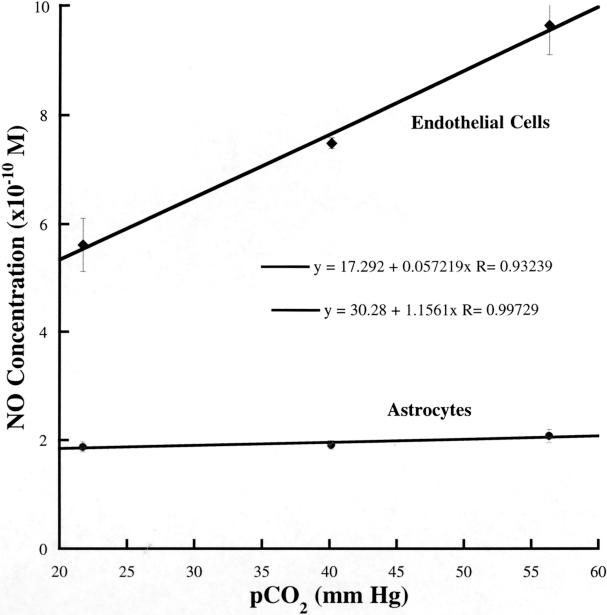
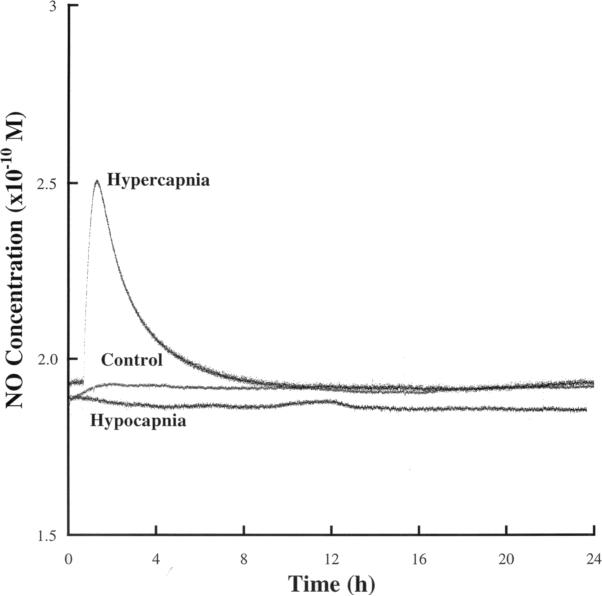
«NO levels in endothelial cells increased during hypercapnia by 36% in 8 hours and remained 25% above baseline. NO increase in astrocytes was 30% after 1 hour but returned to baseline at 8 hours. NLA blocked NO increase in endothelial cells under hypercapnia.»

«This study suggests that cerebral endothelial cells and astrocytes release NO under normocapnic conditions and NO production is increased during hypercapnia and decreased during hypocapnia independent of pH. Further, this demonstrates that endothelial cells may play a pivotal role in chemoregulation by modulating NOS activity.»

«Modulation of cerebral vascular tone in response to changes in the arterial partial pressure of carbon dioxide (pCO2) is defined as chemoregulation. In humans hypocapnia produces vasoconstriction resulting in decreased cerebral blood flow (CBF), whereas hypercapnia produces vasodilation and increased CBF (Lavi et al., 2003). »

«Using nitric oxide synthase (NOS) inhibitors, several in vivo studies have suggested that vasodilation in response to increased pCO2may be mediated by NO (Lavi et al., 2006). »

«Under hypercapnic conditions (pCO2 56.3±8.7 mmHg), NO concentration increased from baseline levels to a mean of 10±0.6×10⁻¹⁰M during the first 4 hours (Figure 1A). NO concentration peaked at 36% (10.2±0.5×10⁻¹⁰M) above baseline at 8 hours and stabilized 25% (9.4±0.5×10⁻¹⁰M) above baseline until completion of the experiment.»

«By plotting NO changes as a function of pCO2, we could disregard time as a variable in NO production (Figure 3) to establish that changes in NO levels correlate with changes in pCO2 (R=0.99).»

CO2 og NO

«Under hypercapnic conditions (pCO2 56.3±8.7 mmHg), human fetal astrocytes increased NO production by 30% over baseline values to a mean level of 2.5±1.2×10⁻¹⁰M in the first hour of hypercapnia (Figure 2). NO production then gradually decreased to control levels after 8 hours and remained at control levels for the remainder of the experiments.»

CO2 og NO i astrocytt

«The pH values were kept stable within a neutral gap under normocapnic (7.39±0.01), hypercapnic (7.36±0.02) and hypocapnic (7.40±0.01) conditions.»

» Stimulation of NOS in the endothelial cells is consistent with the NO-dependent vasodilation and increased CBF that occur in vivo during hypercapnia, as has been shown in rats (Iadecola, 1992) and in primates (Thompson et al., 1996). Decreased NO production by endothelial cells also correlates with the in vivo vasoconstrictive response to hypocapnia shown previously (Lavi et al., 2003;Thompson et al., 1996).»

«Thus, it is unlikely that eNOS is responsible for the early or fast phase response during chemoregulation in vivo. There are several explanations for this phenomenon. First, nitrite (NO2), being a storage pool of NO, can be reduced to NO under acidic and hypoxic conditions in vivo (Cosby et al., 2003). Under these conditions nitrite releases NO in the presence of deoxygenated hemoglobin in blood (Cosby et al., 2003;Nagababu et al., 2003) or neuroglobin (Burmester et al., 2000) in neurons acting as a nitrite reductase (Petersen et al., 2008). »

«The chemoregulatory response to CO2 changes in vivo is rapid, occurring on the order of milliseconds; our results did not demonstrate this component of the chemoregulatory response.»

«Cerebrovascular reactivity in response to CO2 is impaired in diabetic or hypertensive patients with endothelial dysfunction (Lavi et al., 2006), suggesting an important role for endothelial cells in modulating CBF response to CO2. »

«It has been reported that the ATP-sensitive K+ channels play a pivotal role in microvessel vasodilation of the cerebral cortex in response to decreased pH corresponding to mild hypercapnia and that a NOS inhibitor could not alter this vasodilation (Nakahata et al., 2003).»

Ukjent sin avatar

Elevated lactate during psychogenic hyperventilation

Om CO2 relatert til melkesyre. Denne er ifh panikkangst, men gjelder også ifh trening og hva som helst av aktivitet eller sykdom hvor melkesyre er et element å ta hensyn til.

http://emj.bmj.com/content/28/4/269.long

«Whereas high lactates are usually associated with acidosis and an increased risk of poor outcome, in patients with psychogenic hyperventilation, high lactates are associated with hypocapnia and alkalosis.»

«However, provoked hyperventilation, a less life-threatening condition, has been shown to result in elevated lactate levels as well. Passive overbreathing under anaesthesia has been shown to induce hyperlactataemia in various studies.9 10 Furthermore, active voluntary overbreathing in individuals with panic disorders has been related to the development of a marked hyperlactataemia as well.11 12»

«As expected, median Pco2 (4.3 (2.0–5.5)) was below the lower reference value of 4.6 kPa, and median pH was slightly increased (7.47 (7.40–7.68)). Po2 and saturation were normal in all the patients without supplementary oxygen (table 1). Fourteen participants had a lactate level above the reference value of 1.5 mmol/l, of which 11 were still hyperventilating at the moment of drawing their blood, as reflected by the Pco2 values <4.6 kPa. The participants who were still actively hyperventilating had a higher median pH of 7.50 (7.42–7.68) versus 7.44 (7.40–7.49) (p<0.01) and a higher median lactate level of 1.4 (0.7–4.4) versus 0.9 (0.5–3.5) (p<0.01) compared with the participants diagnosed as having psychogenic hyperventilation who had ceased to actively hyperventilate at the moment of drawing their blood. In line with the higher pH in this group, bicarbonate and potassium concentrations were lower (table 1).»

«In univariate correlation analysis, there was a significant positive correlation of plasma lactate with both Po2 and pH, whereas significant inverse relations were found for potassium and bicarbonate (table 2). Most interestingly, a significant negative correlation was found between Pco2 and arterial lactate (r=−0.50, p<0.001; figure 2). This negative correlation was specifically present in patients with hypocapnia (ie, Pco2 <4.6 kPa): in these patients, there was a moderate significant negative correlation between Pco2 and plasma lactate levels (r=−0.53, p<0.003), whereas this correlation was not seen in normocapnic participants (r=−0.17, NS).»

«Scatter plot of the relation of Pco2 with lactate for patients diagnosed as having psychogenic hyperventilation (n=46). Depicted are the regression line in bold (r2=0.25, p<0.001), with estimated 95% CIs. The vertical dashed line denotes the lower reference value of arterial Pco2; and the horizontal line, the upper reference value of lactate.»

«In our study, we showed that lactate levels are elevated in 30% of the participants with psychogenic hyperventilation who present at the ED. Furthermore, we demonstrate that under these circumstances, Pco2 is the most important predictor of arterial lactate levels and that in this context, an elevated lactate level should not be regarded as an adverse sign.»

«The reported 0.5% incidence of hyperventilation in our study population seems to be low compared with that in previous studies, reporting incidences of 6%–11%.14» «We suppose that the relatively low incidence in our study population could be related to a substantial amount of patients with psychogenic hyperventilation who are not referred to the hospital at all by their general practitioner.»

«Our present study is the first to describe the presence of hyperventilation-related hyperlactataemia in an otherwise healthy patient population presenting in the ED in an observational setting.»

«Pco2 being the strongest lactate predictor of the two, as changes in pH during hyperventilation are modulated by changes in breathing rate (and thus Pco2). Our findings are in line with those of previous studies, which showed that intracellular hypocapnia and alkalosis contribute directly to both an increased lactate production and a reduced lactate clearance.18–21»

«However, it should be noted that in patients with critical illnesses, lactate is a risk marker not a risk mediator22: several studies have shown that the administration of exogenous lactate is safe or even beneficial.23 Lactate can be reused directly as a substrate to generate adenosine triphosphate by many organs, including the heart, the brain and the kidneys.24 25»

TABLE 1

Total Pco2≥4.6 Pco2<4.6
n 46 17 29
Sex (% male) 46 41 48
Age (years) 30 (18–77) 26 (18–66) 35 (18–77)
Respiratory rate at triage 25 (20–35) 24 (20–30) 25 (20–35)
Pco2 (kPa) 4.3 (2.0–5.5) 4.9 (4.7–5.5) 3.9 (92.0–4.5)
Lactate level (mmol/l) 1.2 (0.5–4.4) 0.9 (0.5–3.5) 1.4 (0.7–4.4)*
Lactate level >1.5 mmol/l (n) 14 3 11
Base excess 1.4 (−3.2–4.8) 2.1 (−2.7–4.3) 0.6 (−3.2–4.8)*
Potassium (mmol/l) 3.5 (2.8–4.2) 3.8 (3.3–4.0) 3.4 (2.8–4.2)*
HCO3 (mmol/l) 23 (17–27) 26 (21–27) 22 (17–25)
pH 7.47 (7.40–7.68) 7.44 (7.40–7.49) 7.50 (7.42–7.68)
Po2 (kPa) 13.3 (9.3–17.9) 12.9 (10.3–15.6) 13.8 (9.3–17.9)*
Saturation (%) 98 (97–99) 98 (97–99) 98 (97–99)
  • Clinical and biochemical characteristics of the 46 patients as indicated in figure 1 and after stratification for the presence of hypocapnia (Pco2 <4.6). The data are presented as median (range). Statistical comparisons between the normocapnic and hypocapnic subgroups were made by the χ2 test for dichotomous variables and for continuous variables by Mann–Whitney U test.

  • * p<0.05 compared with normocapnic participants.

  • † p<0.001 compared with normocapnic participants.

Ukjent sin avatar

Basilar Artery Response to Hyperventilation in Panic Disorder

Nevner hvordan hyperventilering fjerner CO2 og gjør at blodkar trekker seg sammen. Nevner spesielt basilary artery inni hjernen.

http://ajp.psychiatryonline.org/data/journals/ajp/3682/1603.pdf

«Gibbs (2) reported that nine panic disorder patients in a neurology clinic experienced a significantly greater decrease in basilar artery blood flow during voluntary hyperventilation (mean decrease, 62%) than did nine normal comparison subjects (mean decrease, 36%). However, no respiratory measures were assessed dur- ing hyperventilation, and this omission is important, since changes in carbon dioxide levels are critical in regulating cerebral arterial flow (3).»

«For mean blood flow, the panic patients had a 55% reduction (mean change=–21.1 cm/sec, SD=7.1), which was sig- nificantly greater than the 42% reduction for the com- parison group (mean change=–15.8 cm/sec, SD=5.4)»

«The increases in the dizziness ratings were associated with the percent- ages of the decreases in both peak flow (r=–0.60, N=24, p<0.01) and mean flow (r=–0.57, N=24, p<0.01).»

«The pCO2 level of the panic disorder patients decreased 33% during hyperventilation (pCO2 level dur- ing hyperventilation: mean=24.80 mm Hg, SD=7.29), which did not differ significantly from the 37% decrease for the comparison subjects (pCO2 during hyperventila- tion: mean=24.55 mm Hg, SD=3.09) (t=–0.14, df=7, n.s.).»

«The ratio of blood flow changes to pCO2 changes is approximately 1.0 in normative studies (4), which is consistent with the values for our comparison group. The patients with panic disorder had a ratio of blood flow change to pCO2 change that was almost twice that of the normal subjects. This suggests that the sensitivity of the basilar artery in patients with anxiety disorders may not be due solely to changes in respiratory physiology.»