Ukjent sin avatar

In vivo analys is of skin microcirc ulation and the role of nitric oxide dur ing vibration.

Nevner at vibrasjon (47Hz) øker blodsirkulasjonen i huden pga stimuli av NO i blodkar cellene. De viste dette fordi ved å gi forsøksdyrene en NO-hemmer fikk de ingen økning i blodsirkulasjon selv med vibrasjoner.

http://www.ncbi.nlm.nih.gov/pubmed/21918246

Studies in healthy volunteers and patients with renal failure have shown that vibration, applied with a frequency of 47 Hz and a vibrational intensity of 600 mVpp, increases microcirculation of blood in the skin.

Vibration significantly increased the blood flow at 5 and 15 minutes after application (P = 0.002 and P = 0.046, respectively). Differences between the control and experimental group also were statistically significant (P = 0.0017 and P = 0.046, respectively).

When NO synthase inhibitor L-NAME was administered, the increase in blood flow in the vibration group was minimal after 5 and 10 minutes, and nonexistent after 15 minutes.

Ukjent sin avatar

Vascular Fasciatherapy Danis Bois Method: a Study on Mechanism Concerning the Supporting Point Applied on Arteries

Studie som nevner svært mye interessant om blodsirkulasjon, tensegritet og om bindevev. Den er rettet mot en spesifikk metode for spontan bevegelse, men har mye interessante teamer som gjelder andre bodyworkmetoder også.

http://www.ncbi.nlm.nih.gov/pmc/articles/PMC3242644/

«Vascular research especially made a jump forward with the Nobel Prize awarded to Furchgott, Ignarro and Murad for having discovered the endogenous production of nitric oxide (NO). »

«Mesenchyme differentiates and generates every type of connective tissue and many organs in adults(3) including bone, muscle, and the middle layer of the skin, excepting nervous tissue and the digestive track(7).»

«In this study, one can notice that they are totally or partially at the origin of vascular endothelium and mesothelium (peritoneum, pleura, pericardium)(6). And this vascular endothelium is the origin of blood, which is also considered as specialized connective tissue(6).»

Forskjellen mellom arterier og kapillærer:
«Capillaries have the function of distributing blood in the body, bringing about an exchange between blood and tissues. Structurally, arteries carry and separate blood and tissues.»

«Fascia is a very sensitive tissue that detects any kind of stress — physical, emotional or psycho-social. It reacts by contracting and imprisoning the organs it covers, thus impairing their physiological functions. Furthermore, the tightening of their connective parts induces a perceptible disturbance in mobility and rhythm of these organs.»

«ECs respond to increased blood flow by causing relaxation of the surrounding VSMCs. VSMC relaxation in response to flow occurs over seconds to minutes and if high flow persists, remodeling of the artery wall enlarges the lumen over time in a period of weeks to months(36). Decreased flow induces vessel narrowing(37), and extreme low flow may lead to complete vessel regression, which involves apoptosis of the ECs(38).»

«The human body seems to be made of the only and same tissue which is functionally differentiated: there are only tissue connections, simply a histological continuum without any clear separation between the skin and hypodermis, the vessels, the aponeurosis, and the muscles(46). So connective tissue, its cells, MEC, and fibers are an obvious link in this construction.»

«The theory of tensegrity emerged from the interests of architects (from Richard Buckminster Fuller to Rene Motro) and biologists (Donald Ingber(47)), and their meeting point of connection with our discussion can be found in these definitions: “a type of prestressed structural network, composed of opposing tension and compression elements that self-stabilizes its shape through establishment of a mechanical force balance”, and “tensegrity is used to stabilize the shape of living cells, tissue and organs, as well as our whole bodies”(4). Hence, the use of this architectural system for structural organization provides a mechanism to physically integrate part and whole(4).»

«Arteries have a special relation with fascias. Connective tissue is present in the three tunics of the artery. Adventitia is a typical sheathing fascia, which becomes tense in reaction to stress. Media is an association of muscle and connective tissue reacting to local mechanical variations (i.e. blood pressure) or general influence (i.e. stress) by tensing and/or by contracting. Intima, whose endothelium can be assimilated to a very big autocrine/paracrine formation(48)reacting mainly to the influence of blood qualities (i.e. type of flow, components), lies on a connective layer underlining endothelium.»

Ukjent sin avatar

Hypoxia-generated superoxide induces the development of the adhesion phenotype

Viktig studie om mekanismen bak hvordan hypoxi gir arrvev (adhesions) i kroppen. Relatert til hyperventilering vil lite CO2 gir hypoxi og sammen med trange blodkar vil de utsatte stedene i kroppen utvikle arrvev mellom muskler og nerver. Nevner hvordan antioksidanter er viktig for å unngå arrvev, spesielt etter operasjoner. Og motsatt, at oksidanter kan skape arrvev fra friskt vev. Nevner også hvordan nitratreaksjoner er med å skaper arrvev, så mulig at CO2 bidrar med å dempe nitratreaksjonene og dermed dempe dannelsen av arrvev. Den viser også at det kan være mulig å få arrvev celler om til å bli normale celler.

http://www.ncbi.nlm.nih.gov/pmc/articles/PMC2574925/

«Adhesion fibroblasts exhibit higher TGF-β1 and type I collagen expression as compared to normal peritoneal broblasts. Furthermore, exposure of normal peritoneal fibroblasts to hypoxia results in an irreversible increase in TGF-β1 and type I collagen. We postulated that the mechanism by which hypoxia induced the adhesion phenotype is through the production of superoxide either directly or through the formation of peroxynitrite. »

«Hypoxia treatment resulted in a time-dependent increase in TGF-β1 and type I collagen mRNA levels in both normal peritoneal and adhesion fibroblasts.»

«In contrast, treatment with SOD, to scavenge endogenous superoxide, resulted in a decrease in TGF-β1 and type I collagen expression in adhesion fibroblasts to levels seen in normal peritoneal fibroblasts; no effect on the expression of these molecules was seen in normal peritoneal fibroblasts. »

«In conclusion, hypoxia, through the production of superoxide, causes normal peritoneal fibroblasts to acquire the adhesion phenotype. Scavenging superoxide, even in the presence of hypoxia, prevented the development of the adhesion phenotype. These findings further support the central role of free radicals in the development of adhesions.»

«Postoperative adhesions are a significant source of impaired organ functioning, decreased fertility, bowel obstruction, difficult reoperation, and possibly pain (1,2)

The following popper user interface control may not be accessible. Tab to the next button to revert the control to an accessible version.

Destroy user interface c»

«The processes that result in either normal peritoneal tissue repair or the development of adhesions include the migration, proliferation, and/or differentiation of several cell types, among them inflammatory, immune, mesothelial, and fibroblast cells (3)

«Hypoxia, resulting from tissue injury, has been suggested to play an important role in wound healing, and may therefore be a critical factor in the development of postoperative adhesions (4,7)

The following popper user interface control may not be accessible. Tab to the next button to revert the control to an accessible version.

Destroy user interface contrHypoxia is known to trigger the expression of TGF-β1, which consequently increases the expression of extracellular matrix proteins, including type I collagen (4) 

The following popper user interface control may not be accessible. Tab to the next button to revert the control to an accessible version.

Destroy user interface contr«Type I collagen synthesis has been shown to be crucially dependent on the availability of molecular oxygen in tissue culture, animal, and human wound healing experiments (8,9)

The following popper user interface control may not be accessible. Tab to the next button to revert the control to an accessible version.

Destroy user interface controlMoreover, exposure of normal peritoneal fibroblasts to hypoxia irreversibly induces TGF-β1 and type I collagen to levels seen in adhesion fibroblasts (4,10)

«Additionally, hypoxia is known to acutely promote superoxide (O2.−) generation from disparate intracellular sources that include xanthine dehydrogenase oxidase (11), mitochondrial electron transport chain (12), and NAD[P]H oxidase (13).

In biological systems, superoxide dismutase (SOD) protects against the deleterious actions of this radical by catalyzing its dismutation to hydrogen peroxide plus oxygen, (14) Whereas SOD breaks down O2.−, xanthine oxidase synthesizes O2.−. Xanthine oxidase appears to be one of the major superoxide-producing enzymes (14)«

«Scavenging superoxide restores both TGF-β1 and type I collagen mRNA levels in adhesion fibroblasts to levels observed in normal peritoneal fibroblasts»
«Normal peritoneal and adhesion fibroblasts treated with super-oxide dismutase, a O2.− scavenging enzyme, exhibited a dose–response decrease (0, 5, 10, 15, and 20 units/ml) in TGF-β1 and type I collagen mRNA levels in adhesion fibroblasts while not effecting normal peritoneal fibroblasts (Figs. 3A and B).»

«Scavenging superoxide during hypoxia exposure protects against the development of the adhesion phenotype»

«Peroxynitrite treatment increased the adhesion phenotype markers, TGF-β1 and type I collagen»

«Adhesion fibroblasts are myofibroblasts, defined as transiently activated fibroblasts exhibiting features intermediate between those of smooth muscle cells and fibroblasts, including the expression of α-SM actin (29,21) and a depleted antioxidant system (22). In normal wound healing, as the wound resolves, the cellularity decreases and the myofibroblasts disappear by apoptosis (23). However, in several pathological cases, including fibrosis, myofibroblastic differentiation persists and causes excessive scarring (24,25)

«This is further supported by the fact that when O2.− was scavenged, there was in a significant decrease in TGF-β1 and type I collagen in adhesion fibroblasts to levels seen in normal peritoneal fibroblasts. »

«Reactive oxygen species (ROS) are involved in TGF-β-stimulated collagen production in murine embryo fibroblasts (NIH3T3), and the effect of glutathione depletion on TGF-β-stimulated collagen production may be mediated by facilitating ROS signaling (37)

«Reactive oxygen and nitrogen intermediates control the synthesis of cytokines and growth factors in several in vitro models (40). For instance, they modulate the expression and/or release of monocyte chemoattractant protein-1 (41,42), tumor necrosis factor-α, interleukin (IL)-1 (43,44), IL-8 (45,46), platelet-derived growth factor (47,48), and TGF-β1 (49). «

«Adhesion fibroblasts exhibited a significantly lower level of nitric oxide (NO) and higher protein nitration as compared to normal peritoneal fibroblasts, although there was no difference in the iNOS expression level between the two cell lines (17,50,51). This strongly indicates that adhesion fibroblasts use NO to form ONOO−, and consequently their basal ONOO− levels are higher than normal peritoneal fibroblasts. «

«Thus, treatment with SOD might affect the homeostasis of myofibroblasts by inducing cell death or the phenotypic reversion of myofibroblasts into normal fibroblasts. »

«Our results clearly indicate that hypoxia generated O2.− is a key player in the formation of the adhesion phenotype. This became evident when normal peritoneal fibroblasts were treated with SOD under hypoxic conditions and no change in adhesion markers was seen.»


«In this model, hypoxia-generated O2.− exerts its effect directly by enhancing the expression of TGF-β1, which consequently leads to elevated levels of type I collagen, a hallmark of the adhesion phenotype.»

Ukjent sin avatar

Carbon dioxide influence on nitric oxide production in endothelial cells and astrocytes: Cellular mechanisms

Viktig studie som nevner hvordan CO2 forholder seg til NO og vasodilasjon. Nevner mekanismene bak eNOS og nNOS og hva som faktisk skjer i cellene. Denne studien er på celler, men beskriver mye av det som skjer in vivo og refererer til andre viktige studier.

http://www.ncbi.nlm.nih.gov/pmc/articles/PMC3073030/

«Cerebral vessels may regulate cerebral blood flow by responding to changes in carbon dioxide (CO2) through nitric oxide (NO) production. »

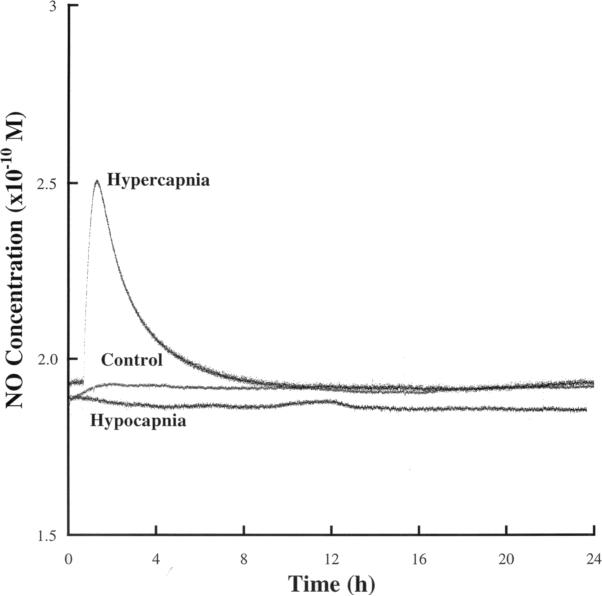
«NO levels in endothelial cells increased during hypercapnia by 36% in 8 hours and remained 25% above baseline. NO increase in astrocytes was 30% after 1 hour but returned to baseline at 8 hours. NLA blocked NO increase in endothelial cells under hypercapnia.»

«This study suggests that cerebral endothelial cells and astrocytes release NO under normocapnic conditions and NO production is increased during hypercapnia and decreased during hypocapnia independent of pH. Further, this demonstrates that endothelial cells may play a pivotal role in chemoregulation by modulating NOS activity.»

«Modulation of cerebral vascular tone in response to changes in the arterial partial pressure of carbon dioxide (pCO2) is defined as chemoregulation. In humans hypocapnia produces vasoconstriction resulting in decreased cerebral blood flow (CBF), whereas hypercapnia produces vasodilation and increased CBF (Lavi et al., 2003). »

«Using nitric oxide synthase (NOS) inhibitors, several in vivo studies have suggested that vasodilation in response to increased pCO2may be mediated by NO (Lavi et al., 2006). »

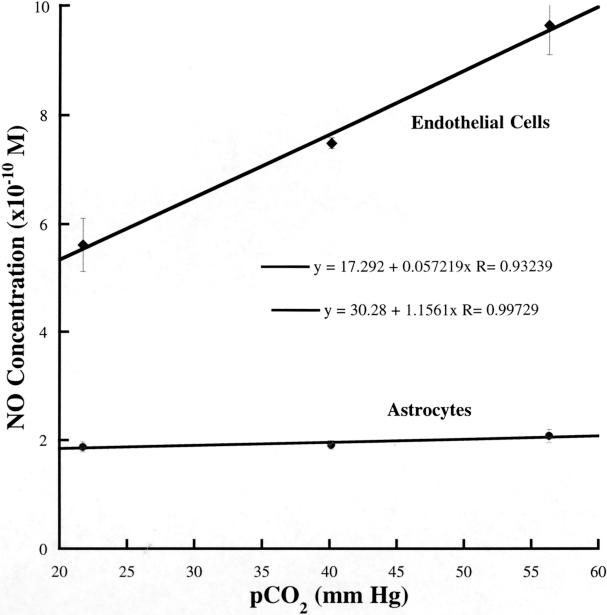
«Under hypercapnic conditions (pCO2 56.3±8.7 mmHg), NO concentration increased from baseline levels to a mean of 10±0.6×10⁻¹⁰M during the first 4 hours (Figure 1A). NO concentration peaked at 36% (10.2±0.5×10⁻¹⁰M) above baseline at 8 hours and stabilized 25% (9.4±0.5×10⁻¹⁰M) above baseline until completion of the experiment.»

«By plotting NO changes as a function of pCO2, we could disregard time as a variable in NO production (Figure 3) to establish that changes in NO levels correlate with changes in pCO2 (R=0.99).»

CO2 og NO

«Under hypercapnic conditions (pCO2 56.3±8.7 mmHg), human fetal astrocytes increased NO production by 30% over baseline values to a mean level of 2.5±1.2×10⁻¹⁰M in the first hour of hypercapnia (Figure 2). NO production then gradually decreased to control levels after 8 hours and remained at control levels for the remainder of the experiments.»

CO2 og NO i astrocytt

«The pH values were kept stable within a neutral gap under normocapnic (7.39±0.01), hypercapnic (7.36±0.02) and hypocapnic (7.40±0.01) conditions.»

» Stimulation of NOS in the endothelial cells is consistent with the NO-dependent vasodilation and increased CBF that occur in vivo during hypercapnia, as has been shown in rats (Iadecola, 1992) and in primates (Thompson et al., 1996). Decreased NO production by endothelial cells also correlates with the in vivo vasoconstrictive response to hypocapnia shown previously (Lavi et al., 2003;Thompson et al., 1996).»

«Thus, it is unlikely that eNOS is responsible for the early or fast phase response during chemoregulation in vivo. There are several explanations for this phenomenon. First, nitrite (NO2), being a storage pool of NO, can be reduced to NO under acidic and hypoxic conditions in vivo (Cosby et al., 2003). Under these conditions nitrite releases NO in the presence of deoxygenated hemoglobin in blood (Cosby et al., 2003;Nagababu et al., 2003) or neuroglobin (Burmester et al., 2000) in neurons acting as a nitrite reductase (Petersen et al., 2008). »

«The chemoregulatory response to CO2 changes in vivo is rapid, occurring on the order of milliseconds; our results did not demonstrate this component of the chemoregulatory response.»

«Cerebrovascular reactivity in response to CO2 is impaired in diabetic or hypertensive patients with endothelial dysfunction (Lavi et al., 2006), suggesting an important role for endothelial cells in modulating CBF response to CO2. »

«It has been reported that the ATP-sensitive K+ channels play a pivotal role in microvessel vasodilation of the cerebral cortex in response to decreased pH corresponding to mild hypercapnia and that a NOS inhibitor could not alter this vasodilation (Nakahata et al., 2003).»

Ukjent sin avatar

Endothelial dysfunction as a possible link between C-reactive protein levels and cardiovascular disease

Nevner at lavgrads betennelse er utgangspunktet for arterosklerose. Og at det hemmer endotelfunksjonen, altså blodkar cellenes evne til å trekke seg sammen og utvide seg.

http://www.clinsci.org/cs/098/0531/cs0980531.htm

«Low-grade chronic inflammation, characterized by elevated plasma concentrations of C-reactive protein (CRP), is associated with an increased risk of atherosclerotic cardiovascular disease.»

«These data demonstrate for the first time a relationship between low-grade chronic inflammation and basal endothelial NO synthesis (measured using an invasive method), and support the notion that endothelial dysfunction is a critical intermediate phenotype in the relationship between inflammation and cardiovascular disease.»

«Inflammation may increase cardiovascular risk via effects on known cardiovascular risk factors (e.g. lipid profiles), by altering other putative risk markers (e.g. fibrinogen, plasminogen activator inhibitor-1), or by impairing carbohydrate metabolism [2]. «

«In this clinical study we provide, to the best of our knowledge, the first direct evidence for an association between endothelial dysfunction and low-grade chronic inflammation. »

Viser til at blodkar får vansker med å slappe av når det er betennelsesfaktorer tilstedet:
«Our data also complement previous experiments by Bhagat et al. [6,7], who noted that infusion of endotoxin or pro-inflammatory cytokines [interleukin-1, tumour necrosis factor-a (TNF-a)] into superficial hand veins of healthy volunteers (provoking a local acute inflammatory response) caused a selective impairment of endothelium-dependent relaxation. «

«Correlation does not imply causality, but the relationship we have suggested between inflammation and endothelial dysfunction is biologically plausible. Low-grade chronic vascular inflammation may promote biochemical (e.g. peroxidative) and cellular changes in the vessel wall.»

Viser at NO produksjonen synker ved betennelse og gjør at blodet lettere levrer seg, som videre øker sjansen for sammentrekning, trombose og full avstengning av blodkar.
«A decrease in basal NO production secondary to low-grade chronic inflammation would favour increased expression of cell-surface adhesion molecules for leucocytes and platelets, promote interaction between these cells and the vascular endothelium, and induce procoagulant activity. Such effects, in turn, might increase the likelihood of vasospasm, thrombosis and vessel occlusion [1]. Thus endothelial dysfunction may be a critical factor in the relationship between low-grade chronic inflammation and cardiovascular disease.»

Ukjent sin avatar

Nitric Oxide Inhibits Nociceptive Transmission by Differentially Regulating Glutamate and Glycine Release to Spinal Dorsal Horn Neurons

Mer om NO sin funksjon som både smertedempende og smerteøkende. Nevner alle faktorer som spiller inn i både nervesystem, ryggmarg og perifert. Viktig studie som også indirekte kan brukes i å forstå sammenhengen mellom hvordan CO2 og økning av eNOS (i blodkar) kan dempe nNOS (i nervesystemet).

http://www.jbc.org/content/286/38/33190.full

«Our findings suggest that spinal endogenous NO enhances inhibitory glycinergic input to dorsal horn neurons through sGC-cGMP-protein kinase G. Furthermore, NO reduces glutamate release from primary afferent terminals through S-nitrosylation of voltage-activated Ca2+ channels. Both of these actions probably contribute to inhibition of nociceptive transmission by NO at the spinal level.»

«Nitric oxide (NO) is freely diffusible across the cell membranes and is synthesized by the nitric-oxide synthase (NOS)2 from L-arginine and different cofactors.»

«The three NOS isoforms, including neuronal NOS (nNOS), endothelial NOS (eNOS), and inducible NOS (iNOS), have distinct structures and functions (1, 2). »

Refererer til Superoxid, den viktigste antioksidanten som CO2 beskytter. Og til peroxynitritt, den farligste oksidanten som CO2 også beskytter mot.

«The diverse effects of NO is commonly mediated through increased cGMP production upon activation of NO-sensitive soluble guanylyl cyclase (sGC), S-nitrosylation, tyrosine nitration, and the interaction with superoxide to form peroxynitrite (3,,5). »

Hvordan NO gir smerte, og at NO-hemmere demper smerte.:
«Some studies suggest that spinal NO is involved in the potentiation of nociception. For example, mechanical hypersensitivity induced by nerve injury or tissue inflammation is reduced by intrathecal administration of nNOS inhibitors and in nNOS-knock-out mice (6, 9, 10). »

Hvordan NO demper smerte:
«In contrast, other studies have shown that spinal NO plays a role in the inhibition of nociceptive processing. In this regard, intrathecal administration of L-arginine increases the mechanical nociceptive withdrawal threshold in rats (12). »

Mengden har mye å si for effekten, med lite er det smertedempende, men mye er det smerteøkende.
«For instance, it has been shown that intrathecal injection of low doses of L-arginine or NO donors reduce nociception, but L-arginine or NO donors at the high doses potentiates nociceptive responses to formalin injection or nerve injury (16, 17).»

Nevner at hvis én type NO er nedregulert blir en annen type oppregulert. Muligheten er da for at om eNOS (i blodårer) er lav pga dårlig blodsirkulasjon og lite CO2, kan nNOS (i nervesystemet) økes og dermed gi smerter. Ved å øke eNOS kan man da få mindre nNOS og dermed en indirekte smertedemping.
«In addition, it should be noted that in eNOS-, nNOS-, or iNOS-knock-out mice, an increase in the expression of other NOS isoforms in the spinal cord has been reported (18, 19). This compensatory up-regulation of other NOS subtypes in specific NOS isoform-knock-out mice further confounds the interpretation of the results.»

Om at NO både øker nocicepsjon og demper den:

«The discrepancy may result from the use of different pain models, the amount of NO produced locally, and the specific CNS sites involved. For example, NO-cGMP inhibits dorsal horn neuronal activity at the spinal level but excites spinal dorsal horn neurons at the supraspinal level (15, 39). Also, while low concentrations of NO inhibit NMDA receptor activity (40, 41), high concentrations of NO stimulate TRPV1 and TRPA1 receptors (42). »

«GABA and glycine are the two predominant inhibitory neurotransmitters in the spinal cord. Blocking GABAA or glycine receptors in the spinal cord induces pain hypersensitivity in rats (4344).»

«Of note, L-arginine and SNAP had similar effects on glycinergic sIPSCs and mIPSCs, suggesting that NO can potentiate glycine release from presynaptic terminals of interneurons in the spinal dorsal horn. Thus, our findings indicate that NO potentiates glycinergic input to spinal dorsal horn neurons to attenuate nociceptive transmission

«Glutamate is an excitatory neurotransmitter critically involved in nociceptive transmission in the spinal dorsal horn. In this study, we found that L-arginine and SNAP significantly inhibited the frequency of glutamatergic sEPSCs of lamina II neurons. L-Arginine and SNAP also consistently inhibited glutamatergic EPSCs evoked from primary afferents in most lamina II neurons.»

«Thus, it is unlikely that the inhibitory effect of NO on synaptic glutamate release to dorsal horn neurons is secondary to increased glycine release and stimulation of presynaptic glycine receptors (35). Our findings strongly suggest that NO attenuates synaptic glutamate release by inhibition of HVACCs at primary afferent terminals.»

«Another salient finding of our study is that NO potentiates glycinergic input and inhibits glutamatergic synaptic transmission in the spinal dorsal horn through distinct signaling pathways.»

«Therefore, our findings suggest that spinal NO primarily inhibits glutamate release through S-nitrosylation of HVACCs at primary afferent terminals.»

«In addition to its inhibitory effect on HVACCs shown in our study, NO can inhibit NMDA receptor currents in recombinant systems (6061) and in spinal lamina II neurons (41). Because both HVACCs and NMDA receptors are critically involved in nociceptive transmission, it seems difficult to explain the proposed pronociceptive role of NO at the spinal level. Of note, systemic use of NO or NO donors has been shown to reduce pain intensity caused by sickle cell crisis or diabetic neuropathy in patients (62, 63). We found in the present study that intrathecal administration of L-arginine or SNAP in rats significantly increased the nociceptive mechanical thresholds.»

«Hence, NMDA receptor activation could lead to increased NO production and release, and NO can diffuse to the presynaptic site to reduce glutamate release from primary afferent terminals. By reducing glutamatergic transmission, NO could serve as a feedback regulator to attenuate nociceptive transmission at the spinal level during painful conditions.»

«In summary, our study provides important new evidence that spinal NO potentiates inhibitory glycinergic input but reduces glutamatergic synaptic transmission between primary afferents and dorsal horn neurons through distinct signaling mechanisms. The opposing effects of NO on glutamatergic and glycinergic synaptic transmission could contribute to the antinociceptive effect of NO at the spinal level. This new information is important for our understanding of the synaptic actions underlying the antinociceptive effect of NO at the spinal level.»


Ukjent sin avatar

Pain and analgesia: The dual effect of nitric oxide in the nociceptive system.

Om at NO har en tosidig effekt som både smertedempende og smerteøkende.

http://www.ncbi.nlm.nih.gov/pubmed/21723953
«Nitric oxide is an important neurotransmitter involved in the nociceptive process and, in the dorsal horn of the spinal cord, it contributes to the development of central sensitization. On the other hand, experimental data have also demonstrated that NO inhibits nociception in the peripheral and also in the central nervous system. »

«In addition, it has been shown that nitric oxide mediates the analgesic effect of opioids and other analgesic substances. «

Ukjent sin avatar

Nitric oxide and pro-inflammatory cytokines correlate with pain intensity in chronic pain patients.

Bekrefter at mengden betennelsesfaktorer (f.eks. IL-6 og TNFa) er proporsjonal med smerteopplevelse. Og sier at NO er økt ved økt smerte. Dette burde tilsi bedre blodsirkulasjon, men det er åpenbart ikke det. NO har en tosidig effekt som både smertedempende og smerteøkende. (http://www.ncbi.nlm.nih.gov/pubmed/21723953)

http://www.ncbi.nlm.nih.gov/pubmed/17334668
«Pro-inflammatory cytokines (IL-1beta, IL-2, IL-6, IFN-gamma, TNF-alpha) in the plasma correlate with increasing pain intensity. Chronic pain patients show a significant increase in plasma levels of NO in comparison to healthy controls.»

Ukjent sin avatar

The exercise-induced growth hormone response in athletes.

Studie som gir oversikt over mange faktorer rundt veksthormonøkning i trening.

http://www.ncbi.nlm.nih.gov/pubmed/12797841

«A number of physiological stimuli can initiate hGH secretion, the most powerful, non-pharmacological of which are sleep and exercise. »

«The exercise-induced growth hormone response (EIGR) is well recognised and although the exact mechanisms remain elusive, a number of candidates have been implicated. These include neural input, direct stimulation by catecholamines, lactate and or nitric oxide, and changes in acid-base balance. Of these, the best candidates appear to be afferent stimulation, nitric oxide and lactate. Resistance training results in a significant EIGR.»

«An exercise intensity above lactate threshold and for a minimum of 10 minutes appears to elicit the greatest stimulus to the secretion of hGH. Exercise training above the lactate threshold may amplify the pulsatile release of hGH at rest, increasing 24-hour hGH secretion.»

«In a great many cases, the impact of some of the deleterious effects of ageing could be reduced if exercise focused on promoting the EIGR. «