Ukjent sin avatar

THE VALUE OF BLOWING UP A BALLOON

Dette er en veldig viktig artikkel for å forstå diafragmas rolle i både pust og bevegelse, og ifh smertetilstander i ryggraden. Nevner en lovende teknikk for å styrke diafragma og støttemuskulatur hvor man blåser opp en ballong og strammer kjernemuskulaturen. Nevner Zone of Apposition (ZOA) som beskriver diafragmas bevegelsesmuligheter. Ved lav ZOA har diafrgma lite bevegelse. Vi ønsker å øke ZOA. Denne øvelsen er konstruert basert på fysioterapeutisk prinsipper, men i Verkstedet Breathing System har vi øvelser som er gir samme resultater på diafragma, men bygget på lang og erfaringsbasert tradisjon fra tibetansk buddhisme.

Nevner også hvordan mage-pust minker bevegelsen i diafragma.

http://www.ncbi.nlm.nih.gov/pmc/articles/PMC2971640/

Suboptimal breathing patterns and impairments of posture and trunk stability are often associated with musculoskeletal complaints such as low back pain. A therapeutic exercise that promotes optimal posture (diaphragm and lumbar spine position), and neuromuscular control of the deep abdominals, diaphragm, and pelvic floor (lumbar-pelvic stabilization) is desirable for utilization with patients who demonstrate suboptimal respiration and posture. This clinical suggestion presents a therapeutic exercise called the 90/90 bridge with ball and balloon. This exercise was designed to optimize breathing and enhance both posture and stability in order to improve function and/or decrease pain. Research and theory related to the technique are also discussed.

Many muscles used for postural control/stabilization and for respiration are the same, for example: the diaphragm, transversus abdominis, and muscles comprising the pelvic floor.16 Maintaining optimal posture/stability and respiration is important and is even more challenging during exercise. Exercise increases respiratory demand (e.g. running) and limb movements (e.g. arms moving while standing still) increase postural demands for stabilization.3,7

Many factors are potentially involved with suboptimal respiration and suboptimal (faulty) posture and may be associated with musculoskeletal complaints such as low back pain, and/or sacroiliac joint pain.8 (Table 1)

Suboptimal Respiration and Posture
Decreased/suboptimal Zone of Apposition of diaphragm
Decreased exercise tolerance
Decreased intra-abdominal pressure
Shortness of Breath/Dyspnea
Decreased respiratory efficiency
Decreased expansion of lower rib cage/chest
Decreased appositional diaphragm force
Decreased length of diaphragm (short)
Decreased transdiaphragm pressure
Increased use of accessory muscles of respiration
Poor neuromuscular control of core muscles
Increased lumbar lordosis
Increased anterior pelvic tilt
Increased hamstring length
Increased abdominal length
Rib elevation/external rotation
Sternum elevation
Increased activity of paraspinals
Increased lumbar-pelvic instability
Low back pain
Sacroiliac Joint pain
Thoracic Outlet Syndrome
Headaches
Asthma

One of the most critical factors, often overlooked by physical therapists, is maintaining an optimal zone of apposition of the diaphragm.3,911 The zone of apposition (ZOA) is the area of the diaphragm encompassing the cylindrical portion (the part of the muscle shaped like a dome/umbrella) which corresponds to the portion directly apposed to the inner aspect of the lower rib cage.12 The ZOA is important because it is controlled by the abdominal muscles and directs diaphragmatic tension. When the ZOA is decreased or suboptimal, there are several potential negative consequences. (Table 1) Two examples include:

  1. Inefficient respiration (less air in and out) because the transdiaphragmatic pressure is reduced.11 The smaller the ZOA, there will be less inspiratory action of the diaphragm on the rib cage.11
  2. Diminished activation of the transversus abdominis which is important for both respiration and lumbar stabilization.11,13

The incidence of LBP has been documented to be as high as 30% in the athletic population, and in many cases pain may persist for years.15 Low back pain is frequently correlated with faulty posture such as an excessive lumbar lordosis.1618 Excessive lumbar lordosis may be associated with over lengthened and weak abdominal musculature.1820 Poor neuromuscular control of core muscles (transversus abdominis, internal oblique, pelvic floor and diaphragm) has been described in individuals with SIJ pain21 and in individuals with lumbar segmental instability, potentially adversely affecting respiration.22

Richardson et al.27 describe coordination of the Transversus abdominis and the diaphragm in respiration during tasks in which stability is maintained by tonic activity of these muscles. During inspiration, the diaphragm contracts concentrically, whereas the transversus abdominis contracts eccentrically. The muscles function in reverse during exhalation with the diaphragm contracting eccentrically while the transversus abdominis contracts concentrically. Hodges et al. noted that during respiratory disease the coordinating function between the transversus abdominis and diaphragm was reduced.6 Thus, it is also possible that faulty posture such as over lengthened abdominals and excessive lordosis could reduce the coordination of the diaphragm and transversus abdominis during respiration and stabilization activities.

O’sullivan et al.21 studied subjects with LBP attributed to the sacroiliac joints and compared them to control subjects without pain. O’sullivan et al. compared respiratory rate and diaphragm and pelvic floor movement using real time ultrasound during a task that required load transfer through the lumbo-pelvic region (the active straight leg raise test). Subjects with pain had an increase in respiratory rate, descent of their pelvic floor and a decrease in diaphragm excursion as compared to the control subjects, who had normal respiratory rates, less pelvic floor descent, and optimal diaphragm excursion. While O’sullivan et al. concluded that an intervention program focused on integrating control of deep abdominal muscles with normal pelvic floor and diaphragm function may be effective in managing patients with LBP,21 they did not describe strategies or exercises to achieve this goal.21

While the role of the Transversus abdominis in lumbar stability is well documented, less well known is the role of the diaphragm in lumbar stability. While the primary function of the diaphragm is respiration, it also plays a role in spinal stability.3,28

The right hemidiaphragm attaches distally to the anterior portions of the first through third lumbar vertebrae (L1-3) and the left hemidiaphragm attaches distally on the first and second lumbar vertebrae (L1-2).29 This section of the diaphragm is referred to as the crura. Of interest is the asymmetrical attachment of the diaphragm with the left hemidiaphragm attaching to L1-2 and the right portion attaching to L1-3.

During the inhalation phase of ventilation, the dome of the diaphragm moves caudally like a piston creating a negative pressure in the thorax that forces air into the lungs. This action is normally accompanied by a rotation of the ribs outward (external rotation) largely in part due to the ZOA.12 (Figure 1) Apposition is a term that means multiple layers adjacent to each other.33 The normal force of pull on the sternal and costal portions of the diaphragm would produce an internal rotation of the ribs. The ZOA creates an external rotation of these ribs primarily because the pressure in the thoracic cavity prevents an inward motion. The crural portion of the diaphragm assists the caudal motion of the dome. It also pulls the anterior lumbar spine upward (cephalad and anterior). Additionally, the abdominal muscles and pelvic floor musculature are less active to allow visceral displacement due to the dome of the diaphragm dropping. With exhalation, this process is reversed. Abdominal muscle activity compresses the viscera in the abdominal cavity, the diaphragm is forced cephalad and the ribs internally rotate. As exhalation becomes forced as during exercise, abdominal activity (rectus abdominus, internal obliques, external obliques, and transversus abdominis) will be increased.3436

When the ZOA is optimized, the respiratory and postural roles of the diaphragm have maximal efficiency.37 In suboptimal positions (i.e. decreased ZOA), the diaphragm has a decreased ability to draw air into the thorax because of less caudal movement upon contraction and less effective tangential tension of the diaphragm on the ribs and therefore lower transdiaphragmatic pressure.38 This decreased ZOA is accompanied by decreased expansion of the rib cage, postural alterations, and a compensatory increase in abdominal expansion.12 (Figure 2)

One such adaptive breathing strategy would be to relax the abdominal musculature more than necessary on inspiration to allow for thoraco-abdominal expansion. This situation leads to decreased abdominal responsibility while breathing and can contribute to instability. This would reflect more upper chest breathing and less efficient diaphragm activity. If the body maintains this position and breathing strategy for an extended period of time, the diaphragm may adaptively shorten and the lungs may become hyperinflated.37,39,40 Hyperinflation may also contribute to over use of accessory muscles of respiration such as scalenes, sternocleidomastoid (SCM), pectorals, upper trapezius and paraspinals in an attempt to expand the upper rib cage.4144 Again, without an optimal dome shape/position of the diaphragm or an optimal ZOA the body compensates to get air in with accessory muscles since the more linear/flat/short diaphragm is less efficient for breathing.32

Instructions for Performance of the 90/90 Bridge with Ball and Balloon: 1. Lie on your back with your feet flat on a wall and knees and hips bent at a 90-degree angle. 2. Place a 4-6 inch ball between your knees. 3. Place your right arm above your head and a balloon in your left hand. 4. Inhale through your nose and as you exhale through your mouth, perform a pelvic tilt so that your tailbone is raised slightly off the mat. Keep low back flat on the mat. Do not press your feet into the wall, instead pull down with your heels. 5. You should feel the back of your thighs and inner thighs engage, keeping pressure on the ball. Maintain this position for the remainder of the exercise. 6. Now inhale through your nose and slowly blow out into the balloon. 7. Pause three seconds with your tongue positioned on the roof of your mouth to prevent airflow out of the balloon. 8. Without pinching the neck of the balloon and keeping your tongue on the roof of your mouth, inhale again through your nose. 9. Slowly blow out as you stabilize the balloon with your left hand. 10. Do not strain your neck or cheeks as you blow. 11. After the fourth breath in, pinch the balloon neck and remove it from your mouth. Let the air out of the balloon.12. Relax and repeat the sequence 4 more times. Copyright © Postural Restoration Institute™ 2009, used with permission

The patient/athlete is asked to hold the balloon with one hand and inhale through his/her nose with the tongue on the roof of the mouth (normal rest position) and then exhale through his/her mouth into the balloon. The inhalation, to about 75% of maximum, is typically 3-4 seconds in duration, and the complete exhalation is usually 5-8 seconds long followed by a 2-3 second pause. This slowed breathing is thought to further relax the neuromuscular system/parasympathetic nervous system and generally decrease resting muscle tone. Ideally the patient/athlete will be able to inhale again without pinching off the balloon with their teeth, lips, or fingertips. This requires maintenance of intra-abdominal pressure to allow inhalation through the nose without the air coming back out of the balloon and into the mouth.

When the exercise is performed by the patient/athlete with hamstring and gluteus maximus (glut max) activation (hip extensors) the pelvis moves into a relative posterior pelvic tilt and the ribs into relative depression and internal rotation. This pelvic and rib position helps to optimize abdominal length (decreases) and diaphragm length/ZOA (increases).

Clinical experience with the BBE includes utilization of the exercise for both female and male patients (more females than males), ages 5-89 with a wide variety of diagnoses including: low back pain, trochanteric bursitis, SIJ pain, asthma, COPD, acetabular labral tear, anterior knee pain, thoracic outlet syndrome (TOS) and sciatica.

Ukjent sin avatar

Brain Mechanisms Supporting the Modulation of Pain by Mindfulness Meditation

En studie som gir en tydelig beskrivelse av hvor mye mindfulness demper smerte. De fant ingen korrelasjon mellom pustefrekvens og smertereduksjon, men det kan være flere faktorer som spiller inn der.  I denne studien gjorde de f.eks. kun 20 min meditasjon i 4 dager, med mennesker som ikke har meditert først. De andre studiene inkluderer mennesker som har meditert lenge. I tillegg kan man tydelig se at etter 4 dager med meditasjon så blir pustefrekvensen lavere når man blir påført vond varme, noe som tyder på at de begynner å bruke pusten som smertereduksjon. Det var motsatt før de hadde fått instruksjon i meditasjon.

http://www.jneurosci.org/content/31/14/5540.full

After 4 d of mindfulness meditation training, meditating in the presence of noxious stimulation significantly reduced pain unpleasantness by 57% and pain intensity ratings by 40% when compared to rest.

Meditation-induced reductions in pain intensity ratings were associated with increased activity in the anterior cingulate cortex and anterior insula, areas involved in the cognitive regulation of nociceptive processing. Reductions in pain unpleasantness ratings were associated with orbitofrontal cortex activation, an area implicated in reframing the contextual evaluation of sensory events. Moreover, reductions in pain unpleasantness also were associated with thalamic deactivation, which may reflect a limbic gating mechanism involved in modifying interactions between afferent input and executive-order brain areas. Together, these data indicate that meditation engages multiple brain mechanisms that alter the construction of the subjectively available pain experience from afferent information.

Mindfulness-based mental training.

Mindfulness-based mental training was performed in four separate, 20 min sessions conducted by a facilitator with >10 years of experience leading similar meditation regimens. Subjects had no previous meditative experience and were informed that such training was secular and taught as the cognitive practice of Shamatha or mindfulness meditation. Each training session was held with one to three participants.

On mindfulness meditation training day 1, subjects were encouraged to sit with a straight posture, eyes closed, and to focus on the changing sensations of the breath occurring at the tips of their nostrils. Instructions emphasized acknowledging discursive thoughts and feelings and to return their attention back to the breath sensation without judgment or emotional reaction whenever such discursive events occurred. On training day 2, participants continued to focus on breath-related nostril sensations and were instructed to “follow the breath,” by mentally noting the rise and fall of the chest and abdomen. The last 10 min were held in silence so subjects could develop their meditative practice. On training day 3, the same basic principles of the previous sessions were reiterated. However, an audio recording of MRI scanner sounds was introduced during the last 10 min of meditation to familiarize subjects with the sounds of the scanner. On the final training session (day 4), subjects received minimal meditation instruction but were required to lie in the supine position and meditate with the audio recording of the MRI sounds to simulate the scanner environment. Contrary to traditional mindfulness-based training programs, subjects were not required to practice outside of training.

Subjects also completed the Freiburg Mindfulness Inventory short-form (FMI), a 14-item assessment that measures levels of mindfulness, before psychophysical pain training and after MRI session 2. The FMI is a psychometrically validated instrument with high internal consistency (Cronbach α = 0.86) (Walach et al., 2006). Statements such as “I am open to the experience of the present moment” are rated on a five-point scale from 1 (rarely) to 5 (always). Higher scores indicate more skill with the mindfulness technique.

Decreases in respiration rate have been reported previously to predict reductions in pain ratings (Grant and Rainville, 2009Zautra et al., 2010). In the present data (MRI session 2; n = 14), no significant relationship between the decreased respiration rates and pain intensity (p = 0.22, r = −0.35), pain unpleasantness (p = 0.41, r = −0.24), or FMI ratings (p = 0.42, r = 0.24) was found.

CBF Respiration rate Heart rate
Session 1
    Rest: neutral 74.12 (3.01) 19.97 (1.29) 72.53 (2.33)
    Rest: heat 71.51 (2.93) 20.45 (1.11) 74.79 (2.39)
    ATB: neutral 70.69 (3.56) 17.05 (1.00) 70.46 (1.79)
    ATB: heat 67.90 (3.08) 19.32 (1.33) 74.07 (2.19)
Session 2
    Rest: neutral 68.57 (3.17) 16.72 (0.82) 74.82 (3.08)
    Rest: heat 66.82 (2.59) 17.12 (0.93) 77.32 (2.95)
    Meditation: neutral 65.09 (3.59) 11.55 (0.74) 73.62 (2.77)
    Meditation: heat 65.47 (3.86) 9.47 (0.67)a 75.38 (2.70)

In the present investigation, meditation reduced all subjects’ pain intensity and unpleasantness ratings with decreases ranging from 11 to 70% and from 20 to 93%, respectively.

Meditation likely modulates pain through several mechanisms. First, brain areas not directly related to meditation exhibited altered responses to noxious thermal stimuli. Notably, meditation significantly reduced pain-related afferent processing in SI (Fig. 5), a region long associated with sensory-discriminative processing of nociceptive information (Coghill et al., 1999). Executive-level brain regions (ACC, AI, OFC) are thought to influence SI activity via anatomical pathways traversing the SII, insular, and posterior parietal cortex (Mufson and Mesulam, 1982Friedman et al., 1986;Vogt and Pandya, 1987). However, because meditation-induced changes in SI were not specifically correlated with reductions in either pain intensity or unpleasantness, this remote tuning may take place at a processing level before the differentiation of nociceptive information into subjective sensory experience.

Second, the magnitude of decreased pain intensity ratings was associated with ACC and right AI activation (Fig. 6). Activation in the mid-cingulate and AI overlapped between meditation and pain, indicating a likely substrate for pain modulation. Converging lines of evidence suggest that these regions play a major role in the evaluation of pain intensity and fine-tuning afferent processing in a context-relevant manner (Koyama et al., 2005Oshiro et al., 2009;Starr et al., 2009). Such roles are consistent with the aspect of mindfulness meditation that involves reducing appraisals that normally impart significance to salient sensory events.

Third, OFC activation was associated with decreases in pain unpleasantness ratings (Fig. 6). The OFC has been implicated in regulating affective responses by manipulating the contextual evaluation of sensory events (Rolls and Grabenhorst, 2008) and processing reward value in the cognitive modulation of pain (Petrovic and Ingvar, 2002). Meditation directly improves mood (Zeidan et al., 2010a), and positive mood induction reduces pain ratings (Villemure and Bushnell, 2009). Therefore, meditation-related OFC activation may reflect altered executive-level reappraisals to consciously process reward and hedonic experiences (e.g., immediate pain relief, positive mood) (O’Doherty et al., 2001Baliki et al., 2010Peters and Büchel, 2010).

Ukjent sin avatar

Effects of a 4-week training with voluntary hypoventilation carried out at low pulmonary volumes

Spennende studie som viser hvordan lav pustefrekvens i selve trening påvirker restitusjonen etterpå. F.eks. hvordan bikarbonat/natron (HCO3-) påvirker melkesyreterskel. Teknikken bestod i å holde pusten 4 sekunder etter utpust, i bolker a 5minutter i løpet av treningsperioden. Det gir spesielt lite oksygen i blodet, som gir mange positive resultater.

http://www.sciencedirect.com/science/article/pii/S1569904807002327

Helle studien her:  http://www.google.com/url?sa=t&rct=j&q=&esrc=s&source=web&cd=1&ved=0CCsQFjAA&url=http%3A%2F%2Fwww.researchgate.net%2Fpublication%2F5689789_Effects_of_a_4-week_training_with_voluntary_hypoventilation_carried_out_at_low_pulmonary_volumes%2Ffile%2F79e41509ccd387b0f9.pdf&ei=pM58UpS3IIKF4ATU24D4CA&usg=AFQjCNFVh6Yl8e_ScphKf6HTFiLp1CWKsw&sig2=B9Zq9u_LuDDzGru14OKsLQ&bvm=bv.56146854,d.bGE

This study investigated the effects of training with voluntary hypoventilation (VH) at low pulmonary volumes. Two groups of moderately trained runners, one using hypoventilation (HYPO, n = 7) and one control group (CONT, n = 8), were constituted. The training consisted in performing 12 sessions of 55 min within 4 weeks. In each session, HYPO ran 24 min at 70% of maximal O2 consumption (View the MathML source) with a breath holding at functional residual capacity whereas CONT breathed normally. A View the MathML source and a time to exhaustion test (TE) were performed before (PRE) and after (POST) the training period. There was no change in View the MathML source, lactate threshold or TE in both groups at POST vs. PRE. At maximal exercise, blood lactate concentration was lower in CONT after the training period and remained unchanged in HYPO. At 90% of maximal heart rate, in HYPO only, both pH (7.36 ± 0.04 vs. 7.33 ± 0.06; p < 0.05) and bicarbonate concentration (20.4 ± 2.9 mmol L−1 vs. 19.4 ± 3.5; p < 0.05) were higher at POST vs. PRE. The results of this study demonstrate that VH training did not improve endurance performance but could modify the glycolytic metabolism. The reduced exercise-induced blood acidosis in HYPO could be due to an improvement in muscle buffer capacity. This phenomenon may have a significant positive impact on anaerobic performance.

Ukjent sin avatar

Respiratory Dysregulation in Anxiety, Functional Cardiac, and Pain Disorders

Svært mye interessant i denne studien om pusten og CO2. Spesielt avsnittene om at kronisk smerte endrer pustemønsteret og senker CO2 nivået i kroppen.

http://www.ncbi.nlm.nih.gov/pubmed/11530714

http://www.mental-mechanics.org/pdf/Anxiety/FH%20Wilhelm%20et%20al%20-%20Respiratory%20dysregulation%20review.pdf

CHRONIC PAIN
Acute pain results in shortness of breath and an increase in ventila- tion (Nishino, Shimoyama, Ide, & Isono, 1999). A commonly used pain provocation in the laboratory is immersion of a limb into almost freezing water (cold pressor test), which is reliably followed by reduc- tions of PetCO2 among healthy people. (On the other hand, partial or full immersion of the face in cold water causes a modest reduction in ventilation, a component of the diving response). Patients who experi- ence intense chronic pain show these respiratory-related changes over extended periods. For example, migraine headache patients were found to have significantly lowered PetCO2 levels during an attack compared to controls and to migraine-free periods (Hannerz & Jogestrand, 1995), and there were even respiratory abnormalities immediately before an attack (Zhao, Sand, & Sjaastad, 1992). Glynn, Lloyd, & Folkhard (1981) examined arterial pH and PCO2 in 52 chronic pain patients (e.g., back pain, cancer-related pain). PCO2 was mark- edly lowered in these patients, and nerve blockade of pain resulted in a significant rise in PCO2.

Interestingly, blood pH was normal, indicat- ing a long-term blood chemistry compensation for chronic hyperven- tilation. In a sleep study of fibromyalgia patients, a high incidence of respiratory abnormalities such as periodic breathing were found, and arterial PCO2 was lowered in a subgroup of patients (Sergi et al., 1999). Many clinicians, including one of the present authors (Gevirtz), have had the opportunity to measure PetCO2 levels in hun- dreds of chronic muscle pain patients, and the clinical impression is that these levels are almost universally low (c.f., Timmons & Ley, 1994). Of course, pain may also play a role in the increased ventilation found in the FCD patients discussed above, especially during acute episodes of chest pain.

The increased ventilation during acute pain is likely a component of the fight-flight response, preparing the individual for immediate action and sometimes for being attacked or maybe injured. Interest- ingly, recent evidence from animal studies indicates that acute hyperventilation has anesthetic effects via the adrenergic and endogenous opiate system (Ide et al., 1994a, 1994b). Thus, the increased ventila- tion that first served to activate an individual for a fight may have the beneficial side effect of relieving pain if the fight is lost.

So far, no study we know of has examined if the chronic hyperventi- lation exhibited by pain patients is of any benefit to their pain experi- ence (and thus a coping strategy), is only a side effect of the intense pain, or makes their pain worse. One would expect that chronic hyper- ventilation is not healthy in these patients, as it is in other clinical groups, because it interferes with blood homeostatic mechanisms and can lead to a variety of physical symptoms. It has been suggested that by numbing pain, hyperventilation may become a short-term adaptive process with long-term negative consequences (Conway, 1994). Inter- esting in this context is that opioids are frequently prescribed to chronic pain patients to suppress their pain, and they typically also suppress ventilation via central nervous pathways, sometimes to a lethal extent. In summary, there is some initial evidence that hyper- ventilation plays a role in chronic pain, and some mediating mecha- nisms have been identified. However, most of the pain-hypocapnia relationship in chronic pain syndromes is not well understood.

Chronic Pain
Slow abdominal breathing is often taught as a relaxation technique in preparation for acute pain, such as surgery or childbirth, and it also helps patients counteract their tendency to hyperventilate during such events. As described above, the chronic hyperventilation that can accompany long-lasting pain may be especially problematic because it may have long-term negative organismic effects. It is therefore logi- cal that breathing training could be a valuable asset in the overall treat- ment of chronic pain disorders. However, no data are currently avail- able on the role of breathing training as a systematic intervention in these disorders. It is one author’s (Gevirtz) clinical experience that breathing training is in fact a powerful tool in a comprehensive pain management protocol. This is also a common assumption of most bodywork therapies of pain (c.f., Clifton-Smith, 1998). Here again, the capnometry readings are used to illustrate the physiological basis of the symptomatology.

Muscular pain can result from chronically tense muscles. Hubbard, Gevirtz, and their colleagues recently showed that a sympathetically mediated pathway to muscle spindles (trigger points), rather than pathways to muscle fibers, plays an important role in the maintenance of chronic muscular pain (Gerwin, Shannon, Hong, Hubbard, & Gevirtz, 1997; Hubbard & Berkoff, 1993; McNulty, Gevirtz, Hub- bard, & Berkoff, 1994). Psychological stress increased the activity of these spindles, which suggests that stress reduction could alleviate chronic muscle pain. Thus, relaxation induced by slow diaphragmatic breathing may have a beneficial effect on the activation of these spin- dles and reduce general muscle tension.

Ukjent sin avatar

Cardiovascular and Respiratory Effect of Yogic Slow Breathing in the Yoga Beginner: What Is the Best Approach?

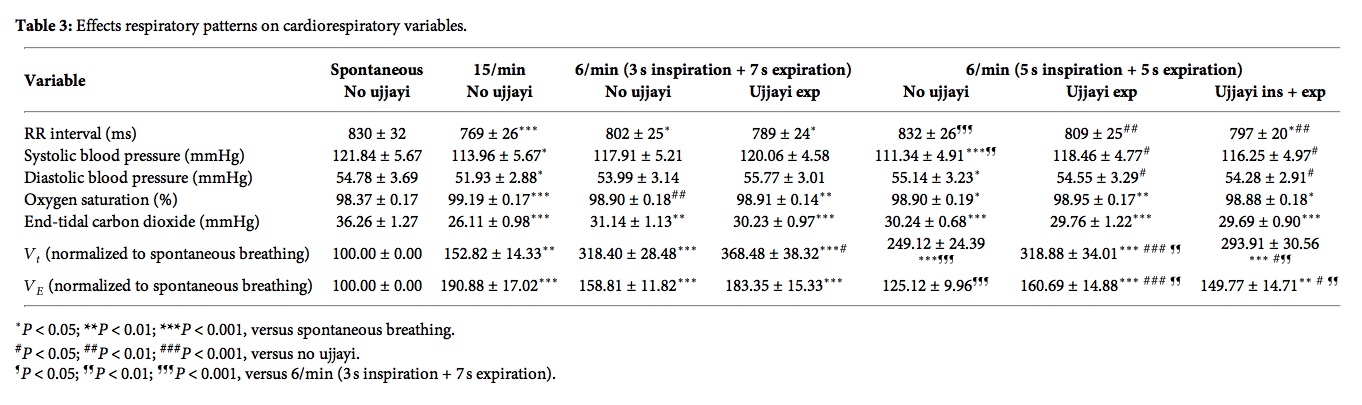
Svært spennende studie ang pustens påvirkning på vagusnerven, som bekrefter Breathing System sin Autonome pust, 5 sek inn og 5 sek ut, altså 6 pust i minuttet.

Nevner hvordan en usymmetrisk pust, f.eks. 3 inn og 7 ut, ikke påvirker vagusnerven i særlig stor grad. Og at ujjayi påvirker vagusnerven dårligere enn uanstrengt sakte pust. Ujjiayi pust har andre positivie effekter.

Nevner også at CO2 synker fra 36 til 30 mmHg når man puster 5/5 i forhold til når man ikke gjør pusteteknikk (spontan pust), men synker til 26 mmHg når man puster 15 pust i minuttet. Selv med 7s utpust synker CO2 ned til 31 mmHg. Dette er motsatt av hva studien på CO2 hos angstpasienter viser, hvor CO2 øker selv når pustefrekvensen senkes fra 15 til 12, og øker mer jo saktere pustefrekvensen er.

Nevner også noe svært interessant om at små endinger i oksygenmetning kan gi store endringer oksygentrykket pga bohr-effekt kurven som flater veldig ut ved 98% slik at en 0.5% økning i oksygenmetning kan likevel gir 30% økning i oksygentrykket.

http://www.hindawi.com/journals/ecam/2013/743504/

The slow breathing with equal inspiration and expiration seems the best technique for improving baroreflex sensitivity in yoga-naive subjects. The effects of ujjayi seems dependent on increased intrathoracic pressure that requires greater effort than normal slow breathing.

Respiratory research documents that reduced breathing rate, hovering around 5-6 breaths per minute in the average adult, can increase vagal activation leading to reduction in sympathetic activation, increased cardiac-vagal baroreflex sensitivity (BRS), and increased parasympathetic activation all of which correlated with mental and physical health [14]. BRS is a measure of the heart’s capacity to efficiently alter and regulate blood pressure in accordance with the requirements of a given situation. A high degree of BRS is thus a good marker of cardiac health [5].

The slow breathing-induced increase in BRS could be due to the increased tidal volume that stimulates the Hering-Breuer reflex, an inhibitory reflex triggered by stretch receptors in the lungs that feed to the vagus [6]. In addition, the slow breathing increases the oxygen absorption that follows greater tidal volume , as a result of reduction in the effects of anatomical and physiological dead space [78]. This might in turn produce another positive effect, that is, a reduction in the need of breathing. Indeed, a reduction in chemoreflex sensitivity and, via their reciprocal relationships, an increase in BRS, have been documented with slow breathing [913].

 pustmønster CO2
In comparison to spontaneous breathing, fast breathing led to a reduction in BRS, whilst all slow breathing (with or without ujjayi breathing) increased BRS. This increase was seen in both the symmetrical (5 second inspiration and expiration) and asymmetrical (3 second inspiration and 7 second expiration) slow breathing conditions. Engaging ujjayi breathing on the exhalation had the effect of reducing the increase in BRS of slow breathing alone, and this was further reduced with ujjayi on the inspiration and expiration (which was not significantly higher than baseline). These differences were even more pronounced with respect to controlled breathing at 15 breath/minute, which also showed highly significant differences with respect to spontaneous breathing, but in the opposite direction.
When slow breathing was done in conjunction with ujjayi breathing, oxygen saturation further increased, though only slightly. Overall, however, this was a highly significant change given that baseline oxygen saturation was already high approximately 98.3% (Table 3).
However, with 15 breath/minute controlled breathing the increase in oxygen saturation occurred with a large relative increase in Ve and a marked drop in end-tidal carbon dioxide. Conversely, with slow breathing, the increase in oxygen saturation occurred with only a moderate increase in Ve and drop in carbon dioxide.
The greatest improvement was found in slow breathing without ujjayi, while breathing controlled at a rate of 15/min caused a drop in BRS. In all forms of slow breathing there was a statistically significant increase in oxygen saturation from the mean baseline of 98.3%, confirming the relationship between high levels of oxygen absorption and BRS.
In this study, we show that slow breathing and increased oxygen absorption lead to enhanced BRS. This might result from several possible factors, all interrelated. In theory, the increase in arterial oxygen partial pressure increases blood pressure, which in turn could stimulate the baroreceptors and improve the BRS gain. This was recently observed in healthy [28] and diabetic subjects [25]. The seemingly small extent of the increase in oxygen saturation should not be overlooked. In fact, the haemoglobin dissociation curves states that at higher saturation values small changes reflex large changes in the partial pressure of oxygen.
Because the oxygen tension (and not oxygen saturation) is the chemoreflex input signal, this explains why in a previous study the administration of oxygen in normoxia induced a significant increase in BRS and parasympathetic activity despite a small increase in oxygen saturation [25].
We did not find any significant difference between asymmetrical and symmetrical breathing during slow breathing. We suggest that most of these results could be due to the prolonged expiratory time (in fact the 3-second inspiratory time of the asymmetrical breathing was very close to the spontaneous breathing). In the yoga tradition several degrees of asymmetries were adopted. While some of these could have specific effects (and could be matter for further investigations), our results suggest that an expiratory time of at least 5 seconds was sufficient to elicit most of the results observed.
Based on our findings, slow breathing with similar inspiration and expiration times appears the most effective and simple way to heighten the BRS and improve oxygenation in normoxia. Ujjayi breath demonstrates limited added benefit over slow breathing done at 6/min in normoxia; however, the effects could be more pronounced in hypoxia, and this could be matter for future investigations.


Ukjent sin avatar

Modulatory effects of respiration

Viser at HRV er størst ved 5-6 pust i minuttet.

http://www.sciencedirect.com/science/article/pii/S1566070201002673

Respiration is a powerful modulator of heart rate variability, and of baro- and chemoreflex sensitivity. Abnormal respiratory modulation of heart rate is often an early sign of autonomic dysfunction in a number of diseases.

This review examines the possibility that manipulation of breathing pattern may provide beneficial effects in terms not only of ventilatory efficiency, but also of cardiovascular and respiratory control in physiologic and pathologic conditions, such as chronic heart failure.


Fig. 2. Heart rate variability is maximal when respiration slows down in the low-frequency range, and particularly at 0.1 Hz (equivalent to 6 breaths/min).

Ukjent sin avatar

Respiratory weakness in patients with chronic neck pain.

Studie som nevner at alle med kroniske nakkeplager også har svake pustemuskler, og at pusten kan bidra til å opprettholde smertene. Spesielt ved svak utpust (MEP – maximal expiratory pressure) er det sammenheng med nakkesmerter. Kunne trengt hele denne studien.

http://www.ncbi.nlm.nih.gov/pubmed/23199797

Neck muscle strength (r > 0.5), kinesiophobia (r < -0.3) and catastrophizing (r < -0.3) were significantly associated with maximal mouth pressures (P < 0.05), whereas MEP was additionally negatively correlated with neck pain and disability (r < -0.3, P < 0.05).

It can be concluded that patients with chronic neck pain present weakness of their respiratory muscles. This weakness seems to be a result of the impaired global and local muscle system of neck pain patients, and psychological states also appear to have an additional contribution. Clinicians are advised to consider the respiratory system of patients with chronic neck pain during their usual assessment and appropriately address their treatment.

Ukjent sin avatar

Effects of Slow Deep Breathing at High Altitude on Oxygen Saturation, Pulmonary and Systemic Hemodynamics

Om hvordan sakte pust øker oksygennivå når man er på høyfjellet.

http://www.ncbi.nlm.nih.gov/pmc/articles/PMC3495772/

Study variables, including SpO2 and systemic and pulmonary arterial pressure, were assessed before, during and after 15 minutes of breathing at 6 breaths/min. At the end of slow breathing, an increase in SpO2 (Study A: from 80.2±7.7% to 89.5±8.2%; Study B: from 81.0±4.2% to 88.6±4.5; both p<0.001) and significant reductions in systemic and pulmonary arterial pressure occurred. This was associated with increased tidal volume and no changes in minute ventilation or pulmonary CO diffusion

From the point of view of oxygen gas exchange, human lungs are highly inefficient, as suggested by the 50–60 mmHg PO2 gap between atmosphere and arterial blood observed at sea level. Indeed, some animal species can reach much higher altitudes than humans without supplement O2 due to several reasons including a lower PO2 gap between atmosphere and arterial blood

The following popper user interface control may not be accessible. Tab to the next button to revert the control to an accessible version.

Destroy user interface control[1].

In turn, hypoxemia activates a chemoreflex response leading to increased ventilation, which results in hypocapnia and respiratory alkalosis. Exposure to HA is also associated with pulmonary hypertension and lung fluid accumulation, both of which further contribute to hypoxemia and, in some cases, lead to high altitude pulmonary edema (HAPE)

The following popper user interface control may not be accessible. Tab to the next button to revert the control to an accessible version.

Destroy user interface control[2],

The following popper user interface control may not be accessible. Tab to the next button to revert the control to an accessible version.

Destroy user interface control[3].

Efficiency of ventilation for oxygen may be improved by changing the respiratory pattern in order to optimize the partitioning between alveolar ventilation and airway ventilation, being that the latter useless in terms of gas exchange. This has been reported by Yoga practice

The following popper user interface control may not be accessible. Tab to the next button to revert the control to an accessible version.

Destroy user interface control[4] or by regular breathing as obtained during regular rosary praying

The following popper user interface control may not be accessible. Tab to the next button to revert the control to an accessible version.

Destroy user interface control[5].

Controlled breathing with low rate and high tidal volume, the so called “slow deep breathing”, has also been shown to improve the efficiency of ventilation by increasing alveolar and reducing dead space ventilation

The following popper user interface control may not be accessible. Tab to the next button to revert the control to an accessible version.

Destroy user interface control[6]. Slow deep breathing may also improve arterial oxygenation by increasing alveolar volume and gas exchange at the alveolar capillary membrane level. The latter particularly increases when interstitial lung fluids are increased. Indeed, it has been reported that paced slow deep breathing improves blood oxygenation in subjects chronically exposed to HA

The following popper user interface control may not be accessible. Tab to the next button to revert the control to an accessible version.

Destroy user interface control[7] and in patients with congestive heart failure or with chronic pulmonary obstructive disease

The following popper user interface control may not be accessible. Tab to the next button to revert the control to an accessible version.

Destroy user interface control[6],

The following popper user interface control may not be accessible. Tab to the next button to revert the control to an accessible version.

Destroy user interface control[8],

The following popper user interface control may not be accessible. Tab to the next button to revert the control to an accessible version.

Destroy user interface control[9],

The following popper user interface control may not be accessible. Tab to the next button to revert the control to an accessible version.

Destroy user interface control[10]. Slow deep breathing might also counteract some hemodynamic effects of hypobaric hypoxia at HA, including the increase in systemic blood pressure

The following popper user interface control may not be accessible. Tab to the next button to revert the control to an accessible version.

Destroy user interface control[11], given the evidence that device-guided slow deep breathing reduces elevated blood pressure in hypertensive patients

The following popper user interface control may not be accessible. Tab to the next button to revert the control to an accessible version.

Destroy user interface control[12],

The following popper user interface control may not be accessible. Tab to the next button to revert the control to an accessible version.

Destroy user interface control[13],

The following popper user interface control may not be accessible. Tab to the next button to revert the control to an accessible version.

Destroy user interface control[14].

http://www.ncbi.nlm.nih.gov/pmc/articles/PMC3495772/bin/pone.0049074.g002.jpg

Our main result is that in healthy subjects exposed to HA, i.e. to a low ambient-air PO2, the change in breathing pattern from a spontaneous rate to a paced frequency of 6 breaths per minute was associated with an improvement of ventilation efficiency, as shown by the significant increase in blood oxygen saturation. This was the case both for acute (Study A) and prolonged (Study B) exposure to HA hypoxia. This increase occurred rapidly and was maintained throughout the slow deep breathing period. Most of the improvement of blood oxygenation was lost within 5 minutes after restoration of spontaneous breathing pattern, and no differences compared with baseline were evident after 30 minutes.

In the present study, we showed for the first time the time course of the response to slow deep breathing, showing that the maximum effect is reached after about 5 minutes and is subsequently maintained. Moreover, we reported for the first time data on the recovery period. In Study B, we extended the recovery period to 30 minutes, which allowed us to observe a progressive reduction of slow deep breathing effects, which are at their highest after 5 minutes, but some continue up to 30 minutes after its termination.

However, the reduction of PtCO2 during slow deep breathing exercise in Study A and the SpO2increase in both studies suggest that slow deep breathing improves the efficiency of ventilation. The lack of reduction of PetCO2 in Study B (table 1) is not in contrast with this interpretation of our findings but merely a technical consequence of the measurement technique.

Indeed, PetCO2 pressure, due to the shape of the CO2 curve during expiration, is higher with lower respiratory frequency. Therefore, a reduction in PaCO2 may actually have occurred during slow deep breathing in both studies.

Moreover, because slow deep breathing is associated to a reduction of sympathetic tone (see below), the improvement of ventilation/perfusion matching may also originate by more respiratory sinus arrhythmia

The following popper user interface control may not be accessible. Tab to the next button to revert the control to an accessible version.

Destroy user interface control[22]. Finally, the reduction of sympathetic tone could lead to a reduction in metabolic rate, which, possibly combined with an increase of cardiac output, may lead to an increase of mixed venous PO2 and thus less admixture. All together, our data suggest that the benefits from slow deep breathing exercise are due to an improvement in ventilation mechanics, in pulmonary perfusion and in ventilation/perfusion matching, and possibly to a reduction of the metabolic rate.

This acute blood pressure lowering effect of slow deep breathing may be related to the ability of this manoeuvre to increase baroreflex and reduce chemoreflex sensitivity

The following popper user interface control may not be accessible. Tab to the next button to revert the control to an accessible version.

Destroy user interface control[8],

The following popper user interface control may not be accessible. Tab to the next button to revert the control to an accessible version.

Destroy user interface control[23], resulting in a sympathetic inhibitory action, as recently directly shown by Oneda et al.

The following popper user interface control may not be accessible. Tab to the next button to revert the control to an accessible version.

Destroy user interface control[24].

The blood pressure reduction observed in our study is in line with data obtained in previous studies that proposed regular and repeated performance of slow deep breathing exercise at sea level as a nonpharmacological approach to the treatment of hypertension

The following popper user interface control may not be accessible. Tab to the next button to revert the control to an accessible version.

Destroy user interface control[12],

The following popper user interface control may not be accessible. Tab to the next button to revert the control to an accessible version.

Destroy user interface control[13],

The following popper user interface control may not be accessible. Tab to the next button to revert the control to an accessible version.

Destroy user interface control[14]. These studies have also emphasized that this effect may originate from an enhanced sensitivity of the baroreflex and/or a reduced sensitivity of the chemoreflex

The following popper user interface control may not be accessible. Tab to the next button to revert the control to an accessible version.

Destroy user interface control[4],

The following popper user interface control may not be accessible. Tab to the next button to revert the control to an accessible version.

Destroy user interface control[23].

In conclusion, slow deep breathing induced a significant improvement in ventilation efficiency as shown by SpO2 increase in healthy subjects exposed to HA. This improvement was most likely due to a reduction of dead space ventilation and an increase in alveolar ventilation, and was associated to a reduction of both pulmonary and systemic BP levels, both elevated at HA. This intervention is easy and cheap.

Ukjent sin avatar

Energy cost of breathing at depth: effect of respiratory muscle training

Om at å trene innpustmuskler gjør det lettere å puste normale og uanstrengt etterpå.

http://www.ncbi.nlm.nih.gov/pubmed/22908839

RRMT significantly reduced the energy cost of ventilation, measured as delta VO2/delta V(E) during ISEV, at a depth of 55 fsw. Whether this change was due to reduced work of breathing and/or increased efficiency of the respiratory muscles remains to be determined.

Ukjent sin avatar

Diaphragm Postural Function Analysis Using Magnetic Resonance Imaging

Studie som bekrefter alt om diafragma og dens bevegelse. Bl.a. at den har mye mev holdning og bevegelse å gjøre, og at baksiden beveger seg mest. Nevner også hva som er optimal bevegelse av diafragma for best fungere som stabilisator av ryggraden i bevegelse.

http://www.plosone.org/article/info:doi/10.1371/journal.pone.0056724

When a load was applied to the lower limbs, the pathological subjects were mostly not able to maintain the respiratory diaphragm function, which was lowered significantly. Subjects from the control group showed more stable parameters of both respiratory and postural function. Our findings consistently affirmed worse muscle cooperation in the low back pain population subgroup

The diaphragm and deep stabilization muscles of the body have been described as an important functional unit for dynamic spinal stabilization [1], [2]. The diaphragm precedes any movement of the body by lowering and subsequently establishing abdominal pressure which helps to stabilize the lumbar part of the spine. Proper activation of the diaphragm within the stabilization mechanism requires the lower ribs to be in an expiratory (low) position. During the breathing cycle, the lower ribs have to stay in the expiratory position and only expand to the sides. This is an important assumption for the straight and stabilized spine. Under these conditions, the motion of the diaphragm during respiration is smooth, and properly helps to maintain abdominal pressure.

Dysfunction of the cooperation among diaphragm, abdominal muscles, pelvic floor muscles and the deep back muscles is the main cause of vertebrogenic diseases and structural spine findings such as hernia, spondylosis and spondylarthrosis [3], [4].

Noen studier å se nærmere på her:
Studies focused on diaphragm activation with the aim of posture stabilization include Hodges[11][14], who concluded phase modulation corresponding to the movement of the upper limbs in diaphragm electromyography records. Some works deal with various modes of diaphragm functions in various respiration types [15], [16] or in situations not directly related to respiration, e.g. activation during breath holding [17]. These studies have always concentrated on healthy subjects who did not exhibit symptoms of respiratory disease or vertebrogenic problems.

Og enda fler å se nærmere på her, spesielt relatert til scoliose:
Gierada [20] also used MRI for observing the anteroposterior size of the thorax, the height of the diaphragm during inspiration and expiration, and also the ventral and dorsal costophrenic angle during maximal breathe in and out. Kotani[21] and Chu [22] assessed chest and diaphragm movements for scoliosis patients. Suga [23]compared healthy subjects and subjects with chronic obstructive pulmonary disease (COPD), measuring the height, excursions and antero-posterior (AP) size of the diaphragm with the zone of apposition. Paradox diaphragm movements for subjects with COPD were investigated by Iwasawa [10]. Iwasawa used deep breath sequences while comparing diaphragm height and costophrenic angles. The study consisted of healthy subjects and subjects with scoliosis. Kotani [21] concluded that there was ordinary diaphragm motion with limited rib cage motion in the scoliosis group. The position of the diaphragm was measured relative to the apex of the lungs to the highest point of the diaphragm. Chu [22] compared healthy subjects against subjects with scoliosis, finding the same amount of diaphragm movement for both groups. The scoliosis group had the diaphragm significantly lower in the trunk and relatively smaller lung volumes. The distance between the apex of the lungs and the diaphragm ligaments was measured by Kondo [24], comparing young and old subjects. The effect of intraabdominal pressure on the lumbar part of the spine was observed by MRI and pressure measurement by Daggfeldt and Thorstensson [25]. Differences in diaphragm movement while performing thoracic or pulmonary breathing with the same spirometric parameters were tested by Plathow[26]. Plathow also examined the vital capacity of the lungs compared with 2D and 3D views in[27]. He concluded that there was a better correlation between the lung capacity and the 3D scans. In another study, Plathow focused on dynamic MRI. He proved significant correlations among diaphragm length and spirometric values vital capacity (VC), forced expiratory volume (FEV1) and other lung parameters [28].

Nevner også hvordan MRI-funn i ryggraden ikke har noe med smerte å gjøre:
Jensen found no direct connection between certain types of structural changes and LBP. The only structural change related to pain was disk protrusion. Carragee [31] studied MRI findings of 200 subjects after a period of low LBP, and found no direct significant MRI finding related to low back pain.

Nevner at problemer med pustefunksjon kan være en større indikator på ryggsmerter enn forandringer i ryggsøylen:
The way in which the diaphragm is used for non-breathing purposes is affected by it’s recruitment for respiration [32]. There is evidence that the presence of respiratory disease is a stronger predictor for low back pain than other established factors [33]. However, the relationship between the respiratory function and the postural function is widely disregarded[34]. Body muscles coordination for posture stabilization is a complex issue, and the role of the diaphragm in this cooperation has not been intensively studied [35].

Målet med studien:
he main goal is to separate respiratory diaphragm movements from non-respiratory diaphragm movements, and then to evaluate their role in body stabilization.
We investigated diaphragm reactability and movement during tidal breathing and breathing while a load was applied to the lower limbs.

Eksempel på diafragmas bevegelse:

Viser normal(C2) reaksjon på aktivitet(S2) og forskjellen i unormal(C1) reaksjon ved rygglager:

Figure 4. Dif-curves (solid line) and extracted res-curves (red dashed line) and pos-curves (green dotted line).

Example of harmonic breathing (A), breath with a strong postural part after the load occurred (B), harmonic breath which became partly non-harmonic after the load occurred (C, D), and breath which almost lost its ability of respiration movement ability after the load occurred (E, F).

Om hvor mye diafragma beveger seg:

As in the case of respiratory frequency, there was no change in respiratory curve amplitude in the control group when a load was applied to the lower limbs (1823 journal.pone.0056724.e253&representation=PNG journal.pone.0056724.e254&representation=PNG, 1928 journal.pone.0056724.e255&representation=PNG journal.pone.0056724.e256&representation=PNG). By contrast, the pathological group showed lowered excursions when load was applied (870 journal.pone.0056724.e257&representation=PNG journal.pone.0056724.e258&representation=PNG, 540 journal.pone.0056724.e259&representation=PNG journal.pone.0056724.e260&representation=PNG). The inter-situational difference was significantly different amongst the groups with journal.pone.0056724.e261&representation=PNG. In comparison with the pathological group, the control group had 3 times bigger excursions in situation journal.pone.0056724.e262&representation=PNG, and 6.5 times bigger excursions in the situation journal.pone.0056724.e263&representation=PNG.

In addition, the measurements showed great motion of the posterior diaphragm part than of the anterior part. Injournal.pone.0056724.e266&representation=PNG, the antero-posterior ratio was journal.pone.0056724.e267&representation=PNG within the control group and journal.pone.0056724.e268&representation=PNG within the pathological group. In journal.pone.0056724.e269&representation=PNG, the control group raised the range of the posterior part to journal.pone.0056724.e270&representation=PNG mm, resulting in an antero-posterior ratio of journal.pone.0056724.e271&representation=PNG. The pathological group, by contrast, raised the range in the anterior area and reduced the range in posterior area, resulting in an antero-posterior ratio of journal.pone.0056724.e272&representation=PNG.

Om hvordan pusten reagererer annerledes ved ryggsmerter:

We concluded that there was slower and deeper respiratory motion (parameters journal.pone.0056724.e362&representation=PNG) for both observed situations. In addition, after the postural demands rose in situation journal.pone.0056724.e363&representation=PNG, the breathing speed increased significantly (journal.pone.0056724.e364&representation=PNG) in the pathological group. In the same manner the breath depth (journal.pone.0056724.e365&representation=PNG) lessened significantly (journal.pone.0056724.e366&representation=PNG) in the pathological group. There were bigger postural moves in the control group, and they remained bigger in both situations, rising equally for each group.

Ved ryggsmerter er diafragma høyere opp i kroppen og lungene blir mindre:

The inclination of the diaphragm was greater (i.e. it was more verticalized) in the control group. The pathological group had the diaphragm placed significantly higher in the trunk, as indicated by the journal.pone.0056724.e372&representation=PNG parameter.

Om forholdet mellom diafragma og smerte, hd er høyden på diafragma, jo høyere jo mer smerte:

Diaphragm height were the only diaphragm parameter which was statistically significantly correlated (p = 0.0035) with the subjects’ low back pain indicated during the month before imaging. Pearson correlation coefficient was 0.67.

Om hvor mye diafragma beveger seg:
In the results section, we concluded that there is a statistically significant difference in the range of motion (ROM) of the diaphragm. A two and three times greater ROM was noted in the control group, than in the pathological group in situations journal.pone.0056724.e379&representation=PNG and journal.pone.0056724.e380&representation=PNG. In addition, the average diaphragm excursions journal.pone.0056724.e381&representation=PNG (central part) in situation journal.pone.0056724.e382&representation=PNG were journal.pone.0056724.e383&representation=PNG mm in the control group and journal.pone.0056724.e384&representation=PNGmm in the pathological group. In situation journal.pone.0056724.e385&representation=PNG, journal.pone.0056724.e386&representation=PNG was journal.pone.0056724.e387&representation=PNG mm in the control group and journal.pone.0056724.e388&representation=PNG mm in the pathological group.

We observed that the diaphragm was significantly higher for the pathological group. This may be a mechanism by which the pathological group was able to keep the diaphragm excursions more evenly spread after the postural demands increased.

Diafragma beveger seg normalt mer på baksiden:
We also observed that the diaphragm was more contracted in the posterior part for the control group. Diaphragm inclination measurements showed significant lowering of the posterior part of the diaphragm relative to the anterior part of the diaphragm for the control group. The pathological group kept the diaphragm in a more horizontal position.

Suwatanapongched [43]concluded that there was flattening of the diaphragm in the older population in his study. Our results did not show any significant age-related correlation of diaphragm flatness. Instead, the only significant correlation that we observed was between diaphragm height and the LBP intensity of the pathological group during the month before the measurements were made.

Jo høyere opp diafragma er, jo vanskeligerere blir den å bevege:
We assume that this diaphragm bulging is due to worse ability to contract the diaphragm properly. To the best of our knowledge, there are no results in the literature for measurements of diaphragm flatness in subjects suffering from LBP. Worse ability to contract the diaphragm in the pathological group is also supported by the significantly higher position in the trunk.

No correlation was concluded between measured parameters and pain intensity except for bulging (i.e. long term pain) of the diaphragm, as was discussed above. The results indicate that, as the pain is long term, the patients do not change their respiratory patterns according to fluctuations in the chronic LBP.

The significant differences in the harmonicity of the diaphragm motion observed in this study indicate changes in the central nervous system related to diaphragm function in subjects with pathological spinal findings suffering from various intensities of chronic low back pain. Low back pain is a wide-spread and widely studied phenomenon. Alternating respiratory patterns and anatomical changes in the diaphragm have been assessed in LBP subjects. Studies concluding increased susceptibility to pain and injury [1], [13], [49] identified differences in muscle recruitment in people suffering from LBP. Janssens [50] used fatigue of inspiratory muscles, and observed altered postural stabilizing strategy in healthy subjects. Jenssens also observed non-worsening stabilization with an already altered stabilizing strategy in subjects suffering from LBP. Grimstone [51] measured respiration-related body imbalance in subjects suffering from LBP, observing worse stability in subjects with LBP. Kolar [44] investigated differences in diaphragm contractions between healthy subjects and LBP subjects. He observed lesser contractions in the posterior part of the diaphragm while the postural demands on the lower limbs increased, and he suspected that intra-abdominal pressure lowering might be the underlying mechanism of LBP. Roussel [34] assessed the altered breathing patterns of LBP subjects during lumbopelvic motor control tests, concluding that some subjects used an altered breathing pattern to provide stronger support for spinal stability.
In our measurements, we did not observe the same diaphragm excursions in the posterior part of the diaphragm for healthy subjects and for subjects suffering from LBP as were observed by[44]. The excursions were reduced in the pathological group. In contrast with Kolar’s findings[44], we concluded that there was also lowering of the diaphragm inspiratory position in the pathological group in situation journal.pone.0056724.e399&representation=PNG. Our measurements support the hypothesis of less diaphragm contraction in the pathological group, with a significant correlation between diaphragm bulging and the intensity of the patient’s low back pain.

Om hvordan magemuskler er nødvendig for diafragma stabilitet:
In the pathological group, the abdominal muscles lack the ability to hold the ribs in lower position. For this reason, the insertion parts of the diaphragm are not fixed and the diaphragm muscle changes its activation. The diaphragm is disharmonic in its motion, which causes problems with providing respiration and at the same time retaining abdominal pressure. The muscle principle for spine stabilization is therefore violated, and is replaced by a substitute model, which tends more easily toward the emergence of low back pain, spine degeneration or disc hernia.

Reversed causation is always a possibility, i.e. it is possible that the diaphragm behavior is changed in order to stabilize the spine after the deep intrinsic spinal muscles fail. During these changes, breathing patterns may occur, e.g. breath holding and decreased diaphragm excursions.

Our study shows a way to compare the diaphragm motion within the group of controls without spinal findings and those who have a structural spinal finding, e.g. a hernia, etc., not caused by an injury. In this way, we confirm our experience of the influence of the diaphragm on spinal stability and respiration. The control group show a bigger range of diaphragm motion with lower breathing frequency. The diaphragm also performs better harmonicity (coordination) within its movement. The postural and breathing components are better balanced. This fact is very important for maintaining the intraabdominal pressure, which helps to support the spine from the front. For this reason, it plays a key role in treating back pain, hernias, etc. In the group of controls we also found a lower position of the diaphragm while it was in inspiration position in tidal breathing and also while being loaded. These facts also support the ability of the diaphragm to play a key role in maintaining the good stability of the trunk. It is also important that we are able to separate the phases of diaphragm movement. This supports both the postural function and the breathing function of this muscle due to MR imaging.