Ukjent sin avatar

Mitochondrial Uncoupling

Endelig har jeg begynt å forstå verdien i det de kaller Mitochondrial Uncoupling.

«Uncoupling» innbærer at mitokondriene produserer varme istedet for ATP. I denne prosessen produseres faktisk mer CO2 enn når mitokondriene produserer ATP (energi-molekyl). Overproduksjon av ATP skaper problemer i cellene. Jo mer ATP jo raskere vil cellen bli overstimulert og dø.

Det er «uncoupling» effekten som gir oss livsforlengelse. Jo større evne mitokondriene våre har til å bli «uncoupled», jo lenger vil vi leve.


Denne studien er en rapport fra et møte med 50 forskere som jobber med uncoupling. Den beskriver mye av det fysiologiske med 3 uncoupling proteiner, UPC1,UPC2 og UPC3. Det er UPC1 som gir termogenese(varme): http://www.ncbi.nlm.nih.gov/pmc/articles/PMC1369193/

Uncoupling proteins: current status and therapeutic prospects

In bioenergetics, ‘uncoupling’ refers to any process through which energy released from the combustion of substrate (food) in the mitochondria is not conserved. The final steps in the oxidation of substrate are the transfer of electrons to oxygen, forming water, by the respiratory chain. The energy released is used by the respiratory chain to pump protons out of the mitochondria, as seen in Fig 1A. In most mitochondria, the majority of these protons re-enter through the ATP synthase, and the energy is used to synthesize ATP. However, if the protons re-enter by any other means, the mitochondria are considered to be uncoupled.

As energy in this process is transferred to heat and not stored as fat in the body, the activity of the uncoupling protein(s) can be viewed as an anti-obesity mechanism—a possibility that has attracted much attention, as both pharmaceutical companies and the general public are looking for easy ‘slimming’ agents.


Whether UCP1 needs an ‘activator’ is also a debated issue—however, it is agreed that an activator is necessary in the cell, with most scientists suggesting that fatty acids are good candidates. (Notat: fruktose er også en «aktivator»)

Uncoupling (measured as thermogenesis) is only observed when the cells are adequately stimulated, for example, by norepinephrine (Fig 1B).

However, it was the opinion of several participants at the meeting (in particular, E. Rial, Madrid, Spain, and J. Nedergaard, Stockholm, Sweden) that fatty acids do not participate in the uncoupling process. Instead, the fatty acids function only as anti-inhibitors by relieving the inhibition caused by the purine nucleotides (ATP and ADP) present in the cells—and experimentally by GDP in isolated brown-adipose mitochondria studies (Fig 1B)—prinicpally in accordance with suggestions by Nicholls from the 1970s.

The most discussed hypothesis at the meeting was that UCP2 and UCP3 do indeed function as uncoupling proteins, but only when oxidative stress (superoxide production) can be ameliorated by their activity. This is generally presented as the ‘mild-uncoupling’ hypothesis (Fig 2). It was debated whether this type of ‘not thermogenic but still membrane potential lowering activity’ is bioenergetically possible.

However, the oxidative-stress protection function is supported by the observation that macrophages from UCP2-null mice produce more superoxide, which results in a chronic activation of the NF-κB system with expected inflammatory consequences (S. Collins, Research Triangle Park, NC, USA). In addition, mice without UCP2 are more susceptible than normal mice to chemically induced colon cancer.

Brand suggested that the UCPs—whether or not this includes UCP1 is still open—specifically protect against oxidative damage caused by fatty acids, particularly polyunsaturated fatty acids from membrane phospholipids. These fatty acids can be attacked by mitochondrially-generated superoxide that converts them into 4-hydroxy-2-nonenal (HNE) and then interacts with the UCPs to make them able to conduct protons (or an equivalent). This ‘mild uncoupling’ would decrease the membrane potential and thus diminish the rate of production of superoxide; that is, this would be a self-regulating protective system.

Uncoupling protein 1. In mammals, UCP1 is found only in brown adipose tissue.

Uncoupling protein 2. UCP2 mRNA has been detected in macrophages, lymphocytes, thymocytes, pulmonary cells, enterocytes, adipocytes, pancreatic β-cells and certain neurons and, at a lower level, in liver, muscle and kidney cells. In the brain, UCP2 gene expression is generally low but high levels of UCP2 mRNA have been found in some regions, such as the limbic system and particular subdomains of the hypothalamus (D. Richard, Quebec, Canada).

Uncoupling protein 3. UCP3 expression levels in the skeletal muscle of animals or humans respond to changes in fatty-acid flux (F. Villarroya, Barcelona, Spain; Harper; Dulloo; Schrauwen).

The thyroid hormone tri-iodothyronine has a positive role in the control of UCP3 expression (F. Goglia, Benevento, Italy).


Denne studien fra 2002 beskriver de viktigste prisinippene for hva det vil si å ha evnen til å «uncouple» mitokondrienes energiproduksjon:

Living Fast, Dying When? The Link between Aging and Energetics

Her beskrives prosessen med proton-flyt (H+):

During oxidative phosphorylation electrons from reduced substrates are picked up by ubiquinone (Q) on complex 1 of the mitochondrial membrane. As these electrons are passed from complex 1 down the cytochromes the released energy is used to pump protons across the inner mitochondrial membrane creating a protonmotive force. Finally, in complex 4 the electron combines with a proton and oxygen to form water. The hydrogen ions pass back across the membrane via ATP synthase, resulting in the generation of ATP from ADP and inorganic phosphate, although occasionally protons leak back through the membrane without the creation of ATP, either as a membrane leak or via a specialized protein called an uncoupling protein (UCP), which allows the proton to pass uncoupled from the generation of ATP, but resulting in release of the stored energy as heat. Occasionally, however, this process goes wrong and the oxygen reacts with a reduced form of Q, called ubisemiquinone (QH), which results in generation of a superoxide free radical (O2) (6063).

Animals can reduce the levels of protonmotive force by increasing the extent of uncoupling in their mitochondria. To continue to generate ATP requires elevated oxygen consumption, although the net production of free-radical species is diminished. The animals uncouple respiration to increase their survival (63). This effect is diametrically opposed to the prevailing notion that increasing uncoupling should lead to an increase in free-radical production because of the elevated oxygen consumption (95). Our data are consistent with a protective effect of uncoupling respiration and, consequently, our current efforts are directed at resolving whether those MF1 mice with high-energy expenditures have more uncoupled mitochondria, or elevated levels of protection and repair processes.

http://m.jn.nutrition.org/content/132/6/1583S.long


Denne studiens overskrift (fra 2004) sier alt:

Uncoupled and surviving: individual mice with high metabolism have greater mitochondrial uncoupling and live longer

Mice in the upper quartile of metabolic intensities had greater resting oxygen consumption by 17% and lived 36% longer than mice in the lowest intensity quartile. Mitochondria isolated from the skeletal muscle of mice in the upper quartile had higher proton conductance than mitochondria from mice from the lowest quartile. The higher conductance was caused by higher levels of endogenous activators of proton leak through the adenine nucleotide translocase and uncoupling protein-3. Individuals with high metabolism were therefore more uncoupled, had greater resting and total daily energy expenditures and survived longest – supporting the ‘uncoupling to survive’ hypothesis.

The work we performed on mitochondria extracted from the second and third cohorts of mice, in combination with the first cohort [Fig. 1] where we showed that mice with higher metabolic intensities lived longest, provide greater support for the ‘uncoupling to survive’ hypothesis than for the ‘rate of living-free-radical damage’ hypothesis, at the level of individual phenotypic differences in metabolic intensity. Since we used an outbred strain kept in constant environmental conditions, presumably these phenotypic differences have a genetic component at their origin; this conclusion is supported by the fact that the same association between longevity and metabolic intensity is also observed across inbred strains (Storer et al., 1967).

http://onlinelibrary.wiley.com/doi/10.1111/j.1474-9728.2004.00097.x/full


Denne studien fra 1993 nevner at «uncoupled» mitkondria produserer mer CO2:

Characterization of the folate-dependent mitochondrial oxidation of carbon 3 of serine.

In contrast, CO2 production was greatest in uncoupled mitochondria and lowest in respiratory-inhibited mitochondria.
http://www.ncbi.nlm.nih.gov/pubmed/8485144/

Ukjent sin avatar

Metabolic Fingerprint of Dimethyl Sulfone (DMSO2) in Microbial-Mammalian Co-metabolism.

Nevner mye om hvordan MSM produseres naturlig i kroppen av bakterier som omformer metionin. Spesielt dette avsnittet om hvordan Chrons og IBS har mangel på svovel i tarmen fordi de ikke greier å omforme metionin.

http://www.ncbi.nlm.nih.gov/pubmed/25245235

There is evidence that supports the existence of an altered co- metabolic pathway of methionine in inflammatory bowel disease (IBD) patients. For example, the fecal metagenome of ileal Crohn’s disease (CD) patients exhibits a significant increase in genes related to cysteine and methionine metabolism compared with that in healthy subjects.39 Additionally, fecal sulfur-containing compounds (such as MT, DMS, methyl propyl sulfide, and methyl-2-propenyl disulfide) are significantly lower in CD patients compared with that in healthy subjects, whereas H2S production is higher.40,41 Interestingly, Dawiskiba et al. reported that serum DMSO2 is significantly lower in IBD patients (24 UC and 19 CD patients) compared with that in healthy controls.42 It is therefore possible that these intestinal diseases are associated with both a disruption of microbial methionine degradation as well as the host detoxification pathways (discussed in Section 4.2) that reshape the sulfur-compound distribution in the host metabolic profile.

Ukjent sin avatar

Johannesurt olje mot hud smerter og skader

Denne beskriver alt om hvordan johannesurt olje kan brukes på huden:

https://www.thieme-connect.com/products/ejournals/html/10.1055/s-0033-1351019

Topical St. Johnʼs wort preparations such as oils or tinctures are used for the treatment of minor wounds and burns, sunburns, abrasions, bruises, contusions, ulcers, myalgia, and many others.


Denne beskriver hvordan johannesurt olje øke helbredelsen av sår i huden og reduserer betennelsesreaksjoner.

Klikk for å få tilgang til 54041310531059.pdf

Although the anti-inflammatory effect of the Hypericum extracts was attributed mainly to the inhibitory action of quercetin upon the signal transduction pathway, recent experiments reveal an important role of hyperforin, demonstrating an inhibitory effect upon the lymphocyte reaction at the level of the epidermal cells and upon the T-lymphocyte proliferation [16]. Hyperforin also interferes with prostanoid generation in biological systems, particularly with key enzymes participating in prostaglandin (PG) E2 biosynthesis, i.e., cyclooxygenases (COX)-1/2 and microsomal PGE2 synthase (mPGES)-1 which play key roles in inflammation and tumorigenesis [17]. On the other hand, hyperforin is one of the natural compounds with a strong inhibitory effect upon cyclooxygenase-1 (COX-1) and lipoxygenase-5 (LOX-5) [18]. This dual mechanism offers the rational basis for the traditional use of St. John’s wort in inflammatory dermal disorders.

The wound healing process is evident in all the three types of dermal affection: incision, excision, and thermal burn.

Conclusions

The clinical and histopathological results, along with the wound contraction rate and period of epithelialization, demonstrate the wound-healing effect of the novel St. John’s wort ointment in linear incisions, circular excisions and thermal burns. The results are clearly superior to those cited in other studies.


Ukjent sin avatar

Palmitoyletanolamide

Denne beskriver det meste om historien og virkningsmekanismene til Palmitoyletanolamide:

Klikk for å få tilgang til Lambert-2002-1.pdf

Denne artikkelen forklarer på enkelt vis hvordan det fungerer:

http://www.cortjohnson.org/blog/2014/09/19/palmitoylethanolamide-pea-medical-food-fibromyalgia-chronic-fatigue-syndrome-mecfs/

Studie fra Hassellink fra 2013. Han er den forskeren som har brakt PEA frem i lyset igjen:

http://www.hindawi.com/journals/iji/2013/151028/


Ukjent sin avatar

Pain-related fear, lumbar flexion, and dynamic EMG among persons with chronic musculoskeletal low back pain.

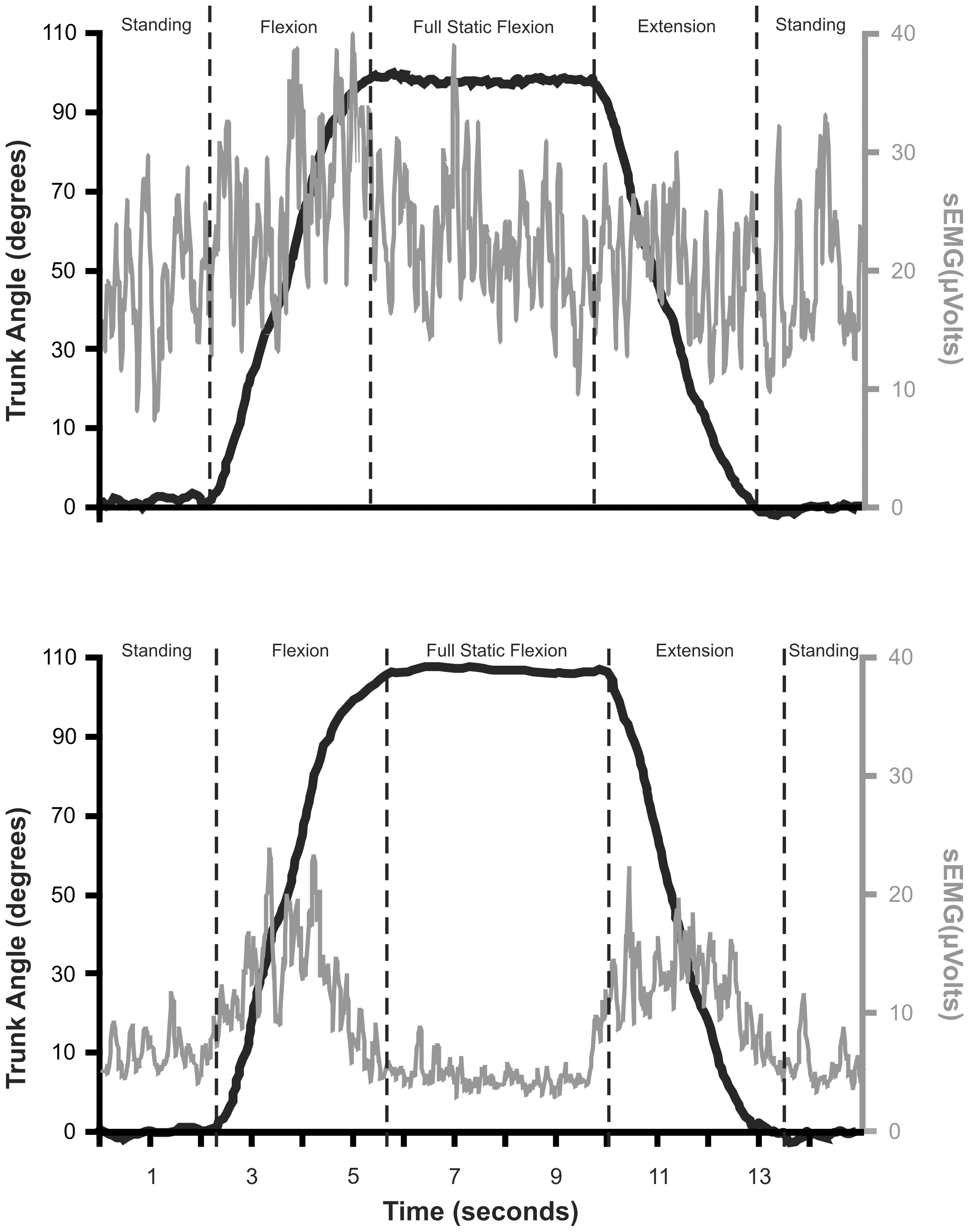
Denne studien nevner at frykt for bevegelse gjør at ryggradens muskler ikke greier å slappe av ordentlig når ryggen ikke er i bevegelse. Bildet neders viser hvordan ryggradens muskler slapper av når du står og når du henger fremover (full static flxion), og spenner seg kun når du beveger ryggraden.

Frykten for hva som skjer med opprettholder muskelspenninger og hemmer restitusjon etter f.eks. en kink eller skade. Derfor er det så viktig at terapeuter ikke skaper frykt for ryggradens bevegelser i sine klienter.

http://www.ncbi.nlm.nih.gov/pubmed/14770044

Abstract

OBJECTIVES:

The purpose of this study was to examine the relationship between pain-related fear, lumbar flexion, and dynamic EMG activity among persons with chronic musculoskeletal low back pain. It was hypothesized that pain-related fear would be significantly related to decreased lumbar flexion and specific patterns of EMG activity during flexion and extension.

STUDY DESIGN:

Data was obtained from subjects who, on a single day, completed self-report measures of pain and pain-related fear, and were interviewed to determine demographic and pain information. Subjects then underwent a dynamic EMG evaluation for which they were asked to stand, then bend forward as far as possible, stay fully flexed, and return to standing. Lumbar EMG and angle of flexion were recorded during this time. A flexion-relaxation ratio (FRR) was computed by comparing maximal EMG while flexing to the average EMG in full flexion.

SUBJECTS:

Seventy-six persons with chronic musculoskeletal low back pain.

RESULTS:

Zero-order correlations indicated that pain-related fear was significantly related to reduced lumber flexion (r = -0.55), maximum EMG during flexion (r = -0.38) and extension (r = -0.51), and the FRR (r = -0.40). When controlling for pain and demographic factors, pain-related fear continued to be related to reduced lumbar flexion. Using a path-analytic model to examine whether angle of flexion mediated the relationship between fear and EMG activity, the models examining maximal EMG during flexion and extension supported the notion that pain-related fear influences these measures indirectly through its association with decreased range of motion. Conversely, pain-related fear was independently related to higher average EMG in full flexion, while angle of flexion was not significantly related. Pain-related fear was directly related to a smaller FRR, as well as indirectly through angle of flexion.

CONCLUSIONS:

Pain-related fear is significantly associated with reduced lumbar flexion, greater EMG in full flexion, and a smaller FRR. The relationship between pain-related fear and EMG during flexion and extension appears to be mediated by reduced lumbar flexion. These results suggest that pain-related fear is directly associated with musculoskeletal abnormalities observed among persons with chronic low back pain, as well as indirectly through limited lumbar flexion. These musculoskeletal abnormalities as well as limited movement may be involved in the development and maintenance of chronic low back pain. In addition, changes in musculoskeletal functioning and flexion associated with pain-related fear may warrant greater attention as part of treatment.

journal.pone.0039207.g002

Ukjent sin avatar

Nutritional essentiality of sulfur in health and disease.

Denne beskriver det aller meste om svovel og hvorfor det er et viktig næringsstoff å fokusere på. Den nevner bl.a. at svovel tilskudd, f.eks. MSM, går inn i TBS (total body sulfur pool) som en svovelkilde for glutation. Sammen med metionin og cystein fra maten.

Den nevner også hvordan stress og betennelser skaper en større «turnover» av proteiner, som ofte ikke samsvarer med inntaket av proteiner. Man blir da kronisk på underskudd av svovel og proteiner. Dette forklarer hvorfor proteintilskudd er viktig ved betennelsestilstander og stress tilstander som f.eks. kronisk smerte.

Svovel og Nitrogen har et forhold på 1:14 og er tett sammenkoblet. Når nitrogen forsvinner forsvinner også svovel. Muligens kan man måle svoveltilgjengeligheten i kroppen ved å måle nitrogen med urinstix.

http://www.ncbi.nlm.nih.gov/pubmed/23815141

Hele artikkelen er i min dropbox.

HYPERHOMOCYSTEINEMIA AS A RESPONSE TO STRESS

N and S maintain tightly correlated ratios in tissues of both healthy subjects8 and diseased patients.167 Acute stressful conditions of any cause unleash a shower of many cytokines that fulfill a myriad of autocrine, para- crine, and endocrine functions.168 As a consequence, enhanced tissue proteolysis throughout the body ensues, allowing the redirection of AA residues toward the pref- erential overproduction of acute-phase reactants and repair proteins by the liver and at the site of injury.169 The rate of protein degradation usually exceeds that of protein undergoing neosynthesis,170,171 leading to a negative N balance with subsequent depletion of TBN reserves. The increased urinary excretion of N catabolites (mainly urea, but also creatinine, NH4+, 3-CH3-histidine, and other minor compounds) demonstrates that both metabolic and structural tissues participate in the adap- tive responses to injury in proportion to the magnitude of initial impact.31,170,171 In very aggressive conditions (burns) affecting adult men, urinary output of N may be as high as 250 g of N per week, which corresponds to a loss of 6–7 kg of LBM31 or 12–14% of metabolically active tissues.30 Major stressful disorders are associated with massive urinary excretion of S,167,172 which depletes endogenous pools of TBS. In stressors of medium severity (bone fracture), S spillover has been estimated to be 17 g of S per week, or more than 10% of TBS body stores. Interestingly enough, measurement of S and N urinary losses yields values very close to the 1:14 ratio that char- acterizes mammalian tissues,8,167 indicating that TBN and TBS pools exhibit concomitant degradation patterns throughout the course of injury.

Ukjent sin avatar

MSM sitt forhold til homocystein

Homocystein er sett på som utgangspunktet for mange livsstilssykdommer. Homocystein økes av det moderne kostholdet med mye kjøtt spesielt.

Denn studien nevner at MSM reduserer homocystein-økning etter trening. http://www.ncbi.nlm.nih.gov/pmc/articles/PMC3507661/

Aside from measures of antioxidant status (TEAC and glutathione), we included the measure of homocysteine in the current design. Homocysteine is a non-protein amino acid, with elevated levels in circulation thought to be associated with an increased risk of cardiovascular disease; although recent evidence questions this association [22]. A study by Kim et al. reported a statistically significant lowering of homocysteine (8.0 to 7.2 μmol·L-1) in a sample of knee osteoarthritis patients following intake of MSM at a dosage of 6 grams per day for 12 weeks [4]. Data from the present investigation somewhat corroborate the work of Kim and colleagues, as we noted a lowering of homocysteine during the post-exercise period after subjects were supplemented with MSM for four weeks (Figure (Figure3).3). The mechanism of action of this effect may be linked to methyl group donation by MSM, in much the same way as done by B-vitamins [23].

Og denne nevner at homocystein har en direkte giftig effekt på sirkulasjonssystemet og nervesystemt og er assosiert med mange nevrologiske sykdommer. http://www.ncbi.nlm.nih.gov/pmc/articles/PMC4198708/

Homocysteine (Hcy) is a sulfur-containing amino acid that is generated during methionine metabolism. It has a physiologic role in DNA metabolism via methylation, a process governed by the presentation of folate, and vitamins B6 and B12. Physiologic Hcy levels are determined primarily by dietary intake and vitamin status. Elevated plasma levels of Hcy (eHcy) can be caused by deficiency of either vitamin B12 or folate, or a combination thereof. Certain genetic factors also cause eHcy, such as C667T substitution of the gene encoding methylenetetrahydrofolate reductase. eHcy has been observed in several medical conditions, such as cardiovascular disorders, atherosclerosis, myocardial infarction, stroke, minimal cognitive impairment, dementia, Parkinson’s disease, multiple sclerosis, epilepsy, and eclampsia. There is evidence from laboratory and clinical studies that Hcy, and especially eHcy, exerts direct toxic effects on both the vascular and nervous systems. This article provides a review of the current literature on the possible roles of eHcy relevant to various neurologic disorders.

Studien nevner at homocystin transformeres tilbake til methionin ved hjelp av B12, med hjelp av folat og B6 (svovel-holdig b-vitamin). Som den første studien viser vil også MSM virke direkte reduserende på homocystein og dermed kan vi forklare den smerte- og symptomreduserende effekten MSM har på nevrologiske problemer.

Ukjent sin avatar

Nuclear Magnetic Resonance–Based Metabolomics Enable Detection of the Effects of a Whole Grain Rye and Rye Bran Diet on the Metabolic Profile of Plasma in Prostate Cancer Patients1,2

Denne nevner at MSM (dimetyl sulfone) økes når vi spiser helkorn.


Effect of RP on the metabolism of homocysteine and dimethyl sulfone.

WG and bran fractions are rich sources of betaine (36), which may explain the increased betaine level observed after RP in our study. An increase in betaine was previously reported in postprandial plasma collected from pigs fed a WG rye diet (37), but our study shows that it is measurable even in overnight fasting plasma. Betaine acts as a methyl donor in the betaine-homocysteine methyl transferase reaction, which converts homocysteine and betaine to methionine and N,N-dimethylglycine (38). We also observed a reduction in homocysteine and an increase in plasma N,N-dimethylglycine after RP, which indicates a favorable shift in homocysteine metabolism. Elevated circulating homocysteine levels are an independent risk factor for cardiovascular diseases (3941). Insulin suppresses the expression of betaine homocysteine methyl transferase and consequently reduces the rate of the betaine-homocysteine methyl transferase reaction (42). Therefore, the favorable shift in homocysteine metabolism in our study could be explained by reduced insulin secretion (5) as well as higher bioavailability of betaine as reaction precursor after RP treatment.

We also observed an increase in the organic sulfur compound dimethyl sulfone after RP treatment. Dimethyl sulfone is a metabolite occurring in the plasma and cerebrospinal fluid of normal humans (43). It derives from dietary sources, from intestinal bacterial metabolism and human endogenous methanethiol metabolism (43). It is plausible that higher dimethyl sulfone is associated with a higher rate of intestinal fermentation after RP intake (16). SCFA are also the products of intestinal fermentation (44), but they were not detected in our NMR analysis, possibly because of their limit of detection in plasma.

Ukjent sin avatar

Sulfur Amino Acids in Diet-induced Fatty Liver: A New Perspective Based on Recent Findings

Man har sett at metionin reduserer fettlever, mens cystein øker fettlever. Nå viser ny forskning at alt dette styrt av tilgangen på svovel. Metionin gir svovel som reduserer fettlever, mens cysten tar opp svovel slik at det blir mindre svovel tilgjengelig til å redusere fettlever.

Abstract

: The relationship of sulfur amino acids to diet-induced fatty liver was established 80 years ago, with cystine promoting the condition and methionine preventing it. This relationship has renewed importance today because diet-induced fatty liver is relevant to the current epidemics of obesity, non-alcoholic fatty liver disease, metabolic syndrome, and type 2 diabetes. Two recent papers provide the first evidence linking sulfane sulfur to diet-induced fatty liver opening a new perspective on the problem. This review summarizes the early data on sulfur amino acids in fatty liver and correlates that data with current knowledge of sulfur metabolism. Evidence is reviewed showing that the lipotropic effect of methionine may be mediated by sulfane sulfur and that the hepatosteatogenic effect of cystine may be related to the removal of sulfane sulfur by cysteine catabolites. Possible preventive and therapeutic strategies are discussed.