Ukjent sin avatar

The fascia of the limbs and back – a review

Never det meste rundt bindevev: tensegritet, subcutan hud, skinligaments, stretching, ligamenter, nerver, m.m.

http://www.ncbi.nlm.nih.gov/pmc/articles/PMC2667913/

Fasciae probably hold many of the keys for understanding muscle action and musculoskeletal pain, and maybe of pivotal importance in understanding the basis of acupuncture and a wide range of alternative therapies (Langevin et al. 2001, 2002, 2006a; Langevin & Yandow, 2002; Iatridis et al. 2003). Intriguingly, Langevin et al. (2007) have shown that subtle differences in the way that acupuncture needles are manipulated can change how the cells in fascia respond. The continuum of connective tissue throughout the body, the mechanical role of fascia and the ability of fibroblasts to communicate with each other via gap junctions, mean that fascia is likely to serve as a body-wide mechanosensitive signaling system with an integrating function analogous to that of the nervous system (Langevin et al. 2004; Langevin, 2006). It is indeed a key component of a tensegrity system that operates at various levels throughout the body and which has been considered in detail by Lindsay (2008) in the context of fascia.

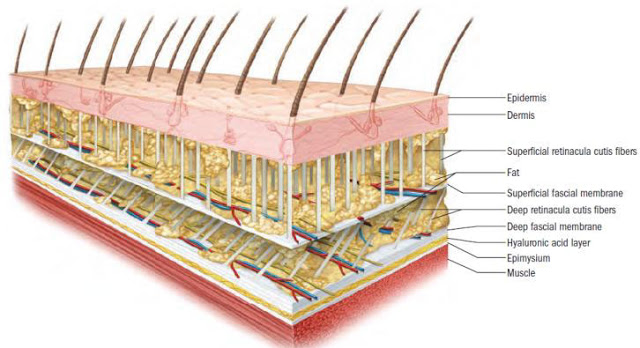
Anatomists have long distinguished between superficial and deep fascia (Fig. 1), although to many surgeons, ‘fascia’ is simply ‘deep fascia’. The superficial fascia is traditionally regarded as a layer of areolar connective or adipose tissue immediately beneath the skin, whereas deep fascia is a tougher, dense connective tissue continuous with it.


A diagrammatic representation of a transverse section through the upper part of the leg showing the relative positions of the superficial (SF) and deep fascia (DF) in relation to the skin (S) and muscles. Note how the deep fascia, in association with the bones [tibia (T) and fibula (F)] and intermuscular septa (IS) forms a series of osteofascial compartments housing the extensor, peroneal (PER) and flexor muscles. If pressure builds up within a compartment because of an acute or overuse injury, then the vascular supply to the muscles within it can be compromised and ischaemia results. ANT, anterior compartment; IM, interosseous membrane.

The presence of a significant layer of fat in the superficial fascia is a distinctive human trait (thepanniculus adiposus), compensating for the paucity of body hair. It thus plays an important role in heat insulation. In hairy mammals, the same fascia is typically an areolar tissue that allows the skin to be readily stripped from the underlying tissues (Le Gros Clark, 1945). Where fat is prominent in the superficial fascia (as in man), it may be organized into distinctive layers, or laminae (Johnston & Whillis, 1950), although Gardner et al. (1960) caution that these may sometimes be a characteristic of embalmed cadavers and not evident in the living person. Furthermore, Le Gros Clark (1945) also argues that fascial planes can be artefactually created by dissection. Conversely, however, some layers of deep fascia are more easily defined in fresh than in fixed cadavers (Lytle, 1979).

The superficial fascia conveys blood vessels and nerves to and from the skin and often promotes movement between the integument and underlying structures.

Skin mobility protects both the integument and the structures deep to it from physical damage. Mobility is promoted by multiple sheets of collagen fibres coupled with the presence of elastin (Kawamata et al. 2003). The relative independence of the collagen sheets from each other promotes skin sliding and further stretching is afforded by a re-alignment of collagen fibres within the lamellae. The skin is brought back to its original shape and position by elastic recoil when the deforming forces are removed. As Kawamata et al. (2003)point out, one of the consequences of the movement-promoting characteristics of the superficial fascia is that the blood vessels and nerves within it must run a tortuous route so that they can adapt to an altered position of the skin, relative to the deeper structures.

Although deep fascia elsewhere in the limbs is often not so tightly bound to the skin, nevertheless cutaneous ligaments extending from deep fascia to anchor the integument are much more widespread than generally recognized and serve to resist a wide variety of forces, including gravitational influences (Nash et al. 2004).

According to Bouffard et al. (2008), brief stretching decreases TGF-β1-mediated fibrillogenesis, which may be pertinent to the deployment of manual therapy techniques for reducing the risk of scarring/fibrosis after an injury. As Langevin et al. (2005) point out, such striking cell responses to mechanical load suggest changes in cell signaling, gene expression and cell-matrix adhesion.

In contrast, Schleip et al. (2007) have reported myofibroblasts in the rat lumbar fascia (a dense connective tissue). The cells can contract in vitro andSchleip et al. (2007) speculate that similar contractions in vivo may be strong enough to influence lower back mechanics. Although this is an intriguing suggestion that is worthy of further exploration, it should be noted that tendon cells immunolabel just as strongly for actin stress fibres as do fascial cells and this may be associated with tendon recovery from passive stretch (Ralphs et al. 2002). Finally, the reader should also note that true muscle fibres (both smooth and skeletal) can sometimes be found in fascia. Smooth muscle fibres form the dartos muscle in the superficial fascia of the scrotum and skeletal muscle fibres form the muscles of fascial expression in the superficial fascia of the head and neck.

Consequently, entheses are designed to reduce this stress concentration, and the anatomical adaptations for so doing are evident at the gross, histological and molecular levels. Thus many tendons and ligaments flare out at their attachment site to gain a wide grip on the bone and commonly have fascial expansions linking them with neighbouring structures. Perhaps the best known of these is the bicipital aponeurosis that extends from the tendon of the short head of biceps brachii to encircle the forearm flexor muscles and blend with the antebrachial deep fascia (Fig. 6). Eames et al. (2007) have suggested that this aponeurosis may stabilize the tendon of biceps brachii distally. In doing so, it reduces movement near the enthesis and thus stress concentration at that site.


The bicipital aponeurosis (BA) is a classic example of a fascial expansion which arises from a tendon (T) and dissipates some of the load away from its enthesis (E). It originates from that part of the tendon associated with the short head of biceps brachii (SHB) and blends with the deep fascia (DF) covering the muscles of the forearm. The presence of such an expansion at one end of the muscle only, means that the force transmitted through the proximal and distal tendons cannot be equal. LHB, long head of biceps brachii. Photograph courtesy of S. Milz and E. Kaiser.

Several reports suggest that fascia is richly innervated, and abundant free and encapsulated nerve endings (including Ruffini and Pacinian corpuscles) have been described at a number of sites, including the thoracolumbar fascia, the bicipital aponeurosis and various retinacula (Stilwell, 1957; Tanaka & Ito, 1977; Palmieri et al. 1986; Yahia et al. 1992; Sanchis-Alfonso & Rosello-Sastre, 2000; Stecco et al. 2007a).

Changes in innervation can occur pathologically in fascia, and Sanchis-Alfonso & Rosello-Sastre (2000) report the ingrowth of nociceptive fibres, immunoreactive to substance P, into the lateral knee retinaculum of patients with patello-femoral malignment problems.

Stecco et al. (2008) argue that the innervation of deep fascia should be considered in relation to its association with muscle. They point out, as others have as well (see below in ‘Functions of fascia’) that many muscles transfer their pull to fascial expansions as well as to tendons. By such means, parts of a particular fascia may be tensioned selectively so that a specific pattern of proprioceptors is activated.

It is worth noting therefore that Hagert et al. (2007) distinguish between ligaments at the wrist that are mechanically important yet poorly innervated, and ligaments with a key role in sensory perception that are richly innervated. There is a corresponding histological difference, with the sensory ligaments having more conspicuous loose connective tissue in their outer regions (in which the nerves are located). Comparable studies are not available for deep fascia, although Stecco et al. (2007a) report that the bicipital aponeurosis and the tendinous expansion of pectoralis major are both less heavily innervated than the fascia with which they fuse. Where nerves are abundant in ligaments, blood vessels are also prominent (Hagert et al. 2005). One would anticipate similar findings in deep fascia.

Some of the nerve fibres associated with fascia are adrenergic and likely to be involved in controlling local blood flow, but others may have a proprioceptive role. Curiously, however, Bednar et al. (1995)failed to find any nerve fibres in thoracolumbar fascia taken at surgery from patients with low back pain.

The unyielding character of the deep fascia enables it to serve as a means of containing and separating groups of muscles into relatively well-defined spaces called ‘compartments’.

One of the most influential anatomists of the 20th century, Professor Frederic Wood Jones, coined the term ‘ectoskeleton’ to capture the idea that fascia could serve as a significant site of muscle attachment – a ‘soft tissue skeleton’ complementing that created by the bones themselves (Wood Jones, 1944). It is clearly related to the modern-day concept of ‘myofascia’ that is popular with manual therapists and to the idea of myofascial force transmission within skeletal muscle, i.e. the view that force generated by skeletal muscle fibres is transmitted not only directly to the tendon, but also to connective tissue elements inside and outside the skeletal muscle itself (Huijing et al. 1998; Huijing, 1999).

One can even extend this idea to embrace the concept that agonists and antagonists are mechanically coupled via fascia (Huijing, 2007). Thus Huijing (2007) argues that forces generated within a prime mover may be exerted at the tendon of an antagonistic muscle and indeed that myofascial force transmission can occur between all muscles of a particular limb segment.

Wood Jones (1944) was particularly intrigued by the ectoskeletal function of fascia in the lower limb. He related this to man’s upright stance and thus to the importance of certain muscles gaining a generalized attachment to the lower limb when it is viewed as a whole weight-supporting column, rather than a series of levers promoting movement. He singled out gluteus maximus and tensor fascia latae as examples of muscles that attach predominantly to deep fascia rather than bone (Wood Jones, 1944).

They have argued that a common attachment to the thoracolumbar fascia means that the latter has an important role in integrating load transfer between different regions. In particular, Vleeming et al. (1995) have proposed that gluteus maximus and latissimus dorsi (two of the largest muscles of the body) contribute to co-ordinating the contralateral pendulum like motions of the upper and lower limbs that characterize running or swimming. They suggest that the muscles do so because of a shared attachment to the posterior layer of the thoracolumbar fascia. Others, too, have been attracted by the concept of muscle-integrating properties of fascia. Thus Barker et al. (2007) have argued for a mechanical link between transversus abdominis and movement in the segmental neutral zone of the back, via the thoracolumbar fascia. They feel that the existence of such fascial links gives an anatomical/biomechanical foundation to the practice in manual therapy of recommending exercises that provoke a submaximal contraction of transversus abdominis in the treatment of certain forms of low back pain.

An important function of deep fascia in the limbs is to act as a restraining envelope for muscles lying deep to them. When these muscles contract against a tough, thick and resistant fascia, the thin-walled veins and lymphatics within the muscles are squeezed and their unidirectional valves ensure that blood and lymph are directed towards the heart. Wood Jones (1944) contests that the importance of muscle pumping for venous and lymphatic return is one of the reasons why the deep fascia in the lower limb is generally more prominent than in the upper – because of the distance of the leg and foot below the heart.

In certain regions of the body, fascia has a protective function. Thus, the bicipital aponeurosis (lacertus fibrosus), a fascial expansion arising from the tendon of the short head of biceps brachii (Athwal et al. 2007), protects the underlying vessels. It also has mechanical influences on force transmission and stabilizes the tendon itself distally (Eames et al. 2007).

Ukjent sin avatar

Sensory innervation of the thoracolumbar fascia in rats and humans.

Studie som viser innervasjon av korsryggbindevev og påpeker at det er kun det ytre laget av bindevevet, det som er helt inn mot huden, som er tettpakket med sensoriske nerver og nociceptive fibre (som utskiller substans P og CGRP, og gir betennelser). De dypere lagene i midten av bindevevet eller ned mot musklene har nesten ingen nerveender eller sansesmuligheter.

http://www.ncbi.nlm.nih.gov/pubmed/21839150

Hele studien i min dropbox.

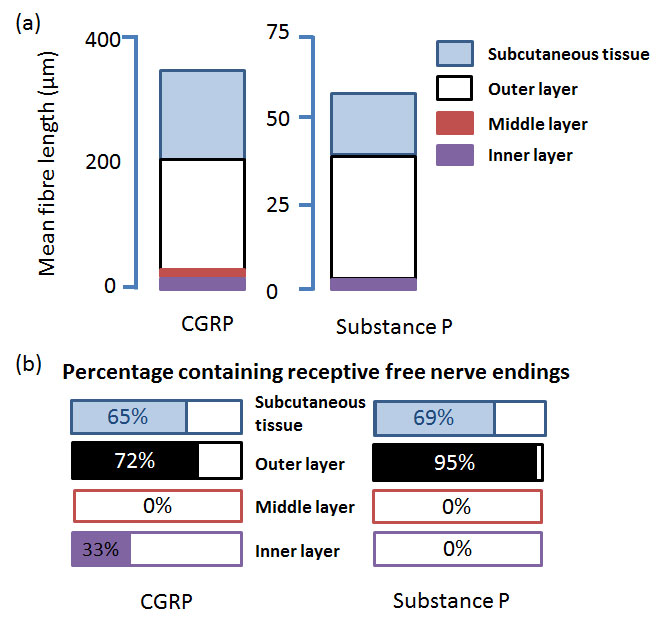
The subcutaneous tissue and the outer layer showed a particularly dense innervation with sensory fibers. SP-positive free nerve endings-which are assumed to be nociceptive-were exclusively found in these layers. Because of its dense sensory innervation, including presumably nociceptive fibers, the TLF may play an important role in low back pain.


Fig. 1. Structure of the rat thoracolumbar fascia (TLF) close to the spinous processes L4/L5. (a) Transversal section showing the three layers of the TLF (hematoxylin and eosin staining): OL, outer layer with transversely oriented collagen fibers; ML, middle layer composed of collagen fiber bundles oriented diagonally to the long axis of the body; IL, inner layer of loose connective tissue covering the multifidus muscle (muscle). SCT, subcutaneous tissue. (b) PGP 9.5-ir nerve fibers in the layers of the TLF. Black arrows, fibers on passage; open arrows, nerve endings. (c) Mean fiber length of PGP 9.5-ir fibers in the TLF. The great majority of all fibers were located in the outer layer (OL) of the fascia and in the subcutaneous tissue (SCT). White part of the bar: subcutaneous tissue plus outer layer of the TLF; black: middle layer; hatched: inner layer. n, number of sections evaluated.


Fig. 4. Distribution of CGRP and Substance P (SP)-immunoreactive nerve fibers in the TLF. (a) Mean fiber length of CGRP-ir nerve fibers. (b) Mean fiber length of SP-ir nerve fibers. Almost all fibers were found in the outer layer of the fascia and the subcutaneous tissue. The middle layer was free of SP-positive fibers. Gray part of the bars: subcutaneous tissue; white: outer layer of the TLF; black: middle layer; hatched: inner layer. n=number of sections evaluated. (c, d) Distribution of CGRP- (c) and SP-containing receptive free nerve endings (d) expressed as percent of the total number of CGRP- or SP-containing fibers in each layer. For classification as receptive endings, the structures had to exhibit at least three varicosities. SP-containing free nerve endings were restricted to the outer layer of the thoracolumbar fascia and the subcutaneous connective tissue while CGRP-containing free nerve endings were also found in the inner layer of the thoracolumbar fascia.

Og et bilde av de forskjellige bindevevslagene som er nevnt i denne studien.

Our study demonstrates that the rat TLF and the SCT overlying the fascia are densely innervated tissues, and therefore both the TLF and SCT, may play a role in low back pain. Most nerve fibers are located in the OL of the TLF and in the SCT, whereas in the ML nerve fibers are rare. Actually, no SP-ir fibers were found in this layer. Teleologically, the lack of fibers in the ML, particularly those containing SP, makes sense because each move- ment of the body causes shearing forces between the collagen fiber bundles, which might excite nociceptors.

Ukjent sin avatar

Om Natron

Natron, norges billigste kosttilskudd, fåes kjøpt i butikken som helt rent natriumbikarbonat. Bikarbonat er et av de viktigste mineralene i kroppen fordi det hjelper oss å holde en stor pH-buffer kapasitet. Blodets pH holdes innenfor en liten ramme på 7,35-7,45. Hvis pH kommer langt nok utenfor denne rammen kan det være livsfarlig og vi kan gå i koma eller få permanente skader. Med stor nok buffer kan vi tåle store svigninger uten at det trenger å gå på bekostning av andre funksjoner i kroppen. Jeg anbefaler vanligvis 1 ts 2-4x daglig, som er 10-20g, i perioder når man trenger det.

Maten vi spiser og vår moderne livsstil gir kroppen en stor syre-utforing og mange mennesker går rundt med en mild acidose. Det gjelder spesielt om man har et kosthold med mye korn og lite grønnsaker. Bikarbonatinnholdet i blodet går ned, nyrene kompenserer og sjelettet utskiller mineraler. Natron fyller opp bikarbonatlagrene igjen slik at kroppen ikke trenger å kompensere med andre funksjoner.

I denne studien fra 2010 blir kostens påvirkning på surhetsgraden i kroppen gjennomgått. Den nevner bl.a. hvordan selv en mild acidose gjør at muskelene blir insulinresistente. http://www.ncbi.nlm.nih.gov/pubmed/21481501

En studie fra 2001 så på forskjellen mellom et syrefremmende kosthold og et basefremmende kosthold. Selv blodets pH ble minimalt endret, men det gikk på bekostning av andre funksjoner. Ved et surt kosthold henter kroppen basedannende mineraler fra skjelettet. Kalsiumutskillelsen økte med 74% hos de sure og kan være et bidrag til osteoporose. Den basiske gruppen fikk bl.a. bikarbonat å drikke.  http://www.ncbi.nlm.nih.gov/pubmed/11446566

Svært interessant studie fra 2009 som viser hvordan bikarbonat øker mitokondrienes aktivitet og respirasjon hos mus fordi H+ i musklene dempes. Musene fikk 0,05g/kg bikarbonat og kom opp i en pH på 7,5 som holdt seg der i mer en enn time etterpå. http://ajpendo.physiology.org/content/299/2/E225

Studie fra 1991 som viser at bikarbonat er essensielt for DNA aktivitet, gjort på in vitro (på celler). pH er optimal mellom 7,5-8. http://www.ncbi.nlm.nih.gov/pubmed/1890072 

Studie fra 1990 som viser at natriumklorid (salt) øker kalsium utskillelse, mens natriumbikarbonat (natron) gjør det ikke. Denne studien viser også at tilførsel av bikarbonat faktisk senker blodtrykk etter bare 7 dager. http://www.ncbi.nlm.nih.gov/pubmed/2168457

Denne studien fra 1996 viser også at natriumklorid demper den negative effekten av for mye salt i maten. Det senker blodtrykket. http://www.ncbi.nlm.nih.gov/pubmed/12013486

Denne studien viser at det er klorid-delen av salt, ikke natrium-delen, som skaper høyt blodtrykk og problemene vi hører om ang for mye salt i maten. Natrium som kommer fra natriumbikarbonat regnes som helt ufarlig. http://www.ncbi.nlm.nih.gov/pmc/articles/PMC2927202/

Studie fra 2012 som viser at å drikke bikarbonat minker faren for hjerte/kar problemer hos unge mennesker med høyt kolesterol. Etter 4 uker sank totalt kolesterol med 6%, LDL med 10%, men CRP og andre faktorer ble ikke påvirket. http://www.ncbi.nlm.nih.gov/pubmed/19954956

TRENING

Bikarbonat brukes til å øke prestasjon og utholdenhet i trening, spesielt i kort-distanse og høy-intensitet øvelser. I intense aktiviteter synker pH i blod, og dette gjør at kroppen må hyperventilere for å fjerne CO2 raskt nok og holde blodet i riktig pH-ramme. Man tilfører bikarbonat for å gi kroppen større bufferkapasitet også under trening.

En studie fra 2010 gjenomgikk hvilke doser og til hvilke tider det bør inntas før treningen. De kom frem til at om man tar 0,2g/kg bør man ta det 40-50min før, og om man tar 0,3g/kg bør man ta det 60min før. http://www.ncbi.nlm.nih.gov/pubmed/20040895

En studie fra 2009 viste at 0,3g/kg ga en mye raske innhenting av pustefrekvens og CO2 etter høy-intensitet trening. Deltakerne fikk 6 doser med 10min mellomrom (fikk pH opp i 7,51) og utførte treningen 1t etter det igjen. De nevner at ved høyere bikarbonat konsentrasjoner konsumeres mer H+ og dermed også produserer mer CO2. http://www.biomed.cas.cz/physiolres/pdf/58/58_537.pdf

En studie fra 2004 så på hvordan bikarbonat påvirker muskel-pH under og etter gjentatte sprinter. pH ble 7,50, men i musklene var det ingen forskjell hverken i pH, melkesyre eller bufferkapsitet. Likevel presterte deltakerene med bikarbonat bedre i sprint 3, 4 og 5 enn kontrollgruppen. Etter trening hadde bikarbonatgruppen mye mer laktat i musklene, noe som innebærer at anaerobisk energi blir lettere tilgjengelig når blodet er mer basisk. Dette forklarerer større utholdenhet. http://www.ncbi.nlm.nih.gov/pubmed/15126714

I en studie fra 2011 ble det vist at det er ingen sammenheng mellom bikarbonat inntak og melkesyre i musklene under høy-intensitet intervaller. http://www.ncbi.nlm.nih.gov/pubmed/21197542

En studie fra 2011 undersøkte hvordan de vanlige høye dosene som anbefales for atleter (0,3g/kg) påvirker mage/tarm symptomer. For noen kan det gi diare. Studien viste at pH ble høyest og mage/tarm problemer minst når det inntas sammen med mat. Og symptomene var værst 90 minutter etter inntak. De konkluderer med at det bør inntas 2-2,5t før trening om man vil unngå mage/tarm symptomer. http://www.ncbi.nlm.nih.gov/pubmed/21719899

En studie fra 2013 viste at ved bikarbonat doser på 0,3g/kg kan det blir mage/tarm symptomer. 91% fikk diarre, 64% ble oppblåst og tørste, 45% ble kvalme. http://www.ncbi.nlm.nih.gov/m/pubmed/23746564

En ny studie fra 2013 undersøkte hvordan bikarbonat inntak flere dager før en treningsøkt kunne forbedre prestasjon og dempe acidose. De to 0,3g/kg i 5 dager. Tid før utmattelse(Tlim) økte med 23%. Bikarbonat økte også plasmavolum. Av den grunn økte ikke pH selv om bikarbonatinntaket økte. Derfor konkluderer forskerne her med at det holder å ta det dagen i forveien. Eller det viser oss at vi ikke trenger å være redd for en akkumulering av bikarbonat ved langvarig inntak. De viser også til at bikarbonat inntak bidrar til å begrense syre-overskudd i musklene ved at basisk blod trekker H+ ut. Dette øker laktat-aktivitet og dermed utholdenheten. http://www.ncbi.nlm.nih.gov/pmc/articles/PMC3623762/

En studie fra 2011 nevner at pre-alkalisering med bikarbonat før trening minker effekten av Heat-Shock protiner, altså demper stressreaksjonen etter trening. http://www.ncbi.nlm.nih.gov/pubmed/21498114

En studie fra 2013 nevner at oksidativt stress etter trening minker med inntak av bikarbonat, men at årsaken ikke kommer av økt antioksidantaktivitet, men av økt TBARS og Monicyte expressend heat-shock protein. http://www.ncbi.nlm.nih.gov/pubmed/22610152

Studie fra 2012 som viser at kronisk tilførsel av bikarbonat fungerer like bra som akutt. http://www.ncbi.nlm.nih.gov/m/pubmed/23001395

Studie fra 2013 som viser at bikarbonat oksygenmetningen høy under trening. http://www.ncbi.nlm.nih.gov/m/pubmed/23903526

Studie fra 2008 som nevner at en pre-alkalisering bedrer restitusjonen etter trening, både ved aktiv og ved passiv restitusjon. http://www.ncbi.nlm.nih.gov/m/pubmed/18004683

En studie fra 2011 mener at bikarbonat har ingen effekt på trening. http://www.ncbi.nlm.nih.gov/m/pubmed/21465247

Meta-analyse så på 58 studier, fra 2010 som mener man kan ta 0,3-0,5g/kg for å øke prestansjon med 1,7%. http://www.ncbi.nlm.nih.gov/pubmed/21923200

Studie fra 1999 som forteller at ved sykkelritt opp til 60 minutter vil bikarbonat gjøre at man får større utholdenhet, utmattelse utsettes. http://www.ncbi.nlm.nih.gov/m/pubmed/10367725/

Nettside som forteller om bivirkninger m.m. relatert til bikarbonat mot sure oppstøt. http://www.nlm.nih.gov/medlineplus/druginfo/meds/a682001.html

MEDISIN

En studie fra 2000 nevner at det kan brukes for å dempe metabolsk acidemia, men ikke til å fjerne melkesyre. http://www.ncbi.nlm.nih.gov/pubmed/10631227

I medisin kan det brukes i akutt behandling av f.eks. sjokk hvor kroppen går inn i alvorlig acidose, under 7,15. http://www.ncbi.nlm.nih.gov/pubmed/18614899

En studie fra 2013 nevner at bikarbonatinntak demper nyresteinproduksjon etter bare 3 dager, når det gjelder citrat-relaterte steiner. Men pasienter med rene urinsyresteiner vil nok ikke ha like god effekt. http://www.ncbi.nlm.nih.gov/pubmed/23602798

En studie fra 2013 bekrefter at bikarbonat er nyttig for å forhindre komplikasjoner ved nyresvikt. http://www.ncbi.nlm.nih.gov/pmc/articles/PMC3729547/

KREFT

Kreftsvulster har en pH på 6,5-6,8, mens normalt vev har en pH på 7,35-7,45. Det sure mijøet i kreftsvulster gjør at de blir mer resistente mot medisiner.

En studie fra 2010 undersøkte muligheten for å endre pH rundt kreftsvulster for å hemme veksten og spredningen. Nevner at inntak av bikarbonat hos mus gjør dette. http://www.ncbi.nlm.nih.gov/pubmed/21155627

En studie fra 2011 nevner at bikarbonat i kreftbehandling er upålitelig. Av en eller annen grunn klarte ikke forskerene å oppnå alkalose i musene. Selve kreftsvulsten blie ikke særlig påvirket, men spredning ble dempet og overlevelse økte for musene i denne studien. http://www.ncbi.nlm.nih.gov/pubmed/21663677

Denne studien fra 2009 nevner at bikarbonat inntak øker pH i kreftceller og hemmer spredning hos mus. http://www.ncbi.nlm.nih.gov/pmc/articles/PMC2834485/

Studie fra 2013 nevner at bikarbonatinntak øker pH i kreftcellen, som igjen øker opptaket av askorbinsyre og dermed hemmes HIF-1 og kreftens evne til overlevelse. http://www.ncbi.nlm.nih.gov/pubmed/23916956

Studie fra 2013 som viser hvordan bikarbonat og en systemisk høy pH hindrer kreftspredning. http://www.ncbi.nlm.nih.gov/m/pubmed/23936808

ARTIKLER

http://suppversity.blogspot.no/2011/11/baking-soda-for-stressed-white-blood.html

http://www.collective-evolution.com/2012/05/06/baking-soda-is-proving-to-be-an-effective-treatment-for-cancer/

http://articles.mercola.com/sites/articles/archive/2012/08/27/baking-soda-natural-remedy.aspx

http://en.wikipedia.org/wiki/Sodium_bicarbonate

Full gjennomgang av natriumbikarbonats toksisitet her: http://www.inchem.org/documents/sids/sids/sodbicarb.pdf 

«The uptake of sodium, via exposure to sodium bicarbonate, is much less than the uptake of sodium via food. Therefore, sodium bicarbonate is not expected to be systemically available in the body. Furthermore it should be realised that an oral uptake of sodium bicarbonate will result in a neutralisation in the stomach due to the gastric acid. » …viser desverre ikke til noe referanse for dette utsagnet.

Natrium er ca. 1/4 av natriumbikarbonat (NaHCO3), så når vi spiser 4g Natron, får vi i oss ca.1g natrium. Maksimumsgrensen for natrium er 5g, som innbærer 20g Natron. http://www.helsekostopplysningen.no/Innhold/Kost–Kosttilskudd/Vitamniner-og-mineraler/Mineraler-og-sporstoffer-/Natrium-Na–Engelsk-Sodium-/

Denne fra 1984 nevner at natriumbikarbonat (baking soda) kjøpt i butikken er bare 3% av prisen av det vi får kjøpt på apotek, men like trygt og effektivt. http://www.ncbi.nlm.nih.gov/pubmed/6319065

Om man har lite magesyre fra før av kan det gir ubehag når man spiser natron og får enda mindre magesyre. En enkel måte å teste dette på er å ta 1ts natron i et halvt glass før mat om morgenen. Om du raper innen 5 min så har du nok magesyre. Bikarbonatet reagerer med magesyren og gir kullsyre. Og derfor raper du. Med lite magesyre blir det ikke laget nok kullsyre til å stimulere raping.

Ukjent sin avatar

Modulatory effects of respiration

Viser at HRV er størst ved 5-6 pust i minuttet.

http://www.sciencedirect.com/science/article/pii/S1566070201002673

Respiration is a powerful modulator of heart rate variability, and of baro- and chemoreflex sensitivity. Abnormal respiratory modulation of heart rate is often an early sign of autonomic dysfunction in a number of diseases.

This review examines the possibility that manipulation of breathing pattern may provide beneficial effects in terms not only of ventilatory efficiency, but also of cardiovascular and respiratory control in physiologic and pathologic conditions, such as chronic heart failure.


Fig. 2. Heart rate variability is maximal when respiration slows down in the low-frequency range, and particularly at 0.1 Hz (equivalent to 6 breaths/min).

Ukjent sin avatar

Om alt som er galt med fysio

Her er et fantastisk innlegg fra en fysioterapeut. Dette er så spot-on at han ble kalt inn på teppet av ledelsen på sitt undiversitet og forsøkt kneblet. De mente han burde ha ventet med å skrive slikt til han hadde minst 5 år mer erfaring. Noe som bare viser hvordan autoriteter mangler evne til fleksibilitet, og at såkalte evidensbaserte behandlingsformer ikke greier å tilpasse seg ny forskning. Fysioterapi henger 50 år etter. Jeg har samlet alle referansene for lettere tilgang.

http://blog.theravid.com/patient-care/redefining-evidence-ebp-in-experience-cut/

How does one justify the use of ultrasound when the biophysical (Baker et al 2001) and clinical (Robertson et al 2001) effects have been so thoroughly disproven?

Why are we still taught that we are molders of connective tissue, when the forces required to create plastic deformation of connective tissue ranges between 50 and 250 pounds of force (Threlkeld 1992)?

When are we going to accept the fact that our palpatory exams lack reliability (French et al 2000) (Lucas et al 2009)

and validity (Najm et al 2003) (Landel et al 2008) (Preece et al 2008)?

When will we stop telling students, colleagues, and patients that pain is related to their posture, muscle length, muscle strength, or biomechanics (Edmondston et al 2007) (Lewis et al 2005) (Nourbakhsh et al 2002)?

When will we cease blaming pain on something found on an image (Reilly et al 2006) (Beattie et al 2005) (Borenstein et al 2001)?

When will we stop thinking that we can change someone’s static posture with strengthening (Walker et al 1987) (Diveta et al 1990)?

When we teach these things to students and say them to our patients, it is misleading at best and fear inducing and hurtful at worst (Zusman 2012).

In My Experience”remain the three most dangerous words in medicine.

This is perhaps even doubly so in the world of physical therapy, given the litany of non-specific effects that go into a treatment encounter (Hall et al 2010) (Miciak et al 2012).

Physical therapists are in a unique position to make a significant impact on the burden of chronic pain, however, we fail to live up to our potential by holding onto a postural-structural-biomechanical model that has been proven ineffective and incorrect (Lederman 2011).

We need to familiarize ourselves with the work of people like Ronald Melzack, Patrick Wall, Louis Gifford, David Butler and Lorimer Moseley.

Ukjent sin avatar

Deconstructing the Placebo Effect and Finding the Meaning Response

Om placeboeffekten og at «mening» er bedre å bruke enn en placeborespons når vi snakker om behandling. Placebo-sukkerpillen har ingen effekt i kroppen, men meningen vi legger i den har det. Vi får en «meningsrespons». Selv medisiner eller operasjoner får bedre effekt når det er en «mening» bak det.

http://annals.org/article.aspx?articleid=715182

http://www.homeopathy.org/wp-content/uploads/downloads/2012/05/Mossman.pdf

We provide a new perspective with which to understand what for a half century has been known as the “placebo effect.” We argue that, as currently used, the concept includes much that has noth- ing to do with placebos, confusing the most interesting and im- portant aspects of the phenomenon. We propose a new way to understand those aspects of medical care, plus a broad range of additional human experiences, by focusing on the idea of “mean- ing,” to which people, when they are sick, often respond.

We review several of the many areas in medicine in which meaning affects illness or healing and introduce the idea of the “meaning response.” We suggest that use of this formulation, rather than the fixation on inert placebos, will probably lead to far greater insight into how treatment works and perhaps to real improvements in human well-being.

If we replace the word “placebo” in the second sentence with its definition from the first, we get: “The placebo effect is the therapeutic effect produced by [things] objectively without specific activity for the condition being treated.” This makes no sense whatsoever. Indeed, it flies in the face of the obvious. The one thing of which we can be absolutely certain is that placebos do not cause placebo effects. Placebos are inert and don’t cause anything.

Moreover, people frequently expand the concept of the placebo effect very broadly to include just about every conceivable sort of beneficial biological, social, or human interaction that doesn’t involve some drug well- known to the pharmacopoeia.

The concept of the placebo effect has been expanded much more broadly than this. Some attribute the effects of various alternative medical systems, such as homeopathy (33) or chiropractic (34), to the placebo effect. Others have described studies that show the positive effects of enhanced communication, such as Egbert’s (35), as “the placebo re- sponse without the placebo” (7). No wonder things are confusing.

Instead, they can be ex- plained by the “meanings” in the experiment: 1) Red means “up,” “hot,” “danger,” while blue means “down,” “cool,” “quiet” and 2) two means more than one. These effects of color (37– 40) and number (41, 42) have been widely replicated.

In this study, branded aspirin worked better than unbranded aspirin, which worked better than branded placebo, which worked better than unbranded placebo.

Aspirin relieves headaches, but so does the knowledge that the pills you are taking are “good” ones.

n a study of the benefits of aerobic exercise, two groups participated in a 10-week exercise program. One group was told that the exercise would enhance their aerobic capacity, while the other group was told that the exercise would enhance aerobic capacity and psychological well-being. Both groups improved their aerobic capacity, but only the second group improved in psychological well-being (actually “self-esteem”). The re- searchers called this “strong evidence . . . that exercise may enhance psychological well-being via a strong placebo effect” (44).

It seems reasonable to label all these effects (except, of course, of the aspirin and the exercise) as “mean- ing responses,” a term that seeks, among other things, to recall Dr. Herbert Benson’s “relaxation response” (45). Ironically, although placebos clearly cannot do anything themselves, their meaning can.

We define the meaning response as the physiologic or psychological effects of meaning in the origins or treatment of illness; meaning responses elicited after the use of inert or sham treatment can be called the “placebo effect” when they are desirable and the “nocebo effect” (46) when they are undesirable.

Insofar as medicine is meaningful, it can affect pa- tients, and it can affect the outcome of treatment (47– 49). Most elements of medicine are meaningful, even if practitioners do not intend them to be so. The physi- cian’s costume (the white coat with stethoscope hanging out of the pocket) (50), manner (enthusiastic or not), style (therapeutic or experimental), and language (51) are all meaningful and can be shown to affect the out- come; indeed, we argue that both diagnosis (52) and prognosis (53) can be important forms of treatment.

Likewise, acupuncture analgesia can be reversed with naloxone in animals (61) and people (62). To say that a treatment such as acupuncture “isn’t better than placebo” does not mean that it does nothing.

Surgery is particularly meaningful: Surgeons are among the elite of medical practitioners; the shedding of blood is inevitably meaningful in and of itself.

The intensity of the effect was shown to be correlated with “the strength of commitment to traditional Chinese culture.” These differences in longevity (up to 6% or 7% difference in length of life!) are not due to having Chinese genes but to having Chinese ideas, to knowing the world in Chinese ways. The effects of meaning on health and disease are not restricted to placebos or brand names but permeate life.

Practitioners can benefit clinically by conceptualizing this issue in terms of the meaning response rather than the placebo effect. Placebos are inert. You can’t do anything about them. For human beings, meaning is everything that placebos are not, richly alive and powerful.

One reason we are so ignorant is that, by focusing on placebos, we constantly have to address the moral and ethical issues of prescribing inert treatments (73, 74), of lying (75), and the like. It seems possible to evade the entire issue by simply avoiding placebos. One cannot, however, avoid meaning while engaging human beings. Even the most distant objects—the planet Venus, the stars in the constellation Orion—are meaningful to us, as well as to others (76).

Ukjent sin avatar

Nociceptors: the sensors of the pain pathway

Alt om nociceptorer og smerte. Nevner at nedstigende signaler i ryggmargen sender signaler ut i perferien hvor nervetråden utløser betennelser og dermed gir smerte i huden.

http://www.ncbi.nlm.nih.gov/pmc/articles/PMC2964977/

Since enhanced excitability of primary sensory neurons in inflammatory and pathologic pain states is a major contributor to the perception of pain, specific pharmacological agents that specifically dampen aberrant activity are desirable in the design of pain therapeutics.

Anatomy of nociceptors.

(A) Somatosensory neurons are located in peripheral ganglia (trigeminal and dorsal root ganglia) located alongside the spinal column and medulla. Afferent neurons project centrally to the brainstem (Vc) and dorsal horn of the spinal cord and peripherally to the skin and other organs. Vc, trigeminal brainstem sensory subnucleus caudalis. (B) Most nociceptors are unmyelinated with small diameter axons (C-fibers, red). Their peripheral afferent innervates the skin (dermis and/or epidermis) and central process projects to superficial laminae I and II of the dorsal horn. (C) A-fiber nociceptors are myelinated and usually have conduction velocities in the Aδ range (red). A-fiber nociceptors project to superficial laminae I and V.

Pain, as a submodality of somatic sensation, has been defined as a “complex constellation of unpleasant sensory, emotional and cognitive experiences provoked by real or perceived tissue damage and manifested by certain autonomic, psychological, and behavioral reactions” (1).

Normally, nociception (see Glossary, Sidebar 1) and the perception of pain are evoked only at pressures and temperatures extreme enough to potentially injure tissues and by toxic molecules and inflammatory mediators.

Pain is described as having different qualities and temporal features depending on the modality and locality of the stimulus, respectively: first pain is described as lancinating, stabbing, or pricking; second pain is more pervasive and includes burning, throbbing, cramping, and aching and recruits sustained affective components with descriptors such as “sickening” (3).

As opposed to the relatively more objective nature of other senses, pain is highly individual and subjective (4, 5) and the translation of nociception into pain perception can be curtailed by stress or exacerbated by anticipation (6).

Adequate stimuli include temperature extremes (> ~40°C–45°C or < ~15°C), intense pressure, and chemicals signaling potential or actual tissue damage. Nociceptors are generally electrically silent (12) and transmit all-or-none action potentials only when stimulated.

However, nociceptor activity does not per se lead to the perception of pain. The latter requires peripheral information to reach higher centers and normally depends on the frequency of action potentials in primary afferents, temporal summation of pre- and postsynaptic signals, and central influences (7).

Most nociceptors have small diameter unmyelinated axons (C-fibers) (12) bundled in fascicles surrounded by Schwann cells and support conduction velocities of 0.4–1.4 m/s (22) (Figure ​(Figure1).1). Initial fast-onset pain is mediated by A-fiber nociceptors whose axons are myelinated and support conduction velocities of approximately 5–30 m/s (most in the slower Aδ range) (22).

Noxious stimuli are transduced into electrical signals in free “unencapsulated” nerve endings that have branched from the main axon and terminate in the wall of arterioles and surrounding connective tissue, and may innervate distinct regions in the dermis and epidermis (17, 30). The endings are ensheathed by Schwann cells except at the end bulb and at mitochondria- and vesicle-rich varicosities (17). A–fibers lose their myelin sheath and the unmyelinated A-fiber branches cluster in separated small spots within a small area, the anatomical substrate for their receptive field (17). C-fiber branches are generally more broadly distributed, precluding precise localization of the stimulus (17).

In contrast, specialized nonneuronal structures conferring high sensitivity to light touch, stretch, vibration, and hair movement are innervated by low threshold A-fibers (11).

They terminate predominantly in laminae I, II, and V of the dorsal horn on relay neurons and local interneurons important for signal modification (13, 37, 38) (Figure ​(Figure1,1, B and C). The relay neurons project to the medulla, mesencephalon, and thalamus, which in turn project to somatosensory and anterior cingulate cortices to drive sensory-discriminative and affective-cognitive aspects of pain, respectively (38). Local inhibitory and excitatory interneurons in the dorsal horn as well as descending inhibitory and facilitatory pathways originating in the brain modulate the transmission of nociceptive signals, thus contributing to the prioritization of pain perception relative to other competing behavioral needs and homeostatic demands (39).

Whereas heat- and chemical-induced nociceptor responses correlate with pain perception in humans (9,24), mechanical stimulation of C-MH (24) and rapidly adapting A-HTM (18) fibers may not (24) (Tables​(Tables11 and ​and2).2).

To this end, an understanding of species-specific differences is critical, as exemplified by the dramatically different phenotypes in mice and humans lacking Nav1.7: although mice lacking Nav1.7 show a mechanosensory (pinch) and formalin-induced (5%) pain phenotype (103), humans lacking Nav1.7 are insensitive to pain altogether (104).

Anterograde transmission of action potentials from the spinal cord to the periphery results in release of peptides and other inflammatory mediators in the skin and exacerbates nociceptor excitability and pain (see below). It is at the spinal level that nonnociceptive neurons are recruited by strong nociceptor activation through functional modulation of local circuits (105).

Injury to the skin induces protective physiological responses aimed at decreasing the likelihood of exacerbating the injury. After an injury induced by pungent chemicals (e.g., capsaicin, mustard oil) and burn, stimulation of the injured area produces enhanced pain to noxious stimuli (primary mechanical and thermal hyperalgesia) dependent on C-fiber activity that manifests as a decrease in threshold to activate C-MH fibers and to perceive pain (9, 19, 106). Immediately surrounding the injured area, a zone of flare (reddening) develops and stimulation of even a larger secondary zone produces pain in response to normally innocuous stimuli (e.g., brush stroke) (secondary mechanical allodynia) as well as enhanced responsiveness to noxious mechanical (secondary mechanical hyperalgesia) and thermal (heat) hyperalgesia if spatial summation is invoked (secondary thermal hyperalgesia) (21, 105, 107). Here, noxious punctate stimulation of C-nociceptors induces secondary mechanical hyperalgesia mediated by A-nociceptors (7) and innocuous dynamic mechanical stimuli (gentle stroking) provokes nonnociceptor A-fiber–mediated pain (108). Cellular mechanisms underlying this complicated response involve both peripheral and central processes (14, 38, 105, 107) and require nociceptor input, particularly A-MH and C-MH fibers (19, 91, 105). After a burn, A-MH fibers (most likely type I) mediate primary heat hyperalgesia in glabrous skin (9).

Centrally propagating impulses can antidromically invade peripheral arborizations innervating other areas in the afferent’s receptive field (axon reflex), causing the release of peptides (e.g., substance P, CGRP, somatostatin) and/or other bioactive substances from the terminal (e.g., cytokines) into the interstitial tissue (17). The released substances produce a myriad of autocrine or paracrine effects on endothelial, epithelial, and resident immune cells (Langerhans), which lead to arteriolar vasodilatation (“flare,” via CGRP) and/or increased vascular permeability and plasma extravasation from venules (edema, via substance P). Liberated enzymes (e.g., kallikreins) and blood cells (e.g., platelets, mast cells) further contribute to the accumulation of inflammatory mediators and neurogenic inflammation (110, 111).

A recently described phenomenon (“hyperalgesic priming”) evoked by cytokine- and neurotrophin-induced recruitment of Gi/o-PKCε signaling in nociceptors can produce prolonged sensitization and mechanical hyperalgesia and may contribute to chronic pain (114).

Significant crosstalk between these pathways exists at multiple levels including stimulus transduction (118), peripheral terminals during neurogenic inflammation, and central connections during central sensitization and may underlie paradoxical temperature sensation.

Ukjent sin avatar

Spectrum of gluten-related disorders: consensus on new nomenclature and classification

Oppdatert forhold til ikke-cøliakisk glutenintoleranse fra 14 eksperter i USA.

http://www.ncbi.nlm.nih.gov/pmc/articles/PMC3292448/

This review will summarize our current knowledge about the three main forms of gluten reactions: allergic (wheat allergy), autoimmune (celiac disease, dermatitis herpetiformis and gluten ataxia) and possibly immune-mediated (gluten sensitivity), and also outline pathogenic, clinical and epidemiological differences and propose new nomenclature and classifications.

It is now becoming apparent that reactions to gluten are not limited to CD, rather we now appreciate the existence of a spectrum of gluten-related disorders. The high frequency and wide range of adverse reactions to gluten raise the question as to why this dietary protein is toxic for so many individuals in the world. One possible explanation is that the selection of wheat varieties with higher gluten content has been a continuous process during the last 10,000 years, with changes dictated more by technological rather than nutritional reasons.

Additionally, gluten is one of the most abundant and diffusely spread dietary components for most populations, particularly those of European origin. In Europe, the mean consumption of gluten is 10 g to 20 g per day, with segments of the general population consuming as much as 50 g of daily gluten or more [6667] All individuals, even those with a low degree of risk, are therefore susceptible to some form of gluten reaction during their life span.

Ukjent sin avatar

Differences in the control of breathing between Himalayan and sea-level residents

Om hvordan langvarig høydeopphold utvisker sensitiviteten til CO2.

http://jp.physoc.org/content/588/9/1591.full

Highlanders had lower mean ± S.E.M.ventilatory sensitivities to CO2 than lowlanders at both isoxic tensions (hyperoxic: 2.3 ± 0.3 vs. 4.2 ± 0.3 l min−1 mmHg−1, P = 0.021; hypoxic: 2.8 ± 0.3 vs. 7.1 ± 0.6 l min−1mmHg−1, P < 0.001), and the usual increase in ventilatory sensitivity to CO2 induced by hypoxia in lowlanders was absent in highlanders (P = 0.361).

Furthermore, the ventilatory recruitment threshold (VRT) CO2 tensions in highlanders were lower than in lowlanders (hyperoxic: 33.8 ± 0.9 vs. 48.9 ± 0.7 mmHg, P < 0.001; hypoxic: 31.2 ± 1.1 vs. 44.7 ± 0.7 mmHg, P < 0.001).

We conclude that control of breathing in Himalayan highlanders is distinctly different from that of sea-level lowlanders. Specifically, Himalayan highlanders have decreased central and absent peripheral sensitivities to CO2. Their response to hypoxia was heterogeneous, with the majority decreasing their VRT indicating either a CO2-independent increase in activity of peripheral chemoreceptor or hypoxia-induced increase in [H+] at the central chemoreceptor.

Control of breathing in humans can be broadly divided into chemoreflex and non-chemoreflex drives to breathe (Fig. 1) (Lloyd & Cunningham, 1963). Non-chemoreflex breathing stimuli include a wakefulness drive (Longobardo et al. 2002), voluntary (cortical) drive (Shea, 1996) and hormonal factors (Jensen et al. 2008), as well as neural and humoral mediating factors that are especially important in the control of breathing during exercise (Bell, 2006; Dempsey, 2006; Haouzi, 2006). The chemoreflex drive to breathe can be further divided into central and peripheral chemoreceptor drives. Both central and peripheral chemoreceptors respond to changes in the hydrogen ion concentration ([H+]) in their immediate environments (Torrance, 1996; Nattie & Li, 2009).

In contrast to the central chemoreceptors, peripheral chemoreceptors are also sensitive to changes in arterial Graphic (Graphic) via a hypoxia-mediated increase in their sensitivity to [H+] (Cunningham, 1987; Torrance, 1996; Kumar & Bin-Jaliah, 2007), and hyperoxia (Graphic ≥ 150 mmHg) effectively silences this response (Lloyd & Cunningham, 1963; Mohan & Duffin, 1997).

Central and peripheral chemoreceptor neural drives are integrated in the medulla to provide the total chemoreflex neural drive (Fink, 1961; Shea, 1996; Mohan & Duffin, 1997; Orem et al. 2002) that, in combination with non-chemoreflex drives, provides ventilatory drive to respiratory muscles.


Figure 3. Hypercapnic ventilatory response The graph displays two isoxic responses: hyperoxic (Graphic = 150 mmHg) representing central chemoreflex response, and hypoxic (Graphic = 50 mmHg) representing the addition of central and peripheral chemoreflexes responses. The slope of each isoxic response represents sensitivity of the chemoreflex to CO2. The inflection point at which ventilation starts to increase in response to increasing Graphic is the ventilatory recruitment threshold (VRT), where the chemoreflex neural drive to breathe exceeds a drive threshold and starts to produce an increase in pulmonary ventilation. Ventilation below VRT represents non-chemoreflex drives to breathe and is known as the basal ventilation. The differences in ventilation between isoxic rebreathing lines at any given isocapnic Graphic can be used to calculate the hypoxic ventilatory response (indicated by vertical arrows). Note that the choice of isocapnic Graphic affects the magnitude of the measured HVR even within the same subject (Duffin, 2007), with higher HVRs measured at higher isocapnic Graphicvalues in the illustrated example. Note also that the magnitude of HVR provides little information about the characteristics of the control of breathing model, as HVR magnitude is dependent on the combination of central and peripheral chemoreflex responses.

There was no difference in the non-chemoreflex drives to breathe between highlanders and lowlanders, as indicated by similar basal (below VRT) ventilations in the two populations (Table 2).

The highlanders had decreased VRTs compared to lowlanders during both hypoxic and hyperoxic rebreathing tests. The leftward shift of the VRTs in highlanders suggests that a lower Graphic was required to exceed the VRT in highlanders compared to lowlanders. Since both central and peripheral chemoreceptors are actually [H+] sensors, interpretation of this result should consider the acid–base status in both populations. According to the Henderson–Hasselbach equation (Nunn, 1993), the relationship between [H+] and Graphiccan be described as follows:Formulawhere [HCO3] is the bicarbonate ion concentration. In a hypothetical sea-level resident at sea-level, [H+] is approximately 40 nM l−1, Graphic is 40 mmHg and [HCO3] is 24 mM l−1. At altitude, hypoxia-induced hyperventilation results in a reduction of Graphic that leads to a reduction in [H+] and respiratory alkalosis according to the above equation. Highlanders compensate for respiratory alkalosis by presumably reducing their [HCO3] through increased renal excretion, thereby restoring the Graphic/[HCO3] ratio to sea-level values and normalizing [H+].

For example, if hypoxia-induced hyperventilation reduced CO2 from 40 to 30 mmHg, and HCO3− fell from 24 to 18 mM l−1, then the overall ratio of CO2/HCO3− would be maintained at 5/3 as in sea-level lowlanders, but normal [H+] of 40 nM l−1 would be achieved at a lower Graphic of 30 mmHg rather than 40 mmHg, as at sea-level. Considering that the highlanders in our study have an adapted acid–base status (Santolaya 1989), the observed difference in VRTs can be explained by the altered [H+]–Graphic relationship in highlanders compared to lowlanders, with the assumption that the chemoreceptor thresholds [H+] are similar (Duffin, 2005).

The sensitivity of the central chemoreceptor to CO2, as indicated by the ventilatory sensitivity during hyperoxic rebreathing, was lower in highlanders compared to lowlanders (2.5 ± 0.4 vs. 4.2 ± 0.3 l min−1 mmHg−1, P = 0.011). Hyperoxia effectively silences the peripheral chemoreceptor (Lloyd & Cunningham, 1963; Mohan & Duffin, 1997), and therefore the ventilatory sensitivity measured during hyperoxic rebreathing can be taken as a measure of central chemoreceptor sensitivity (Duffin, 2007).

Since the ventilatory response to hypercapnia decreases with age (Nishimura et al. 1991; Jones et al. 1993; Poulin et al.1993; McGurk et al. 1995) and increases with weight (Marcus et al. 1994), the observed lower central CO2 chemosensivity in our highlander subjects may be the result of their older age and smaller body size.

Ventilatory response to hypoxia in highlanders was markedly different from that in lowlanders. Unlike lowlanders, who responded to hypoxia by increasing the sensitivity of their ventilatory response to CO2 (Mohan & Duffin, 1997), the highlanders seemed to decrease their VRT in response to hypoxia with no change in the sensitivity to CO2.

The ventilatory response to hypoxia in sea-level residents is mediated by peripheral chemoreceptors via an increase in the peripheral chemoreceptor sensitivity to [H+] (Cunningham, 1987; Torrance, 1996; Kumar & Bin-Jaliah, 2007). A lack of increase in ventilatory sensitivity to CO2 with induction of hypoxia in highlanders suggests that their peripheral chemoreceptors are relatively insensitive to CO2.

Other possible mechanisms of CO2-independent peripheral responses to hypoxia may include a hypoxia-induced increase in the carotid body tonic drive to breathe, changes in systemic hormonal mediators, an altered cerebral spinal fluid-buffering capacity at the central chemoreceptor or an alteration in cerebral vascular reactivity leading to a higher [H+] at central chemoreceptor.

Specifically, we showed that Himalayan highlanders have decreased central and absent peripheral chemoreceptor sensitivity to CO2, and that they are sensitive to hypoxia, albeit via a different mechanism than that observed in lowlanders at sea-level. A blunted central and an absent peripheral ventilatory sensitivity to CO2 in Himalayan highlanders may stabilize their ventilatory controller by reducing the overall gain in the feedback part of the controller circuit, thereby reducing altitude-related breathing instability (Ainslie & Duffin, 2009)

The non-chemoreflex drives to breathe were similar between Himalayan highlanders and sea-level lowlanders.

Ukjent sin avatar

Effects of Slow Deep Breathing at High Altitude on Oxygen Saturation, Pulmonary and Systemic Hemodynamics

Om hvordan sakte pust øker oksygennivå når man er på høyfjellet.

http://www.ncbi.nlm.nih.gov/pmc/articles/PMC3495772/

Study variables, including SpO2 and systemic and pulmonary arterial pressure, were assessed before, during and after 15 minutes of breathing at 6 breaths/min. At the end of slow breathing, an increase in SpO2 (Study A: from 80.2±7.7% to 89.5±8.2%; Study B: from 81.0±4.2% to 88.6±4.5; both p<0.001) and significant reductions in systemic and pulmonary arterial pressure occurred. This was associated with increased tidal volume and no changes in minute ventilation or pulmonary CO diffusion

From the point of view of oxygen gas exchange, human lungs are highly inefficient, as suggested by the 50–60 mmHg PO2 gap between atmosphere and arterial blood observed at sea level. Indeed, some animal species can reach much higher altitudes than humans without supplement O2 due to several reasons including a lower PO2 gap between atmosphere and arterial blood

The following popper user interface control may not be accessible. Tab to the next button to revert the control to an accessible version.

Destroy user interface control[1].

In turn, hypoxemia activates a chemoreflex response leading to increased ventilation, which results in hypocapnia and respiratory alkalosis. Exposure to HA is also associated with pulmonary hypertension and lung fluid accumulation, both of which further contribute to hypoxemia and, in some cases, lead to high altitude pulmonary edema (HAPE)

The following popper user interface control may not be accessible. Tab to the next button to revert the control to an accessible version.

Destroy user interface control[2],

The following popper user interface control may not be accessible. Tab to the next button to revert the control to an accessible version.

Destroy user interface control[3].

Efficiency of ventilation for oxygen may be improved by changing the respiratory pattern in order to optimize the partitioning between alveolar ventilation and airway ventilation, being that the latter useless in terms of gas exchange. This has been reported by Yoga practice

The following popper user interface control may not be accessible. Tab to the next button to revert the control to an accessible version.

Destroy user interface control[4] or by regular breathing as obtained during regular rosary praying

The following popper user interface control may not be accessible. Tab to the next button to revert the control to an accessible version.

Destroy user interface control[5].

Controlled breathing with low rate and high tidal volume, the so called “slow deep breathing”, has also been shown to improve the efficiency of ventilation by increasing alveolar and reducing dead space ventilation

The following popper user interface control may not be accessible. Tab to the next button to revert the control to an accessible version.

Destroy user interface control[6]. Slow deep breathing may also improve arterial oxygenation by increasing alveolar volume and gas exchange at the alveolar capillary membrane level. The latter particularly increases when interstitial lung fluids are increased. Indeed, it has been reported that paced slow deep breathing improves blood oxygenation in subjects chronically exposed to HA

The following popper user interface control may not be accessible. Tab to the next button to revert the control to an accessible version.

Destroy user interface control[7] and in patients with congestive heart failure or with chronic pulmonary obstructive disease

The following popper user interface control may not be accessible. Tab to the next button to revert the control to an accessible version.

Destroy user interface control[6],

The following popper user interface control may not be accessible. Tab to the next button to revert the control to an accessible version.

Destroy user interface control[8],

The following popper user interface control may not be accessible. Tab to the next button to revert the control to an accessible version.

Destroy user interface control[9],

The following popper user interface control may not be accessible. Tab to the next button to revert the control to an accessible version.

Destroy user interface control[10]. Slow deep breathing might also counteract some hemodynamic effects of hypobaric hypoxia at HA, including the increase in systemic blood pressure

The following popper user interface control may not be accessible. Tab to the next button to revert the control to an accessible version.

Destroy user interface control[11], given the evidence that device-guided slow deep breathing reduces elevated blood pressure in hypertensive patients

The following popper user interface control may not be accessible. Tab to the next button to revert the control to an accessible version.

Destroy user interface control[12],

The following popper user interface control may not be accessible. Tab to the next button to revert the control to an accessible version.

Destroy user interface control[13],

The following popper user interface control may not be accessible. Tab to the next button to revert the control to an accessible version.

Destroy user interface control[14].

http://www.ncbi.nlm.nih.gov/pmc/articles/PMC3495772/bin/pone.0049074.g002.jpg

Our main result is that in healthy subjects exposed to HA, i.e. to a low ambient-air PO2, the change in breathing pattern from a spontaneous rate to a paced frequency of 6 breaths per minute was associated with an improvement of ventilation efficiency, as shown by the significant increase in blood oxygen saturation. This was the case both for acute (Study A) and prolonged (Study B) exposure to HA hypoxia. This increase occurred rapidly and was maintained throughout the slow deep breathing period. Most of the improvement of blood oxygenation was lost within 5 minutes after restoration of spontaneous breathing pattern, and no differences compared with baseline were evident after 30 minutes.

In the present study, we showed for the first time the time course of the response to slow deep breathing, showing that the maximum effect is reached after about 5 minutes and is subsequently maintained. Moreover, we reported for the first time data on the recovery period. In Study B, we extended the recovery period to 30 minutes, which allowed us to observe a progressive reduction of slow deep breathing effects, which are at their highest after 5 minutes, but some continue up to 30 minutes after its termination.

However, the reduction of PtCO2 during slow deep breathing exercise in Study A and the SpO2increase in both studies suggest that slow deep breathing improves the efficiency of ventilation. The lack of reduction of PetCO2 in Study B (table 1) is not in contrast with this interpretation of our findings but merely a technical consequence of the measurement technique.

Indeed, PetCO2 pressure, due to the shape of the CO2 curve during expiration, is higher with lower respiratory frequency. Therefore, a reduction in PaCO2 may actually have occurred during slow deep breathing in both studies.

Moreover, because slow deep breathing is associated to a reduction of sympathetic tone (see below), the improvement of ventilation/perfusion matching may also originate by more respiratory sinus arrhythmia

The following popper user interface control may not be accessible. Tab to the next button to revert the control to an accessible version.

Destroy user interface control[22]. Finally, the reduction of sympathetic tone could lead to a reduction in metabolic rate, which, possibly combined with an increase of cardiac output, may lead to an increase of mixed venous PO2 and thus less admixture. All together, our data suggest that the benefits from slow deep breathing exercise are due to an improvement in ventilation mechanics, in pulmonary perfusion and in ventilation/perfusion matching, and possibly to a reduction of the metabolic rate.

This acute blood pressure lowering effect of slow deep breathing may be related to the ability of this manoeuvre to increase baroreflex and reduce chemoreflex sensitivity

The following popper user interface control may not be accessible. Tab to the next button to revert the control to an accessible version.

Destroy user interface control[8],

The following popper user interface control may not be accessible. Tab to the next button to revert the control to an accessible version.

Destroy user interface control[23], resulting in a sympathetic inhibitory action, as recently directly shown by Oneda et al.

The following popper user interface control may not be accessible. Tab to the next button to revert the control to an accessible version.

Destroy user interface control[24].

The blood pressure reduction observed in our study is in line with data obtained in previous studies that proposed regular and repeated performance of slow deep breathing exercise at sea level as a nonpharmacological approach to the treatment of hypertension

The following popper user interface control may not be accessible. Tab to the next button to revert the control to an accessible version.

Destroy user interface control[12],

The following popper user interface control may not be accessible. Tab to the next button to revert the control to an accessible version.

Destroy user interface control[13],

The following popper user interface control may not be accessible. Tab to the next button to revert the control to an accessible version.

Destroy user interface control[14]. These studies have also emphasized that this effect may originate from an enhanced sensitivity of the baroreflex and/or a reduced sensitivity of the chemoreflex

The following popper user interface control may not be accessible. Tab to the next button to revert the control to an accessible version.

Destroy user interface control[4],

The following popper user interface control may not be accessible. Tab to the next button to revert the control to an accessible version.

Destroy user interface control[23].

In conclusion, slow deep breathing induced a significant improvement in ventilation efficiency as shown by SpO2 increase in healthy subjects exposed to HA. This improvement was most likely due to a reduction of dead space ventilation and an increase in alveolar ventilation, and was associated to a reduction of both pulmonary and systemic BP levels, both elevated at HA. This intervention is easy and cheap.