Ukjent sin avatar

om hvordan sittestilling påvirker kroppen

En gjennomgang av hvordan sitteposisjon og holdning påvirker kroppen.

http://www.dynamicchiropractic.ca/mpacms/dc_ca/article.php?id=56598

In order to assess the loads placed on a spine during various positions, Rohlmann, et al. (2011) looked at various seating positions.4 They found the implant force increased 48 percent for 15 degrees flexion and decreased 19 percent for 10 degrees extension of the trunk. Placing the hands on the thighs reduced the loads by 19 percent, on average, compared to having arms hanging at the sides.

Dreischarf, et al. (2010) also found that reduced spinal load during sitting can be achieved by supporting the upper body with the arms.5

A study by De Carvalho, et al. (2010) compared lumbar spine and pelvic posture between standing and sitting via radiologic investigation. Lumbar lordosis and sacral inclination decreased by 43 and 44 degrees, respectively.6 This shows that with respect to sitting posture, to goal should be to maintain or prevent a reduction of the lumbar lordosis.

One study found 40-percent higher cervical extensor activity in the slouched posture. More neutral sitting postures reduce the demand on the cervical extensor muscles.7 Education on maintaining a neutral sitting posture can offset the detrimental effects.

A study by Caneiro, et al. (2010) showed that slumped sitting was associated with greater head / neck flexion, and increased muscle activity of the cervical erector spinae.9 Adjustments to seat angle and lumbar roll can also significantly effect head and neck posture.

A study by Horton, et al. (2010) found that the degree of angulation of the backrest support of an office chair, plus the addition of a lumbar roll support, are the two most important seat factors that will benefit head and neck postural alignment.10

A study by Bullock, et al. (2005) looked at how sitting posture can affect range of motion and pain for those with shoulder impingement.11 An erect posture appeared to increase active shoulder flexion, although there was no difference in shoulder pain between an erect and slouched posture.

Finley, et al. (2003) found that an increased thoracic kyphosis from a slouched posture can significantly alter the kinematics of the scapula during humeral elevation.12

And Kebaetse, et al. (1999) found that a slouched posture is associated with a 16.2 percent reduction in arm horizontal muscle force.13

A recent study by Dunk, et al. (2009), out of the University of Waterloo, evaluated whether the intervertebral joints of the lumbosacral spine approach their end ranges of motion in a seated posture.15 In upright sitting, the L5-S1 intervertebral joint was flexed to more than 60 percent of its total range of motion. In a slouched posture, each of the lower three intervertebral joints approached their total flexion angles. This shows an increased loading of the passive tissues (time-dependent «creep»), which may contribute to low back pain from prolonged sitting.

A study by Reeve, et al. (2009) assessed the thickness of the TrA in various postural positions. Thickness was significantly greater in standing and erect sitting than in a slouched or sway-back standing position.16 The authors concluded that lumbopelvic neutral postures have a positive influence on spinal stability compared to equivalent poor postures.

A study by Claus, et al. (2009) looked at the effect of various postures on regional muscle activity.17 For the deep and superficial fibers of lumbar multifidus muscles, the least muscle activity occurred during a flat posture, which was similar to a slump posture. The most activity occurred in a short lordosis position; there was also more activity in the obliquus internus.

A study by Dolan, et al. (2006) provided evidence that a slouched posture of 5 minutes’ duration can increase reposition error.18 Proprioceptive control is known to be valuable in spinal stability. The fact that reposition error can occur within as little as 5 minutes of «slouched» posture suggests the importance of postural education in decreasing proprioceptive loss and injury.
Ukjent sin avatar

Neural Prolotherapy


Denne artikkelen er om en behandlingsform som sprøyter inn dextrose rett under huden for å stimulere nervetrådene der. Den har mange gode forklaringsmodeller om hva som skjer i nervene rett under huden. Nevner bla anterograd og retrograd nervesignaler i C-fibrene. Og Hiltons Law, som er et svært interessant konsept: nervene som går til et ledd går også til musklene som beveger leddet og huden over muskelens feste. Viser til at dextrose hemmer betennelse i nervene, men dette er et vanskelig konsept ved f.eks. diabetisk nevropati hvor hyperglycemi er noe av årsaken til nerveskaden i utgangspunktet. Dog hyperglycemi påvirker blodsirkulasjonen først og fremst.

http://www.orthohealing.com/wp-content/uploads/2011/10/Neural_prolotherapy.pdf

paThology oF NEUrogENiC iNFlaMMaTioN
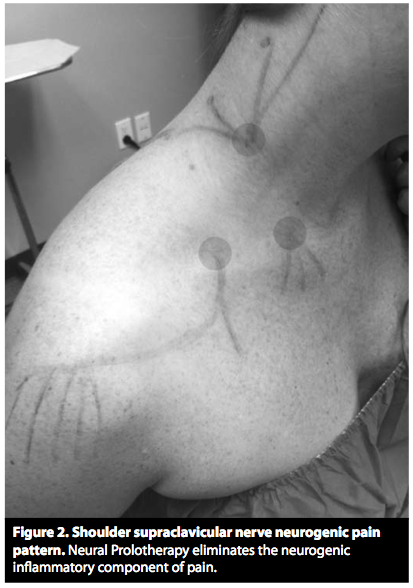
The pathology of neurogenic inflammation is well established.1, 2, 16 Ligaments, tendons and joints have TRPV1-sensitive C pain fiber innervation. Dr. Pybus explains that the C pain fibers transmit the “deep pain” often seen with osteoarthritis.14 “When these C pain fibers are irritated anywhere along their length they will transmit ectopic impulses in both forward (prodromic) and reverse (antidromic) direction.”14 The forward direction of the nerve signal will cause pain perception as the signal travels through the posterior root ganglia up to the brain. You will also have a local reflex action from the spinal cord ventral horn cells out to the muscle fibers, which will cause a reflex muscle spasm.14 The reverse (antidromic) signal will travel to the blood vessels where substance P is released causing swelling and pain. The nerves themselves also have a nerve supply called the Nervi Nervorum (NN).2 In a pathological state, the NN can release substance P (Sub P) and Calcitonin Gene Related Peptide (CGRP) onto these C pain fibers.11 Sub P and CGRP are known to cause pain, swelling of the nerve and surrounding tissue.7

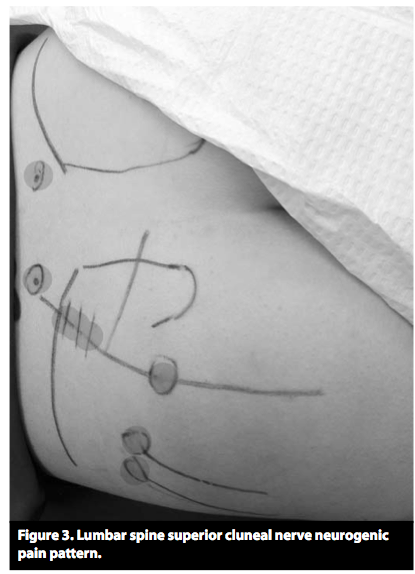
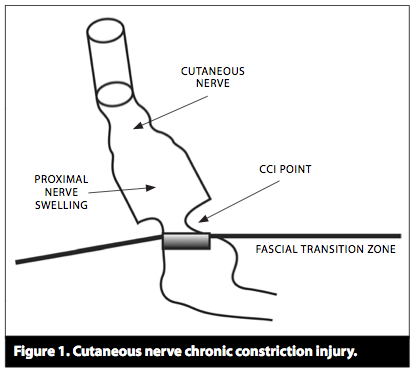
Dr. Lyftogt discussed in his recent Neural Prolotherapy meeting that “Cutaneous nerves pass through many fascial layers on their way to the spine. When there is neurogenic swelling at the Fascial Penetration Zone, a Chronic Constriction Injury (CCI) occurs. The CCI points will inhibit flow of Nerve Growth Factor (NGF).8, 7 Proper flow of NGF is essential for nerve health and repair.”3 (See Figure 1.)

Skjermbilde 2013-08-06 kl. 08.59.43

There are two major ways that the fascial penetration point can affect a nerve. Trauma to a nerve will cause edema to travel proximal and distal to the injury. When this swelling reaches the fascial penetration points this can cause a self- strangulation of the nerve and decrease nerve growth factor flow.16, 17 Morton’s neuroma is a clinical example of this.17

Dr. Pybus has also suggested that a change in fascial tension from repetitive muscle dysfunction can also cause a CCI point.15, 17

Another critical concept in NPT is what is called Bystander disease.9, 17 Bystander disease helps explain how superficial nerve pathology can affect deeper anatomic structures.9 This is based on Hilton’s law. Hilton’s law states: the nerve supplying a joint also supplies both the muscles that move the joint and the skin covering the articular insertion of those muscles.9 An example: The musculocutaneous nerve supplies the elbow with pain and proprioception as it is the nerve supply to the biceps brachii and brachialis muscles, as well as the skin close to the insertion of these muscles.17 Hilton’s Law arises as a result of the embryological development of humans.

This concept of Hilton’s law coupled with the idea of anterograde and retrograde axonal flow of neurodegenerative peptides,17 can help explain the wide reaching affects of NPT on pain control.

Glucose responsive nerves have been demonstrated throughout the nervous system.4, 5, 6 One proposed mechanism of action suggests that dextrose binds to pre synaptic calcium channels and inhibits the release of substance P and CGRP, thereby decreasing neurogenic inflammation. This allows normal flow of nerve growth factor and subsequent nerve repair and decreased pain.7

Skjermbilde 2013-08-06 kl. 08.59.48

Skjermbilde 2013-08-06 kl. 09.00.00

1 Geppetti, et al. Neurogenic Inflammation. Boca Raton: Edited CRC Press; 1996. Chapter 5, Summary; p.53-63.

2 Marshall J. Nerve stretching for the relief or cure of pain. The Lancet.1883;2:1029-36.

8 Bennett GJ, et al. A peripheral mononeuropathy in rat that produces disorders of pain sensation like those seen in man. Pain. 1988;33(1):87-107.

9 Hilton J. On rest and Pain. In Jacobesen WHA(ed): On Rest and Pain, 2nd edition, New York: William Wood & company, 1879.

Ukjent sin avatar

Scratch collapse test for evaluation of carpal and cubital tunnel syndrome.

Viser hvilken klinisk relevanse scratch collapse test har for å finne hvor nerver er i klem.

http://www.ncbi.nlm.nih.gov/pubmed/18984333

For the new test, the patient resisted bilateral shoulder external rotation with elbows flexed. The area of suspected nerve compression was lightly «scratched,» and then resisted shoulder external rotation was immediately repeated. Momentary loss of shoulder external rotation resistance on the affected side was considered a positive test.

For carpal tunnel syndrome, sensitivities were 64%, 32%, and 44% for the scratch collapse test, Tinel’s test, and wrist flexion/compression test, respectively. For cubital tunnel syndrome, sensitivities were 69%, 54%, and 46% for the scratch collapse test, Tinel test, and elbow flexion/compression test, respectively. The scratch collapse test had the highest negative predictive value (73%) for carpal tunnel syndrome. Tinel’s test had the highest negative predictive value (98%) for cubital tunnel syndrome.

The scratch collapse test had significantly higher sensitivity than Tinel’s test and the flexion/nerve compression test for carpal tunnel and cubital tunnel syndromes. Accuracy for this test was 82% for carpal tunnel syndrome and 89% for cubital tunnel syndrome.

Mer utfyllende studie om Scratch Collapse her: http://www.ncbi.nlm.nih.gov/pmc/articles/PMC2880669/

Though the exact mechanism of the scratch collapse test is unknown, we believe it may represent a gross physical manifestation of the “cutaneous silent period.” This EMG-demonstrated phenomenon is observed following noxious stimuli. A brief pause of voluntary muscle contraction is demonstrated following stimulation of a cutaneous nerve [24]. The scratch collapse yields a similar reflex response. We propose that as the nervi-nervorum at the site of neuritis are stimulated, an ipsilateral central inhibition is transiently activated. It is not surprising that this response would be most robust at the focus of the neuritis.

The scratch collapse examination shares several features with the cutaneous silent period. Both phenomena occur after a noxious stimulus, are very resistant to habituation, are able to override voluntary muscle contraction, and result in a deferment in resistance in a pattern that corresponds to the withdrawal of the extremity into a position of protection (e.g., in this case, internally rotating the arms in against the body) [911131617]. From an evolutionary standpoint, such a reflex would be important in survival.

The test offers an advantage over these other tests in that it appears to precisely localize the site of nerve compression.

Ukjent sin avatar

Undervisning om nervekompresjon nevropati og kirurgi i armen

Nervekompresjon begynner i en mild variant, hvor myelinlaget rundt nervene fortsatt er tykt og fint. Blodsirkulasjonen hemmes. Smerter og paraestesier kommer og går. Tinels tegn er negativt tidlig i progresjonen. Scratch-Collapse Test viser hvor i nervebanen det er kompresjonproblemer(f.eks. doublecrush syndrome).

Blir moderat, hvor myelinlaget blir tynt. Det blir hevelse i nerven og bindevevet blir tykkere i området. Smerter er konstante og musklene svekkes. Det tar 3-4 mnd å bygge opp myelinlaget igjen når kompresjonen er rettet opp.

Og alvorlig, hvor myelinlaget er borte. Nervetrådene forvinner mer og mer. Atrofi og nummenhet i musklene. Når kompresjonen er borte repareres nerven ca.3 cm i måneden.

http://prezi.com/mjuaxe0cwwbr/?utm_campaign=share&utm_medium=copy&rc=ex0share

Ukjent sin avatar

Om alt som er galt med fysio

Her er et fantastisk innlegg fra en fysioterapeut. Dette er så spot-on at han ble kalt inn på teppet av ledelsen på sitt undiversitet og forsøkt kneblet. De mente han burde ha ventet med å skrive slikt til han hadde minst 5 år mer erfaring. Noe som bare viser hvordan autoriteter mangler evne til fleksibilitet, og at såkalte evidensbaserte behandlingsformer ikke greier å tilpasse seg ny forskning. Fysioterapi henger 50 år etter. Jeg har samlet alle referansene for lettere tilgang.

http://blog.theravid.com/patient-care/redefining-evidence-ebp-in-experience-cut/

How does one justify the use of ultrasound when the biophysical (Baker et al 2001) and clinical (Robertson et al 2001) effects have been so thoroughly disproven?

Why are we still taught that we are molders of connective tissue, when the forces required to create plastic deformation of connective tissue ranges between 50 and 250 pounds of force (Threlkeld 1992)?

When are we going to accept the fact that our palpatory exams lack reliability (French et al 2000) (Lucas et al 2009)

and validity (Najm et al 2003) (Landel et al 2008) (Preece et al 2008)?

When will we stop telling students, colleagues, and patients that pain is related to their posture, muscle length, muscle strength, or biomechanics (Edmondston et al 2007) (Lewis et al 2005) (Nourbakhsh et al 2002)?

When will we cease blaming pain on something found on an image (Reilly et al 2006) (Beattie et al 2005) (Borenstein et al 2001)?

When will we stop thinking that we can change someone’s static posture with strengthening (Walker et al 1987) (Diveta et al 1990)?

When we teach these things to students and say them to our patients, it is misleading at best and fear inducing and hurtful at worst (Zusman 2012).

In My Experience”remain the three most dangerous words in medicine.

This is perhaps even doubly so in the world of physical therapy, given the litany of non-specific effects that go into a treatment encounter (Hall et al 2010) (Miciak et al 2012).

Physical therapists are in a unique position to make a significant impact on the burden of chronic pain, however, we fail to live up to our potential by holding onto a postural-structural-biomechanical model that has been proven ineffective and incorrect (Lederman 2011).

We need to familiarize ourselves with the work of people like Ronald Melzack, Patrick Wall, Louis Gifford, David Butler and Lorimer Moseley.

Ukjent sin avatar

Deconstructing the Placebo Effect and Finding the Meaning Response

Om placeboeffekten og at «mening» er bedre å bruke enn en placeborespons når vi snakker om behandling. Placebo-sukkerpillen har ingen effekt i kroppen, men meningen vi legger i den har det. Vi får en «meningsrespons». Selv medisiner eller operasjoner får bedre effekt når det er en «mening» bak det.

http://annals.org/article.aspx?articleid=715182

http://www.homeopathy.org/wp-content/uploads/downloads/2012/05/Mossman.pdf

We provide a new perspective with which to understand what for a half century has been known as the “placebo effect.” We argue that, as currently used, the concept includes much that has noth- ing to do with placebos, confusing the most interesting and im- portant aspects of the phenomenon. We propose a new way to understand those aspects of medical care, plus a broad range of additional human experiences, by focusing on the idea of “mean- ing,” to which people, when they are sick, often respond.

We review several of the many areas in medicine in which meaning affects illness or healing and introduce the idea of the “meaning response.” We suggest that use of this formulation, rather than the fixation on inert placebos, will probably lead to far greater insight into how treatment works and perhaps to real improvements in human well-being.

If we replace the word “placebo” in the second sentence with its definition from the first, we get: “The placebo effect is the therapeutic effect produced by [things] objectively without specific activity for the condition being treated.” This makes no sense whatsoever. Indeed, it flies in the face of the obvious. The one thing of which we can be absolutely certain is that placebos do not cause placebo effects. Placebos are inert and don’t cause anything.

Moreover, people frequently expand the concept of the placebo effect very broadly to include just about every conceivable sort of beneficial biological, social, or human interaction that doesn’t involve some drug well- known to the pharmacopoeia.

The concept of the placebo effect has been expanded much more broadly than this. Some attribute the effects of various alternative medical systems, such as homeopathy (33) or chiropractic (34), to the placebo effect. Others have described studies that show the positive effects of enhanced communication, such as Egbert’s (35), as “the placebo re- sponse without the placebo” (7). No wonder things are confusing.

Instead, they can be ex- plained by the “meanings” in the experiment: 1) Red means “up,” “hot,” “danger,” while blue means “down,” “cool,” “quiet” and 2) two means more than one. These effects of color (37– 40) and number (41, 42) have been widely replicated.

In this study, branded aspirin worked better than unbranded aspirin, which worked better than branded placebo, which worked better than unbranded placebo.

Aspirin relieves headaches, but so does the knowledge that the pills you are taking are “good” ones.

n a study of the benefits of aerobic exercise, two groups participated in a 10-week exercise program. One group was told that the exercise would enhance their aerobic capacity, while the other group was told that the exercise would enhance aerobic capacity and psychological well-being. Both groups improved their aerobic capacity, but only the second group improved in psychological well-being (actually “self-esteem”). The re- searchers called this “strong evidence . . . that exercise may enhance psychological well-being via a strong placebo effect” (44).

It seems reasonable to label all these effects (except, of course, of the aspirin and the exercise) as “mean- ing responses,” a term that seeks, among other things, to recall Dr. Herbert Benson’s “relaxation response” (45). Ironically, although placebos clearly cannot do anything themselves, their meaning can.

We define the meaning response as the physiologic or psychological effects of meaning in the origins or treatment of illness; meaning responses elicited after the use of inert or sham treatment can be called the “placebo effect” when they are desirable and the “nocebo effect” (46) when they are undesirable.

Insofar as medicine is meaningful, it can affect pa- tients, and it can affect the outcome of treatment (47– 49). Most elements of medicine are meaningful, even if practitioners do not intend them to be so. The physi- cian’s costume (the white coat with stethoscope hanging out of the pocket) (50), manner (enthusiastic or not), style (therapeutic or experimental), and language (51) are all meaningful and can be shown to affect the out- come; indeed, we argue that both diagnosis (52) and prognosis (53) can be important forms of treatment.

Likewise, acupuncture analgesia can be reversed with naloxone in animals (61) and people (62). To say that a treatment such as acupuncture “isn’t better than placebo” does not mean that it does nothing.

Surgery is particularly meaningful: Surgeons are among the elite of medical practitioners; the shedding of blood is inevitably meaningful in and of itself.

The intensity of the effect was shown to be correlated with “the strength of commitment to traditional Chinese culture.” These differences in longevity (up to 6% or 7% difference in length of life!) are not due to having Chinese genes but to having Chinese ideas, to knowing the world in Chinese ways. The effects of meaning on health and disease are not restricted to placebos or brand names but permeate life.

Practitioners can benefit clinically by conceptualizing this issue in terms of the meaning response rather than the placebo effect. Placebos are inert. You can’t do anything about them. For human beings, meaning is everything that placebos are not, richly alive and powerful.

One reason we are so ignorant is that, by focusing on placebos, we constantly have to address the moral and ethical issues of prescribing inert treatments (73, 74), of lying (75), and the like. It seems possible to evade the entire issue by simply avoiding placebos. One cannot, however, avoid meaning while engaging human beings. Even the most distant objects—the planet Venus, the stars in the constellation Orion—are meaningful to us, as well as to others (76).

Ukjent sin avatar

Neural tissue management provides immediate clinically relevant benefits without harmful effects for patients with nerve-related neck and arm pain: a randomised trial

Om hvordan manipulering av vevet rundt nerver gir en umiddelbar bedring av nakkesmerter med utstårling ut armen.

http://ajp.physiotherapy.asn.au/AJP/vol_58/1/Nee.pdf

These results enable physiotherapists to inform patients that neural tissue management provides immediate clinically relevant benefits beyond advice to remain active with no evidence of harmful effects.

One month prevalence rates for activity-limiting neck pain range from 7.5% to 14.5% in the general population (Hogg-Johnson et al 2008, Webb et al 2003). Neck pain spreading down the arm is more common than neck pain alone and is associated with higher levels of self-reported disability (Daffner et al 2003). One mechanism for neck pain spreading down the arm is the sensitisation of neural tissues (Bogduk 2009).

Neural tissue management was based on principles proposed by Elvey (1986) and Butler (2000). Along with advice to continue their usual activities, participants assigned to the experimental group received an educational component, manual therapy techniques, and a home program of nerve gliding exercises. The educational component attempted to reduce unnecessary apprehension participants may have had about neural tissue management (Butler 2000). The manual therapy techniques and nerve gliding exercises have been advocated for reducing nerve mechanosensitivity (Butler 2000, Coppieters and Butler 2008, Elvey 1986).

The educational component emphasised two points. First, examination findings suggested that participants’ symptoms were at least partly related to nerves in the neck and arm that had become overly sensitive to movement. Second, neural tissue management techniques would move the nerves in a gentle and pain-free manner, aiming to reduce this sensitivity. The manual therapy techniques included a contralateral cervical lateral glide and a shoulder girdle oscillation combined with active craniocervical flexion to elongate the posterior cervical spine (Elvey 1986). The home program of nerve gliding exercises involved a ‘sliding’ and a ‘tensioning’ technique for the median nerve and cervical nerve roots (Coppieters and Butler 2008).

There was no evidence to suggest that neural tissue management was harmful. ‘Worst case’ intention-to- treat and ‘complete case’ analyses showed no difference in the prevalence of worsening between groups (Table 2).

Ukjent sin avatar

A novel protocol to develop a prediction model that identifies patients with nerve-related neck and arm pain who benefit from the early introduction of neural tissue management

Om hvordan mobilisering av vevet rundt nervetrådene gir solid bedring på nakkesmerter med utstrålinger ut i armen. Studien har detaljert beskrivelse av teknikkene. Kan det være at den fikk så stor bedring ved at kriteriene ble satt på subjektiv opplevelse av «moderat bedring» av klientene?

http://www.sciencedirect.com/science/article/pii/S1551714411001455

We describe a novel protocol to develop a prediction model that identifies patients with nerve-related neck and arm pain who are likely to benefit from the early introduction of neural tissue management (NTM).

Patients rating themselves at least ‘moderately better’ on a Global Rating of Change scale will be considered ‘improved’.

Ukjent sin avatar

Respiratory weakness in patients with chronic neck pain.

Studie som nevner at alle med kroniske nakkeplager også har svake pustemuskler, og at pusten kan bidra til å opprettholde smertene. Spesielt ved svak utpust (MEP – maximal expiratory pressure) er det sammenheng med nakkesmerter. Kunne trengt hele denne studien.

http://www.ncbi.nlm.nih.gov/pubmed/23199797

Neck muscle strength (r > 0.5), kinesiophobia (r < -0.3) and catastrophizing (r < -0.3) were significantly associated with maximal mouth pressures (P < 0.05), whereas MEP was additionally negatively correlated with neck pain and disability (r < -0.3, P < 0.05).

It can be concluded that patients with chronic neck pain present weakness of their respiratory muscles. This weakness seems to be a result of the impaired global and local muscle system of neck pain patients, and psychological states also appear to have an additional contribution. Clinicians are advised to consider the respiratory system of patients with chronic neck pain during their usual assessment and appropriately address their treatment.

Ukjent sin avatar

Somatosensory Demands Modulate Muscular Beta Oscillations, Independent of Motor Demands

Om at berørelse og bevegelse er det samme i hjernen og helt ned på muskelnivå. Og at berørelse demper signaler fra musklene i hjernen. Trenger hele denne studien.

http://www.jneurosci.org/content/33/26/10849.short?rss=1

Specifically, somatosensory demands suppress the degree to which not only cortical activity but also muscular activity oscillates in the beta band. This suppression of muscular beta oscillations by perceptual demands is specific to demands in the somatosensory modality and occurs independent of movement preparation and execution: it occurs even when no movement is required at all.

This places touch perception as an important computation within this widely distributed somatomotor beta network and suggests that, at least in healthy subjects, somatosensation and action should not be considered as separable processes, not even at the level of the muscles.