Ukjent sin avatar

Is recovery driven by central or peripheral factors? A role for the brain in recovery following intermittent-sprint exercise

Nevner svært mye spennende om stølhet (DOMS). Spesielt om hvor mye central sensitering har å si, og mye om hydrering (vann). Samt alt om betennelser og andre faktorer knyttet til DOMS. Sier bl.a. at glucogenlagre normaliseres etter 24 timer uavhengig av hva man spiser, men glykogen omsetningen i kroppen er begrenset i 2-3 dager etter. Nevner også at det er alle de perifere faktorene, sammen med de sentrale, som tilsammen skaper DOMS tilstanden.

http://www.ncbi.nlm.nih.gov/pmc/articles/PMC3909945/

Abstract

Prolonged intermittent-sprint exercise (i.e., team sports) induce disturbances in skeletal muscle structure and function that are associated with reduced contractile function, a cascade of inflammatory responses, perceptual soreness, and a delayed return to optimal physical performance. In this context, recovery from exercise-induced fatigue is traditionally treated from a peripheral viewpoint, with the regeneration of muscle physiology and other peripheral factors the target of recovery strategies. The direction of this research narrative on post-exercise recovery differs to the increasing emphasis on the complex interaction between both central and peripheral factors regulating exercise intensity during exercise performance. Given the role of the central nervous system (CNS) in motor-unit recruitment during exercise, it too may have an integral role in post-exercise recovery. Indeed, this hypothesis is indirectly supported by an apparent disconnect in time-course changes in physiological and biochemical markers resultant from exercise and the ensuing recovery of exercise performance. Equally, improvements in perceptual recovery, even withstanding the physiological state of recovery, may interact with both feed-forward/feed-back mechanisms to influence subsequent efforts. Considering the research interest afforded to recovery methodologies designed to hasten the return of homeostasis within the muscle, the limited focus on contributors to post-exercise recovery from CNS origins is somewhat surprising. Based on this context, the current review aims to outline the potential contributions of the brain to performance recovery after strenuous exercise.

recovery strategies might be broadly differentiated as being either physiological (e.g., cryotherapy, hydrotherapy, massage, compression, sleep), pharmacological (e.g., non-steroidal anti-inflammatory medications) or nutritional (e.g., dietary supplements), all mean to limit continued post-exercise disturbances and inflammatory events within the exercised muscle cells. This peripheral focus emphasizes the importance of an accelerated return of structural integrity and functional capacity from below the neuromuscular junction.

Conceptually, if the brain is held as central to the process of performance declines (i.e., fatigue), it stands to reason that it would also have some role in post-exercise recovery (De Pauw et al., 2013).

Classically defined as an exercise-induced reduction in force generating capacity of the muscle, fatigue may be attributed to peripheral contractile failure, sub-optimal motor cortical output (supraspinal fatigue) and/or altered afferent inputs (spinal fatigue) innervating the active musculature (Gandevia, 2001).

Alternatively, concepts of residual fatigue remain predominately within the domain of peripherally driven mechanisms, such as blood flow, muscle glycogen repletion and clearance of metabolic wastes (Bangsbo et al., 2006).

The physical and biochemical changes observed during intermittent-sprint exercise have traditionally been interpreted in terms of metabolic capacity (Glaister, 2005). Indeed, lowered phosphocreatine concentrations (Dawson et al., 1997), reduced glycolytic regeneration of ATP (Gaitanos et al., 1993) and increasing H+ accumulation (Bishop et al., 2003) have all been associated with declining intermittent-sprint performance.

While reductions in muscle excitability after intermittent-sprint exercise have also been observed (Bishop, 2012), metabolic perturbations are rapidly recovered within minutes (Glaister, 2005).

The ultimate indicator of post-exercise recovery is the ability of the muscle to produce force i.e., performance outcomes.

Reductions in skeletal muscle function after intermittent-sprint exercise are often proposed to be caused by a range of peripherally-induced factors, including: intra-muscular glycogen depletion; increased muscle and blood metabolites concentrations; altered Ca++ or Na+-K+ pump function; increased skeletal muscle damage; excessive increases in endogenous muscle and core temperatures; and the reduction in circulatory function via reduced blood volume and hypohydration (Duffield and Coutts, 2011; Bishop, 2012; Nédélec et al., 2012).

Conversely, Krustrup et al. (2006) reported declines in intramuscular glycogen of 42 ± 6% in soccer players, with depleted or almost depleted glycogen stores in ~55% of type I fibers and ~25–45% of type II fibers reasoned to explain acute declines in sprint speed post-match. Importantly, muscle glycogen resynthesis after team sport activity is slow and may remain attenuated for 2–3 days (Nédélec et al., 2012). Such findings highlight the importance of nutrition in post-exercise recovery (Burke et al., 2006); yet it is noteworthy that muscle glycogen stores remain impaired 24 h after a soccer match, irrespective of carbohydrate intake and should be recognized as a factor in sustained post-match suppression of force (Bangsbo et al., 2006; Krustrup et al., 2011).

Mechanical disruptions to the muscle fiber are task dependant, though likely relate to the volume of acceleration, deceleration, directional change and inter-player contact completed (i.e., tackling or collisions) (McLellan et al., 2011; Duffield et al., 2012). Importantly, EIMD manifests in reduced voluntary force production that has been associated with the elevated expression of intracellular proteins (e.g., creatine kinase and C-reactive protein), swelling, restricted range of motion and muscle soreness (Cheung et al., 2003). Whilst it is generally accepted that lowering blood-based muscle damage profiles may hasten athletic recovery, mechanisms explaining the return of skeletal muscle function are somewhat ambiguous (Howatson and Van Someren, 2008).

Interestingly, markers of EIMD are also not closely associated with muscle soreness (Nosaka et al., 2002; Prasartwuth et al., 2005), though perceptual recovery is reportedly related with the recovery of maximal sprint speed (Cook and Beaven, 2013). While this raises questions in terms of the physiological underpinnings of muscle soreness, weaker relationships between EIMD and neuromuscular performance may suggest the potential for other drivers of recovery outside of peripheral (muscle damage or metabolic) factors alone.

Finally, while the relationship between hydration status and intermittent-sprint performance remains contentious (Edwards and Noakes, 2009), fluid deficits of 2–4% are common following team-sport exercise (Duffield and Coutts, 2011). Mild hypohydration reportedly demonstrates limited effects on anaerobic power and vertical jump performance (Hoffman et al., 1995; Cheuvront et al., 2006); however, some caution is required in interpreting these data as these testing protocols reflect only select components of team sport performance.

Nevertheless, the role of hydration in recovery should not be overlooked as changes in extracellular osmolarity are suggested to influence glucose and leucine kinetics (Keller et al., 2003). Further, the negative psychological associations (conscious or otherwise) derived from a greater perceptual effort incurred in a hypohydrated state may impact mental fatigue (Devlin et al., 2001; Mohr et al., 2010).

Rather, that the integrative regulation of whole body disturbances based on these peripheral factors, alongside central regulation may be relevant.

Ukjent sin avatar

The Mechanisms of Manual Therapy in the Treatment of Musculoskeletal Pain: A Comprehensive Model

Nevner det meste rundt behandling av muskel og skjelett problemer, både usikkerheter, manglende diagnostisk spesifisitet, dårlig forhold mellom forklaringsmodelle og realitet, og foreslår nevrosentriske forklaringsmodeller. Viser til at spesifikk behandling ikke har bedre effekt enn uspesifikk behandling. Og til at den mekaniske teknikken setter igang en kaskade av nevrologiske effekter som resulterer i en behandlingeffekt.

http://www.ncbi.nlm.nih.gov/pmc/articles/PMC2775050/

Abstract

Prior studies suggest manual therapy (MT) as effective in the treatment of musculoskeletal pain; however, the mechanisms through which MT exerts its effects are not established. In this paper we present a comprehensive model to direct future studies in MT. This model provides visualization of potential individual mechanisms of MT that the current literature suggests as pertinent and provides a framework for the consideration of the potential interaction between these individual mechanisms. Specifically, this model suggests that a mechanical force from MT initiates a cascade of neurophysiological responses from the peripheral and central nervous system which are then responsible for the clinical outcomes. This model provides clear direction so that future studies may provide appropriate methodology to account for multiple potential pertinent mechanisms.

Mechanical Stimulus 

First, only transient biomechanical effects are supported by studies which quantify motion (Colloca et al., 2006;Gal et al., 1997;Coppieters & Butler, 2007;Coppieters & Alshami, 2007) but not a lasting positional change (Tullberg et al., 1998;Hsieh et al., 2002). Second, biomechanical assessment is not reliable. Palpation for position and movement faults has demonstrated poor reliability (Seffinger et al., 2004;Troyanovich et al., 1998) suggesting an inability to accurately determine a specific area requiring MT.  Third, MT techniques lack precision as nerve biased techniques are not specific to a single nerve (Kleinrensink et al., 2000) and joint biased technique forces are dissipated over a large area (Herzog et al., 2001;Ross et al., 2004).

Finally, studies have reported improvements in signs and symptoms away from the site of application such as treating cervical pain with MT directed to the thoracic spine (Cleland et al., 2005;Cleland et al., 2007) and lateral epicondylitis with MT directed to the cervical spine (Vicenzino et al., 1996).

Subsequently, we suggest, that as illustrated by the model, a mechanical force is necessary to initiate a chain of neurophysiological responses which produce the outcomes associated with MT. 

Neurophysiological Mechanism 

Studies have measured associated responses of hypoalgesia and sympathetic activity following MT to suggest a mechanism of action mediated by the periaquaductal gray (Wright, 1995) and lessening of temporal summation following MT to suggest a mechanism mediated by the dorsal horn of the spinal cord (George et al., 2006) The model makes use of directly measurable associated responses to imply specific neurophysiological mechanisms when direct observations are not possible. The model categorizes neurophysiological mechanisms as those likely originating from a peripheral mechanism, spinal cord mechanisms, and/or supraspinal mechanisms.

Peripheral mechanism 

Musculoskeletal injuries induce an inflammatory response in the periphery which initiates the healing process and influences pain processing. Inflammatory mediators and peripheral nociceptors interact in response to injury and MT may directly affect this process. For example, (Teodorczyk-Injeyan et al., 2006) observed a significant reduction of blood and serum level cytokines in individuals receiving joint biased MT which was not observed in those receiving sham MT or in a control group. Additionally, changes of blood levels of β-endorphin, anandamide, N-palmitoylethanolamide, serotonin, (Degenhardt et al., 2007) and endogenous cannabinoids (McPartland et al., 2005) have been observed following MT. Finally, soft tissue biased MT has been shown to alter acute inflammation in response to exercise (Smith et al., 1994) and substance P levels in individuals with fibromyalgia (Field et al., 2002). Collectively, these studies suggest a potential mechanism of action of MT on musculoskeletal pain mediated by the peripheral nervous system for which mechanistic studies may wish to account. 

Spinal mechanisms 

MT may exert an effect on the spinal cord. For example, MT has been suggested to act as a counter irritant to modulate pain (Boal & Gillette, 2004) and joint biased MT is speculated to “bombard the central nervous system with sensory input from the muscle proprioceptors (Pickar & Wheeler, 2001).”Subsequently, a spinal cord mediated mechanism of MT must be considered and is accounted for in the model. Direct evidence for such an effect comes from a study (Malisza et al., 2003b) in which joint biased MT was applied to the lower extremity of rats following capsaicin injection. A spinal cord response was quantified by functional MRI during light touch to the hind paw. A trend was noted towards decreased activation of the dorsal horn of the spinal cord following the MT. The model uses associated neuromuscular responses following MT to provide indirect evidence for a spinal cord mediated mechanism. For example, MT is associated with hypoalgesia (George et al., 2006;Mohammadian et al., 2004;Vicenzino et al., 2001), afferent discharge (Colloca et al., 2000;Colloca et al., 2003), motoneuron pool activity (Bulbulian et al., 2002;Dishman & Burke, 2003), and changes in muscle activity (Herzog et al., 1999;Symons et al., 2000) all of which may indirectly implicate a spinal cord mediated effect.

Supraspinal mechanisms 

Finally, the pain literature suggests the influence of specific supraspinal structures in response to pain. Structures such as the anterior cingular cortex (ACC), amygdala, periaqueductal gray (PAG), and rostral ventromedial medulla (RVM) are considered instrumental in the pain experience.(Peyron et al., 2000;Vogt et al., 1996;Derbyshire et al., 1997;Iadarola et al., 1998;Hsieh et al., 1995;Oshiro et al., 2007;Moulton et al., 2005;Staud et al., 2007;Bee & Dickenson, 2007;Guo et al., 2006). Subsequently, the model considers potential supraspinal mechanisms of MT. Direct support for a supraspinal mechanism of action of MT comes from (Malisza et al., 2003a) who applied joint biased MT to the lower extremity of rats following capsaicin injection. Functional MRI of the supraspinal region quantified the response of the hind paw to light touch following the injection. A trend was noted towards decreased activation of the supraspinal regions responsible for central pain processing. The model accounts for direct measures of supraspinal activity along with associated responses such as autonomic responses (Moulson & Watson, 2006;Sterling et al., 2001;Vicenzino et al., 1998) (Delaney et al., 2002;Zhang et al., 2006), and opiod responses (Vernon et al., 1986) (Kaada & Torsteinbo, 1989) to indirectly imply a supraspinal mechanism. Additionally, variables such as placebo, expectation, and psychosocial factors may be pertinent in the mechanisms of MT (Ernst, 2000;Kaptchuk, 2002). For example expectation for the effectiveness of MT is associated with functional outcomes (Kalauokalani et al., 2001) and a recent systematic review of the literature has noted that joint biased MT is associated with improved psychological outcomes (Williams et al., 2007). For this paper we categorize such factors as neurophysiological effects related to supraspinal descending inhibition due to associated changes in the opioid system (Sauro & Greenberg, 2005), dopamine production (Fuente-Fernandez et al., 2006), and central nervous system (Petrovic et al., 2002;Wager et al., 2004;Matre et al., 2006) which have been observed in studies unrelated to MT.

Figure 3 Pathway considering both a spinal cord and supraspinal mediated effect from Bialosky et al (2008)

Ukjent sin avatar

THE VALUE OF BLOWING UP A BALLOON

Dette er en veldig viktig artikkel for å forstå diafragmas rolle i både pust og bevegelse, og ifh smertetilstander i ryggraden. Nevner en lovende teknikk for å styrke diafragma og støttemuskulatur hvor man blåser opp en ballong og strammer kjernemuskulaturen. Nevner Zone of Apposition (ZOA) som beskriver diafragmas bevegelsesmuligheter. Ved lav ZOA har diafrgma lite bevegelse. Vi ønsker å øke ZOA. Denne øvelsen er konstruert basert på fysioterapeutisk prinsipper, men i Verkstedet Breathing System har vi øvelser som er gir samme resultater på diafragma, men bygget på lang og erfaringsbasert tradisjon fra tibetansk buddhisme.

Nevner også hvordan mage-pust minker bevegelsen i diafragma.

http://www.ncbi.nlm.nih.gov/pmc/articles/PMC2971640/

Suboptimal breathing patterns and impairments of posture and trunk stability are often associated with musculoskeletal complaints such as low back pain. A therapeutic exercise that promotes optimal posture (diaphragm and lumbar spine position), and neuromuscular control of the deep abdominals, diaphragm, and pelvic floor (lumbar-pelvic stabilization) is desirable for utilization with patients who demonstrate suboptimal respiration and posture. This clinical suggestion presents a therapeutic exercise called the 90/90 bridge with ball and balloon. This exercise was designed to optimize breathing and enhance both posture and stability in order to improve function and/or decrease pain. Research and theory related to the technique are also discussed.

Many muscles used for postural control/stabilization and for respiration are the same, for example: the diaphragm, transversus abdominis, and muscles comprising the pelvic floor.16 Maintaining optimal posture/stability and respiration is important and is even more challenging during exercise. Exercise increases respiratory demand (e.g. running) and limb movements (e.g. arms moving while standing still) increase postural demands for stabilization.3,7

Many factors are potentially involved with suboptimal respiration and suboptimal (faulty) posture and may be associated with musculoskeletal complaints such as low back pain, and/or sacroiliac joint pain.8 (Table 1)

Suboptimal Respiration and Posture
Decreased/suboptimal Zone of Apposition of diaphragm
Decreased exercise tolerance
Decreased intra-abdominal pressure
Shortness of Breath/Dyspnea
Decreased respiratory efficiency
Decreased expansion of lower rib cage/chest
Decreased appositional diaphragm force
Decreased length of diaphragm (short)
Decreased transdiaphragm pressure
Increased use of accessory muscles of respiration
Poor neuromuscular control of core muscles
Increased lumbar lordosis
Increased anterior pelvic tilt
Increased hamstring length
Increased abdominal length
Rib elevation/external rotation
Sternum elevation
Increased activity of paraspinals
Increased lumbar-pelvic instability
Low back pain
Sacroiliac Joint pain
Thoracic Outlet Syndrome
Headaches
Asthma

One of the most critical factors, often overlooked by physical therapists, is maintaining an optimal zone of apposition of the diaphragm.3,911 The zone of apposition (ZOA) is the area of the diaphragm encompassing the cylindrical portion (the part of the muscle shaped like a dome/umbrella) which corresponds to the portion directly apposed to the inner aspect of the lower rib cage.12 The ZOA is important because it is controlled by the abdominal muscles and directs diaphragmatic tension. When the ZOA is decreased or suboptimal, there are several potential negative consequences. (Table 1) Two examples include:

  1. Inefficient respiration (less air in and out) because the transdiaphragmatic pressure is reduced.11 The smaller the ZOA, there will be less inspiratory action of the diaphragm on the rib cage.11
  2. Diminished activation of the transversus abdominis which is important for both respiration and lumbar stabilization.11,13

The incidence of LBP has been documented to be as high as 30% in the athletic population, and in many cases pain may persist for years.15 Low back pain is frequently correlated with faulty posture such as an excessive lumbar lordosis.1618 Excessive lumbar lordosis may be associated with over lengthened and weak abdominal musculature.1820 Poor neuromuscular control of core muscles (transversus abdominis, internal oblique, pelvic floor and diaphragm) has been described in individuals with SIJ pain21 and in individuals with lumbar segmental instability, potentially adversely affecting respiration.22

Richardson et al.27 describe coordination of the Transversus abdominis and the diaphragm in respiration during tasks in which stability is maintained by tonic activity of these muscles. During inspiration, the diaphragm contracts concentrically, whereas the transversus abdominis contracts eccentrically. The muscles function in reverse during exhalation with the diaphragm contracting eccentrically while the transversus abdominis contracts concentrically. Hodges et al. noted that during respiratory disease the coordinating function between the transversus abdominis and diaphragm was reduced.6 Thus, it is also possible that faulty posture such as over lengthened abdominals and excessive lordosis could reduce the coordination of the diaphragm and transversus abdominis during respiration and stabilization activities.

O’sullivan et al.21 studied subjects with LBP attributed to the sacroiliac joints and compared them to control subjects without pain. O’sullivan et al. compared respiratory rate and diaphragm and pelvic floor movement using real time ultrasound during a task that required load transfer through the lumbo-pelvic region (the active straight leg raise test). Subjects with pain had an increase in respiratory rate, descent of their pelvic floor and a decrease in diaphragm excursion as compared to the control subjects, who had normal respiratory rates, less pelvic floor descent, and optimal diaphragm excursion. While O’sullivan et al. concluded that an intervention program focused on integrating control of deep abdominal muscles with normal pelvic floor and diaphragm function may be effective in managing patients with LBP,21 they did not describe strategies or exercises to achieve this goal.21

While the role of the Transversus abdominis in lumbar stability is well documented, less well known is the role of the diaphragm in lumbar stability. While the primary function of the diaphragm is respiration, it also plays a role in spinal stability.3,28

The right hemidiaphragm attaches distally to the anterior portions of the first through third lumbar vertebrae (L1-3) and the left hemidiaphragm attaches distally on the first and second lumbar vertebrae (L1-2).29 This section of the diaphragm is referred to as the crura. Of interest is the asymmetrical attachment of the diaphragm with the left hemidiaphragm attaching to L1-2 and the right portion attaching to L1-3.

During the inhalation phase of ventilation, the dome of the diaphragm moves caudally like a piston creating a negative pressure in the thorax that forces air into the lungs. This action is normally accompanied by a rotation of the ribs outward (external rotation) largely in part due to the ZOA.12 (Figure 1) Apposition is a term that means multiple layers adjacent to each other.33 The normal force of pull on the sternal and costal portions of the diaphragm would produce an internal rotation of the ribs. The ZOA creates an external rotation of these ribs primarily because the pressure in the thoracic cavity prevents an inward motion. The crural portion of the diaphragm assists the caudal motion of the dome. It also pulls the anterior lumbar spine upward (cephalad and anterior). Additionally, the abdominal muscles and pelvic floor musculature are less active to allow visceral displacement due to the dome of the diaphragm dropping. With exhalation, this process is reversed. Abdominal muscle activity compresses the viscera in the abdominal cavity, the diaphragm is forced cephalad and the ribs internally rotate. As exhalation becomes forced as during exercise, abdominal activity (rectus abdominus, internal obliques, external obliques, and transversus abdominis) will be increased.3436

When the ZOA is optimized, the respiratory and postural roles of the diaphragm have maximal efficiency.37 In suboptimal positions (i.e. decreased ZOA), the diaphragm has a decreased ability to draw air into the thorax because of less caudal movement upon contraction and less effective tangential tension of the diaphragm on the ribs and therefore lower transdiaphragmatic pressure.38 This decreased ZOA is accompanied by decreased expansion of the rib cage, postural alterations, and a compensatory increase in abdominal expansion.12 (Figure 2)

One such adaptive breathing strategy would be to relax the abdominal musculature more than necessary on inspiration to allow for thoraco-abdominal expansion. This situation leads to decreased abdominal responsibility while breathing and can contribute to instability. This would reflect more upper chest breathing and less efficient diaphragm activity. If the body maintains this position and breathing strategy for an extended period of time, the diaphragm may adaptively shorten and the lungs may become hyperinflated.37,39,40 Hyperinflation may also contribute to over use of accessory muscles of respiration such as scalenes, sternocleidomastoid (SCM), pectorals, upper trapezius and paraspinals in an attempt to expand the upper rib cage.4144 Again, without an optimal dome shape/position of the diaphragm or an optimal ZOA the body compensates to get air in with accessory muscles since the more linear/flat/short diaphragm is less efficient for breathing.32

Instructions for Performance of the 90/90 Bridge with Ball and Balloon: 1. Lie on your back with your feet flat on a wall and knees and hips bent at a 90-degree angle. 2. Place a 4-6 inch ball between your knees. 3. Place your right arm above your head and a balloon in your left hand. 4. Inhale through your nose and as you exhale through your mouth, perform a pelvic tilt so that your tailbone is raised slightly off the mat. Keep low back flat on the mat. Do not press your feet into the wall, instead pull down with your heels. 5. You should feel the back of your thighs and inner thighs engage, keeping pressure on the ball. Maintain this position for the remainder of the exercise. 6. Now inhale through your nose and slowly blow out into the balloon. 7. Pause three seconds with your tongue positioned on the roof of your mouth to prevent airflow out of the balloon. 8. Without pinching the neck of the balloon and keeping your tongue on the roof of your mouth, inhale again through your nose. 9. Slowly blow out as you stabilize the balloon with your left hand. 10. Do not strain your neck or cheeks as you blow. 11. After the fourth breath in, pinch the balloon neck and remove it from your mouth. Let the air out of the balloon.12. Relax and repeat the sequence 4 more times. Copyright © Postural Restoration Institute™ 2009, used with permission

The patient/athlete is asked to hold the balloon with one hand and inhale through his/her nose with the tongue on the roof of the mouth (normal rest position) and then exhale through his/her mouth into the balloon. The inhalation, to about 75% of maximum, is typically 3-4 seconds in duration, and the complete exhalation is usually 5-8 seconds long followed by a 2-3 second pause. This slowed breathing is thought to further relax the neuromuscular system/parasympathetic nervous system and generally decrease resting muscle tone. Ideally the patient/athlete will be able to inhale again without pinching off the balloon with their teeth, lips, or fingertips. This requires maintenance of intra-abdominal pressure to allow inhalation through the nose without the air coming back out of the balloon and into the mouth.

When the exercise is performed by the patient/athlete with hamstring and gluteus maximus (glut max) activation (hip extensors) the pelvis moves into a relative posterior pelvic tilt and the ribs into relative depression and internal rotation. This pelvic and rib position helps to optimize abdominal length (decreases) and diaphragm length/ZOA (increases).

Clinical experience with the BBE includes utilization of the exercise for both female and male patients (more females than males), ages 5-89 with a wide variety of diagnoses including: low back pain, trochanteric bursitis, SIJ pain, asthma, COPD, acetabular labral tear, anterior knee pain, thoracic outlet syndrome (TOS) and sciatica.

Ukjent sin avatar

Understanding the Process of Fascial Unwinding

Studie som nevner hvordan «fascial unwinding» skjer ved hjelp av stimulering av mekanoreseptorer i huden. Parasympatikus aktiveres og gjør at muskelspenninger slipper taket.

http://ijtmb.org/index.php/ijtmb/article/view/43/75

Hypothetical Model: During fascial unwinding, the therapist stimulates mechanoreceptors in the fascia by applying gentle touch and stretching. Touch and stretching induce relaxation and activate the parasympathetic nervous system. They also activate the central nervous system, which is involved in the modulation of muscle tone as well as movement. As a result, the central nervous system is aroused and thereby responds by encouraging muscles to find an easier, or more relaxed, position and by introducing the ideomotor action. Although the ideomotor action is generated via normal voluntary motor control systems, it is altered and experienced as an involuntary response.

Conclusions: Fascial unwinding occurs when a physically induced suggestion by a therapist prompts ideomotor action that the client experiences as involuntary. This action is guided by the central nervous system, which produces continuous action until a state of ease is reached. Consequently, fascial unwinding can be thought of as a neurobiologic process employing the self-regulation dynamic system theory.

In this paper, I propose a model based on scientific literature to explain the process and mechanism of fascial unwinding (Fig. 1). The model is based on the theories of ideomotor action by Carpenter(18) and Dorko,(16) fascia neurobiologic theory by Schleip,(4,5) and the psychology of consciousness by Halligan and Oakley.(19)

A set of conditions are required to initiate or facilitate the unwinding process. The therapist’s sensitivity and fine palpation skills form the most important part of these conditions, but it is also imperative that the client be able to relax and “let go” of his or her body.

In the first stage—the initiation or induction phase— the therapist working on a client will introduce touch or stretching onto the tissue. Touch is the entrance requirement for the process of unwinding. Touch stimulates the fascia’s mechanoreceptors and, in turn, arouses a parasympathetic nervous system response.(5) As a result of this latter response, the client is in a state of deep relaxation and calm, sometimes followed with rapid eye movement, twitching, or deep breathing—a state that can be observed clinically.(20,21) In this state, the conscious mind is relaxed and off guard. Stimulation of mechanoreceptors also influences the central nervous system. The central nervous system responds to this proprioceptive input by allowing the muscles to perform actions that decrease tone or that create movement in a joint or limb, making it move into an area of ease. At this point, ideomotor reflexes occur. Ideomotor action pertains to involuntary muscle movement, which can manifest in various ways and is directed at the central nervous system.(22)

These reflexes occur unconsciously, indicating dissociation between voluntary action and conscious experience.(23) In clinical situations, the client is unaware of the unconscious movement and thinks that it is generated by the therapist. This unconscious movement or stretching sensation stimulates a response in the tissue, providing a feedback to the central nervous system as outlined in the theory of ideomotor action.(24) The process is repeated until the client is relaxed or has reached a “still point” or state of ease.

The indirect stimulation of the autonomic nervous system (that is, the parasympathetic nervous system), which results in global muscle relaxation and a more peaceful state of mind, represents the heart of the changes that are so vital to many manual therapies. Gentler types of myofascial stretching and cranial techniques have also long been acknowledged to affect the parasympathetic nervous system.(25) Bertolucci(20) observed that, when a client is being treated with a muscle repositioning technique, the client begins to show involuntary motor reactions—reactions that include the involuntary action of related muscles and rapid eye movements. Several studies have evaluated the physiologic changes in the autonomic nervous system that occur as a result of craniosacral and MFR interventions,(21,26) clinically-known techniques that can trigger the unwinding process.

Recent studies have used heart rate variability, respiratory rate, skin conductance, and skin temperature as measures of physiologic change. Zullow and Reisman(26) indicated an increase in parasympathetic activity resulting from the compression of the fourth intracranial ventricle (CV4) maneuver and sacral holds, as measured by heart rate variability. Using heart rate variability measurement, Henley et al.(25) demonstrated that cervical MFR shifts sympathovagal balance from the sympathetic to the parasympathetic nervous system.

Dorko(16) was the first to suggest that fascial unwinding can be simply explained as an ideomotor movement. McCarthy et al.(29) were the first to document unwinding as an ideomotor-based manual therapy in the treatment of a patient with chronic neck pain. Their research showed that a reduction in pain intensity and perceived disability can be achieved with the introduction of ideomotor treatment.

A model built upon the neurobiologic, ideomotor action, and consciousness theories is proposed to explain the mechanism of unwinding. Touch, stretching, and manual therapy can induce relaxation in the parasympathetic nervous system. They also activate the central nervous system, which is involved in the modulation of muscle tone as well as movement. This activation stimulates the response to stretching: muscles find areas and positions of ease, the client experiences less pain or is more relaxed, thereby introducing the ideomotor action. The ideomotor action is generated through normal voluntary motor control systems, but is altered and experienced as an involuntary reaction. The stretching sensation provides a feedback to the nervous system, which in turn will generate the movements again.

Ukjent sin avatar

Alterations in Cortical and Cerebellar Motor Processing in Subclinical Neck Pain Patients Following Spinal Manipulation.

Interessant studie som nevner at personer med kronisk smerte (i nakken) får endret aktivitet i lillehjernen, som styrer våre bevegelsesmønstre. Med manipulering etterfulgt av 20 minutter motorisk trening blir lillehjernens aktivitet lik de som ikke har smerte. Studien nevner manipulering av ryggraden, men sannsynligvis vil også percussor eller en hvilken som helst annen behandling gi samme effekten.

http://www.ncbi.nlm.nih.gov/pubmed/24035521

Subclinical neck pain patients have altered CBI when compared with healthy controls, and spinal manipulation before a motor sequence learning task changes the CBI pattern to one similar to healthy controls.

Ukjent sin avatar

Tissue Stretch Decreases Soluble TGF-β1 and Type-1 Procollagen in Mouse Subcutaneous Connective Tissue: Evidence From Ex Vivo and In Vivo Models

Svært interessant studie som viser at å strekke bindevev jevnlig, f.eks. slik vi gjør under behandling eller i yoga, gjør at vi får mindre arrvev. Det produseres mindre TGF-B1, et molekyl som stimulerer arrvevproduksjon. Spesielt for indre organer er dette hjelpsomt, som lunger og tarmer, f.eks. etter operasjoner eller ved betennelsesykdommer. Forskerene viser at det holder å strekke overkroppen så det blir 20-30% lengre avstand mellom hofte og skulder. Dette får vi til med noe så enkelt som å  svaie ryggen og strekke armene opp. F.eks.  ved å ligge på ryggen over en ball eller gjøre The Founder.

http://www.ncbi.nlm.nih.gov/pmc/articles/PMC3065715/

We tested the hypothesis that brief (10 min) static tissue stretch attenuates TGF-β1-mediated new collagen deposition in response to injury.

In the in vivo model, microinjury resulted in a significant increase in Type-1 procollagen in the absence of stretch (P < 0.001), but not in the presence of stretch (P = 0.21). Thus, brief tissue stretch attenuated the increase in both soluble TGF-β1 (ex vivo) and Type-1 procollagen (in vivo) following tissue injury. These results have potential relevance to the mechanisms of treatments applying brief mechanical stretch to tissues (e.g., physical therapy, respiratory therapy, mechanical ventilation, massage, yoga, acupuncture).

Transforming growth factor β1 (TGF-β1) is well-established as one of the key cytokines regulating the response of fibroblasts to injury, as well as the pathological production of fibrosis (Barnard et al., 1990;Sporn and Roberts, 1990; Leask and Abraham, 2004). Tissue injury is known to cause auto-induction of TGF-β1 protein production and secretion (Van Obberghen-Schilling et al., 1988; Morgan et al., 2000). Elevated extracellular levels of TGF-β1 have a major impact on extracellular matrix composition by causing autocrine and paracrine activation of fibroblast cell surface receptors, leading to increased synthesis of collagens, elastin, proteoglycans, fibronectin, and tenascin (Balza et al., 1988; Bassols and Massague, 1988; Kahari et al., 1992; Cutroneo, 2003).

In vivo, connective tissue remodeling is not limited to tissue injury, but also occurs in response to changing levels of tissue mechanical forces (e.g., immobilization, beginning a new exercise or occupation). Long-standing physical therapy practices also suggest that externally applied mechanical forces can be used to reduce collagen deposition during tissue repair and scar formation (Cummings and Tillman, 1992).

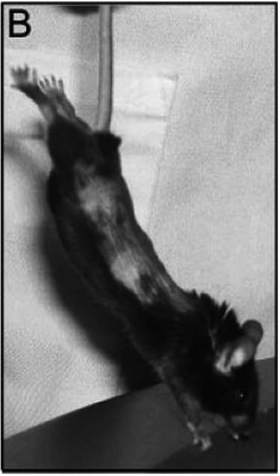
In the stretch group, the mice underwent stretching of the trunk for 10 min twice a day for 7 days in the following manner: each mouse was suspended by the tail such that its paws barely touched a surface slightly inclined relative to the vertical. In response to this maneuver, the mouse spontaneously extended its front and hind limbs (Fig. 1B) with the distance between ipsilateral hip and shoulder joints becoming 20–30% greater than the resting distance.

NIHMS173978.html

B: Method used to induce tissue stretch in vivo. Mice are suspended by the tail such that their paws barely touch a surface slightly inclined relative to the vertical. The mice spontaneously extend their front and hind limbs, the distance between ipsilateral hip and shoulder joints becoming 20–30% greater than the resting distance.

Effect of tissue stretch on TGF-β1 protein ex vivo. A: Time course of TGF-β1 protein levels in the culture media for non-stretched (closed circle, N = 4) and stretched (open circle, N = 4) mouse subcutaneous tissue explants on days 0, 1, and 3 post-stretch (or no stretch). All tissue samples were excised and incubated for 24h prior to day 0.B:Levels of TGF-β1 protein in the culture media at day 3 for non-stretched and stretched sbcutaneous tissue samples (N = 36). Asterisk (*) indicates significant difference from stretched (P = 0.002). Error bars represent standard errors.


Ex vivo tissue injury and cell viability assessment. A: Time course of LDH concentration in the culture media (marker of cell death) for non-stretched (closed circle, n = 4) and stretched (open circle, n = 4) mouse subcutaneous tissue explants on days 0, 1, and 3 post-stretch (or no stretch). B,C: Confocal microscopy imaging of mouse subcutaneous tissue explants showing similar proportions of live (green) and dead (red) cells in non-stretched (A) versus stretched (B) tissue after 3 day incubation post-stretch (or no stretch). Images are projections of three-dimensional image stacks. Scale bars: 40 μm.


Effect of tissue stretch in vivo on subcutaneous tissue Type-1 procollagen in mouse microinjury model. A: Mean ± SE procollagen percent staining area in non-injured versus injured sides, without stretch (N = 11) and with stretch (N = 10); B,C: Type-1 procollagen in non-stretched and stretched tissue (both injured). Scale bars, 40 μm.

First, stretching mouse subcutaneous tissue explants by 20% for 10 min decreases soluble TGF-β1 levels measured 3 days after stretch. During the 4-day incubation, TGF-β1 levels in the culture media increase in both stretched and non-stretched samples; because some tissue trauma occurs at the time of excision, this progressive rise in TGF-β1 is consistent with an injury response. However, the increase in the level of TGF-β1 is slower in the samples that are briefly stretched for 10 min, compared with samples that are not stretched. Since TGF-β1 auto-induction is an important mechanism driving the increase in collagen synthesis following tissue injury (Cutroneo, 2003), we hypothesized that brief stretching of tissue following injury in vivo would decrease soluble TGF-β1 levels, attenuate TGF-β1 auto-induction and decrease new collagen deposition.

Testing this hypothesis in a mouse subcutaneous tissue injury model showed that elongating the tissues of the trunk by 20–30% for 10 min twice a day significantly reduces the amount of subcutaneous new collagen 7 days following subcutaneous tissue injury.

Reducing scar and adhesion formation using stretch and mobilization is especially important for internal tissue injuries and inflammation involving fascia and organs, as opposed to open wounds. For open wounds (including surgical incisions) and severe internal tears (such as a ruptured ligament or tendon), wound closure and strength are critical and thus a certain amount of scarring is necessary and inevitable. In the case of minor sprains and repetitive motion injuries, however, scarring is mostly detrimental since it can contribute to maintaining the chronicity of tissue stiffness, abnormal movement patterns, and pain (Langevin and Sherman, 2007).

We have proposed that therapies that briefly stretch tissues beyond the habitual range of motion (physical therapy, massage, yoga, acupuncture) locally inhibit new collagen formation for several days after stretch and thus prevent and/or ameliorate soft tissue adhesions (Langevin et al., 2001, 2002, 2005, 2006a, 2007).


Proposed model for healing of connective tissue injury in the absence (A,C,E) and presence (B,D,F) of tissue stretch. In this model, brief stretching of tissue beyond the habitual range of motion reduces soluble TGF-β1 levels (D) causing a decrease in the fibrotic response, less collagen deposition, and reduced tissue adhesion (F) compared with no stretch (E). Black lines represent newly formed collagen.

Ukjent sin avatar

The fascia of the limbs and back – a review

Never det meste rundt bindevev: tensegritet, subcutan hud, skinligaments, stretching, ligamenter, nerver, m.m.

http://www.ncbi.nlm.nih.gov/pmc/articles/PMC2667913/

Fasciae probably hold many of the keys for understanding muscle action and musculoskeletal pain, and maybe of pivotal importance in understanding the basis of acupuncture and a wide range of alternative therapies (Langevin et al. 2001, 2002, 2006a; Langevin & Yandow, 2002; Iatridis et al. 2003). Intriguingly, Langevin et al. (2007) have shown that subtle differences in the way that acupuncture needles are manipulated can change how the cells in fascia respond. The continuum of connective tissue throughout the body, the mechanical role of fascia and the ability of fibroblasts to communicate with each other via gap junctions, mean that fascia is likely to serve as a body-wide mechanosensitive signaling system with an integrating function analogous to that of the nervous system (Langevin et al. 2004; Langevin, 2006). It is indeed a key component of a tensegrity system that operates at various levels throughout the body and which has been considered in detail by Lindsay (2008) in the context of fascia.

Anatomists have long distinguished between superficial and deep fascia (Fig. 1), although to many surgeons, ‘fascia’ is simply ‘deep fascia’. The superficial fascia is traditionally regarded as a layer of areolar connective or adipose tissue immediately beneath the skin, whereas deep fascia is a tougher, dense connective tissue continuous with it.


A diagrammatic representation of a transverse section through the upper part of the leg showing the relative positions of the superficial (SF) and deep fascia (DF) in relation to the skin (S) and muscles. Note how the deep fascia, in association with the bones [tibia (T) and fibula (F)] and intermuscular septa (IS) forms a series of osteofascial compartments housing the extensor, peroneal (PER) and flexor muscles. If pressure builds up within a compartment because of an acute or overuse injury, then the vascular supply to the muscles within it can be compromised and ischaemia results. ANT, anterior compartment; IM, interosseous membrane.

The presence of a significant layer of fat in the superficial fascia is a distinctive human trait (thepanniculus adiposus), compensating for the paucity of body hair. It thus plays an important role in heat insulation. In hairy mammals, the same fascia is typically an areolar tissue that allows the skin to be readily stripped from the underlying tissues (Le Gros Clark, 1945). Where fat is prominent in the superficial fascia (as in man), it may be organized into distinctive layers, or laminae (Johnston & Whillis, 1950), although Gardner et al. (1960) caution that these may sometimes be a characteristic of embalmed cadavers and not evident in the living person. Furthermore, Le Gros Clark (1945) also argues that fascial planes can be artefactually created by dissection. Conversely, however, some layers of deep fascia are more easily defined in fresh than in fixed cadavers (Lytle, 1979).

The superficial fascia conveys blood vessels and nerves to and from the skin and often promotes movement between the integument and underlying structures.

Skin mobility protects both the integument and the structures deep to it from physical damage. Mobility is promoted by multiple sheets of collagen fibres coupled with the presence of elastin (Kawamata et al. 2003). The relative independence of the collagen sheets from each other promotes skin sliding and further stretching is afforded by a re-alignment of collagen fibres within the lamellae. The skin is brought back to its original shape and position by elastic recoil when the deforming forces are removed. As Kawamata et al. (2003)point out, one of the consequences of the movement-promoting characteristics of the superficial fascia is that the blood vessels and nerves within it must run a tortuous route so that they can adapt to an altered position of the skin, relative to the deeper structures.

Although deep fascia elsewhere in the limbs is often not so tightly bound to the skin, nevertheless cutaneous ligaments extending from deep fascia to anchor the integument are much more widespread than generally recognized and serve to resist a wide variety of forces, including gravitational influences (Nash et al. 2004).

According to Bouffard et al. (2008), brief stretching decreases TGF-β1-mediated fibrillogenesis, which may be pertinent to the deployment of manual therapy techniques for reducing the risk of scarring/fibrosis after an injury. As Langevin et al. (2005) point out, such striking cell responses to mechanical load suggest changes in cell signaling, gene expression and cell-matrix adhesion.

In contrast, Schleip et al. (2007) have reported myofibroblasts in the rat lumbar fascia (a dense connective tissue). The cells can contract in vitro andSchleip et al. (2007) speculate that similar contractions in vivo may be strong enough to influence lower back mechanics. Although this is an intriguing suggestion that is worthy of further exploration, it should be noted that tendon cells immunolabel just as strongly for actin stress fibres as do fascial cells and this may be associated with tendon recovery from passive stretch (Ralphs et al. 2002). Finally, the reader should also note that true muscle fibres (both smooth and skeletal) can sometimes be found in fascia. Smooth muscle fibres form the dartos muscle in the superficial fascia of the scrotum and skeletal muscle fibres form the muscles of fascial expression in the superficial fascia of the head and neck.

Consequently, entheses are designed to reduce this stress concentration, and the anatomical adaptations for so doing are evident at the gross, histological and molecular levels. Thus many tendons and ligaments flare out at their attachment site to gain a wide grip on the bone and commonly have fascial expansions linking them with neighbouring structures. Perhaps the best known of these is the bicipital aponeurosis that extends from the tendon of the short head of biceps brachii to encircle the forearm flexor muscles and blend with the antebrachial deep fascia (Fig. 6). Eames et al. (2007) have suggested that this aponeurosis may stabilize the tendon of biceps brachii distally. In doing so, it reduces movement near the enthesis and thus stress concentration at that site.


The bicipital aponeurosis (BA) is a classic example of a fascial expansion which arises from a tendon (T) and dissipates some of the load away from its enthesis (E). It originates from that part of the tendon associated with the short head of biceps brachii (SHB) and blends with the deep fascia (DF) covering the muscles of the forearm. The presence of such an expansion at one end of the muscle only, means that the force transmitted through the proximal and distal tendons cannot be equal. LHB, long head of biceps brachii. Photograph courtesy of S. Milz and E. Kaiser.

Several reports suggest that fascia is richly innervated, and abundant free and encapsulated nerve endings (including Ruffini and Pacinian corpuscles) have been described at a number of sites, including the thoracolumbar fascia, the bicipital aponeurosis and various retinacula (Stilwell, 1957; Tanaka & Ito, 1977; Palmieri et al. 1986; Yahia et al. 1992; Sanchis-Alfonso & Rosello-Sastre, 2000; Stecco et al. 2007a).

Changes in innervation can occur pathologically in fascia, and Sanchis-Alfonso & Rosello-Sastre (2000) report the ingrowth of nociceptive fibres, immunoreactive to substance P, into the lateral knee retinaculum of patients with patello-femoral malignment problems.

Stecco et al. (2008) argue that the innervation of deep fascia should be considered in relation to its association with muscle. They point out, as others have as well (see below in ‘Functions of fascia’) that many muscles transfer their pull to fascial expansions as well as to tendons. By such means, parts of a particular fascia may be tensioned selectively so that a specific pattern of proprioceptors is activated.

It is worth noting therefore that Hagert et al. (2007) distinguish between ligaments at the wrist that are mechanically important yet poorly innervated, and ligaments with a key role in sensory perception that are richly innervated. There is a corresponding histological difference, with the sensory ligaments having more conspicuous loose connective tissue in their outer regions (in which the nerves are located). Comparable studies are not available for deep fascia, although Stecco et al. (2007a) report that the bicipital aponeurosis and the tendinous expansion of pectoralis major are both less heavily innervated than the fascia with which they fuse. Where nerves are abundant in ligaments, blood vessels are also prominent (Hagert et al. 2005). One would anticipate similar findings in deep fascia.

Some of the nerve fibres associated with fascia are adrenergic and likely to be involved in controlling local blood flow, but others may have a proprioceptive role. Curiously, however, Bednar et al. (1995)failed to find any nerve fibres in thoracolumbar fascia taken at surgery from patients with low back pain.

The unyielding character of the deep fascia enables it to serve as a means of containing and separating groups of muscles into relatively well-defined spaces called ‘compartments’.

One of the most influential anatomists of the 20th century, Professor Frederic Wood Jones, coined the term ‘ectoskeleton’ to capture the idea that fascia could serve as a significant site of muscle attachment – a ‘soft tissue skeleton’ complementing that created by the bones themselves (Wood Jones, 1944). It is clearly related to the modern-day concept of ‘myofascia’ that is popular with manual therapists and to the idea of myofascial force transmission within skeletal muscle, i.e. the view that force generated by skeletal muscle fibres is transmitted not only directly to the tendon, but also to connective tissue elements inside and outside the skeletal muscle itself (Huijing et al. 1998; Huijing, 1999).

One can even extend this idea to embrace the concept that agonists and antagonists are mechanically coupled via fascia (Huijing, 2007). Thus Huijing (2007) argues that forces generated within a prime mover may be exerted at the tendon of an antagonistic muscle and indeed that myofascial force transmission can occur between all muscles of a particular limb segment.

Wood Jones (1944) was particularly intrigued by the ectoskeletal function of fascia in the lower limb. He related this to man’s upright stance and thus to the importance of certain muscles gaining a generalized attachment to the lower limb when it is viewed as a whole weight-supporting column, rather than a series of levers promoting movement. He singled out gluteus maximus and tensor fascia latae as examples of muscles that attach predominantly to deep fascia rather than bone (Wood Jones, 1944).

They have argued that a common attachment to the thoracolumbar fascia means that the latter has an important role in integrating load transfer between different regions. In particular, Vleeming et al. (1995) have proposed that gluteus maximus and latissimus dorsi (two of the largest muscles of the body) contribute to co-ordinating the contralateral pendulum like motions of the upper and lower limbs that characterize running or swimming. They suggest that the muscles do so because of a shared attachment to the posterior layer of the thoracolumbar fascia. Others, too, have been attracted by the concept of muscle-integrating properties of fascia. Thus Barker et al. (2007) have argued for a mechanical link between transversus abdominis and movement in the segmental neutral zone of the back, via the thoracolumbar fascia. They feel that the existence of such fascial links gives an anatomical/biomechanical foundation to the practice in manual therapy of recommending exercises that provoke a submaximal contraction of transversus abdominis in the treatment of certain forms of low back pain.

An important function of deep fascia in the limbs is to act as a restraining envelope for muscles lying deep to them. When these muscles contract against a tough, thick and resistant fascia, the thin-walled veins and lymphatics within the muscles are squeezed and their unidirectional valves ensure that blood and lymph are directed towards the heart. Wood Jones (1944) contests that the importance of muscle pumping for venous and lymphatic return is one of the reasons why the deep fascia in the lower limb is generally more prominent than in the upper – because of the distance of the leg and foot below the heart.

In certain regions of the body, fascia has a protective function. Thus, the bicipital aponeurosis (lacertus fibrosus), a fascial expansion arising from the tendon of the short head of biceps brachii (Athwal et al. 2007), protects the underlying vessels. It also has mechanical influences on force transmission and stabilizes the tendon itself distally (Eames et al. 2007).

Ukjent sin avatar

om hvordan sittestilling påvirker kroppen

En gjennomgang av hvordan sitteposisjon og holdning påvirker kroppen.

http://www.dynamicchiropractic.ca/mpacms/dc_ca/article.php?id=56598

In order to assess the loads placed on a spine during various positions, Rohlmann, et al. (2011) looked at various seating positions.4 They found the implant force increased 48 percent for 15 degrees flexion and decreased 19 percent for 10 degrees extension of the trunk. Placing the hands on the thighs reduced the loads by 19 percent, on average, compared to having arms hanging at the sides.

Dreischarf, et al. (2010) also found that reduced spinal load during sitting can be achieved by supporting the upper body with the arms.5

A study by De Carvalho, et al. (2010) compared lumbar spine and pelvic posture between standing and sitting via radiologic investigation. Lumbar lordosis and sacral inclination decreased by 43 and 44 degrees, respectively.6 This shows that with respect to sitting posture, to goal should be to maintain or prevent a reduction of the lumbar lordosis.

One study found 40-percent higher cervical extensor activity in the slouched posture. More neutral sitting postures reduce the demand on the cervical extensor muscles.7 Education on maintaining a neutral sitting posture can offset the detrimental effects.

A study by Caneiro, et al. (2010) showed that slumped sitting was associated with greater head / neck flexion, and increased muscle activity of the cervical erector spinae.9 Adjustments to seat angle and lumbar roll can also significantly effect head and neck posture.

A study by Horton, et al. (2010) found that the degree of angulation of the backrest support of an office chair, plus the addition of a lumbar roll support, are the two most important seat factors that will benefit head and neck postural alignment.10

A study by Bullock, et al. (2005) looked at how sitting posture can affect range of motion and pain for those with shoulder impingement.11 An erect posture appeared to increase active shoulder flexion, although there was no difference in shoulder pain between an erect and slouched posture.

Finley, et al. (2003) found that an increased thoracic kyphosis from a slouched posture can significantly alter the kinematics of the scapula during humeral elevation.12

And Kebaetse, et al. (1999) found that a slouched posture is associated with a 16.2 percent reduction in arm horizontal muscle force.13

A recent study by Dunk, et al. (2009), out of the University of Waterloo, evaluated whether the intervertebral joints of the lumbosacral spine approach their end ranges of motion in a seated posture.15 In upright sitting, the L5-S1 intervertebral joint was flexed to more than 60 percent of its total range of motion. In a slouched posture, each of the lower three intervertebral joints approached their total flexion angles. This shows an increased loading of the passive tissues (time-dependent «creep»), which may contribute to low back pain from prolonged sitting.

A study by Reeve, et al. (2009) assessed the thickness of the TrA in various postural positions. Thickness was significantly greater in standing and erect sitting than in a slouched or sway-back standing position.16 The authors concluded that lumbopelvic neutral postures have a positive influence on spinal stability compared to equivalent poor postures.

A study by Claus, et al. (2009) looked at the effect of various postures on regional muscle activity.17 For the deep and superficial fibers of lumbar multifidus muscles, the least muscle activity occurred during a flat posture, which was similar to a slump posture. The most activity occurred in a short lordosis position; there was also more activity in the obliquus internus.

A study by Dolan, et al. (2006) provided evidence that a slouched posture of 5 minutes’ duration can increase reposition error.18 Proprioceptive control is known to be valuable in spinal stability. The fact that reposition error can occur within as little as 5 minutes of «slouched» posture suggests the importance of postural education in decreasing proprioceptive loss and injury.

Ukjent sin avatar

Om alt som er galt med fysio

Her er et fantastisk innlegg fra en fysioterapeut. Dette er så spot-on at han ble kalt inn på teppet av ledelsen på sitt undiversitet og forsøkt kneblet. De mente han burde ha ventet med å skrive slikt til han hadde minst 5 år mer erfaring. Noe som bare viser hvordan autoriteter mangler evne til fleksibilitet, og at såkalte evidensbaserte behandlingsformer ikke greier å tilpasse seg ny forskning. Fysioterapi henger 50 år etter. Jeg har samlet alle referansene for lettere tilgang.

http://blog.theravid.com/patient-care/redefining-evidence-ebp-in-experience-cut/

How does one justify the use of ultrasound when the biophysical (Baker et al 2001) and clinical (Robertson et al 2001) effects have been so thoroughly disproven?

Why are we still taught that we are molders of connective tissue, when the forces required to create plastic deformation of connective tissue ranges between 50 and 250 pounds of force (Threlkeld 1992)?

When are we going to accept the fact that our palpatory exams lack reliability (French et al 2000) (Lucas et al 2009)

and validity (Najm et al 2003) (Landel et al 2008) (Preece et al 2008)?

When will we stop telling students, colleagues, and patients that pain is related to their posture, muscle length, muscle strength, or biomechanics (Edmondston et al 2007) (Lewis et al 2005) (Nourbakhsh et al 2002)?

When will we cease blaming pain on something found on an image (Reilly et al 2006) (Beattie et al 2005) (Borenstein et al 2001)?

When will we stop thinking that we can change someone’s static posture with strengthening (Walker et al 1987) (Diveta et al 1990)?

When we teach these things to students and say them to our patients, it is misleading at best and fear inducing and hurtful at worst (Zusman 2012).

In My Experience”remain the three most dangerous words in medicine.

This is perhaps even doubly so in the world of physical therapy, given the litany of non-specific effects that go into a treatment encounter (Hall et al 2010) (Miciak et al 2012).

Physical therapists are in a unique position to make a significant impact on the burden of chronic pain, however, we fail to live up to our potential by holding onto a postural-structural-biomechanical model that has been proven ineffective and incorrect (Lederman 2011).

We need to familiarize ourselves with the work of people like Ronald Melzack, Patrick Wall, Louis Gifford, David Butler and Lorimer Moseley.