Ukjent sin avatar

Structure of the rat subcutaneous connective tissue in relation to its sliding mechanism.

Om hvordan bindevevet i huden beveger seg når man strekker huden. Nevner at nerver og blodårer har veldig svingete baner i huden, og at dette gjør at vi tåler mye strekk og bevegelse uten at disse strekkes eller ødelegges.

http://www.ncbi.nlm.nih.gov/pubmed/14527168/

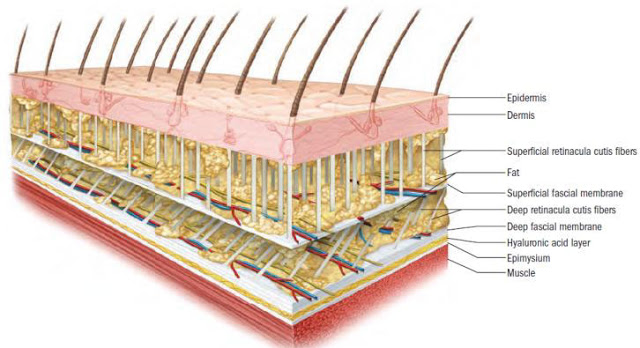
The subcutaneous connective tissue was observed to be composed of multiple layers of thin collagen sheets containing elastic fibers. These piled-up collagen sheets were loosely interconnected with each other, while the outer and inner sheets were respectively anchored to the dermis and epimysium by elastic fibers. Collagen fibers in each sheet were variable in diameter and oriented in different directions to form a thin, loose meshwork under conditions without mechanical stretching.

When a weak shear force was loaded between the skin and the underlying abdominal muscles, each collagen sheet slid considerably, resulting in a stretching of the elastic fibers which anchor these sheets. When a further shear force was loaded, collagen fibers in each sheet seemed to align in a more parallel manner to the direction of the tension. With the reduction or removal of the force, the arrangement of collagen fibers in each sheet was reversed and the collagen sheets returned to their original shapes and positions, probably with the stabilizing effect of elastic fibers.

Blood vessels and nerves in the subcutaneous connective tissue ran in tortuous routes in planes parallel to the unloaded skin, which seemed very adaptable for the movement of collagen sheets. These findings indicate that the subcutaneous connective tissue is extensively mobile due to the presence of multilayered collagen sheets which are maintained by elastic fibers.

Ukjent sin avatar

Immunohistochemical analysis of wrist ligament innervation in relation to their structural composition.

Nevner at noen ligamenter i håndleddethar mye innervasjon og er viktige for propriosepsjon, mens andre har ikke det. Sier at innervasjonen sitter helt ytterst i ligamentene. Nevner at det meste av innerverte ligamenter er på oversiden.

http://www.ncbi.nlm.nih.gov/pubmed/17218173/

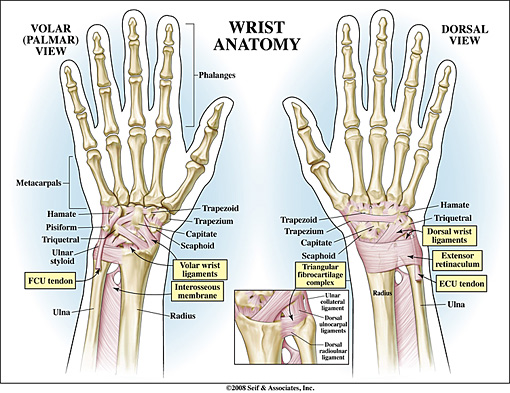
The innervation pattern in the ligaments was found to vary distinctly, with a pronounced innervation in the dorsal wrist ligaments (dorsal radiocarpal, dorsal intercarpal, scaphotriquetral, dorsal scapholunate interosseous), an intermediate innervation in the volar triquetral ligaments (palmar lunotriquetral interosseous, triquetrocapitate, triquetrohamate), and only limited/occasional innervation in the remaining volar wrist ligaments. The innervation pattern also was reflected in the structural differences between the ligaments.

When present, mechanoreceptors and nerve fibers were consistently found in the loose connective tissue in the outer region (epifascicular region) of the ligament. Hence, ligaments with abundant innervation had a large epifascicular region, as compared with the ligaments with limited innervation, which consisted mostly of densely packed collagen fibers.

The results of our study suggest that wrist ligaments vary with regard to sensory and biomechanical functions. Rather, based on the differences found in structural composition and innervation, wrist ligaments are regarded as either mechanically important ligaments or sensory important ligaments. The mechanically important ligaments are ligaments with densely packed collagen bundles and limited innervation. They are located primarily in the radial, force-bearing column of the wrist. The sensory important ligaments, by contrast, are richly innervated although less dense in connective tissue composition and are related to the triquetrum. The triquetrum and its ligamentous attachments are regarded as key elements in the generation of the proprioceptive information necessary for adequate neuromuscular wrist stabilization.

Ukjent sin avatar

The fascia of the limbs and back – a review

Never det meste rundt bindevev: tensegritet, subcutan hud, skinligaments, stretching, ligamenter, nerver, m.m.

http://www.ncbi.nlm.nih.gov/pmc/articles/PMC2667913/

Fasciae probably hold many of the keys for understanding muscle action and musculoskeletal pain, and maybe of pivotal importance in understanding the basis of acupuncture and a wide range of alternative therapies (Langevin et al. 2001, 2002, 2006a; Langevin & Yandow, 2002; Iatridis et al. 2003). Intriguingly, Langevin et al. (2007) have shown that subtle differences in the way that acupuncture needles are manipulated can change how the cells in fascia respond. The continuum of connective tissue throughout the body, the mechanical role of fascia and the ability of fibroblasts to communicate with each other via gap junctions, mean that fascia is likely to serve as a body-wide mechanosensitive signaling system with an integrating function analogous to that of the nervous system (Langevin et al. 2004; Langevin, 2006). It is indeed a key component of a tensegrity system that operates at various levels throughout the body and which has been considered in detail by Lindsay (2008) in the context of fascia.

Anatomists have long distinguished between superficial and deep fascia (Fig. 1), although to many surgeons, ‘fascia’ is simply ‘deep fascia’. The superficial fascia is traditionally regarded as a layer of areolar connective or adipose tissue immediately beneath the skin, whereas deep fascia is a tougher, dense connective tissue continuous with it.


A diagrammatic representation of a transverse section through the upper part of the leg showing the relative positions of the superficial (SF) and deep fascia (DF) in relation to the skin (S) and muscles. Note how the deep fascia, in association with the bones [tibia (T) and fibula (F)] and intermuscular septa (IS) forms a series of osteofascial compartments housing the extensor, peroneal (PER) and flexor muscles. If pressure builds up within a compartment because of an acute or overuse injury, then the vascular supply to the muscles within it can be compromised and ischaemia results. ANT, anterior compartment; IM, interosseous membrane.

The presence of a significant layer of fat in the superficial fascia is a distinctive human trait (thepanniculus adiposus), compensating for the paucity of body hair. It thus plays an important role in heat insulation. In hairy mammals, the same fascia is typically an areolar tissue that allows the skin to be readily stripped from the underlying tissues (Le Gros Clark, 1945). Where fat is prominent in the superficial fascia (as in man), it may be organized into distinctive layers, or laminae (Johnston & Whillis, 1950), although Gardner et al. (1960) caution that these may sometimes be a characteristic of embalmed cadavers and not evident in the living person. Furthermore, Le Gros Clark (1945) also argues that fascial planes can be artefactually created by dissection. Conversely, however, some layers of deep fascia are more easily defined in fresh than in fixed cadavers (Lytle, 1979).

The superficial fascia conveys blood vessels and nerves to and from the skin and often promotes movement between the integument and underlying structures.

Skin mobility protects both the integument and the structures deep to it from physical damage. Mobility is promoted by multiple sheets of collagen fibres coupled with the presence of elastin (Kawamata et al. 2003). The relative independence of the collagen sheets from each other promotes skin sliding and further stretching is afforded by a re-alignment of collagen fibres within the lamellae. The skin is brought back to its original shape and position by elastic recoil when the deforming forces are removed. As Kawamata et al. (2003)point out, one of the consequences of the movement-promoting characteristics of the superficial fascia is that the blood vessels and nerves within it must run a tortuous route so that they can adapt to an altered position of the skin, relative to the deeper structures.

Although deep fascia elsewhere in the limbs is often not so tightly bound to the skin, nevertheless cutaneous ligaments extending from deep fascia to anchor the integument are much more widespread than generally recognized and serve to resist a wide variety of forces, including gravitational influences (Nash et al. 2004).

According to Bouffard et al. (2008), brief stretching decreases TGF-β1-mediated fibrillogenesis, which may be pertinent to the deployment of manual therapy techniques for reducing the risk of scarring/fibrosis after an injury. As Langevin et al. (2005) point out, such striking cell responses to mechanical load suggest changes in cell signaling, gene expression and cell-matrix adhesion.

In contrast, Schleip et al. (2007) have reported myofibroblasts in the rat lumbar fascia (a dense connective tissue). The cells can contract in vitro andSchleip et al. (2007) speculate that similar contractions in vivo may be strong enough to influence lower back mechanics. Although this is an intriguing suggestion that is worthy of further exploration, it should be noted that tendon cells immunolabel just as strongly for actin stress fibres as do fascial cells and this may be associated with tendon recovery from passive stretch (Ralphs et al. 2002). Finally, the reader should also note that true muscle fibres (both smooth and skeletal) can sometimes be found in fascia. Smooth muscle fibres form the dartos muscle in the superficial fascia of the scrotum and skeletal muscle fibres form the muscles of fascial expression in the superficial fascia of the head and neck.

Consequently, entheses are designed to reduce this stress concentration, and the anatomical adaptations for so doing are evident at the gross, histological and molecular levels. Thus many tendons and ligaments flare out at their attachment site to gain a wide grip on the bone and commonly have fascial expansions linking them with neighbouring structures. Perhaps the best known of these is the bicipital aponeurosis that extends from the tendon of the short head of biceps brachii to encircle the forearm flexor muscles and blend with the antebrachial deep fascia (Fig. 6). Eames et al. (2007) have suggested that this aponeurosis may stabilize the tendon of biceps brachii distally. In doing so, it reduces movement near the enthesis and thus stress concentration at that site.


The bicipital aponeurosis (BA) is a classic example of a fascial expansion which arises from a tendon (T) and dissipates some of the load away from its enthesis (E). It originates from that part of the tendon associated with the short head of biceps brachii (SHB) and blends with the deep fascia (DF) covering the muscles of the forearm. The presence of such an expansion at one end of the muscle only, means that the force transmitted through the proximal and distal tendons cannot be equal. LHB, long head of biceps brachii. Photograph courtesy of S. Milz and E. Kaiser.

Several reports suggest that fascia is richly innervated, and abundant free and encapsulated nerve endings (including Ruffini and Pacinian corpuscles) have been described at a number of sites, including the thoracolumbar fascia, the bicipital aponeurosis and various retinacula (Stilwell, 1957; Tanaka & Ito, 1977; Palmieri et al. 1986; Yahia et al. 1992; Sanchis-Alfonso & Rosello-Sastre, 2000; Stecco et al. 2007a).

Changes in innervation can occur pathologically in fascia, and Sanchis-Alfonso & Rosello-Sastre (2000) report the ingrowth of nociceptive fibres, immunoreactive to substance P, into the lateral knee retinaculum of patients with patello-femoral malignment problems.

Stecco et al. (2008) argue that the innervation of deep fascia should be considered in relation to its association with muscle. They point out, as others have as well (see below in ‘Functions of fascia’) that many muscles transfer their pull to fascial expansions as well as to tendons. By such means, parts of a particular fascia may be tensioned selectively so that a specific pattern of proprioceptors is activated.

It is worth noting therefore that Hagert et al. (2007) distinguish between ligaments at the wrist that are mechanically important yet poorly innervated, and ligaments with a key role in sensory perception that are richly innervated. There is a corresponding histological difference, with the sensory ligaments having more conspicuous loose connective tissue in their outer regions (in which the nerves are located). Comparable studies are not available for deep fascia, although Stecco et al. (2007a) report that the bicipital aponeurosis and the tendinous expansion of pectoralis major are both less heavily innervated than the fascia with which they fuse. Where nerves are abundant in ligaments, blood vessels are also prominent (Hagert et al. 2005). One would anticipate similar findings in deep fascia.

Some of the nerve fibres associated with fascia are adrenergic and likely to be involved in controlling local blood flow, but others may have a proprioceptive role. Curiously, however, Bednar et al. (1995)failed to find any nerve fibres in thoracolumbar fascia taken at surgery from patients with low back pain.

The unyielding character of the deep fascia enables it to serve as a means of containing and separating groups of muscles into relatively well-defined spaces called ‘compartments’.

One of the most influential anatomists of the 20th century, Professor Frederic Wood Jones, coined the term ‘ectoskeleton’ to capture the idea that fascia could serve as a significant site of muscle attachment – a ‘soft tissue skeleton’ complementing that created by the bones themselves (Wood Jones, 1944). It is clearly related to the modern-day concept of ‘myofascia’ that is popular with manual therapists and to the idea of myofascial force transmission within skeletal muscle, i.e. the view that force generated by skeletal muscle fibres is transmitted not only directly to the tendon, but also to connective tissue elements inside and outside the skeletal muscle itself (Huijing et al. 1998; Huijing, 1999).

One can even extend this idea to embrace the concept that agonists and antagonists are mechanically coupled via fascia (Huijing, 2007). Thus Huijing (2007) argues that forces generated within a prime mover may be exerted at the tendon of an antagonistic muscle and indeed that myofascial force transmission can occur between all muscles of a particular limb segment.

Wood Jones (1944) was particularly intrigued by the ectoskeletal function of fascia in the lower limb. He related this to man’s upright stance and thus to the importance of certain muscles gaining a generalized attachment to the lower limb when it is viewed as a whole weight-supporting column, rather than a series of levers promoting movement. He singled out gluteus maximus and tensor fascia latae as examples of muscles that attach predominantly to deep fascia rather than bone (Wood Jones, 1944).

They have argued that a common attachment to the thoracolumbar fascia means that the latter has an important role in integrating load transfer between different regions. In particular, Vleeming et al. (1995) have proposed that gluteus maximus and latissimus dorsi (two of the largest muscles of the body) contribute to co-ordinating the contralateral pendulum like motions of the upper and lower limbs that characterize running or swimming. They suggest that the muscles do so because of a shared attachment to the posterior layer of the thoracolumbar fascia. Others, too, have been attracted by the concept of muscle-integrating properties of fascia. Thus Barker et al. (2007) have argued for a mechanical link between transversus abdominis and movement in the segmental neutral zone of the back, via the thoracolumbar fascia. They feel that the existence of such fascial links gives an anatomical/biomechanical foundation to the practice in manual therapy of recommending exercises that provoke a submaximal contraction of transversus abdominis in the treatment of certain forms of low back pain.

An important function of deep fascia in the limbs is to act as a restraining envelope for muscles lying deep to them. When these muscles contract against a tough, thick and resistant fascia, the thin-walled veins and lymphatics within the muscles are squeezed and their unidirectional valves ensure that blood and lymph are directed towards the heart. Wood Jones (1944) contests that the importance of muscle pumping for venous and lymphatic return is one of the reasons why the deep fascia in the lower limb is generally more prominent than in the upper – because of the distance of the leg and foot below the heart.

In certain regions of the body, fascia has a protective function. Thus, the bicipital aponeurosis (lacertus fibrosus), a fascial expansion arising from the tendon of the short head of biceps brachii (Athwal et al. 2007), protects the underlying vessels. It also has mechanical influences on force transmission and stabilizes the tendon itself distally (Eames et al. 2007).

Ukjent sin avatar

Sensory innervation of the thoracolumbar fascia in rats and humans.

Studie som viser innervasjon av korsryggbindevev og påpeker at det er kun det ytre laget av bindevevet, det som er helt inn mot huden, som er tettpakket med sensoriske nerver og nociceptive fibre (som utskiller substans P og CGRP, og gir betennelser). De dypere lagene i midten av bindevevet eller ned mot musklene har nesten ingen nerveender eller sansesmuligheter.

http://www.ncbi.nlm.nih.gov/pubmed/21839150

Hele studien i min dropbox.

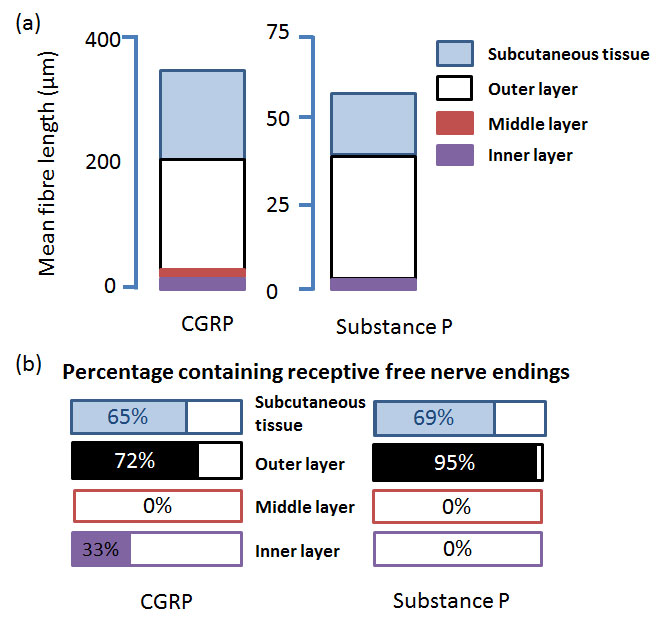
The subcutaneous tissue and the outer layer showed a particularly dense innervation with sensory fibers. SP-positive free nerve endings-which are assumed to be nociceptive-were exclusively found in these layers. Because of its dense sensory innervation, including presumably nociceptive fibers, the TLF may play an important role in low back pain.


Fig. 1. Structure of the rat thoracolumbar fascia (TLF) close to the spinous processes L4/L5. (a) Transversal section showing the three layers of the TLF (hematoxylin and eosin staining): OL, outer layer with transversely oriented collagen fibers; ML, middle layer composed of collagen fiber bundles oriented diagonally to the long axis of the body; IL, inner layer of loose connective tissue covering the multifidus muscle (muscle). SCT, subcutaneous tissue. (b) PGP 9.5-ir nerve fibers in the layers of the TLF. Black arrows, fibers on passage; open arrows, nerve endings. (c) Mean fiber length of PGP 9.5-ir fibers in the TLF. The great majority of all fibers were located in the outer layer (OL) of the fascia and in the subcutaneous tissue (SCT). White part of the bar: subcutaneous tissue plus outer layer of the TLF; black: middle layer; hatched: inner layer. n, number of sections evaluated.


Fig. 4. Distribution of CGRP and Substance P (SP)-immunoreactive nerve fibers in the TLF. (a) Mean fiber length of CGRP-ir nerve fibers. (b) Mean fiber length of SP-ir nerve fibers. Almost all fibers were found in the outer layer of the fascia and the subcutaneous tissue. The middle layer was free of SP-positive fibers. Gray part of the bars: subcutaneous tissue; white: outer layer of the TLF; black: middle layer; hatched: inner layer. n=number of sections evaluated. (c, d) Distribution of CGRP- (c) and SP-containing receptive free nerve endings (d) expressed as percent of the total number of CGRP- or SP-containing fibers in each layer. For classification as receptive endings, the structures had to exhibit at least three varicosities. SP-containing free nerve endings were restricted to the outer layer of the thoracolumbar fascia and the subcutaneous connective tissue while CGRP-containing free nerve endings were also found in the inner layer of the thoracolumbar fascia.

Og et bilde av de forskjellige bindevevslagene som er nevnt i denne studien.

Our study demonstrates that the rat TLF and the SCT overlying the fascia are densely innervated tissues, and therefore both the TLF and SCT, may play a role in low back pain. Most nerve fibers are located in the OL of the TLF and in the SCT, whereas in the ML nerve fibers are rare. Actually, no SP-ir fibers were found in this layer. Teleologically, the lack of fibers in the ML, particularly those containing SP, makes sense because each move- ment of the body causes shearing forces between the collagen fiber bundles, which might excite nociceptors.

Ukjent sin avatar

Undervisning om nervekompresjon nevropati og kirurgi i armen

Nervekompresjon begynner i en mild variant, hvor myelinlaget rundt nervene fortsatt er tykt og fint. Blodsirkulasjonen hemmes. Smerter og paraestesier kommer og går. Tinels tegn er negativt tidlig i progresjonen. Scratch-Collapse Test viser hvor i nervebanen det er kompresjonproblemer(f.eks. doublecrush syndrome).

Blir moderat, hvor myelinlaget blir tynt. Det blir hevelse i nerven og bindevevet blir tykkere i området. Smerter er konstante og musklene svekkes. Det tar 3-4 mnd å bygge opp myelinlaget igjen når kompresjonen er rettet opp.

Og alvorlig, hvor myelinlaget er borte. Nervetrådene forvinner mer og mer. Atrofi og nummenhet i musklene. Når kompresjonen er borte repareres nerven ca.3 cm i måneden.

http://prezi.com/mjuaxe0cwwbr/?utm_campaign=share&utm_medium=copy&rc=ex0share

Ukjent sin avatar

Om alt som er galt med fysio

Her er et fantastisk innlegg fra en fysioterapeut. Dette er så spot-on at han ble kalt inn på teppet av ledelsen på sitt undiversitet og forsøkt kneblet. De mente han burde ha ventet med å skrive slikt til han hadde minst 5 år mer erfaring. Noe som bare viser hvordan autoriteter mangler evne til fleksibilitet, og at såkalte evidensbaserte behandlingsformer ikke greier å tilpasse seg ny forskning. Fysioterapi henger 50 år etter. Jeg har samlet alle referansene for lettere tilgang.

http://blog.theravid.com/patient-care/redefining-evidence-ebp-in-experience-cut/

How does one justify the use of ultrasound when the biophysical (Baker et al 2001) and clinical (Robertson et al 2001) effects have been so thoroughly disproven?

Why are we still taught that we are molders of connective tissue, when the forces required to create plastic deformation of connective tissue ranges between 50 and 250 pounds of force (Threlkeld 1992)?

When are we going to accept the fact that our palpatory exams lack reliability (French et al 2000) (Lucas et al 2009)

and validity (Najm et al 2003) (Landel et al 2008) (Preece et al 2008)?

When will we stop telling students, colleagues, and patients that pain is related to their posture, muscle length, muscle strength, or biomechanics (Edmondston et al 2007) (Lewis et al 2005) (Nourbakhsh et al 2002)?

When will we cease blaming pain on something found on an image (Reilly et al 2006) (Beattie et al 2005) (Borenstein et al 2001)?

When will we stop thinking that we can change someone’s static posture with strengthening (Walker et al 1987) (Diveta et al 1990)?

When we teach these things to students and say them to our patients, it is misleading at best and fear inducing and hurtful at worst (Zusman 2012).

In My Experience”remain the three most dangerous words in medicine.

This is perhaps even doubly so in the world of physical therapy, given the litany of non-specific effects that go into a treatment encounter (Hall et al 2010) (Miciak et al 2012).

Physical therapists are in a unique position to make a significant impact on the burden of chronic pain, however, we fail to live up to our potential by holding onto a postural-structural-biomechanical model that has been proven ineffective and incorrect (Lederman 2011).

We need to familiarize ourselves with the work of people like Ronald Melzack, Patrick Wall, Louis Gifford, David Butler and Lorimer Moseley.

Ukjent sin avatar

The fascia: the forgotten structure.

Nyeste oppdateringen om bindevet her, som gir en klar definisjon av hva det faktisk er. Nevner forholdet mellom superficial og deep facia.

Dropbox fil her: https://dl.dropboxusercontent.com/u/17457302/Forskning%20mappe%20for%20terapi/The%20fascia%20-%20the%20forgotten%20structure.pdfAbstract: http://www.ncbi.nlm.nih.gov/pubmed/22852442

In 1987, Myers wrote: “the traditional approach that studies the muscles as inde- pendent units, has been a barrier to understand the bigger picture of fascial func- tion”. Indeed, the whole musculoskeletal system is usually studied only with respect to its bone and muscle components, the fasciae being traditionally relegated to the role of deftly holding ‘parts’ together.

It is increasingly evident that the fasciae may play important roles in venous return (Caggiati, 2000), dissipation of tensional stress concentrated at the sites of entheses (Benjiamin et al., 2008), etiology of pain (Langevin et al., 2001; Langevin, 2006), interactions among limb muscles (Huijing et al., 1998; Huijing, 1999; Huijing and Baan, 2001a,b; Yucesoy et al., 2006) and movement perception and coordina- tion (Vleeming et al., 1995, 1996; Stecco L., 1996, 2004; Stecco L. and Stecco C., 2009), due to their unique mechanical properties and rich innervation. Huijing et al. (2003) showed that only 70% of muscle tension transmission is directed through tendons, which thus definitely play a mechanical role, but 30% of muscle force is transmitted to the connective tissue surrounding muscles, highlighting the role of the deep fasciae in the peripheral coordination of agonist, antagonist and synergic muscles. The many functions of the fasciae include the roles of the ectoskeleton for muscle attachments and protective sheets for underlying structures (Wood Jones, 1944; Benjiamin, 2009). Lastly, recent studies have emphasized the continuity of the fascial system between regions, leading to presume its role as a body-wide proprioceptive/communicating organ (Langevin, 2006; Langevin et al., 2006; Lindsay, 2008; Kassolik et al., 2009).

This ample list of functions partly also derives from the fact that the term ‘fas- cia’ has been applied to a large number of very different tissues, ranging from well- defined anatomical structures, such as the fascia lata, thoracolumbar fascia, plantar and palmar fasciae, and cervical and clavipectoral fasciae, to the loose packing tissues which surround all the moving structures within the body. In fact, according to the American Heritage Stedman’s Medical Dictionary (2007), a fascia is “a sheet or band of fibrous connective tissue enveloping, separating, or binding together muscles, organs, and other soft structures of the body”, so that only the well-defined fibrous connective tissue layers may appropriately be called “fascia”, and it is consequently incorrect to use this term to mean all the connective tissue of the body.

Functionally, the superficial fascia may play a role in the integrity of the skin and support for subcutaneous structures, particularly veins, by ensuring their patency.

The deep fascia is a fibrous membrane forming an intricate network which envel- ops and separates muscles, forms sheaths for nerves and vessels, strengthens liga- ments around joints, and binds all the structures together into a firm compact mass. The deep fasciae envelop all the muscles of the body, but have different features according to region.

Under the deep fascia, the muscles are free to slide because of their epimysium. Loose connective tissue rich in hyaluronic acid lies between the epimysium and the deep fasciae (McCombe et al., 2001).

In the last few years, several studies have demonstrated the presence of many free, encapsulated nerve endings, particularly Ruffini and Pacini corpuscles, inside the deep fasciae (Stilwell, 1957; Yahia et al., 1992; Stecco C. et al., 2007), although dif- ferences exist according to the different regions; retinacula seem to be the most highly innervated structures. Analysis of the relationship between these nerve endings and the surrounding fibrous tissue shows that the corpuscle capsules and free nerve end- ings are closely connected to the surrounding collagen fibers, indicating that these nerve endings may be stretched, and thus activated, every time the surrounding deep fascia is stretched.

Some recent studies have reported possi- ble alterations of the retinacula (Demondion et al., 2010), particularly in ankle sprain outcomes (Stecco A. et al., 2011), in that they sometimes show more intense signal ascribable to local edema and inflammation; in patellofemoral malalignment, the medial and lateral retinacula of the knee show different thicknesses and/or degrees of tension. Despite these data, the fascial system is usually not analysed, by either radiologists or surgeons, and only a few papers report the visualization of possible alterations of the fasciae.

Ukjent sin avatar

Investigation of the mechanical properties of the human crural fascia and their possible clinical implications.

Om at bindevevet kan endres med stretching over 120s, og kan dermed redusere sitt «stress» med 40%.

http://www.ncbi.nlm.nih.gov/pubmed/23793789

The stress relaxation tests showed that the crural fascia needs 120 s to decrease stress of 40 %, suggesting a similar time also in the living so that the static stretching could have an effect on the fascia

Ukjent sin avatar

Inflammation and the pathophysiology of work-related musculoskeletal disorders

Viktig studie om betennelse og hvordan det påvirker muskler og annet vev i kroppen. Nevner gangen i prosessen: repetitiv muskelsammentrekning, økning i betennelsesfaktorer for å reprere, manglende restitusjon, økning i fibrøst vev (arrvev), kompresjon på nerver, myalgi, økt temperament, osv. Nevner også hvordan betennelser påvirker psyken; depresjon, nedsatt seksuallyst, tilbaketrekning, smerter, m.m. IL-6 gir utmattelse.

Den beskriver hvordan cytokiner sprøytet inn i mus gir «sickness behaviour» og hyperalgesi (økt smertesensitivitet). Studien her forholder seg mest til betennelser som følge av repetitive bevegelser, men dette utsagnet vil også tilsi at kosthold som øker pro-inflammatoriske cytokiner kan bidra til hyperalgesi.

http://www.ncbi.nlm.nih.gov/pmc/articles/PMC1552097/

Results from several clinical and experimental studies indicate that tissue microtraumas occur as a consequence of performing repetitive and/or forceful tasks, and that this mechanical tissue injury leads to local and perhaps even systemic inflammation, followed by fibrotic and structural tissue changes.

We also propose a conceptual framework suggesting the potential roles that inflammation may play in these disorders, and how inflammation may contribute to pain, motor dysfunction, and to puzzling psychological symptoms that are often characteristic of patients with work-related MSDs.

Several recent clinical and experimental studies have been published indicating that inflammation plays a role in the development of tissue pathologies associated with these chronic disorders.

The US Department of Labor defines work-related MSDs as injuries or disorders of the muscles, nerves, tendons, joints, cartilage, and spinal discs associated with exposure to risk factors in the workplace. MSDs include sprains, strains, tears, back pain, soreness, pain, carpal tunnel syndrome, musculoskeletal system, or connective tissue diseases and disorders, when the event or exposure leading to the injury or illness is bodily reaction/bending, climbing, crawling, reaching, twisting; overexertion; or repetition (Bureau of Labor Statistics, 2005). Several risk factors are associated with the development or exacerbation of MSDs in the workplace, including physical, biomechanical, individual predisposition, and psychosocial conditions.

Psychosocial risk factors in the workplace also contribute to MSDs. These factors are associated with levels of workplace stress, such as job content and demands, job control, and social support (National Research Council, 2001). Non-workplace factors may also contribute to the development and exacerbation of MSDs, such as similar physical or high stress levels in the home. Certain past or present medical conditions also represent comorbid risk factors for MSDs (National Research Council, 2001).

Examples include past traumatic injury to the affected body part, systemic diseases that affect the musculoskeletal system, and diseases/disorders of the circulatory system. Women appear more susceptible than men to the development of MSDs, although this is highly industry-dependent. Advanced age or obesity may increase the impact of other risk factors on the severity of MSDs (National Research Council, 2001).

Musculotendinous injuries resulting from performing repetitive and/or forceful tasks are due to repeated overstretch, compression, friction, ischemia, and overexertion. We hypothesize that these injuries lead initially to an inflammatory response (Fig. 1). While the ultimate outcome of inflammation is to replace or repair injured tissues with healthy, regenerated tissue, Copstead and Banadki, 2000, when continued task performance is superimposed upon injured and inflamed tissue a vicious cycle of injury, chronic or systemic inflammation, fibrosis, and perhaps even tissue breakdown may occur. The end result is often pain and loss of motor function.


Schematic diagram showing three primary pathways hypothesized to lead to work-related musculoskeletal disorders caused by repetitive and/or forceful hand-intensive tasks: CNS reorganization (reviewed in Barr et al., 2004), tissue injury, or tissue reorganization.

Hirata et al. (2005) divided patients into symptom duration groups (<3, 4-7, 8-12, and >12 months).

  • Edematous changes were found in these tissues in patients of ❤ month duration.
  • Prostaglandin E2 (PGE2) and vascular endothelial growth factor (VEGF) were increased in patients of 4-7 month symptom duration,
  • while fibrotic changes were present in patients of longer symptom duration (>7 months).

PGE2 is a factor believed to cause vasodilation, edema, and enhancement of cytokines that induce synoviocyte proliferation, while VEGF is associated with endothelial and vascular smooth muscle cell proliferation during chronic inflammation. In Hirata’s study, both molecules peak in the intermediate phase (4-7 months) of CTS-induced tendosynovial changes and appear to contribute to tissue remodeling. Hirata postulates that since PGE2 is thought to regulate the production of several molecules, that it may regulate VEGF production in tenosynovium.

The increase in IL-6 is interesting. IL-6 has both inflammatory and anti-inflammatory properties, the latter primarily to suppress low-grade inflammation (Biffl et al., 1996). IL-6 is a tightly regulated cytokine normally not detectable in serum unless there is trauma, infection, or cellular stress, at which time IL-6 is an early cytokine responder. Pro-inflammatory effects of IL-6 include induction of cell growth and proliferation, and acute-phase responses, while its anti-inflammatory actions include inducing increases in serum IL-1 receptor antagonist and soluble TNF receptor (Biffl et al., 1996).

Trapezius muscle biopsies from male and female workers with either continuous or intermittent trapezius myalgia of at least 12 months duration show evidence of myopathic changes such as moth eaten and ragged, red type I muscle fibers, increased frequency of type II myofibers and atrophic myofibers consistent with muscle injury, and denervation/ischemic loss of muscle fibers, but no evidence of inflammation (Larsson et al., 2001). In contrast, Dennet and Fry (1988) examining the first dorsal interosseous muscle collected from 29 patients with painful chronic overuse syndrome found increased inflammatory cells as well as myopathic changes.

The first study, by Freeland et al. (2002) detected increased serum malondialdehyde, an indicator of cell stress, in patients with carpal tunnel syndrome, but no serum increases in PGE2, IL-1, or IL-6.

A recent study by Kuiper et al. (2005), examined serum for biomarkers of collagen synthesis and degradation (but not for biomarkers of injury or inflammation) in construction workers involved in heavy manual materials handling. Both collagen synthesis and degradation products were increased in workers involved in heavy manual tasks, although the overall ratio of synthesis to degradation products remained the same as in sedentary workers. Kuiper’s results suggest that tissues undergo adaptive growth responses that protect them from unresolved degradation.

In the third study, elevated plasma fibrinogen were present in subjects with low job control, linking perceived job stress with a biomarker of chronic inflammation (Clays et al., 2005).

a recently submitted study from our lab found increased pro-inflammatory cytokines in serum of patients with moderate and severe work-related MSD.

Archambault et al. (1997) observed hypercellularity, inflammatory cells, increased inflammatory cytokines, and increased mRNA of matrix molecules in the tendon by 6-8 weeks. When the kicking protocol was prolonged to 11 weeks, the inflammatory responses were apparently resolved. Instead, matrix reorganization processes, such as increased mRNA for collagen type III and matrix metalloproteinases, were observed (Archambault et al., 2001). Thus, in the higher demand kicking task, inflammation and tissue pathology were simultaneously present, while in the lower demand kicking task, inflammation preceeded matrix reorganization which may be a beneficial adaptive reorganization since no necrosis was observed.

In a series of studies, they report evidence of inflammation and angiogenesis (hypercellularity; increased COX-2 and VEGF mRNA) after 4 weeks of running at a rate of 17 m/min on a decline, 1 h/day for 5 days/week. These changes persisted through 16 weeks. They also found tendon thickening and reduced biomechanical tissue tolerance, changes that increased with continued exposure. Thus, repetitive tendon overuse is associated with inflammation. The tendon tissue is unable to launch a successful healing response due to continued use, and becomes fibrotic and structurally damaged.

These dose-dependent findings are similar to our recently submitted human study in which a systemic inflammatory mediator/marker response was greater in patients with moderate and severe MSD compared to mild.

In MSD, the primary causes of peripheral nerve trauma are over-stretch and compression of neuronal tissues during excursion (reviewed in Barr et al., 2004).

Animal models of chronic nerve constriction injury using ligatures show that chronic compression leads to an upregulation of intraneural inflammatory cytokines, fibrosis, Schwann cell death, axonal demyelination, and declines in electrophysiological function.
In our rat model, we found decreased nerve conduction velocity (NCV) in the median nerve at the wrist. By week 10 in HRLF rats, there was a small (9%) but significant decrease in NCV (Clark et al., 2003), demonstrating that nerve injury accumulates with continued task performance and leads to a clinically relevant loss of nerve function.

The association of motor behavioral changes with tissue changes in both our and Messner’s studies indicates that functional declines accompany tissue injury, inflammation and fibrosis/degeneration.

The psychoneuroimmunological effects of pro-inflammatory cytokines, specifically IL-1β, TNF-α, and IL-6, have been extensively studied in humans and in animal models over the past decade for their contribution to a constellation of physiological and behavioral responses known collectively as the “sickness behaviors”. This response includes fever, weakness, listlessness, hyperalgesia, allodynia, decreased social interaction and exploration, somnolence, decreased sexual activity, and decreased food and water intake (amply reviewed by Capuron and Dantzer, 2003Wieseler-Frank et al., 2005). Sickness behaviors can be induced by administration of exogenous cytokines to animals, whether the cytokines were injected peripherally or centrally. One mechanism of action, the immune-to-brain communication through activation of brain and spinal cord glial cells was reviewed by Wieseler-Frank et al. (2005). Activation of CNS glia and subsequent production of inflammatory cytokines can lead to hyperalgesia.

Cohen et al. (1997) have also speculated that the elevation of serum IL-6 produces fatigue, which then may be responsible for decreases in an individual’s ability to perform functionally. The possibility for patients with chronic inflammatory conditions to succumb to the depressive effects of local and systemic pro-inflammatory cytokines has implications in the management of overuse MSDs.

Symptoms of depression, anxiety, heightened job stress, more anger with their employer, higher pain ratings, greater reactivity to pain, enhanced feelings of being overwhelmed by pain, and low confidence in problem solving abilities have been reported in numerous epidemiological and clinical studies of patients with MSDs (Clays et al., 2005Gold et al., 2006Shaw et al., 2002).

We hypothesize that performance of repetitive and/or forceful tasks may induce MSDs through three primary pathways: (1) CNS reorganization, (2) tissue injury, and (3) tissue reorganization.

The extent of these changes is dependent on task exposure (duration and level). A systemic response may be stimulated by cytokines released into the blood stream by injured tissues and immune cells. Circulating cytokines can stimulate global responses such as widespread increase in macrophages, local and distant tissue sensitization, and perhaps the induction of sickness behaviors, depression or anxiety, as may cytokine elevation in peripheral nerve tissues.

Ukjent sin avatar

Pathophysiology of Nerve Compression Syndromes: Response of Peripheral Nerves to Loading

Om nerve compression syndrome, som sannsynligvis er årsaken til de fleste plager folk kommer til behandling for. Nevner hvordan nervevev påvirkes i løpet av timer, dager og uker. Nevner de 3 gradene av kompresjon og hvilke symptomer de gir.

http://ergo.berkeley.edu/docs/1999rempeljbjs.pdf

Nerve compression syndromes involve peripheral- nerve dysfunction that is due to localized interference of microvascular function and structural changes in the nerve or adjacent tissues.

When tissues are subjected to load or pressure, they deform and pressure gradients are formed, redistribut- ing the compressed tissue toward areas of lower pres- sure. Nerve compression syndromes usually occur at sites where the nerve passes through a tight tunnel formed by stiff tissue boundaries. The resultant con- fined space limits movement of tissue and can lead to sustained tissue pressure gradients. Space-occupying structures or lesions (for example, lumbrical muscles, tu- mors, and cysts) can cause nerve compression injury, as can conditions associated with accumulation of fluid (for example, pregnancy, congestive heart failure, and muscle compartment syndromes) or accumulation of extracellular matrix (for example, acromegaly, myx- edema hypothyroidism, and mucopolysaccharidosis)76.

Although nerve injuries related to vibration occur near the region of exposure, the symptoms may be manifest at another site, where the nerve may be constricted.

Other conditions, such as diabetes mellitus, may increase the likelihood that a compressed nerve will undergo a pathological response. In addition, there may be an in- flammatory reaction that may impair the normal gliding of the nerve.

Lying next to the myelinated nerve fibers are many nonmyelinated fibers associated with one Schwann cell. Myelinated and nonmyelinated nerve fibers are organized in bundles, called fascicles, which are surrounded by a strong membrane called the peri- neurial membrane, consisting of laminae of flattened cells.

Between the nerve fibers and their basal mem- brane is an intrafascicular connective tissue known as the endoneurium. The quantity of the connective-tissue components may vary between nerves and also along the length of the same nerve. For example, nerves lo- cated superficially in the limb or parts of the nerve that cross a joint contain a greater quantity of connective tissue, possibly as a response to repeated loading76.

The propagation of impulses in the nerve fibers as well as the communication and nutritional transport sys- tem in the neuron (axonal transport) requires an ade- quate energy supply. Therefore, the peripheral nerve contains a well developed microvascular system with vascular plexuses in all of its layers of connective tis- sue36,38. The vessels approach the nerve trunk segmen- tally and have a coiled configuration so that the vascular supply is not impaired during normal gliding or excur- sion of the nerve trunk. When the vessels reach the nerve trunk, they divide into branches that run longi- tudinally in various layers of the epineurium and they also form numerous collateral connections to vessels in the perineurial sheath. When the vessels pass through the perineurium into the endoneurium, which contains primarily capillaries, they often go through the perineu- rium obliquely, thereby constituting a possible valve mechanism36,38.

The perineurial layer and the endoneurial vessels play an important role in protecting the nerve fibers in the fascicles. The endoneurial milieu is protected by a blood-nerve barrier, and the tissue pressure in the fascicle (endoneurial fluid pressure) is slightly positive50.

The median and ulnar nerves may glide 7.3 and 9.8 millimeters, respectively, during full flexion and extension of the elbow, and the extent of excursion of these nerves just proximal to the wrist is even more pronounced (14.5 and 13.8 millimeters, respectively)90. In relation to the flexor retinaculum, the median nerve can move a maximum of 9.6 millimeters during wrist flexion and somewhat less during wrist extension; it also moves during motion of the fingers48.

Acute Effects of Nerve Compression (Effects within Hours)
In animal experiments, low-magnitude extraneural compression was noted to decrease intraneural micro- vascular flow, impair axonal transport, and alter nerve structure and function. Extraneural pressures of 2.7 kilo- pascals (twenty millimeters of mercury), induced with use of miniature inflatable cuffs, reduced epineurial ve- nule blood flow68. At pressures of 10.7 kilopascals (eighty millimeters of mercury), all intraneural blood flow ceased. Similarly, pressures of 4.0 kilopascals (thirty mil- limeters of mercury) inhibited both fast and slow ante- grade as well as retrograde axonal transport8.

In subjects with different blood pres- sures, the critical extraneural pressure threshold above which nerve function was blocked was 4.0 kilopascals (thirty millimeters of mercury) less than the diastolic pressure. This finding, combined with the observation that carpal tunnel syndrome may manifest with the treat- ment of hypertension17, provides additional support for an ischemic mechanism of acute nerve dysfunction.

Short-Term Effects of Nerve Compression (Effects within Days)
Com- pression of 4.0 kilopascals led to an elevated endoneu- rial pressure, which persisted for twenty-four hours after release of the cuff. Furthermore, the endoneurial pres- sures at twenty-four hours after release of the cuff increased with increasing durations of compression. His- tological examination demonstrated endoneurial edema in the nerves that had been subjected to eight hours of compression but not in those subjected to shorter dura- tions. Eight hours of compression led to an increase of the endoneurial pressures to levels that can reduce in- traneural blood flow51.

The study demonstrated that, af- ter low elevations of extraneural pressure for only two hours, endoneurial fluid pressures increased rapidly and the increases persisted for at least an additional twentyfour hours40. These effects probably are due to the in- creased vascular permeability of the epineurial and en- doneurial vessels after compression. Other studies have demonstrated that ischemia alters the structure of the endothelial and basement membranes over a similar time-frame2.

Long-Term Effects of Nerve Compression (Effects within Weeks)
Edema was visible in the sub- perineurial space within four hours in all compression subgroups, and it persisted for the entire duration of the study. Inflammation and fibrin deposits occurred within hours after compression, followed by prolifera- tion of endoneurial fibroblasts and capillary endothe- lial cells. Vigorous proliferation of fibrous tissue was noted within days, and marked fibrosis and sheets of fibrous tissue were seen extending to adjacent structures at twenty-eight days. Endoneurial invasion of mast cells and macrophages was noted, especially at twenty-eight days. Axonal degeneration was noted in the nerves sub- jected to 10.7 kilopascals of compression and, to a lesser extent, in those subjected to 4.0 kilopascals of compres- sion. It rarely was seen in the nerves subjected to 1.3 kilopascals of compression. Axonal degeneration was associated with the degree of endoneurial edema. De- myelination and Schwann-cell necrosis at seven and ten days was followed by remyelination at fourteen and twenty-eight days. Demyelination was prominent in the nerves subjected to 4.0 kilopascals of compres- sion and, to a lesser extent, in those subjected to1.3 kilo- pascals of compression.

The tension of the ligatures or the inner diameter of the tube generally was selected so that blood flow was not visibly restricted. The re- sponse of nerves to compression in these studies was similar to that in the experiments involving compression with a cuff. For example, the application of loose liga- tures around the sciatic nerve led to perineurial edema with proliferation of endothelial cells and demyelina- tion within the first few days, to proliferation of fibro- blasts and macrophages as well as degeneration of distal nerve fibers and the beginning of nerve sprouts within one week, to invasion by fibrous tissue and remyelina- tion at two weeks, to regeneration of nerve fibers as well as thickening of the perineurium and the vessel walls at six weeks, and to remyelination of distal nerve segments at twelve weeks73.

Applica- tion of silicone tubes with a wide internal diameter can induce increased expression of interleukin-1 and trans- forming growth factor beta-1 in the nerve cell bodies in the dorsal root ganglia, but the relevance of this finding remains to be clarified92. The limitations of these models are that (1) the effects of the tissue inflammatory reac- tion to the device (foreign-body reaction) usually are not considered but do occur29 and (2) it is not possible to measure or control the applied extraneural pressure. However, these observational studies provide some in- sight into the biological response of the nerve to chronic low-grade compression.

In a few case reports on patients in whom a nerve segment was resected, the nerve at the site of the injury was compared with a nerve at a site proximal or distal to the injury47,55,82. In each instance, there was thickening of the walls of the microvessels in the endo- neurium and perineurium as well as epineurial and peri- neurial edema, thickening, and fibrosis at the site of the injury. Thinning of the myelin also was noted, along with evidence of degeneration and regeneration of fibers. The patients in these reports had advanced stages of compression syndrome. Earlier in the course of the dis- ease, a segment of the nerve usually is compressed with disturbance of the microcirculation, which is restored immediately after transection of the flexor retinaculum. There is usually both an immediate and a delayed return of nerve function, indicating the importance of ischemia in the early stages of compression syndrome43.

The tissues that lie next to a nerve, within a confined space (for example, synovial tissue within the carpal tunnel), are more easily obtained and can provide infor- mation on the response of these tissues to compres- sion18,20,32,53,61,69,70,91.
The im- portant findings were increased edema and vascular sclerosis (endothelial thickening) in samples from the patients, who were between the ages of nineteen and seventy-nine years. Inflammatory cell infiltrates (lym- phocytes and histiocytes) were observed in only 10 per- cent (seventeen) of the 177 samples. Surprisingly, the prevalence of fibrosis (3 percent [five of 177]) was much lower than the prevalences of 33 percent (fifteen of forty-five) to 100 percent (twenty-one of twenty-one) reported in the other studies.

The initial symptoms of compres- sion of the median nerve at the wrist (carpal tunnel syndrome) usually are intermittent paresthesia and def- icits of sensation that occur primarily at night (stage I). These symptoms probably are due to changes in the intraneural microcirculation that are associated with some edema, which disappears during the day.
Progres- sive compression leads to more severe and constant symptoms that do not disappear during the day (stage II); these include paresthesia and numbness, impaired dexterity, and, possibly, muscle weakness. During this stage, the microcirculation may be altered throughout the day by edema and there may be morphological changes such as segmental demyelination.
In the final stage (stage III), there are more pronounced morpho- logical changes accompanied by degeneration of the nerve fibers; these changes manifest as constant pain with atrophy of the median-nerve-innervated thenar muscles and permanent sensory dysfunction.

In a study of the ulnar nerve at the elbow, localized areas of strain (nerve-stretching) of greater than 10 percent were observed in some cadav- eric arms83. A strain of 6 to 8 percent can limit blood flow in a nerve or can alter nerve function5,37,59.

Overview
First, elevated extraneural pressures can, within min- utes or hours, inhibit intraneural microvascular blood flow, axonal transport, and nerve function and also can cause endoneurial edema with increased intrafascicular pressure and displacement of myelin, in a dose-response manner. Pressures of 2.7 kilopascals (twenty millimeters of mercury) can limit epineurial blood flow, pressures of 4.0 kilopascals (thirty millimeters of mercury) can limit axonal transport and can cause nerve dysfunction and endoneurial edema, and pressures of 6.7 kilopascals (fifty millimeters of mercury) can alter the structure of myelin sheaths.

Second, on the basis of several animal models, it is apparent that low-magnitude, short-duration extraneu- ral pressure (for example, 4.0 kilopascals [thirty millime-
ters of mercury] applied for two hours) can initiate a process of nerve injury and repair and can cause struc- tural tissue changes that persist for at least one month.

The cascade of the bio- logical response to compression includes endoneurial edema, demyelination, inflammation, distal axonal de- generation, fibrosis, growth of new axons, remyelination, and thickening of the perineurium and endothelium. The degree of axonal degeneration is associated with the amount of endoneurial edema.

Third, in healthy people, non-neutral positions of the fingers, wrist, and forearm and loading of the fingertips can elevate extraneural pressure in the carpal tunnel in a dose-response manner. For example, fingertip pinch forces of five, ten, and fifteen newtons can elevate pres- sures to 4.0, 5.6, and 6.6 kilopascals

Fourth, in a rat model, exposure of the hindlimb to vibration for four to five hours per day for five days can cause intraneural edema, structural changes in my- elinated and unmyelinated fibers in the sciatic nerve, and functional changes both in nerve fibers and in non- neuronal cells.

Fifth, exposure to vibrating hand tools at work can lead to permanent nerve injury with structural neuronal changes in finger nerves as well as in the nerve trunks just proximal to the wrist. The relationships between the duration of exposure, the magnitude of the vibration, and structural changes in the nerve are unknown.