Ukjent sin avatar

The fascia of the limbs and back – a review

Never det meste rundt bindevev: tensegritet, subcutan hud, skinligaments, stretching, ligamenter, nerver, m.m.

http://www.ncbi.nlm.nih.gov/pmc/articles/PMC2667913/

Fasciae probably hold many of the keys for understanding muscle action and musculoskeletal pain, and maybe of pivotal importance in understanding the basis of acupuncture and a wide range of alternative therapies (Langevin et al. 2001, 2002, 2006a; Langevin & Yandow, 2002; Iatridis et al. 2003). Intriguingly, Langevin et al. (2007) have shown that subtle differences in the way that acupuncture needles are manipulated can change how the cells in fascia respond. The continuum of connective tissue throughout the body, the mechanical role of fascia and the ability of fibroblasts to communicate with each other via gap junctions, mean that fascia is likely to serve as a body-wide mechanosensitive signaling system with an integrating function analogous to that of the nervous system (Langevin et al. 2004; Langevin, 2006). It is indeed a key component of a tensegrity system that operates at various levels throughout the body and which has been considered in detail by Lindsay (2008) in the context of fascia.

Anatomists have long distinguished between superficial and deep fascia (Fig. 1), although to many surgeons, ‘fascia’ is simply ‘deep fascia’. The superficial fascia is traditionally regarded as a layer of areolar connective or adipose tissue immediately beneath the skin, whereas deep fascia is a tougher, dense connective tissue continuous with it.


A diagrammatic representation of a transverse section through the upper part of the leg showing the relative positions of the superficial (SF) and deep fascia (DF) in relation to the skin (S) and muscles. Note how the deep fascia, in association with the bones [tibia (T) and fibula (F)] and intermuscular septa (IS) forms a series of osteofascial compartments housing the extensor, peroneal (PER) and flexor muscles. If pressure builds up within a compartment because of an acute or overuse injury, then the vascular supply to the muscles within it can be compromised and ischaemia results. ANT, anterior compartment; IM, interosseous membrane.

The presence of a significant layer of fat in the superficial fascia is a distinctive human trait (thepanniculus adiposus), compensating for the paucity of body hair. It thus plays an important role in heat insulation. In hairy mammals, the same fascia is typically an areolar tissue that allows the skin to be readily stripped from the underlying tissues (Le Gros Clark, 1945). Where fat is prominent in the superficial fascia (as in man), it may be organized into distinctive layers, or laminae (Johnston & Whillis, 1950), although Gardner et al. (1960) caution that these may sometimes be a characteristic of embalmed cadavers and not evident in the living person. Furthermore, Le Gros Clark (1945) also argues that fascial planes can be artefactually created by dissection. Conversely, however, some layers of deep fascia are more easily defined in fresh than in fixed cadavers (Lytle, 1979).

The superficial fascia conveys blood vessels and nerves to and from the skin and often promotes movement between the integument and underlying structures.

Skin mobility protects both the integument and the structures deep to it from physical damage. Mobility is promoted by multiple sheets of collagen fibres coupled with the presence of elastin (Kawamata et al. 2003). The relative independence of the collagen sheets from each other promotes skin sliding and further stretching is afforded by a re-alignment of collagen fibres within the lamellae. The skin is brought back to its original shape and position by elastic recoil when the deforming forces are removed. As Kawamata et al. (2003)point out, one of the consequences of the movement-promoting characteristics of the superficial fascia is that the blood vessels and nerves within it must run a tortuous route so that they can adapt to an altered position of the skin, relative to the deeper structures.

Although deep fascia elsewhere in the limbs is often not so tightly bound to the skin, nevertheless cutaneous ligaments extending from deep fascia to anchor the integument are much more widespread than generally recognized and serve to resist a wide variety of forces, including gravitational influences (Nash et al. 2004).

According to Bouffard et al. (2008), brief stretching decreases TGF-β1-mediated fibrillogenesis, which may be pertinent to the deployment of manual therapy techniques for reducing the risk of scarring/fibrosis after an injury. As Langevin et al. (2005) point out, such striking cell responses to mechanical load suggest changes in cell signaling, gene expression and cell-matrix adhesion.

In contrast, Schleip et al. (2007) have reported myofibroblasts in the rat lumbar fascia (a dense connective tissue). The cells can contract in vitro andSchleip et al. (2007) speculate that similar contractions in vivo may be strong enough to influence lower back mechanics. Although this is an intriguing suggestion that is worthy of further exploration, it should be noted that tendon cells immunolabel just as strongly for actin stress fibres as do fascial cells and this may be associated with tendon recovery from passive stretch (Ralphs et al. 2002). Finally, the reader should also note that true muscle fibres (both smooth and skeletal) can sometimes be found in fascia. Smooth muscle fibres form the dartos muscle in the superficial fascia of the scrotum and skeletal muscle fibres form the muscles of fascial expression in the superficial fascia of the head and neck.

Consequently, entheses are designed to reduce this stress concentration, and the anatomical adaptations for so doing are evident at the gross, histological and molecular levels. Thus many tendons and ligaments flare out at their attachment site to gain a wide grip on the bone and commonly have fascial expansions linking them with neighbouring structures. Perhaps the best known of these is the bicipital aponeurosis that extends from the tendon of the short head of biceps brachii to encircle the forearm flexor muscles and blend with the antebrachial deep fascia (Fig. 6). Eames et al. (2007) have suggested that this aponeurosis may stabilize the tendon of biceps brachii distally. In doing so, it reduces movement near the enthesis and thus stress concentration at that site.


The bicipital aponeurosis (BA) is a classic example of a fascial expansion which arises from a tendon (T) and dissipates some of the load away from its enthesis (E). It originates from that part of the tendon associated with the short head of biceps brachii (SHB) and blends with the deep fascia (DF) covering the muscles of the forearm. The presence of such an expansion at one end of the muscle only, means that the force transmitted through the proximal and distal tendons cannot be equal. LHB, long head of biceps brachii. Photograph courtesy of S. Milz and E. Kaiser.

Several reports suggest that fascia is richly innervated, and abundant free and encapsulated nerve endings (including Ruffini and Pacinian corpuscles) have been described at a number of sites, including the thoracolumbar fascia, the bicipital aponeurosis and various retinacula (Stilwell, 1957; Tanaka & Ito, 1977; Palmieri et al. 1986; Yahia et al. 1992; Sanchis-Alfonso & Rosello-Sastre, 2000; Stecco et al. 2007a).

Changes in innervation can occur pathologically in fascia, and Sanchis-Alfonso & Rosello-Sastre (2000) report the ingrowth of nociceptive fibres, immunoreactive to substance P, into the lateral knee retinaculum of patients with patello-femoral malignment problems.

Stecco et al. (2008) argue that the innervation of deep fascia should be considered in relation to its association with muscle. They point out, as others have as well (see below in ‘Functions of fascia’) that many muscles transfer their pull to fascial expansions as well as to tendons. By such means, parts of a particular fascia may be tensioned selectively so that a specific pattern of proprioceptors is activated.

It is worth noting therefore that Hagert et al. (2007) distinguish between ligaments at the wrist that are mechanically important yet poorly innervated, and ligaments with a key role in sensory perception that are richly innervated. There is a corresponding histological difference, with the sensory ligaments having more conspicuous loose connective tissue in their outer regions (in which the nerves are located). Comparable studies are not available for deep fascia, although Stecco et al. (2007a) report that the bicipital aponeurosis and the tendinous expansion of pectoralis major are both less heavily innervated than the fascia with which they fuse. Where nerves are abundant in ligaments, blood vessels are also prominent (Hagert et al. 2005). One would anticipate similar findings in deep fascia.

Some of the nerve fibres associated with fascia are adrenergic and likely to be involved in controlling local blood flow, but others may have a proprioceptive role. Curiously, however, Bednar et al. (1995)failed to find any nerve fibres in thoracolumbar fascia taken at surgery from patients with low back pain.

The unyielding character of the deep fascia enables it to serve as a means of containing and separating groups of muscles into relatively well-defined spaces called ‘compartments’.

One of the most influential anatomists of the 20th century, Professor Frederic Wood Jones, coined the term ‘ectoskeleton’ to capture the idea that fascia could serve as a significant site of muscle attachment – a ‘soft tissue skeleton’ complementing that created by the bones themselves (Wood Jones, 1944). It is clearly related to the modern-day concept of ‘myofascia’ that is popular with manual therapists and to the idea of myofascial force transmission within skeletal muscle, i.e. the view that force generated by skeletal muscle fibres is transmitted not only directly to the tendon, but also to connective tissue elements inside and outside the skeletal muscle itself (Huijing et al. 1998; Huijing, 1999).

One can even extend this idea to embrace the concept that agonists and antagonists are mechanically coupled via fascia (Huijing, 2007). Thus Huijing (2007) argues that forces generated within a prime mover may be exerted at the tendon of an antagonistic muscle and indeed that myofascial force transmission can occur between all muscles of a particular limb segment.

Wood Jones (1944) was particularly intrigued by the ectoskeletal function of fascia in the lower limb. He related this to man’s upright stance and thus to the importance of certain muscles gaining a generalized attachment to the lower limb when it is viewed as a whole weight-supporting column, rather than a series of levers promoting movement. He singled out gluteus maximus and tensor fascia latae as examples of muscles that attach predominantly to deep fascia rather than bone (Wood Jones, 1944).

They have argued that a common attachment to the thoracolumbar fascia means that the latter has an important role in integrating load transfer between different regions. In particular, Vleeming et al. (1995) have proposed that gluteus maximus and latissimus dorsi (two of the largest muscles of the body) contribute to co-ordinating the contralateral pendulum like motions of the upper and lower limbs that characterize running or swimming. They suggest that the muscles do so because of a shared attachment to the posterior layer of the thoracolumbar fascia. Others, too, have been attracted by the concept of muscle-integrating properties of fascia. Thus Barker et al. (2007) have argued for a mechanical link between transversus abdominis and movement in the segmental neutral zone of the back, via the thoracolumbar fascia. They feel that the existence of such fascial links gives an anatomical/biomechanical foundation to the practice in manual therapy of recommending exercises that provoke a submaximal contraction of transversus abdominis in the treatment of certain forms of low back pain.

An important function of deep fascia in the limbs is to act as a restraining envelope for muscles lying deep to them. When these muscles contract against a tough, thick and resistant fascia, the thin-walled veins and lymphatics within the muscles are squeezed and their unidirectional valves ensure that blood and lymph are directed towards the heart. Wood Jones (1944) contests that the importance of muscle pumping for venous and lymphatic return is one of the reasons why the deep fascia in the lower limb is generally more prominent than in the upper – because of the distance of the leg and foot below the heart.

In certain regions of the body, fascia has a protective function. Thus, the bicipital aponeurosis (lacertus fibrosus), a fascial expansion arising from the tendon of the short head of biceps brachii (Athwal et al. 2007), protects the underlying vessels. It also has mechanical influences on force transmission and stabilizes the tendon itself distally (Eames et al. 2007).
Ukjent sin avatar

Neural Prolotherapy


Denne artikkelen er om en behandlingsform som sprøyter inn dextrose rett under huden for å stimulere nervetrådene der. Den har mange gode forklaringsmodeller om hva som skjer i nervene rett under huden. Nevner bla anterograd og retrograd nervesignaler i C-fibrene. Og Hiltons Law, som er et svært interessant konsept: nervene som går til et ledd går også til musklene som beveger leddet og huden over muskelens feste. Viser til at dextrose hemmer betennelse i nervene, men dette er et vanskelig konsept ved f.eks. diabetisk nevropati hvor hyperglycemi er noe av årsaken til nerveskaden i utgangspunktet. Dog hyperglycemi påvirker blodsirkulasjonen først og fremst.

http://www.orthohealing.com/wp-content/uploads/2011/10/Neural_prolotherapy.pdf

paThology oF NEUrogENiC iNFlaMMaTioN
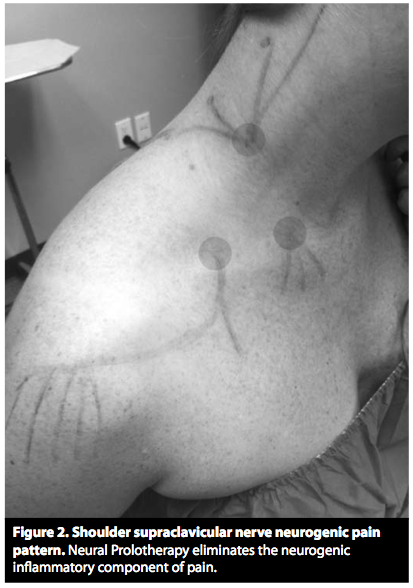
The pathology of neurogenic inflammation is well established.1, 2, 16 Ligaments, tendons and joints have TRPV1-sensitive C pain fiber innervation. Dr. Pybus explains that the C pain fibers transmit the “deep pain” often seen with osteoarthritis.14 “When these C pain fibers are irritated anywhere along their length they will transmit ectopic impulses in both forward (prodromic) and reverse (antidromic) direction.”14 The forward direction of the nerve signal will cause pain perception as the signal travels through the posterior root ganglia up to the brain. You will also have a local reflex action from the spinal cord ventral horn cells out to the muscle fibers, which will cause a reflex muscle spasm.14 The reverse (antidromic) signal will travel to the blood vessels where substance P is released causing swelling and pain. The nerves themselves also have a nerve supply called the Nervi Nervorum (NN).2 In a pathological state, the NN can release substance P (Sub P) and Calcitonin Gene Related Peptide (CGRP) onto these C pain fibers.11 Sub P and CGRP are known to cause pain, swelling of the nerve and surrounding tissue.7

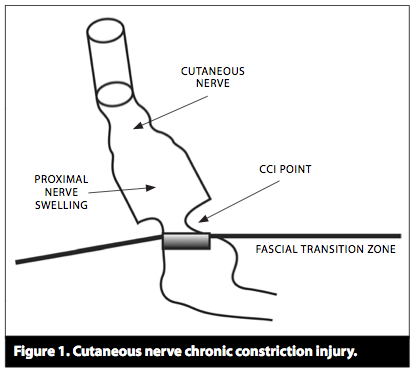
Dr. Lyftogt discussed in his recent Neural Prolotherapy meeting that “Cutaneous nerves pass through many fascial layers on their way to the spine. When there is neurogenic swelling at the Fascial Penetration Zone, a Chronic Constriction Injury (CCI) occurs. The CCI points will inhibit flow of Nerve Growth Factor (NGF).8, 7 Proper flow of NGF is essential for nerve health and repair.”3 (See Figure 1.)

Skjermbilde 2013-08-06 kl. 08.59.43

There are two major ways that the fascial penetration point can affect a nerve. Trauma to a nerve will cause edema to travel proximal and distal to the injury. When this swelling reaches the fascial penetration points this can cause a self- strangulation of the nerve and decrease nerve growth factor flow.16, 17 Morton’s neuroma is a clinical example of this.17

Dr. Pybus has also suggested that a change in fascial tension from repetitive muscle dysfunction can also cause a CCI point.15, 17

Another critical concept in NPT is what is called Bystander disease.9, 17 Bystander disease helps explain how superficial nerve pathology can affect deeper anatomic structures.9 This is based on Hilton’s law. Hilton’s law states: the nerve supplying a joint also supplies both the muscles that move the joint and the skin covering the articular insertion of those muscles.9 An example: The musculocutaneous nerve supplies the elbow with pain and proprioception as it is the nerve supply to the biceps brachii and brachialis muscles, as well as the skin close to the insertion of these muscles.17 Hilton’s Law arises as a result of the embryological development of humans.

This concept of Hilton’s law coupled with the idea of anterograde and retrograde axonal flow of neurodegenerative peptides,17 can help explain the wide reaching affects of NPT on pain control.

Glucose responsive nerves have been demonstrated throughout the nervous system.4, 5, 6 One proposed mechanism of action suggests that dextrose binds to pre synaptic calcium channels and inhibits the release of substance P and CGRP, thereby decreasing neurogenic inflammation. This allows normal flow of nerve growth factor and subsequent nerve repair and decreased pain.7

Skjermbilde 2013-08-06 kl. 08.59.48

Skjermbilde 2013-08-06 kl. 09.00.00

1 Geppetti, et al. Neurogenic Inflammation. Boca Raton: Edited CRC Press; 1996. Chapter 5, Summary; p.53-63.

2 Marshall J. Nerve stretching for the relief or cure of pain. The Lancet.1883;2:1029-36.

8 Bennett GJ, et al. A peripheral mononeuropathy in rat that produces disorders of pain sensation like those seen in man. Pain. 1988;33(1):87-107.

9 Hilton J. On rest and Pain. In Jacobesen WHA(ed): On Rest and Pain, 2nd edition, New York: William Wood & company, 1879.

Ukjent sin avatar

Apnea: A new training method in sport?

Veldig viktig studie om hva dykkeres trening i Apnea (å holde pusten) kan bidra med i annen idrett. Bekrefter det meste av det jeg har skrevet om, men oppklarer noe om blodverdier bl.a. Nevner EPO, nyrenes tilpasning, hypoxi, HIF-1, melkesyre, lungevolum

http://www.univ-rouen.fr/servlet/com.univ.utils.LectureFichierJoint?CODE=1307716204012&LANGUE=0

http://www.ncbi.nlm.nih.gov/pubmed/19850416

Breath-hold divers have shown reduced blood acidosis, oxidative stress and basal metabolic rate, and increased hematocrit, erythropoietin concentration, hemoglobin mass and lung volumes. We hypothesise that these adaptations contributed to long apnea durations and improve performance. These results suggest that apnea training may be an effective alternative to hypo- baric or normobaric hypoxia to increase aerobic and/or anaerobic performance.

Apnea durations clearly increase with training. Perhaps less well known are the findings that apnea train- ing also increases hematocrit (Hct), erythropoietin (EPO) concen- tration, hemoglobin (Hb) mass, and lung volumes [2–5]. In addition, blood acidosis and oxidative stress were shown to be re- duced after three months of apnea training [6,7]. Therefore, why not encourage apnea training for athletes?

The major determinant of aerobic performance is the capacity to deliver oxygen to the tissues [8]. An increase in the total amount of erythrocytes, as reflected by increased Hct and Hb mass, is med- iated by the glycoprotein hormone EPO, which is predominantly synthesized by the kidneys in response to chronic hypoxia [9] and to some extent (10–15% of total production) by the liver. EPO stimulates the proliferation and maturation of red blood cell precursors in bone marrow, increasing oxygen delivery to muscle and thereby enhancing sports performance [9].

(hypoxic or ischemic conditions) results in a stabilization of the transcription factor hypoxia-inducible factor (HIF)-1a, which increases EPO secretion and the expression of EPO receptor [10].

Furthermore, any training effect vanishes rapidly (two weeks), as the newly formed red cells disappear within a mat- ter of days due to neocytolysis.

The splenic contraction effect

Apnea training may well be a future training method. Splenic contraction has been described in marine mammals as improving oxygen transport, through an increase in circulating erythrocytes. Its consequence is a prolonged dive without injuries. In humans, repeated apneas (five, in general) induce splenic contraction. This increases Hct and Hb (both between 2% and 5%) independently of hemoconcentration [19] and reduces arterial oxygen desaturation, thereby prolonging the apnea duration [3,19–22].

Repeated apneas are known to induce hypoxemia in the spleen and kidney, increas- ing respectively Hct and Hb and serum EPO concentrations [2,23].

First, the splenic contraction develops quickly after three or four apneas separated by two minutes of recovery and is associ- ated with a transient increase in Hb concentration. The amplitude of the spleen volume reduction after repeated apneas, with or without face immersion, varies widely (20–46%) depending on the rate of change in oxygenation [3,19,22,25–27]. The rapidity of the splenic contraction after simulated apneas strongly suggested a centrally-mediated feed-forward mechanism rather than the influ- ence of slower peripheral triggers [19]. These spleen and Hb re- sponses may be trainable.

Second, DeBruijns et al. [2] recently observed that repeated apneas increased EPO concentration by 24%, with the peak value reached 3 h after the last apnea and a return to baseline 2 h later.

The rapid reduction in tissue oxygen levels that oc- curs during apneas has been suggested to stimulate enhanced EPO production [25]. The decreased kidney blood flow induced by apneic vasoconstriction would result in local ischemic hypoxia, stimulating kidney EPO production. Similarly, obstructive sleep ap- nea increases the levels of EPO (􏰀1.6) and Hb (+18%) [24].

The lower SaO2 decrease found in trained divers after repeated apneas may account for the reduced oxygen delivery because of the diving response (bradycardia and vasocon- striction) and/or an increase in oxygen content [1].

Long term-effects

Another important consideration is the persistence of the per- formance gains. Most of the altitude exposure studies reported short-term effects (i.e., weeks). Repeated apneas increase Hct but this increase disappears within 10min after the last apnea [22,26].

The effects of repeated apneas on spleen and endogenous EPO may also constitute an alternative to using rhEPO or its analogues. In addition, comparison of resting Hb mass in elite BHDs and untrained subjects showed a 5% higher Hb mass in the BHDs, and the BHDs also showed a larger relative increase in Hb after three apneas (2.7%). The long-term effect of apnea training on Hb mass might be implicated in elite divers’ performances. Re- cently, it has been found that after a 3-month apnea training pro- gram, the forced expiratory volume in 1 s was higher (4.85 ± 0.78 vs. 4.94 ± 0.81 L, p < 0.05), with concomitant increases in the max- imal oxygen uptake, arterial oxygen saturation, and respiratory compensation point values during an incremental test [30].

In addition to increasing EPO and provoking splenic contraction, apnea training has been hypothesized to modify muscle glycolytic metabolism. An improvement in muscle buffer capacity [6,7,32] would reduce blood acidosis and post-apnea oxidative stress [6]. Delayed acidosis would also be advantageous for exercise perfor- mance. Finally, trained BHDs exhibit high lung volumes [15]. Ap- nea training might be interesting to improve respiratory muscle performance [15], thereby delaying the respiratory muscle fatigue during prolonged and maximal exercise.

Greater cerebral blood flow (CBF) increase was described during long apnea in elite BHDs than in controls and interpreted as a protection of the brain against the alteration of blood gas [33]. The CBF increase observed in BHDs could be the re- sult of an increased capillary density in the brain as has been de- scribed after a prolonged hypobaric hypoxia exposure [35]. These results suggest that apnea training per se provides hypoxic precon- ditioning, increasing hypoxemia and ischemia tolerance [33].

The physiological responses to apnea training exhibited by elite breath-hold divers may contribute to improving sports perfor- mance. These adaptations may be an effective alternative to hypo- baric or normobaric hypoxia to increase performance. Further experimental research of the apnea training effects on aerobic and/or anaerobic performance are needed to confirm this theory.

Ukjent sin avatar

Bench-to-bedside review: Carbon dioxide

Om CO2 i helbredelse av vev. Viktig oversikt som nevner CO2 sin bane og effekt gjennom hele organismen – fra DNA til celle til vev til blod. Bekrefter ALT jeg har funnet om CO2 og pusteknikkene. Nevner også potensiell farer, som kun skjer ved akutt hypercapnia. Nevner også en meget spennende konsept om å buffre CO2 acidose med bikarbonat (Natron). I kliniske tilfeller på sykehus kan det ha negative effekter, men hos normale mennesker vil det virke som en effektiv buffer.

http://www.ncbi.nlm.nih.gov/pmc/articles/PMC2887152/

Hypercapnia may play a beneficial role in the pathogenesis of inflammation and tissue injury, but may hinder the host response to sepsis and reduce repair. In contrast, hypocapnia may be a pathogenic entity in the setting of critical illness.

For practical purposes, PaCO2 reflects the rate of CO2 elimination.

The commonest reason for hypercapnia in ventilated patients is a reduced tidal volume (VT); this situation is termed permissive hypercapnia.

http://www.ncbi.nlm.nih.gov/pmc/articles/PMC2887152/table/T1/?report=previmg

High VT causes, or potentiates, lung injury [4]. Smaller VT often leads to elevated PaCO2, termed permissive hypercapnia, and is associated with better survival [5,6]. These low-VT strategies are not confined to patients with acute lung injury (ALI)/acute respiratory distress syndrome (ARDS); they were first reported successful in severe asthma [7], and attest to the overall safety of hypercapnia. Indeed, hypercapnia in the presence of higher VT may independently improve survival [8].

Hypocapnia is common in several diseases (Table ​(Table1;1; for example, early asthma, high-altitude pulmonary edema, lung injury), is a common acid-base disturbance and a criterion for systemic inflammatory response syndrome [9], and is a prognostic marker of adverse outcome in diabetic ketoacidosis [10]. Hypocapnia – often prolonged – remains common in the management of adult [11] and pediatric [12] acute brain injury.

Table 1

Causes of hypocapnia

Hypoxemia Altitude, pulmonary disease
Pulmonary disorders Pneumonia, interstitial pneumonitis, fibrosis, edema, pulmonary emboli, vascular disease, bronchial asthma, pneumothorax
Cardiovascular system disorders Congestive heart failure, hypotension
Metabolic disorders Acidosis (diabetic, renal, lactic), hepatic failure
Central nervous system disorders Psychogenic/anxiety hyperventilation, central nervous system infection, central nervous system tumors
Drug induced Salicylates, methylxanthines, β-adrenergic agonists, progesterone
Miscellaneous Fever, sepsis, pain, pregnancy

CO2 is carried in the blood as HCO3-, in combination with hemoglobin and plasma proteins, and in solution. Inside the cell, CO2 interacts with H2O to produce carbonic acid (H2CO3), which is in equilibrium with H+ and HCO3-, a reaction catalyzed by carbonic anhydrase. CO2 transport into cells is complex, and passive diffusion, specific transporters and rhesus proteins may all be involved.

CO2 is sensed in central and peripheral neurons. Changes in CO2 and H+ are sensed in chemosensitive neurons in the carotid body and in the hindbrain [13,14]. Whether CO2 or the pH are preferentially sensed is unclear, but the ventilatory response to hypercapnic acidosis (HCA) exceeds that of an equivalent degree of metabolic acidosis [15], suggesting specific CO2 sensing.

An in vitro study has demonstrated that elevated CO2 levels suppress expression of TNF and other cytokines by pulmonary artery endothelial cells via suppression of NF-κB activation [18].

Furthermore, hypercapnia inhibits pulmonary epithelial wound repair also via an NF-κB mechanism [19].

The physiologic effects of CO2 are diverse and incompletely understood, with direct effects often counterbalanced by indirect effects.

Hypocapnia can worsen ventilation-perfusion matching and gas exchange in the lung via a number of mechanisms, including bronchoconstriction [21], reduction in collateral ventilation [22], reduction in parenchymal compliance [23], and attenuation of hypoxic pulmonary vasoconstriction and increased intrapulmonary shunting [24].

CO2 stimulates ventilation (see above). Peripheral chemoreceptors respond more rapidly than the central neurons, but central chemosensors make a larger contribution to stimulating ventilation. CO2increases cerebral blood flow (CBF) by 1 to 2 ml/100 g/minute per 1 mmHg in PaCO2[25], an effect mediated by pH rather than by the partial pressure of CO2.

Hypercapnia elevates both the partial pressure of O2 in the blood and CBF, and reducing PaCO2 to 20 to 25 mmHg decreases CBF by 40 to 50% [26]. The effect of CO2 on CBF is far larger than its effect on the cerebral blood volume. During sustained hypocapnia, CBF recovers to within 10% baseline by 4 hours; and because lowered HCO3-returns the pH towards normal, abrupt normalization of CO2 results in (net) alkalemia and risks rebound hyperemia.

Hypocapnia increases both neuronal excitability and excitatory (glutamatergic) synaptic transmission, and suppresses GABA-A-mediated inhibition, resulting in increased O2 consumption and uncoupling of metabolism to CBF [27].

Hypercapnia directly inhibits cardiac and vascular muscle contractility, effects that are counterbalanced by sympathoadrenal increases in heart rate and contractility, increasing the cardiac output overall [28].

Indeed, a large body of evidence now attests to the ability of hypercapnia to increase peripheral tissue oxygenation, independently of its effects on cardiac output [30,31].

The beneficial effects of HCA in such models are increasingly well understood, and include attenuation of lung neutrophil recruitment, pulmonary and systemic cytokine concentrations, cell apoptosis, and O2-derived and nitrogen-derived free radical injury.

Concern has been raised regarding the potential for the anti-inflammatory effects of HCA to impair the host response to infection. In early pulmonary infection, this potential impairment does not appear to occur, with HCA reducing the severity of acute-severe Escherichia coli pneumonia-induced ALI [41]. In the setting of more established E. coli pneumonia, HCA is also protective [42].

Hypocapnia increases microvascular permeability and impairs alveolar fluid reabsorption in the isolated rat lung, due to an associated decrease in Na/K-ATPase activity [47].

HCA protects the heart following ischemia-reperfusion injury.

Hypercapnia attenuates hypoxic-ischemic brain injury in the immature rat [52] and protects the porcine brain from reoxygenation injury by attenuation of free radical action. Hypercapnia increases the size of the region at risk of infarction in experimental acute focal ischemia; in hypoxic-ischemic injury in the immature rat brain, hypocapnia worsens the histologic magnitude of stroke [52] and is associated with a decrease in CBF to the hypoxia-injured brain as well as disturbance of glucose utilization and phosphate reserves.

Indeed, hypocapnia may be directly neurotoxic, through increased incorporation of choline into membrane phospholipids [56].

Rapid induction of hypercapnia in the critically ill patient may have adverse effects. Acute hypercapnia impairs myocardial function.

In patients managed with protective ventilation strategies, buffering of the acidosis induced by hypercapnia remains a common – albeit controversial – clinical practice.
While bicarbonate may correct the arterial pH, it may worsen an intracellular acidosis because the CO2 produced when bicarbonate reacts with metabolic acids diffuses readily across cell membranes, whereas bicarbonate cannot.

Hypocapnia is an underappreciated phenomenon in the critically ill patient, and is potentially deleterious, particularly when severe or prolonged. Hypocapnia should be avoided except in specific clinical situations; when induced, hypercapnic acidosis should be for specific indications while definitive measures are undertaken.

Ukjent sin avatar

Response of skeletal muscle mitochondria to hypoxia

Alt om hvordan mitochondrier reagerer på hypoxi, inkludert under trening. Nevner ROS, kapillærer, oxygencascade, HIF-1,tibetanere og høydetreningmen ingen ting om CO2. Nevner også hypoxi inntrer 20s etter trening starter – ref HIIT.

http://ep.physoc.org/content/88/1/109.long

In contrast to earlier assumptions it is now established that permanent or long-term exposure to severe environmental hypoxia decreases the mitochondrial content of muscle fibres. Oxidative muscle metabolism is shifted towards a higher reliance on carbohydrates as a fuel, and intramyocellular lipid substrate stores are reduced. Moreover, in muscle cells of mountaineers returning from the Himalayas, we find accumulations of lipofuscin, believed to be a mitochondrial degradation product. Low mitochondrial contents are also observed in high-altitude natives such as Sherpas.

In these subjects high-altitude performance seems to be improved by better coupling between ATP demand and supply pathways as well as better metabolite homeostasis.

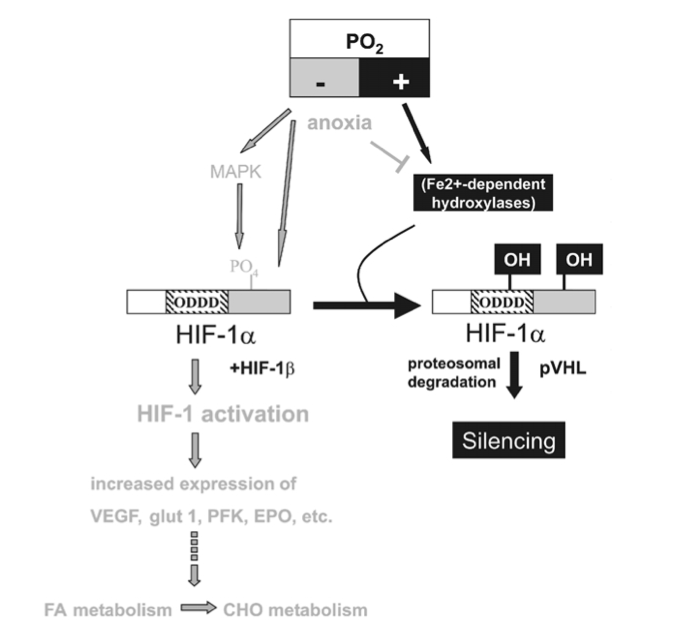
The hypoxia-inducible factor 1 (HIF-1) has been identified as a master regulator for the expression of genes involved in the hypoxia response, such as genes coding for glucose transporters, glycolytic enzymes and vascular endothelial growth factor (VEGF). HIF-1 achieves this by binding to hypoxia response elements in the promoter regions of these genes, whereby the increase of HIF-1 in hypoxia is the consequence of a reduced degradation of its dominant subunit HIF-1a.

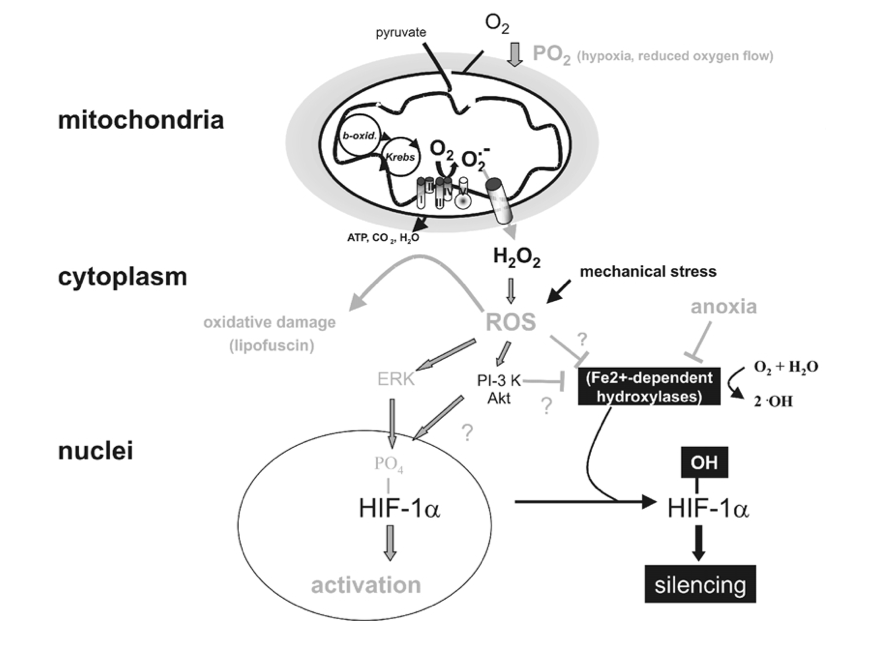
A further mechanism that seems implicated in the hypoxia response of muscle mitochondria is related to the formation of reactive oxygen species (ROS) in mitochondria during oxidative phosphorylation. How exactly ROS interfere with HIF-1a as well as MAP kinase and other signalling pathways is debated.

The current evidence suggests that mitochondria themselves could be important players in oxygen sensing.

The focus on mitochondria neglects the fact that for the dominant function of mitochondria, aerobic ATP re-synthesis, the mitochondrial organelle cannot function independently. It is embedded, at least in animal phyla, in a systems physiological context. Mitochondria house the final biochemical steps in the production of reducing equivalents that react at the terminal oxidases of the respiratory chain with molecular oxygen provided by the respiratory system from the environment.

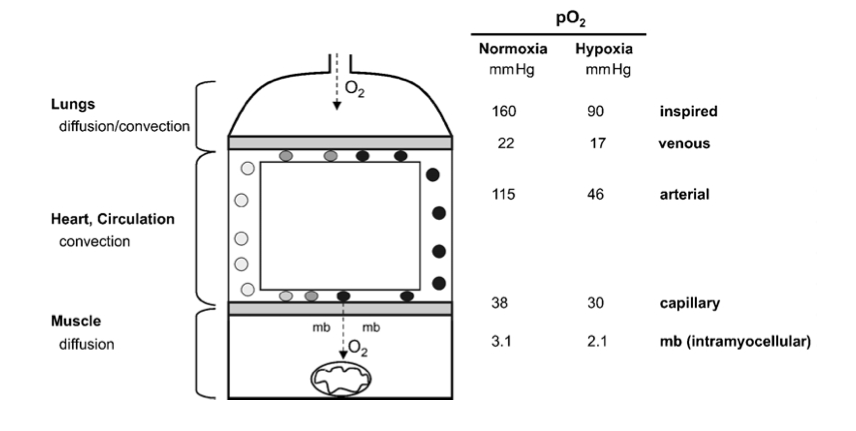
In mitochondria, O2 finally disappears and oxygen partial pressure goes to zero (Fig. 1). Mitochondria thus are an effective oxygen sink and this allows organisms to use all of the available oxygen partial pressure of the actual environment to drive the respiratory cascade from lungs through circulation to the mitochondria (Taylor & Weibel, 1981).

Skjermbilde 2013-06-23 kl. 10.37.19

Figure 1

The pathway of oxygen. Simplified model of the oxygen transport pathway showing the principal structures and the corresponding partial pressure of oxygen (PJ) in these compartments, during maximal exercise, while breathing normoxic or hypoxic room air. mb, myoglobin. The data are derived from Richardson et al. (1995).

What is known is that isolated mitochondria do not need more than a few torr of O2 partial pressure for full function (Gayeski & Honig, 1997). Similarly, it is generally acknowledged that assessing mitochondrial function in hypoxia in cultured cells requires the lowering of the oxygen pressure at the cell surface to values between 0.5 and 5 Torr, values completely incompatible with the survival of all but a few highly specialized species (Boutilier & St Pierre, 2002).

In the context of this review we mostly neglect the hypoxic response of the microvasculature as well as the cardio- vascular and pulmonary system, which all conspire to maintain mitochondrial function under hypoxic conditions (Hochachka, 1998).

With ‘short- term’ hypoxia we refer to continuous bouts of hypoxia exposure lasting from minutes to hours (such as during a physical exercise bout), whereby during most of the day subjects are subjected to normoxic conditions.

With the term ‘intermittent’ hypoxia we designate experimental protocols whereby short periods of hypoxia (minutes) are interspersed with similarly short periods of normoxia. The physiological effects of inter- mittent hypoxia interventions have not yet been well defined. In particular, these types of interventions have not to our knowledge been analysed with regard to changes of the mitochondrial compartment. This literature will thus not be reviewed here (see Serebrovskaya, 2002).

One of the first notions of a change of muscle oxidative capacity with hypoxia is found in Reynafarje’s (1962) landmark paper on muscle adaptations in Peruvian miners. He found cytochrome c reductase activity (+78 %) and myoglobin content (+16%) to be significantly increased in biopsies of sartorius muscle of permanent high-altitude residents as compared to low-landers. This paper, together with data of larger muscle capillary densities in guinea pigs native to the Andeas as compared to data from low-land control animals (Valdivia, 1958), had a strong impact on physiologists’ thinking for at least two decades.

When it became clear towards the end of the sixties, that endurance-type exercise was also a potent stimulator of muscle mitochondrial enzyme activity (Holloszy, 1967), the connection was made that local tissue hypoxia provoked by exercise might be an important signal for mitochondrial proliferation under heavy exercise conditions.

The capillary density (i.e. the number of capillaries counted per unit area of muscle fibre) was indeed found to be increased in post-expedition samples. However, this was not due to capillary neo-formation since the capillary to muscle fibre ratio was unchanged. What had occurred over the time of the expedition was a significant loss of muscle fibre cross- sectional area. Hence, the same number of capillaries supplied a smaller tissue space. In addition, we found a decrease of mitochondrial volume density, which led to a total loss of muscle mitochondrial volume of close to 30 %.

This adaptation was suggested to represent an anti-apoptotic mechanism allowing protection against the lack of oxygen in oxidative muscles (Riva et al. 2001).

We would assume that the increased transcription of genes involved in the metabolic pathways favouring glucose metabolism in muscle cells is responsible for the observed shift towards glucose metabolism in organisms at altitude. The functional advantage of this adaptation would be a larger ATP yield per molecule of oxygen (Wilmore & Costill, 1994). It has recently been shown that protein expression of the enzymes and transporters of lactate, lactate dehydrogenase (LDH) and monocarboxylate transporters (MCT1, 2 and 4), is affected in a tissue-specific manner by long-term exposure to hypobaric hypoxia (McClelland & Brooks, 2002). These findings are broadly compatible with the idea that hypoxia induces mechanisms favouring glucose utilization in muscle cells.

Despite the low muscle mitochondrial oxidative capacity, physical performance capacity of native high-land populations at altitude is excellent. A number of physiological mechanisms have been invoked to explain the ‘paradoxical’ finding of superior aerobic performance in hypoxia despite modest muscle oxidative capacities (Hochachka et al. 2002). Hochachka et al. (1998) describe systemic mechanisms, among them being a blunted hypoxia ventilatory and pulmonary vasoconstrictor response as well as an up-regulation of erythropoietin expression, which help native high-land populations to excel at altitude. At the level of muscle tissue it is suggested that the control contributions from cellular ATP demand and ATP supply pathways are up-regulated whereas the contribution of control steps in O2 delivery are down-regulated (Hochachka et al. 2002). This leads to an improved coupling between ATP demand and supply pathways and better metabolite (i.e. lactate, adenylates) homeostasis.

We thus decided to explore hypoxia protocols under which hypoxia was present only during the exercise session but not during recovery (e.g living low–training high). Analysis of pre- and post- training biopsies of m. vastus lateralis revealed that total mitochondria increased significantly in all groups; in contrast, subsarcolemmal mitochondria, i.e. those located near capillaries, increased significantly only in those groups training under hypoxic conditions, irrespective of training intensity. Noticeably, the group which trained at high intensity in hypoxia showed the highest increase in total mitochondrial volume density (+59 %) and capillary length density was increased significantly in this group only (+17.2 %) (Geiser et al. 2001; Vogt et al. 2001).

Several independent lines of evidence suggest the occurrence of ‘local hypoxia’, i.e. a drop in intramyocellular oxygen pressure with exercise.

This finding of a low muscle oxygen tension during exercise is supported by more recent data using 1H-nuclear magnetic resonance spectroscopy which demonstrates that myoglobin desaturation occurs within 20 s of onset of exercise in human quadriceps muscle (Richardson et al. 1995).

Mitochondria, the oxygen sink, are more prevalent in oxidative fibres by a factor of at least three, and even within fibres they are clustered in the fibre periphery close to the capillaries (Howald et al. 1985).

Skjermbilde 2013-06-23 kl. 10.49.54

Figure 3
HIF-1a-mediated oxygen sensor and hypoxia-inducible gene expression. Oxygen stabilizes hypoxia- inducible factor 1a (HIF-1a) through Fe2+-dependent proline hydroxylases and asparaginyl hydroxylase(s) which hydroxylate HIF-1a within its oxygen-dependent degradation domain (ODDD) and C-terminal portion, respectively. Such modification causes recruitment of the von Hippel-Lindau tumour- suppressor protein (pVHL), which targets HIF-1a for proteosomal degradation thereby silencing HIF-1a activity. Conversely, hypoxia causes a stabilization of HIF-1a and activates the MAPK pathway which enhances the transcriptional activity of HIF-1a through phosphorylation. Both mechanisms contribute to transcriptional activation of downstream angiogenic factor (VEGF), erythropoietin (EPO), glucose transporters (glut 1 and 3) and glycolytic genes (PFK) via HIF-1a/HIF-1b dimers (HIF-1). Moreover, lack of oxygen (anoxia) causes HIF-1a stabilization, possibly by reducing the activity of hydoxylases by depleting their substrate O2.

In vitro experiments show that an activation of HIF-1 leads to an up-regulation of anaerobic enzymes of the glycolytic pathway (Wenger, 2002).

To date there is no clear-cut explanation for the paradoxical finding of increased reactive oxygen species (ROS) production in hypoxia as there is controversy about whether hypoxia, in fact, causes an increase or a fall in ROS production (Archer & Michelakis, 2002). Also the mechanisms by which ROS and cytosolic H2O2 levels are involved in stabilization/activation and eventual degradation/silencing of HIF-1a and other redox-sensitive transcription factors are controversially discussed (Chandel et al. 2000; Kietzmann et al. 2000).

It is reported that ~2% of the O2 used by the mitochondrial electron transport chain creates ROS and in particular the superoxide radical, due to its incomplete reduction (see Kietzmann et al. 2000; Archer & Michelakis, 2002; reviewed in Abele et al. 2002). The superoxide anion (O2•_) radical is very unstable and is rapidly converted either spontaneously or after its export into the cytoplasm by mitochondrial and cytoplasmic superoxide dismutases, MnSOD and Cu/ZnSOD, to the more stable H2O2.

Recent findings in hepatoma cells indicate a small (approximately 2.5-fold) and transient increase in ROS after 40–50 min of hypoxia onset (0.5 % O2; Vanden Hoek et al. 1998). These and subsequent in vitro experiments in the same system point to mitochondria, and to respiratory complex III of the electron transport chain in particular, as the source of ROS production in hypoxia (Chandel et al. 2000).

Skjermbilde 2013-06-23 kl. 11.00.33

Figure 4

Targets of mitochondrial ROS production. Incomplete reduction of O2 during normal metabolic conversion of pyruvate in mitochondria gives rise to a low level of superoxide anion (O2•_). Exposure of cells to hypoxia increases the aberrant production of O2•_ at the mitochondrial electron chain complex III. Catalysed or spontaneous dismutation of the unstable superanion and export via anion channels enhances the concentration of cytosolic H2O2 and other reactive oxygen species (ROS). Increased ROS may increase the level of oxidatively damaged lipids (lipofuscin) or activate downstream redox-sensitive signal transduction events. For example ROS stabilize HIF-1a possibly by interfering with the activity of Fe2+-dependent proline hydroxylases. ROS may also activate the MAPK or PI-3K/Akt pathway, which enhance the transcriptional activity of HIF-1a through its phosphorylation. Lastly, mechanical stress may also increase ROS production which may influence HIF-1a activation.

Clearly there is evidence pointing to a role of mitochondria as oxygen sensors by modulation of ROS production.

Recently, evidence for increased oxidant production in rat skeletal muscle during prolonged exercise has been provided, with both the mitochondrial respiratory chain and the NADPH oxidase as potential sources for oxidants (Bejma & Ji, 1999). This argues for ROS production in skeletal muscle due to local tissue hypoxia.

Ukjent sin avatar

Two routes to functional adaptation: Tibetan and Andean high-altitude natives

Om hvordan pusten endres når man bor i høyland. Nevner mye om oksygentilgjengelighet, oksygenkaskade, hypoxi, kapillærer, mitokondrier, m.m., og om hvorfor vi har lite oksygen i mitokondriene. Studier undersøker spesifikt om at tibetanere har endrede gener siden de med gener som er tilpasset lave oksygennivåer har mindre fysiologisk stress og dermed større sjangse for barn som overlever, og hvilke forkjeller i hypoxi-tilpasning som har sjedd i de to befolkningene.

Ny, som må gjennomgåes: http://www.ncbi.nlm.nih.gov/pmc/articles/PMC1876443/

http://www.pnas.org/content/104/suppl.1/8655.full

These reveal generally more genetic variance in the Tibetan population and more potential for natural selection. There is evidence that natural selection is ongoing in the Tibetan population, where women estimated to have genotypes for high oxygen saturation of hemoglobin (and less physiological stress) have higher offspring survival.

At 4,000-m elevation, every breath of air contains only ≈60% of the oxygen molecules in the same breath at sea level. This is a constant feature of the ambient environment to which every person at a given altitude is inexorably exposed. Less oxygen in inspired air results in less oxygen to diffuse into the bloodstream to be carried to the cells for oxygen-requiring energy-producing metabolism in the mitochondria.

Humans do not store oxygen, because it reacts so rapidly and destructively with other molecules. Therefore, oxygen must be supplied, without interruption, to the mitochondria and to the ≥1,000 oxygen-requiring enzymatic reactions in various cells and tissues (4).


Fig. 1. Ambient oxygen levels, measured by the partial pressure of oxygen (solid line) or as a percent of sea-level values (dashed line), decrease with increasing altitude, a situation called high-altitude or hypobaric hypoxia. The atmosphere contains ≈21% oxygen at all altitudes.

The oxygen level is near zero in human mitochondria at all altitudes (5). This condition is described as “primitive,” because it has changed little for the past 2.5 billion years despite wide swings in the amount of atmospheric oxygen (at times it has been 10,000-fold lower; refs. 6 and 7) and “protective” in the sense that it circumvents potentially damaging reactions of oxygen with other molecules (8).


Fig. 2. The oxygen transport cascade at sea level (solid line) and at the high altitude of 4,540 m (dashed line) illustrates the oxygen levels at the major stages of oxygen delivery and suggests potential points of functional adaptation (data from ref. 60).

Potential and Actual Points of Adaptation to Hypoxia

Energy Production.

Lowlanders traveling to high altitude display homeostatic responses to the acute severe hypoxia. The responses are energetically costly, as indicated by an increase in basal metabolic rate (BMR; the minimum amount of energy needed to maintain life with processes such as regulating body temperature, heart rate, and breathing). BMR is increased by ≈17–27% for the first few weeks upon exposure to high altitude and gradually returns toward sea-level baseline (9). In other words, for acutely exposed lowlanders, the fundamental physiological processes required to sustain life at high altitude require more oxygen despite lower oxygen availability.

In contrast to acutely exposed lowlanders and despite the equally low level of oxygen pressure in the air and lungs, both Andean and Tibetan highlanders display the standard low-altitude range of oxygen delivery from minimal to maximal. Both populations have the normal basal metabolic rate expected for their age, sex, and body weight (1416), implying that their functional adaptations do not entail increased basal oxygen requirements. Furthermore, Andean and Tibetan highlanders have maximal oxygen uptake expected for their level of physical training (12, 13, 17).

Ventilation.

One potential point of adaptation in oxygen delivery is ventilation, which, if raised, could move a larger overall volume of air and achieve a higher level of oxygen in the alveolar air (Fig. 2) and diffusion of more oxygen. An immediate increase in ventilation is perhaps the most important response of lowlanders acutely exposed to high altitude, although it is not sustained indefinitely and is not found among members of low-altitude populations born and raised at high altitude, such as Europeans or Chinese (3, 18).

For example, a comparative analysis summarizing the results of 28 samples of Tibetan and Andean high-altitude natives at an average altitude of ≈3,900 m reported an estimated resting ventilation of 15.0 liters/min among the Tibetan samples as compared with 10.5 liters/min among the Andean samples (19).

Fig. 3 illustrates the higher resting ventilation of Tibetans as compared with Andean highlanders evaluated using the same protocol at ≈4,000 m. The mean resting ventilation for Tibetans was >1 SD higher than the mean of the Andean highlanders (20).

Oxygen in the Bloodstream.

The higher ventilation levels among Tibetans that move more oxygen through the lungs, along with the higher HVRs that respond more vigorously to fluctuations in oxygen levels, might be expected to result in more oxygen in the bloodstream. However, the level of oxygen in the arterial blood (Fig. 2) of a sample of Tibetans at ≈3,700 m was lower than that of a sample of Andean high-altitude natives at the same altitude (54 as compared with 57 mmHg; 1 mmHg = 133 Pa) (24, 25). In addition, hemoglobin, the oxygen-carrying molecule in blood, is less saturated with oxygen among Tibetans than among their Andean counterparts (26, 27). Fig. 3 illustrates the lower percent of oxygen saturation of hemoglobin in a sample of Tibetans at ≈4,000 m. The increased breathing of Tibetans does not deliver more oxygen to the hemoglobin in the arteries.

Fig. 3 illustrates the markedly lower hemoglobin concentrations in a sample of Tibetan men and women as compared with their Andean counterparts at ≈4,000 m. [The average hemoglobin concentrations were 15.6 and 19.2 g/dl for Tibetan and Andean men, respectively, and 14.2 and 17.8 g/dl for women (28).] Hemoglobin concentration is influenced by many factors, including erythropoietin, a protein that causes differentiation of the precursors that will become hemoglobin-containing red blood cells. Tibetans have slightly lower erythropoietin concentrations than Andean highlanders at the same altitude (25). When matched for volume of red blood cells, a procedure that would effectively compare the highest Tibetan and the lowest Andean values, Andean highlanders have much higher erythropoietin levels, which implies that some sensor is responding as if the stress were more severe, even though the samples were collected at the same altitude of ≈3,700 m.

Andean highlanders have overcompensated for ambient hypoxia according to this measure, whereas Tibetan highlanders have undercompensated. Indeed, Tibetans are profoundly hypoxic and must be engaging other mechanisms or adapting at different points in the oxygen transport cascade to sustain normal aerobic metabolism.

Fig. 4. The calculated arterial oxygen content of Tibetan men and women is profoundly lower than their Andean counterparts measured at ≈4,000 m (data from ref. 62), whereas the exhaled NO concentration is markedly higher (recalculated from data reported in ref. 34).

Blood Flow and Oxygen Diffusion.

Other potential points of functional adaptation include the rate of flow of oxygen-carrying blood to tissues and the rate of oxygen diffusion from the bloodstream into cells.

Because blood flow is a function of the diameter of blood vessels, dilating factors could, in principle, improve the rate of oxygen delivery. Sea-level populations respond to high-altitude hypoxia by narrowing the blood vessels in their lungs, the first point of contact with the circulation. Known as hypoxic pulmonary vasoconstriction, that reflex evolved at sea level to direct blood away from temporarily poorly oxygenated toward better oxygenated parts of the lung. High-altitude hypoxia causes poor oxygenation of the entire lung and general constriction of blood vessels to the degree that it raises pulmonary blood pressure, often to hypertensive levels (3, 29).

In contrast, most Tibetans do not have hypoxic pulmonary vasoconstriction or pulmonary hypertension. This is indicated by essentially normal pulmonary blood flow, as measured by normal or only minimally elevated pulmonary artery pressure (29, 30).

a mean pulmonary artery pressure of 31 mmHg for the Tibetan 28% lower than the mean of 43 mmHg for the Andean (35 mmHg is often considered the upper end of the normal sea-level range) (30, 31). Andean highlanders are consistently reported to have pulmonary hypertension (29). Thus, pulmonary blood flow is another element of oxygen delivery for which Tibetans differ from Andean highlanders in the direction of greater departure from the ancestral response to acute hypoxia.

A probable reason for the normal pulmonary artery pressure among Tibetans is high levels of the vasodilator nitric oxide (NO) gas synthesized in the lining of the blood vessels. Low-altitude populations acutely exposed to high-altitude down-regulate NO synthesis, a response thought to contribute to hypoxic pulmonary vasoconstriction (32, 33). In contrast, NO is substantially elevated in the lungs of Tibetan as compared with Andean highlanders and lowlanders at sea level (Fig. 4) (34). Among Tibetans, higher exhaled NO is associated with higher blood flow through the lungs (30).

Several other lines of evidence highlight the importance of high blood flow for Tibetans. These include greater increase in blood flow after temporary occlusion (35) and higher blood flow to the brain during exercise (36) as compared with lowlanders.

Generally, Tibetans appear to have relatively high blood flow that may contribute significantly to offsetting their low arterial oxygen content.

A denser capillary network could potentially improve perfusion and oxygen delivery, because each capillary would supply a smaller area of tissue, and oxygen would diffuse a shorter distance. Tibetans (the study sample were Sherpas, an ethnic group that emigrated from Tibet to Nepal ≈500 years ago) who are born and raised at high altitude have higher capillary density in muscles as compared with Andean high-altitude natives, Tibetans born and raised at low altitude, or lowlanders (Fig. 5) (40).


Fig. 5. High-altitude native Tibetans have higher capillary density than their Andean counterparts or populations at low altitude; Tibetan and Andean highlanders both have lower mitochondrial volume than low-altitude populations (data from refs. 40, 44, 63, and64).

The last potential point of adaptation is at the level of the mitochondrion itself. Acutely exposed lowlanders lose mitochondria in leg muscles during the first 3 weeks at altitude. Similarly, both Tibetan (Sherpas) and Andean high-altitude natives have a lower mitochondrial volume in leg muscle tissue than sea-level natives at sea level (Fig. 5) (40).

Among Tibetans, a smaller mitochondrial volume somehow supports a relatively larger oxygen consumption, perhaps by higher metabolic efficiency (12, 43, 44).

Another candidate gene is the transcription factor hypoxia-inducible factor 1 (HIF1) often called the “master regulator” of oxygen homeostasis, because it induces >70 genes that respond to hypoxia (5658). An investigation of polymorphisms in the HIF1A gene of Tibetans (Sherpas) found a dinucleotide repeat in 20 Tibetans that was not found in 30 Japanese lowlander controls (59).

Ukjent sin avatar

Differences in the control of breathing between Himalayan and sea-level residents

Om hvordan langvarig høydeopphold utvisker sensitiviteten til CO2.

http://jp.physoc.org/content/588/9/1591.full

Highlanders had lower mean ± S.E.M.ventilatory sensitivities to CO2 than lowlanders at both isoxic tensions (hyperoxic: 2.3 ± 0.3 vs. 4.2 ± 0.3 l min−1 mmHg−1, P = 0.021; hypoxic: 2.8 ± 0.3 vs. 7.1 ± 0.6 l min−1mmHg−1, P < 0.001), and the usual increase in ventilatory sensitivity to CO2 induced by hypoxia in lowlanders was absent in highlanders (P = 0.361).

Furthermore, the ventilatory recruitment threshold (VRT) CO2 tensions in highlanders were lower than in lowlanders (hyperoxic: 33.8 ± 0.9 vs. 48.9 ± 0.7 mmHg, P < 0.001; hypoxic: 31.2 ± 1.1 vs. 44.7 ± 0.7 mmHg, P < 0.001).

We conclude that control of breathing in Himalayan highlanders is distinctly different from that of sea-level lowlanders. Specifically, Himalayan highlanders have decreased central and absent peripheral sensitivities to CO2. Their response to hypoxia was heterogeneous, with the majority decreasing their VRT indicating either a CO2-independent increase in activity of peripheral chemoreceptor or hypoxia-induced increase in [H+] at the central chemoreceptor.

Control of breathing in humans can be broadly divided into chemoreflex and non-chemoreflex drives to breathe (Fig. 1) (Lloyd & Cunningham, 1963). Non-chemoreflex breathing stimuli include a wakefulness drive (Longobardo et al. 2002), voluntary (cortical) drive (Shea, 1996) and hormonal factors (Jensen et al. 2008), as well as neural and humoral mediating factors that are especially important in the control of breathing during exercise (Bell, 2006; Dempsey, 2006; Haouzi, 2006). The chemoreflex drive to breathe can be further divided into central and peripheral chemoreceptor drives. Both central and peripheral chemoreceptors respond to changes in the hydrogen ion concentration ([H+]) in their immediate environments (Torrance, 1996; Nattie & Li, 2009).

In contrast to the central chemoreceptors, peripheral chemoreceptors are also sensitive to changes in arterial Graphic (Graphic) via a hypoxia-mediated increase in their sensitivity to [H+] (Cunningham, 1987; Torrance, 1996; Kumar & Bin-Jaliah, 2007), and hyperoxia (Graphic ≥ 150 mmHg) effectively silences this response (Lloyd & Cunningham, 1963; Mohan & Duffin, 1997).

Central and peripheral chemoreceptor neural drives are integrated in the medulla to provide the total chemoreflex neural drive (Fink, 1961; Shea, 1996; Mohan & Duffin, 1997; Orem et al. 2002) that, in combination with non-chemoreflex drives, provides ventilatory drive to respiratory muscles.


Figure 3. Hypercapnic ventilatory response The graph displays two isoxic responses: hyperoxic (Graphic = 150 mmHg) representing central chemoreflex response, and hypoxic (Graphic = 50 mmHg) representing the addition of central and peripheral chemoreflexes responses. The slope of each isoxic response represents sensitivity of the chemoreflex to CO2. The inflection point at which ventilation starts to increase in response to increasing Graphic is the ventilatory recruitment threshold (VRT), where the chemoreflex neural drive to breathe exceeds a drive threshold and starts to produce an increase in pulmonary ventilation. Ventilation below VRT represents non-chemoreflex drives to breathe and is known as the basal ventilation. The differences in ventilation between isoxic rebreathing lines at any given isocapnic Graphic can be used to calculate the hypoxic ventilatory response (indicated by vertical arrows). Note that the choice of isocapnic Graphic affects the magnitude of the measured HVR even within the same subject (Duffin, 2007), with higher HVRs measured at higher isocapnic Graphicvalues in the illustrated example. Note also that the magnitude of HVR provides little information about the characteristics of the control of breathing model, as HVR magnitude is dependent on the combination of central and peripheral chemoreflex responses.

There was no difference in the non-chemoreflex drives to breathe between highlanders and lowlanders, as indicated by similar basal (below VRT) ventilations in the two populations (Table 2).

The highlanders had decreased VRTs compared to lowlanders during both hypoxic and hyperoxic rebreathing tests. The leftward shift of the VRTs in highlanders suggests that a lower Graphic was required to exceed the VRT in highlanders compared to lowlanders. Since both central and peripheral chemoreceptors are actually [H+] sensors, interpretation of this result should consider the acid–base status in both populations. According to the Henderson–Hasselbach equation (Nunn, 1993), the relationship between [H+] and Graphiccan be described as follows:Formulawhere [HCO3] is the bicarbonate ion concentration. In a hypothetical sea-level resident at sea-level, [H+] is approximately 40 nM l−1, Graphic is 40 mmHg and [HCO3] is 24 mM l−1. At altitude, hypoxia-induced hyperventilation results in a reduction of Graphic that leads to a reduction in [H+] and respiratory alkalosis according to the above equation. Highlanders compensate for respiratory alkalosis by presumably reducing their [HCO3] through increased renal excretion, thereby restoring the Graphic/[HCO3] ratio to sea-level values and normalizing [H+].

For example, if hypoxia-induced hyperventilation reduced CO2 from 40 to 30 mmHg, and HCO3− fell from 24 to 18 mM l−1, then the overall ratio of CO2/HCO3− would be maintained at 5/3 as in sea-level lowlanders, but normal [H+] of 40 nM l−1 would be achieved at a lower Graphic of 30 mmHg rather than 40 mmHg, as at sea-level. Considering that the highlanders in our study have an adapted acid–base status (Santolaya 1989), the observed difference in VRTs can be explained by the altered [H+]–Graphic relationship in highlanders compared to lowlanders, with the assumption that the chemoreceptor thresholds [H+] are similar (Duffin, 2005).

The sensitivity of the central chemoreceptor to CO2, as indicated by the ventilatory sensitivity during hyperoxic rebreathing, was lower in highlanders compared to lowlanders (2.5 ± 0.4 vs. 4.2 ± 0.3 l min−1 mmHg−1, P = 0.011). Hyperoxia effectively silences the peripheral chemoreceptor (Lloyd & Cunningham, 1963; Mohan & Duffin, 1997), and therefore the ventilatory sensitivity measured during hyperoxic rebreathing can be taken as a measure of central chemoreceptor sensitivity (Duffin, 2007).

Since the ventilatory response to hypercapnia decreases with age (Nishimura et al. 1991; Jones et al. 1993; Poulin et al.1993; McGurk et al. 1995) and increases with weight (Marcus et al. 1994), the observed lower central CO2 chemosensivity in our highlander subjects may be the result of their older age and smaller body size.

Ventilatory response to hypoxia in highlanders was markedly different from that in lowlanders. Unlike lowlanders, who responded to hypoxia by increasing the sensitivity of their ventilatory response to CO2 (Mohan & Duffin, 1997), the highlanders seemed to decrease their VRT in response to hypoxia with no change in the sensitivity to CO2.

The ventilatory response to hypoxia in sea-level residents is mediated by peripheral chemoreceptors via an increase in the peripheral chemoreceptor sensitivity to [H+] (Cunningham, 1987; Torrance, 1996; Kumar & Bin-Jaliah, 2007). A lack of increase in ventilatory sensitivity to CO2 with induction of hypoxia in highlanders suggests that their peripheral chemoreceptors are relatively insensitive to CO2.

Other possible mechanisms of CO2-independent peripheral responses to hypoxia may include a hypoxia-induced increase in the carotid body tonic drive to breathe, changes in systemic hormonal mediators, an altered cerebral spinal fluid-buffering capacity at the central chemoreceptor or an alteration in cerebral vascular reactivity leading to a higher [H+] at central chemoreceptor.

Specifically, we showed that Himalayan highlanders have decreased central and absent peripheral chemoreceptor sensitivity to CO2, and that they are sensitive to hypoxia, albeit via a different mechanism than that observed in lowlanders at sea-level. A blunted central and an absent peripheral ventilatory sensitivity to CO2 in Himalayan highlanders may stabilize their ventilatory controller by reducing the overall gain in the feedback part of the controller circuit, thereby reducing altitude-related breathing instability (Ainslie & Duffin, 2009)

The non-chemoreflex drives to breathe were similar between Himalayan highlanders and sea-level lowlanders.

Ukjent sin avatar

Fibromyalgia is not all in your head, new research confirms

Interessant bilde som viser hvordan sympaticus nerver stenger «shunts» i huden for å øke blodsirkulasjon til huden og avgi varme, mens sensoriske nerver åpner «shunts» slik at blodsirkulasjonen til huden minker og vi kan bevare varme. I fibromyalgi har forskere funnet at sensoriske nerver holder «shunts» åpne slik at blodsirkulasjonen i huden minker, dette gir kalde hender og bidrar til smerte. Nevner at hender og føtter er et «reservoir» av blod som kan påvirke blodsirkulasjonen i hele resten av kroppen.

http://medicalxpress.com/news/2013-06-fibromyalgia.html


This schematic illustrates the organization of blood vessels and the regulation of blood flow (arrows) in the palm of the hands. Arteriole-venule shunts are small muscular valves that connect directly between an arteriole and a venule to bypass the capillaries. Arrows indicate the direction of blood flow. As shown on the left, in order to radiate heat from our skin when we are hot, activation of the sympathetic nerve fibers close the shunts so that oxygenated blood (red arrows) in the arterioles is forced into the capillaries and deoxygenated (blue arrows) blood returns to the venules. As shown to the right, in order to conserve heat when we are cold, activation of sensory nerve fibers dilate the shunts and the blood bypasses the capillaries. Fibromyalgia patients were found to have an excessive amount of sensory fibers around the shunts.

Dr. Rice continued, «We previously thought that these nerve endings were only involved in regulating blood flow at a subconscious level, yet here we had evidencs that the blood vessel endings could also contribute to our conscious sense of touch… and also pain.»

As Dr. Rice describes their function, «We are all taught that oxygenated blood flows from arterioles to capillaries, which then convey the deoxygenated blood to the venules. The AV shunts in the hand are unique in that they create a bypass of the capillary bed for the major purpose of regulating body temperature.»

«In addition to involvement in temperature regulation, an enormous proportion of our blood flow normally goes to our hands and feet. Far more than is needed for their metabolism» noted Dr. Rice. «As such, the hands and the feet act as a reservoir from which blood flow can be diverted to other tissues of the body, such as muscles when we begin to exercise. Therefore, the pathology discovered among these shunts in the hands could be interfering with blood flow to the muscles throughout the body. This mismanaged blood flow could be the source of muscular pain and achiness, and the sense of fatigue which are thought to be due to a build-up of lactic acid and low levels of inflammation fibromyalgia patients. This, in turn, could contribute to the hyperactvity in the brain.»

Ukjent sin avatar

Skin Matters: Identifying Pain Mechanisms and Predicting Treatment Outcomes

Mye om huden relatert til smerte og nevropati! Mest relatert til biopsi, men mye kan knyttes til behandling også. Spesielt ved hemming av TRPV1.

http://www.hindawi.com/journals/nri/2013/329364/

This data has led to new insights into the potential pain mechanisms for various pain conditions including neuropathic pain (from small fiber neuropathies) and Complex Regional Pain Syndrome. The somatosensory neurons that innervate our skin constantly update our brains on the objects and environmental factors that surround us. Cutaneous sensory neurons expressing nociceptive receptors such as transient receptor potential vanilloid 1 channels and voltage-gated sodium channels are critical for pain transmission. Epidermal cells (such as keratinocytes, Langerhans cells, and Merkel cells) express sensor proteins and neuropeptides; these regulate the neuroimmunocutaneous system and participate in nociception and neurogenic inflammation.

The skin has homeostatic and immunologic barrier functions, but acts as a complex sensory organ as well [1]. The somatosensory neurons that innervate our skin constantly update our brains on the objects and environmental factors that surround us [2]. The neuroimmunocutaneous system (NICS) is responsible for the cutaneous sensations of touch, pressure, temperature, and pain. This sensory transduction occurs via primary afferent nerves following reciprocated signals between neuronal and nonneuronal skin cells of the NICS [1]. New data concerning peripheral pain mechanisms from within the skin have led to new insight into the potential pain mechanisms for various pain conditions including neuropathic pain syndromes such as diabetic neuropathy and Complex Regional Pain Syndrome.

In pain and neurogenic inflammation, TRPV1 is coexpressed on TRPA1-expressing sensory nerves; both integrate a variety of noxious stimuli [4]. Complex signaling pathways between cells of the NICS, such as keratinocytes, TRPV1-expressing nociceptors, and macrophages, lead to the release of neural growth factor (NGF), prostaglandins, opioids, proinflammatory cytokines, and chemokines [1]. These lead to sensitisation of the peripheral nerves by upregulating ionic channels and by inducing further spinal cord cytokine release [8].

2. Small Fiber Neuropathy (SFN)
Neuropathic pain arises as a direct consequence of a lesion or disease of the somatosensory system; it affects about 7% of the general population [10, 11].

Small fiber neuropathy is a neuropathy of the small nonmyelinated fibers and myelinated A delta fibers. Neuropathic pain occurs from small fiber neuropathy; small fiber neuropathy is caused by a wide variety of acquired and genetic disorders [12], many of which are treatable [13].

Diabetes mellitus is the most frequent underlying cause of SFN [14]. Other causes include toxic (e.g., alcohol), metabolic, immune-mediated, infectious, and hereditary causes.

About 60% of patients describe the painful sensation as spontaneous (burning, sunburn-like, paroxysmal, pruritic, and deep), with worsening at rest or during the night [12]; the sensation can be associated with thermal evoked pain (cold or warm) with or without allodynia, a painful response to a normally innocuous stimulus, and hyperalgesia, an increased response to a painful stimulus [12]. In addition there are negative sensory symptoms (thermal and pinprick hypoesthesia) that reflect peripheral deafferentation [19]. Sensation of cold feet is reported, though warm to touch. Thermal hypoesthesia with or without pinprick hypoesthesia has been detected in 40% of patients [20]; hyperalgesia and aftersensation have been detected in 10–20% of patients [12, 20].

2.3. Complex Regional Pain Syndrome (CRPS)
CRPS is a syndrome characterized by a continuing (spontaneous and/or evoked) regional pain, that is, seemingly disproportionate in time or degree to the usual course of any known trauma or other lesion [23]. The pain is regional (not in a specific nerve territory or dermatome); it usually has a distal predominance of abnormal sensory, motor, sudomotor, vasomotor, and/or trophic findings. It has signs of central sensitisation such as allodynia and hyperalgesia. The syndrome shows variable progression over time [23].

Accumulating experimental and clinical evidence supports the hypothesis that Complex Regional Pain Syndrome type I (CRPS-I) might indeed be a small fiber neuropathy [25]. Most post-traumatic inflammatory changes observed in CRPS are mediated by two peptides, CGRP and substance P [26]. The activation of cutaneous nociceptors can induce retrograde depolarisation of small-diameter primary afferents, causing release of neuropeptides such as substance P and CGRP from sensory terminals in the skin.

A specific diagnostic test for small fiber neuropathy is a skin biopsy; this includes a count of the intraepidermal small nerve fibers (IENF) that cross the basal membrane. The loss of IENF can be reliably measured and is currently used to diagnose small fiber neuropathy (SFN) [17].


Skin biopsy is much less invasive and more practical than peripheral nerve biopsy. It is a safe and reliable tool for investigating nociceptive fibers in human epidermis and dermis [29]. It can be performed at any site of the body, with a disposable punch, using a sterile technique, and under local anesthesia (Figure 2) [29].

A recent study assessed the usefulness of skin biopsy in the assessment of 145 patients with suspected SFN [21]. In 59% of patients skin biopsy was abnormal in at least one site [21]. Patients with confirmed SFN were significantly more likely to have pain; they were more than twice as likely to respond to standard neuropathic pain medications [21]. A positive response to neuropathic pain medications was seen in 84% of patients with an abnormal skin biopsy compared to only 42% of those with a normal biopsy [21]. Skin biopsy has a relatively high yield in patients with sensory symptoms with no findings of mixed fiber neuropathy on clinical examination or on nerve conduction studies [21].

Along with neuronal and immunological systems, the skin plays a critical role in sensory transduction [1]. Further direct targeting of the skin with topical agents should be considered. The interaction of TRPV1 and TRPA1 channels in the skin in painful conditions needs further exploration. Second generation TRPV1 antagonists (without on-target side effects of hyperthermia and burn risk) are under development [6].

In Pain Medicine, the skin does indeed matter!

Ukjent sin avatar

Pathophysiology of Nerve Compression Syndromes: Response of Peripheral Nerves to Loading

Om nerve compression syndrome, som sannsynligvis er årsaken til de fleste plager folk kommer til behandling for. Nevner hvordan nervevev påvirkes i løpet av timer, dager og uker. Nevner de 3 gradene av kompresjon og hvilke symptomer de gir.

http://ergo.berkeley.edu/docs/1999rempeljbjs.pdf

Nerve compression syndromes involve peripheral- nerve dysfunction that is due to localized interference of microvascular function and structural changes in the nerve or adjacent tissues.

When tissues are subjected to load or pressure, they deform and pressure gradients are formed, redistribut- ing the compressed tissue toward areas of lower pres- sure. Nerve compression syndromes usually occur at sites where the nerve passes through a tight tunnel formed by stiff tissue boundaries. The resultant con- fined space limits movement of tissue and can lead to sustained tissue pressure gradients. Space-occupying structures or lesions (for example, lumbrical muscles, tu- mors, and cysts) can cause nerve compression injury, as can conditions associated with accumulation of fluid (for example, pregnancy, congestive heart failure, and muscle compartment syndromes) or accumulation of extracellular matrix (for example, acromegaly, myx- edema hypothyroidism, and mucopolysaccharidosis)76.

Although nerve injuries related to vibration occur near the region of exposure, the symptoms may be manifest at another site, where the nerve may be constricted.

Other conditions, such as diabetes mellitus, may increase the likelihood that a compressed nerve will undergo a pathological response. In addition, there may be an in- flammatory reaction that may impair the normal gliding of the nerve.

Lying next to the myelinated nerve fibers are many nonmyelinated fibers associated with one Schwann cell. Myelinated and nonmyelinated nerve fibers are organized in bundles, called fascicles, which are surrounded by a strong membrane called the peri- neurial membrane, consisting of laminae of flattened cells.

Between the nerve fibers and their basal mem- brane is an intrafascicular connective tissue known as the endoneurium. The quantity of the connective-tissue components may vary between nerves and also along the length of the same nerve. For example, nerves lo- cated superficially in the limb or parts of the nerve that cross a joint contain a greater quantity of connective tissue, possibly as a response to repeated loading76.

The propagation of impulses in the nerve fibers as well as the communication and nutritional transport sys- tem in the neuron (axonal transport) requires an ade- quate energy supply. Therefore, the peripheral nerve contains a well developed microvascular system with vascular plexuses in all of its layers of connective tis- sue36,38. The vessels approach the nerve trunk segmen- tally and have a coiled configuration so that the vascular supply is not impaired during normal gliding or excur- sion of the nerve trunk. When the vessels reach the nerve trunk, they divide into branches that run longi- tudinally in various layers of the epineurium and they also form numerous collateral connections to vessels in the perineurial sheath. When the vessels pass through the perineurium into the endoneurium, which contains primarily capillaries, they often go through the perineu- rium obliquely, thereby constituting a possible valve mechanism36,38.

The perineurial layer and the endoneurial vessels play an important role in protecting the nerve fibers in the fascicles. The endoneurial milieu is protected by a blood-nerve barrier, and the tissue pressure in the fascicle (endoneurial fluid pressure) is slightly positive50.

The median and ulnar nerves may glide 7.3 and 9.8 millimeters, respectively, during full flexion and extension of the elbow, and the extent of excursion of these nerves just proximal to the wrist is even more pronounced (14.5 and 13.8 millimeters, respectively)90. In relation to the flexor retinaculum, the median nerve can move a maximum of 9.6 millimeters during wrist flexion and somewhat less during wrist extension; it also moves during motion of the fingers48.

Acute Effects of Nerve Compression (Effects within Hours)
In animal experiments, low-magnitude extraneural compression was noted to decrease intraneural micro- vascular flow, impair axonal transport, and alter nerve structure and function. Extraneural pressures of 2.7 kilo- pascals (twenty millimeters of mercury), induced with use of miniature inflatable cuffs, reduced epineurial ve- nule blood flow68. At pressures of 10.7 kilopascals (eighty millimeters of mercury), all intraneural blood flow ceased. Similarly, pressures of 4.0 kilopascals (thirty mil- limeters of mercury) inhibited both fast and slow ante- grade as well as retrograde axonal transport8.

In subjects with different blood pres- sures, the critical extraneural pressure threshold above which nerve function was blocked was 4.0 kilopascals (thirty millimeters of mercury) less than the diastolic pressure. This finding, combined with the observation that carpal tunnel syndrome may manifest with the treat- ment of hypertension17, provides additional support for an ischemic mechanism of acute nerve dysfunction.

Short-Term Effects of Nerve Compression (Effects within Days)
Com- pression of 4.0 kilopascals led to an elevated endoneu- rial pressure, which persisted for twenty-four hours after release of the cuff. Furthermore, the endoneurial pres- sures at twenty-four hours after release of the cuff increased with increasing durations of compression. His- tological examination demonstrated endoneurial edema in the nerves that had been subjected to eight hours of compression but not in those subjected to shorter dura- tions. Eight hours of compression led to an increase of the endoneurial pressures to levels that can reduce in- traneural blood flow51.

The study demonstrated that, af- ter low elevations of extraneural pressure for only two hours, endoneurial fluid pressures increased rapidly and the increases persisted for at least an additional twentyfour hours40. These effects probably are due to the in- creased vascular permeability of the epineurial and en- doneurial vessels after compression. Other studies have demonstrated that ischemia alters the structure of the endothelial and basement membranes over a similar time-frame2.

Long-Term Effects of Nerve Compression (Effects within Weeks)
Edema was visible in the sub- perineurial space within four hours in all compression subgroups, and it persisted for the entire duration of the study. Inflammation and fibrin deposits occurred within hours after compression, followed by prolifera- tion of endoneurial fibroblasts and capillary endothe- lial cells. Vigorous proliferation of fibrous tissue was noted within days, and marked fibrosis and sheets of fibrous tissue were seen extending to adjacent structures at twenty-eight days. Endoneurial invasion of mast cells and macrophages was noted, especially at twenty-eight days. Axonal degeneration was noted in the nerves sub- jected to 10.7 kilopascals of compression and, to a lesser extent, in those subjected to 4.0 kilopascals of compres- sion. It rarely was seen in the nerves subjected to 1.3 kilopascals of compression. Axonal degeneration was associated with the degree of endoneurial edema. De- myelination and Schwann-cell necrosis at seven and ten days was followed by remyelination at fourteen and twenty-eight days. Demyelination was prominent in the nerves subjected to 4.0 kilopascals of compres- sion and, to a lesser extent, in those subjected to1.3 kilo- pascals of compression.

The tension of the ligatures or the inner diameter of the tube generally was selected so that blood flow was not visibly restricted. The re- sponse of nerves to compression in these studies was similar to that in the experiments involving compression with a cuff. For example, the application of loose liga- tures around the sciatic nerve led to perineurial edema with proliferation of endothelial cells and demyelina- tion within the first few days, to proliferation of fibro- blasts and macrophages as well as degeneration of distal nerve fibers and the beginning of nerve sprouts within one week, to invasion by fibrous tissue and remyelina- tion at two weeks, to regeneration of nerve fibers as well as thickening of the perineurium and the vessel walls at six weeks, and to remyelination of distal nerve segments at twelve weeks73.

Applica- tion of silicone tubes with a wide internal diameter can induce increased expression of interleukin-1 and trans- forming growth factor beta-1 in the nerve cell bodies in the dorsal root ganglia, but the relevance of this finding remains to be clarified92. The limitations of these models are that (1) the effects of the tissue inflammatory reac- tion to the device (foreign-body reaction) usually are not considered but do occur29 and (2) it is not possible to measure or control the applied extraneural pressure. However, these observational studies provide some in- sight into the biological response of the nerve to chronic low-grade compression.

In a few case reports on patients in whom a nerve segment was resected, the nerve at the site of the injury was compared with a nerve at a site proximal or distal to the injury47,55,82. In each instance, there was thickening of the walls of the microvessels in the endo- neurium and perineurium as well as epineurial and peri- neurial edema, thickening, and fibrosis at the site of the injury. Thinning of the myelin also was noted, along with evidence of degeneration and regeneration of fibers. The patients in these reports had advanced stages of compression syndrome. Earlier in the course of the dis- ease, a segment of the nerve usually is compressed with disturbance of the microcirculation, which is restored immediately after transection of the flexor retinaculum. There is usually both an immediate and a delayed return of nerve function, indicating the importance of ischemia in the early stages of compression syndrome43.

The tissues that lie next to a nerve, within a confined space (for example, synovial tissue within the carpal tunnel), are more easily obtained and can provide infor- mation on the response of these tissues to compres- sion18,20,32,53,61,69,70,91.
The im- portant findings were increased edema and vascular sclerosis (endothelial thickening) in samples from the patients, who were between the ages of nineteen and seventy-nine years. Inflammatory cell infiltrates (lym- phocytes and histiocytes) were observed in only 10 per- cent (seventeen) of the 177 samples. Surprisingly, the prevalence of fibrosis (3 percent [five of 177]) was much lower than the prevalences of 33 percent (fifteen of forty-five) to 100 percent (twenty-one of twenty-one) reported in the other studies.

The initial symptoms of compres- sion of the median nerve at the wrist (carpal tunnel syndrome) usually are intermittent paresthesia and def- icits of sensation that occur primarily at night (stage I). These symptoms probably are due to changes in the intraneural microcirculation that are associated with some edema, which disappears during the day.
Progres- sive compression leads to more severe and constant symptoms that do not disappear during the day (stage II); these include paresthesia and numbness, impaired dexterity, and, possibly, muscle weakness. During this stage, the microcirculation may be altered throughout the day by edema and there may be morphological changes such as segmental demyelination.
In the final stage (stage III), there are more pronounced morpho- logical changes accompanied by degeneration of the nerve fibers; these changes manifest as constant pain with atrophy of the median-nerve-innervated thenar muscles and permanent sensory dysfunction.

In a study of the ulnar nerve at the elbow, localized areas of strain (nerve-stretching) of greater than 10 percent were observed in some cadav- eric arms83. A strain of 6 to 8 percent can limit blood flow in a nerve or can alter nerve function5,37,59.

Overview
First, elevated extraneural pressures can, within min- utes or hours, inhibit intraneural microvascular blood flow, axonal transport, and nerve function and also can cause endoneurial edema with increased intrafascicular pressure and displacement of myelin, in a dose-response manner. Pressures of 2.7 kilopascals (twenty millimeters of mercury) can limit epineurial blood flow, pressures of 4.0 kilopascals (thirty millimeters of mercury) can limit axonal transport and can cause nerve dysfunction and endoneurial edema, and pressures of 6.7 kilopascals (fifty millimeters of mercury) can alter the structure of myelin sheaths.

Second, on the basis of several animal models, it is apparent that low-magnitude, short-duration extraneu- ral pressure (for example, 4.0 kilopascals [thirty millime-
ters of mercury] applied for two hours) can initiate a process of nerve injury and repair and can cause struc- tural tissue changes that persist for at least one month.

The cascade of the bio- logical response to compression includes endoneurial edema, demyelination, inflammation, distal axonal de- generation, fibrosis, growth of new axons, remyelination, and thickening of the perineurium and endothelium. The degree of axonal degeneration is associated with the amount of endoneurial edema.

Third, in healthy people, non-neutral positions of the fingers, wrist, and forearm and loading of the fingertips can elevate extraneural pressure in the carpal tunnel in a dose-response manner. For example, fingertip pinch forces of five, ten, and fifteen newtons can elevate pres- sures to 4.0, 5.6, and 6.6 kilopascals

Fourth, in a rat model, exposure of the hindlimb to vibration for four to five hours per day for five days can cause intraneural edema, structural changes in my- elinated and unmyelinated fibers in the sciatic nerve, and functional changes both in nerve fibers and in non- neuronal cells.

Fifth, exposure to vibrating hand tools at work can lead to permanent nerve injury with structural neuronal changes in finger nerves as well as in the nerve trunks just proximal to the wrist. The relationships between the duration of exposure, the magnitude of the vibration, and structural changes in the nerve are unknown.