Ukjent sin avatar

om hvordan sittestilling påvirker kroppen

En gjennomgang av hvordan sitteposisjon og holdning påvirker kroppen.

http://www.dynamicchiropractic.ca/mpacms/dc_ca/article.php?id=56598

In order to assess the loads placed on a spine during various positions, Rohlmann, et al. (2011) looked at various seating positions.4 They found the implant force increased 48 percent for 15 degrees flexion and decreased 19 percent for 10 degrees extension of the trunk. Placing the hands on the thighs reduced the loads by 19 percent, on average, compared to having arms hanging at the sides.

Dreischarf, et al. (2010) also found that reduced spinal load during sitting can be achieved by supporting the upper body with the arms.5

A study by De Carvalho, et al. (2010) compared lumbar spine and pelvic posture between standing and sitting via radiologic investigation. Lumbar lordosis and sacral inclination decreased by 43 and 44 degrees, respectively.6 This shows that with respect to sitting posture, to goal should be to maintain or prevent a reduction of the lumbar lordosis.

One study found 40-percent higher cervical extensor activity in the slouched posture. More neutral sitting postures reduce the demand on the cervical extensor muscles.7 Education on maintaining a neutral sitting posture can offset the detrimental effects.

A study by Caneiro, et al. (2010) showed that slumped sitting was associated with greater head / neck flexion, and increased muscle activity of the cervical erector spinae.9 Adjustments to seat angle and lumbar roll can also significantly effect head and neck posture.

A study by Horton, et al. (2010) found that the degree of angulation of the backrest support of an office chair, plus the addition of a lumbar roll support, are the two most important seat factors that will benefit head and neck postural alignment.10

A study by Bullock, et al. (2005) looked at how sitting posture can affect range of motion and pain for those with shoulder impingement.11 An erect posture appeared to increase active shoulder flexion, although there was no difference in shoulder pain between an erect and slouched posture.

Finley, et al. (2003) found that an increased thoracic kyphosis from a slouched posture can significantly alter the kinematics of the scapula during humeral elevation.12

And Kebaetse, et al. (1999) found that a slouched posture is associated with a 16.2 percent reduction in arm horizontal muscle force.13

A recent study by Dunk, et al. (2009), out of the University of Waterloo, evaluated whether the intervertebral joints of the lumbosacral spine approach their end ranges of motion in a seated posture.15 In upright sitting, the L5-S1 intervertebral joint was flexed to more than 60 percent of its total range of motion. In a slouched posture, each of the lower three intervertebral joints approached their total flexion angles. This shows an increased loading of the passive tissues (time-dependent «creep»), which may contribute to low back pain from prolonged sitting.

A study by Reeve, et al. (2009) assessed the thickness of the TrA in various postural positions. Thickness was significantly greater in standing and erect sitting than in a slouched or sway-back standing position.16 The authors concluded that lumbopelvic neutral postures have a positive influence on spinal stability compared to equivalent poor postures.

A study by Claus, et al. (2009) looked at the effect of various postures on regional muscle activity.17 For the deep and superficial fibers of lumbar multifidus muscles, the least muscle activity occurred during a flat posture, which was similar to a slump posture. The most activity occurred in a short lordosis position; there was also more activity in the obliquus internus.

A study by Dolan, et al. (2006) provided evidence that a slouched posture of 5 minutes’ duration can increase reposition error.18 Proprioceptive control is known to be valuable in spinal stability. The fact that reposition error can occur within as little as 5 minutes of «slouched» posture suggests the importance of postural education in decreasing proprioceptive loss and injury.

Ukjent sin avatar

Are Carbonate Solutions Alive?

Svært interessant artikkel med mange viktige og overraskende poenger. Nevner at vann i levende systemer kan skape oksygen og energi i seg selv, og at dette kun kan skje i «urene» vann-systemer, hvor urenhetene er CO2 og HCO3-. Beskriver hvordan carbonatløsninger tilsatt jern sender ut fotoner (lys) hvor intensiteten påvirkes av månefaser.

http://www.21stcenturysciencetech.com/Articles_2011/Fall-2011/Carbonate_Solutions.pdf

Carbonates (bicarbonate, carbonic acid, and CO2) are the necessary constituents of cell cytoplasm and of all biological liquids. The bicarbonate con- tent is strictly maintained in the organism. Its deficiency results in impaired cell and tis- sue respiration, followed by the develop- ment of a variety of pathological states. Both normal and healing drinking waters are usu- ally bicarbonate solutions, and supplemen- tation with bicarbonate is a universal heal- ing method in complementary medicine.

We discovered that the addition of iron oxide Fe(II) salts to bicarbonate solutions induces a wave of photon emission. The in- tensity of the wave is boosted in the presence of luminol, the probe for the reactive oxygen species (ROS), indicating that spontaneous chain reactions with the participation of reactive oxygen species take place continuously in aqueous bicarbonate solutions.

Drastic chang- es in photon emission from both plain and activated bicarbonate solutions were ob- served during and after solar and lunar eclipses, indicating a very high sensitivity of these highly non- equilibrium, and yet stable, systems to extremely low-inten- sity natural factors.
Such properties of bicarbonate aqueous systems imply that they have a complex dynamic structure, that they acquire a con- tinuous supply of energy from the environment, and that they may be sensitive to extremely low-intensity resonant factors. The behavior of these systems agrees with the theory of coherent do- mains developed by G. Preparata and E. Del Giudice.

Living systems are unique in that they are never at equilibrium. They perform work against equilibrium, ceaselessly, and in a manner demanded by the physical and chemical laws appropriate to the actual external conditions.1

In other words, in order to maintain the stability of its non- equilibrium state, a living system transforms all of its free energy into work aimed at sustaining or changing its parameters in response to changing conditions. The non-equilibrium state of mat- ter, in the sense of Bauer’s principle, is an excited state, in which the structure of matter and its properties differ significantly from those characteristic of the equilibrium (ground) state of the same matter. Stable non-equilibrium is displayed at all levels of organization of a living system, including the molecular one.

Water is, by far, the dominant molecular constituent of all liv- ing systems. On a molar basis, water constitutes more than 99 percent of the molecules of any living cell and of the extracel- lular matrix. Biological molecules can exert their functions only in aqueous milieu; no biological processes can occur in a sys- tem whose water content is below a certain threshold.2,3 Thus, water should participate directly both in keeping living matter in the excited state, and in the performance of its work against equilibrium.

A natural electron acceptor whose reduction gives the highest yield of free energy is oxygen. It is always present in water, even if in minute quantities, because under relatively mild conditions water can split and produce oxygen.10 Many “impurities,” such as nano- and micro-bubbles, nanoparticles, and ions facilitate this process. Thus, EZ-water in contact with bulk water containing dissolved oxygen represents a donor- acceptor pair, and, under appropriate conditions, the complete oxygen-reduction reaction may proceed within it:

2H2O (EZ-water) + O2 → O2 + 2H2O (Bulk water) + n·hn (Energy)

The process of EZ-water “burning” (meaning oxygen re- duction by electrons extracted from the “fuel”) outlined in the equation in Figure 2 shows some ideal situation that probably cannot be realized in “pure” water. Certain cata- lysts are needed for the process of water “burning” to pro- ceed efficiently. The most common “impurities” that may serve as catalysts for the processes related to water splitting and burning are the members of the carbonate family:

CO2 + H2O ↔ H2CO3 ↔ HCO3– +H+

However, even when fuel and oxygen are not limited, respira- tion may be halted if the living system is severely deficient of carbonates. Thus, carbonates present in water may participate in (bio)energetic processes based on respiration on a very fun- damental level.

At the end of the 19th Century, the Swiss biologist Friedrich Miescher discovered that the intensity of physiological respira- tion (breathing) depended much more strongly on small chang- es in the CO2 content in alveolar air, than on the oxygen con- tent in the inhaled air. He described this in a poetic phrase: “Carbon dioxide spreads its protective wings over the body’s oxygen supply—especially as it cares for the brain. . . .”12

Henderson claimed that CO2 (and carbonates in general) is the major hormone of the body; that it is produced in every tissue and exerts its effects on all the tissues; and that a decrease of car- bonates below some critical level, especially in the brain, may result in fatigue and death due to cessation of respiration.13

In fact, it was demonstrated that CO2 and bicarbonates sup- port respiration in isolated leucocytes,14 and are necessary for DNA replication and cell division in primary cultures of eu- karyotic cells.15,16 There are multiple mechanisms for the ac- tion of carbonates on the cellular level. One of them may be related to the reaction of CO2 with the amino groups in pep- tides and proteins, forming unstable carbamino adducts:
Protein-(NH2) + CO2 ↔ Protein-NH-COOH ↔ Protein- NH-COO– + H+

Carbonates modulate oxidation, peroxidation, and ni- tration both in vivo, and in vitro. The carbonates possess such a property because they react with the active oxygen species, and turn into relatively long-living and more selectively acting free radicals18 and peroxycarbonates.19 In particular, they exert striking effects on the activity of the enzymes involved in the metabolism of the reactive oxygen species.

The least, but probably not the last, is the ability of carbon- ates to participate directly in the synthetic reactions which give rise to the organic compounds, and in the processes in which (bio)polymers originate.20

Using sensitive single photon counters we found that a wave of photon emission in the visi- ble range of the electromagnetic spectrum may be initiated in bicarbonate artesian waters and in aqueous bicarbonate solu- tions, following the addition of Fe(II) salts (FeSO4 or FeCl2) in concentrations as low as 5 μM (micromoles).

The development of a luminol-amplified photon emission- wave from bicarbonate solutions of Fe(II) salts, indicated that spontaneous chain reactions with the participation of reactive oxygen species continuously take place in aqueous bicarbon- ate solutions.

Carbonates present in such water may perform several func- tions simultaneously. CO2 may support water structuring,21 and structured water splits more easily under the action of multiple physical factors. Water splitting results in the appearance of free radicals (H atoms and hydroxyl radicals), and HCO3– is easily oxidized by a hydroxyl radical (HO·), turning into a carbonate radical CO3–.

Ukjent sin avatar

Om Natron

Natron, norges billigste kosttilskudd, fåes kjøpt i butikken som helt rent natriumbikarbonat. Bikarbonat er et av de viktigste mineralene i kroppen fordi det hjelper oss å holde en stor pH-buffer kapasitet. Blodets pH holdes innenfor en liten ramme på 7,35-7,45. Hvis pH kommer langt nok utenfor denne rammen kan det være livsfarlig og vi kan gå i koma eller få permanente skader. Med stor nok buffer kan vi tåle store svigninger uten at det trenger å gå på bekostning av andre funksjoner i kroppen. Jeg anbefaler vanligvis 1 ts 2-4x daglig, som er 10-20g, i perioder når man trenger det.

Maten vi spiser og vår moderne livsstil gir kroppen en stor syre-utforing og mange mennesker går rundt med en mild acidose. Det gjelder spesielt om man har et kosthold med mye korn og lite grønnsaker. Bikarbonatinnholdet i blodet går ned, nyrene kompenserer og sjelettet utskiller mineraler. Natron fyller opp bikarbonatlagrene igjen slik at kroppen ikke trenger å kompensere med andre funksjoner.

I denne studien fra 2010 blir kostens påvirkning på surhetsgraden i kroppen gjennomgått. Den nevner bl.a. hvordan selv en mild acidose gjør at muskelene blir insulinresistente. http://www.ncbi.nlm.nih.gov/pubmed/21481501

En studie fra 2001 så på forskjellen mellom et syrefremmende kosthold og et basefremmende kosthold. Selv blodets pH ble minimalt endret, men det gikk på bekostning av andre funksjoner. Ved et surt kosthold henter kroppen basedannende mineraler fra skjelettet. Kalsiumutskillelsen økte med 74% hos de sure og kan være et bidrag til osteoporose. Den basiske gruppen fikk bl.a. bikarbonat å drikke.  http://www.ncbi.nlm.nih.gov/pubmed/11446566

Svært interessant studie fra 2009 som viser hvordan bikarbonat øker mitokondrienes aktivitet og respirasjon hos mus fordi H+ i musklene dempes. Musene fikk 0,05g/kg bikarbonat og kom opp i en pH på 7,5 som holdt seg der i mer en enn time etterpå. http://ajpendo.physiology.org/content/299/2/E225

Studie fra 1991 som viser at bikarbonat er essensielt for DNA aktivitet, gjort på in vitro (på celler). pH er optimal mellom 7,5-8. http://www.ncbi.nlm.nih.gov/pubmed/1890072 

Studie fra 1990 som viser at natriumklorid (salt) øker kalsium utskillelse, mens natriumbikarbonat (natron) gjør det ikke. Denne studien viser også at tilførsel av bikarbonat faktisk senker blodtrykk etter bare 7 dager. http://www.ncbi.nlm.nih.gov/pubmed/2168457

Denne studien fra 1996 viser også at natriumklorid demper den negative effekten av for mye salt i maten. Det senker blodtrykket. http://www.ncbi.nlm.nih.gov/pubmed/12013486

Denne studien viser at det er klorid-delen av salt, ikke natrium-delen, som skaper høyt blodtrykk og problemene vi hører om ang for mye salt i maten. Natrium som kommer fra natriumbikarbonat regnes som helt ufarlig. http://www.ncbi.nlm.nih.gov/pmc/articles/PMC2927202/

Studie fra 2012 som viser at å drikke bikarbonat minker faren for hjerte/kar problemer hos unge mennesker med høyt kolesterol. Etter 4 uker sank totalt kolesterol med 6%, LDL med 10%, men CRP og andre faktorer ble ikke påvirket. http://www.ncbi.nlm.nih.gov/pubmed/19954956

TRENING

Bikarbonat brukes til å øke prestasjon og utholdenhet i trening, spesielt i kort-distanse og høy-intensitet øvelser. I intense aktiviteter synker pH i blod, og dette gjør at kroppen må hyperventilere for å fjerne CO2 raskt nok og holde blodet i riktig pH-ramme. Man tilfører bikarbonat for å gi kroppen større bufferkapasitet også under trening.

En studie fra 2010 gjenomgikk hvilke doser og til hvilke tider det bør inntas før treningen. De kom frem til at om man tar 0,2g/kg bør man ta det 40-50min før, og om man tar 0,3g/kg bør man ta det 60min før. http://www.ncbi.nlm.nih.gov/pubmed/20040895

En studie fra 2009 viste at 0,3g/kg ga en mye raske innhenting av pustefrekvens og CO2 etter høy-intensitet trening. Deltakerne fikk 6 doser med 10min mellomrom (fikk pH opp i 7,51) og utførte treningen 1t etter det igjen. De nevner at ved høyere bikarbonat konsentrasjoner konsumeres mer H+ og dermed også produserer mer CO2. http://www.biomed.cas.cz/physiolres/pdf/58/58_537.pdf

En studie fra 2004 så på hvordan bikarbonat påvirker muskel-pH under og etter gjentatte sprinter. pH ble 7,50, men i musklene var det ingen forskjell hverken i pH, melkesyre eller bufferkapsitet. Likevel presterte deltakerene med bikarbonat bedre i sprint 3, 4 og 5 enn kontrollgruppen. Etter trening hadde bikarbonatgruppen mye mer laktat i musklene, noe som innebærer at anaerobisk energi blir lettere tilgjengelig når blodet er mer basisk. Dette forklarerer større utholdenhet. http://www.ncbi.nlm.nih.gov/pubmed/15126714

I en studie fra 2011 ble det vist at det er ingen sammenheng mellom bikarbonat inntak og melkesyre i musklene under høy-intensitet intervaller. http://www.ncbi.nlm.nih.gov/pubmed/21197542

En studie fra 2011 undersøkte hvordan de vanlige høye dosene som anbefales for atleter (0,3g/kg) påvirker mage/tarm symptomer. For noen kan det gi diare. Studien viste at pH ble høyest og mage/tarm problemer minst når det inntas sammen med mat. Og symptomene var værst 90 minutter etter inntak. De konkluderer med at det bør inntas 2-2,5t før trening om man vil unngå mage/tarm symptomer. http://www.ncbi.nlm.nih.gov/pubmed/21719899

En studie fra 2013 viste at ved bikarbonat doser på 0,3g/kg kan det blir mage/tarm symptomer. 91% fikk diarre, 64% ble oppblåst og tørste, 45% ble kvalme. http://www.ncbi.nlm.nih.gov/m/pubmed/23746564

En ny studie fra 2013 undersøkte hvordan bikarbonat inntak flere dager før en treningsøkt kunne forbedre prestasjon og dempe acidose. De to 0,3g/kg i 5 dager. Tid før utmattelse(Tlim) økte med 23%. Bikarbonat økte også plasmavolum. Av den grunn økte ikke pH selv om bikarbonatinntaket økte. Derfor konkluderer forskerne her med at det holder å ta det dagen i forveien. Eller det viser oss at vi ikke trenger å være redd for en akkumulering av bikarbonat ved langvarig inntak. De viser også til at bikarbonat inntak bidrar til å begrense syre-overskudd i musklene ved at basisk blod trekker H+ ut. Dette øker laktat-aktivitet og dermed utholdenheten. http://www.ncbi.nlm.nih.gov/pmc/articles/PMC3623762/

En studie fra 2011 nevner at pre-alkalisering med bikarbonat før trening minker effekten av Heat-Shock protiner, altså demper stressreaksjonen etter trening. http://www.ncbi.nlm.nih.gov/pubmed/21498114

En studie fra 2013 nevner at oksidativt stress etter trening minker med inntak av bikarbonat, men at årsaken ikke kommer av økt antioksidantaktivitet, men av økt TBARS og Monicyte expressend heat-shock protein. http://www.ncbi.nlm.nih.gov/pubmed/22610152

Studie fra 2012 som viser at kronisk tilførsel av bikarbonat fungerer like bra som akutt. http://www.ncbi.nlm.nih.gov/m/pubmed/23001395

Studie fra 2013 som viser at bikarbonat oksygenmetningen høy under trening. http://www.ncbi.nlm.nih.gov/m/pubmed/23903526

Studie fra 2008 som nevner at en pre-alkalisering bedrer restitusjonen etter trening, både ved aktiv og ved passiv restitusjon. http://www.ncbi.nlm.nih.gov/m/pubmed/18004683

En studie fra 2011 mener at bikarbonat har ingen effekt på trening. http://www.ncbi.nlm.nih.gov/m/pubmed/21465247

Meta-analyse så på 58 studier, fra 2010 som mener man kan ta 0,3-0,5g/kg for å øke prestansjon med 1,7%. http://www.ncbi.nlm.nih.gov/pubmed/21923200

Studie fra 1999 som forteller at ved sykkelritt opp til 60 minutter vil bikarbonat gjøre at man får større utholdenhet, utmattelse utsettes. http://www.ncbi.nlm.nih.gov/m/pubmed/10367725/

Nettside som forteller om bivirkninger m.m. relatert til bikarbonat mot sure oppstøt. http://www.nlm.nih.gov/medlineplus/druginfo/meds/a682001.html

MEDISIN

En studie fra 2000 nevner at det kan brukes for å dempe metabolsk acidemia, men ikke til å fjerne melkesyre. http://www.ncbi.nlm.nih.gov/pubmed/10631227

I medisin kan det brukes i akutt behandling av f.eks. sjokk hvor kroppen går inn i alvorlig acidose, under 7,15. http://www.ncbi.nlm.nih.gov/pubmed/18614899

En studie fra 2013 nevner at bikarbonatinntak demper nyresteinproduksjon etter bare 3 dager, når det gjelder citrat-relaterte steiner. Men pasienter med rene urinsyresteiner vil nok ikke ha like god effekt. http://www.ncbi.nlm.nih.gov/pubmed/23602798

En studie fra 2013 bekrefter at bikarbonat er nyttig for å forhindre komplikasjoner ved nyresvikt. http://www.ncbi.nlm.nih.gov/pmc/articles/PMC3729547/

KREFT

Kreftsvulster har en pH på 6,5-6,8, mens normalt vev har en pH på 7,35-7,45. Det sure mijøet i kreftsvulster gjør at de blir mer resistente mot medisiner.

En studie fra 2010 undersøkte muligheten for å endre pH rundt kreftsvulster for å hemme veksten og spredningen. Nevner at inntak av bikarbonat hos mus gjør dette. http://www.ncbi.nlm.nih.gov/pubmed/21155627

En studie fra 2011 nevner at bikarbonat i kreftbehandling er upålitelig. Av en eller annen grunn klarte ikke forskerene å oppnå alkalose i musene. Selve kreftsvulsten blie ikke særlig påvirket, men spredning ble dempet og overlevelse økte for musene i denne studien. http://www.ncbi.nlm.nih.gov/pubmed/21663677

Denne studien fra 2009 nevner at bikarbonat inntak øker pH i kreftceller og hemmer spredning hos mus. http://www.ncbi.nlm.nih.gov/pmc/articles/PMC2834485/

Studie fra 2013 nevner at bikarbonatinntak øker pH i kreftcellen, som igjen øker opptaket av askorbinsyre og dermed hemmes HIF-1 og kreftens evne til overlevelse. http://www.ncbi.nlm.nih.gov/pubmed/23916956

Studie fra 2013 som viser hvordan bikarbonat og en systemisk høy pH hindrer kreftspredning. http://www.ncbi.nlm.nih.gov/m/pubmed/23936808

ARTIKLER

http://suppversity.blogspot.no/2011/11/baking-soda-for-stressed-white-blood.html

http://www.collective-evolution.com/2012/05/06/baking-soda-is-proving-to-be-an-effective-treatment-for-cancer/

http://articles.mercola.com/sites/articles/archive/2012/08/27/baking-soda-natural-remedy.aspx

http://en.wikipedia.org/wiki/Sodium_bicarbonate

Full gjennomgang av natriumbikarbonats toksisitet her: http://www.inchem.org/documents/sids/sids/sodbicarb.pdf 

«The uptake of sodium, via exposure to sodium bicarbonate, is much less than the uptake of sodium via food. Therefore, sodium bicarbonate is not expected to be systemically available in the body. Furthermore it should be realised that an oral uptake of sodium bicarbonate will result in a neutralisation in the stomach due to the gastric acid. » …viser desverre ikke til noe referanse for dette utsagnet.

Natrium er ca. 1/4 av natriumbikarbonat (NaHCO3), så når vi spiser 4g Natron, får vi i oss ca.1g natrium. Maksimumsgrensen for natrium er 5g, som innbærer 20g Natron. http://www.helsekostopplysningen.no/Innhold/Kost–Kosttilskudd/Vitamniner-og-mineraler/Mineraler-og-sporstoffer-/Natrium-Na–Engelsk-Sodium-/

Denne fra 1984 nevner at natriumbikarbonat (baking soda) kjøpt i butikken er bare 3% av prisen av det vi får kjøpt på apotek, men like trygt og effektivt. http://www.ncbi.nlm.nih.gov/pubmed/6319065

Om man har lite magesyre fra før av kan det gir ubehag når man spiser natron og får enda mindre magesyre. En enkel måte å teste dette på er å ta 1ts natron i et halvt glass før mat om morgenen. Om du raper innen 5 min så har du nok magesyre. Bikarbonatet reagerer med magesyren og gir kullsyre. Og derfor raper du. Med lite magesyre blir det ikke laget nok kullsyre til å stimulere raping.

Ukjent sin avatar

Multiday acute sodium bicarbonate intake improves endurance capacity and reduces acidosis in men

En ny studie fra 2013 undersøkte hvordan bikarbonat inntak flere dager før en treningsøkt kunne forbedre prestasjon og dempe acidose. De to 0,3g/kg i 5 dager. Tid før utmattelse(Tlim) økte med 23%. Bikarbonat økte også plasmavolum. Av den grunn økte ikke pH selv om bikarbonatinntaket økte. Derfor konkluderer forskerne her med at det holder å ta det dagen i forveien. Eller det viser oss at vi ikke trenger å være redd for en akkumulering av bikarbonat ved langvarig inntak. De viser også til at bikarbonat inntak bidrar til å begrense syre-overskudd i musklene ved at basisk blod trekker H+ ut. Dette øker laktat-aktivitet og dermed utholdenheten. http://www.ncbi.nlm.nih.gov/pmc/articles/PMC3623762/

«Since during multiday NaHCO3intake, a high amount of Na+ is ingested and absorbed, detrimental effects on endurance performance are possible. In fact, a higher [Na+] leads to water retention and thereby results in PV expansion 20. An increase in PV decreases blood ion concentrations, and as such results in a diminished [HCO3], which in turn could counteract the benefits associated with NaHCO3 intake. It is therefore questionable, whether [HCO3] can be increased beyond the concentration reached after the first day of supplementation on all subsequent days of supplementation. Consequently, we hypothesized that PV expands following a high Na+ intake, limiting any further increase in [HCO3], and consequently Tlim, beyond that observed after the first day of supplementation.»

http://www.ncbi.nlm.nih.gov/pmc/articles/PMC3623762/bin/1550-2783-10-16-2.jpg

«In fact, it has been shown that an increased [HCO3] gradient between the intra- and extramyocellular compartment leads to an amplified H+-efflux from the muscle cell and delays the fall in intramyocellular pH 8,14«

«A fall in intramyocellular [H+] is associated with muscle fatigue due to 1) an inhibition of glycogenolysis and glycolysis 8, 2) increased muscular K+ release, 3) lesser contractility of the heart muscle 9, 4) inhibition of the sarcoplasmatic calcium release 10 and 5) inhibition of the actin-myosin interactions 11. Thus, delaying the fall in intramyocellular pH might postpone the fatigue process and prolong intact muscle function. Indeed, our results showed that the ingestion of NaHCO3 induced metabolic alkalosis, which in turn enhanced Tlim at CP and thus improved high-intensity exercise in the range of 10 to 20 min duration.»

«As shown in this study, the NaHCO3 intervention led to an increase in [Na+] and plasma osmolality after the first bolus administration. This increase was counteracted by an expansion in PV. The increase in PV was to such an extent that pre-exercise blood [HCO3], pH, and ABE remained constant during the 5 days of testing. «

«In accordance with our results, McNaughton et al.29 found an increase in plasma [Na+] after the first of five doses of NaHCO3 but no further increase of plasma [Na+] on the following days. «

» Second, the apparent PV expansion in response to the high ion intake (see above) blunted any further increase in [HCO3]. If the same mechanism would be true for the chronic supplementation protocol, the effectiveness of this protocol should be questioned, as it seems that [HCO3] cannot be increased limitlessly, i.e. that it probably reaches a ceiling. «

«A respiratory compensation mechanism is unlikely to have occurred in our study because there were no differences between the NaHCO3 and placebo intervention for VCO2 (P = 0.903, data not shown) and RER (P = 0.556, data not shown) during the resting measurements before the constant-load tests.»

Ukjent sin avatar

Entrapment Neuropathies in the Upper and Lower Limbs: Anatomy and MRI Features

Nevner viktige steder nerver kommer i klem.

http://www.hindawi.com/journals/rrp/2012/230679/

Although nerves may be injured anywhere along their course, peripheral nerve compression or entrapment occurs more at specific locations, such as sites where a nerve courses through fibroosseous or fibromuscular tunnels or penetrates muscles [2, 3].

Figure 1: The drawing shows anatomy of the suprascapular nerve from the posterior view. Note the nerve courses through the suprascapular notch (open arrow) and spinoglenoid notch (curved arrow). SSN: suprascapular nerve, SS: supraspinatus muscle, IS: infraspinatus muscle.

Suprascapular nerve compression or entrapment, known as suprascapular nerve syndrome, can occur as a result of trauma, an anomalous or thickened transverse scapular ligament, or extrinsic compression by a space-occupying lesion [7, 8], commonly a ganglia cyst or soft tissue tumor. Compression or entrapment at the suprascapular notch leads to supraspinatus and infraspinatus muscle denervation (Figure 2), whereas more distal entrapment at the spinoglenoid notch may present with isolated involvement of the infraspinatus muscle (Figure 3). Patients may present with poorly localized pain and discomfort at the back of the shoulder or the upper back, as well as weakness when raising the arm.


Figure 4: The drawing shows the axillary nerve within the quadrilateral space from a posterior view. AN: axillary nerve, Tm: teres minor muscle, Tr: long head of the triceps, TM: teres major muscle, H: humerus, D: deltoid muscle.

Clinical manifestations include poorly localized shoulder pain and paresthesias in the affected arm in a nondermatomal distribution. The diagnosis can be difficult since clinical symptoms may be confused with rotator cuff pathology or other shoulder joint-related abnormalities [9].


Figure 6: The drawing provides an anterior view of the course of the radial nerve at the elbow. Posterior interosseous nerve (PIN) entrapment may occur due to prominent radial recurrent artery (RRA), medial edge of the extensor carpi radialis brevis (ECRB), and proximal edge of the supinator muscle (SP) (arcade of Frohse). RN: radial nerve, SRN: superficial radial nerve.

The radial nerve is predisposed to injury and entrapment at several locations along its course, which include the radial nerve in the spiral groove of the humerus (spiral groove syndrome) above the elbow joint, where the PIN travels through the radial tunnel, and the superficial branch of the radial nerve where it crosses over the first dorsal wrist compartment (Wartenberg’s syndrome).

Compression or entrapment of the PIN in the radial tunnel may yield two different clinical presentations: posterior interosseous nerve syndrome and radial tunnel syndrome.
In patients with posterior interosseous nerve syndrome, the clinical presentation includes motor deficits of the extensor muscle group without significant sensory loss.
Patients with radial tunnel syndrome, on the other hand, typically present with pain over the proximal lateral forearm [12, 13], which can be caused by acute trauma, masses, and compression from adjacent structures.


Figure 8: The drawing demonstrates the course of the ulnar nerve from posterior view at the elbow. Note the nerve travels deep to the flexor carpi ulnaris muscle (FCU) beneath the arcuate ligament (AL).

Compressive or entrapped ulnar nerve neuropathies include cubital tunnel syndrome and Guyon’s canal syndrome.

Cubital tunnel syndrome is the second most common peripheral neuropathy of the upper extremity. It may be caused by abnormal fascial bands, subluxation, or dislocation of the ulnar nerve over the medial epicondyle, trauma, or direct compression by soft tissue masses. Clinical symptoms include a sensory abnormality of the ulnar hand and weakness of the flexor carpi muscle group of the 4th and 5th fingers.


Figure 12: The drawing of the median nerve shows that it courses along the anterior elbow, through the two heads of the pronator teres muscle (stars), and into the forearm beneath the edge of the fibrous arch of the flexor digitorum sublimis (open arrow).

Median nerve compression or entrapment neuropathies include pronator syndrome, anterior interosseous syndrome, and carpal tunnel syndrome.

Clinical findings include pain and numbness of the volar aspect of the elbow, forearm, and wrist without muscle weakness.


Figure 14: The drawing shows the proximal course the sciatic nerve passing inferior to the piriformis muscle (PS). SG: superior gemellus muscle.

Sciatic nerve entrapment may occur in the hip region and less commonly in the thigh, and clinical presentations are based upon the level of injury [3]. Sciatic neuropathy may result from conditions such as fibrous or muscular entrapment, vascular compression, scarring related to trauma (Figure 15) or radiation, tumors (Figure 16), and hypertrophic neuropathy [3, 17, 18].


Figure 17: Sagittal oblique projection of the knee illustrates the common peroneal nerve (CPN) arising from the sciatic nerve (SN) at the level of popliteal fossa. It travels around the fibular head deep to the origin of the peroneus longus muscle (PL). TN: tibial nerve.

The etiologies of common peroneal neuropathy may include idiopathic mononeuritis, intrinsic and extrinsic space-occupying lesions including an intraneural ganglion cyst (Figure 18) [21], or traumatic injury of the nerve, especially related to proximal fibular fractures [22]. Clinically, patients may experience pain at the site of entrapment with foot drop and a slapping gait [17, 23].


Figure 19: The drawing of the medial aspect of the ankle showing the course of the tibial nerve (TN) and its branches, the medial calcaneal nerve (MCN), and medial and lateral plantar nerves (MPN and LPN), passing through the tarsal tunnel. FR: flexor retinaculum.

Common etiologies include posttraumatic fibrosis due to fracture, tenosynovitis, ganglion cysts (Figure 20), space-occupying lesions, and dilated or tortuous veins. Most patients with tarsal tunnel syndrome have burning pain and paresthesia along the plantar foot and toes.

Ukjent sin avatar

Neural Prolotherapy


Denne artikkelen er om en behandlingsform som sprøyter inn dextrose rett under huden for å stimulere nervetrådene der. Den har mange gode forklaringsmodeller om hva som skjer i nervene rett under huden. Nevner bla anterograd og retrograd nervesignaler i C-fibrene. Og Hiltons Law, som er et svært interessant konsept: nervene som går til et ledd går også til musklene som beveger leddet og huden over muskelens feste. Viser til at dextrose hemmer betennelse i nervene, men dette er et vanskelig konsept ved f.eks. diabetisk nevropati hvor hyperglycemi er noe av årsaken til nerveskaden i utgangspunktet. Dog hyperglycemi påvirker blodsirkulasjonen først og fremst.

http://www.orthohealing.com/wp-content/uploads/2011/10/Neural_prolotherapy.pdf

paThology oF NEUrogENiC iNFlaMMaTioN
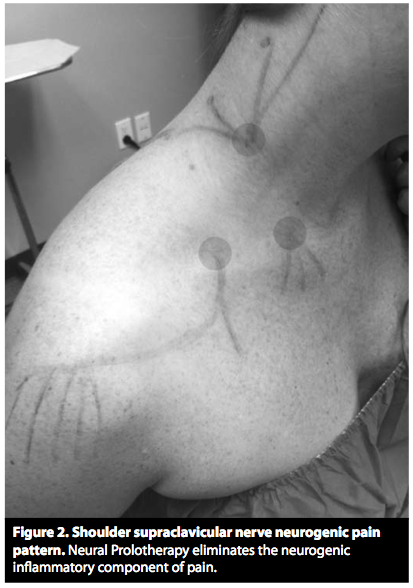
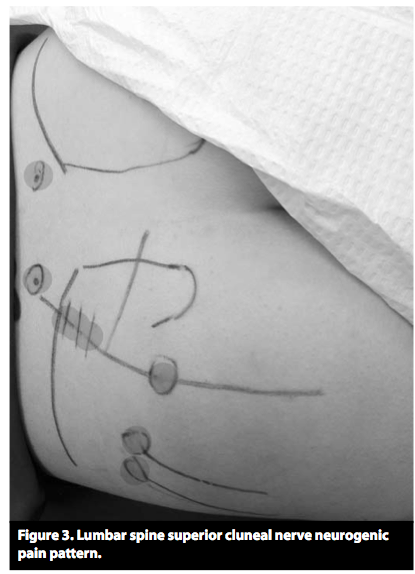
The pathology of neurogenic inflammation is well established.1, 2, 16 Ligaments, tendons and joints have TRPV1-sensitive C pain fiber innervation. Dr. Pybus explains that the C pain fibers transmit the “deep pain” often seen with osteoarthritis.14 “When these C pain fibers are irritated anywhere along their length they will transmit ectopic impulses in both forward (prodromic) and reverse (antidromic) direction.”14 The forward direction of the nerve signal will cause pain perception as the signal travels through the posterior root ganglia up to the brain. You will also have a local reflex action from the spinal cord ventral horn cells out to the muscle fibers, which will cause a reflex muscle spasm.14 The reverse (antidromic) signal will travel to the blood vessels where substance P is released causing swelling and pain. The nerves themselves also have a nerve supply called the Nervi Nervorum (NN).2 In a pathological state, the NN can release substance P (Sub P) and Calcitonin Gene Related Peptide (CGRP) onto these C pain fibers.11 Sub P and CGRP are known to cause pain, swelling of the nerve and surrounding tissue.7

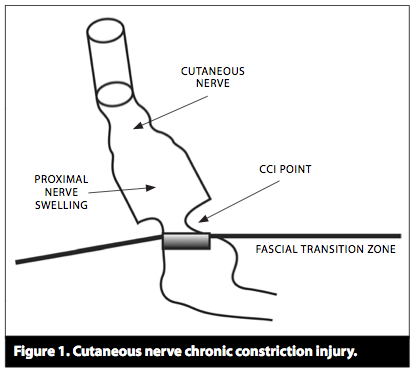
Dr. Lyftogt discussed in his recent Neural Prolotherapy meeting that “Cutaneous nerves pass through many fascial layers on their way to the spine. When there is neurogenic swelling at the Fascial Penetration Zone, a Chronic Constriction Injury (CCI) occurs. The CCI points will inhibit flow of Nerve Growth Factor (NGF).8, 7 Proper flow of NGF is essential for nerve health and repair.”3 (See Figure 1.)

Skjermbilde 2013-08-06 kl. 08.59.43

There are two major ways that the fascial penetration point can affect a nerve. Trauma to a nerve will cause edema to travel proximal and distal to the injury. When this swelling reaches the fascial penetration points this can cause a self- strangulation of the nerve and decrease nerve growth factor flow.16, 17 Morton’s neuroma is a clinical example of this.17

Dr. Pybus has also suggested that a change in fascial tension from repetitive muscle dysfunction can also cause a CCI point.15, 17

Another critical concept in NPT is what is called Bystander disease.9, 17 Bystander disease helps explain how superficial nerve pathology can affect deeper anatomic structures.9 This is based on Hilton’s law. Hilton’s law states: the nerve supplying a joint also supplies both the muscles that move the joint and the skin covering the articular insertion of those muscles.9 An example: The musculocutaneous nerve supplies the elbow with pain and proprioception as it is the nerve supply to the biceps brachii and brachialis muscles, as well as the skin close to the insertion of these muscles.17 Hilton’s Law arises as a result of the embryological development of humans.

This concept of Hilton’s law coupled with the idea of anterograde and retrograde axonal flow of neurodegenerative peptides,17 can help explain the wide reaching affects of NPT on pain control.

Glucose responsive nerves have been demonstrated throughout the nervous system.4, 5, 6 One proposed mechanism of action suggests that dextrose binds to pre synaptic calcium channels and inhibits the release of substance P and CGRP, thereby decreasing neurogenic inflammation. This allows normal flow of nerve growth factor and subsequent nerve repair and decreased pain.7

Skjermbilde 2013-08-06 kl. 08.59.48

Skjermbilde 2013-08-06 kl. 09.00.00

1 Geppetti, et al. Neurogenic Inflammation. Boca Raton: Edited CRC Press; 1996. Chapter 5, Summary; p.53-63.

2 Marshall J. Nerve stretching for the relief or cure of pain. The Lancet.1883;2:1029-36.

8 Bennett GJ, et al. A peripheral mononeuropathy in rat that produces disorders of pain sensation like those seen in man. Pain. 1988;33(1):87-107.

9 Hilton J. On rest and Pain. In Jacobesen WHA(ed): On Rest and Pain, 2nd edition, New York: William Wood & company, 1879.

Ukjent sin avatar

Modulatory effects of respiration

Viser at HRV er størst ved 5-6 pust i minuttet.

http://www.sciencedirect.com/science/article/pii/S1566070201002673

Respiration is a powerful modulator of heart rate variability, and of baro- and chemoreflex sensitivity. Abnormal respiratory modulation of heart rate is often an early sign of autonomic dysfunction in a number of diseases.

This review examines the possibility that manipulation of breathing pattern may provide beneficial effects in terms not only of ventilatory efficiency, but also of cardiovascular and respiratory control in physiologic and pathologic conditions, such as chronic heart failure.


Fig. 2. Heart rate variability is maximal when respiration slows down in the low-frequency range, and particularly at 0.1 Hz (equivalent to 6 breaths/min).

Ukjent sin avatar

A new view on hypocortisolism

Om lavt kortisol-nivå og at det har en beskyttende effekt på kroppen etter langvarig høyt kortisol-nivå. En ny måte å se det på. Det er faktisk en overlevelsesmekanisme. Hvis vi ikke greier å skru av stresset eller fjerne oss fra den stressende livssituasjonen, vil kroppen etter hvert skru av stressresponsen og vi blir oversensitive for enhver utfordring. Utmattelse, muskelsmerter og fibromyalgi blir resultatet. Men likevel er det bedre for organismen enn videre stressresons. Studien forteller hvordan kortisol påvirker sentralnervesystemet, immunsystemet, oppvåkningsresponsen om morgenen, sickness responce, allostatic load, m.m.

http://cfids-cab.org/cfs-inform/Hypotheses/fries.etal05.pdf

Low cortisol levels have been observed in patients with different stress-related disorders such as chronic fatigue syndrome, fibromyalgia, and post- traumatic stress disorder. Data suggest that these disorders are characterized by a symptom triad of enhanced stress sensitivity, pain, and fatigue.

We propose that the phenomenon of hypocortisolism may occur after a prolonged period of hyperactivity of the hypothalamic–pituitary– adrenal axis due to chronic stress as illustrated in an animal model. Further evidence suggests that despite symptoms such as pain, fatigue and high stress sensitivity, hypocortisolism may also have beneficial effects on the organism. This assumption will be underlined by some studies suggesting protective effects of hypocortisolism for the individual.

Since the work of Selye (1936), stress has been associated with an activation of the hypothalamic– pituitary–adrenal (HPA) axis resulting in an increased release of cortisol from the adrenal glands. In recent years, a phenomenon has been described that is characterized by a hyporespon- siveness on different levels of the HPA axis in a number of stress-related states. This phenomenon, termed ‘hypocortisolism’, has been reported in about 20–25% of patients with stress-related dis- orders such as chronic fatigue syndrome (CFS), chronic pelvic pain (CPP), fibromyalgia (FMS), post-traumatic stress disorder (PTSD), irritable bowel syndrome (IBS), low back pain (LBP), burn- out, and atypical depression (Griep et al., 1998; Heim et al., 1998, 2000; Pruessner et al., 1999; Gold and Chrousos, 2002; Gur et al., 2004; Roberts et al., 2004; Rohleder et al., 2004). When hypo- cortisolemic, all these disorders may share affiliated syndromes characterized by a triad of enhanced stress sensitivity, pain, and fatigue.

However, despite different definitions we know today that there is a considerable overlap between the disorders.

In the early 1990s, Hudson and colleagues were amongst the first addressing this issue. They published a study on the comorbidity of FMS with medical and psychiatric disorders in which they reported a higher prevalence of migraine, IBS, and CFS, as well as higher lifetime rates of depression and panic disorder in patients with FMS (Hudson et al., 1992).

Thus, numerous studies on male war veterans have reported an association between PTSD and symp- toms such as fatigue, joint pain, and muscle pain (Engel et al., 2000; Ford et al., 2001).

These alterations of HPA axis are determined by (1) a reduced biosynthesis or release of the respective releasing factor/hormone on different levels of the HPA axis (CRF/AVP from the hypothalamus, ACTH from the pituitary, or cortisol from the adrenal glands) accompanied by a subsequent decreased stimulation of the respective target receptors, (2) a hypersecretion of one secretagogue with a subsequent down-regulation of the respective target receptors, (3) an enhanced sensitivity to the negative feedback of glucocorti- coids, (4) a decreased availability of free cortisol, and/ or (5) reduced effects of cortisol on the target tissue, describing a relative cortisol resistance (Heim et al., 2000; Raison and Miller, 2003).

Several years ago we postulated that hypocortiso- lism/a hyporeactive HPA axis might develop after prolonged periods of stress together with a hyper- activity of the HPA axis and excessive glucocorti- coid release (Hellhammer and Wade, 1993). This proposed time course with changes in HPA axis activity from hyper- to hypocortisolism resembles the history of patients with stress-related disorders who frequently report about the onset of ‘hypo- cortisolemic symptoms’ (fatigue, pain, stress sen- sitivity) after prolonged periods of stress, e.g. work stress, infection, or social stress (Buskila et al., 1998; Van Houdenhove and Egle, 2004)

Thinking about the potential cause/reason for changes in HPA axis activity from hyper- to hypocortisolism one might consider the body’s self-adjusting abilities as an important factor. Self-adjusting abilities play a significant role in survival of the organism by counteracting the enduring increased levels of glucocorticoids, and protecting the organism against the possible dele- terious effects thereof.

Poten- tial mechanisms of the ‘HPA axis adjustment’ are (1) the down-regulation of specific receptors on different levels of the axis (hypothalamus, pitu- itary, adrenals, target cells), (2) reduced biosyn- thesis or depletion at several levels of the HPA axis (CRF, ACTH, cortisol) and/or (3) increased negative feedback sensitivity to glucocorticoids (Hellhammer and Wade, 1993; Heim et al., 2000).

The suppressed stress response after administration of dexamethasone demonstrates an increased sensi- tivity to glucocorticoid negative feedback on the level of the pituitary.

The duration, intensity, number and chronicity of stressors may further pronounce these effects. The low-dose dexamethasone test may be the most sensitive measure of this condition.

The HPA axis plays an important role in the regulation of the SNS. CRF seems to increase the spontaneous discharge rate of locus coeruleus (LC) neurons and enhances norepinephrine (NE) release in the prefrontal cortex (Valentino, 1988; Valentino et al., 1993; Smagin et al., 1995), whereas glucocorticoids seem to exert more inhibitory effects on NE release.

Glucocorticoids are the most potent anti-inflam- matory hormones in the body. They act on the immune system by both suppressing and stimulating pro- and anti-inflammatory mediators. While they promote Th2 development, for example by enhan- cing interleukin (IL)-4 and (IL)-10 secretion by macrophages and Th2 cells (Ramierz et al., 1996), they inhibit inflammatory responses and suppress the production and release of pro-inflammatory cytokines such as tumor necrosis factor alpha (TNF- alpha), IL-1 and IL-6 (see Franchimont et al., 2003).

An important role of glucocorticoids during stress is to suppress the production and activity of pro- inflammatory cytokines, thus restraining the inflammatory reaction and preventing tissue destruction (see McEwen et al., 1997; Ruzek et al., 1999; Franchimont et al., 2003).

Therefore, a hypocortisolemic stress response, as observed in patients with stress-related disorders, may result in an overactivity of the immune system in terms of increased inflammatory responses due to impaired suppressive effects of low cortisol levels (see Heim et al., 2000; Rohleder et al., 2004). This assumption is supported by studies reporting elevated levels of pro-inflammatory cytokines in patients with stress-related disorders such as PTSD, CFS, and FMS (Maes et al., 1999; Patarca-Montero et al., 2001; Thompson and Barkhuizen, 2003; Rohleder et al., 2004).

Assessing the cortisol awakening response in pregnant women, preliminary results from our laboratory suggest that women with higher daily stress load showed lower cortisol levels in the morning compared to women with normal to low daily stress load. This result suggests a possible prevention of harmful stimulatory effects of maternal cortisol on placental CRF, which plays a major role in the initiation of delivery (Rieger, 2005).

The term ‘sickness response’ refers to non-specific symptoms such as fatigue, increased pain sensi- tivity, depressed activity, concentration difficul- ties, and anorexia that accompany the response to infection (Hart, 1988; Maier and Watkins, 1998). Sickness behavior at the behavioral level appears to be the expression of a central motivational state that reorganizes the organism’s priority to cope with infectious pathogens (Hart, 1988).

Further evidence for the protective effects of the development of a hypocortisolism refers to the allostatic load index. The term ‘allostatic load’ was irstly introduced by McEwen and Stellar (1993) describing the wear and tear of the body and brain resulting from chronic overactivity or inactivity of physiological systems that are normally involved in adaptation to environmental challenge. Allostatic load results when the allostatic systems (e.g. the HPA axis) are either overworked or fail to shut off after the stressful event is over or when these systems fail to respond adequately to the initial challenge, leading other systems to overreact (McEwen, 1998). In this context, results of Hell- hammer et al. (2004) demonstrate a significantly higher allostatic load index in older compared to younger subjects with the exception of hypocorti- solemic elderly who had a comparable allostatic load to young people even though they scored far higher on perceived stress scales. Considering the fact that allostatic load has been associated with a higher risk for mortality, these data suggest that a hypocortisolemic response to stress may rather be protective than damaging.

Low cortisol levels in the case of pregnant women may protect the mother and the child against the risk of pre-term birth, which could be harmful for both of them. Similarly, low cortisol levels in those individuals who are repeatedly or continuously exposed to intense immune stimuli may be beneficial for health and survival.

Similarly, low cortisol levels in those individuals who are repeatedly or continuously exposed to intense immune stimuli may be beneficial for health and survival. Most strikingly, the demonstration of a low allostatic load index in hypocortisolemic subjects suggests that a down-regulation of the HPA axis in chroni- cally stressed subjects protects those subjects against the harmful effects of a high allostatic load index.

Ukjent sin avatar

Scratch collapse test for evaluation of carpal and cubital tunnel syndrome.

Viser hvilken klinisk relevanse scratch collapse test har for å finne hvor nerver er i klem.

http://www.ncbi.nlm.nih.gov/pubmed/18984333

For the new test, the patient resisted bilateral shoulder external rotation with elbows flexed. The area of suspected nerve compression was lightly «scratched,» and then resisted shoulder external rotation was immediately repeated. Momentary loss of shoulder external rotation resistance on the affected side was considered a positive test.

For carpal tunnel syndrome, sensitivities were 64%, 32%, and 44% for the scratch collapse test, Tinel’s test, and wrist flexion/compression test, respectively. For cubital tunnel syndrome, sensitivities were 69%, 54%, and 46% for the scratch collapse test, Tinel test, and elbow flexion/compression test, respectively. The scratch collapse test had the highest negative predictive value (73%) for carpal tunnel syndrome. Tinel’s test had the highest negative predictive value (98%) for cubital tunnel syndrome.

The scratch collapse test had significantly higher sensitivity than Tinel’s test and the flexion/nerve compression test for carpal tunnel and cubital tunnel syndromes. Accuracy for this test was 82% for carpal tunnel syndrome and 89% for cubital tunnel syndrome.

Mer utfyllende studie om Scratch Collapse her: http://www.ncbi.nlm.nih.gov/pmc/articles/PMC2880669/

Though the exact mechanism of the scratch collapse test is unknown, we believe it may represent a gross physical manifestation of the “cutaneous silent period.” This EMG-demonstrated phenomenon is observed following noxious stimuli. A brief pause of voluntary muscle contraction is demonstrated following stimulation of a cutaneous nerve [24]. The scratch collapse yields a similar reflex response. We propose that as the nervi-nervorum at the site of neuritis are stimulated, an ipsilateral central inhibition is transiently activated. It is not surprising that this response would be most robust at the focus of the neuritis.

The scratch collapse examination shares several features with the cutaneous silent period. Both phenomena occur after a noxious stimulus, are very resistant to habituation, are able to override voluntary muscle contraction, and result in a deferment in resistance in a pattern that corresponds to the withdrawal of the extremity into a position of protection (e.g., in this case, internally rotating the arms in against the body) [911131617]. From an evolutionary standpoint, such a reflex would be important in survival.

The test offers an advantage over these other tests in that it appears to precisely localize the site of nerve compression.

Ukjent sin avatar

Undervisning om nervekompresjon nevropati og kirurgi i armen

Nervekompresjon begynner i en mild variant, hvor myelinlaget rundt nervene fortsatt er tykt og fint. Blodsirkulasjonen hemmes. Smerter og paraestesier kommer og går. Tinels tegn er negativt tidlig i progresjonen. Scratch-Collapse Test viser hvor i nervebanen det er kompresjonproblemer(f.eks. doublecrush syndrome).

Blir moderat, hvor myelinlaget blir tynt. Det blir hevelse i nerven og bindevevet blir tykkere i området. Smerter er konstante og musklene svekkes. Det tar 3-4 mnd å bygge opp myelinlaget igjen når kompresjonen er rettet opp.

Og alvorlig, hvor myelinlaget er borte. Nervetrådene forvinner mer og mer. Atrofi og nummenhet i musklene. Når kompresjonen er borte repareres nerven ca.3 cm i måneden.

http://prezi.com/mjuaxe0cwwbr/?utm_campaign=share&utm_medium=copy&rc=ex0share