Ukjent sin avatar

CO2-beriket vann til fotbad

Å bade i CO2 beriket vann har vært brukt som medisin i alle år. Hellige og mirkauløse kilder har ofter vært vann med et høyt innhold av karbondioksid. Og det har blitt brukt i spa behandling i århundrer, spesielt i Bulgaria. Man finner Co2-rikt vann spesielt ved sovende og inaktive vulkaner.

CO2 er et veldig lite molekyl som diffunderer lett igjennom huden. I CO2-beriket vann kommer derfor CO2 inn i huden og inn til blodkarene i underhuden, hvor alle sansenerver ligger. Den økte CO2 en gjør at blodkarene rundt nervetrådene og i muskelvevet utvides (vasodilasjon) og at oksygene letter hopper av blodcellene slik at det kan bli brukt til energi i celler som vanligvis har lite tilgang på oksygen.

CO2 beriket vann kan vi lage selv på en svært enkel måte: blande Natron, Sitronsyre og vann. Begge disse stoffene fåes kjøpt på vanlig daglivarebutikk. Vannet begynner å bruse, og dette er CO2.

Studier nevner at man bør ha 900-1200 mg CO2 pr liter vann. Ved å måle pH kan vi regne med at vi har det når pH er nede på 5.

Vi kan se CO2 effekten på huden ved at det kommer tett-i-tett med ørsmå bobler. I f.eks. fotbad vil vi se at når vi tar foten opp fra vannet så er den rød, noe som er et tegn på økt blodsirkulasjon i huden.

For alle med nevropatier, diabetes, sår, nevromer, leggspenninger, restless leg syndrom, som lett blir sliten i bena av å gå, så vil dette være verdt et forsøk.

2-3 ganger i uka pleier å være den vanlige oppskriften. Noen studier har brukt det hver dag i mange uker. Spesielt når det gjelder diabetes sår.

Oppskrift: Bland 1 poseNatron med 2 poser Sitronsyre (blandingsforhold ca. 1:1) og hell innholdet i 5L vann. Det bruser veldig pga reaksjonen som lager CO2. Når du setter føttene nedi skal det komme mange små bobler som dekker huden. Etter 5-10 minutter vil huden som er under vann bli rød. Dette er et tegn på økt blodsirkulasjon.

5-15 minutter etter du er ferdig med fotbadet vil du sannsynligvis kjenne det prikker og strømmer ellers i kroppen også. Vanligvis kjennes det først og fremst i armer og bein, som er de stedene vi lettest kjenner økt blodsirkulasjon.

Her er noen studier som bekrefter effektene av CO2 beriket vann.

Beskriver det meste om balneotherapy, som det også heter. Inkludert kontraindikasjoner(hjerteproblemer og hypercapni som følge av lungeskade): http://www.centro-lavalle.com/edu/wp-content/uploads/2010/05/Carbon_Dioxide_Bath.pdf

Table 4. Major Indicators for CO2 Balneotherapy

1. Hypertension, especially borderline hypertension

2. Arteriolar occlusion, Stages I and II

3. Functional arteriolar blood flow disorders

4. Microcirculatory disorders

5. Functional disorders of the heart

Beskriver alt om hvordan det øker blodsirkulasjon og oksygenmetning: http://www.ncbi.nlm.nih.gov/pmc/articles/PMC3169585/?report=classic

Viser at det øker blodsirkulasjonen i huden og oksygenmetningen i muskelvev hos de som lett blir trøtte i beina: http://www.ncbi.nlm.nih.gov/pubmed/9112881/

Viser at det øker blodsirkulasjon og produksjonen av blodkar (angiogenese): http://circ.ahajournals.org/content/111/12/1523.long

Viser at det reparerer sår som ikke vil gro: http://iv.iiarjournals.org/content/24/2/223.long

Viser at det reparerer muskelskade: http://www.ncbi.nlm.nih.gov/pmc/articles/PMC3805014/

Viser at det reparerer muskelskade og atrofi (muskelsvikt) etter langtids post-operative sengeliggende: http://www.ncbi.nlm.nih.gov/pubmed/21371433

Viser at det reduserer hjertefrekvens gjennom å dempe sympaticus aktivering (ikke ved å øke parasymptaticus aktivering): http://jap.physiology.org/content/96/1/226

Viser at det øker mitokondrier og fjerner syster: http://www.ncbi.nlm.nih.gov/pmc/articles/PMC3499556/

Viser at det øker antioksidant status, reduserer frie radikaler og øker blodsirkulasjon i kapuillærene (mikrosirkulasjon): http://www.ncbi.nlm.nih.gov/pubmed/21248668

Viser at det hjelper til å reparere sår etter operasjon: http://www.ncbi.nlm.nih.gov/pmc/articles/PMC3595724/

Dr. Sircus sin forklaring av CO2 medisin som nevner mange måter å gjøre det på: 

CO2 Medicine & Bath Bombing Your Way to Health

Denne artikkelen beskriver mye om historien til CO2-bad. http://ndnr.com/dermatology/cellulite-and-carbon-dioxide-bath/

Mange bilder av diabetes sår (OBS: ikke for sarte sjeler) som blir regenerert i løpet av få uker med 20-30 min fotbad. Disse bruker 900-1000ppm CO2 konsentrasjon. Jeg er usikker på om det er mulig med å blande Sitronsyre og Natron: http://www.iasj.net/iasj?func=fulltext&aId=48581

Denne artikkelen beskriver de fleste sider ved forskjellig bruk av CO2 behandling. God gjennomgang av hvordan blodsirkluasjonen påvirkes. http://www.scuolaeuropeamedicinaestetica.it/public/CARBOXYTHERAPY.pdf

Ukjent sin avatar

The influence of expectation on spinal manipulation induced hypoalgesia: An experimental study in normal subjects

Nevner at kontekst og pasientens forventning om behandling har alt så si for effekten av behandling. Denne studien gjelder manipulering av ryggraden, men kan forventes å gjelde absolutt all behandling som gjøre på menneskekroppen hvor man tar på huden.

http://www.biomedcentral.com/1471-2474/9/19

The current study replicates prior findings of c- fiber mediated hypoalgesia in the lower extremity following SMT and this occurred regardless of expectation. A significant increase in pain perception occurred following SMT in the low back of participants receiving negative expectation suggesting a potential influence of expectation on SMT induced hypoalgesia in the body area to which the expectation is directed.

A growing body of evidence supports spinal manipulative therapy (SMT) as an effective treatment for low back pain [16]. Furthermore, the evidence is particularly strong when patients are classified into subgroups by patterns suggesting the likelihood of a favorable response [2,3,6]. Despite the positive findings of clinical trials, the mechanisms through which SMT acts are not established.

Hypoalgesia has been associated with SMT and has a postulated involvement in the clinical effectiveness [716]. For example, Vicenzino et al [14] observed greater pain free grip and pain pressure threshold in the forearm following SMT to the cervical spine. A prior study by our group found hypoalgesia of c- fiber mediated pain as measured by lessening of temporal summation in the lower extremity following SMT to the lumbar spine [7]. Temporal summation results from multiple painful stimuli of the same intensity applied at a frequency of less than 3 seconds and has been observed in both healthy subjects [1719] and those experiencing chronic pain [20,21]. Activation of the dorsal horn of the spinal cord has been directly observed with temporal summation in animal studies [2225]. Subsequently, we interpreted our prior findings of hypoalgesia of temporal summation following SMT in healthy participants as indicative of a pain inhibiting effect occurring at the dorsal horn.

A criticism of prior studies of SMT is a lack of consideration for the influence of non- specific effects such as placebo and expectation [2628]. The failure to account for non- specific effects may be significant as expectation has demonstrated a robust influence in the general pain literature [2940]. Specific to manual therapy, Kalauokalani et al [39] report on a secondary analysis of subjects with low back pain who were randomly assigned to receive either acupuncture or massage treatments. Subjects with higher expectations for the effectiveness of their assigned treatments demonstrated greater improvement in function. In our prior study, we attributed hypoalgesia of c- fiber mediated pain in response to SMT to a local spinal cord effect. However, a limitation of our prior study was the failure to account for the potential influence of non- specific effects. Therefore, the purpose of this study was to determine how subjects’ expectation about the effect of SMT would influence hypoalgesia. Similar to prior studies [715], we expected a hypoalgesic effect in response to SMT, however we hypothesized this effect would be greater in subjects receiving positive expectation regarding the SMT procedure as compared to those receiving neutral or negative expectation.

Effect of Instructional Set on Expected Pain in the Low Back. Change in expected pain in the low back following instructional set. Positive values indicate expectation of less pain. A statistical interaction occurred with participants receiving a positive expectation instructional set reporting expectations for less pain with quantitative sensory testing (QST) following spinal manipulative therapy (SMT) and those receiving a negative expectation instructional set reporting expectations for greater pain. Error bars represent 1 standard error of the mean (SEM). * indicates significant change at p ≤ 0.05.

Change in Pain Perception in the Low Back and Lower Extremity by Expectation Instructional Set. Change in pain perception in the low back and lower extremity following spinal manipulative therapy (SMT). Positive numbers indicate hypoalgesia, while negative numbers indicate hyperalgesia. A significant interaction was present in the low back suggesting that post SMT pain perception was dependent upon the group to which the participant was randomly assigned. Follow up pairwise comparison indicated a significant increase in pain perception in subjects receiving a negative expectation instructional set. No interaction was observed in the lower extremity of participants; however, a significant main effect occurred suggesting hypoalgesia regardless of group assignment. Error bars represent 1 standard error of the mean (SEM). * indicates a statistically significant change in pain perception in the low back following SMT at p ≤ 0.05.

This study provides preliminary evidence for the influence of a non- specific effect (expectation) on the hypoalgesia associated with a single session of SMT in normal subjects. We replicated our previous findings of hypoalgesia in the lower extremity associated with SMT to the low back. Additionally, the resultant hypoalgesia in the lower extremity was independent of an expectation instructional set directed at the low back. Conversely, participants receiving a negative expectation instructional set demonstrated hyperalgesia in the low back following SMT which was not observed in those receiving a positive or neutral instructional set.


Ukjent sin avatar

The Mechanisms of Manual Therapy in the Treatment of Musculoskeletal Pain: A Comprehensive Model

Nevner det meste rundt behandling av muskel og skjelett problemer, både usikkerheter, manglende diagnostisk spesifisitet, dårlig forhold mellom forklaringsmodelle og realitet, og foreslår nevrosentriske forklaringsmodeller. Viser til at spesifikk behandling ikke har bedre effekt enn uspesifikk behandling. Og til at den mekaniske teknikken setter igang en kaskade av nevrologiske effekter som resulterer i en behandlingeffekt.

http://www.ncbi.nlm.nih.gov/pmc/articles/PMC2775050/

Abstract

Prior studies suggest manual therapy (MT) as effective in the treatment of musculoskeletal pain; however, the mechanisms through which MT exerts its effects are not established. In this paper we present a comprehensive model to direct future studies in MT. This model provides visualization of potential individual mechanisms of MT that the current literature suggests as pertinent and provides a framework for the consideration of the potential interaction between these individual mechanisms. Specifically, this model suggests that a mechanical force from MT initiates a cascade of neurophysiological responses from the peripheral and central nervous system which are then responsible for the clinical outcomes. This model provides clear direction so that future studies may provide appropriate methodology to account for multiple potential pertinent mechanisms.

Mechanical Stimulus 

First, only transient biomechanical effects are supported by studies which quantify motion (Colloca et al., 2006;Gal et al., 1997;Coppieters & Butler, 2007;Coppieters & Alshami, 2007) but not a lasting positional change (Tullberg et al., 1998;Hsieh et al., 2002). Second, biomechanical assessment is not reliable. Palpation for position and movement faults has demonstrated poor reliability (Seffinger et al., 2004;Troyanovich et al., 1998) suggesting an inability to accurately determine a specific area requiring MT.  Third, MT techniques lack precision as nerve biased techniques are not specific to a single nerve (Kleinrensink et al., 2000) and joint biased technique forces are dissipated over a large area (Herzog et al., 2001;Ross et al., 2004).

Finally, studies have reported improvements in signs and symptoms away from the site of application such as treating cervical pain with MT directed to the thoracic spine (Cleland et al., 2005;Cleland et al., 2007) and lateral epicondylitis with MT directed to the cervical spine (Vicenzino et al., 1996).

Subsequently, we suggest, that as illustrated by the model, a mechanical force is necessary to initiate a chain of neurophysiological responses which produce the outcomes associated with MT. 

Neurophysiological Mechanism 

Studies have measured associated responses of hypoalgesia and sympathetic activity following MT to suggest a mechanism of action mediated by the periaquaductal gray (Wright, 1995) and lessening of temporal summation following MT to suggest a mechanism mediated by the dorsal horn of the spinal cord (George et al., 2006) The model makes use of directly measurable associated responses to imply specific neurophysiological mechanisms when direct observations are not possible. The model categorizes neurophysiological mechanisms as those likely originating from a peripheral mechanism, spinal cord mechanisms, and/or supraspinal mechanisms.

Peripheral mechanism 

Musculoskeletal injuries induce an inflammatory response in the periphery which initiates the healing process and influences pain processing. Inflammatory mediators and peripheral nociceptors interact in response to injury and MT may directly affect this process. For example, (Teodorczyk-Injeyan et al., 2006) observed a significant reduction of blood and serum level cytokines in individuals receiving joint biased MT which was not observed in those receiving sham MT or in a control group. Additionally, changes of blood levels of β-endorphin, anandamide, N-palmitoylethanolamide, serotonin, (Degenhardt et al., 2007) and endogenous cannabinoids (McPartland et al., 2005) have been observed following MT. Finally, soft tissue biased MT has been shown to alter acute inflammation in response to exercise (Smith et al., 1994) and substance P levels in individuals with fibromyalgia (Field et al., 2002). Collectively, these studies suggest a potential mechanism of action of MT on musculoskeletal pain mediated by the peripheral nervous system for which mechanistic studies may wish to account. 

Spinal mechanisms 

MT may exert an effect on the spinal cord. For example, MT has been suggested to act as a counter irritant to modulate pain (Boal & Gillette, 2004) and joint biased MT is speculated to “bombard the central nervous system with sensory input from the muscle proprioceptors (Pickar & Wheeler, 2001).”Subsequently, a spinal cord mediated mechanism of MT must be considered and is accounted for in the model. Direct evidence for such an effect comes from a study (Malisza et al., 2003b) in which joint biased MT was applied to the lower extremity of rats following capsaicin injection. A spinal cord response was quantified by functional MRI during light touch to the hind paw. A trend was noted towards decreased activation of the dorsal horn of the spinal cord following the MT. The model uses associated neuromuscular responses following MT to provide indirect evidence for a spinal cord mediated mechanism. For example, MT is associated with hypoalgesia (George et al., 2006;Mohammadian et al., 2004;Vicenzino et al., 2001), afferent discharge (Colloca et al., 2000;Colloca et al., 2003), motoneuron pool activity (Bulbulian et al., 2002;Dishman & Burke, 2003), and changes in muscle activity (Herzog et al., 1999;Symons et al., 2000) all of which may indirectly implicate a spinal cord mediated effect.

Supraspinal mechanisms 

Finally, the pain literature suggests the influence of specific supraspinal structures in response to pain. Structures such as the anterior cingular cortex (ACC), amygdala, periaqueductal gray (PAG), and rostral ventromedial medulla (RVM) are considered instrumental in the pain experience.(Peyron et al., 2000;Vogt et al., 1996;Derbyshire et al., 1997;Iadarola et al., 1998;Hsieh et al., 1995;Oshiro et al., 2007;Moulton et al., 2005;Staud et al., 2007;Bee & Dickenson, 2007;Guo et al., 2006). Subsequently, the model considers potential supraspinal mechanisms of MT. Direct support for a supraspinal mechanism of action of MT comes from (Malisza et al., 2003a) who applied joint biased MT to the lower extremity of rats following capsaicin injection. Functional MRI of the supraspinal region quantified the response of the hind paw to light touch following the injection. A trend was noted towards decreased activation of the supraspinal regions responsible for central pain processing. The model accounts for direct measures of supraspinal activity along with associated responses such as autonomic responses (Moulson & Watson, 2006;Sterling et al., 2001;Vicenzino et al., 1998) (Delaney et al., 2002;Zhang et al., 2006), and opiod responses (Vernon et al., 1986) (Kaada & Torsteinbo, 1989) to indirectly imply a supraspinal mechanism. Additionally, variables such as placebo, expectation, and psychosocial factors may be pertinent in the mechanisms of MT (Ernst, 2000;Kaptchuk, 2002). For example expectation for the effectiveness of MT is associated with functional outcomes (Kalauokalani et al., 2001) and a recent systematic review of the literature has noted that joint biased MT is associated with improved psychological outcomes (Williams et al., 2007). For this paper we categorize such factors as neurophysiological effects related to supraspinal descending inhibition due to associated changes in the opioid system (Sauro & Greenberg, 2005), dopamine production (Fuente-Fernandez et al., 2006), and central nervous system (Petrovic et al., 2002;Wager et al., 2004;Matre et al., 2006) which have been observed in studies unrelated to MT.

Figure 3 Pathway considering both a spinal cord and supraspinal mediated effect from Bialosky et al (2008)

Ukjent sin avatar

Trigger point dry needling as an adjunct treatment for a patient with adhesive capsulitis of the shoulder.

Nevner gode resultater på forzen shoulder med nålebehandlng av skuldermuskulatur. Men det er bare beskrivelse av en enkelt case, med 13 behandlinger på 6 uker.

http://www.ncbi.nlm.nih.gov/pubmed/24261931

Abstract

STUDY DESIGN:

Case report.

BACKGROUND:

Prognosis for adhesive capsulitis has been described as self-limiting and can persist for 1 to 3 years. Conservative treatment that includes physical therapy is commonly advised.

CASE DESCRIPTION:

The patient was a 54-year-old woman with primary symptoms of shoulder pain and loss of motion consistent with adhesive capsulitis. Manual physical therapy intervention initially consisted of joint mobilizations of the shoulder region and thrust manipulation of the cervicothoracic region. Although manual techniques seemed to result in some early functional improvement, continued progression was limited by pain. Subsequent examination identified trigger points in the upper trapezius, levator scapula, deltoid, and infraspinatus muscles, which were treated with dry needling to decrease pain and allow for higher grades of manual intervention.

OUTCOMES:

The patient was treated for a total of 13 visits over a 6-week period. After trigger point dry needling was introduced on the third visit, improvements in pain-free shoulder range of motion and functional outcome measures, assessed with the Shoulder Pain and Disability Index and the shortened form of the Disabilities of the Arm, Shoulder and Hand questionnaire, exceeded the minimal clinically important difference after 2 treatment sessions. At discharge, the patient had achieved significant improvements in shoulder range of motion in all planes, and outcome measures were significantly improved.

DISCUSSION:

This case report describes the clinical reasoning behind the use of trigger point dry needling in the treatment of a patient with adhesive capsulitis. The rapid improvement seen in this patient following the initiation of dry needling to the upper trapezius, levator scapula, deltoid, and infraspinatus muscles suggests that surrounding muscles may be a significant source of pain in this condition.

Ukjent sin avatar

Måle Vitalkapasitet (lungevolum) med ballong

Denne videoen beskriver hvordan vital kapasitet måles enkelt med en ballong. En greit teknikk å bruke for å sjekke din fremgang med diafragma øvelsene i Verkstedet Breathing System.

Den nevner også hvordan man regner ut kroppens overflateareal, Body Surface Area: BSA = roten av ( (høyde (cm)*vekt (kg)) / 3600)

For så å kunne beregnes hva en vital kapsitet burde være (svaret vises i kubikkcentimeter, cm3):

Menn: BSA * 2500

Kvinner: BSA *  2000

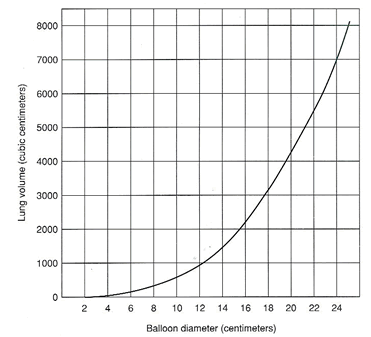
Den virkelige vitalkapsiteten måles ved å blåse i en ballong (som er strekt ut først for å gjøre den mest mulig rund) 3 ganger, og så forholde seg til det største volumet.

Ballong diameteren viser lungevolum i denne grafen:

lungevolum ballong test

Man regner med at alt over 80% av forventet vitalkapsitet er normalt.

Ukjent sin avatar

Ten Steps to Understanding Manual and Movement Therapies for Pain

Alt om smerte, kort fortalt, fra: http://www.somasimple.com/forums/showthread.php?t=4942
Nothing Simple – Ten Steps to Understanding Manual and Movement Therapies for Pain

1. Pain is a category of complex experiences, not a single sensation produced by a single stimulus.

2. Nociception (warning signals from body tissues) is neither necessary nor sufficient to produce pain. In other words, pain can occur in the absence of tissue damage.

3. A pain experience may be induced or amplified by both actual and potential threats.

4. A pain experience may involve a composite of sensory, motor, autonomic, endocrine, immune, cognitive, affective and behavioural components. Context and meaning are paramount in determining the eventual output response.

5. The brain maps peripheral and central neural processing into each of these components at multiple levels. Therapeutic input at a single level may be sufficient to resolve a threat response.

6. Manual and movement therapies may affect peripheral and central neural processes at various stages:
– transduction of nociception at peripheral sensory receptors
– transmission of nociception in the peripheral nervous system
– transmission of nociception in the central nervous system
– processing and modulation in the brain

7. Therapies that are most likely to be successful are those that address unhelpful cognitions and fear concerning the meaning of pain, introduce movement in a non-threatening internal and external context, and/or convince the brain that the threat has been resolved.

8. The corrective physiological mechanisms responsible for resolution are inherent. A therapist need only provide an appropriate environment for their expression.

9. Tissue length, form or symmetry are poor predictors of pain. The forces applied during common manual treatments for pain generally lack the necessary magnitude and specificity to achieve enduring changes in tissue length, form or symmetry. Where such mechanical effects are possible, the clinical relevance to pain is yet to be established. The predominant effects of manual therapy may be more plausibly regarded as the result of reflexive neurophysiological responses.

10. Conditioning for the purposes of fitness and function or to promote general circulation or exercise-induced analgesia can be performed concurrently but points 6 and 9 above should remain salient.

Bibliography

Books:
Pain: The Science of Suffering – Patrick Wall
The Challenge of Pain – Patrick Wall, Ronald Melzack
Explain Pain – David Butler, Lorimer Moseley
The Sensitive Nervous System – David Butler
Phantoms in the Brain – V. S. Ramachandran
Topical Issues in Pain Vol’s 1-5 – Louis Giffiord (ed)
The Feeling of What Happens – Antonio Damasio
Clinical Neurodynamics – Michael Shacklock
Eyal Lederman – The Science and Practice of Manual Therapy

Research articles:
Melzack R. Pain and the neuromatrix in the brain. J Dental Ed. 2001;65:1378-82.
Craig AD. Pain mechanisms: Labeled lines versus convergence in central processing. Ann Rev Neurosci. 2003;26:130.
Craig AD. How do you feel? Interoception: the sense of the physiological condition of the body. Nature Rev Neurosci. 2002;3:655-66.
Henderson LA, Gandevia SC, Macefield VG. Somatotopic organization of the processing of muscle and cutaneous pain in the left and right insula cortex: A single-trial fMRI study. Pain. 2007;128:20-30.
Olausson H, Lamarre Y, Backlund H, Morin C, Wallin BG, Starck G, Ekholm S, Strigo I, Worsley K, Vallbo AB, Bushnell MC. Unmyelinated tactile afferents signal touch and project to insular cortex. Nature Neurosci. 2002;5:900–904.
Moseley GL. A pain neuromatrix approach to patients with chronic pain. Manual Ther. 2003;8:130-40.
Moseley GL. Unravelling the barriers to reconceptualisation of the problem in chronic pain: The actual and perceived ability of patients and health professionals to understand the neurophysiology. J Pain. 2003;4:184-89.
Moseley GL, Arntz A. The context of a noxious stimulus affects the pain it evokes. Pain. 2007;133(1-3):64-71.
Moseley, GL, Nicholas, MK and Hodges, PW. A randomized controlled trial of intensive neurophysiology education in chronic low back pain. Clin J Pain. 2004;20:324-30.
Crombez G, Vlaeyen JWS, Heuts PH et al. Pain-related fear is more disabling than pain itself. Evidence on the role of pain-related fear in chronic back pain disability. Pain. 1999;80:329-40.
Zusman M. Forebrain-mediated sensitization of central pain pathways: ‘non-specific’ pain and a new image for manual therapy. Manual Ther. 2002;7:80-88.
Dorko B. The analgesia of movement: Ideomotor activity and manual care. J Osteopathic Med. 2003;6:93-95.
Threlkeld AJ. The effects of manual therapy on connective tissue. Phys Ther. 1992;72:893-902.
Lederman E. The myth of core stability. Retrieved at: http://www.ppaonline.co.uk/

Ukjent sin avatar

Tensjon i nervesystemet opprettholdes i hofta

Dette klippet nevner forskningen til den svenske nevrokirurgen Alfred Breig og viser til at det er hofteleddet som bestemmer det meste i nervesystemets tensjon (strekk). Utoverrotasjon og lett abduksjon gir minst strekk i nervesystemet.

«Tension in the nervous system has the same effect as compression» – Barret Dorko

Ukjent sin avatar

A meta-ethnography of patients’ experience of chronic non-malignant musculoskeletal pain

Omfattende studie om kronisk smerte som kommer med reelle tiltak for å bedre tilstanden hos pasientene. Nevner spesielt en at en holdningsendring må skje hos legene og sykepleierene hvor man inkluderer pasientes subjektive opplevelse. Nevner grunnlaget for dagens medisin og objektifisering av pasienten: «Foucault412 described the paradoxical position of the clinical encounter, in which the doctor aims to diagnose a disease rather than understand the person’s experience: ‘If one wishes to know the illness from which he is suffering, one must subtract the individual, with his [or her] particular qualities’  »

http://www.journalslibrary.nihr.ac.uk/__data/assets/pdf_file/0010/94285/FullReport-hsdr01120.pdf

Conclusion: Our model helps us to understand the experience of people with chronic MSK pain as a constant adversarial struggle. This may distinguish it from other types of pain. This study opens up possibilities for therapies that aim to help a person to move forward alongside pain. Our findings call on us to challenge some of the cultural notions about illness, in particular the expectation of achieving a diagnosis and cure. Cultural expectations are deep-rooted and can deeply affect the experience of pain. We therefore should incorporate cultural categories into our understanding of pain. Not feeling believed can have an impact on a person’s participation in everyday life. The qualitative studies in this meta-ethnography revealed that people with chronic MSK pain still do not feel believed. This has clear implications for clinical practice. Our model suggests that central to the relationship between patient and practitioner is the recognition of the patient as a person whose life has been deeply changed by pain. Listening to a person’s narratives can help us to understand the impact of pain. Our model suggests that feeling valued is not simply an adjunct to the therapy, but central to it. Further conceptual syntheses would help us make qualitative research accessible to a wider relevant audience. Further primary qualitative research focusing on reconciling acceptance with moving forward with pain might help us to further understand the experience of pain. Our study highlights the need for research to explore educational strategies aimed at improving patients’ and clinicians’ experience of care. 

As part of a person’s struggle we described the fragmentation of body and self, and suggested that moving forward with pain involves a process of reintegrating the painful body. 

Under conditions of health, we perform actions automatically and remain unaware of our body until something goes wrong with it. Health presupposes that we remain unaware of our bodies.396 When in pain, the body emerges as an ‘alien presence’;
it ‘dys-appears’. I no longer am a body but have a body,388 and my body becomes an ‘it’ as opposed to an

I’. Wall399 describes this dualism as epitomised by the expression ‘my foot hurts me’ as if in some way the foot is apart from myself (p. 23). It is because ‘the body seizes our awareness particularly at times of disturbance, [that] it can come to appear “other” and opposed to the self’ (p. 70).388 This fragmentation of ‘mind trapped inside an alien body’ means that our bodies become mistrusted and ‘forgotten as a ground of knowledge’ (p. 86).388 Our concept ‘integrating my painful body’ implies an altered therapeutic relationship with the body in which the dualism of mind and body are broken down.

We do not know why certain patients can accept and redefine their sense of self and others cannot.
It may be related to the degree of disruption to self that is caused by pain. The enmeshment model developed by Pincus and Morley406 proposes that, if a person regards their ideal self as unobtainable in the presence of pain, they are less likely to accept chronic pain. The enmeshment model incorporates self-discrepancy theory,407 which proposes that the extent to which pain disrupts our lives depends on the meaning that it holds for us. In self-discrepancy theory meaning incorporates three constructs: (1) actual self – ‘your representation of the attributes that someone (yourself or another) believes you actually possess’; (2) ideal self – ‘your representation of the attributes that someone (yourself or another) would like you, ideally, to possess’; and (3) ought self – ‘your representation of the attributes that someone (yourself or another) believes you should or ought to possess’ (p. 320–1).407

However, it is ‘pathos’, the feeling of suffering and powerlessness, of ‘life going wrong’, that precedes a person’s visit to the doctor (p. 137).396 Our model suggests that central to the therapeutic relationship is the recognition of ‘pathos’; the patient is a subject rather than an ‘object’ of investigation. This concept is central to models of patient-centred care.413

We described a need for a person in pain to feel that the health-care professional is alongside them with their pain. Affirming a person’s experience and allowing an empathetic interpretation of their story is not an adjunct, but integral to health care.395

Our model also suggests possibilities that might help patients to move forward alongside their pain:

  • an integrated relationship with the painful body
  • redefining a positive sense of self now and in the future
  • communicating to, rather than hiding from, others the experience of pain
  • knowing that I am not the only one with pain (but I am still valued)
  • regaining a sense of reciprocity and social participation
  • recognising the limitations of the medical model
  • being empowered to experiment and change the way that I do things without the sanction of the health-care professional.
Ukjent sin avatar

THE VALUE OF BLOWING UP A BALLOON

Dette er en veldig viktig artikkel for å forstå diafragmas rolle i både pust og bevegelse, og ifh smertetilstander i ryggraden. Nevner en lovende teknikk for å styrke diafragma og støttemuskulatur hvor man blåser opp en ballong og strammer kjernemuskulaturen. Nevner Zone of Apposition (ZOA) som beskriver diafragmas bevegelsesmuligheter. Ved lav ZOA har diafrgma lite bevegelse. Vi ønsker å øke ZOA. Denne øvelsen er konstruert basert på fysioterapeutisk prinsipper, men i Verkstedet Breathing System har vi øvelser som er gir samme resultater på diafragma, men bygget på lang og erfaringsbasert tradisjon fra tibetansk buddhisme.

Nevner også hvordan mage-pust minker bevegelsen i diafragma.

http://www.ncbi.nlm.nih.gov/pmc/articles/PMC2971640/

Suboptimal breathing patterns and impairments of posture and trunk stability are often associated with musculoskeletal complaints such as low back pain. A therapeutic exercise that promotes optimal posture (diaphragm and lumbar spine position), and neuromuscular control of the deep abdominals, diaphragm, and pelvic floor (lumbar-pelvic stabilization) is desirable for utilization with patients who demonstrate suboptimal respiration and posture. This clinical suggestion presents a therapeutic exercise called the 90/90 bridge with ball and balloon. This exercise was designed to optimize breathing and enhance both posture and stability in order to improve function and/or decrease pain. Research and theory related to the technique are also discussed.

Many muscles used for postural control/stabilization and for respiration are the same, for example: the diaphragm, transversus abdominis, and muscles comprising the pelvic floor.16 Maintaining optimal posture/stability and respiration is important and is even more challenging during exercise. Exercise increases respiratory demand (e.g. running) and limb movements (e.g. arms moving while standing still) increase postural demands for stabilization.3,7

Many factors are potentially involved with suboptimal respiration and suboptimal (faulty) posture and may be associated with musculoskeletal complaints such as low back pain, and/or sacroiliac joint pain.8 (Table 1)

Suboptimal Respiration and Posture
Decreased/suboptimal Zone of Apposition of diaphragm
Decreased exercise tolerance
Decreased intra-abdominal pressure
Shortness of Breath/Dyspnea
Decreased respiratory efficiency
Decreased expansion of lower rib cage/chest
Decreased appositional diaphragm force
Decreased length of diaphragm (short)
Decreased transdiaphragm pressure
Increased use of accessory muscles of respiration
Poor neuromuscular control of core muscles
Increased lumbar lordosis
Increased anterior pelvic tilt
Increased hamstring length
Increased abdominal length
Rib elevation/external rotation
Sternum elevation
Increased activity of paraspinals
Increased lumbar-pelvic instability
Low back pain
Sacroiliac Joint pain
Thoracic Outlet Syndrome
Headaches
Asthma

One of the most critical factors, often overlooked by physical therapists, is maintaining an optimal zone of apposition of the diaphragm.3,911 The zone of apposition (ZOA) is the area of the diaphragm encompassing the cylindrical portion (the part of the muscle shaped like a dome/umbrella) which corresponds to the portion directly apposed to the inner aspect of the lower rib cage.12 The ZOA is important because it is controlled by the abdominal muscles and directs diaphragmatic tension. When the ZOA is decreased or suboptimal, there are several potential negative consequences. (Table 1) Two examples include:

  1. Inefficient respiration (less air in and out) because the transdiaphragmatic pressure is reduced.11 The smaller the ZOA, there will be less inspiratory action of the diaphragm on the rib cage.11
  2. Diminished activation of the transversus abdominis which is important for both respiration and lumbar stabilization.11,13

The incidence of LBP has been documented to be as high as 30% in the athletic population, and in many cases pain may persist for years.15 Low back pain is frequently correlated with faulty posture such as an excessive lumbar lordosis.1618 Excessive lumbar lordosis may be associated with over lengthened and weak abdominal musculature.1820 Poor neuromuscular control of core muscles (transversus abdominis, internal oblique, pelvic floor and diaphragm) has been described in individuals with SIJ pain21 and in individuals with lumbar segmental instability, potentially adversely affecting respiration.22

Richardson et al.27 describe coordination of the Transversus abdominis and the diaphragm in respiration during tasks in which stability is maintained by tonic activity of these muscles. During inspiration, the diaphragm contracts concentrically, whereas the transversus abdominis contracts eccentrically. The muscles function in reverse during exhalation with the diaphragm contracting eccentrically while the transversus abdominis contracts concentrically. Hodges et al. noted that during respiratory disease the coordinating function between the transversus abdominis and diaphragm was reduced.6 Thus, it is also possible that faulty posture such as over lengthened abdominals and excessive lordosis could reduce the coordination of the diaphragm and transversus abdominis during respiration and stabilization activities.

O’sullivan et al.21 studied subjects with LBP attributed to the sacroiliac joints and compared them to control subjects without pain. O’sullivan et al. compared respiratory rate and diaphragm and pelvic floor movement using real time ultrasound during a task that required load transfer through the lumbo-pelvic region (the active straight leg raise test). Subjects with pain had an increase in respiratory rate, descent of their pelvic floor and a decrease in diaphragm excursion as compared to the control subjects, who had normal respiratory rates, less pelvic floor descent, and optimal diaphragm excursion. While O’sullivan et al. concluded that an intervention program focused on integrating control of deep abdominal muscles with normal pelvic floor and diaphragm function may be effective in managing patients with LBP,21 they did not describe strategies or exercises to achieve this goal.21

While the role of the Transversus abdominis in lumbar stability is well documented, less well known is the role of the diaphragm in lumbar stability. While the primary function of the diaphragm is respiration, it also plays a role in spinal stability.3,28

The right hemidiaphragm attaches distally to the anterior portions of the first through third lumbar vertebrae (L1-3) and the left hemidiaphragm attaches distally on the first and second lumbar vertebrae (L1-2).29 This section of the diaphragm is referred to as the crura. Of interest is the asymmetrical attachment of the diaphragm with the left hemidiaphragm attaching to L1-2 and the right portion attaching to L1-3.

During the inhalation phase of ventilation, the dome of the diaphragm moves caudally like a piston creating a negative pressure in the thorax that forces air into the lungs. This action is normally accompanied by a rotation of the ribs outward (external rotation) largely in part due to the ZOA.12 (Figure 1) Apposition is a term that means multiple layers adjacent to each other.33 The normal force of pull on the sternal and costal portions of the diaphragm would produce an internal rotation of the ribs. The ZOA creates an external rotation of these ribs primarily because the pressure in the thoracic cavity prevents an inward motion. The crural portion of the diaphragm assists the caudal motion of the dome. It also pulls the anterior lumbar spine upward (cephalad and anterior). Additionally, the abdominal muscles and pelvic floor musculature are less active to allow visceral displacement due to the dome of the diaphragm dropping. With exhalation, this process is reversed. Abdominal muscle activity compresses the viscera in the abdominal cavity, the diaphragm is forced cephalad and the ribs internally rotate. As exhalation becomes forced as during exercise, abdominal activity (rectus abdominus, internal obliques, external obliques, and transversus abdominis) will be increased.3436

When the ZOA is optimized, the respiratory and postural roles of the diaphragm have maximal efficiency.37 In suboptimal positions (i.e. decreased ZOA), the diaphragm has a decreased ability to draw air into the thorax because of less caudal movement upon contraction and less effective tangential tension of the diaphragm on the ribs and therefore lower transdiaphragmatic pressure.38 This decreased ZOA is accompanied by decreased expansion of the rib cage, postural alterations, and a compensatory increase in abdominal expansion.12 (Figure 2)

One such adaptive breathing strategy would be to relax the abdominal musculature more than necessary on inspiration to allow for thoraco-abdominal expansion. This situation leads to decreased abdominal responsibility while breathing and can contribute to instability. This would reflect more upper chest breathing and less efficient diaphragm activity. If the body maintains this position and breathing strategy for an extended period of time, the diaphragm may adaptively shorten and the lungs may become hyperinflated.37,39,40 Hyperinflation may also contribute to over use of accessory muscles of respiration such as scalenes, sternocleidomastoid (SCM), pectorals, upper trapezius and paraspinals in an attempt to expand the upper rib cage.4144 Again, without an optimal dome shape/position of the diaphragm or an optimal ZOA the body compensates to get air in with accessory muscles since the more linear/flat/short diaphragm is less efficient for breathing.32

Instructions for Performance of the 90/90 Bridge with Ball and Balloon: 1. Lie on your back with your feet flat on a wall and knees and hips bent at a 90-degree angle. 2. Place a 4-6 inch ball between your knees. 3. Place your right arm above your head and a balloon in your left hand. 4. Inhale through your nose and as you exhale through your mouth, perform a pelvic tilt so that your tailbone is raised slightly off the mat. Keep low back flat on the mat. Do not press your feet into the wall, instead pull down with your heels. 5. You should feel the back of your thighs and inner thighs engage, keeping pressure on the ball. Maintain this position for the remainder of the exercise. 6. Now inhale through your nose and slowly blow out into the balloon. 7. Pause three seconds with your tongue positioned on the roof of your mouth to prevent airflow out of the balloon. 8. Without pinching the neck of the balloon and keeping your tongue on the roof of your mouth, inhale again through your nose. 9. Slowly blow out as you stabilize the balloon with your left hand. 10. Do not strain your neck or cheeks as you blow. 11. After the fourth breath in, pinch the balloon neck and remove it from your mouth. Let the air out of the balloon.12. Relax and repeat the sequence 4 more times. Copyright © Postural Restoration Institute™ 2009, used with permission

The patient/athlete is asked to hold the balloon with one hand and inhale through his/her nose with the tongue on the roof of the mouth (normal rest position) and then exhale through his/her mouth into the balloon. The inhalation, to about 75% of maximum, is typically 3-4 seconds in duration, and the complete exhalation is usually 5-8 seconds long followed by a 2-3 second pause. This slowed breathing is thought to further relax the neuromuscular system/parasympathetic nervous system and generally decrease resting muscle tone. Ideally the patient/athlete will be able to inhale again without pinching off the balloon with their teeth, lips, or fingertips. This requires maintenance of intra-abdominal pressure to allow inhalation through the nose without the air coming back out of the balloon and into the mouth.

When the exercise is performed by the patient/athlete with hamstring and gluteus maximus (glut max) activation (hip extensors) the pelvis moves into a relative posterior pelvic tilt and the ribs into relative depression and internal rotation. This pelvic and rib position helps to optimize abdominal length (decreases) and diaphragm length/ZOA (increases).

Clinical experience with the BBE includes utilization of the exercise for both female and male patients (more females than males), ages 5-89 with a wide variety of diagnoses including: low back pain, trochanteric bursitis, SIJ pain, asthma, COPD, acetabular labral tear, anterior knee pain, thoracic outlet syndrome (TOS) and sciatica.

Ukjent sin avatar

A Pilot Study Evaluating Mindfulness-Based Stress Reduction and Massage for the Management of Chronic Pain

Studie på Mindfulness mot kroniske muskelsmerter som sammenlignet effekten av muskelterapi (inkl. bindevev og nevromuskulær behandling – konsepter vi behandler etter på Verkstedet). Muskelterapi var bedre enn Mindfulness mot smerte, men Mindfuness var bedre for psyken på lang sikt. Selv 1 måned etter 8-ukers programmet. Meditasjonsprogrammet vi har på Verkstedet er Verkstedet Breathing System, som gjennom pusten skaper meditative opplevelser og reduksjon av smerte.

http://www.ncbi.nlm.nih.gov/pmc/articles/PMC1490272/

It is feasible to study MBSR and massage in patients with chronic musculoskeletal pain. Mindfulness-based stress reduction may be more effective and longer-lasting for mood improvement while massage may be more effective for reducing pain.

Mindfulness-based stress reduction is a mind-body intervention described by Kabat-Zinn.18 The participants met weekly for eight 2½ hour sessions. Meditation and yoga techniques were practiced to foster mindfulness (present moment, nonjudgmental awareness). Audiotaped meditation exercises were assigned as daily home practice. Participants were encouraged to use these skills in moments of stress and/or pain.

One-hour massage sessions were given once per week for 8 weeks by 3 licensed massage therapists. Massage techniques were at the discretion of the therapists and included Swedish, deep-tissue, neuromuscular, and pressure-point techniques. We specifically excluded music, scented oils, and energy techniques such as Reiki or therapeutic touch.