Ukjent sin avatar

Sensory innervation of the thoracolumbar fascia in rats and humans.

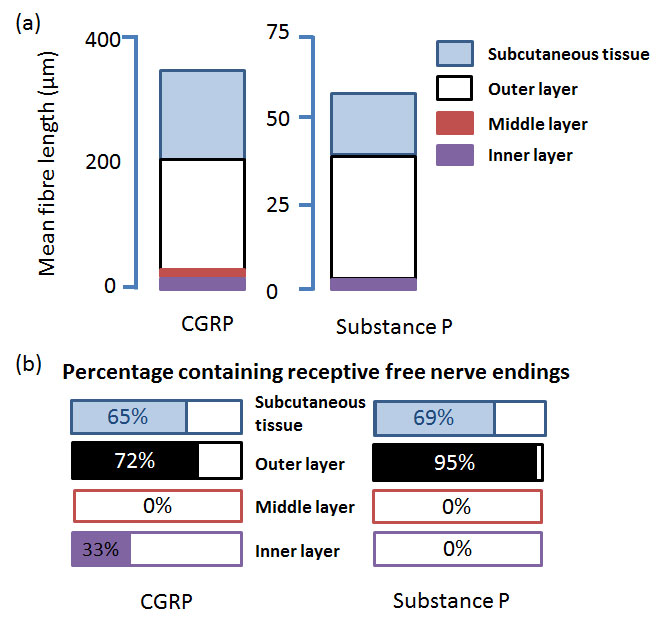
Studie som viser innervasjon av korsryggbindevev og påpeker at det er kun det ytre laget av bindevevet, det som er helt inn mot huden, som er tettpakket med sensoriske nerver og nociceptive fibre (som utskiller substans P og CGRP, og gir betennelser). De dypere lagene i midten av bindevevet eller ned mot musklene har nesten ingen nerveender eller sansesmuligheter.

http://www.ncbi.nlm.nih.gov/pubmed/21839150

Hele studien i min dropbox.

The subcutaneous tissue and the outer layer showed a particularly dense innervation with sensory fibers. SP-positive free nerve endings-which are assumed to be nociceptive-were exclusively found in these layers. Because of its dense sensory innervation, including presumably nociceptive fibers, the TLF may play an important role in low back pain.


Fig. 1. Structure of the rat thoracolumbar fascia (TLF) close to the spinous processes L4/L5. (a) Transversal section showing the three layers of the TLF (hematoxylin and eosin staining): OL, outer layer with transversely oriented collagen fibers; ML, middle layer composed of collagen fiber bundles oriented diagonally to the long axis of the body; IL, inner layer of loose connective tissue covering the multifidus muscle (muscle). SCT, subcutaneous tissue. (b) PGP 9.5-ir nerve fibers in the layers of the TLF. Black arrows, fibers on passage; open arrows, nerve endings. (c) Mean fiber length of PGP 9.5-ir fibers in the TLF. The great majority of all fibers were located in the outer layer (OL) of the fascia and in the subcutaneous tissue (SCT). White part of the bar: subcutaneous tissue plus outer layer of the TLF; black: middle layer; hatched: inner layer. n, number of sections evaluated.


Fig. 4. Distribution of CGRP and Substance P (SP)-immunoreactive nerve fibers in the TLF. (a) Mean fiber length of CGRP-ir nerve fibers. (b) Mean fiber length of SP-ir nerve fibers. Almost all fibers were found in the outer layer of the fascia and the subcutaneous tissue. The middle layer was free of SP-positive fibers. Gray part of the bars: subcutaneous tissue; white: outer layer of the TLF; black: middle layer; hatched: inner layer. n=number of sections evaluated. (c, d) Distribution of CGRP- (c) and SP-containing receptive free nerve endings (d) expressed as percent of the total number of CGRP- or SP-containing fibers in each layer. For classification as receptive endings, the structures had to exhibit at least three varicosities. SP-containing free nerve endings were restricted to the outer layer of the thoracolumbar fascia and the subcutaneous connective tissue while CGRP-containing free nerve endings were also found in the inner layer of the thoracolumbar fascia.

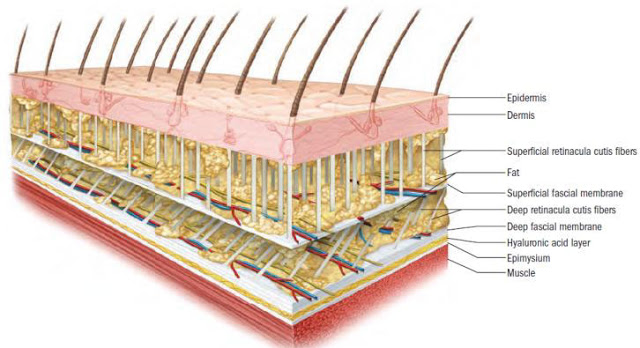
Og et bilde av de forskjellige bindevevslagene som er nevnt i denne studien.

Our study demonstrates that the rat TLF and the SCT overlying the fascia are densely innervated tissues, and therefore both the TLF and SCT, may play a role in low back pain. Most nerve fibers are located in the OL of the TLF and in the SCT, whereas in the ML nerve fibers are rare. Actually, no SP-ir fibers were found in this layer. Teleologically, the lack of fibers in the ML, particularly those containing SP, makes sense because each move- ment of the body causes shearing forces between the collagen fiber bundles, which might excite nociceptors.

Ukjent sin avatar

Entrapment Neuropathies in the Upper and Lower Limbs: Anatomy and MRI Features

Nevner viktige steder nerver kommer i klem.

http://www.hindawi.com/journals/rrp/2012/230679/

Although nerves may be injured anywhere along their course, peripheral nerve compression or entrapment occurs more at specific locations, such as sites where a nerve courses through fibroosseous or fibromuscular tunnels or penetrates muscles [2, 3].

Figure 1: The drawing shows anatomy of the suprascapular nerve from the posterior view. Note the nerve courses through the suprascapular notch (open arrow) and spinoglenoid notch (curved arrow). SSN: suprascapular nerve, SS: supraspinatus muscle, IS: infraspinatus muscle.

Suprascapular nerve compression or entrapment, known as suprascapular nerve syndrome, can occur as a result of trauma, an anomalous or thickened transverse scapular ligament, or extrinsic compression by a space-occupying lesion [7, 8], commonly a ganglia cyst or soft tissue tumor. Compression or entrapment at the suprascapular notch leads to supraspinatus and infraspinatus muscle denervation (Figure 2), whereas more distal entrapment at the spinoglenoid notch may present with isolated involvement of the infraspinatus muscle (Figure 3). Patients may present with poorly localized pain and discomfort at the back of the shoulder or the upper back, as well as weakness when raising the arm.


Figure 4: The drawing shows the axillary nerve within the quadrilateral space from a posterior view. AN: axillary nerve, Tm: teres minor muscle, Tr: long head of the triceps, TM: teres major muscle, H: humerus, D: deltoid muscle.

Clinical manifestations include poorly localized shoulder pain and paresthesias in the affected arm in a nondermatomal distribution. The diagnosis can be difficult since clinical symptoms may be confused with rotator cuff pathology or other shoulder joint-related abnormalities [9].


Figure 6: The drawing provides an anterior view of the course of the radial nerve at the elbow. Posterior interosseous nerve (PIN) entrapment may occur due to prominent radial recurrent artery (RRA), medial edge of the extensor carpi radialis brevis (ECRB), and proximal edge of the supinator muscle (SP) (arcade of Frohse). RN: radial nerve, SRN: superficial radial nerve.

The radial nerve is predisposed to injury and entrapment at several locations along its course, which include the radial nerve in the spiral groove of the humerus (spiral groove syndrome) above the elbow joint, where the PIN travels through the radial tunnel, and the superficial branch of the radial nerve where it crosses over the first dorsal wrist compartment (Wartenberg’s syndrome).

Compression or entrapment of the PIN in the radial tunnel may yield two different clinical presentations: posterior interosseous nerve syndrome and radial tunnel syndrome.
In patients with posterior interosseous nerve syndrome, the clinical presentation includes motor deficits of the extensor muscle group without significant sensory loss.
Patients with radial tunnel syndrome, on the other hand, typically present with pain over the proximal lateral forearm [12, 13], which can be caused by acute trauma, masses, and compression from adjacent structures.


Figure 8: The drawing demonstrates the course of the ulnar nerve from posterior view at the elbow. Note the nerve travels deep to the flexor carpi ulnaris muscle (FCU) beneath the arcuate ligament (AL).

Compressive or entrapped ulnar nerve neuropathies include cubital tunnel syndrome and Guyon’s canal syndrome.

Cubital tunnel syndrome is the second most common peripheral neuropathy of the upper extremity. It may be caused by abnormal fascial bands, subluxation, or dislocation of the ulnar nerve over the medial epicondyle, trauma, or direct compression by soft tissue masses. Clinical symptoms include a sensory abnormality of the ulnar hand and weakness of the flexor carpi muscle group of the 4th and 5th fingers.


Figure 12: The drawing of the median nerve shows that it courses along the anterior elbow, through the two heads of the pronator teres muscle (stars), and into the forearm beneath the edge of the fibrous arch of the flexor digitorum sublimis (open arrow).

Median nerve compression or entrapment neuropathies include pronator syndrome, anterior interosseous syndrome, and carpal tunnel syndrome.

Clinical findings include pain and numbness of the volar aspect of the elbow, forearm, and wrist without muscle weakness.


Figure 14: The drawing shows the proximal course the sciatic nerve passing inferior to the piriformis muscle (PS). SG: superior gemellus muscle.

Sciatic nerve entrapment may occur in the hip region and less commonly in the thigh, and clinical presentations are based upon the level of injury [3]. Sciatic neuropathy may result from conditions such as fibrous or muscular entrapment, vascular compression, scarring related to trauma (Figure 15) or radiation, tumors (Figure 16), and hypertrophic neuropathy [3, 17, 18].


Figure 17: Sagittal oblique projection of the knee illustrates the common peroneal nerve (CPN) arising from the sciatic nerve (SN) at the level of popliteal fossa. It travels around the fibular head deep to the origin of the peroneus longus muscle (PL). TN: tibial nerve.

The etiologies of common peroneal neuropathy may include idiopathic mononeuritis, intrinsic and extrinsic space-occupying lesions including an intraneural ganglion cyst (Figure 18) [21], or traumatic injury of the nerve, especially related to proximal fibular fractures [22]. Clinically, patients may experience pain at the site of entrapment with foot drop and a slapping gait [17, 23].


Figure 19: The drawing of the medial aspect of the ankle showing the course of the tibial nerve (TN) and its branches, the medial calcaneal nerve (MCN), and medial and lateral plantar nerves (MPN and LPN), passing through the tarsal tunnel. FR: flexor retinaculum.

Common etiologies include posttraumatic fibrosis due to fracture, tenosynovitis, ganglion cysts (Figure 20), space-occupying lesions, and dilated or tortuous veins. Most patients with tarsal tunnel syndrome have burning pain and paresthesia along the plantar foot and toes.

Ukjent sin avatar

Neural Prolotherapy


Denne artikkelen er om en behandlingsform som sprøyter inn dextrose rett under huden for å stimulere nervetrådene der. Den har mange gode forklaringsmodeller om hva som skjer i nervene rett under huden. Nevner bla anterograd og retrograd nervesignaler i C-fibrene. Og Hiltons Law, som er et svært interessant konsept: nervene som går til et ledd går også til musklene som beveger leddet og huden over muskelens feste. Viser til at dextrose hemmer betennelse i nervene, men dette er et vanskelig konsept ved f.eks. diabetisk nevropati hvor hyperglycemi er noe av årsaken til nerveskaden i utgangspunktet. Dog hyperglycemi påvirker blodsirkulasjonen først og fremst.

http://www.orthohealing.com/wp-content/uploads/2011/10/Neural_prolotherapy.pdf

paThology oF NEUrogENiC iNFlaMMaTioN
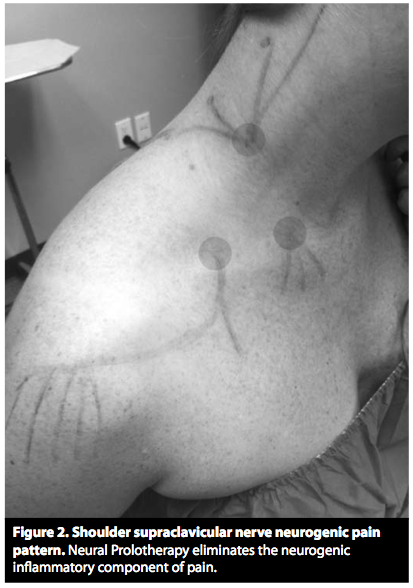
The pathology of neurogenic inflammation is well established.1, 2, 16 Ligaments, tendons and joints have TRPV1-sensitive C pain fiber innervation. Dr. Pybus explains that the C pain fibers transmit the “deep pain” often seen with osteoarthritis.14 “When these C pain fibers are irritated anywhere along their length they will transmit ectopic impulses in both forward (prodromic) and reverse (antidromic) direction.”14 The forward direction of the nerve signal will cause pain perception as the signal travels through the posterior root ganglia up to the brain. You will also have a local reflex action from the spinal cord ventral horn cells out to the muscle fibers, which will cause a reflex muscle spasm.14 The reverse (antidromic) signal will travel to the blood vessels where substance P is released causing swelling and pain. The nerves themselves also have a nerve supply called the Nervi Nervorum (NN).2 In a pathological state, the NN can release substance P (Sub P) and Calcitonin Gene Related Peptide (CGRP) onto these C pain fibers.11 Sub P and CGRP are known to cause pain, swelling of the nerve and surrounding tissue.7

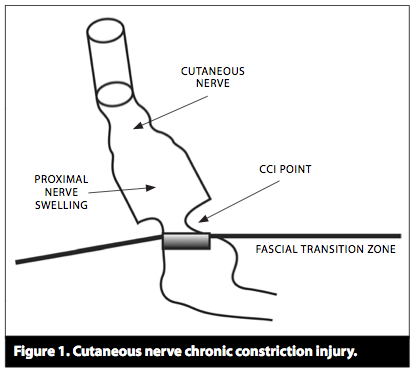
Dr. Lyftogt discussed in his recent Neural Prolotherapy meeting that “Cutaneous nerves pass through many fascial layers on their way to the spine. When there is neurogenic swelling at the Fascial Penetration Zone, a Chronic Constriction Injury (CCI) occurs. The CCI points will inhibit flow of Nerve Growth Factor (NGF).8, 7 Proper flow of NGF is essential for nerve health and repair.”3 (See Figure 1.)

Skjermbilde 2013-08-06 kl. 08.59.43

There are two major ways that the fascial penetration point can affect a nerve. Trauma to a nerve will cause edema to travel proximal and distal to the injury. When this swelling reaches the fascial penetration points this can cause a self- strangulation of the nerve and decrease nerve growth factor flow.16, 17 Morton’s neuroma is a clinical example of this.17

Dr. Pybus has also suggested that a change in fascial tension from repetitive muscle dysfunction can also cause a CCI point.15, 17

Another critical concept in NPT is what is called Bystander disease.9, 17 Bystander disease helps explain how superficial nerve pathology can affect deeper anatomic structures.9 This is based on Hilton’s law. Hilton’s law states: the nerve supplying a joint also supplies both the muscles that move the joint and the skin covering the articular insertion of those muscles.9 An example: The musculocutaneous nerve supplies the elbow with pain and proprioception as it is the nerve supply to the biceps brachii and brachialis muscles, as well as the skin close to the insertion of these muscles.17 Hilton’s Law arises as a result of the embryological development of humans.

This concept of Hilton’s law coupled with the idea of anterograde and retrograde axonal flow of neurodegenerative peptides,17 can help explain the wide reaching affects of NPT on pain control.

Glucose responsive nerves have been demonstrated throughout the nervous system.4, 5, 6 One proposed mechanism of action suggests that dextrose binds to pre synaptic calcium channels and inhibits the release of substance P and CGRP, thereby decreasing neurogenic inflammation. This allows normal flow of nerve growth factor and subsequent nerve repair and decreased pain.7

Skjermbilde 2013-08-06 kl. 08.59.48

Skjermbilde 2013-08-06 kl. 09.00.00

1 Geppetti, et al. Neurogenic Inflammation. Boca Raton: Edited CRC Press; 1996. Chapter 5, Summary; p.53-63.

2 Marshall J. Nerve stretching for the relief or cure of pain. The Lancet.1883;2:1029-36.

8 Bennett GJ, et al. A peripheral mononeuropathy in rat that produces disorders of pain sensation like those seen in man. Pain. 1988;33(1):87-107.

9 Hilton J. On rest and Pain. In Jacobesen WHA(ed): On Rest and Pain, 2nd edition, New York: William Wood & company, 1879.

Ukjent sin avatar

A new view on hypocortisolism

Om lavt kortisol-nivå og at det har en beskyttende effekt på kroppen etter langvarig høyt kortisol-nivå. En ny måte å se det på. Det er faktisk en overlevelsesmekanisme. Hvis vi ikke greier å skru av stresset eller fjerne oss fra den stressende livssituasjonen, vil kroppen etter hvert skru av stressresponsen og vi blir oversensitive for enhver utfordring. Utmattelse, muskelsmerter og fibromyalgi blir resultatet. Men likevel er det bedre for organismen enn videre stressresons. Studien forteller hvordan kortisol påvirker sentralnervesystemet, immunsystemet, oppvåkningsresponsen om morgenen, sickness responce, allostatic load, m.m.

http://cfids-cab.org/cfs-inform/Hypotheses/fries.etal05.pdf

Low cortisol levels have been observed in patients with different stress-related disorders such as chronic fatigue syndrome, fibromyalgia, and post- traumatic stress disorder. Data suggest that these disorders are characterized by a symptom triad of enhanced stress sensitivity, pain, and fatigue.

We propose that the phenomenon of hypocortisolism may occur after a prolonged period of hyperactivity of the hypothalamic–pituitary– adrenal axis due to chronic stress as illustrated in an animal model. Further evidence suggests that despite symptoms such as pain, fatigue and high stress sensitivity, hypocortisolism may also have beneficial effects on the organism. This assumption will be underlined by some studies suggesting protective effects of hypocortisolism for the individual.

Since the work of Selye (1936), stress has been associated with an activation of the hypothalamic– pituitary–adrenal (HPA) axis resulting in an increased release of cortisol from the adrenal glands. In recent years, a phenomenon has been described that is characterized by a hyporespon- siveness on different levels of the HPA axis in a number of stress-related states. This phenomenon, termed ‘hypocortisolism’, has been reported in about 20–25% of patients with stress-related dis- orders such as chronic fatigue syndrome (CFS), chronic pelvic pain (CPP), fibromyalgia (FMS), post-traumatic stress disorder (PTSD), irritable bowel syndrome (IBS), low back pain (LBP), burn- out, and atypical depression (Griep et al., 1998; Heim et al., 1998, 2000; Pruessner et al., 1999; Gold and Chrousos, 2002; Gur et al., 2004; Roberts et al., 2004; Rohleder et al., 2004). When hypo- cortisolemic, all these disorders may share affiliated syndromes characterized by a triad of enhanced stress sensitivity, pain, and fatigue.

However, despite different definitions we know today that there is a considerable overlap between the disorders.

In the early 1990s, Hudson and colleagues were amongst the first addressing this issue. They published a study on the comorbidity of FMS with medical and psychiatric disorders in which they reported a higher prevalence of migraine, IBS, and CFS, as well as higher lifetime rates of depression and panic disorder in patients with FMS (Hudson et al., 1992).

Thus, numerous studies on male war veterans have reported an association between PTSD and symp- toms such as fatigue, joint pain, and muscle pain (Engel et al., 2000; Ford et al., 2001).

These alterations of HPA axis are determined by (1) a reduced biosynthesis or release of the respective releasing factor/hormone on different levels of the HPA axis (CRF/AVP from the hypothalamus, ACTH from the pituitary, or cortisol from the adrenal glands) accompanied by a subsequent decreased stimulation of the respective target receptors, (2) a hypersecretion of one secretagogue with a subsequent down-regulation of the respective target receptors, (3) an enhanced sensitivity to the negative feedback of glucocorti- coids, (4) a decreased availability of free cortisol, and/ or (5) reduced effects of cortisol on the target tissue, describing a relative cortisol resistance (Heim et al., 2000; Raison and Miller, 2003).

Several years ago we postulated that hypocortiso- lism/a hyporeactive HPA axis might develop after prolonged periods of stress together with a hyper- activity of the HPA axis and excessive glucocorti- coid release (Hellhammer and Wade, 1993). This proposed time course with changes in HPA axis activity from hyper- to hypocortisolism resembles the history of patients with stress-related disorders who frequently report about the onset of ‘hypo- cortisolemic symptoms’ (fatigue, pain, stress sen- sitivity) after prolonged periods of stress, e.g. work stress, infection, or social stress (Buskila et al., 1998; Van Houdenhove and Egle, 2004)

Thinking about the potential cause/reason for changes in HPA axis activity from hyper- to hypocortisolism one might consider the body’s self-adjusting abilities as an important factor. Self-adjusting abilities play a significant role in survival of the organism by counteracting the enduring increased levels of glucocorticoids, and protecting the organism against the possible dele- terious effects thereof.

Poten- tial mechanisms of the ‘HPA axis adjustment’ are (1) the down-regulation of specific receptors on different levels of the axis (hypothalamus, pitu- itary, adrenals, target cells), (2) reduced biosyn- thesis or depletion at several levels of the HPA axis (CRF, ACTH, cortisol) and/or (3) increased negative feedback sensitivity to glucocorticoids (Hellhammer and Wade, 1993; Heim et al., 2000).

The suppressed stress response after administration of dexamethasone demonstrates an increased sensi- tivity to glucocorticoid negative feedback on the level of the pituitary.

The duration, intensity, number and chronicity of stressors may further pronounce these effects. The low-dose dexamethasone test may be the most sensitive measure of this condition.

The HPA axis plays an important role in the regulation of the SNS. CRF seems to increase the spontaneous discharge rate of locus coeruleus (LC) neurons and enhances norepinephrine (NE) release in the prefrontal cortex (Valentino, 1988; Valentino et al., 1993; Smagin et al., 1995), whereas glucocorticoids seem to exert more inhibitory effects on NE release.

Glucocorticoids are the most potent anti-inflam- matory hormones in the body. They act on the immune system by both suppressing and stimulating pro- and anti-inflammatory mediators. While they promote Th2 development, for example by enhan- cing interleukin (IL)-4 and (IL)-10 secretion by macrophages and Th2 cells (Ramierz et al., 1996), they inhibit inflammatory responses and suppress the production and release of pro-inflammatory cytokines such as tumor necrosis factor alpha (TNF- alpha), IL-1 and IL-6 (see Franchimont et al., 2003).

An important role of glucocorticoids during stress is to suppress the production and activity of pro- inflammatory cytokines, thus restraining the inflammatory reaction and preventing tissue destruction (see McEwen et al., 1997; Ruzek et al., 1999; Franchimont et al., 2003).

Therefore, a hypocortisolemic stress response, as observed in patients with stress-related disorders, may result in an overactivity of the immune system in terms of increased inflammatory responses due to impaired suppressive effects of low cortisol levels (see Heim et al., 2000; Rohleder et al., 2004). This assumption is supported by studies reporting elevated levels of pro-inflammatory cytokines in patients with stress-related disorders such as PTSD, CFS, and FMS (Maes et al., 1999; Patarca-Montero et al., 2001; Thompson and Barkhuizen, 2003; Rohleder et al., 2004).

Assessing the cortisol awakening response in pregnant women, preliminary results from our laboratory suggest that women with higher daily stress load showed lower cortisol levels in the morning compared to women with normal to low daily stress load. This result suggests a possible prevention of harmful stimulatory effects of maternal cortisol on placental CRF, which plays a major role in the initiation of delivery (Rieger, 2005).

The term ‘sickness response’ refers to non-specific symptoms such as fatigue, increased pain sensi- tivity, depressed activity, concentration difficul- ties, and anorexia that accompany the response to infection (Hart, 1988; Maier and Watkins, 1998). Sickness behavior at the behavioral level appears to be the expression of a central motivational state that reorganizes the organism’s priority to cope with infectious pathogens (Hart, 1988).

Further evidence for the protective effects of the development of a hypocortisolism refers to the allostatic load index. The term ‘allostatic load’ was irstly introduced by McEwen and Stellar (1993) describing the wear and tear of the body and brain resulting from chronic overactivity or inactivity of physiological systems that are normally involved in adaptation to environmental challenge. Allostatic load results when the allostatic systems (e.g. the HPA axis) are either overworked or fail to shut off after the stressful event is over or when these systems fail to respond adequately to the initial challenge, leading other systems to overreact (McEwen, 1998). In this context, results of Hell- hammer et al. (2004) demonstrate a significantly higher allostatic load index in older compared to younger subjects with the exception of hypocorti- solemic elderly who had a comparable allostatic load to young people even though they scored far higher on perceived stress scales. Considering the fact that allostatic load has been associated with a higher risk for mortality, these data suggest that a hypocortisolemic response to stress may rather be protective than damaging.

Low cortisol levels in the case of pregnant women may protect the mother and the child against the risk of pre-term birth, which could be harmful for both of them. Similarly, low cortisol levels in those individuals who are repeatedly or continuously exposed to intense immune stimuli may be beneficial for health and survival.

Similarly, low cortisol levels in those individuals who are repeatedly or continuously exposed to intense immune stimuli may be beneficial for health and survival. Most strikingly, the demonstration of a low allostatic load index in hypocortisolemic subjects suggests that a down-regulation of the HPA axis in chroni- cally stressed subjects protects those subjects against the harmful effects of a high allostatic load index.

Ukjent sin avatar

Undervisning om nervekompresjon nevropati og kirurgi i armen

Nervekompresjon begynner i en mild variant, hvor myelinlaget rundt nervene fortsatt er tykt og fint. Blodsirkulasjonen hemmes. Smerter og paraestesier kommer og går. Tinels tegn er negativt tidlig i progresjonen. Scratch-Collapse Test viser hvor i nervebanen det er kompresjonproblemer(f.eks. doublecrush syndrome).

Blir moderat, hvor myelinlaget blir tynt. Det blir hevelse i nerven og bindevevet blir tykkere i området. Smerter er konstante og musklene svekkes. Det tar 3-4 mnd å bygge opp myelinlaget igjen når kompresjonen er rettet opp.

Og alvorlig, hvor myelinlaget er borte. Nervetrådene forvinner mer og mer. Atrofi og nummenhet i musklene. Når kompresjonen er borte repareres nerven ca.3 cm i måneden.

http://prezi.com/mjuaxe0cwwbr/?utm_campaign=share&utm_medium=copy&rc=ex0share

Ukjent sin avatar

Om alt som er galt med fysio

Her er et fantastisk innlegg fra en fysioterapeut. Dette er så spot-on at han ble kalt inn på teppet av ledelsen på sitt undiversitet og forsøkt kneblet. De mente han burde ha ventet med å skrive slikt til han hadde minst 5 år mer erfaring. Noe som bare viser hvordan autoriteter mangler evne til fleksibilitet, og at såkalte evidensbaserte behandlingsformer ikke greier å tilpasse seg ny forskning. Fysioterapi henger 50 år etter. Jeg har samlet alle referansene for lettere tilgang.

http://blog.theravid.com/patient-care/redefining-evidence-ebp-in-experience-cut/

How does one justify the use of ultrasound when the biophysical (Baker et al 2001) and clinical (Robertson et al 2001) effects have been so thoroughly disproven?

Why are we still taught that we are molders of connective tissue, when the forces required to create plastic deformation of connective tissue ranges between 50 and 250 pounds of force (Threlkeld 1992)?

When are we going to accept the fact that our palpatory exams lack reliability (French et al 2000) (Lucas et al 2009)

and validity (Najm et al 2003) (Landel et al 2008) (Preece et al 2008)?

When will we stop telling students, colleagues, and patients that pain is related to their posture, muscle length, muscle strength, or biomechanics (Edmondston et al 2007) (Lewis et al 2005) (Nourbakhsh et al 2002)?

When will we cease blaming pain on something found on an image (Reilly et al 2006) (Beattie et al 2005) (Borenstein et al 2001)?

When will we stop thinking that we can change someone’s static posture with strengthening (Walker et al 1987) (Diveta et al 1990)?

When we teach these things to students and say them to our patients, it is misleading at best and fear inducing and hurtful at worst (Zusman 2012).

In My Experience”remain the three most dangerous words in medicine.

This is perhaps even doubly so in the world of physical therapy, given the litany of non-specific effects that go into a treatment encounter (Hall et al 2010) (Miciak et al 2012).

Physical therapists are in a unique position to make a significant impact on the burden of chronic pain, however, we fail to live up to our potential by holding onto a postural-structural-biomechanical model that has been proven ineffective and incorrect (Lederman 2011).

We need to familiarize ourselves with the work of people like Ronald Melzack, Patrick Wall, Louis Gifford, David Butler and Lorimer Moseley.

Ukjent sin avatar

Skin Biopsy as a Diagnostic Tool in Peripheral Neuropathy: Correlates of Intraepidermal Nerve Fiber Density

Denne nevner mye om nevropati og sammenhengen mellom small fiber density og smerte, pluss at den nevner hvordan trening og steroidbehandling øker tettheten igjen. Viktigst prinsipp å hente fra denne artikkelen er at c-fiber tettheten sier noe om intensiteten på smerten, men ikke noe om smertetilstanden. Man kan ha lav tetthet og lite smerte, men om man får smerte er intensiteten desto høyere. Man må desverre logge inn for å få opp linkene.

http://www.medscape.org/viewarticle/563262_6

In diabetic neuropathy, patients with pain had lower IENF densities than did asymptomatic patients, but IENF density did not correlate with pain intensity within the group of symptomatic patients.[82]

In patients with impaired glucose tolerance, diet and exercise induced a slight recovery of IENF density that was associated with a reduction in pain symptoms.[83] Similarly, epidermal reinnervation coincided with pain reduction after steroid treatment.[71]

CORRELATES OF INTRAEPIDERMAL NERVE FIBER DENSITY

Clinical Picture, Etiology and Neuropathic Pain

The clinical picture of small-fiber neuropathy is dominated by spontaneous and stimulus-evoked positive sensory symptoms—namely thermal and pinprick hypoesthesia—that can mask the signs of small-fiber loss. Only a few studies have attempted to correlate IENF density with validated clinical scales. In patients with diabetic neuropathy, a negative correlation between IENF density and neuropathy symptom score was reported.[53,56]These studies also showed that the extent of epidermal denervation correlated with the duration of diabetes but not with hemoglobin A1C levels, suggesting that IENF density might be useful as a marker of neuropathy progression. A recent study found a high concordance between reduced IENF density and loss of pinprick sensation in the foot.[61]

Skin biopsy has allowed small-fiber neuropathy to be demonstrated in restless legs syndrome[75] and erythromelalgia.[76] In systemic diseases, such as systemic lupus erythematosus, sarcoidosis, Sjögren’s syndrome, celiac disease and hypothyroidism, skin biopsy has enabled correlations to be found between neuropathic symptoms and small-fiber degeneration.[52,65,77–79]Although IENF density is a general marker of axonal integrity in peripheral neuropathies, it cannot be used to directly address the question of etiology. Skin biopsy findings can, however, indirectly contribute to the assessment of etiology. For example, in 40% of patients with small-fiber neuropathy diagnosed only after skin biopsy, oral glucose tolerance testing revealed a previously undetected impaired glucose tolerance.[49] Similarly, the distribution of IENF loss can help to differentiate between a non-length-dependent sensory neuronopathy and a length-dependent axonal neuropathy,[78,80] thereby leading to focused screening for associated diseases.

The relationship between IENF density and neuropathic pain remains uncertain. In HIV neuropathy, IENF density correlated inversely with pain severity when assessed by the patient, but not when the Gracely Pain Scale was used.[66] Another study found only a trend towards an inverse correlation between IENF density and pain intensity in this setting.[81] In diabetic neuropathy, patients with pain had lower IENF densities than did asymptomatic patients, but IENF density did not correlate with pain intensity within the group of symptomatic patients.[82] In patients with impaired glucose tolerance, diet and exercise induced a slight recovery of IENF density that was associated with a reduction in pain symptoms.[83] Similarly, epidermal reinnervation coincided with pain reduction after steroid treatment.[71]In length-dependent neuropathies, therefore, more-severe IENF loss seems to increase the risk of developing pain, the intensity of which might decrease in parallel with recovery of IENF density.

In postherpetic neuralgia, on the basis of evidence of relatively preserved skin innervation in the area of severe allodynia, normal thermal sensory function, pain relief in response to topical lidocaine, and worsening of pain with application of capsaicin, surgical removal of painful skin has been attempted.[84] After initial relief, pain increased, became intractable, and spread to previously unaffected dermatomes, suggesting the involvement of central mechanisms in the pathogenesis of neuropathic pain.

Sensory Nerve Conduction Studies

Sural sensory nerve action potential (SNAP) amplitude, which reflects the integrity of largediameter fibers, showed concordance with IENF density in the distal part of the leg in patients with large-fiber or mixed small-fiber and largefiber neuropathy. Not surprisingly, skin biopsy analysis seemed to be more sensitive than sural nerve conduction studies for diagnosing smallfiber neuropathy.[62] One study,[85] however, showed that in patients with symptoms of small-fiber neuropathy and normal sural nerve conduction, reduced IENF density correlated with a decrease in SNAP amplitude in the medial plantar nerve. This finding suggests subclinical involvement of the most-distal large fibers in small-fiber neuropathy.

Psychophysical Tests

The detection of thermal and pain thresholds using quantitative sensory testing has been widely used to assess the function of small nerve fibers. Although this approach is useful in population studies, it is an unreliable tool for diagnosing small-fiber neuropathy in clinical practice.[86] Moreover, the size of the probe used for the test can affect the results.[87]

In view of the fact that unmyelinated fibers and thinly myelinated fibers convey warm and cold sensation, respectively, thermal thresholds would be expected to correlate with IENF density. In diabetic neuropathy, IENF density was found to be inversely correlated with thermal and pain thresholds, showing the highest correlation with warm threshold.[53,56,82]Similarly, in Guillain–Barré syndrome lower IENF density was associated with increased warm threshold.[67]One study reported a significant correlation between cold pain threshold and signs of large-fiber impairment.[59]By contrast, others studies did not find any correlation between quantitative sensory testing results and IENF density.[45,51,88]

Autonomic Tests

As IENFs are somatic unmyelinated fibers, their density would not be expected to correlate with autonomic fiber function. Intriguingly, however, in patients with Guillain–Barré syndrome and chronic inflammatory demyelinating polyradiculoneuropathy, lower IENF density was associated with a higher risk of developing dysautonomia.[64,67]These findings suggest that the integrity of IENFs might reflect the integrity of the whole class of small nerve fibers, including autonomic fibers. A few studies have investigated the correlation between IENF density and the results of a quantitative sudomotor axonal reflex test in patients with painful neuropathy and autonomic symptoms in order to test the hypothesis that IENF density and sweat output might decrease concomitantly. IENF density correlated with test results in one study,[63] but not in another.[51] In leprosy neuropathy, reduced nicotine-induced axon-reflex sweating correlated with decreased innervation of sweat glands.[88]

Nonconventional Neurophysiological Tests

Laser-evoked potentials (LEPs) have been used to investigate peripheral and central nociceptive pathways in trigeminal neuralgia and peripheral neuropathies. Late LEPs, reflecting Aδ-fiber activation, are delayed in patients with neuropathic pain, but can be enhanced when the pain has a psychogenic origin.[89] Recording of ultralate LEPs, reflecting activation of unmyelinated C-fibers, is less reliable than recording of late LEPs, thereby limiting the overall usefulness of LEPs in clinical practice. LEPs and skin biopsy findings have been examined in single case reports.[90]In two patients with Ross syndrome, abnormal LEPs correlated with decreased IENF density and increased thermal thresholds.[91] No study has yet looked for a correlation between results of skin biopsy analysis and recording of contact heat-evoked potentials, a technique that was recently proposed for investigating smallfiber function, but which cannot be used to assess C-fiber-related responses.[92]

Microneurography allows single-fiber recordings from nerves in awake patients. This technique demonstrated loss of nociceptive and skin sympathetic C-fiber activity that correlated with IENF and sweat gland denervation in a patient with hereditary sensory and autonomic neuropathy type IV.[20]In two patients with generalized anhidrosis, C-fiber recording and sweat gland innervation analysis distinguished postganglionic autonomic nerve fiber impairment from eccrine gland dysfunction.[34]

Sural Nerve Biopsy

The diagnosis of small-fiber neuropathy is better assessed by skin biopsy than by sural nerve biopsy.[57]IENF density can be reduced despite normal morphometry of unmyelinated and thinly myelinated fibers in sural nerve biopsy.[58] In a large comparative study,[62] skin and sural nerve biopsy findings were concordant in 73% of patients, but in 23% of patients IENF density was the only indicator of small-fiber neuropathy. Skin biopsy offers the opportunity to differentiate small nerve fibers with somatic function from those with autonomic function, thereby giving it a further advantage over nerve biopsy. In Charcot–Marie–Tooth disease and related hereditary neuropathies, a biopsy sample of the glabrous skin demonstrated the typical neuropathological abnormalities known from sural nerve studies.[5,6]

Immunohistochemical studies demonstrated IgM deposited specifically in the myelinated fibers of hairy and glabrous skin in patients with anti-myelin-associated-glycoprotein neuropathy.[93] Although skin biopsy can be contemplated in genetic and immune-mediated neuropathies, sural nerve biopsy should always be considered to confirm the diagnosis in inflammatory polyradiculoneuropathy with atypical presentation, or when vasculitic or amyloid neuropathy is suspected.

Ukjent sin avatar

High spontaneous activity of C-nociceptors in painful polyneuropathy.

Viser hvordan c-fibre fyrer av i både smertefull og ikke-smertefull nevropati. Jo mer spontan aktivitet c-fibrene har, jo mer smerte oppleves.

http://www.ncbi.nlm.nih.gov/pubmed/22986070?dopt=Abstract

Polyneuropathy can be linked to chronic pain but also to reduced pain sensitivity. We investigated peripheral C-nociceptors in painful and painless polyneuropathy patients to identify pain-specific changes. Eleven polyneuropathy patients with persistent spontaneous pain and 8 polyneuropathy patients without spontaneous pain were investigated by routine clinical methods

The mean percentage of C-nociceptors being spontaneously active or mechanically sensitized was significantly higher in patients with pain (mean 40.5% and 14.6%, respectively, P=.02). The difference was mainly due to more spontaneously active mechanoinsensitive C-nociceptors (operationally defined by their mechanical insensitivity and their axonal characteristics) in the pain patients (19 of 56 vs 6 of 43; P=.02).

Hyperexcitability in mechanoinsensitive C-nociceptors was significantly higher in patients with polyneuropathy and pain compared to patients with polyneuropathy without pain, while the difference was much less prominent in mechanosensitive (polymodal) C-nociceptors. This hyperexcitability may be a major underlying mechanism for the pain experienced by patients with painful peripheral neuropathy.

Ukjent sin avatar

Double spikes to single electrical stimulation correlates to spontaneous activity of nociceptors in painful neuropathy patients.

Viser hvor stor andel av c-fibrene som har spontan aktivitet ved nevropati, og hvor stor andel av de igjen som har dobbelt eller trippelt avfyring. Nevner at spontane avfyringer skjer i en viss andel av de uten multippel avfyring også. Og at selv uten smerte er det en liten andel av fibrene som fyrer av dobbelt. De konkluderer med at det er usikkert hvordan slik spontan aktivitetet egentlig er relatert til kliniske smertenivåer.

http://www.ncbi.nlm.nih.gov/pubmed/22154219

Multiple firing of C nociceptors upon a single electrical stimulus has been suggested to be a possible mechanism contributing to neuropathic pain. Because this phenomenon maybe based on a unidirectional conduction block, it might also be related to neuropathic changes without a direct link to pain.

In 11 of 105 nociceptors, double spiking was found, with 1 fibre even showing triple spikes on electrical stimulation.

There was a significant association between spontaneous activity and multiple spiking in C nociceptors, with spontaneous activity being present in 9 of 11 fibres with multiple spiking, but only in 21 of 94 nociceptors without multiple spiking (P<.005, Fisher exact test).

Among the 75 C nociceptors without spontaneous activity, only 2 nociceptors showed multiple spiking.

In 8 neuropathy patients without pain, double spiking was found only in 4 of 90 nociceptors

Multiple spiking of nociceptors coincides with spontaneous activity in nociceptors of painful neuropathy patients. We therefore conclude that rather than being a generic sign of neuropathy, multiple spiking is linked to axonal hyperexcitability and spontaneous activity of nociceptors. It is still unclear whether it also is mechanistically related to the clinical pain level.

Ukjent sin avatar

Double and triple spikes in C-nociceptors in neuropathic pain states: an additional peripheral mechanism of hyperalgesia.

Om at nociceptive c-fibre i en nevropatisk tilstand kan fyre av dobbelt og trippelt ved en enkel stimulering. De forsterker signalene og bidrar til hyperalgesi (økt smerteopplevelse av en vanligvis normal smerteaktivering).

http://www.ncbi.nlm.nih.gov/pubmed/21130572

It was previously reported that in 5 patients with small-fiber neuropathy, neuropathic pain, and hyperalgesia, application of a single, brief electrical stimulus to the skin could give rise to 2 afferent impulses in a C-nociceptor fiber. These double spikes, which are attributed to unidirectional conduction failure at branch points in the terminal arborisation, provide a possible mechanism for hyperalgesia.

We here report that similar multiple spikes are regularly observed in 3 rat models of neuropathic pain: nerve crush, nerve suture, and chronic constriction injury. The proportion of nociceptor fibers exhibiting multiple spikes was similar (10.1-18.5%) in the 3 models, and significantly greater than the proportion in control (unoperated) animals (1.2%).

Whereas only double spikes had previously been described in patients, in these more extensive recordings from rats we found that triple spikes could also be observed after a single electrical stimulus. The results strengthen the suggestion that multiple spiking, because of impaired conduction in the terminal branches of nociceptors, may contribute to hyperalgesia in patients with neuropathic pain. Double and triple spikes in c-nociceptors, caused by impaired conduction in terminal branches, may be an important cause of hyperalgesia in patients with neuropathic pain.