Ukjent sin avatar

Informasjon om Palmitoyletanolamide

Palmitoylethanolamide (PEA) er et svært interessant produkt som har mye forskning bak seg, men er svært lite kjent og lite tilgjengelig. I Italia, Spania og Tyskland selges det som «mat til medisinsk formål», mens i Nederland selges det som kosttilskudd, men da uten noen påstander knyttet til produktet.

Det kan bestilles fra Nederland her: http://www.rs4supplements.com/en/peapure-capsules-info

PEA er et naturlig fettstoff som kroppen produserer selv. Det finnes i mange matvarer, særlig i kjøtt, egg, soyabønner og andre peanøtter.

Kroppen produserer PEA spesielt ved betennelsestilstander, og man ser det øker i konsentrasjon lokalt der betennelsen er. PEA har en beskyttende rolle i en betennelsestilstand. Men om betennelsestilstandende vedvarer kan kroppens naturlige PEA brukes opp. Da får man mindre beskyttelse og det blir lettere å få andre plager eller vedvarende plager. Siden det er kosttilskudd må man regne med å bruke minst 2-3 måneder for å se om det hjelper.

PEA gjør at kroniske betennelsesreaksjoner lettere kan brytes slik at regenerering kan inntre igjen. PEA er spesielt interessant fordi det virker på nervetråder. Nevropati (ødelagte nervetråder) er en svært vanskelig tilstand å behandle, men PEA har potensiale til å være både et effektivt og bivirkningsfri tilskudd for å starte regenereringen av nervetråder. PEA er et endokannabinoid-lignende stoff. Man får alle de medisinske og smertedempende effektene lik kannabinoider, men uten noen form for rus.

Her er en lang rekke med studier som har blitt gjort på nevropati og PEA:

Micronized palmitoylethanolamide reduces the symptoms of neuropathic pain in diabetic patients. (Free in PMC)

These results suggest that PEA-m could be considered as a promising and well-tolerated new treatment for symptomatology experienced by diabetic patients suffering from peripheral neuropathy.

Chronic idiopathic axonal neuropathy and pain, treated with the endogenous lipid mediator palmitoylethanolamide: a case collection. (Free in PMC)

In all these patients, PEA reduced pain significantly, without side effects. PEA can be administered in addition to other analgesics, without negative drug-drug interactions, or can be used as a stand-alone analgesic. Due to a favorable ratio between efficacy and safety, PEA should be considered more often as a treatment for neuropathic pain.

Palmitoylethanolamide is a disease-modifying agent in peripheral neuropathy: pain relief and neuroprotection share a PPAR-alpha-mediated mechanism. (Free in PMC)

These results strongly suggest that PEA, via a PPAR- α -mediated mechanism, can directly intervene in the nervous tissue alterations responsible for pain, starting to prevent macrophage infiltration.

Therapeutic utility of palmitoylethanolamide in the treatment of neuropathic pain associated with various pathological conditions: a case series. (Free in PMC)

Probably due to the fact that PEA is an endogenous modulator as well as a compound in food, such as eggs and milk, no serious side effects have been reported, nor have drug-drug interactions.

Palmitoylethanolamide restores myelinated-fibre function in patients with chemotherapy-induced painful neuropathy.

In a severe condition such as painful neuropathy associated with multiple myeloma and chemotherapy, a safe substance such as PEA provides significant restoration of nerve function.

Use of palmitoylethanolamide in the entrapment neuropathy of the median in the wrist.

The data support the hypothesis of protection against inflammatory and neuropathic pain by PEA.

Palmitoylethanolamide in CNS health and disease.

Overall, the integration of these different modes of action allows PEA to exert an immediate and prolonged efficacious control in neuron signaling either on inflammatory process or neuronal excitability, maintaining cellular homeostasis.

Palmitoylethanolamide, a naturally occurring disease-modifying agent in neuropathic pain.

Collectively, the findings presented here propose that palmitoylethanolamide merits further consideration as a disease-modifying agent for controlling inflammatory responses and related chronic and neuropathic pain.

Mast cells, glia and neuroinflammation: partners in crime?

N-Palmitoylethanolamine has proven efficacious in mast-cell-mediated experimental models of acute and neurogenic inflammation.


Her er en rekke studier som har blitt gjort på betennelser og PEA:

Gastric bypass in morbid obese patients is associated with reduction in adipose tissue inflammationvia N-oleoylethanolamide (OEA)-mediated pathways.

Palmitoylethanolamide regulates development of intestinal radiation injury in a mast cell-dependent manner.

Palmitoylethanolamide normalizes intestinal motility in a model of post-inflammatory accelerated transit: involvement of CB₁ receptors and TRPV1 channels.

Palmitoylethanolamide inhibits rMCP-5 expression by regulating MITF activation in rat chronic granulomatous inflammation.

Palmitoylethanolamide and luteolin ameliorate development of arthritis caused by injection of collagen type II in mice.

An apPEAling new therapeutic for ulcerative colitis?

Palmitoylethanolamide improves colon inflammation through an enteric glia/toll like receptor 4-dependent PPAR-α activation.

A new co-ultramicronized composite including palmitoylethanolamide and luteolin to prevent neuroinflammation in spinal cord injury.

Glia and mast cells as targets for palmitoylethanolamide, an anti-inflammatory and neuroprotective lipid mediator.

New insights in mast cell modulation by palmitoylethanolamide.
Ukjent sin avatar

Pain-related fear, lumbar flexion, and dynamic EMG among persons with chronic musculoskeletal low back pain.

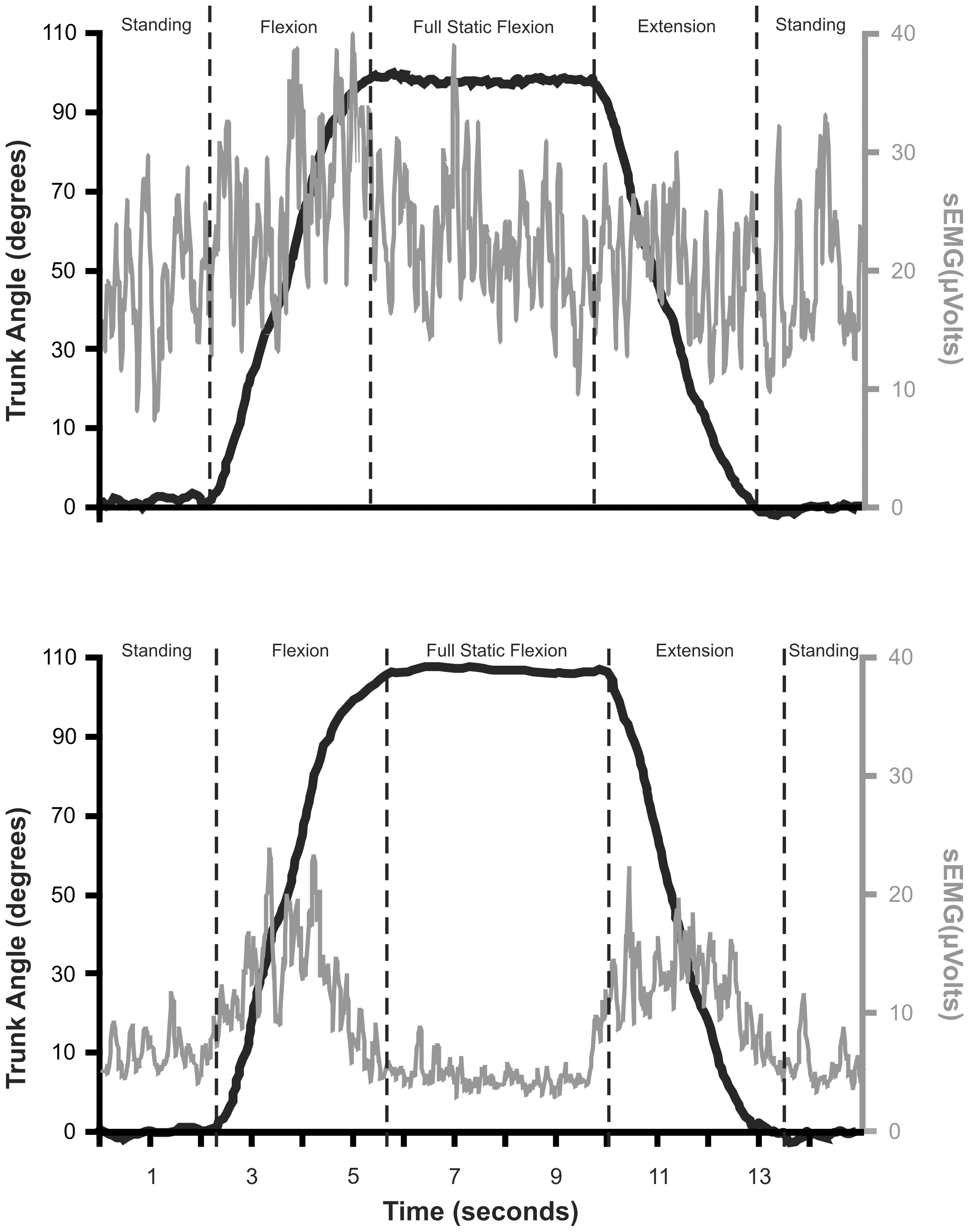
Denne studien nevner at frykt for bevegelse gjør at ryggradens muskler ikke greier å slappe av ordentlig når ryggen ikke er i bevegelse. Bildet neders viser hvordan ryggradens muskler slapper av når du står og når du henger fremover (full static flxion), og spenner seg kun når du beveger ryggraden.

Frykten for hva som skjer med opprettholder muskelspenninger og hemmer restitusjon etter f.eks. en kink eller skade. Derfor er det så viktig at terapeuter ikke skaper frykt for ryggradens bevegelser i sine klienter.

http://www.ncbi.nlm.nih.gov/pubmed/14770044

Abstract

OBJECTIVES:

The purpose of this study was to examine the relationship between pain-related fear, lumbar flexion, and dynamic EMG activity among persons with chronic musculoskeletal low back pain. It was hypothesized that pain-related fear would be significantly related to decreased lumbar flexion and specific patterns of EMG activity during flexion and extension.

STUDY DESIGN:

Data was obtained from subjects who, on a single day, completed self-report measures of pain and pain-related fear, and were interviewed to determine demographic and pain information. Subjects then underwent a dynamic EMG evaluation for which they were asked to stand, then bend forward as far as possible, stay fully flexed, and return to standing. Lumbar EMG and angle of flexion were recorded during this time. A flexion-relaxation ratio (FRR) was computed by comparing maximal EMG while flexing to the average EMG in full flexion.

SUBJECTS:

Seventy-six persons with chronic musculoskeletal low back pain.

RESULTS:

Zero-order correlations indicated that pain-related fear was significantly related to reduced lumber flexion (r = -0.55), maximum EMG during flexion (r = -0.38) and extension (r = -0.51), and the FRR (r = -0.40). When controlling for pain and demographic factors, pain-related fear continued to be related to reduced lumbar flexion. Using a path-analytic model to examine whether angle of flexion mediated the relationship between fear and EMG activity, the models examining maximal EMG during flexion and extension supported the notion that pain-related fear influences these measures indirectly through its association with decreased range of motion. Conversely, pain-related fear was independently related to higher average EMG in full flexion, while angle of flexion was not significantly related. Pain-related fear was directly related to a smaller FRR, as well as indirectly through angle of flexion.

CONCLUSIONS:

Pain-related fear is significantly associated with reduced lumbar flexion, greater EMG in full flexion, and a smaller FRR. The relationship between pain-related fear and EMG during flexion and extension appears to be mediated by reduced lumbar flexion. These results suggest that pain-related fear is directly associated with musculoskeletal abnormalities observed among persons with chronic low back pain, as well as indirectly through limited lumbar flexion. These musculoskeletal abnormalities as well as limited movement may be involved in the development and maintenance of chronic low back pain. In addition, changes in musculoskeletal functioning and flexion associated with pain-related fear may warrant greater attention as part of treatment.

journal.pone.0039207.g002

Ukjent sin avatar

Nutritional essentiality of sulfur in health and disease.

Denne beskriver det aller meste om svovel og hvorfor det er et viktig næringsstoff å fokusere på. Den nevner bl.a. at svovel tilskudd, f.eks. MSM, går inn i TBS (total body sulfur pool) som en svovelkilde for glutation. Sammen med metionin og cystein fra maten.

Den nevner også hvordan stress og betennelser skaper en større «turnover» av proteiner, som ofte ikke samsvarer med inntaket av proteiner. Man blir da kronisk på underskudd av svovel og proteiner. Dette forklarer hvorfor proteintilskudd er viktig ved betennelsestilstander og stress tilstander som f.eks. kronisk smerte.

Svovel og Nitrogen har et forhold på 1:14 og er tett sammenkoblet. Når nitrogen forsvinner forsvinner også svovel. Muligens kan man måle svoveltilgjengeligheten i kroppen ved å måle nitrogen med urinstix.

http://www.ncbi.nlm.nih.gov/pubmed/23815141

Hele artikkelen er i min dropbox.

HYPERHOMOCYSTEINEMIA AS A RESPONSE TO STRESS

N and S maintain tightly correlated ratios in tissues of both healthy subjects8 and diseased patients.167 Acute stressful conditions of any cause unleash a shower of many cytokines that fulfill a myriad of autocrine, para- crine, and endocrine functions.168 As a consequence, enhanced tissue proteolysis throughout the body ensues, allowing the redirection of AA residues toward the pref- erential overproduction of acute-phase reactants and repair proteins by the liver and at the site of injury.169 The rate of protein degradation usually exceeds that of protein undergoing neosynthesis,170,171 leading to a negative N balance with subsequent depletion of TBN reserves. The increased urinary excretion of N catabolites (mainly urea, but also creatinine, NH4+, 3-CH3-histidine, and other minor compounds) demonstrates that both metabolic and structural tissues participate in the adap- tive responses to injury in proportion to the magnitude of initial impact.31,170,171 In very aggressive conditions (burns) affecting adult men, urinary output of N may be as high as 250 g of N per week, which corresponds to a loss of 6–7 kg of LBM31 or 12–14% of metabolically active tissues.30 Major stressful disorders are associated with massive urinary excretion of S,167,172 which depletes endogenous pools of TBS. In stressors of medium severity (bone fracture), S spillover has been estimated to be 17 g of S per week, or more than 10% of TBS body stores. Interestingly enough, measurement of S and N urinary losses yields values very close to the 1:14 ratio that char- acterizes mammalian tissues,8,167 indicating that TBN and TBS pools exhibit concomitant degradation patterns throughout the course of injury.

Ukjent sin avatar

Matoverfølsomhet – et paradigmeskifte

Artikkel skrevet i 2011 som nevner mange viktige poenger. Blandt annet at vagus svekkes ved IBS og at det gir andre plager, spesielt hudplager.

Klikk for å få tilgang til matoverfoelsomhet_aip_1_2011w_v2.pdf

Dessuten hadde mange pasienter ekstra-intesti- nale symptomer og skåret høyt på «Subjective Health Complaints» (1). Påfallende mange anga at de hadde kronisk tretthet samt leddsmerter med morgenstivhet uten påvisbar artritt. Livskvaliteten var til dels be- tydelig redusert (2).

Over 50% av pasientene tilfreds- stilte kravene til en psykiatrisk diag- nose. Men hvor mye av de psykologiske problemene kan være sekundære? Inntil for knapt 20 år siden ble også magesårsykdommen regnet som en psykosomatisk sykdom. De psykolo- giske problemene vi så hos ulcuspasi- entene var ganske like de vi nå finner hos de matoverfølsomme, og vi har enda friskt i minnet hvordan alle pro- blemene hos ulcuspasientene, in- kludert de psykologiske, «blåste bort» etter fjerning av magesårbakterien Helicobacter pylori (4).

Kun sykdomspesifikk angst eller for- ventninger om plager var signifikante uavhengige prediktorer. Disse pre- diktorene forklarte dog til sammen ikke mer enn 10% av variansen i mageplagene, og alder var eneste signifikante prediktor av ekstra- intestinale plager. Det vil si at 90% av variansen i grad av somatiske plager ikke kunne forklares av psyko- logiske faktorer. Vi tror derfor nå at mange av de psykologiske problemene ved matoverfølsomhet er sekundære og at betydningen av psykologiske faktorer som årsak til matoverfølsomhet kan være betydelig overdrevet.

Vi kunne vise at et tungt fordøyelig, men fermenter- bart karbohydrat, som laktulose, ofte reproduserte pasientens plager (6). tester på klassisk IgE-sensitivisering mot spesifikke kostproteiner, deri- mot, var sjeldent positive. Det virker som om mageplagene først og fremst trigges av tungt fordøyelige karbo- hydrater og ikke spesielt av proteiner i kosten. Dessuten, at plagene kunne reproduseres av mat, viser at pasien- ten har rett – plagene kan skyldes maten! Det passer med at pasientene ikke har plager om natta, når de faster, etter tarm- skylling eller når de får tømt seg fullstendig.

Over 60% av pasientene hadde indikasjon på atopisk sykdom (Dette er hud- og slimhinnerelaterte sykdommer som allergi, tørr hud, kløe, m.m.)

Histamin øker sympatisk og redusert para- sympatisk (vagal) tonus, som også er karakteristisk for pasienter med funksjonelle mageplager (16, 17). Slik endret autonom aktivitet kan være et resultat av IgE-mediert histaminfrigjøring fra lokalt sensibili- serte mastceller (18).

Systemiske symptomer som kro- nisk tretthet og leddsmerter hos pasi- enter med IBS har tidligere ofte blitt forklart som somatisering av psykolo- giske problemer, men det finnes andre muligheter. For eksempel er det nylig rapportert at symptomer ved kronisk tretthetssyndrom kan behandles med en B-celle-antagonist (rituximab) (21). I likhet med de matoverfølsomme, har pasienter med kronisk tretthets- syndrom ofte IBS og endret mikro- flora som kan være av betydning for immunaktiveringen hos disse pasi- entene (22). Hos matoverfølsomme med IBS har vi nylig påvist økt nivå av B-celle aktiverende faktor (BAFF) i blod og tarmskyllevæske (23). BAFF er relatert til autoimmunitet og lokal immunaktivering i tarmen («lokal allergi») (24).

At karbohydrater kan reprodusere mageplagene hos pasienter med IBS og matoverfølsomhet, er verdt å merke seg, og mye tyder på at dette allerede nå bør få terapeutiske konsekvenser (27). Vi ser med andre ord for oss et paradigmeskifte når det gjelder utredning og behandling av pasienter med IBS og matoverfølsomhet.

Ukjent sin avatar

Central sensitisation in visceral pain disorders

Nevner hvordan IBS skaper sentralsensitering og hyperalgesia andre steder enn bare tarmen, og bidrar til mange muskel- og ledd problemer. Nevner at dette spesielt skjer i korsryggen hvor sensoriske nerver fra tarmen treffer samme nerve i ryggmargen som de sensoriske nervene fra beina.

http://www.ncbi.nlm.nih.gov/pmc/articles/PMC1856337/

The concept of visceral hyperalgesia has been examined in a variety of functional gastrointestinal disorders (FGIDs), including oesophagitis, gastro‐oesophageal reflux disease, non‐ulcer dyspepsia, gastroparesis, and irritable bowel syndrome (IBS). Visceral hypersensitivity has also been demonstrated in non‐gastrointestinal disorders such as interstitial cystitis and ureteric colic.1 Although the pathophysiological mechanisms of pain and hypersensitivity in these disorders are still not well understood, exciting new developments in research have been made in the study of the brain‐gut interactions involved in the FGIDs.

In this issue of Gut, Sarkar and colleagues2 address the phenomenon of temporal summation of pain, termed “wind‐up”, and its relationship to central sensitisation and secondary visceral pain hyperalgesia caused by acidification of the oesophagus (see page 920). Also in this issue of Gut, Drewes and colleagues3 examine peripheral and central sensitisation using both mechanical and thermal stimuli in patients with oesophagitis compared with control subjects (see page 926). They found that in patients with oesophagitis, the interaction between central and peripheral nociceptive input may help explain patient symptoms. Understanding the implications of these two studies requires examining the concept of central sensitisation in visceral pain disorders. Both of these studies have important clinical and research ramifications for the study of FGIDs.

“Hypersensitivity in IBS patients is not just limited to the gut and more widespread alterations in central pain processing may be involved in this chronic pain disorder”

The most pronounced hyperalgesia appears to occur at the lumbosacral level at which colon and lower extremity nociceptive afferents are likely to converge onto common spinal segments, explaining why patients had higher thermal hypersensitivity in the foot than in the hand (see fig 11).14,15,19

Ukjent sin avatar

High Energy Diets-Induced Metabolic and Prediabetic Painful Polyneuropathy in Rats

Nevner hvordan høy-fett høy-karbo forværrer nevropati (ødelagte nerver), men høy-fett høy-karbo høy-salt ser ut til å dempe smertene noe.

http://www.ncbi.nlm.nih.gov/pmc/articles/PMC3581455/

Conclusions

In the current study, early metabolic syndrome (hyperinsulinemia, dyslipidemia, and hypertension) and prediabetic conditions (IFG) could be induced by high energy (high-fat and high-sucrose) diets in rats which later developed painful polyneuropathy that was characterized by myelin breakdown and LMF loss in both peripheral and central branches of primary afferent neurons. However, SMF and UMF were far less damaged in the same rats. The phenomenon that the high energy diets only induce mechanical, but not thermal, pain hypersensitivity may reflect a selective damage to LMF, but not to the SMF and UMF. Moreover, dietary sodium (high-salt) deteriorates the neuropathic pathological process induced by high energy diets further, but paradoxically high salt consumption may improve, at least temporarily, chronic pain perception in these animals.

We have therefore established a strong link between high-energy/high-salt diet induced metabolic syndrome and prediabetes which results in relatively selective LMF damage in both the PNS and CNS that in turn can result in neuropathic pain. These results have a profound impact on patient welfare relative to diet choice, not just for T2DM onset, but also for its associated neuropathic symptoms.

Ukjent sin avatar

Postural function of the diaphragm in persons with and without chronic low back pain.

Denen Studien beskriver på en svært god måte hvordan diafragmas posisjon og bevegelse kan relateres til ryggplager. Når diafragm får lite bevegelse, spesielt i de fremre og mitre delene, blir vinkelen diafragma står i kroppen brattere. Dette kobles til ryggsmerter. Jo brattere vinkelen er, jo større sjangse for ryggsmerter. Bildene viser hvordan diafragma beveger seg mindre og står høyere opp i kroppen hos det med kroniske ryggsmerter. Den viser også hvordan største delen av bevegelsen i diafragma skjer på bakre del, ikke fremre eller midtre, men ved korsryggplager blir det minst bevegelse i fremre og midtre del, mens bakre del har lige god bevegelse. Spesielt interessant å legge merke til er at den viser ingen forskjell mellom Control og Patients diafragma bevegelse under Tidal Breathing (abdominal pust). Dette viser at for å øke styrke og bevegelse i diafragma må man ta i mer. Abdominal pust er ikke diafragma trening.

http://www.ncbi.nlm.nih.gov/pubmed/22236541/

Hele her: http://www.rehabps.cz/data/JOSPT.pdf

Abstract

STUDY DESIGN:

A case-control study.

OBJECTIVES:

To examine the function of the diaphragm during postural limb activities in patients with chronic low back pain and healthy controls.

BACKGROUND:

Abnormal stabilizing function of the diaphragm may be an etiological factor in spinal disorders. However, a study designed specifically to test the dynamics of the diaphragm in chronic spinal disorders is lacking.

METHODS:

Eighteen patients with chronic low back pain due to chronic overloading, as ascertained via clinical assessment and magnetic resonance imaging, and 29 healthy subjects were examined. Both groups presented with normal pulmonary function test results. A dynamic magnetic resonance imaging system and specialized spirometric readings were used with subjects in the supine position. Measurements during tidal breathing (TB) and isometric flexion of the upper and lower extremities against external resistance with TB were performed. Standard pulmonary function tests, including respiratory muscle drive (PI(max) and PE(max)), were also assessed.

RESULTS:

Using multivariate analysis of covariance, smaller diaphragm excursions and higher diaphragm position were found in the patient group (P<.05) during the upper extremity TB and lower extremity TB conditions. Maximum changes were found in costal and middle points of the diaphragm. A 1-way analysis of covariance showed a steeper slope in the middle-posterior diaphragm in the patient group both in the upper extremity TB and lower extremity TB conditions (P<.05).

CONCLUSION:

Patients with chronic low back pain appear to have both abnormal position and a steeper slope of the diaphragm, which may contribute to the etiology of the disorder.


Perhaps the most clinically important finding of this study concerns the ab- normal coordination of the diaphragm in the patient group during inspiration with postural tasks. This impairment was demonstrated by reduced move- ment of the diaphragm in the anterior and middle portion, while the posterior (crural) part moved in the same manner as in the control group. This pattern of diaphragmatic recruitment resulted in a steeper angle in the middle-posterior part of the diaphragm (FIGURE 4), which may exacerbate the symptomology of chronic low back pain by increasing the anterior shear forces on the ventral region of the spinal column.

Poor coordination of particular di- aphragmatic parts in the patients (points B and C) resulted in an asymmetric dia- phragmatic activation during inspiration, as demonstrated by a steeper slope of the crural part of the diaphragm. Evidently, limited motion of the costal part may result in a more domed inspiratory diaphragmatic position.

In healthy subjects, the diaphragm is able to perform the dual task (trunk stability and respiration) when trunk stability is challenged.19 Generally, dur- ing any body movement, with activation of the extremities during weight-bearing or weight-lifting activities and transi- tional movements, there is simultaneous spinal bracing and transdiaphragmatic pressure elevation.11,22 Intra-abdominal pressure increases, with a simultaneous decrease of intrapleural pressure, during a contraction of both the posterior (cru- ral) and anterior (costal) portions of the diaphragm.7 This coordination may be compromised in patients with chronic low back pain.

CONCLUSION

We found reduced diaphragm movement when isometric flexion against resistance of the up- per or lower extremities was applied. The combined, more cranial position in the anterior and middle portions of the diaphragm and, particularly, the steeper slope between the middle and crural por- tions of the diaphragm in patients with chronic low back pain may contribute to low back pain symptoms. However, given that the results are based on cross- sectional analysis, we cannot exclude the possibility of reverse causation. Still, the results support the theory that patients with low back pain complaints present with compromised diaphragm function, which may play an important role in pos- tural stability.

KEY POINTS

FINDINGS: We found reduced diaphragm movement in patients with chronic low back pain compared to healthy controls when isometric flexion against resis- tance of the upper or lower extremity was applied, mainly in the anterior

and middle portions. This pattern of diaphragmatic recruitment resulted in
a steeper angle in the middle-posterior part of the diaphragm and likely a great- er strain during activity on the ventral region of the spinal column. IMPLICATIONS: Abnormal postural activa- tion of the diaphragm during the pos- tural task of isometric resistance to the extremities may serve as 1 underlying mechanism of chronic low back pain. CAUTION: Only an isolated analysis of the diaphragm excursion was performed, due to the limited field of view. In ad- dition, the diaphragm excursion alone may not be sufficient to understand all mechanical actions of the rib cage and related musculature. We used a con- venience sample in which the patient and control groups differed in size and certain demographic characteristics. Because our study was cross-sectional in nature, we cannot exclude the possibil- ity that low back pain symptoms may be indicative of an initial pathogenic insult resulting in secondary quantitative as well as qualitative adaptive changes in diaphragmatic function.

Ukjent sin avatar

Inflammation-induced hyperalgesia: Effects of timing, dosage, and negative affect on somatic pain sensitivity in human experimental endotoxemia.

En studie til som bekrefter at lav-grads betennelse gir hyperalgesi, altså økt smerteopplevelse.

http://www.ncbi.nlm.nih.gov/pubmed/24814500

Abstract

BACKGROUND:

Inflammation-induced pain amplification and hypersensitivity play a role in the pathophysiology of numerous clinical conditions. Experimental endotoxemia has recently been implemented as model to analyze immune-mediated processes in human pain. In this study, we aimed to analyze dose- and time-dependent effects of lipopolysaccharide (LPS) on clinically-relevant pain models for musculoskeletal and neuropathic pain as well as the interaction among LPS-induced changes in inflammatory markers, pain sensitivity and negative affect.

METHODS:

In this randomized, double-blind, placebo-controlled study, healthy male subjects received an intravenous injection of either a moderate dose of LPS (0.8ng/kg Escherichiacoli), low-dose LPS (0.4ng/kg), or saline (placebo control group). Pressure pain thresholds (PPT), mechanical pain sensitivity (MPS), and cold pain sensitivity (CP) were assessed before and 1, 3, and 6h post injection to assess time-dependent LPS effects on pain sensitivity. Plasma cytokines (TNF-α, IL-6, IL-8, IL-10) and state anxiety were repeatedly measured before, and 1, 2, 3, 4, and 6h after injection of LPS or placebo.

RESULTS:

LPS administration induced a systemic immune activation, reflected by significant increases in cytokine levels, body temperature, and negative mood with pronounced effects to the higher LPS dose. Significant decreases of PPTs were observed only 3h after injection of the moderate dose of LPS (0.8ng/kg). MPS and CP were not affected by LPS-induced immune activation. Correlation analyses revealed that decreased PPTs were associated with peak IL-6 increases and negative mood.

CONCLUSIONS:

Our results revealed widespread increases in musculoskeletal pain sensitivity in response to a moderate dose of LPS (0.8ng/kg), which correlate both with changes in IL-6 and negative mood. These data extend and refine existing knowledge about immune mechanisms mediating hyperalgesia with implications for the pathophysiology of chronic pain and neuropsychiatric conditions.

Ukjent sin avatar

Systemic Inflammation Decreases Pain Threshold in Humans In Vivo

Denne viser hvordan systemisk betennelse, til og med lav-grads systemisk betennelse (som kommer fra kosthold), bidrar til å øke smertesensitivitet.

http://www.ncbi.nlm.nih.gov/pmc/articles/PMC3866228/

In conclusion, this study shows that systemic inflammation elicited by the administration of endotoxin to humans, results in lowering of the pain threshold measured by 3 quantitative sensory testing techniques. The current work provides additional evidence that systemic inflammation is accompanied by changes in pain perception.

Inflammation leads to a broad constellation of adaptive changes, called the ‘sickness response’. Features of this response include fever, increased sleep, decreased locomotion, decreased food and water intake, and hormonal changes [1]. Furthermore, the pain threshold for painful stimuli is lowered, resulting in hyperalgesia, and normally non-painful stimuli can become painful (allodynia).

Systemic inflammation has previously been shown to alter pain perception in animals and humans. Recently, Benson and colleagues reported altered pain perception after the administration of a very low dose of endotoxin (0.4 ng/kg) to healthy volunteers, mimicking low grade systemic inflammation [26].