Ukjent sin avatar

Stress and the inflammatory response: a review of neurogenic inflammation.

Betennelser kan både skapes og opprettholdes av nervesystemet.

Det er velkjent av betennelser økes av stresshormonet kortisol når vi stresser fordi kortisol senker immunfunksjon og dermed øker betennelsestilstander.

Men denne studien beskriver hvordan stress øker nevrogen betennelse (betennelse i nervesystemet), som kan forklare årsaken til at alt som vanligvis bare er litt ukomfortabelt blåses opp og blir vondere når vi er i langvarig stress.

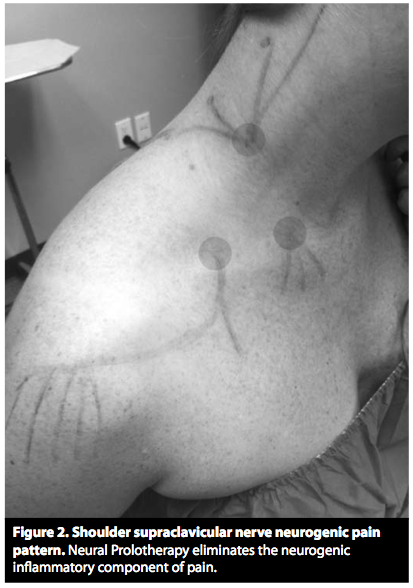
Man tenker vanligvis på sansenerver som noe som sender signaler fra kroppen, gjennom ryggraden og opp til hjernen. Men molekyler kan faktisk gå andre veien i nervetrådene også. Fra ryggraden og UT i kroppen. Når vi stresser sender nervecellene ut et stoff som kalles Substans P, sammen med andre betennelsesøkende stoffer. Der hvor nervetrådene ender (i ledd, i huden eller i organer) blir det en lokal betennelsesreaksjon som bidrar til smerte. Substans P er spesielt assosisert med smertetilstander.

Forskeren konkluderer også med at dette er en viktig årsak til hvordan kronisk stress kan bidra til kroniske betennelsessykdommer som arterosklreose i blodårene eller betennelser i organene.

Beste måten å roe ned et stresset nervesystem er meditasjon med Autonom pust (5-6 pust i minuttet).

http://www.ncbi.nlm.nih.gov/pubmed/12480495

The subject of neuroinflammation is reviewed. In response to psychological stress or certain physical stressors, an inflammatory process may occur by release of neuropeptides, especially Substance P (SP), or other inflammatory mediators, from sensory nerves and the activation of mast cells or other inflammatory cells.

Central neuropeptides, particularly corticosteroid releasing factor (CRF), and perhaps SP as well, initiate a systemic stress response by activation of neuroendocrinological pathways such as the sympathetic nervous system, hypothalamic pituitary axis, and the renin angiotensin system, with the release of the stress hormones (i.e., catecholamines, corticosteroids, growth hormone, glucagons, and renin). These, together with cytokines induced by stress, initiate the acute phase response (APR) and the induction of acute phase proteins, essential mediators of inflammation. Central nervous system norepinephrine may also induce the APR perhaps by macrophage activation and cytokine release. The increase in lipids with stress may also be a factor in macrophage activation, as may lipopolysaccharide which, I postulate, induces cytokines from hepatic Kupffer cells, subsequent to an enhanced absorption from the gastrointestinal tract during psychologic stress.

The brain may initiate or inhibit the inflammatory process.

The inflammatory response is contained within the psychological stress response which evolved later. Moreover, the same neuropeptides (i.e., CRF and possibly SP as well) mediate both stress and inflammation.

Cytokines evoked by either a stress or inflammatory response may utilize similar somatosensory pathways to signal the brain. Other instances whereby stress may induce inflammatory changes are reviewed.

I postulate that repeated episodes of acute or chronic psychogenic stress may produce chronic inflammatory changes which may result in atherosclerosis in the arteries or chronic inflammatory changes in other organs as well.

Ukjent sin avatar

Sensory innervation of the thoracolumbar fascia in rats and humans.

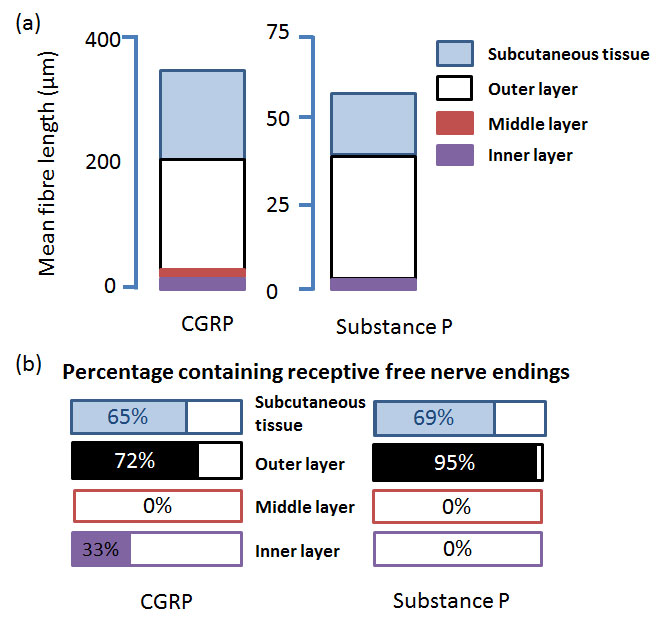
Studie som viser innervasjon av korsryggbindevev og påpeker at det er kun det ytre laget av bindevevet, det som er helt inn mot huden, som er tettpakket med sensoriske nerver og nociceptive fibre (som utskiller substans P og CGRP, og gir betennelser). De dypere lagene i midten av bindevevet eller ned mot musklene har nesten ingen nerveender eller sansesmuligheter.

http://www.ncbi.nlm.nih.gov/pubmed/21839150

Hele studien i min dropbox.

The subcutaneous tissue and the outer layer showed a particularly dense innervation with sensory fibers. SP-positive free nerve endings-which are assumed to be nociceptive-were exclusively found in these layers. Because of its dense sensory innervation, including presumably nociceptive fibers, the TLF may play an important role in low back pain.


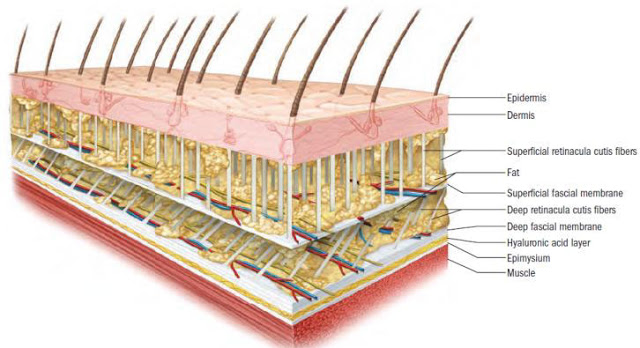
Fig. 1. Structure of the rat thoracolumbar fascia (TLF) close to the spinous processes L4/L5. (a) Transversal section showing the three layers of the TLF (hematoxylin and eosin staining): OL, outer layer with transversely oriented collagen fibers; ML, middle layer composed of collagen fiber bundles oriented diagonally to the long axis of the body; IL, inner layer of loose connective tissue covering the multifidus muscle (muscle). SCT, subcutaneous tissue. (b) PGP 9.5-ir nerve fibers in the layers of the TLF. Black arrows, fibers on passage; open arrows, nerve endings. (c) Mean fiber length of PGP 9.5-ir fibers in the TLF. The great majority of all fibers were located in the outer layer (OL) of the fascia and in the subcutaneous tissue (SCT). White part of the bar: subcutaneous tissue plus outer layer of the TLF; black: middle layer; hatched: inner layer. n, number of sections evaluated.


Fig. 4. Distribution of CGRP and Substance P (SP)-immunoreactive nerve fibers in the TLF. (a) Mean fiber length of CGRP-ir nerve fibers. (b) Mean fiber length of SP-ir nerve fibers. Almost all fibers were found in the outer layer of the fascia and the subcutaneous tissue. The middle layer was free of SP-positive fibers. Gray part of the bars: subcutaneous tissue; white: outer layer of the TLF; black: middle layer; hatched: inner layer. n=number of sections evaluated. (c, d) Distribution of CGRP- (c) and SP-containing receptive free nerve endings (d) expressed as percent of the total number of CGRP- or SP-containing fibers in each layer. For classification as receptive endings, the structures had to exhibit at least three varicosities. SP-containing free nerve endings were restricted to the outer layer of the thoracolumbar fascia and the subcutaneous connective tissue while CGRP-containing free nerve endings were also found in the inner layer of the thoracolumbar fascia.

Og et bilde av de forskjellige bindevevslagene som er nevnt i denne studien.

Our study demonstrates that the rat TLF and the SCT overlying the fascia are densely innervated tissues, and therefore both the TLF and SCT, may play a role in low back pain. Most nerve fibers are located in the OL of the TLF and in the SCT, whereas in the ML nerve fibers are rare. Actually, no SP-ir fibers were found in this layer. Teleologically, the lack of fibers in the ML, particularly those containing SP, makes sense because each move- ment of the body causes shearing forces between the collagen fiber bundles, which might excite nociceptors.

Ukjent sin avatar

Neural Prolotherapy


Denne artikkelen er om en behandlingsform som sprøyter inn dextrose rett under huden for å stimulere nervetrådene der. Den har mange gode forklaringsmodeller om hva som skjer i nervene rett under huden. Nevner bla anterograd og retrograd nervesignaler i C-fibrene. Og Hiltons Law, som er et svært interessant konsept: nervene som går til et ledd går også til musklene som beveger leddet og huden over muskelens feste. Viser til at dextrose hemmer betennelse i nervene, men dette er et vanskelig konsept ved f.eks. diabetisk nevropati hvor hyperglycemi er noe av årsaken til nerveskaden i utgangspunktet. Dog hyperglycemi påvirker blodsirkulasjonen først og fremst.

http://www.orthohealing.com/wp-content/uploads/2011/10/Neural_prolotherapy.pdf

paThology oF NEUrogENiC iNFlaMMaTioN
The pathology of neurogenic inflammation is well established.1, 2, 16 Ligaments, tendons and joints have TRPV1-sensitive C pain fiber innervation. Dr. Pybus explains that the C pain fibers transmit the “deep pain” often seen with osteoarthritis.14 “When these C pain fibers are irritated anywhere along their length they will transmit ectopic impulses in both forward (prodromic) and reverse (antidromic) direction.”14 The forward direction of the nerve signal will cause pain perception as the signal travels through the posterior root ganglia up to the brain. You will also have a local reflex action from the spinal cord ventral horn cells out to the muscle fibers, which will cause a reflex muscle spasm.14 The reverse (antidromic) signal will travel to the blood vessels where substance P is released causing swelling and pain. The nerves themselves also have a nerve supply called the Nervi Nervorum (NN).2 In a pathological state, the NN can release substance P (Sub P) and Calcitonin Gene Related Peptide (CGRP) onto these C pain fibers.11 Sub P and CGRP are known to cause pain, swelling of the nerve and surrounding tissue.7

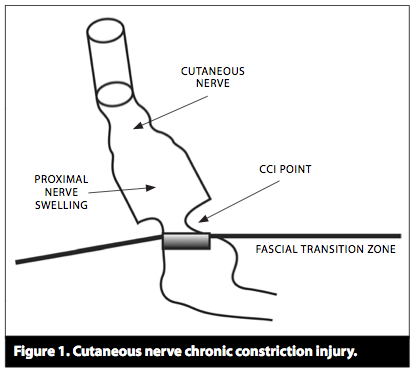
Dr. Lyftogt discussed in his recent Neural Prolotherapy meeting that “Cutaneous nerves pass through many fascial layers on their way to the spine. When there is neurogenic swelling at the Fascial Penetration Zone, a Chronic Constriction Injury (CCI) occurs. The CCI points will inhibit flow of Nerve Growth Factor (NGF).8, 7 Proper flow of NGF is essential for nerve health and repair.”3 (See Figure 1.)

Skjermbilde 2013-08-06 kl. 08.59.43

There are two major ways that the fascial penetration point can affect a nerve. Trauma to a nerve will cause edema to travel proximal and distal to the injury. When this swelling reaches the fascial penetration points this can cause a self- strangulation of the nerve and decrease nerve growth factor flow.16, 17 Morton’s neuroma is a clinical example of this.17

Dr. Pybus has also suggested that a change in fascial tension from repetitive muscle dysfunction can also cause a CCI point.15, 17

Another critical concept in NPT is what is called Bystander disease.9, 17 Bystander disease helps explain how superficial nerve pathology can affect deeper anatomic structures.9 This is based on Hilton’s law. Hilton’s law states: the nerve supplying a joint also supplies both the muscles that move the joint and the skin covering the articular insertion of those muscles.9 An example: The musculocutaneous nerve supplies the elbow with pain and proprioception as it is the nerve supply to the biceps brachii and brachialis muscles, as well as the skin close to the insertion of these muscles.17 Hilton’s Law arises as a result of the embryological development of humans.

This concept of Hilton’s law coupled with the idea of anterograde and retrograde axonal flow of neurodegenerative peptides,17 can help explain the wide reaching affects of NPT on pain control.

Glucose responsive nerves have been demonstrated throughout the nervous system.4, 5, 6 One proposed mechanism of action suggests that dextrose binds to pre synaptic calcium channels and inhibits the release of substance P and CGRP, thereby decreasing neurogenic inflammation. This allows normal flow of nerve growth factor and subsequent nerve repair and decreased pain.7

Skjermbilde 2013-08-06 kl. 08.59.48

Skjermbilde 2013-08-06 kl. 09.00.00

1 Geppetti, et al. Neurogenic Inflammation. Boca Raton: Edited CRC Press; 1996. Chapter 5, Summary; p.53-63.

2 Marshall J. Nerve stretching for the relief or cure of pain. The Lancet.1883;2:1029-36.

8 Bennett GJ, et al. A peripheral mononeuropathy in rat that produces disorders of pain sensation like those seen in man. Pain. 1988;33(1):87-107.

9 Hilton J. On rest and Pain. In Jacobesen WHA(ed): On Rest and Pain, 2nd edition, New York: William Wood & company, 1879.

Ukjent sin avatar

Scratch collapse test for evaluation of carpal and cubital tunnel syndrome.

Viser hvilken klinisk relevanse scratch collapse test har for å finne hvor nerver er i klem.

http://www.ncbi.nlm.nih.gov/pubmed/18984333

For the new test, the patient resisted bilateral shoulder external rotation with elbows flexed. The area of suspected nerve compression was lightly «scratched,» and then resisted shoulder external rotation was immediately repeated. Momentary loss of shoulder external rotation resistance on the affected side was considered a positive test.

For carpal tunnel syndrome, sensitivities were 64%, 32%, and 44% for the scratch collapse test, Tinel’s test, and wrist flexion/compression test, respectively. For cubital tunnel syndrome, sensitivities were 69%, 54%, and 46% for the scratch collapse test, Tinel test, and elbow flexion/compression test, respectively. The scratch collapse test had the highest negative predictive value (73%) for carpal tunnel syndrome. Tinel’s test had the highest negative predictive value (98%) for cubital tunnel syndrome.

The scratch collapse test had significantly higher sensitivity than Tinel’s test and the flexion/nerve compression test for carpal tunnel and cubital tunnel syndromes. Accuracy for this test was 82% for carpal tunnel syndrome and 89% for cubital tunnel syndrome.

Mer utfyllende studie om Scratch Collapse her: http://www.ncbi.nlm.nih.gov/pmc/articles/PMC2880669/

Though the exact mechanism of the scratch collapse test is unknown, we believe it may represent a gross physical manifestation of the “cutaneous silent period.” This EMG-demonstrated phenomenon is observed following noxious stimuli. A brief pause of voluntary muscle contraction is demonstrated following stimulation of a cutaneous nerve [24]. The scratch collapse yields a similar reflex response. We propose that as the nervi-nervorum at the site of neuritis are stimulated, an ipsilateral central inhibition is transiently activated. It is not surprising that this response would be most robust at the focus of the neuritis.

The scratch collapse examination shares several features with the cutaneous silent period. Both phenomena occur after a noxious stimulus, are very resistant to habituation, are able to override voluntary muscle contraction, and result in a deferment in resistance in a pattern that corresponds to the withdrawal of the extremity into a position of protection (e.g., in this case, internally rotating the arms in against the body) [911131617]. From an evolutionary standpoint, such a reflex would be important in survival.

The test offers an advantage over these other tests in that it appears to precisely localize the site of nerve compression.

Ukjent sin avatar

Skin Biopsy as a Diagnostic Tool in Peripheral Neuropathy: Correlates of Intraepidermal Nerve Fiber Density

Denne nevner mye om nevropati og sammenhengen mellom small fiber density og smerte, pluss at den nevner hvordan trening og steroidbehandling øker tettheten igjen. Viktigst prinsipp å hente fra denne artikkelen er at c-fiber tettheten sier noe om intensiteten på smerten, men ikke noe om smertetilstanden. Man kan ha lav tetthet og lite smerte, men om man får smerte er intensiteten desto høyere. Man må desverre logge inn for å få opp linkene.

http://www.medscape.org/viewarticle/563262_6

In diabetic neuropathy, patients with pain had lower IENF densities than did asymptomatic patients, but IENF density did not correlate with pain intensity within the group of symptomatic patients.[82]

In patients with impaired glucose tolerance, diet and exercise induced a slight recovery of IENF density that was associated with a reduction in pain symptoms.[83] Similarly, epidermal reinnervation coincided with pain reduction after steroid treatment.[71]

CORRELATES OF INTRAEPIDERMAL NERVE FIBER DENSITY

Clinical Picture, Etiology and Neuropathic Pain

The clinical picture of small-fiber neuropathy is dominated by spontaneous and stimulus-evoked positive sensory symptoms—namely thermal and pinprick hypoesthesia—that can mask the signs of small-fiber loss. Only a few studies have attempted to correlate IENF density with validated clinical scales. In patients with diabetic neuropathy, a negative correlation between IENF density and neuropathy symptom score was reported.[53,56]These studies also showed that the extent of epidermal denervation correlated with the duration of diabetes but not with hemoglobin A1C levels, suggesting that IENF density might be useful as a marker of neuropathy progression. A recent study found a high concordance between reduced IENF density and loss of pinprick sensation in the foot.[61]

Skin biopsy has allowed small-fiber neuropathy to be demonstrated in restless legs syndrome[75] and erythromelalgia.[76] In systemic diseases, such as systemic lupus erythematosus, sarcoidosis, Sjögren’s syndrome, celiac disease and hypothyroidism, skin biopsy has enabled correlations to be found between neuropathic symptoms and small-fiber degeneration.[52,65,77–79]Although IENF density is a general marker of axonal integrity in peripheral neuropathies, it cannot be used to directly address the question of etiology. Skin biopsy findings can, however, indirectly contribute to the assessment of etiology. For example, in 40% of patients with small-fiber neuropathy diagnosed only after skin biopsy, oral glucose tolerance testing revealed a previously undetected impaired glucose tolerance.[49] Similarly, the distribution of IENF loss can help to differentiate between a non-length-dependent sensory neuronopathy and a length-dependent axonal neuropathy,[78,80] thereby leading to focused screening for associated diseases.

The relationship between IENF density and neuropathic pain remains uncertain. In HIV neuropathy, IENF density correlated inversely with pain severity when assessed by the patient, but not when the Gracely Pain Scale was used.[66] Another study found only a trend towards an inverse correlation between IENF density and pain intensity in this setting.[81] In diabetic neuropathy, patients with pain had lower IENF densities than did asymptomatic patients, but IENF density did not correlate with pain intensity within the group of symptomatic patients.[82] In patients with impaired glucose tolerance, diet and exercise induced a slight recovery of IENF density that was associated with a reduction in pain symptoms.[83] Similarly, epidermal reinnervation coincided with pain reduction after steroid treatment.[71]In length-dependent neuropathies, therefore, more-severe IENF loss seems to increase the risk of developing pain, the intensity of which might decrease in parallel with recovery of IENF density.

In postherpetic neuralgia, on the basis of evidence of relatively preserved skin innervation in the area of severe allodynia, normal thermal sensory function, pain relief in response to topical lidocaine, and worsening of pain with application of capsaicin, surgical removal of painful skin has been attempted.[84] After initial relief, pain increased, became intractable, and spread to previously unaffected dermatomes, suggesting the involvement of central mechanisms in the pathogenesis of neuropathic pain.

Sensory Nerve Conduction Studies

Sural sensory nerve action potential (SNAP) amplitude, which reflects the integrity of largediameter fibers, showed concordance with IENF density in the distal part of the leg in patients with large-fiber or mixed small-fiber and largefiber neuropathy. Not surprisingly, skin biopsy analysis seemed to be more sensitive than sural nerve conduction studies for diagnosing smallfiber neuropathy.[62] One study,[85] however, showed that in patients with symptoms of small-fiber neuropathy and normal sural nerve conduction, reduced IENF density correlated with a decrease in SNAP amplitude in the medial plantar nerve. This finding suggests subclinical involvement of the most-distal large fibers in small-fiber neuropathy.

Psychophysical Tests

The detection of thermal and pain thresholds using quantitative sensory testing has been widely used to assess the function of small nerve fibers. Although this approach is useful in population studies, it is an unreliable tool for diagnosing small-fiber neuropathy in clinical practice.[86] Moreover, the size of the probe used for the test can affect the results.[87]

In view of the fact that unmyelinated fibers and thinly myelinated fibers convey warm and cold sensation, respectively, thermal thresholds would be expected to correlate with IENF density. In diabetic neuropathy, IENF density was found to be inversely correlated with thermal and pain thresholds, showing the highest correlation with warm threshold.[53,56,82]Similarly, in Guillain–Barré syndrome lower IENF density was associated with increased warm threshold.[67]One study reported a significant correlation between cold pain threshold and signs of large-fiber impairment.[59]By contrast, others studies did not find any correlation between quantitative sensory testing results and IENF density.[45,51,88]

Autonomic Tests

As IENFs are somatic unmyelinated fibers, their density would not be expected to correlate with autonomic fiber function. Intriguingly, however, in patients with Guillain–Barré syndrome and chronic inflammatory demyelinating polyradiculoneuropathy, lower IENF density was associated with a higher risk of developing dysautonomia.[64,67]These findings suggest that the integrity of IENFs might reflect the integrity of the whole class of small nerve fibers, including autonomic fibers. A few studies have investigated the correlation between IENF density and the results of a quantitative sudomotor axonal reflex test in patients with painful neuropathy and autonomic symptoms in order to test the hypothesis that IENF density and sweat output might decrease concomitantly. IENF density correlated with test results in one study,[63] but not in another.[51] In leprosy neuropathy, reduced nicotine-induced axon-reflex sweating correlated with decreased innervation of sweat glands.[88]

Nonconventional Neurophysiological Tests

Laser-evoked potentials (LEPs) have been used to investigate peripheral and central nociceptive pathways in trigeminal neuralgia and peripheral neuropathies. Late LEPs, reflecting Aδ-fiber activation, are delayed in patients with neuropathic pain, but can be enhanced when the pain has a psychogenic origin.[89] Recording of ultralate LEPs, reflecting activation of unmyelinated C-fibers, is less reliable than recording of late LEPs, thereby limiting the overall usefulness of LEPs in clinical practice. LEPs and skin biopsy findings have been examined in single case reports.[90]In two patients with Ross syndrome, abnormal LEPs correlated with decreased IENF density and increased thermal thresholds.[91] No study has yet looked for a correlation between results of skin biopsy analysis and recording of contact heat-evoked potentials, a technique that was recently proposed for investigating smallfiber function, but which cannot be used to assess C-fiber-related responses.[92]

Microneurography allows single-fiber recordings from nerves in awake patients. This technique demonstrated loss of nociceptive and skin sympathetic C-fiber activity that correlated with IENF and sweat gland denervation in a patient with hereditary sensory and autonomic neuropathy type IV.[20]In two patients with generalized anhidrosis, C-fiber recording and sweat gland innervation analysis distinguished postganglionic autonomic nerve fiber impairment from eccrine gland dysfunction.[34]

Sural Nerve Biopsy

The diagnosis of small-fiber neuropathy is better assessed by skin biopsy than by sural nerve biopsy.[57]IENF density can be reduced despite normal morphometry of unmyelinated and thinly myelinated fibers in sural nerve biopsy.[58] In a large comparative study,[62] skin and sural nerve biopsy findings were concordant in 73% of patients, but in 23% of patients IENF density was the only indicator of small-fiber neuropathy. Skin biopsy offers the opportunity to differentiate small nerve fibers with somatic function from those with autonomic function, thereby giving it a further advantage over nerve biopsy. In Charcot–Marie–Tooth disease and related hereditary neuropathies, a biopsy sample of the glabrous skin demonstrated the typical neuropathological abnormalities known from sural nerve studies.[5,6]

Immunohistochemical studies demonstrated IgM deposited specifically in the myelinated fibers of hairy and glabrous skin in patients with anti-myelin-associated-glycoprotein neuropathy.[93] Although skin biopsy can be contemplated in genetic and immune-mediated neuropathies, sural nerve biopsy should always be considered to confirm the diagnosis in inflammatory polyradiculoneuropathy with atypical presentation, or when vasculitic or amyloid neuropathy is suspected.

Ukjent sin avatar

High spontaneous activity of C-nociceptors in painful polyneuropathy.

Viser hvordan c-fibre fyrer av i både smertefull og ikke-smertefull nevropati. Jo mer spontan aktivitet c-fibrene har, jo mer smerte oppleves.

http://www.ncbi.nlm.nih.gov/pubmed/22986070?dopt=Abstract

Polyneuropathy can be linked to chronic pain but also to reduced pain sensitivity. We investigated peripheral C-nociceptors in painful and painless polyneuropathy patients to identify pain-specific changes. Eleven polyneuropathy patients with persistent spontaneous pain and 8 polyneuropathy patients without spontaneous pain were investigated by routine clinical methods

The mean percentage of C-nociceptors being spontaneously active or mechanically sensitized was significantly higher in patients with pain (mean 40.5% and 14.6%, respectively, P=.02). The difference was mainly due to more spontaneously active mechanoinsensitive C-nociceptors (operationally defined by their mechanical insensitivity and their axonal characteristics) in the pain patients (19 of 56 vs 6 of 43; P=.02).

Hyperexcitability in mechanoinsensitive C-nociceptors was significantly higher in patients with polyneuropathy and pain compared to patients with polyneuropathy without pain, while the difference was much less prominent in mechanosensitive (polymodal) C-nociceptors. This hyperexcitability may be a major underlying mechanism for the pain experienced by patients with painful peripheral neuropathy.

Ukjent sin avatar

Double spikes to single electrical stimulation correlates to spontaneous activity of nociceptors in painful neuropathy patients.

Viser hvor stor andel av c-fibrene som har spontan aktivitet ved nevropati, og hvor stor andel av de igjen som har dobbelt eller trippelt avfyring. Nevner at spontane avfyringer skjer i en viss andel av de uten multippel avfyring også. Og at selv uten smerte er det en liten andel av fibrene som fyrer av dobbelt. De konkluderer med at det er usikkert hvordan slik spontan aktivitetet egentlig er relatert til kliniske smertenivåer.

http://www.ncbi.nlm.nih.gov/pubmed/22154219

Multiple firing of C nociceptors upon a single electrical stimulus has been suggested to be a possible mechanism contributing to neuropathic pain. Because this phenomenon maybe based on a unidirectional conduction block, it might also be related to neuropathic changes without a direct link to pain.

In 11 of 105 nociceptors, double spiking was found, with 1 fibre even showing triple spikes on electrical stimulation.

There was a significant association between spontaneous activity and multiple spiking in C nociceptors, with spontaneous activity being present in 9 of 11 fibres with multiple spiking, but only in 21 of 94 nociceptors without multiple spiking (P<.005, Fisher exact test).

Among the 75 C nociceptors without spontaneous activity, only 2 nociceptors showed multiple spiking.

In 8 neuropathy patients without pain, double spiking was found only in 4 of 90 nociceptors

Multiple spiking of nociceptors coincides with spontaneous activity in nociceptors of painful neuropathy patients. We therefore conclude that rather than being a generic sign of neuropathy, multiple spiking is linked to axonal hyperexcitability and spontaneous activity of nociceptors. It is still unclear whether it also is mechanistically related to the clinical pain level.

Ukjent sin avatar

Double and triple spikes in C-nociceptors in neuropathic pain states: an additional peripheral mechanism of hyperalgesia.

Om at nociceptive c-fibre i en nevropatisk tilstand kan fyre av dobbelt og trippelt ved en enkel stimulering. De forsterker signalene og bidrar til hyperalgesi (økt smerteopplevelse av en vanligvis normal smerteaktivering).

http://www.ncbi.nlm.nih.gov/pubmed/21130572

It was previously reported that in 5 patients with small-fiber neuropathy, neuropathic pain, and hyperalgesia, application of a single, brief electrical stimulus to the skin could give rise to 2 afferent impulses in a C-nociceptor fiber. These double spikes, which are attributed to unidirectional conduction failure at branch points in the terminal arborisation, provide a possible mechanism for hyperalgesia.

We here report that similar multiple spikes are regularly observed in 3 rat models of neuropathic pain: nerve crush, nerve suture, and chronic constriction injury. The proportion of nociceptor fibers exhibiting multiple spikes was similar (10.1-18.5%) in the 3 models, and significantly greater than the proportion in control (unoperated) animals (1.2%).

Whereas only double spikes had previously been described in patients, in these more extensive recordings from rats we found that triple spikes could also be observed after a single electrical stimulus. The results strengthen the suggestion that multiple spiking, because of impaired conduction in the terminal branches of nociceptors, may contribute to hyperalgesia in patients with neuropathic pain. Double and triple spikes in c-nociceptors, caused by impaired conduction in terminal branches, may be an important cause of hyperalgesia in patients with neuropathic pain.

Ukjent sin avatar

Tynnfibernevropati

Alt om small fiber neuropathy, tynnfibernevropati, på norsk. Nevner at det er en underdiagnostisert tilstand, og vanskelig å diagnostisere siden alle nevrologiske tester er normale. Nevner også medikamenter, men at disse heller ikke gir særlig god effekt. De skriver at man kan behandle den underliggende sykdommen, men vi kan vel forvente at de mener medikamentell behandling da også, uten noen forhold til ernæring, trening eller manuell behandling.

http://tidsskriftet.no/article/2961926/

På grunn av manglende kunnskap om tilstanden blant mange leger samt begrensede diagnostiske metoder, er denne typen nevropati sannsynligvis underdiagnostisert. Tynnfibernevropati kan ha mange årsaker, men symptomene er ofte relativt like.

Tynnfibernevropati gir en karakteristisk distribusjon av symptomer, spesielt smerte, og er assosiert med flere vanlige sykdomstilstander. Spesifikke tynnfibertester som hudbiopsi og termotest kan brukes for å stille diagnosen. Behandlingen er symptomatisk, men det er ofte vanskelig å oppnå fullstendig smertelindring.

Den kliniske nevrologiske undersøkelsen vil i liten grad kunne påvise tynnfibernevropati, men først og fremst bidra til å utelukke en mer generell polynevropati. Ofte er det nødvendig med supplerende undersøkelser for å stille endelig diagnose.

Tynnfibernevropati affiserer enten selektivt eller i overveiende grad de tynne nervefibrene, dvs. de umyeliniserte C-fibrene og de tynne, myeliniserte A-deltafibrene.

Tynnfiberskaden er størst hos de pasientene som også har en tykkfibernevropati (1). Forekomst av tynnfibernevropati er ikke kjent (2). Dette skyldes hovedsakelig at diagnosen baseres på metoder som er innført de senere årene og som fortsatt ikke er rutine. Men tynnfibernevropati forekommer ved mange forholdsvis vanlige tilstander.

Symptomene ved tynnfibernevropati gjenspeiler ikke årsaken til nevropatien, men hvilke fibre som er affisert. Den vanligste grunnen til at en pasient søker lege, er etter vår erfaring smerter distalt i ekstremitetene, slik det også ofte er gjengitt i den aktuelle litteraturen. Dette skyldes en affeksjon av de tynne afferente A-delta-fibrene og C-fibrene.

Efferente, tynne autonome sudomotoriske og/eller vasomotoriske fibre kan være skadet, og noen pasienter opplever da et endret svettemønster (som regel manglende svette) og/eller kalde ekstremiteter.

Det er viktig å presisere at en smertetilstand som omfatter hele kroppen som regel ikke vil være uttrykk for en perifer tynnfibernevropati.

Pasienter beskriver smerten ved tynnfibernevropati på mange ulike måter, slik det også er ved nevropatisk smerte generelt. Smerten kan være dyp og/eller overflatisk og ha mange kvaliteter; brennende, verkende, klemmende, skjærende, sviende, stikkende osv. Smerten kan være konstant eller intermitterende. Det mest typiske er at smerten forverres under, og spesielt etter, fysisk aktivitet, om kvelden når pasienten setter seg ned og om natten (2, 3). Pasienter med tynnfibernevropati kan i tillegg ha både spontan paroksysmal og provosert smerte (3). Den paroksysmale smerten innebærer støt- eller sjokkliknende smerte innenfor det smertefulle området, ofte med noe utstråling og med svært varierende frekvens. Den provoserte smerten er smerte utløst ved stimulering av det smertefulle området, som regel ved berøring, trykk, men av og til ved kulde og (noe sjeldnere) varmestimuli. Typisk vil mange pasienter beskrive smerter når de tar på seg sokker og sko, føle ubehag ved trykk fra dynen om natten og at det er smertefullt å gå barbeint. Provosert smerte kan inndeles i allodyni, dvs. smerte ved et normalt ikke-smertefullt stimulus og hyperalgesi, dvs. en unormal sterk smerte ved et normalt smertefullt stimulus (4).

Årsaken til at den nevnte smerten oppstår, er sannsynligvis ulike former for hypereksitabilitet i tynne umyeliniserte C-fibre. Det kan dreie seg om unormal spontan fyring eller doble og tredoble impulser (5). Mengden av spontan fyring synes å stå i forhold til intensiteten av den opplevde smerten (6). Fenomenene mekanisk allodyni og hyperalgesi skyldes i all hovedsak sentralnervøs sensitisering, altså endringer i det sentrale nervesystemet som inntreffer både i ryggmargen og høyere opp i sentralnervesystemet (7).

Tilstander som er assosiert med eller kan gi tynnfibernevropati

Metabolske

Diabetes mellitus type 1 og 2

Nedsatt glukosetoleranse (omdiskutert)

Hypotyreose

Hyperlipidemi

Leversvikt

Nyresvikt

Arvelige

Fabrys sykdom

Familiær amyloidose

Hereditær sensorisk og autonom nevropati

Toksiske

Alkoholmisbruk

B6-intoksikasjon

Cytostatika

Andre

Antifosfolipidsyndrom

Bindevevssykdommer

Cøliaki

Hemokromatose

Hiv

Kryoglobulinemi

Monoklonal gammopati

Paraneoplasi

Sarkoidose

Sjögrens syndrom

Den langt vanligste årsaken er antakelig diabetes mellitus (14). I flere studier har man også funnet at det er økt forekomst av forstadier til diabetes og nedsatt glukosetoleranse hos pasienter med tynnfibernevropati (15, 16) og pekt på at det er en mulig årsakssammenheng.

Det viktigste kriteriet for å mistenke tynnfibernevropati er manglende funn forenlig med generell tykkfibernevropati, dvs. at det er intakt sensibilitet for lett berøring, vibrasjon og leddsans, normal motorikk og normale reflekser. Pasientene vil ofte ha nærmest normal nevrologisk status, men kan ha nedsatt sensibilitet for stikk og temperatur, eventuelt også allodyni eller hyperalgesi, oftest i sokkeformet mønster. Allodyni undersøkes ved bruk av lett berøring med bomull eller en børste og hyperalgesi ved stikk med sikkerhetsnål eller liknende, for eksempel en spiss tannstikker.

Den viktigste delen av den kliniske undersøkelsen er anamneseopptaket, med spesielt fokus på eventuelle smerter, endret svettemønster og plager med kalde ekstremiteter.

Hudbiopsi. Hudbiopsi tas som en 3 mm eller 4 mm stansebiopsi i lokalanestesi, normalt fra nedre del av leggen

Termotest. Dette er en test av afferente temperaturmedierende A-delta-fibre og C-fibre. En termode festes på pasientens hud. Temperaturen i termoden kan være 10 – 50 °C. Pasienten signaliserer ved å trykke på en knapp når han eller hun kjenner den minste antydning til kulde (en test av A-delta-fibre), den minste antydning til varme (en test av C-fibre) og også ved terskel til kuldesmerte (en test av både A-delta-fibre og C-fibre) og varmesmerte (en test av C-fibre) (illustrasjon).

QSART (Quantitative sudomotor axon reflex test). Dette er en spesifikk og objektiv test av de efferente autonome sudomotorfibrene. Testen måler volum av svette på huden etter iontoforese av acetylkolin.

Andre tester på tynnfiberfunksjon. Det finnes en rekke andre tester på tynnfibre. Noen undersøker primært efferente fibre ved aksonreflekstest og svettetester. Det finnes også mer sofistikerte hudbiopsimetoder som kan avdekke tidlige forandringer i tynnfibre.

Hvis man kjenner årsaken til pasientens tynnfibernevropati, kan det i noen tilfeller være mulig å redusere symptomene ved behandling eller forebygging av grunnlidelsen. Foruten en alvorlig autonom nevropati som kan kreve overvåking og behandling i en intensivenhet, vil ofte smerte være det enkeltsymptomet som gjør at en pasient oppsøker lege.

Førstehåndspreparater ved behandling av smertefull tynnfibernevropati er trisykliske antidepressiver (amitriptylin, nortriptylin), serotonin-noradrenalinreopptakshemmere (duloksetin) eller anitiepileptika (gabapentin eller pregabalin) (34, 35). Antidepressiver og antiepileptika brukes alene eller i kombinasjon, og ved manglende eller partiell effekt kan det være aktuelt å prøve ut depotopioider til noen pasienter som tilleggsmedikasjon eller som monoterapi (28, 35).

Tynnfibernevropati forekommer ved mange vanlige lidelser, men det er grunn til å anta at det er en underdiagnostisert tilstand. Ved klinisk mistanke og normale funn ved EMG/nevrografi bør pasienten henvises til spesifikke tynnfibertester.

Ukjent sin avatar

Skin Matters: Identifying Pain Mechanisms and Predicting Treatment Outcomes

Mye om huden relatert til smerte og nevropati! Mest relatert til biopsi, men mye kan knyttes til behandling også. Spesielt ved hemming av TRPV1.

http://www.hindawi.com/journals/nri/2013/329364/

This data has led to new insights into the potential pain mechanisms for various pain conditions including neuropathic pain (from small fiber neuropathies) and Complex Regional Pain Syndrome. The somatosensory neurons that innervate our skin constantly update our brains on the objects and environmental factors that surround us. Cutaneous sensory neurons expressing nociceptive receptors such as transient receptor potential vanilloid 1 channels and voltage-gated sodium channels are critical for pain transmission. Epidermal cells (such as keratinocytes, Langerhans cells, and Merkel cells) express sensor proteins and neuropeptides; these regulate the neuroimmunocutaneous system and participate in nociception and neurogenic inflammation.

The skin has homeostatic and immunologic barrier functions, but acts as a complex sensory organ as well [1]. The somatosensory neurons that innervate our skin constantly update our brains on the objects and environmental factors that surround us [2]. The neuroimmunocutaneous system (NICS) is responsible for the cutaneous sensations of touch, pressure, temperature, and pain. This sensory transduction occurs via primary afferent nerves following reciprocated signals between neuronal and nonneuronal skin cells of the NICS [1]. New data concerning peripheral pain mechanisms from within the skin have led to new insight into the potential pain mechanisms for various pain conditions including neuropathic pain syndromes such as diabetic neuropathy and Complex Regional Pain Syndrome.

In pain and neurogenic inflammation, TRPV1 is coexpressed on TRPA1-expressing sensory nerves; both integrate a variety of noxious stimuli [4]. Complex signaling pathways between cells of the NICS, such as keratinocytes, TRPV1-expressing nociceptors, and macrophages, lead to the release of neural growth factor (NGF), prostaglandins, opioids, proinflammatory cytokines, and chemokines [1]. These lead to sensitisation of the peripheral nerves by upregulating ionic channels and by inducing further spinal cord cytokine release [8].

2. Small Fiber Neuropathy (SFN)
Neuropathic pain arises as a direct consequence of a lesion or disease of the somatosensory system; it affects about 7% of the general population [10, 11].

Small fiber neuropathy is a neuropathy of the small nonmyelinated fibers and myelinated A delta fibers. Neuropathic pain occurs from small fiber neuropathy; small fiber neuropathy is caused by a wide variety of acquired and genetic disorders [12], many of which are treatable [13].

Diabetes mellitus is the most frequent underlying cause of SFN [14]. Other causes include toxic (e.g., alcohol), metabolic, immune-mediated, infectious, and hereditary causes.

About 60% of patients describe the painful sensation as spontaneous (burning, sunburn-like, paroxysmal, pruritic, and deep), with worsening at rest or during the night [12]; the sensation can be associated with thermal evoked pain (cold or warm) with or without allodynia, a painful response to a normally innocuous stimulus, and hyperalgesia, an increased response to a painful stimulus [12]. In addition there are negative sensory symptoms (thermal and pinprick hypoesthesia) that reflect peripheral deafferentation [19]. Sensation of cold feet is reported, though warm to touch. Thermal hypoesthesia with or without pinprick hypoesthesia has been detected in 40% of patients [20]; hyperalgesia and aftersensation have been detected in 10–20% of patients [12, 20].

2.3. Complex Regional Pain Syndrome (CRPS)
CRPS is a syndrome characterized by a continuing (spontaneous and/or evoked) regional pain, that is, seemingly disproportionate in time or degree to the usual course of any known trauma or other lesion [23]. The pain is regional (not in a specific nerve territory or dermatome); it usually has a distal predominance of abnormal sensory, motor, sudomotor, vasomotor, and/or trophic findings. It has signs of central sensitisation such as allodynia and hyperalgesia. The syndrome shows variable progression over time [23].

Accumulating experimental and clinical evidence supports the hypothesis that Complex Regional Pain Syndrome type I (CRPS-I) might indeed be a small fiber neuropathy [25]. Most post-traumatic inflammatory changes observed in CRPS are mediated by two peptides, CGRP and substance P [26]. The activation of cutaneous nociceptors can induce retrograde depolarisation of small-diameter primary afferents, causing release of neuropeptides such as substance P and CGRP from sensory terminals in the skin.

A specific diagnostic test for small fiber neuropathy is a skin biopsy; this includes a count of the intraepidermal small nerve fibers (IENF) that cross the basal membrane. The loss of IENF can be reliably measured and is currently used to diagnose small fiber neuropathy (SFN) [17].


Skin biopsy is much less invasive and more practical than peripheral nerve biopsy. It is a safe and reliable tool for investigating nociceptive fibers in human epidermis and dermis [29]. It can be performed at any site of the body, with a disposable punch, using a sterile technique, and under local anesthesia (Figure 2) [29].

A recent study assessed the usefulness of skin biopsy in the assessment of 145 patients with suspected SFN [21]. In 59% of patients skin biopsy was abnormal in at least one site [21]. Patients with confirmed SFN were significantly more likely to have pain; they were more than twice as likely to respond to standard neuropathic pain medications [21]. A positive response to neuropathic pain medications was seen in 84% of patients with an abnormal skin biopsy compared to only 42% of those with a normal biopsy [21]. Skin biopsy has a relatively high yield in patients with sensory symptoms with no findings of mixed fiber neuropathy on clinical examination or on nerve conduction studies [21].

Along with neuronal and immunological systems, the skin plays a critical role in sensory transduction [1]. Further direct targeting of the skin with topical agents should be considered. The interaction of TRPV1 and TRPA1 channels in the skin in painful conditions needs further exploration. Second generation TRPV1 antagonists (without on-target side effects of hyperthermia and burn risk) are under development [6].

In Pain Medicine, the skin does indeed matter!