Ukjent sin avatar

Hypoxia-generated superoxide induces the development of the adhesion phenotype

Viktig studie om mekanismen bak hvordan hypoxi gir arrvev (adhesions) i kroppen. Relatert til hyperventilering vil lite CO2 gir hypoxi og sammen med trange blodkar vil de utsatte stedene i kroppen utvikle arrvev mellom muskler og nerver. Nevner hvordan antioksidanter er viktig for å unngå arrvev, spesielt etter operasjoner. Og motsatt, at oksidanter kan skape arrvev fra friskt vev. Nevner også hvordan nitratreaksjoner er med å skaper arrvev, så mulig at CO2 bidrar med å dempe nitratreaksjonene og dermed dempe dannelsen av arrvev. Den viser også at det kan være mulig å få arrvev celler om til å bli normale celler.

http://www.ncbi.nlm.nih.gov/pmc/articles/PMC2574925/

«Adhesion fibroblasts exhibit higher TGF-β1 and type I collagen expression as compared to normal peritoneal broblasts. Furthermore, exposure of normal peritoneal fibroblasts to hypoxia results in an irreversible increase in TGF-β1 and type I collagen. We postulated that the mechanism by which hypoxia induced the adhesion phenotype is through the production of superoxide either directly or through the formation of peroxynitrite. »

«Hypoxia treatment resulted in a time-dependent increase in TGF-β1 and type I collagen mRNA levels in both normal peritoneal and adhesion fibroblasts.»

«In contrast, treatment with SOD, to scavenge endogenous superoxide, resulted in a decrease in TGF-β1 and type I collagen expression in adhesion fibroblasts to levels seen in normal peritoneal fibroblasts; no effect on the expression of these molecules was seen in normal peritoneal fibroblasts. »

«In conclusion, hypoxia, through the production of superoxide, causes normal peritoneal fibroblasts to acquire the adhesion phenotype. Scavenging superoxide, even in the presence of hypoxia, prevented the development of the adhesion phenotype. These findings further support the central role of free radicals in the development of adhesions.»

«Postoperative adhesions are a significant source of impaired organ functioning, decreased fertility, bowel obstruction, difficult reoperation, and possibly pain (1,2)

The following popper user interface control may not be accessible. Tab to the next button to revert the control to an accessible version.

Destroy user interface c»

«The processes that result in either normal peritoneal tissue repair or the development of adhesions include the migration, proliferation, and/or differentiation of several cell types, among them inflammatory, immune, mesothelial, and fibroblast cells (3)

«Hypoxia, resulting from tissue injury, has been suggested to play an important role in wound healing, and may therefore be a critical factor in the development of postoperative adhesions (4,7)

The following popper user interface control may not be accessible. Tab to the next button to revert the control to an accessible version.

Destroy user interface contrHypoxia is known to trigger the expression of TGF-β1, which consequently increases the expression of extracellular matrix proteins, including type I collagen (4) 

The following popper user interface control may not be accessible. Tab to the next button to revert the control to an accessible version.

Destroy user interface contr«Type I collagen synthesis has been shown to be crucially dependent on the availability of molecular oxygen in tissue culture, animal, and human wound healing experiments (8,9)

The following popper user interface control may not be accessible. Tab to the next button to revert the control to an accessible version.

Destroy user interface controlMoreover, exposure of normal peritoneal fibroblasts to hypoxia irreversibly induces TGF-β1 and type I collagen to levels seen in adhesion fibroblasts (4,10)

«Additionally, hypoxia is known to acutely promote superoxide (O2.−) generation from disparate intracellular sources that include xanthine dehydrogenase oxidase (11), mitochondrial electron transport chain (12), and NAD[P]H oxidase (13).

In biological systems, superoxide dismutase (SOD) protects against the deleterious actions of this radical by catalyzing its dismutation to hydrogen peroxide plus oxygen, (14) Whereas SOD breaks down O2.−, xanthine oxidase synthesizes O2.−. Xanthine oxidase appears to be one of the major superoxide-producing enzymes (14)«

«Scavenging superoxide restores both TGF-β1 and type I collagen mRNA levels in adhesion fibroblasts to levels observed in normal peritoneal fibroblasts»
«Normal peritoneal and adhesion fibroblasts treated with super-oxide dismutase, a O2.− scavenging enzyme, exhibited a dose–response decrease (0, 5, 10, 15, and 20 units/ml) in TGF-β1 and type I collagen mRNA levels in adhesion fibroblasts while not effecting normal peritoneal fibroblasts (Figs. 3A and B).»

«Scavenging superoxide during hypoxia exposure protects against the development of the adhesion phenotype»

«Peroxynitrite treatment increased the adhesion phenotype markers, TGF-β1 and type I collagen»

«Adhesion fibroblasts are myofibroblasts, defined as transiently activated fibroblasts exhibiting features intermediate between those of smooth muscle cells and fibroblasts, including the expression of α-SM actin (29,21) and a depleted antioxidant system (22). In normal wound healing, as the wound resolves, the cellularity decreases and the myofibroblasts disappear by apoptosis (23). However, in several pathological cases, including fibrosis, myofibroblastic differentiation persists and causes excessive scarring (24,25)

«This is further supported by the fact that when O2.− was scavenged, there was in a significant decrease in TGF-β1 and type I collagen in adhesion fibroblasts to levels seen in normal peritoneal fibroblasts. »

«Reactive oxygen species (ROS) are involved in TGF-β-stimulated collagen production in murine embryo fibroblasts (NIH3T3), and the effect of glutathione depletion on TGF-β-stimulated collagen production may be mediated by facilitating ROS signaling (37)

«Reactive oxygen and nitrogen intermediates control the synthesis of cytokines and growth factors in several in vitro models (40). For instance, they modulate the expression and/or release of monocyte chemoattractant protein-1 (41,42), tumor necrosis factor-α, interleukin (IL)-1 (43,44), IL-8 (45,46), platelet-derived growth factor (47,48), and TGF-β1 (49). «

«Adhesion fibroblasts exhibited a significantly lower level of nitric oxide (NO) and higher protein nitration as compared to normal peritoneal fibroblasts, although there was no difference in the iNOS expression level between the two cell lines (17,50,51). This strongly indicates that adhesion fibroblasts use NO to form ONOO−, and consequently their basal ONOO− levels are higher than normal peritoneal fibroblasts. «

«Thus, treatment with SOD might affect the homeostasis of myofibroblasts by inducing cell death or the phenotypic reversion of myofibroblasts into normal fibroblasts. »

«Our results clearly indicate that hypoxia generated O2.− is a key player in the formation of the adhesion phenotype. This became evident when normal peritoneal fibroblasts were treated with SOD under hypoxic conditions and no change in adhesion markers was seen.»


«In this model, hypoxia-generated O2.− exerts its effect directly by enhancing the expression of TGF-β1, which consequently leads to elevated levels of type I collagen, a hallmark of the adhesion phenotype.»

Ukjent sin avatar

Elevated lactate during psychogenic hyperventilation

Om CO2 relatert til melkesyre. Denne er ifh panikkangst, men gjelder også ifh trening og hva som helst av aktivitet eller sykdom hvor melkesyre er et element å ta hensyn til.

http://emj.bmj.com/content/28/4/269.long

«Whereas high lactates are usually associated with acidosis and an increased risk of poor outcome, in patients with psychogenic hyperventilation, high lactates are associated with hypocapnia and alkalosis.»

«However, provoked hyperventilation, a less life-threatening condition, has been shown to result in elevated lactate levels as well. Passive overbreathing under anaesthesia has been shown to induce hyperlactataemia in various studies.9 10 Furthermore, active voluntary overbreathing in individuals with panic disorders has been related to the development of a marked hyperlactataemia as well.11 12»

«As expected, median Pco2 (4.3 (2.0–5.5)) was below the lower reference value of 4.6 kPa, and median pH was slightly increased (7.47 (7.40–7.68)). Po2 and saturation were normal in all the patients without supplementary oxygen (table 1). Fourteen participants had a lactate level above the reference value of 1.5 mmol/l, of which 11 were still hyperventilating at the moment of drawing their blood, as reflected by the Pco2 values <4.6 kPa. The participants who were still actively hyperventilating had a higher median pH of 7.50 (7.42–7.68) versus 7.44 (7.40–7.49) (p<0.01) and a higher median lactate level of 1.4 (0.7–4.4) versus 0.9 (0.5–3.5) (p<0.01) compared with the participants diagnosed as having psychogenic hyperventilation who had ceased to actively hyperventilate at the moment of drawing their blood. In line with the higher pH in this group, bicarbonate and potassium concentrations were lower (table 1).»

«In univariate correlation analysis, there was a significant positive correlation of plasma lactate with both Po2 and pH, whereas significant inverse relations were found for potassium and bicarbonate (table 2). Most interestingly, a significant negative correlation was found between Pco2 and arterial lactate (r=−0.50, p<0.001; figure 2). This negative correlation was specifically present in patients with hypocapnia (ie, Pco2 <4.6 kPa): in these patients, there was a moderate significant negative correlation between Pco2 and plasma lactate levels (r=−0.53, p<0.003), whereas this correlation was not seen in normocapnic participants (r=−0.17, NS).»

«Scatter plot of the relation of Pco2 with lactate for patients diagnosed as having psychogenic hyperventilation (n=46). Depicted are the regression line in bold (r2=0.25, p<0.001), with estimated 95% CIs. The vertical dashed line denotes the lower reference value of arterial Pco2; and the horizontal line, the upper reference value of lactate.»

«In our study, we showed that lactate levels are elevated in 30% of the participants with psychogenic hyperventilation who present at the ED. Furthermore, we demonstrate that under these circumstances, Pco2 is the most important predictor of arterial lactate levels and that in this context, an elevated lactate level should not be regarded as an adverse sign.»

«The reported 0.5% incidence of hyperventilation in our study population seems to be low compared with that in previous studies, reporting incidences of 6%–11%.14» «We suppose that the relatively low incidence in our study population could be related to a substantial amount of patients with psychogenic hyperventilation who are not referred to the hospital at all by their general practitioner.»

«Our present study is the first to describe the presence of hyperventilation-related hyperlactataemia in an otherwise healthy patient population presenting in the ED in an observational setting.»

«Pco2 being the strongest lactate predictor of the two, as changes in pH during hyperventilation are modulated by changes in breathing rate (and thus Pco2). Our findings are in line with those of previous studies, which showed that intracellular hypocapnia and alkalosis contribute directly to both an increased lactate production and a reduced lactate clearance.18–21»

«However, it should be noted that in patients with critical illnesses, lactate is a risk marker not a risk mediator22: several studies have shown that the administration of exogenous lactate is safe or even beneficial.23 Lactate can be reused directly as a substrate to generate adenosine triphosphate by many organs, including the heart, the brain and the kidneys.24 25»

TABLE 1

Total Pco2≥4.6 Pco2<4.6
n 46 17 29
Sex (% male) 46 41 48
Age (years) 30 (18–77) 26 (18–66) 35 (18–77)
Respiratory rate at triage 25 (20–35) 24 (20–30) 25 (20–35)
Pco2 (kPa) 4.3 (2.0–5.5) 4.9 (4.7–5.5) 3.9 (92.0–4.5)
Lactate level (mmol/l) 1.2 (0.5–4.4) 0.9 (0.5–3.5) 1.4 (0.7–4.4)*
Lactate level >1.5 mmol/l (n) 14 3 11
Base excess 1.4 (−3.2–4.8) 2.1 (−2.7–4.3) 0.6 (−3.2–4.8)*
Potassium (mmol/l) 3.5 (2.8–4.2) 3.8 (3.3–4.0) 3.4 (2.8–4.2)*
HCO3 (mmol/l) 23 (17–27) 26 (21–27) 22 (17–25)
pH 7.47 (7.40–7.68) 7.44 (7.40–7.49) 7.50 (7.42–7.68)
Po2 (kPa) 13.3 (9.3–17.9) 12.9 (10.3–15.6) 13.8 (9.3–17.9)*
Saturation (%) 98 (97–99) 98 (97–99) 98 (97–99)
  • Clinical and biochemical characteristics of the 46 patients as indicated in figure 1 and after stratification for the presence of hypocapnia (Pco2 <4.6). The data are presented as median (range). Statistical comparisons between the normocapnic and hypocapnic subgroups were made by the χ2 test for dichotomous variables and for continuous variables by Mann–Whitney U test.

  • * p<0.05 compared with normocapnic participants.

  • † p<0.001 compared with normocapnic participants.

Ukjent sin avatar

Basilar Artery Response to Hyperventilation in Panic Disorder

Nevner hvordan hyperventilering fjerner CO2 og gjør at blodkar trekker seg sammen. Nevner spesielt basilary artery inni hjernen.

http://ajp.psychiatryonline.org/data/journals/ajp/3682/1603.pdf

«Gibbs (2) reported that nine panic disorder patients in a neurology clinic experienced a significantly greater decrease in basilar artery blood flow during voluntary hyperventilation (mean decrease, 62%) than did nine normal comparison subjects (mean decrease, 36%). However, no respiratory measures were assessed dur- ing hyperventilation, and this omission is important, since changes in carbon dioxide levels are critical in regulating cerebral arterial flow (3).»

«For mean blood flow, the panic patients had a 55% reduction (mean change=–21.1 cm/sec, SD=7.1), which was sig- nificantly greater than the 42% reduction for the com- parison group (mean change=–15.8 cm/sec, SD=5.4)»

«The increases in the dizziness ratings were associated with the percent- ages of the decreases in both peak flow (r=–0.60, N=24, p<0.01) and mean flow (r=–0.57, N=24, p<0.01).»

«The pCO2 level of the panic disorder patients decreased 33% during hyperventilation (pCO2 level dur- ing hyperventilation: mean=24.80 mm Hg, SD=7.29), which did not differ significantly from the 37% decrease for the comparison subjects (pCO2 during hyperventila- tion: mean=24.55 mm Hg, SD=3.09) (t=–0.14, df=7, n.s.).»

«The ratio of blood flow changes to pCO2 changes is approximately 1.0 in normative studies (4), which is consistent with the values for our comparison group. The patients with panic disorder had a ratio of blood flow change to pCO2 change that was almost twice that of the normal subjects. This suggests that the sensitivity of the basilar artery in patients with anxiety disorders may not be due solely to changes in respiratory physiology.»

Ukjent sin avatar

Relationship between Hyperventilation and Excessive CO2 Output during Recovery from Repeated Cycling Sprints

Nevner at CO2 ikke er årsak til hyperventillering under trening, men at det er melkesyre. Pusten øker for å fjerne CO2 så syreoverskuddet holdes i balanse.

http://eprints.lib.hokudai.ac.jp/dspace/bitstream/2115/51990/1/repeat-ex-PR.pdf

«During incremental exercise, blood lactate is progressively increased above the VT. This is buffered by the bicarbonate system. This results in progressive reduction of blood bicarbonate ion (Beaver et al. 1986a) and metabolic acidosis. In order to improve this metabolic acidosis, ventilation is driven and becomes hyperventilation above the VT in incremental exercise. As a result, Vco2excess is progressively increased above the VT.»

«The following findings suggest that hyperventilation in exercise is induced by metabolic acidosis due to an increase in blood lactate detected by peripheral chemoreceptors. »

«Secondly, it was found that intravenous infusion of bicarbonate during incremental exercise attenuated the decrease in blood pH above the VT and consequently reduced hyperventilation by 15-30 % (Peronnet et al. 2007). However, if this hyperventilation accompanies a decrease in Paco2, it would stimulate central chemoreceptors and peripheral receptors via its effect on pH (Clement et al. 1992) and consequently can attenuate the hyperventilation. »

«Thus, hyperventilation during second recovery did not increase despite an increase in blood lactate probably due to lower Paco2 than that during first recovery. »

«During recovery, lactate is not produced in muscle. However, lactate is transported from the muscle to blood. The buffering system is primarily a non-bicarbonate system in muscle cells (Hultman and Shalin, 1980) but a bicarbonate system in blood (Yano 1987, Peronnet and Aguilaniu 2006).»

«After the end of heavy, very heavy and cycling sprint, Paco2 becomes lower than the resting level (Kowalchuk et al. 1988, . Stringer et al. 1992). »


Ukjent sin avatar

Breathing pattern disorders and physiotherapy: inspiration for our profession

Nevner hva pustetrening kan gjøre for fysioterapeuters behandlingseffekt og hvorfor det er viktig å jobbe med pusten. Viktig studie som også nevner og bekrefter Chaitows arbeid.

«Currently in western medicine, a fundamental push is to encourage healthy life style skills. Education in one of the most fundamental tools, and yet breathing has not been emphasized enough as part of this healthy lifestyle package. »

http://xa.yimg.com/kq/groups/23948119/856437899/name/Breathing%20pattern%20disorders%20and%20physiotherapy.pdf

«The potential for improving the patient’s state, by optimizing their breathing pattern in all their activities, is an important development in physiotherapy. It is a developing area of knowledge which is pertinent to physiotherapy practice as it develops in a biopsychosocial model. »

«Hyperventilation results in altered (CO2) levels, and this is most commonly seen as lowered end tidal CO2 (PET CO2), or fluctuating CO2 levels, and a slower return to normal CO2 levels.34 »

«Research by Hodges et al.56–58 examines the relationship between trunk stability and low back pain. It supports the vital role the diaphragm plays with respect to truck stability and locomotor control. The diaphragm has the ability to perform the dual role of respiration and postural stability. When all systems are challenged, however, breathing will remain as the final driving force.59

In other words ‘Breathing always wins’.60 »

hyperventilering faktorer


«Breathing re-education is drug free, appealing to the new paradigm of health for all, and a practice that requires little or no machinery so a low running cost, and initial set-up is minimal for the therapist. »


Ukjent sin avatar

Feedback of End-tidal pCO2 as a Therapeutic Approach for Panic Disorder

Beskriver hvordan pustemønster er en grunnleggende aspekt av panikkangst og at pusteteknikker for å øke CO2 ved hjelpe av Capnografisk biofeedback virker terapeutisk med svært gode resultater. Etter 12 mnd rapportert 68% at de var blitt fri fra panikkangst og hele 96% var «mye bedre».

http://www.ncbi.nlm.nih.gov/pmc/articles/PMC2890048/

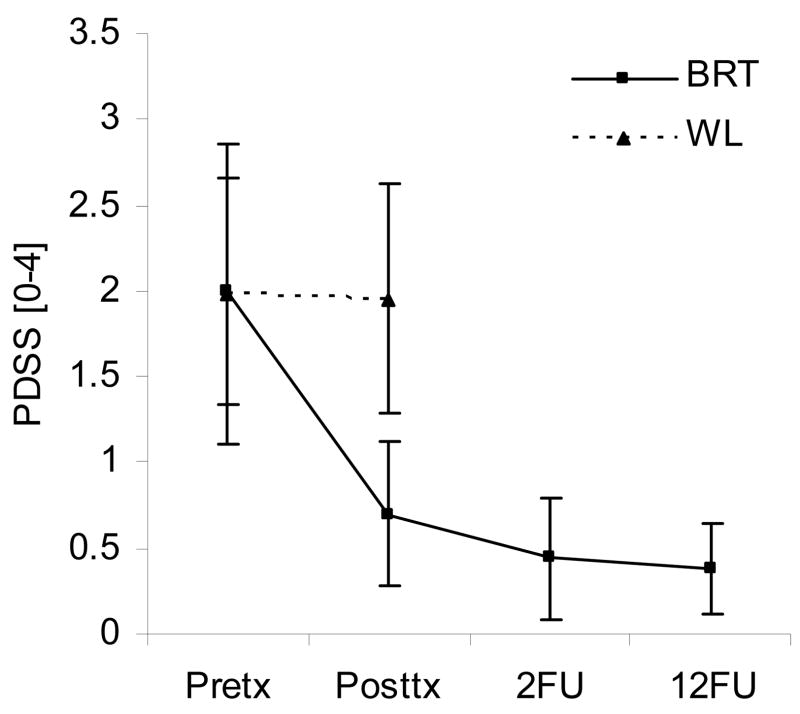
«Significant improvements (in PD severity, agoraphobic avoidance, anxiety sensitivity, disability, and respiratory measures) were seen in treated but not untreated patients, with moderate to large effect sizes. Improvements were maintained at follow-up. »

«That such training will result in higher levels of pCO2 cannot be taken for granted, since the usual instruction to breathe slowly can actually lead to decreases in pCO2 (Meuret et al., 2003; Ley, 1991), probably because of deeper individual breaths (higher tidal volumes) stimulated by feelings of suffocation.»

«Klein’s suffocation alarm hypothesis (Klein, 1993), for example, suggests that both panic attacks and the consistent respiratory abnormalities seen in panic patients may be due to hypersensitive, medullary carbon dioxide (CO2) detectors. »

nihms46964f2

nihms46964f3

The treatment had five major components: (a) educating patients about the role of breathing in the etiology and maintenance of PD, (b) directing their attention to potentially problematic respiratory patterns, particularly those observed during the extended physiological monitoring, (c) having them perform different breathing maneuvers with capnometer feedback to experience how changes in breathing affect physiology, symptoms, and mood, (d) teaching them ways to simultaneously control pCO2 level and RR (e) and having them practice breathing exercises daily.

Individual training exercises, to be performed twice- daily for 17-min, at home or elsewhere, consisted of three parts: (a) a baseline period (baseline), during which patients sat quietly with their eyes closed for 2-min, (b) a 10-min paced breathing period (paced) during which patients breathed in synchrony with tones while occasionally checking their pCO2 and RR on a feedback device, and (c) a 5-min breathing period without pacing tones during which patients were to maintain their previously paced RR and pCO2 level using the feedback device (transfer).

In addition, patients were provided with a pocket-sized tape player and audiotapes with instructions and pacing tones for their exercises. The tones were set to correspond to a RR of 13 breaths per minute in the first week, and rates of 11, 9, and 6 breaths per minute in successive following weeks.

During the maintenance period (between 2 and12-month FU) nine of the patients taking psychotropic medication had reduced their doses or discontinued medication altogether; four patients initiated alternative (n=3, relaxation, yoga, spiritual guidance) or psychological treatment (n=1, cognitive therapy).

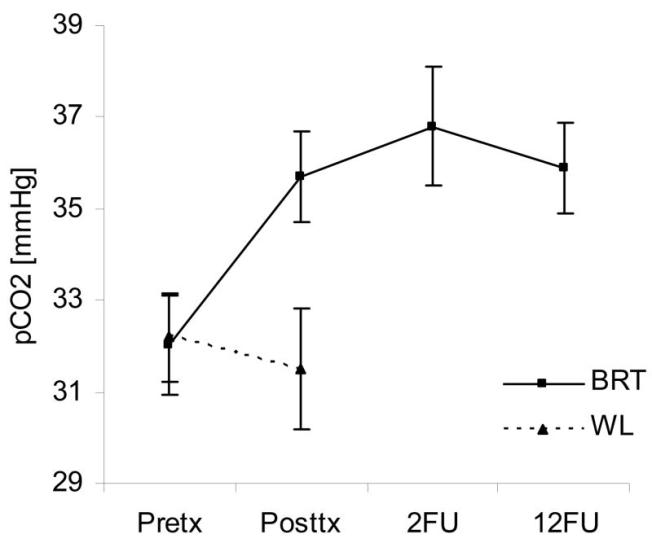
Post-hoc tests showed that pCO2 dropped significantly below baseline level during paced breathing and transfer in week 1 (34.7 and 34.5 mmHg). It reached the highest levels (around 38 mmHg) for all three phases during week 4.

«At posttreatment 40% had experienced no further panic attack during the four week period. At 2-month follow-up 62% had experienced no further panic attack since the end of treatment and 68% were panic-free at 12-month follow-up. Eighty-eight percent at 2-month follow-up and 96% at 12-month follow-up were either “much improved” or “very much improved” »

The results of this study suggest that a new, brief, capnometry-assisted breathing therapy (BRT), which specifically teaches patients to raise pCO2 levels by regular slow and shallow breathing, can be therapeutic in PD. Significant improvements were seen in treated but not untreated patients, with respect to PD severity, agoraphobic avoidance, anxiety sensitivity, disability, and respiratory measures. Psychological measures continued to be improved or improved further at 2-month and 12-month reassessments. Mean pCO2 increased from hypocapnic to normocapnic levels over the course of treatment and remained normocapnic at follow-up.

«Repeated elevation of pCO2 during homework sessions may have desensitized a hypersensitive suffocation alarm system (Klein, 1993), reducing panic vulnerability. Such desensitization could increase tolerance for incidental increases of arterial pCO2during daily life and result in fewer compensatory hyperventilatory episodes.»

Alternatively, in so far as hyperventilation itself can cause panic attacks (Ley, 1985), practiced skill at raising pCO2 could directly reduce risk. The fact that an inability to normalize breathing quickly after paced hyperventilation was associated with less clinical recovery suggests that respiratory and clinical outcomes were linked.

Thus, non-respiratory mechanisms may also have played a role in patient improvement. For instance, the treatment rationale provided to patients included cognitive components that may have counteracted catastrophic thinking and given patients a greater sense of control. The paced breathing exercises, which often triggered uncomfortable sensations similar to those experienced during panic attacks (Meuret et al., 2003), may have produced interoceptive exposure and desensitization to bodily cues that was not respiration-specific (Craske et al., 1997). The slight decreases of pCO2 during home-exercises could be indicative of such an unpleasant exposure effect.

Ukjent sin avatar

End-tidal versus transcutaneous measurement of PCO2 during voluntary hypo- and hyperventilation

Nevner at «paused breathing» øker CO2 mest, og viser hvordan CO2 påvirkes av forskjellige pustefrekvenser. Å øke CO2 virker terapeutisk mot panikkangst. I denne studien pustet de riktig nok 3 pust i minuttet, men deres paused breathing innebar ett sekund inn, holde pusten i 18 sekunder, og så ett sekund ut. Det er en ganske mye mer anstrengende måte å puste på. De nevner ingen ting om hvordan deltakerne opplevde denne pusteteknikken i studien.

Pubmed artikkel: http://www.ncbi.nlm.nih.gov/pubmed/18706460
Bilder: http://www.sciencedirect.com/science/article/pii/S0167876008007654

«Recent studies have shown that end-tidal PCO2 is lower during anxiety and stress, and that changing PCO2by altering breathing is therapeutic in panic disorder.»

«Both methods documented that paused breathing was effective for raising PCO(2), a presumed antidote for anxious hyperventilation.»

«The results show that PCO2 estimated by the two methods was comparable except that for transcutaneous measurement registration of changes in PCO2 was delayed and absolute levels were much higher.«

Ukjent sin avatar

better chemistry through breathing

Nevner blodsirkulasjon og hvordan blodårene forholder seg til pH endringer.

Klikk for å få tilgang til Kaiser%20Permanente%20Better%20Chemistry%20Through%20Breathing.pdf

«For the majority of people, just 1 minute of determined overbreathing reduces cutaneous and peripheral blood circulation (colder hands, paler skin); interferes with peripheral nerve conduction (tingling in fingers and lips); lowers muscle contraction thresholds (more susceptible to twitching); and stimulates cerebral vasoconstriction (interference with vision, hearing, sensory perception, balance, orientation, judgment, and cognition). »

Hvis dette skjer etter 1 minutt med hyperventilering, hva skjer ved kronisk hyperventilering?

«A “compensated hyperventilator” will often feel out of breath; because much of the bicarbonate buffer is gone, there is less of a defense against the rising acidity associated with retaining CO2. Normal breathing will feel insufficient. Thus breath-holding time is typically shorter than average—often below 15 seconds. »

«If the breath is stopped or inhibited, CO2 rises and blood vessel diameter increases in order to maximize transfer of glucose and oxygen out of the bloodstream and into the tissues. But with hyperventilation, the opposite happens: blood vessels constrict, inhibiting transfer of nutrients from the bloodstream. »

CO2 blodsirkulasjon

«Because hyperventilation is associated with alkalinity, the kidneys start retaining acid and more of the blood’s bicarbonate (alkaline) buffer is excreted. Although this does return the pH toward normal, it creates a false, fragile equilibrium that depends on continued hyperventilation. This new “set point” makes recovering a normal breathing pattern difficult. This person will be oversensitive to both exercise and relaxation and may suffer anxiety, chest tight- ness, fatigue, and muscle pain.»

«In some individuals, blood vessel diameter fell by 50%; in others, much less. Those with the strongest constriction general- ly reported more symptoms of panic.»

«Hyperventilation restricts circulation more in the cortex than in the lower brain levels and can seriously impair cortical functioning, disrupting judgment, perception, memory, orientation, and reaction time, and slowing EEG frequencies. »

«Excess sighing and deep breaths are markers for panic disorder (Wilhelm, Trabert, & Roth, 2001).» «For such a person, deep but urgent breathing may be an attempt to over- come a tight diaphragm or other muscular rigidity, so emphasizing muscle relaxation and gentler breathing might be more helpful than recommending deep breathing.»