Ukjent sin avatar

Pain Sensitivity and Analgesic Effects of Mindful States in Zen Meditators: A Cross-Sectional Study

Nevner hvordan smerteopplevelse blir mindre med meditasjon, men viser også til at det sannsynligvis er pustefrekvensen som gir den smertestillende effekten. Pluss den nevner hvordan frontallappen bidrar med smertestillende opioider.

http://www.psychosomaticmedicine.org/content/71/1/106.long

These results indicated that Zen meditators have lower pain sensitivity and experience analgesic effects during mindful states. Results may reflect cognitive/self-regulatory skills related to the concept of mindfulness and/or altered respiratory patterns.

Mindfulness can be described as an equanimous state of observation of one’s own immediate and ongoing experience.

Mindfulness has been described as “intentional self-regulation of attention from moment to moment … of a constantly changing field of objects … to include, ultimately, all physical and mental events….” (5). Furthermore, an attitude of acceptance toward any and all experience is stressed. Traditional accounts of mental and emotional transformation accompanying mindful practice (6,7) are supported by scientific findings of psychological and biological effects on practitioners (8–10) and patients (5,11–15).

Mindfulness-based therapies have reported success treating anxiety (11,15), obsessive compulsive disorder (13), and depression (12,14). Positive correlations between meditation experience of Buddhist monks and positive affect (10) have been reported. Increases in positive affect have also been observed in a longitudinal study in which naïve subjects were trained to meditate (8).

It is well known that cognitive manipulations, such as hypnosis, attention, expectancy or placebo, can influence the experience of pain and the associated neurophysiological activity (17–19). There is also mounting evidence that mindfulness may be effective in treating chronic pain.

Significant positive improvements were found on all measures immediately after the 10-week training program. However, follow-up evaluation showed stable improvements on most measures with the exception of present moment pain. The authors interpreted the results as the acquisition of an effective coping strategy for pain, where the pain itself did not change but the relation or stance taken toward the pain was positively altered.

Changes in pain were further examined in relationship to meditation training. The amount of meditation experience of individual practitioners predicted the degree of pain intensity modulation (i.e., versus baseline) with more hours of experience leading to greater reductions in pain intensity during the mindfulness condition [r(9) = −.82, p< .01].

Notably, pain modulation induced by mindfulness (relative to baseline-1) was correlated with the corresponding changes in respiratory rate across all subjects [intensity: r(23) = .37, p = .03; unpleasantness: r(23) = .42, p = .02]. Furthermore, the significant decrease in pain intensity reported above in the meditators during the mindfulness condition relative to baseline-1 (Figure 2) did not reach significance after including the changes in respiration as a covariate [F(1,11) = 3.02, p = .11]. In contrast, the significant increase in pain intensity reported by the control subjects in the concentration condition remained significant after accounting for changes in respiratory rates [F(1,11) = 20.94, p = .001]. These effects suggest that the changes in pain induced by mindfulness, but not concentration, may be at least partly accounted for by changes in respiration.

The main findings are the following:

  • 1) Meditators required hotter temperatures than controls to experience moderate pain.
  • 2) As hypothesized, meditators experienced less pain while attending mindfully, whereas control subjects did not show such modulation.
  • 3) Unexpectedly, analgesic effects of mindfulness were more clear on the sensory dimension of pain (i.e., perceived intensity) than the affective dimension of pain (i.e., pain unpleasantness), although effects were observed in the same direction.
  • 4) The magnitude of the analgesic effect of mindfulness was predicted by the number of hours of meditation practice in meditators.
  • 5) When attention was directed toward the stimulation, with no mention of attending mindfully, control subjects showed the expected increase in pain intensity and unpleasantness whereas meditators did not differ from baseline.
  • 6) Physiologically, meditators had slower breathing rates than controls, consistent with their self-assessed reduced reactivity. Importantly, changes in respiratory rate predicted the changes in felt pain and the analgesic effect of mindfulness states was no longer significant after accounting for changes in respiratory rates (covariance).
  • 7) On a mindfulness scale, meditators scored higher on the tendency to be observant and nonreactive. Higher scores on these dimensions of mindfulness were further associated with lower pain sensitivity and slower respiratory rates.

Zen meditation was associated with lower pain sensitivity as demonstrated by the higher temperatures required to produce moderate pain. The observed difference (49.9°C versus 48.2°C) should be considered large as it typically corresponds to an increase of about 50% on a ratio scale of pain perception or 20 to 25 points on a 0 to 100 numerical pain scale, based on similar psychophysical methods (28,33).

While attending mindfully, the Zen practitioners showed reductions of 18% pain intensity. Remarkably, individuals with more extensive training experienced greater reduction in pain. This finding is extremely important as it suggests that the observed pain reduction may not simply reflect a predisposition to meditation (individual differences) but may also involve experience-dependent changes associated with practice. This is in line with other studies linking meditation training with mindfulness, medical symptoms, and well-being (16); attention performance, anxiety, depression, anger, cortisol and immunoreactivity (34); an inverted U-shaped function of attention-related brain activity (35); electrophysiological markers of positive affect (10); positive affect and stronger immune responses (8); and cortical thickness and gray matter density (9,36,37).

The analgesic effects of mindful attention may relate to the physiological state induced as suggested by the respiration data. Overall, the meditators breathed at a slower rate than control subjects in all conditions and their mean respiratory pattern followed that of their pain ratings. In contrast, respiratory rate did not change noticeably across conditions in the control subjects. Slower breathing rates (typically meditators) were associated with less reactivity and with lower pain sensitivity. These relationships suggested that the meditators were in a more relaxed, nonreactive physiological state throughout the study, which culminated in the mindfulness condition and which influenced the degree to which they experienced pain.

The covariance analysis suggested that this analgesic effect could be mediated at least in part by the observed change in respiration.

A neuro-chemical model of meditation put forth by Newberg and Iversen (47) offers a possible explanation for our results. Meditation practice, involving volitional regulation of attention, seems to activate prefrontal cortex (35,48,49); this has been observed during Zen practice (50). Increases in prefrontal activation can stimulate the production of b-endorphin (e.g., in the arcuate nucleus of the hypothalamus) (47). B-endorphin is an opiate associated with both analgesia and a reduction in respiratory rate as well as decreases in fear and increases in joy and euphoria (47). Interestingly, the direction of attention toward breathing and the volitional control of breathing rates are part of many meditative techniques; however, causation can obviously not be inferred from those observations.

Another related possibility is that meditation leads to reductions in stress and stress-related chemicals, such as cortisol which interact with the opiate system. A reduction of cortisol can greatly enhance the binding potential/efficacy of endogenous opioids (27), possibly contributing to a downregulation of nociceptive responses. Studies have reported evidence of reduced cortisol responses in meditators (34,52,53).
Ukjent sin avatar

Influence of blood glucose on heart rate and cardiac autonomic function

Interessant studie som beskriver sammenhengen mellom hjerterytme (HR), blodsukker og HRV både hos diabetikere og normale. Nevner også at sympaticus dominans kan gi insulinresisten.

http://hal.archives-ouvertes.fr/docs/00/55/50/75/PDF/Valensi_DME_article.pdf

«HR, but not HRV, was associated with glycaemic status and capillary glucose. After deep- breathing, HR recovery was altered in known diabetic patients, and was associated with reduced HRV»

«Elevated heart rate (HR) predicts cardiovascular morbidity and mortality in both diabetic [1,2] and non- diabetic individuals [3,4]. HR is the result of fitness, neurohormonal factors and the autonomic nervous system function. In type 2 diabetic patients, HR is faster [5] and this may be related to cardiac autonomic neuropathy (CAN). Fasting plasma glucose is associated with higher resting HR [6] and in the Insulin Resistance Atherosclerosis Study, HR was associated with insulin sensitivity and with the acute insulin response to glucose [7].»

«In type 2 diabetes, CAN is associated with age, obesity, systolic blood pressure, glycaemic control, and duration of diabetes [14] and in non-diabetic individuals, with age, overweight, pre-diabetes, HR, diminished HRV, treatment for hypertension, metabolic syndrome and insulin resistance [3,15].»

«Interestingly, a longitudinal study has shown that autonomic nervous system dysfunction (high HR, low HRV), may be associated with incident diabetes [1].»

«Known diabetic participants had a more severe cardio-vascular risk profile: 75% had the metabolic syndrome in comparison to only 15% in normoglycemic individuals.»

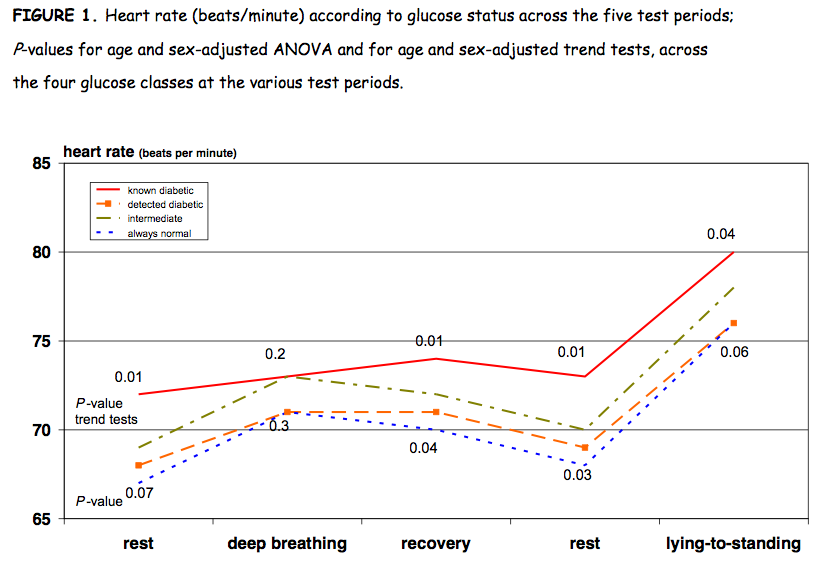
«HR was related with glycaemic status (Figure 1), particularly during recovery after deep-breathing, and during subsequent rest (P < 0.04,0.03), and known diabetic patients had the highest HR.»

«HR was higher in those with the metabolic syndrome for all test periods (Table 2), but was attenuated after adjustment on BMI with a significantly different HR remaining only during deep-breathing.»

«HRV was more closely related with glycaemic status at deep-breathing and particularly at recovery, than at other periods; patients with known diabetes had the lowest HRV (Fig. 3 A-F). At recovery, the detected diabetic and IFG individuals had similar HRV, and all six HRV indices were significantly lower than in those with normal glucose.»

«significant HR difference between the four glycaemic groups; treated diabetic patients had the highest HR, those with screened diabetes or IFG had slightly elevated HR in all test periods; HR was correlated with capillary glucose and triglycerides during all test periods;»

«HR which continued to increase between deep-breathing and recovery in diabetic patients in contrast to other groups;»

«Higher sympathetic tone can cause insulin resistance [20]. Conversely insulin resistance and hyperinsulinemia can cause sympathetic overactivity and depress vagal activity in healthy subjects [21] and in insulin-resistant non-diabetic offspring of type 2 diabetes patients [22].»

«The present data suggest that glucose is a determinant of HR.»

«The heart-rate profile during exercise and recovery (high resting HR, low HR increase during exercise, low HR decrease after exercise) predicts sudden death [23].»

«In our study, in the known diabetic patients, HR increased less between rest and deep-breathing and continued to increase during the recovery time after deep- breathing while in all other groups, HR decreased, the differences remaining significant after BMI adjustment.»

«These results suggest that this relatively simple test has good sensitivity, and could be a new marker, worthy of evaluation.»

«Lower HRV has been reported in fasting hyperglycemia [3], glucose intolerance [14]; the metabolic syndrome has been implicated in reduced HRV in non-diabetic individuals, independently of glucose [3]. Some data suggest that HRV impairment is associated with more severe insulin resistance in non-diabetic obese individuals [24].»

«The value of this simple forced deep-breathing test warrants further evaluation in diabetic as well as in pre-diabetic patients.»

Dette er metoden, om hjerterytmen fortsetter å stige etter dyp pust så er det mulig diabetes problematikk:

HR and HRV have been measured during static conditions (at rest) and dynamic conditions (deep- breathing and lying-to-standing:

  •   5 minutes resting in recumbent position,
  •   1 minute deep-breathing in recumbent position: 6 deep respiratory cycles during 1 minute [14],
  •   1 minute recovery,
  •   1 minute resting,

hjerterytme i dyp pust

Ukjent sin avatar

The effects of slow breathing on affective responses to pain stimuli: an experimental study.

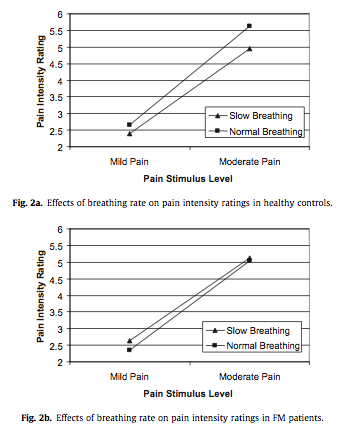
Viktig studie om pustens regulering av smerte som nevner at å senke pustefrekvens demper smerte betraktelig for frisk mennesker, men hos Fibromyalgi er det ikke nok i seg selv som smertedemping.

http://www.ncbi.nlm.nih.gov/pubmed/20079569

Dropbox link: https://dl.dropboxusercontent.com/u/17457302/Forskning%20mappe%20for%20terapi/STUDIE%20-%20The%20effect%20of%20slow%20breathing%20on%20affective%20responses%20to%20pain%20stimul.pdf
Dropbox link til kommentar om fibromyalgi: https://dl.dropboxusercontent.com/u/17457302/Forskning%20mappe%20for%20terapi/Respiration-induced%20hypoalgesia%20-%20%20Additional%20evidence%20for%20pain%20modulation%20deficits%20in%20fibromyalgia.pdf

«M and HC were exposed to low and moderate thermal pain pulses during paced breathing at their normal rate and one-half their normal rate. »

«Participants who reported higher levels of trait positive affect prior to the experiment showed greater decreases in negative affect as a result of slow versus normal breathing.  »

«FM patients and normal controls were instructed to breathe at either their normal rate or 1/2 that rate during four blocks of four trials.  »

«An inspection of resting breathing rates for the two groups revealed no differences between groups: an average rate of 13.68 (SD = 3.54) breaths per minute for FM patients, and 13.63 (SD = 2.17) for HCs.  »

Skjermbilde 2013-05-12 kl. 11.31.28

«These findings are consistent with those of an observational investigation, which found lower breathing rates were associated with reduced pain intensity and unpleasant- ness ratings when participants meditated while receiving pulses of painful heat [12]. »

«Since all participants were administered trials where pain was administered, the potential benefit of interventions that include the practice of meditation in the treatment of pain patients is sup- ported. However, the mixed findings for FM patients give us pause. It may be more difficult to engender states of relaxation needed to endure pain in FM patients through slow paced breathing alone. »

«Taken together these findings are consistent with the model of pain as a homeostatic emotion. In this model, the neurophysiologi- cal processes that underlie how slow breathing influences pain begins with the increased bronchiopulmonary afferent activity. This activity produces increased activation in the left mid-insula and anterior insula [24], as well as increased activation in the left anterior cingulate associated directly with increased heart rate variability [18], corresponding with a shift in sympathovagal tone. This activation counterbalances the acute activation in the right anterior insula produced by painful stimulation [2] by virtue of opnent interaction [4].»

«The findings indicate that a slower breathing rate is a useful target in interventions for patients in pain. Reductions in pain and negative affect may be ex- pected when people are guided to halve their respiration rate.  »

«However, for FM patients, the data suggest that med- itative breathing alone is insufficient. Clinical interventions that address positive affective disregulation, appear necessary to assist FM patients in the management of their chronic pain. «

Ukjent sin avatar

Breathing Movements and Breathing Patterns among Healthy Men and Women 20–69 Years of Age

Viktig studie som viser normalt pustemønster i forskjellige aldre. 108 deltakere i denne og viser at det er lite forskjeller mellom kvinner og menn, og lite forskjeller mellom forskjellige aldersgrupper i normal avslappet pust. Men menn har større bevegelse i brystkassen og i magen ved dyp pust.

http://www.karger.com/Article/Pdf/87456

«The main findings from this study include that respi- ratory movements are symmetrical, do not decrease sig- nificantly with increasing age up till 69 years, and are not significantly different for males and females, except for abdominal motion during deep breathing. »

«During deep breathing the abdominal movements were significantly less amongst the women than the men (p ! 0.05). The average respira- tory rate was 14 during quiet and 7.4 during deep breathing for both sexes. The rhythm (inspiration/expiration ratio) was 1:1.21 for men and 1:1.14 for women during quiet breathing and 1:1.23 for men and 1:1.40 for women during deep breathing.»

«The range of quiet breathing movements of men and women was not significantly different, but during deep breathing the women had significantly less abdominal movements than the men. »

«found an approximately 50–60% decrease in chest expansion with increasing age (age 15–75+) . The present study showed 10% decrease of the lower thoracic and 0.1% of the upper thoracic movements with increasing age. »

«The frequency of breathing movements was on the av- erage a little over 14/min during quiet breathing. These findings are similar to previous reports [1, 2, 24, 25]. «

Ukjent sin avatar

Breathing pattern disorders and physiotherapy: inspiration for our profession

Nevner hva pustetrening kan gjøre for fysioterapeuters behandlingseffekt og hvorfor det er viktig å jobbe med pusten. Viktig studie som også nevner og bekrefter Chaitows arbeid.

«Currently in western medicine, a fundamental push is to encourage healthy life style skills. Education in one of the most fundamental tools, and yet breathing has not been emphasized enough as part of this healthy lifestyle package. »

http://xa.yimg.com/kq/groups/23948119/856437899/name/Breathing%20pattern%20disorders%20and%20physiotherapy.pdf

«The potential for improving the patient’s state, by optimizing their breathing pattern in all their activities, is an important development in physiotherapy. It is a developing area of knowledge which is pertinent to physiotherapy practice as it develops in a biopsychosocial model. »

«Hyperventilation results in altered (CO2) levels, and this is most commonly seen as lowered end tidal CO2 (PET CO2), or fluctuating CO2 levels, and a slower return to normal CO2 levels.34 »

«Research by Hodges et al.56–58 examines the relationship between trunk stability and low back pain. It supports the vital role the diaphragm plays with respect to truck stability and locomotor control. The diaphragm has the ability to perform the dual role of respiration and postural stability. When all systems are challenged, however, breathing will remain as the final driving force.59

In other words ‘Breathing always wins’.60 »

hyperventilering faktorer


«Breathing re-education is drug free, appealing to the new paradigm of health for all, and a practice that requires little or no machinery so a low running cost, and initial set-up is minimal for the therapist. »


Ukjent sin avatar

Breathing pattern and thoracoabdominal motion in healthy individuals: influence of age and sex

Om pustemønstre i forskjellige aldre og mellom forskjellig kjønn. Viser hva som er normalt i befolkningen (i Brasil) blandt de som ikke har noen sykdommer. 104 mennesker var med så dette regnes som en ganske stor studie. Man regner «normal» tidal volume til å være 500ml pr pust, men studien viser at den er nede på 350ml for de fleste.

http://www.scielo.br/pdf/rbfis/v14n5/en_a10v14n5.pdf

«he data found in this study suggest that the breathing pattern is influenced by sex whereas the thoracoabdominal motion is influenced by age.»

«In addition, the women presented higher respiratory frequency, thus suggesting that they tended to breathe more rapidly than the men »

kvinner     menn 20-39 år

325±127 441±114 *  Vt (ml)   tidal volume

15±2 13±4  f(breaths/min)  respiratory frequency

4.69±1.34   5.61±1.13 *    VE (l/min)  minute ventilation

46±15   39±10   %RC   rib cage motion

7±3   8±3  PhRIB (%)   inspiratory phase relation

15±7   15±6   PhREB (%)    expiratory phase relation

11±5   10±6   PhaseAng (°)    phase angle

phase angle (PhaseAng), which reflected the delay between rib cage and abdomen excursions

inspiratory phase relation (PhRIB) and expiratory phase relation (PhREB), which reflected the percentage of time during one breath in which the rib cage and abdomen moved in opposite directions, respectively

Ukjent sin avatar

Feedback of End-tidal pCO2 as a Therapeutic Approach for Panic Disorder

Beskriver hvordan pustemønster er en grunnleggende aspekt av panikkangst og at pusteteknikker for å øke CO2 ved hjelpe av Capnografisk biofeedback virker terapeutisk med svært gode resultater. Etter 12 mnd rapportert 68% at de var blitt fri fra panikkangst og hele 96% var «mye bedre».

http://www.ncbi.nlm.nih.gov/pmc/articles/PMC2890048/

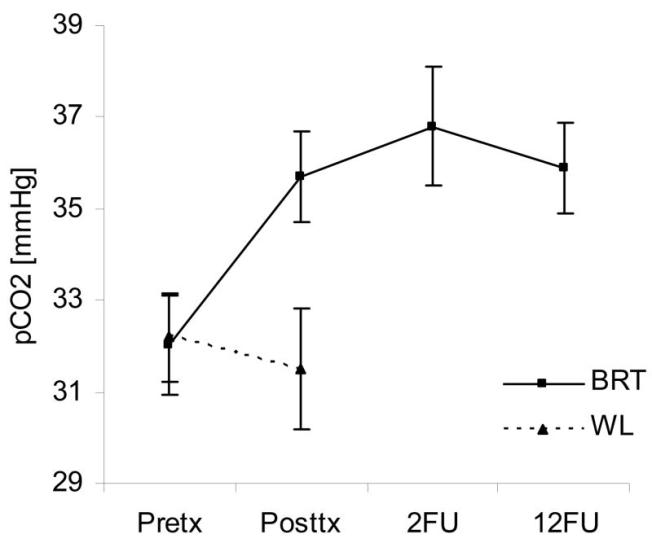
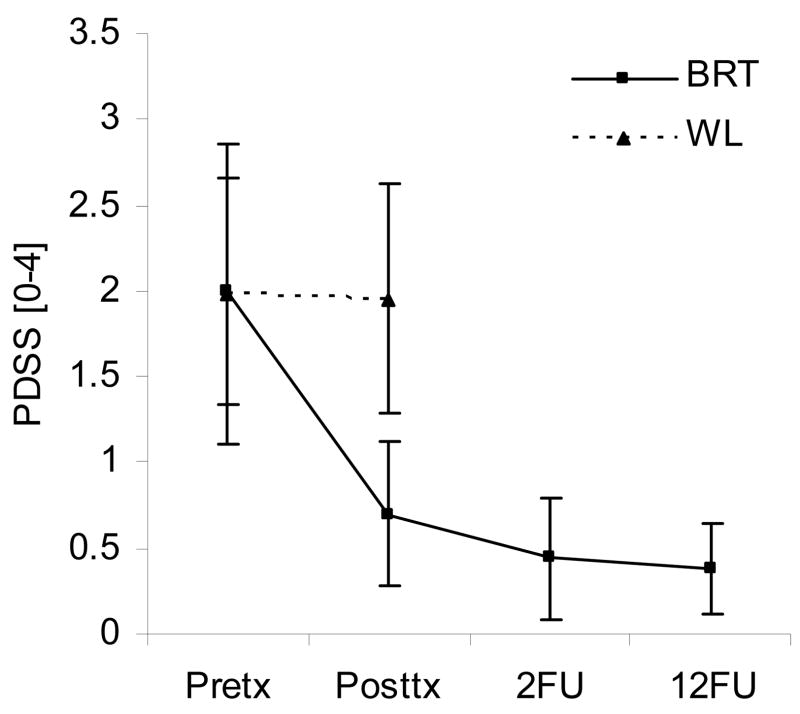
«Significant improvements (in PD severity, agoraphobic avoidance, anxiety sensitivity, disability, and respiratory measures) were seen in treated but not untreated patients, with moderate to large effect sizes. Improvements were maintained at follow-up. »

«That such training will result in higher levels of pCO2 cannot be taken for granted, since the usual instruction to breathe slowly can actually lead to decreases in pCO2 (Meuret et al., 2003; Ley, 1991), probably because of deeper individual breaths (higher tidal volumes) stimulated by feelings of suffocation.»

«Klein’s suffocation alarm hypothesis (Klein, 1993), for example, suggests that both panic attacks and the consistent respiratory abnormalities seen in panic patients may be due to hypersensitive, medullary carbon dioxide (CO2) detectors. »

nihms46964f2

nihms46964f3

The treatment had five major components: (a) educating patients about the role of breathing in the etiology and maintenance of PD, (b) directing their attention to potentially problematic respiratory patterns, particularly those observed during the extended physiological monitoring, (c) having them perform different breathing maneuvers with capnometer feedback to experience how changes in breathing affect physiology, symptoms, and mood, (d) teaching them ways to simultaneously control pCO2 level and RR (e) and having them practice breathing exercises daily.

Individual training exercises, to be performed twice- daily for 17-min, at home or elsewhere, consisted of three parts: (a) a baseline period (baseline), during which patients sat quietly with their eyes closed for 2-min, (b) a 10-min paced breathing period (paced) during which patients breathed in synchrony with tones while occasionally checking their pCO2 and RR on a feedback device, and (c) a 5-min breathing period without pacing tones during which patients were to maintain their previously paced RR and pCO2 level using the feedback device (transfer).

In addition, patients were provided with a pocket-sized tape player and audiotapes with instructions and pacing tones for their exercises. The tones were set to correspond to a RR of 13 breaths per minute in the first week, and rates of 11, 9, and 6 breaths per minute in successive following weeks.

During the maintenance period (between 2 and12-month FU) nine of the patients taking psychotropic medication had reduced their doses or discontinued medication altogether; four patients initiated alternative (n=3, relaxation, yoga, spiritual guidance) or psychological treatment (n=1, cognitive therapy).

Post-hoc tests showed that pCO2 dropped significantly below baseline level during paced breathing and transfer in week 1 (34.7 and 34.5 mmHg). It reached the highest levels (around 38 mmHg) for all three phases during week 4.

«At posttreatment 40% had experienced no further panic attack during the four week period. At 2-month follow-up 62% had experienced no further panic attack since the end of treatment and 68% were panic-free at 12-month follow-up. Eighty-eight percent at 2-month follow-up and 96% at 12-month follow-up were either “much improved” or “very much improved” »

The results of this study suggest that a new, brief, capnometry-assisted breathing therapy (BRT), which specifically teaches patients to raise pCO2 levels by regular slow and shallow breathing, can be therapeutic in PD. Significant improvements were seen in treated but not untreated patients, with respect to PD severity, agoraphobic avoidance, anxiety sensitivity, disability, and respiratory measures. Psychological measures continued to be improved or improved further at 2-month and 12-month reassessments. Mean pCO2 increased from hypocapnic to normocapnic levels over the course of treatment and remained normocapnic at follow-up.

«Repeated elevation of pCO2 during homework sessions may have desensitized a hypersensitive suffocation alarm system (Klein, 1993), reducing panic vulnerability. Such desensitization could increase tolerance for incidental increases of arterial pCO2during daily life and result in fewer compensatory hyperventilatory episodes.»

Alternatively, in so far as hyperventilation itself can cause panic attacks (Ley, 1985), practiced skill at raising pCO2 could directly reduce risk. The fact that an inability to normalize breathing quickly after paced hyperventilation was associated with less clinical recovery suggests that respiratory and clinical outcomes were linked.

Thus, non-respiratory mechanisms may also have played a role in patient improvement. For instance, the treatment rationale provided to patients included cognitive components that may have counteracted catastrophic thinking and given patients a greater sense of control. The paced breathing exercises, which often triggered uncomfortable sensations similar to those experienced during panic attacks (Meuret et al., 2003), may have produced interoceptive exposure and desensitization to bodily cues that was not respiration-specific (Craske et al., 1997). The slight decreases of pCO2 during home-exercises could be indicative of such an unpleasant exposure effect.

Ukjent sin avatar

End-tidal versus transcutaneous measurement of PCO2 during voluntary hypo- and hyperventilation

Nevner at «paused breathing» øker CO2 mest, og viser hvordan CO2 påvirkes av forskjellige pustefrekvenser. Å øke CO2 virker terapeutisk mot panikkangst. I denne studien pustet de riktig nok 3 pust i minuttet, men deres paused breathing innebar ett sekund inn, holde pusten i 18 sekunder, og så ett sekund ut. Det er en ganske mye mer anstrengende måte å puste på. De nevner ingen ting om hvordan deltakerne opplevde denne pusteteknikken i studien.

Pubmed artikkel: http://www.ncbi.nlm.nih.gov/pubmed/18706460
Bilder: http://www.sciencedirect.com/science/article/pii/S0167876008007654

«Recent studies have shown that end-tidal PCO2 is lower during anxiety and stress, and that changing PCO2by altering breathing is therapeutic in panic disorder.»

«Both methods documented that paused breathing was effective for raising PCO(2), a presumed antidote for anxious hyperventilation.»

«The results show that PCO2 estimated by the two methods was comparable except that for transcutaneous measurement registration of changes in PCO2 was delayed and absolute levels were much higher.«

Ukjent sin avatar

Pain and faulty breathing: a pilot study

Nevner hvordan pusten har sammenheng med smerter, spesielt i nakke, og beskriver normal vs abnormal pustefunksjon.

http://reactivemovement.com/images/stories/pain%20and%20faulty%20breathing.pdf

http://www.bodyworkmovementtherapies.com/article/S1360-8592(03)00085-8/abstract

«Breathing mechanics are influenced directly by

  • * Bio-mechanical factors such as rib head fixations or classical upper/lower crossed patterns of muscle imbalance.
  • * Biochemical factors involving anything that affects the body’s delicate pH balance including allergy, infection, poor diet, hormonal influences or kidney dysfunction.
  • * Psychosocial factors such as chronic anxiety, anger or depression. «

«For example, ketoacidosis, a byproduct of a very popular diet which promotes high protein/low carbohydrate intake, increases the acidic state of the blood which will promote deeper, faster breathing (the higher CO2 content stimulates the breathing drive).»

«Alkalosis causes a decrease in the threshold of peripheral nerve firing, an increase in muscular tension, muscle spasm, spinal reflexes and significantly heightened perception of pain, light and sound. Alkalosis can also result in emotional lability and produce a sense of apprehension and anxiety that frequently leads to panic attacks and phobic behavior (Chaitow et al., 2002; Chaitow, 2000).»

«With each normal (resting) breath this bucket handle movement occurs at every rib level, which has a gentle micro-massaging effect maintaining healthy spinal movement, blood and nutritional flow to the musculo-skeletal struc- tures.»

normal pust

«Although the pectoralis major, pectoralis minor, latissimus dorsi, serratus anterior and trapezius are not typically considered accessory respiratory muscles, they assume a more respiratory than postural function in the dysfunctional or paradoxical breath- er and contribute to the faulty pattern of lifting the ribcage up during inspiration (Hruska, 1997). When chest lifting becomes a faulty breathing pattern, chronic lifting of the clavicles creates the appearance of deep clavicular grooves as seen in Fig. 5 (Lewit, 1999).»

unormal pust

«The same criteria were applied for normal (relaxed) breathing as for deep breathing. A ‘‘normal’’ breath according to these criteria would:

  1. Initiate in the abdomen, which would expand outward during inhalation and inward during exhalation.
  2. Have some degree of horizontal lower rib motion (even if slight).
  3. Have no lifting up motion in the upper ribs.
  4. Have no clavicular grooves. «

«Only one type of pain had a statistically significant relationship with faulty breathing – neck pain»

«This study showed that 87.2% of the participants have experienced some sort of musculo-skeletal pain. This high percentage is no surprise. What was remarkable were the high percentages of this sample population with faulty breathing me- chanics; 56.4% of the population studied had faulty relaxed breathing and 75% showed faulty breathing when taking a deep breath. »

«If the results of this study reflect the general population, as clinicians your chances are 3 in 4 that the new patient you see today will have some level of abnormal breathing patterns.»

«But why is the relationship between faulty breathing and neck pain so pervasive?
The answer may be simply that the most common fault in respiration of lifting the thorax with the accessory muscles of respiration instead of widen- ing it in the horizontal plane overstrains the cervical spine and musculature, contributing to recurrent cervical syndromes (Lewit, 1999)»

«He especially found this in patients with forward head postures, temporo-mandibular dysfunction and chronic sinus problems. Clinically, Hruska has identified hemidiaphragm hypertonicity complementing ipsilateral abdominal and oblique muscle weakness and contra lateral cervical symptoms (Hruska, 1997).»

«This study has shown that normal patterns of breathing are the exception rather than the rule. An overwhelming 75% of those studied exhibited faulty breathing mechanics. If the results of this study reflect the general population, as clinicians, your chances are 3 in 4 that the new patient you see today will have faulty breath- ing patterns.»