Ukjent sin avatar

Carbon dioxide pressure-concentration relationship in arterial and mixed venous blood during exercise

Om hvordan CO2 endrer seg under trening og at CO2 handler mest om å regulere pH.

http://jap.physiology.org/content/90/5/1798.long

«Although the mean mixed venous PCO 2 rose from 47 Torr at rest to 59 Torr at the lactic acidosis threshold (LAT) and further to 78 Torr at Max, the Cv̄CO2 rose from 22.8 mM at rest to 25.5 mM at LAT but then fell to 23.9 mM at Max.»

«We conclude that changes in buffer base and pH dominate the PCO 2-CCO 2 relationship during exercise, with changes in Hb and blood oxyhemoglobin saturation exerting much less influence.»

«This study discloses several important findings. 

1) During exercise, CCO 2 and [HCO Formula ] do not consistently increase in proportion to PCO 2

2) Because of the acidemia caused by increased lactate production, Cv̄CO2 and mixed venous [HCO Formula ] decrease to near resting values as maximalV˙O 2 is approached, despite increasing Pv̄CO2

3) Above LAT, while Pv̄CO2 increases to high levels, PaCO2 decreases because of ventilatory compensation for the exercise lactic acidosis; consequently, CaCO2 decreases to a greater degree than does Cv̄CO2

4) The increase in Cv̄CO2-CaCO2during exercise is mainly due to the increase in Cv̄CO2 below LAT and the decrease in CaCO2 above LAT.

5) Changes in SO 2 and Hb have minor influences on the PCO 2-CCO 2 relationship during exercise, whereas changes in pH due to changes in buffer base have a major influence.

6) Because pHdecreases more than pHa, there are large errors in calculated Cv̄CO2-CaCO2 when the pH change is ignored. 

7) At rest and during all levels of exercise, over threefourths of the total CO2exchange from the blood to lung gas (i.e., Cv̄CO2-CaCO2) is due to dissociation of [HCO Formula ], whereas less than one-fourth is due to the combination of venoarterial differences in [CO2] and [NH-CO2] at rest to Max.»

«It is clear that the dissociation of [HCO Formula ] plays the dominant role in CO2 exchange at the lung, whereas [CO2] and [NH-CO2] play smaller roles in total CO2 exchange. Although PCO 2differences account for the transfer of CO2 out of blood, >75% of the quantity transferred comes from the dissociation of mixed venous [HCO Formula ].»

«We have shown that Cv̄CO2 in blood actually decreases during exercise above the LAT, despite increasing PCO 2. The major reason for this is that the CO2 dissociation curve is shifted downward when lactic acid is generated during exercise.»

Her er CO2 Disossiation Curve: 

Ukjent sin avatar

Physiological mechanisms dissociating pulmonary CO2 and O2 exchange dynamics during exercise in humans

Beskriver hvordan forholdet mellom CO2 og O2 endrer seg unde trening, og spesielt over melkesyreterskel hvor bikarbonat også begynner å spille inn i homeosasen av pH i blod.

http://ep.physoc.org/content/92/2/347.long

«During incremental exercise, the increased rate of Graphic relative to pulmonary O2 uptake (Graphic) can be used to quantify θL validly if aerobic and hyperventilatory sources can be ruled out, i.e. θL is then attributable to the decrease in muscle and blood [HCO3]. In many cases, however, very rapid incrementation of work rate and/or prior depletion of CO2 stores (by volitional or anticipatory hyperventilation) can yield a ‘false positive’ non-invasive estimation of θL(‘pseudo-threshold’) resulting from a slowing of the rate of wash-in of transient CO2stores.»

«Since the tissue capacitance for CO2 is appreciably greater than for O2 (Farhi & Rahn, 1955), this means that the respiratory exchange ratio (R), i.e. the ratio of the volumes of CO2and O2 exchanged across the tissue of interest per unit time, will differ from that of the respiratory quotient (RQ), i.e. the ratio of the amounts of metabolic CO2 and O2 produced and consumed, respectively, by the tissue per unit time not only across the lung, where it is most typically determined and from which inferences are most typically drawn, but also across the muscle vascular bed itself. »

«But, in addition, skeletal muscle contraction results in a transient metabolic alkalosis in the force-generating units (Steinhagen et al. 1976; Kemp, 2005) and in the venous effluent of the exercising muscle (Wasserman et al. 1997) as a result of the net proton (H+) trapping associated with the high-energy phosphate utilization, i.e. H+ release as ATP is split, and H+ uptake consequent to phosphocreatine (PCr) splitting (Kushmerick, 1997).»

«This transient alkalosis therefore results in a component of the metabolically produced CO2 being retained within the muscle.»

Ukjent sin avatar

Lactic acid buffering, nonmetabolic CO2 and exercise hyperventilation: a critical reappraisal

Om non-metabolic CO2, altså CO2 som ikke skapes i mitokondriene men kommer fra bikarbonat-reaksjoner med melkesyre.

www.ncbi.nlm.nih.gov/pubmed/15890562‎
Hele studien i dropbox: https://dl.dropboxusercontent.com/u/17457302/Nonmetabolic_CO2.pdf

«It has been suggested that hyperventilation and the disproportionate increase in VCO2 versus VO2 above the ventilatory threshold (V(TH)) in ramp exercise are due to the production of nonmetabolic CO2 in muscle because of lactic acid buffering by plasma bicarbonate entering the cell in exchange with lactate»

«(1) bicarbonate is not the main buffer in the muscle; (2) the decrease in standard bicarbonate concentration is not the mirror image of the increase in lactate concentration; (3) buffering by bicarbonate does not increase CO2 production in muscle (no nonmetabolic CO2 is produced in tissues); (4) the CO2 flow to the lungs, which should not be confused with VCO2 at the mouth, does not increase at a faster rate above than below V(TH).»

Forklaring på Non-Metabolic CO2 her:

Non-Metabolic Carbon Dioxide

At rest and during moderate exercise, lactic acid will not increase in your muscles because all that is produced is also used. Once you reach more challenging work rates, production exceeds use and the acid enters your blood. To maintain a healthy pH, sodium bicarbonate in your blood buffers most lactic acid by breaking it down to water and carbon dioxide. This results in additional carbon dioxide that must be released by your blood.

Read more: http://www.livestrong.com/article/524672-what-effect-does-exercise-have-on-the-amount-of-carbon-dioxide-released-by-the-blood/#ixzz2SmWggmYh

Ukjent sin avatar

Relationship between Hyperventilation and Excessive CO2 Output during Recovery from Repeated Cycling Sprints

Nevner at CO2 ikke er årsak til hyperventillering under trening, men at det er melkesyre. Pusten øker for å fjerne CO2 så syreoverskuddet holdes i balanse.

http://eprints.lib.hokudai.ac.jp/dspace/bitstream/2115/51990/1/repeat-ex-PR.pdf

«During incremental exercise, blood lactate is progressively increased above the VT. This is buffered by the bicarbonate system. This results in progressive reduction of blood bicarbonate ion (Beaver et al. 1986a) and metabolic acidosis. In order to improve this metabolic acidosis, ventilation is driven and becomes hyperventilation above the VT in incremental exercise. As a result, Vco2excess is progressively increased above the VT.»

«The following findings suggest that hyperventilation in exercise is induced by metabolic acidosis due to an increase in blood lactate detected by peripheral chemoreceptors. »

«Secondly, it was found that intravenous infusion of bicarbonate during incremental exercise attenuated the decrease in blood pH above the VT and consequently reduced hyperventilation by 15-30 % (Peronnet et al. 2007). However, if this hyperventilation accompanies a decrease in Paco2, it would stimulate central chemoreceptors and peripheral receptors via its effect on pH (Clement et al. 1992) and consequently can attenuate the hyperventilation. »

«Thus, hyperventilation during second recovery did not increase despite an increase in blood lactate probably due to lower Paco2 than that during first recovery. »

«During recovery, lactate is not produced in muscle. However, lactate is transported from the muscle to blood. The buffering system is primarily a non-bicarbonate system in muscle cells (Hultman and Shalin, 1980) but a bicarbonate system in blood (Yano 1987, Peronnet and Aguilaniu 2006).»

«After the end of heavy, very heavy and cycling sprint, Paco2 becomes lower than the resting level (Kowalchuk et al. 1988, . Stringer et al. 1992). »


Ukjent sin avatar

Breathing pattern disorders, motor control, and low back pain

Viktig artikkel fra Leon Chaitow om pustens rolle i ryggsmerter. Beskriver hva som skjer med nervesystemet, med bindevevet og muskelkontroll i ryggraden. Og nevner hvordan progesteron og blodsukker påvirker pusten.

http://leonchaitow.com/wp-content/uploads/pdfs/Breathing%20Pattern%20Disorders%20and%20back%20pain.pdf

«Nixon and Andrews16 have summarised the emerging symptoms resulting from hypocapnoea in a deconditioned individual, as follows: “Muscular aching at low levels of effort; restlessness and heightened sympathetic activity; increased neuronal sensitivity; and, constriction of smooth- muscle tubes (e.g. the vascular, respiratory and gastric- intestinal) can accompany the basic symptom of inability to make and sustain normal levels of effort.” »

«Lum7 notes, “Alkalosis alone cannot fully explain the symptoms [of chronic hyperventilation]. Altitude adaptation allows residents of high altitudes to remain well, despite chronic respiratory alkalosis. In symptomatic hyperventilation however, the PCO2 fluctuates, often wildly, causing constantly changing pH in nerve cells and tissue fluid to which no adaptation is possible…significant amounts of CO2 can be lost in a few minutes of overbreathing, immediately causing respiratory alkalosis. Compensation, by excretion of bicarbonate, is relatively slow and may take hours or days.” »

«Seyal et al36 note that hyperventilation increases the excitability of both cutaneous and motor axons, and that in experimental animals, HVS increases excitability of hippocampal neurons. Their research, involving healthy humans, demonstrates that hyperventilation increases the excitability of the human corticospinal system. »

«Lum 38 reports,: “During moderate hyperventilation, loss of CO2 ions from neurons stimulates neuronal activity, causing increased sensory and motor discharges, muscular tension and spasm, speeding of spinal reflexes, heightened perception (photophobia, hyperacusis) and other sensory disturbances. More profound hypocapnoea, however, increasingly depresses activity. This parallels the clinical state: initial alertness with increased activity, progressing through decreased alertness, to stupor and coma.” »

«An altered pH in the local chemical environment of peripheral nociceptors, such as occurs with respiratory alkalosis, helps to induce mechanical sensitisation and ischaemic pain.47,48 »

«Hodges further hypothesises: “Although investigation of spinal mechanics is required to confirm the extent to which spinal control is compromised by increases in respiratory demand, it is hypothesised that such a compromise may lead to increased potential for injury to spinal structures and reduced postural control. During strenuous exercise, when the physical stresses to the spine are greater, the physiological vulnerability of the spine to injury is likely to be increased.”

«Progesterone is a respiratory stimulant, making patients with BPD most vulnerable during the post-ovulation phase of the menstrual cycle.10 »

«Blood sugar levels are, “clinically the most important of these non-ventilatory factors. When blood glucose is below the middle of the normal range (i.e. below 4.4 mmol/L) the effects of overbreathing are progressively enhanced at lower levels.” 81 «

Ukjent sin avatar

Breathing pattern disorders and physiotherapy: inspiration for our profession

Nevner hva pustetrening kan gjøre for fysioterapeuters behandlingseffekt og hvorfor det er viktig å jobbe med pusten. Viktig studie som også nevner og bekrefter Chaitows arbeid.

«Currently in western medicine, a fundamental push is to encourage healthy life style skills. Education in one of the most fundamental tools, and yet breathing has not been emphasized enough as part of this healthy lifestyle package. »

http://xa.yimg.com/kq/groups/23948119/856437899/name/Breathing%20pattern%20disorders%20and%20physiotherapy.pdf

«The potential for improving the patient’s state, by optimizing their breathing pattern in all their activities, is an important development in physiotherapy. It is a developing area of knowledge which is pertinent to physiotherapy practice as it develops in a biopsychosocial model. »

«Hyperventilation results in altered (CO2) levels, and this is most commonly seen as lowered end tidal CO2 (PET CO2), or fluctuating CO2 levels, and a slower return to normal CO2 levels.34 »

«Research by Hodges et al.56–58 examines the relationship between trunk stability and low back pain. It supports the vital role the diaphragm plays with respect to truck stability and locomotor control. The diaphragm has the ability to perform the dual role of respiration and postural stability. When all systems are challenged, however, breathing will remain as the final driving force.59

In other words ‘Breathing always wins’.60 »

hyperventilering faktorer


«Breathing re-education is drug free, appealing to the new paradigm of health for all, and a practice that requires little or no machinery so a low running cost, and initial set-up is minimal for the therapist. »


Ukjent sin avatar

Feedback of End-tidal pCO2 as a Therapeutic Approach for Panic Disorder

Beskriver hvordan pustemønster er en grunnleggende aspekt av panikkangst og at pusteteknikker for å øke CO2 ved hjelpe av Capnografisk biofeedback virker terapeutisk med svært gode resultater. Etter 12 mnd rapportert 68% at de var blitt fri fra panikkangst og hele 96% var «mye bedre».

http://www.ncbi.nlm.nih.gov/pmc/articles/PMC2890048/

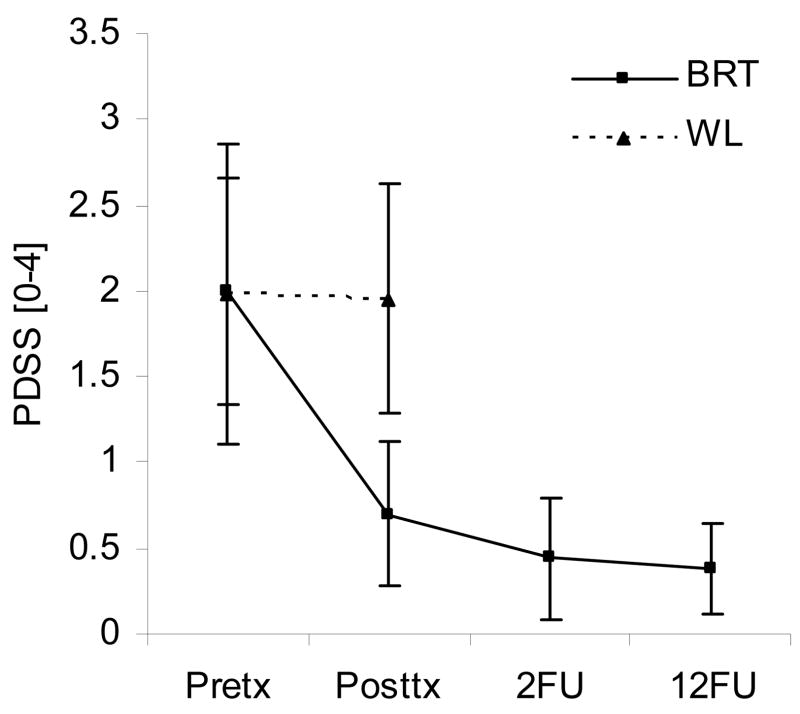
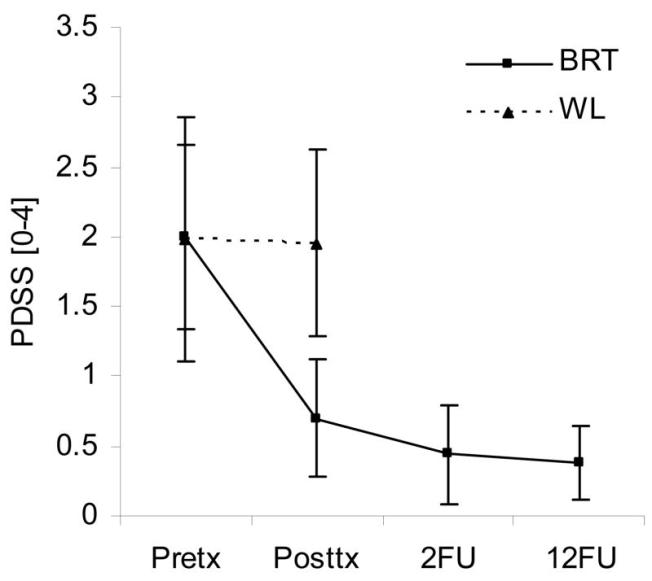
«Significant improvements (in PD severity, agoraphobic avoidance, anxiety sensitivity, disability, and respiratory measures) were seen in treated but not untreated patients, with moderate to large effect sizes. Improvements were maintained at follow-up. »

«That such training will result in higher levels of pCO2 cannot be taken for granted, since the usual instruction to breathe slowly can actually lead to decreases in pCO2 (Meuret et al., 2003; Ley, 1991), probably because of deeper individual breaths (higher tidal volumes) stimulated by feelings of suffocation.»

«Klein’s suffocation alarm hypothesis (Klein, 1993), for example, suggests that both panic attacks and the consistent respiratory abnormalities seen in panic patients may be due to hypersensitive, medullary carbon dioxide (CO2) detectors. »
nihms46964f2

nihms46964f3

The treatment had five major components: (a) educating patients about the role of breathing in the etiology and maintenance of PD, (b) directing their attention to potentially problematic respiratory patterns, particularly those observed during the extended physiological monitoring, (c) having them perform different breathing maneuvers with capnometer feedback to experience how changes in breathing affect physiology, symptoms, and mood, (d) teaching them ways to simultaneously control pCO2 level and RR (e) and having them practice breathing exercises daily.

Individual training exercises, to be performed twice- daily for 17-min, at home or elsewhere, consisted of three parts: (a) a baseline period (baseline), during which patients sat quietly with their eyes closed for 2-min, (b) a 10-min paced breathing period (paced) during which patients breathed in synchrony with tones while occasionally checking their pCO2 and RR on a feedback device, and (c) a 5-min breathing period without pacing tones during which patients were to maintain their previously paced RR and pCO2 level using the feedback device (transfer).

In addition, patients were provided with a pocket-sized tape player and audiotapes with instructions and pacing tones for their exercises. The tones were set to correspond to a RR of 13 breaths per minute in the first week, and rates of 11, 9, and 6 breaths per minute in successive following weeks.

During the maintenance period (between 2 and12-month FU) nine of the patients taking psychotropic medication had reduced their doses or discontinued medication altogether; four patients initiated alternative (n=3, relaxation, yoga, spiritual guidance) or psychological treatment (n=1, cognitive therapy).

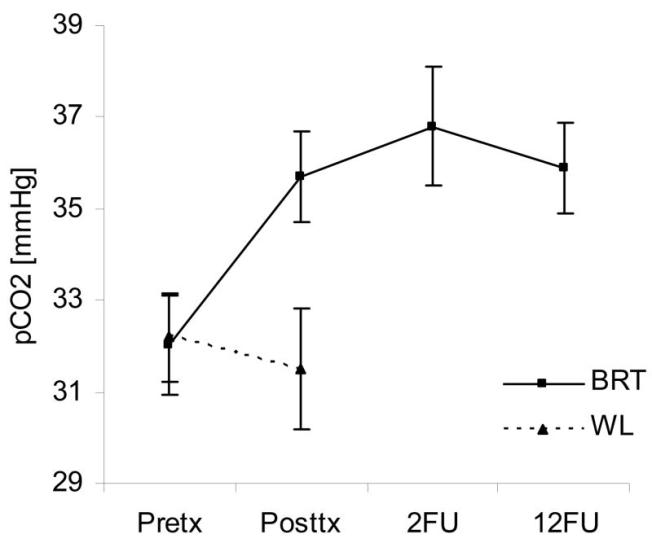
Post-hoc tests showed that pCO2 dropped significantly below baseline level during paced breathing and transfer in week 1 (34.7 and 34.5 mmHg). It reached the highest levels (around 38 mmHg) for all three phases during week 4.

«At posttreatment 40% had experienced no further panic attack during the four week period. At 2-month follow-up 62% had experienced no further panic attack since the end of treatment and 68% were panic-free at 12-month follow-up. Eighty-eight percent at 2-month follow-up and 96% at 12-month follow-up were either “much improved” or “very much improved” »

The results of this study suggest that a new, brief, capnometry-assisted breathing therapy (BRT), which specifically teaches patients to raise pCO2 levels by regular slow and shallow breathing, can be therapeutic in PD. Significant improvements were seen in treated but not untreated patients, with respect to PD severity, agoraphobic avoidance, anxiety sensitivity, disability, and respiratory measures. Psychological measures continued to be improved or improved further at 2-month and 12-month reassessments. Mean pCO2 increased from hypocapnic to normocapnic levels over the course of treatment and remained normocapnic at follow-up.

«Repeated elevation of pCO2 during homework sessions may have desensitized a hypersensitive suffocation alarm system (Klein, 1993), reducing panic vulnerability. Such desensitization could increase tolerance for incidental increases of arterial pCO2during daily life and result in fewer compensatory hyperventilatory episodes.»

Alternatively, in so far as hyperventilation itself can cause panic attacks (Ley, 1985), practiced skill at raising pCO2 could directly reduce risk. The fact that an inability to normalize breathing quickly after paced hyperventilation was associated with less clinical recovery suggests that respiratory and clinical outcomes were linked.

Thus, non-respiratory mechanisms may also have played a role in patient improvement. For instance, the treatment rationale provided to patients included cognitive components that may have counteracted catastrophic thinking and given patients a greater sense of control. The paced breathing exercises, which often triggered uncomfortable sensations similar to those experienced during panic attacks (Meuret et al., 2003), may have produced interoceptive exposure and desensitization to bodily cues that was not respiration-specific (Craske et al., 1997). The slight decreases of pCO2 during home-exercises could be indicative of such an unpleasant exposure effect.

Ukjent sin avatar

End-tidal versus transcutaneous measurement of PCO2 during voluntary hypo- and hyperventilation

Nevner at «paused breathing» øker CO2 mest, og viser hvordan CO2 påvirkes av forskjellige pustefrekvenser. Å øke CO2 virker terapeutisk mot panikkangst. I denne studien pustet de riktig nok 3 pust i minuttet, men deres paused breathing innebar ett sekund inn, holde pusten i 18 sekunder, og så ett sekund ut. Det er en ganske mye mer anstrengende måte å puste på. De nevner ingen ting om hvordan deltakerne opplevde denne pusteteknikken i studien.

Pubmed artikkel: http://www.ncbi.nlm.nih.gov/pubmed/18706460
Bilder: http://www.sciencedirect.com/science/article/pii/S0167876008007654

«Recent studies have shown that end-tidal PCO2 is lower during anxiety and stress, and that changing PCO2by altering breathing is therapeutic in panic disorder.»

«Both methods documented that paused breathing was effective for raising PCO(2), a presumed antidote for anxious hyperventilation.»

«The results show that PCO2 estimated by the two methods was comparable except that for transcutaneous measurement registration of changes in PCO2 was delayed and absolute levels were much higher.«

Ukjent sin avatar

Breathing evaluation and retraining in manual therapy

Nevner mye rundt opptrening av pustefunksjon, men fokuseres på Capnografi fordi forfatteren selger Capnotrainer apparatet.
http://reactivemovement.com/images/stories/breathing%20evaluation%20and%20retraining.pdf

«According to Hodges et al. (2007), trunk muscle functions of spinal stabilization, continence and respiration are all interrelated. They conclude that when dysfunction occurs in one system, it can negatively impact the other two. Further, it is known that people with back pain brace with their superficial abdominal muscles and diaphragm and have poor core muscle activation (Hodges and Richardson, 1999; Radebold et al., 2001; O’Sullivan and Beales, 2007).»

«In neck pain, it is known that there is frequent evidence of over-activation of some of the inspiratory muscles, such as the scalenes, sternocleidomastoid and upper fibres of trapezius (Falla, 2004; Nederhand et al., 2000).»

«Symptoms associated with hypocapnia
Cerebral
Headache, impaired intellectual function, confusion, giddiness, visual disturbances, light headedness, dizziness, syncope, seizures, hallucinations, depersonalization and unilateral somatic symptoms (Thomson et al., 1997; Gardner, 1996; Lum, 1981). Muscular
Increased membrane excitability (Thomson et al., 1997)
Cardiac
Chest pain, coronary artery spasm (Thomson et al., 1997; Nakao et al., 1997; Laffey and Kavanagh, 2002; Gardner, 1996)
ECG changes (Thomson et al., 1997; Rutherford et al., 2005; Sullivan et al., 2004)
Respiratory
Bronchospasm with or without asthma, breathlessness (Levitsky, 2003; Laffey and Kavanagh, 2002; Gardner, 1996; Lum, 1996)
Gastrointestinal
Increased tone, motility and sensitivity (Ford et al., 1995; Bharucha et al., 1996; Cooke et al., 1996)
Women’s Health
Decreased CO2 levels during pregnancy (Thomson et al., 1997; Jensen et al., 2007, 2008)
Decreased CO2 levels during luteal phase of menses (Slatkovska et al., 2006)
Large drops in CO2 in women with Pre- menstrual Syndrome (Ott et al., 2006) «

Ukjent sin avatar

better chemistry through breathing

Nevner blodsirkulasjon og hvordan blodårene forholder seg til pH endringer.

Klikk for å få tilgang til Kaiser%20Permanente%20Better%20Chemistry%20Through%20Breathing.pdf

«For the majority of people, just 1 minute of determined overbreathing reduces cutaneous and peripheral blood circulation (colder hands, paler skin); interferes with peripheral nerve conduction (tingling in fingers and lips); lowers muscle contraction thresholds (more susceptible to twitching); and stimulates cerebral vasoconstriction (interference with vision, hearing, sensory perception, balance, orientation, judgment, and cognition). »

Hvis dette skjer etter 1 minutt med hyperventilering, hva skjer ved kronisk hyperventilering?

«A “compensated hyperventilator” will often feel out of breath; because much of the bicarbonate buffer is gone, there is less of a defense against the rising acidity associated with retaining CO2. Normal breathing will feel insufficient. Thus breath-holding time is typically shorter than average—often below 15 seconds. »

«If the breath is stopped or inhibited, CO2 rises and blood vessel diameter increases in order to maximize transfer of glucose and oxygen out of the bloodstream and into the tissues. But with hyperventilation, the opposite happens: blood vessels constrict, inhibiting transfer of nutrients from the bloodstream. »

CO2 blodsirkulasjon

«Because hyperventilation is associated with alkalinity, the kidneys start retaining acid and more of the blood’s bicarbonate (alkaline) buffer is excreted. Although this does return the pH toward normal, it creates a false, fragile equilibrium that depends on continued hyperventilation. This new “set point” makes recovering a normal breathing pattern difficult. This person will be oversensitive to both exercise and relaxation and may suffer anxiety, chest tight- ness, fatigue, and muscle pain.»

«In some individuals, blood vessel diameter fell by 50%; in others, much less. Those with the strongest constriction general- ly reported more symptoms of panic.»

«Hyperventilation restricts circulation more in the cortex than in the lower brain levels and can seriously impair cortical functioning, disrupting judgment, perception, memory, orientation, and reaction time, and slowing EEG frequencies. »

«Excess sighing and deep breaths are markers for panic disorder (Wilhelm, Trabert, & Roth, 2001).» «For such a person, deep but urgent breathing may be an attempt to over- come a tight diaphragm or other muscular rigidity, so emphasizing muscle relaxation and gentler breathing might be more helpful than recommending deep breathing.»